What with school and homework, we did very little by way of museums and sights in our first two weeks. But today it begins! After a simple brekkies at our hotel, we walked through the park to reach The Fine Arts Museum. Oh wow. (Already revisiting our perpetual travel need for more superlatives.)
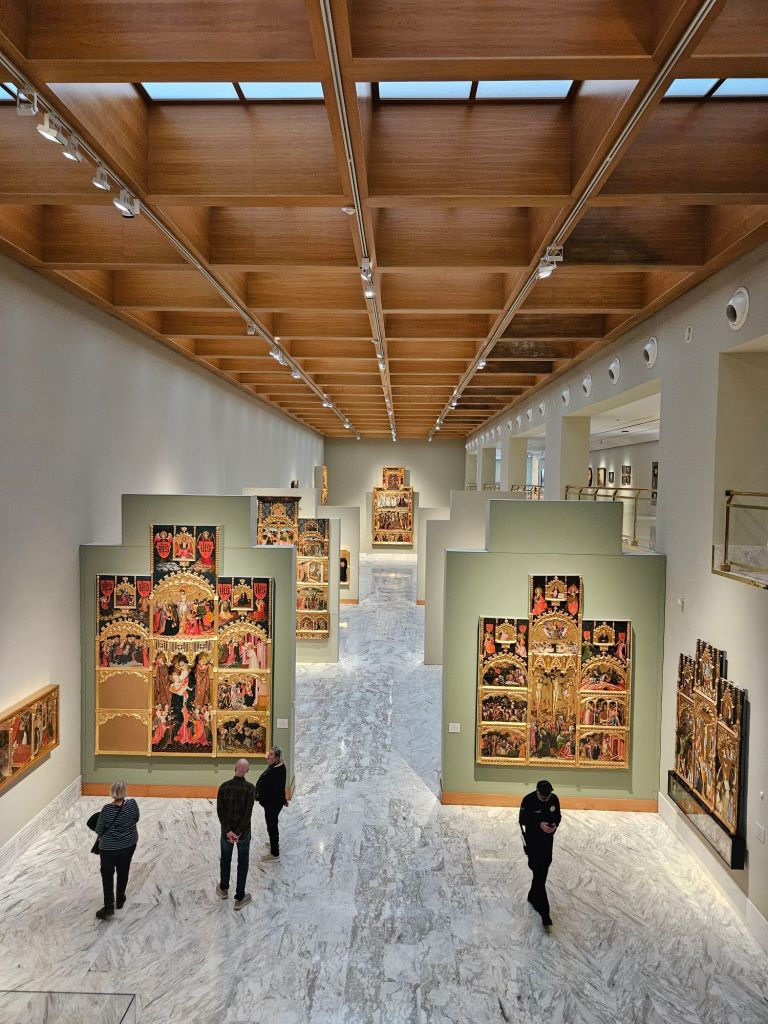
We started in the lower floor with the medieval stuff, thinking we’d give it a quick look before moving on to the Renaissance and upstairs to the 18th and 19th centuries. Little did we know how captivating their collection of altar pieces would be.
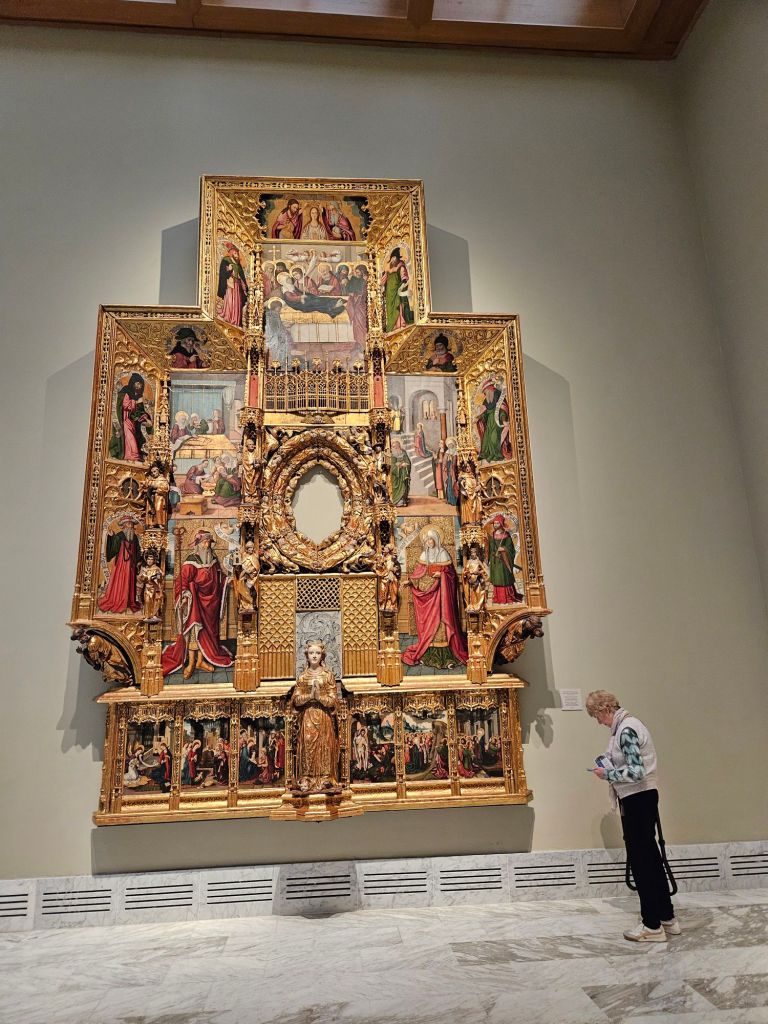
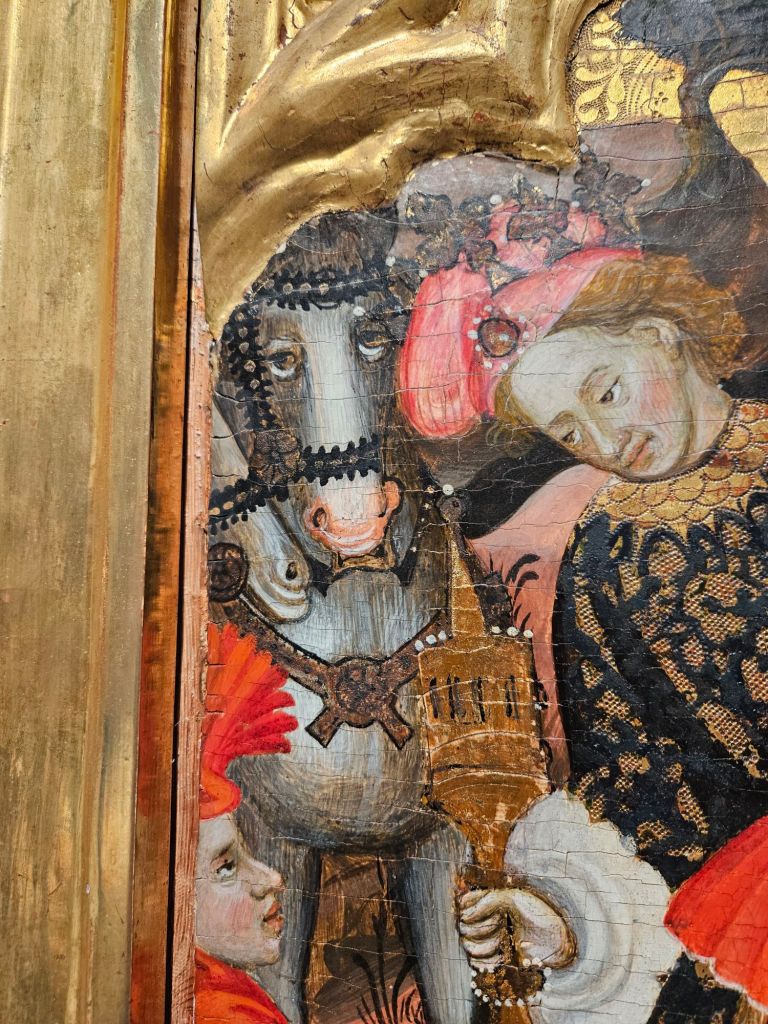
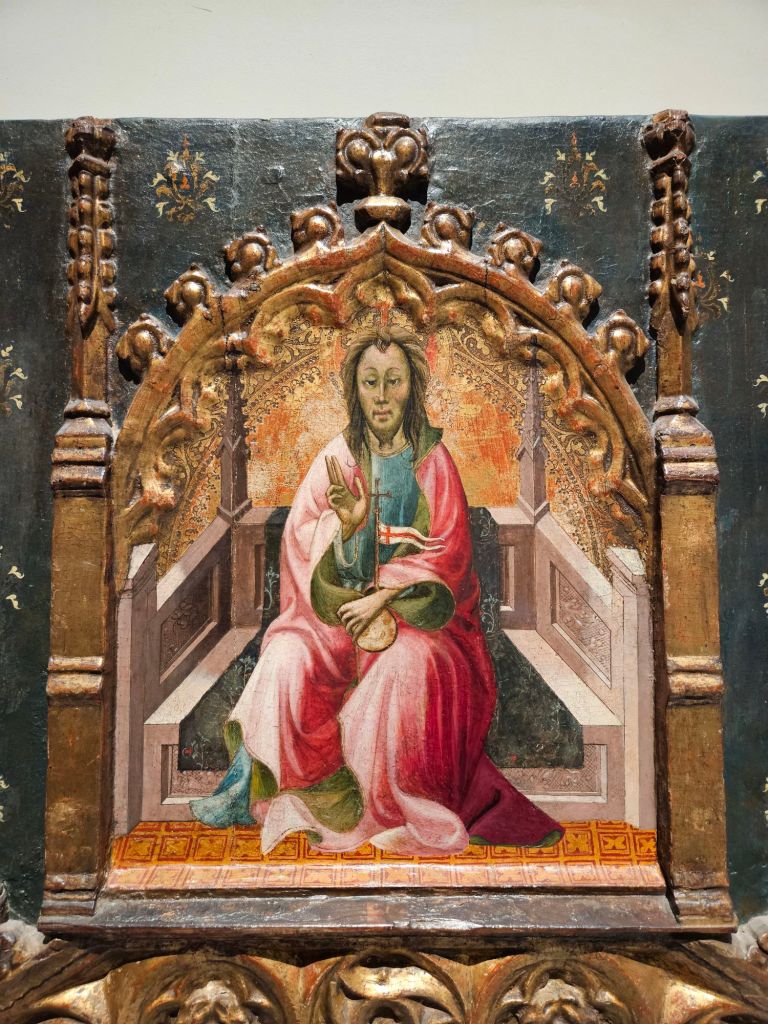
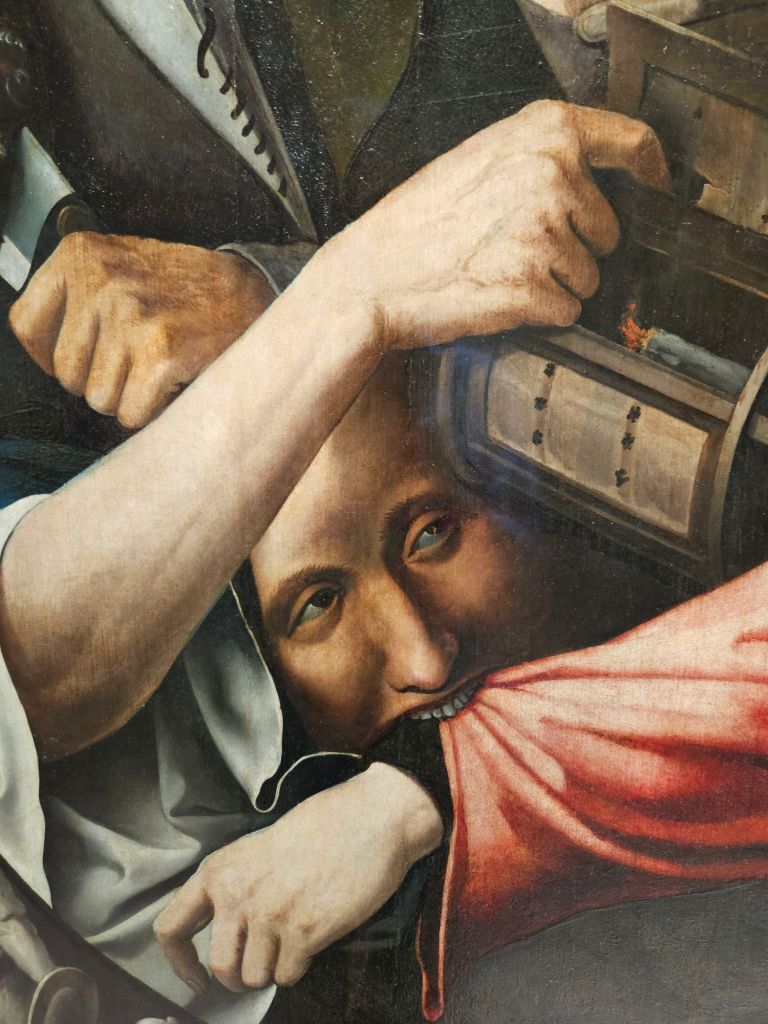
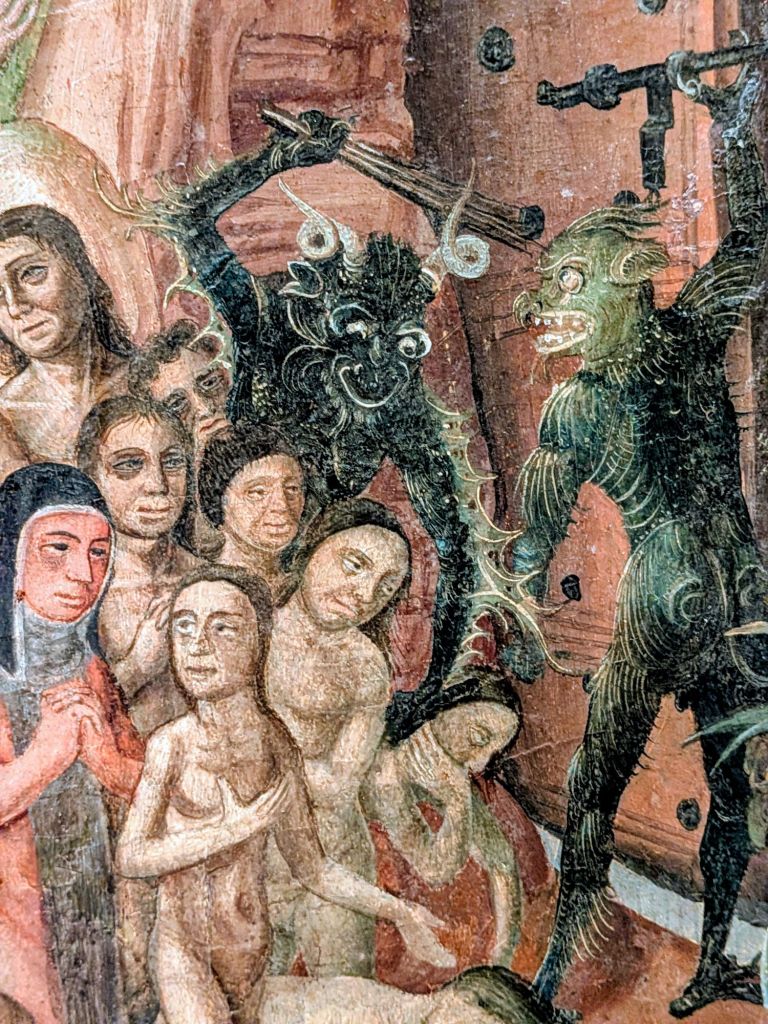
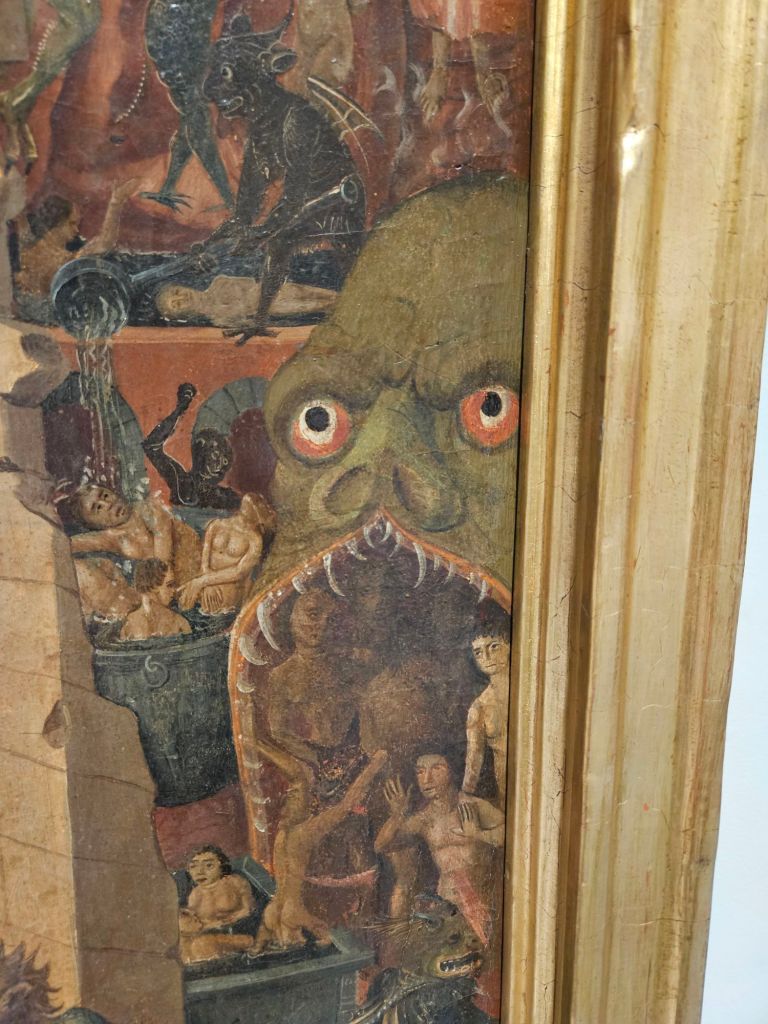
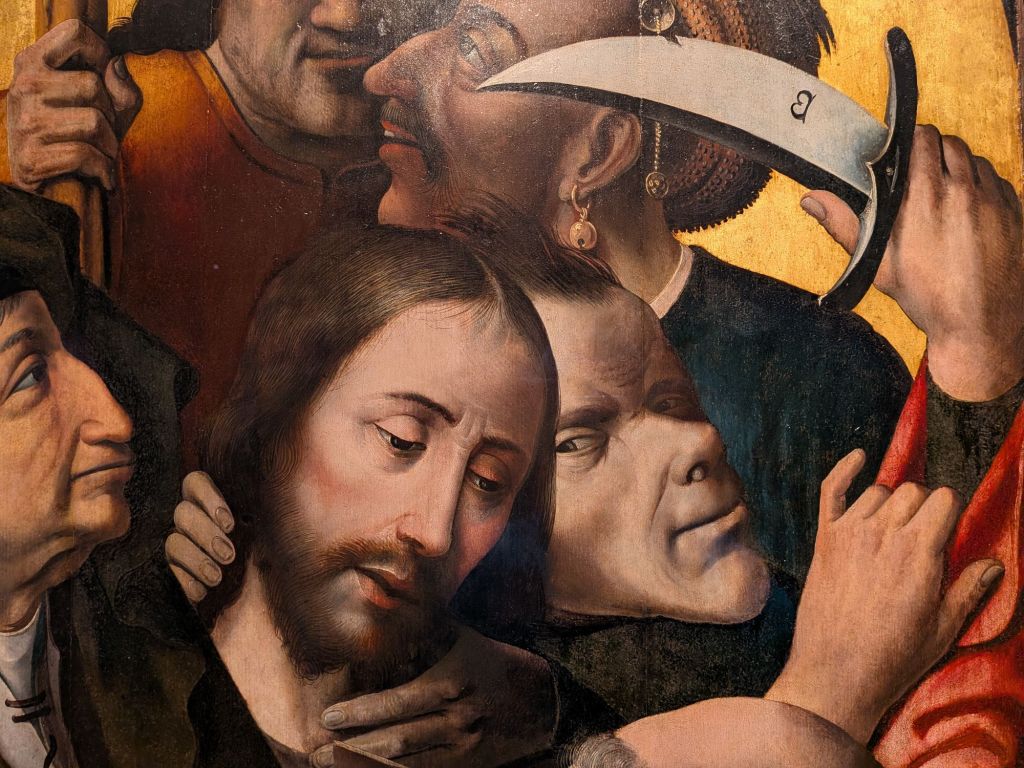
The scale of the altar pieces were incredible, but the details in the paintings really drew us in, especially the sly bits of humor in various expressions.
A bemused horseGod the Father a little tired – or stoned? Who knowsNot much fun, unless you’re a devil, at the entrance to Hell.An unpleasant hot tub experience Thug with knife wants to attack Christ. Needs to blow nose first.
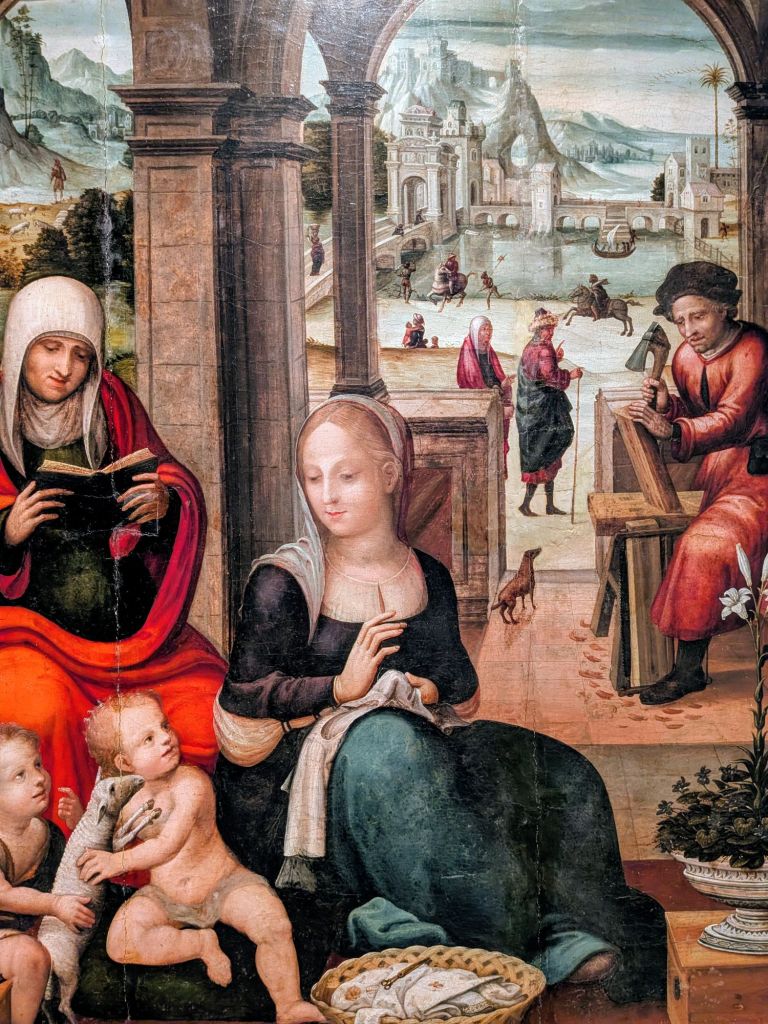
We had just moved on to the Early Renaissance – “Hey, everyone, I’ve discovered perspective!” –
Miguel Esteve, La Sagrada Familia, c. 1520
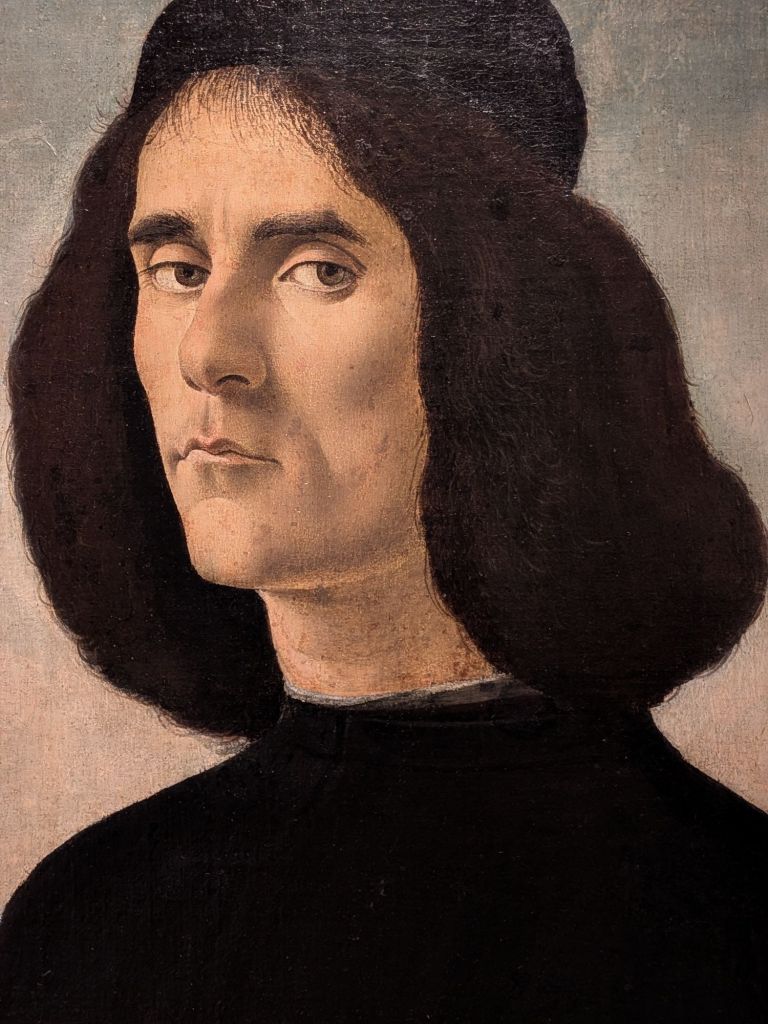
… and encountered Botticelli’s portrait of Mark Rylance in Wolf Hall –
(OK, I thought the resemblance was extraordinary, but possibly it was some Greek dude called Michele Tarcaiota) when…crash.
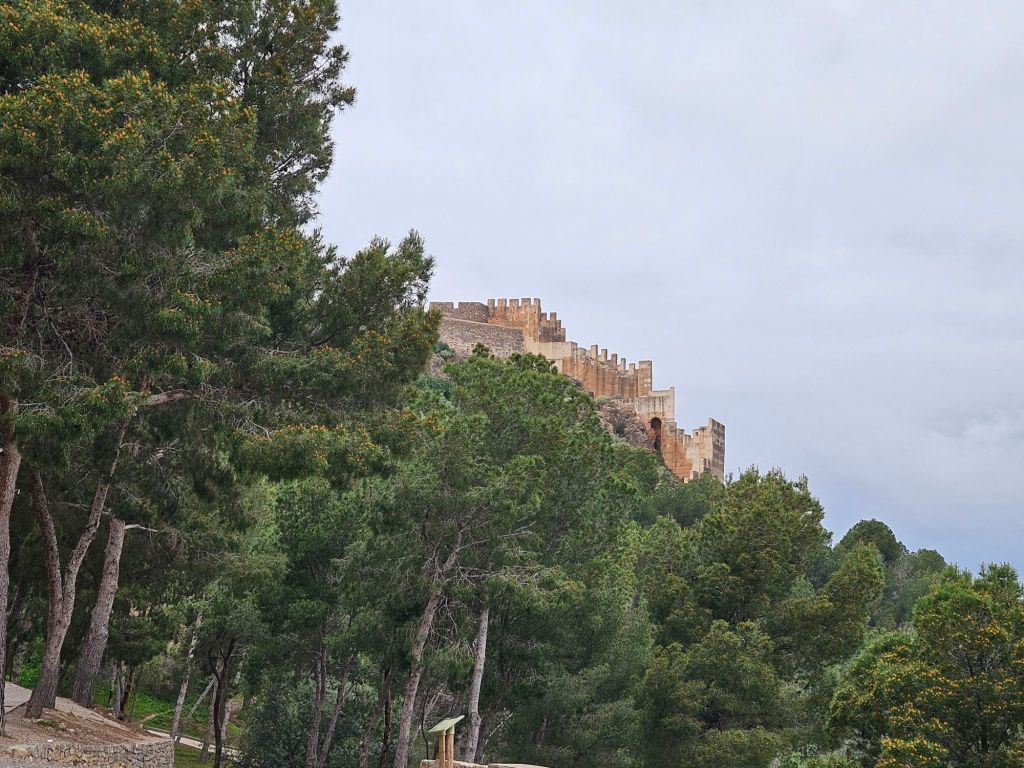
This town, a 25 minute train ride north of Valencia, was known as Sagunto by the Romans and then as Murviejo (“Old walls”) for about a thousand subsequent years of its impossibly complex history – before reacquiring the old name 100 years or so ago.
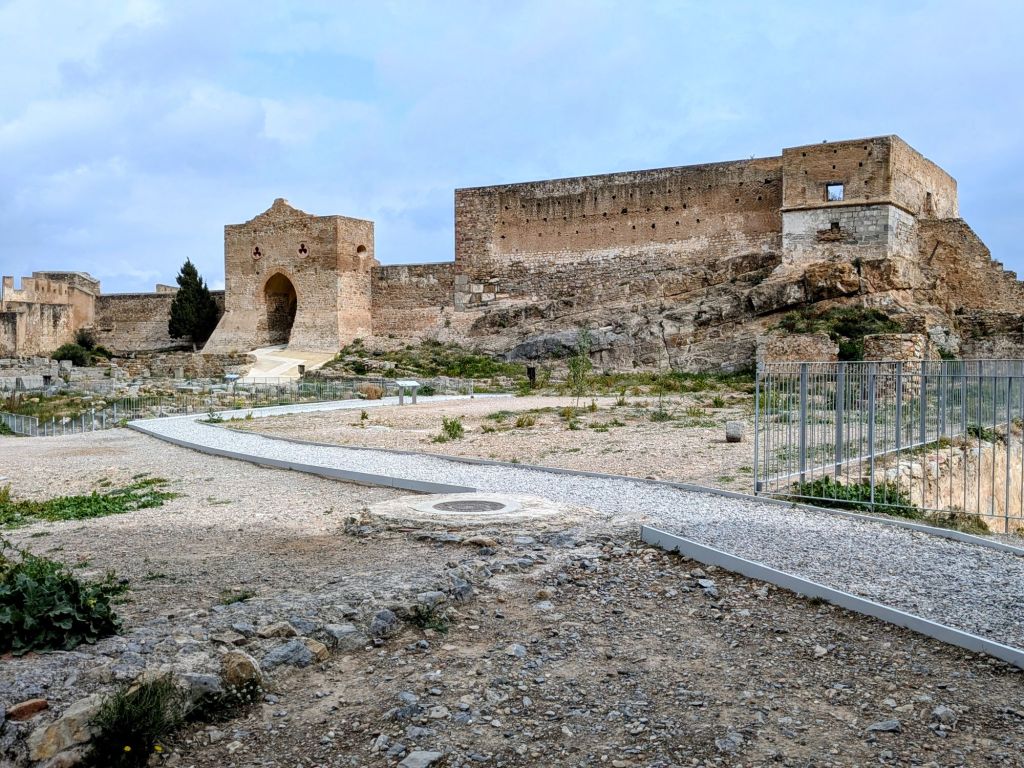
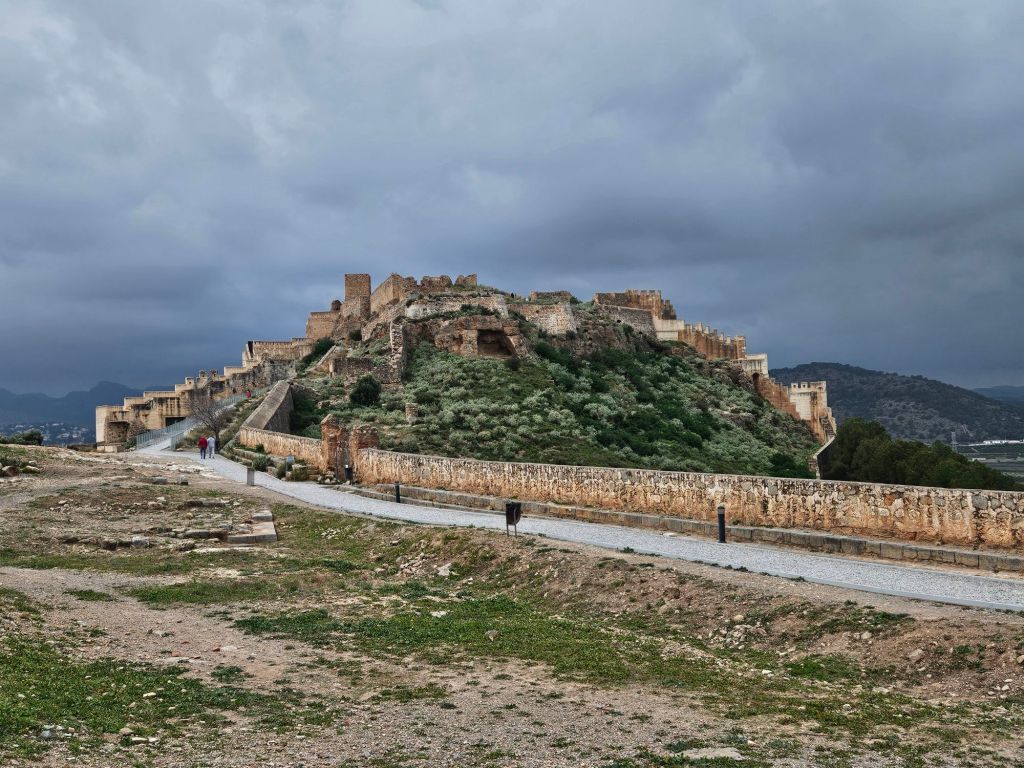
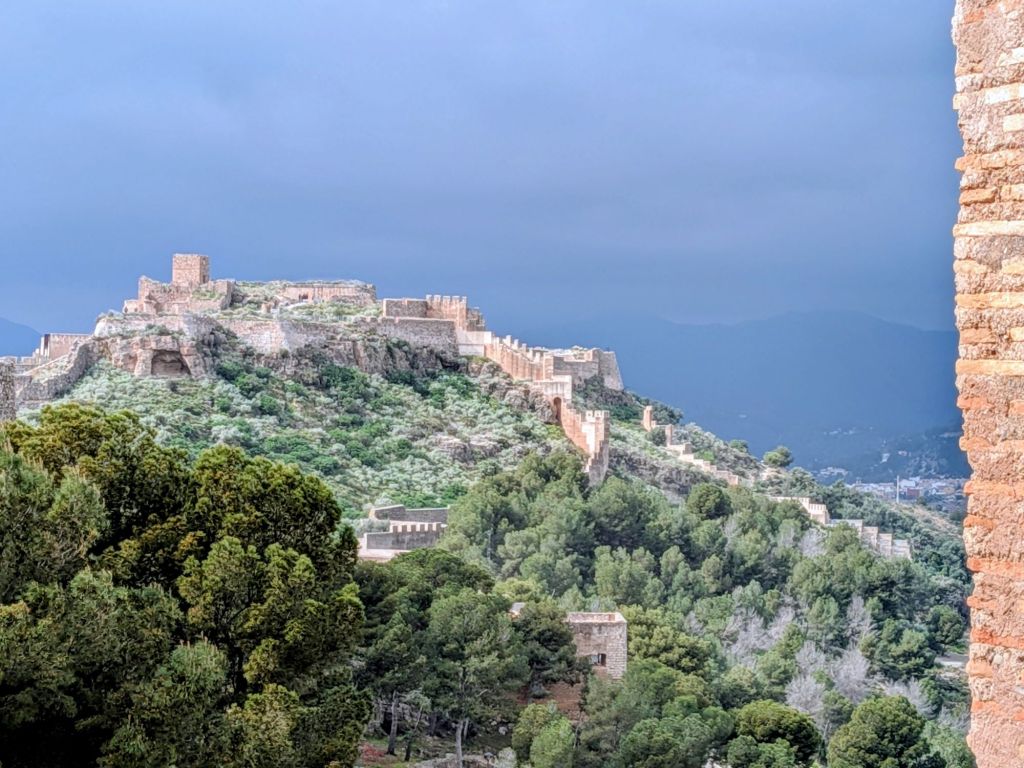
Today one visits for the chance to explore the remains of the castle/fortress/stronghold which stands above the city.
Mentioned in Greek texts from 600 BCE. Built up by the Romans. Besieged for 9 months and then taken by Hannibal. Taken back from the Carthaginians by the Romans > Visigoths > Muslims > Spanish Christians > French > Valencian Spanish (hence Sagunt > Republican anti-fascist Partisans > Franco’s Falange > tourists.
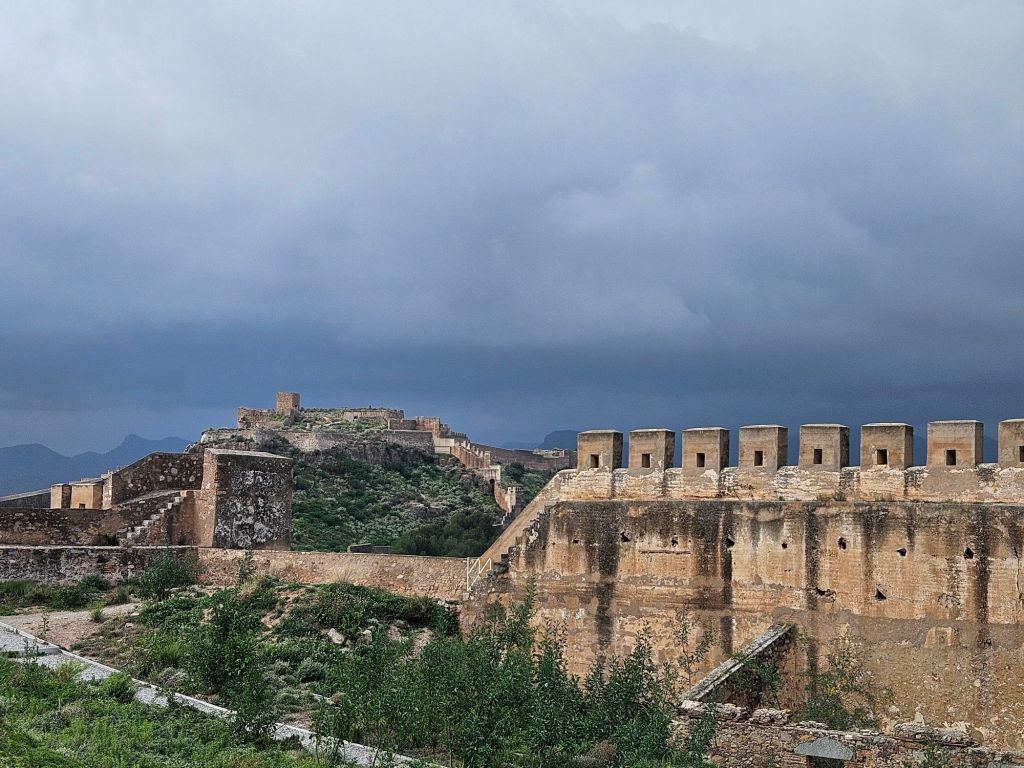
The castle complex is over 1km long. This is one end of it, viewed from the middle:
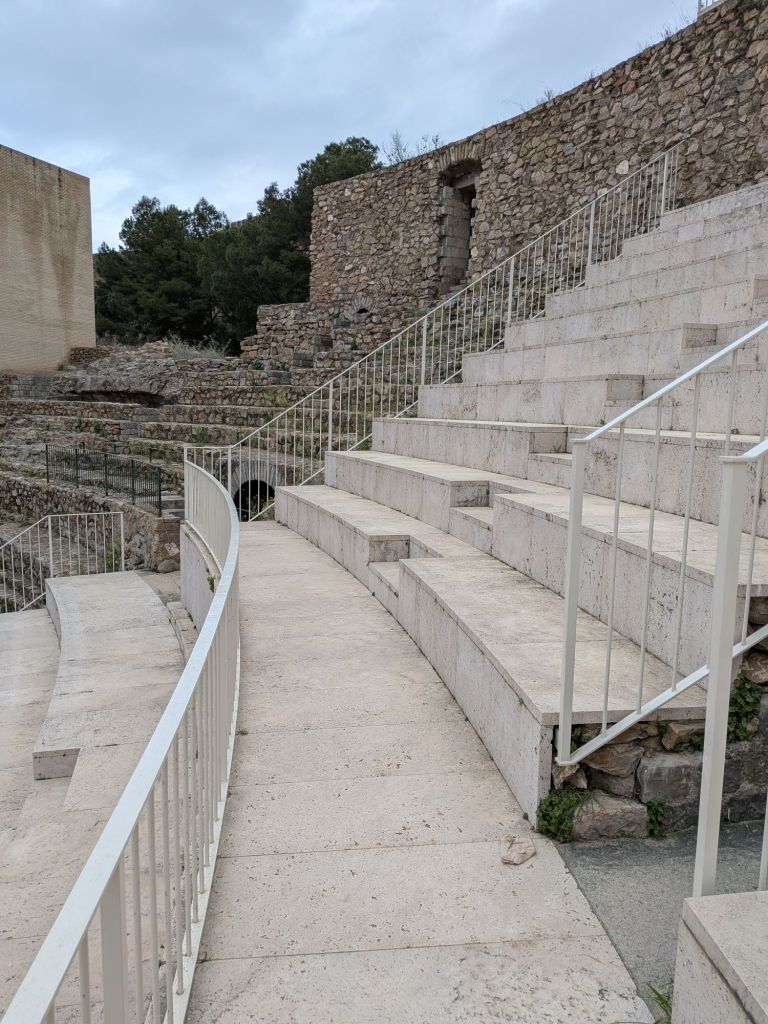
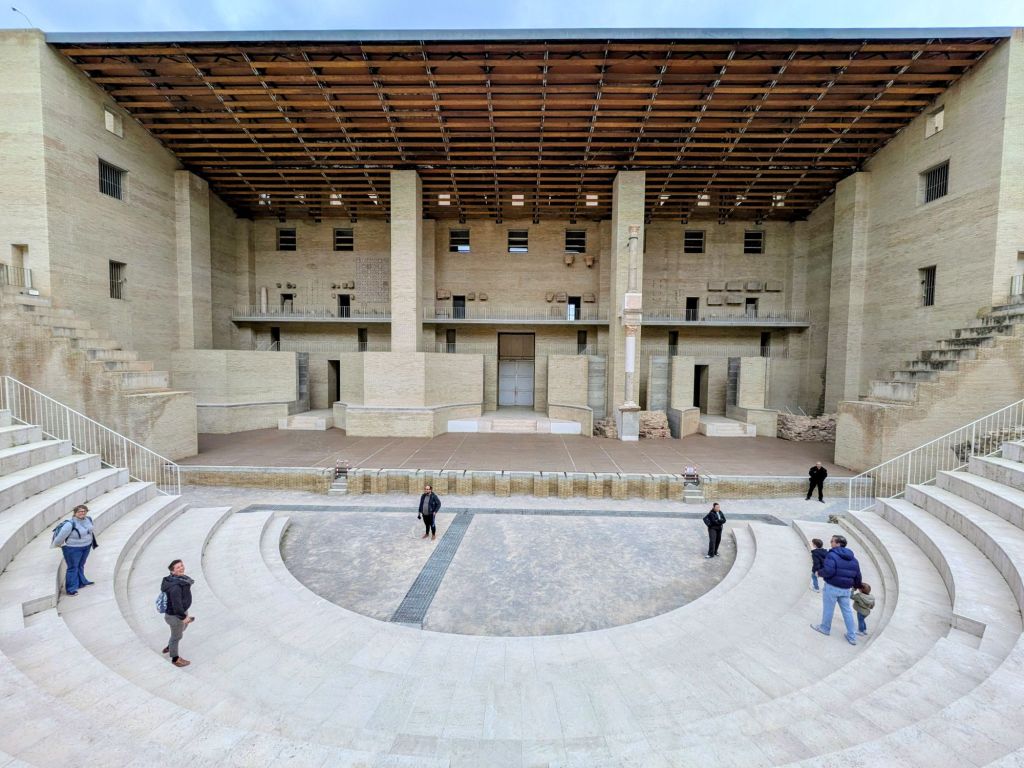
Below is the ruin of a Roman theatre (built in the first century CE) with (very controversially) a huge new brick theatre built directly on top of the ruin in the 1990s:
Great acoustics, I have to give them that.
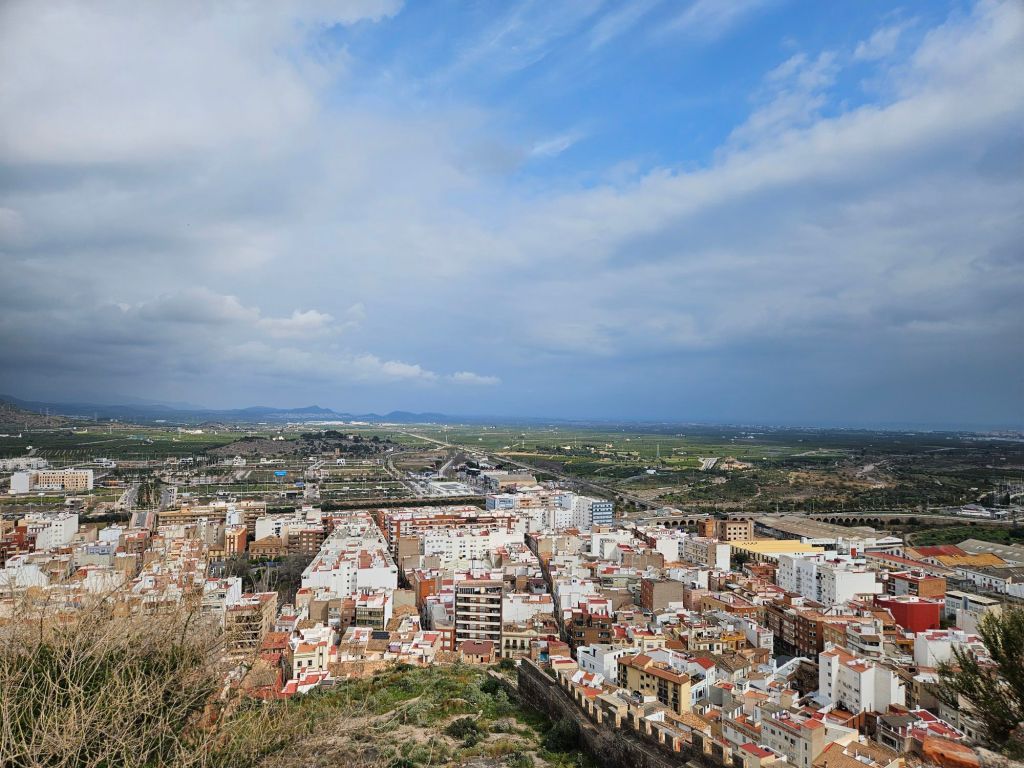
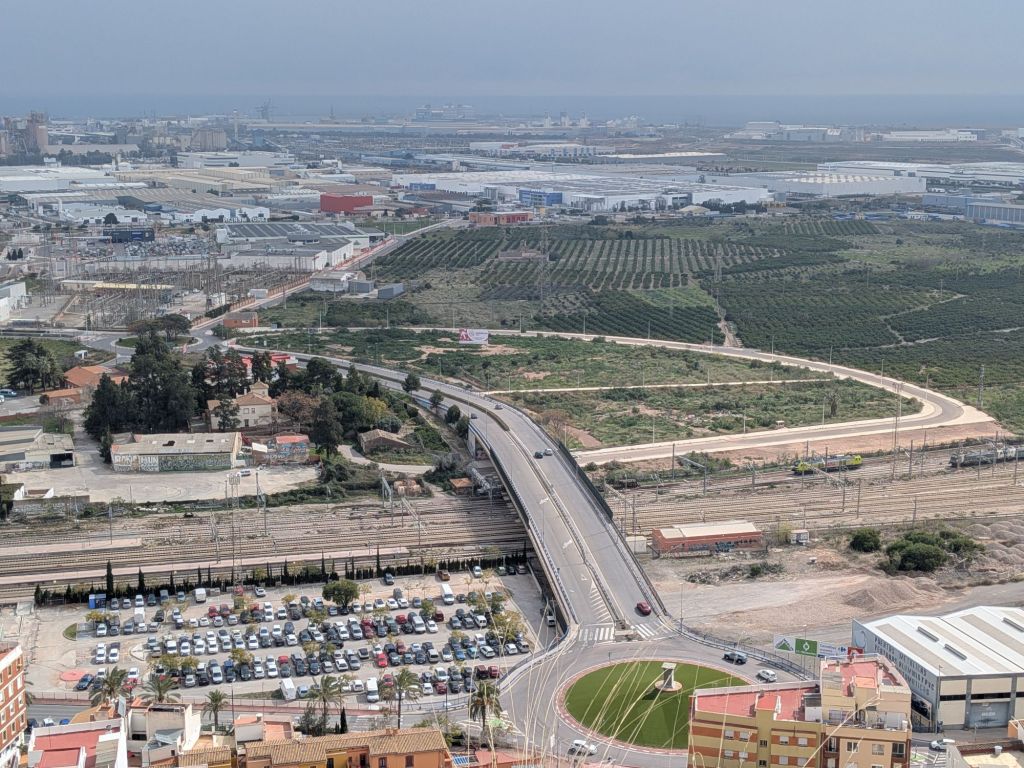
A chilly, cloudy day and alas the once-magnificent views out to the coast are an industrial wasteland:
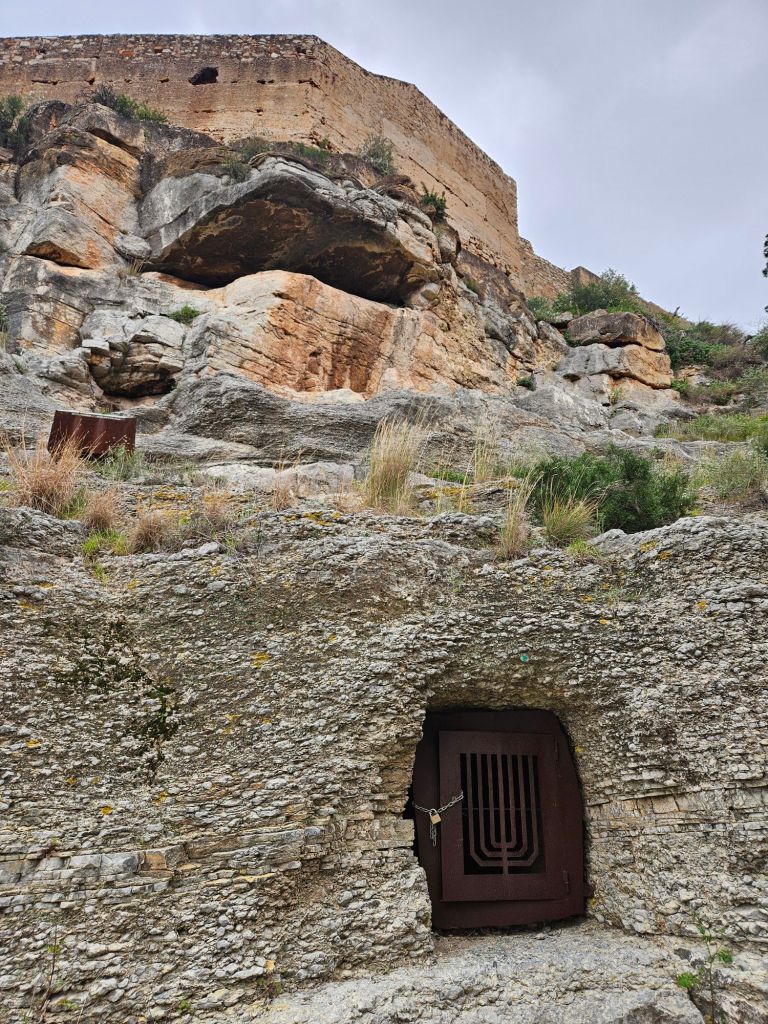
Carved into the hills below the castle are the remains of old Jewish graves. Their history is not known, other than the relative certainty that they were abandoned by the late 1400s due to the Spanish Inquisition.
One of about 15 gates protecting a grave site.
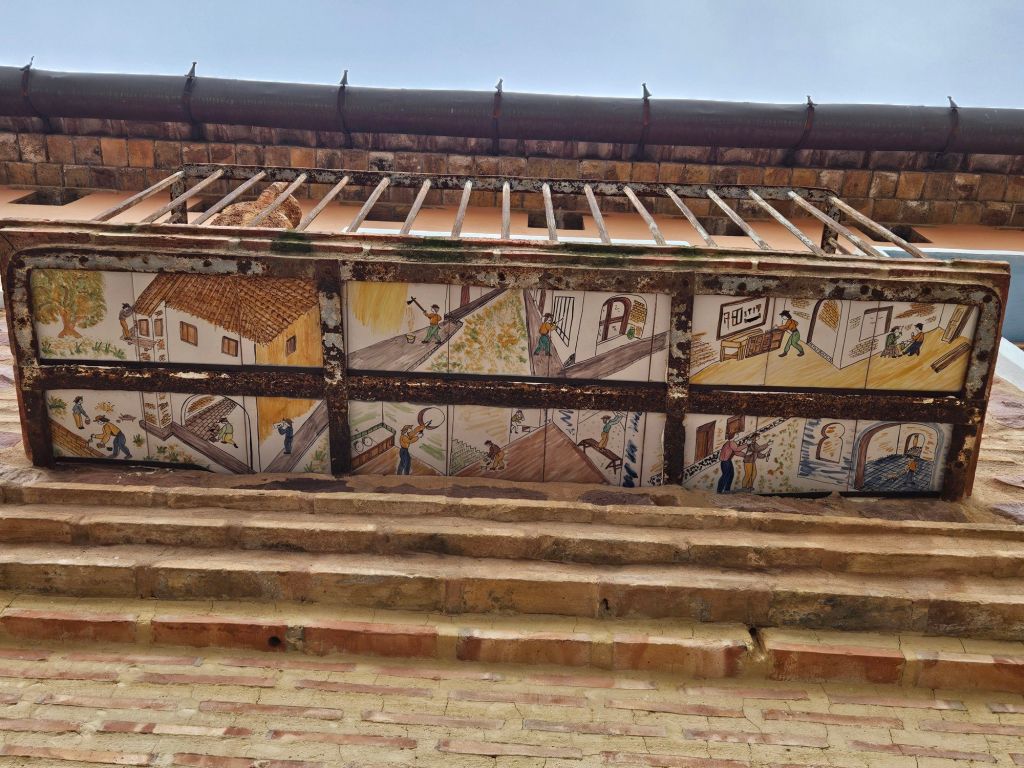
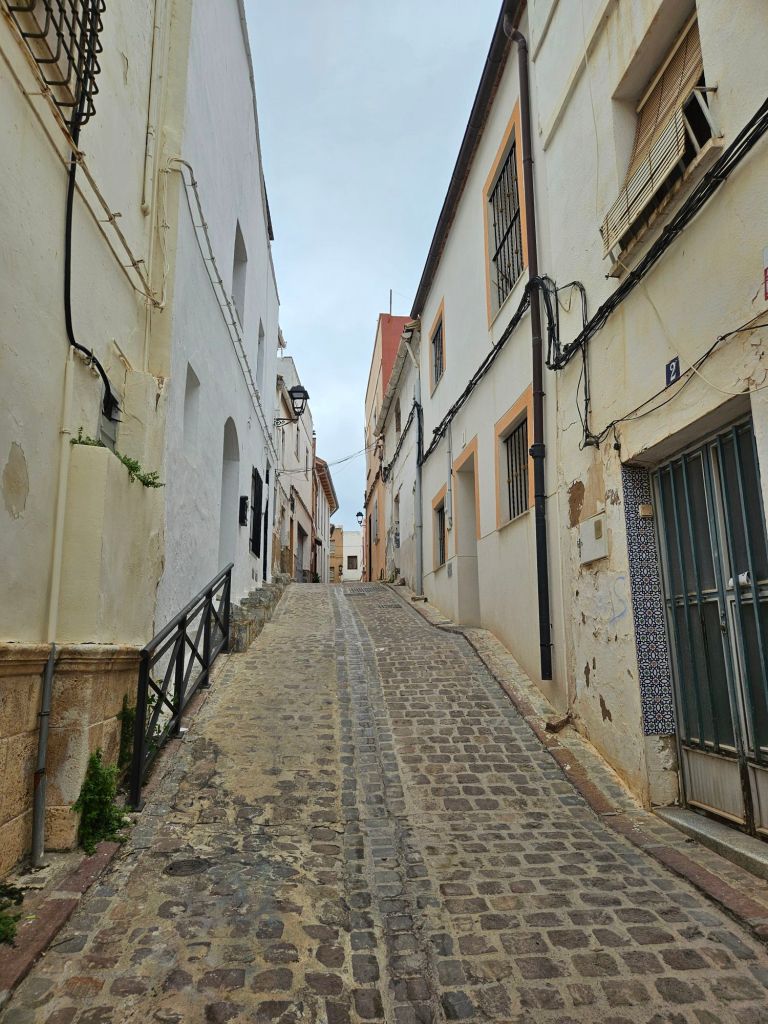
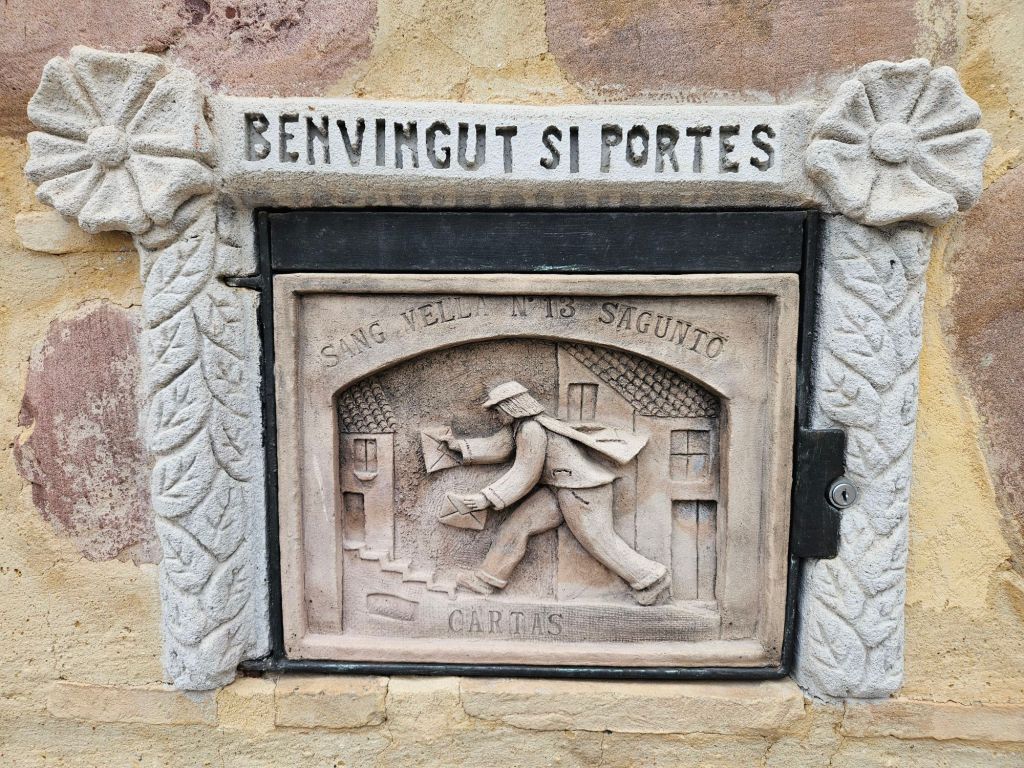
We had the chance for a bit of a wander through the old part of town before the chilly air chased the group back into the relative warmth of the train.
Now back in Valencia and, having moved out of the student residence, we are at the clean and modern if slightly utilitarian Hotel Kramer, just outside the old city.
Or trying to. It’s Saturday and we’re done with our two weeks of classes. The school is well-run and our two teachers, Yolanda and Rosa, were I think quite good, mostly. But I found class exhausting on the good days (as in: four hours of speed chess against an opponent who is consistently better than you) – and some days it felt humiliating and borderline useless. I’ve been pondering why I experienced it that way.
The school uses the standard Cervantes Institute layers of A1-A2 (beginner), B1-B2 (intermediate) etc, except they distinguish also between B1.1 and B1.2. I tested into B1.1, but probably only just, and was with students (including K) who are more solidly at that level or close to B2. It was definitely the right level for me in terms of material – in fact my vocabulary and grammar are in some respects B2-ish. But I have a shaky grip even on the elementary stuff. And the bigger problem is that I have, at least at this level, a terrible ear for what people are saying, to a degree that I felt the teachers consistently didn’t understand or make allowance for. I could have understood 90-95% of their words, in writing, but orally, at speed, I was often completely lost even after they’d repeated it three times. (I experience this as being literally like a hearing problem: there’s a noise, and I know it’s Spanish, but the words refuse to emerge from it.)
Finally, K and others seemed much better at getting by with what they have in conversation. I can make a comment or ask a question, but when I don’t fully understand the response – or I do, but realize I’ve forgotten some basic word I need for the next step – I freeze.
I feel that for me there’s some deeply buried psychology here. Even at the age of 10 or 12 I recall being reasonably confident intellectually in every area – except terrified of French. What was that about?
Having said all this, some progress for sure. I did have simple conversations in Spanish with several people – including once while on a bicycle next to a beach. I even had kind people say “Your Spanish is good!” and know enough to say “¡Que va!” – which is roughly the equivalent of “get out of here.”
Still, the capacity for a fluent hour-long discussion of Spanish history or social issues – in which I’m grasping more than a rough outline of what the other person is saying – is a loooong way away.
Pero la solución es claro – vamos a ello: let’s get to it.
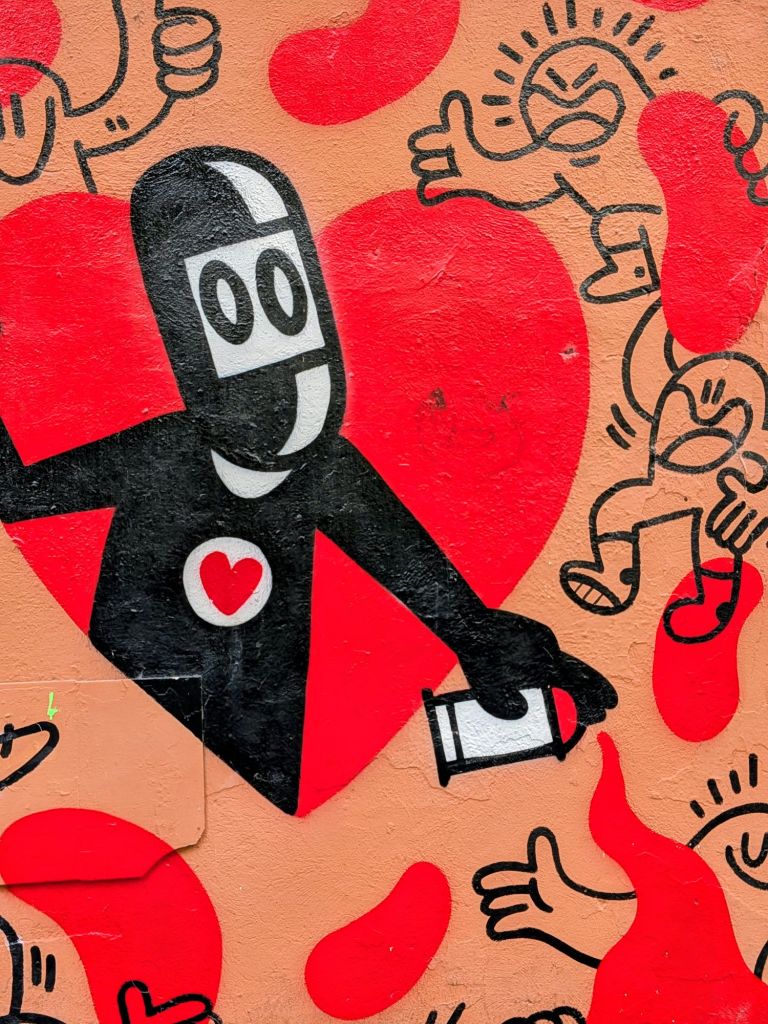
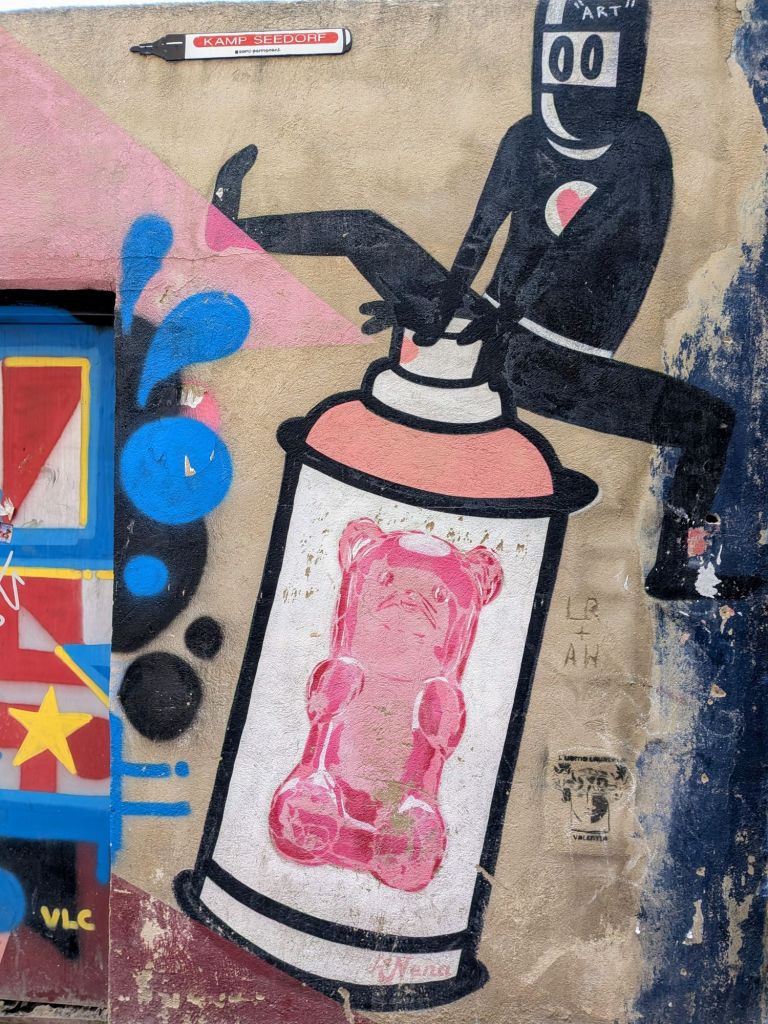
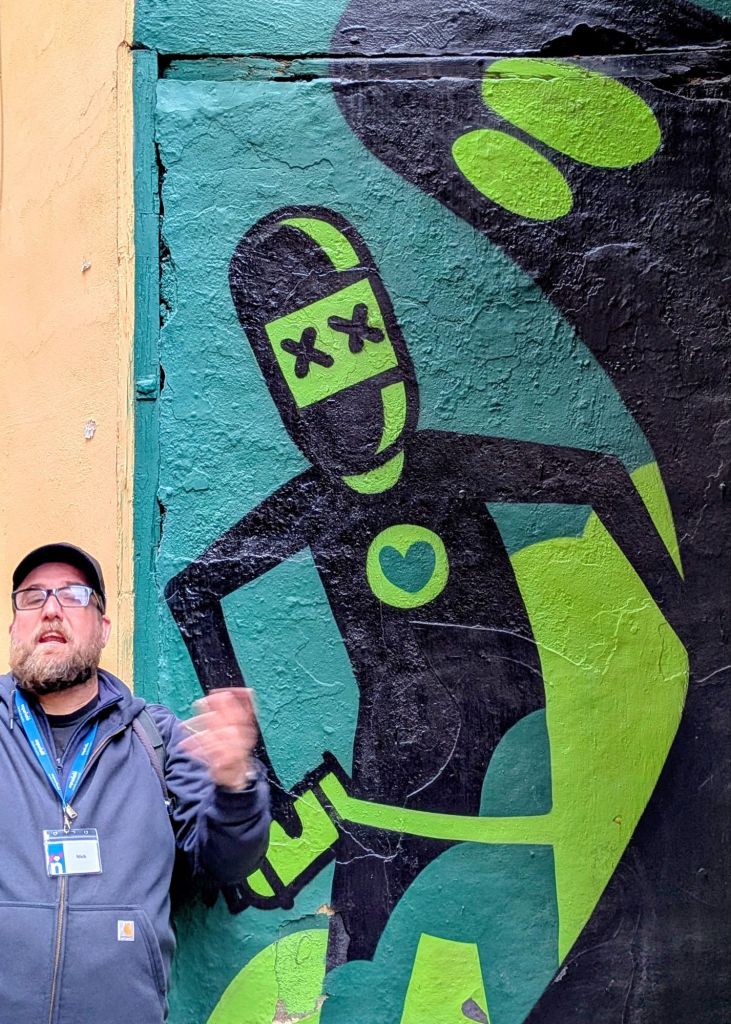
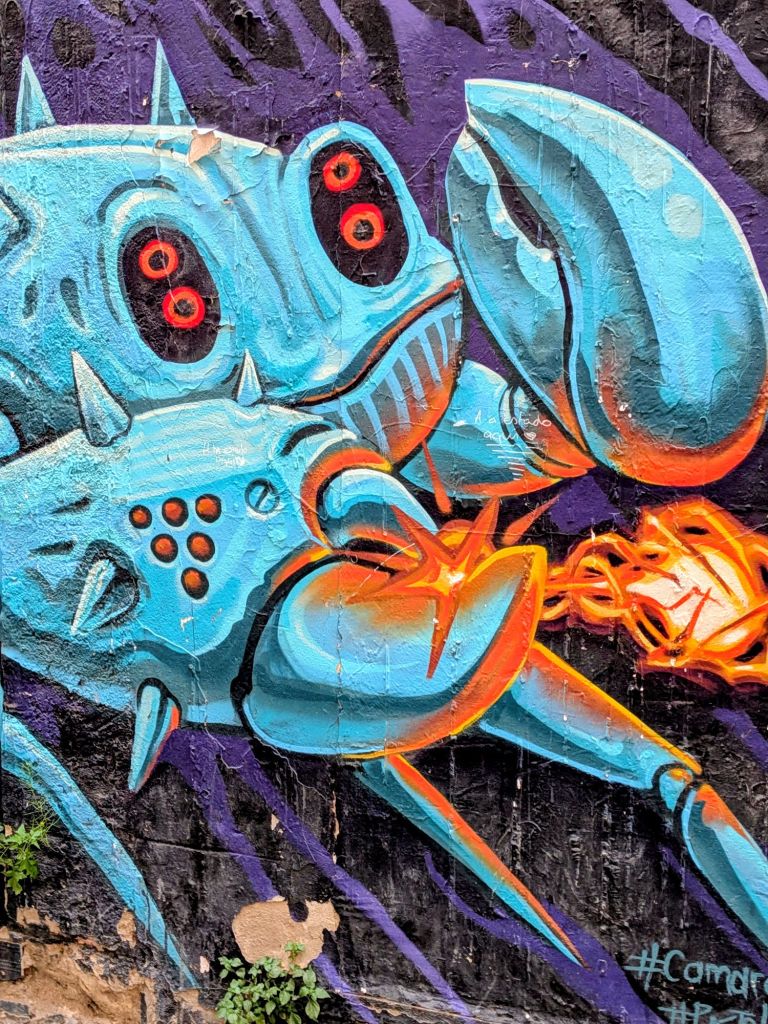
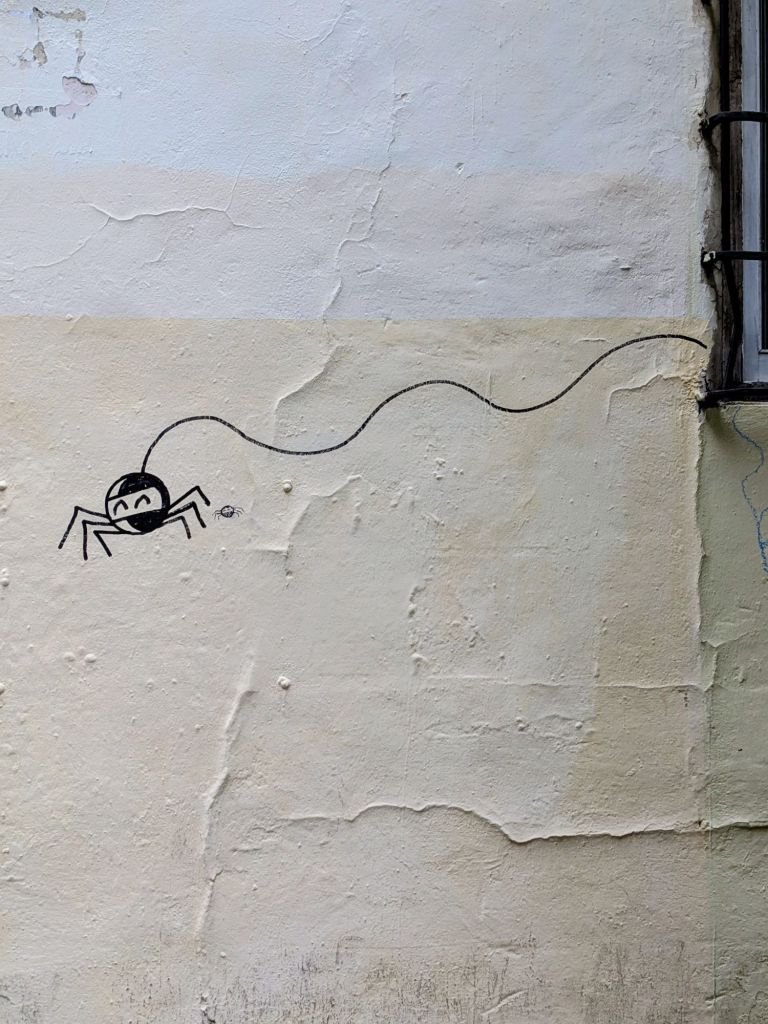
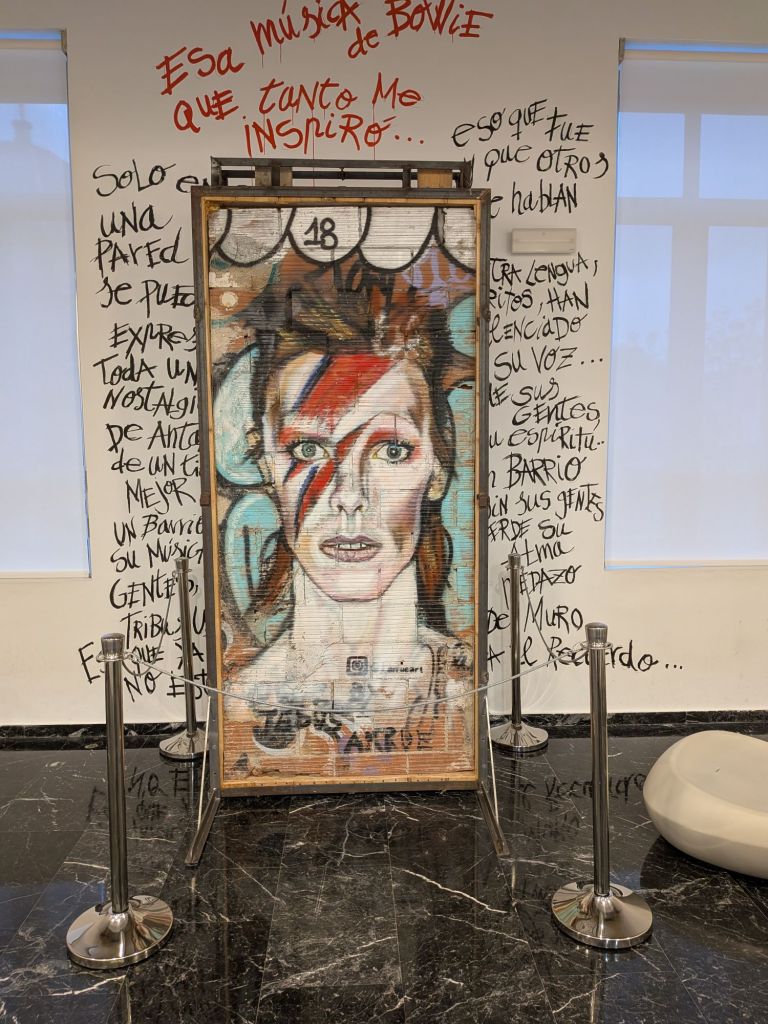
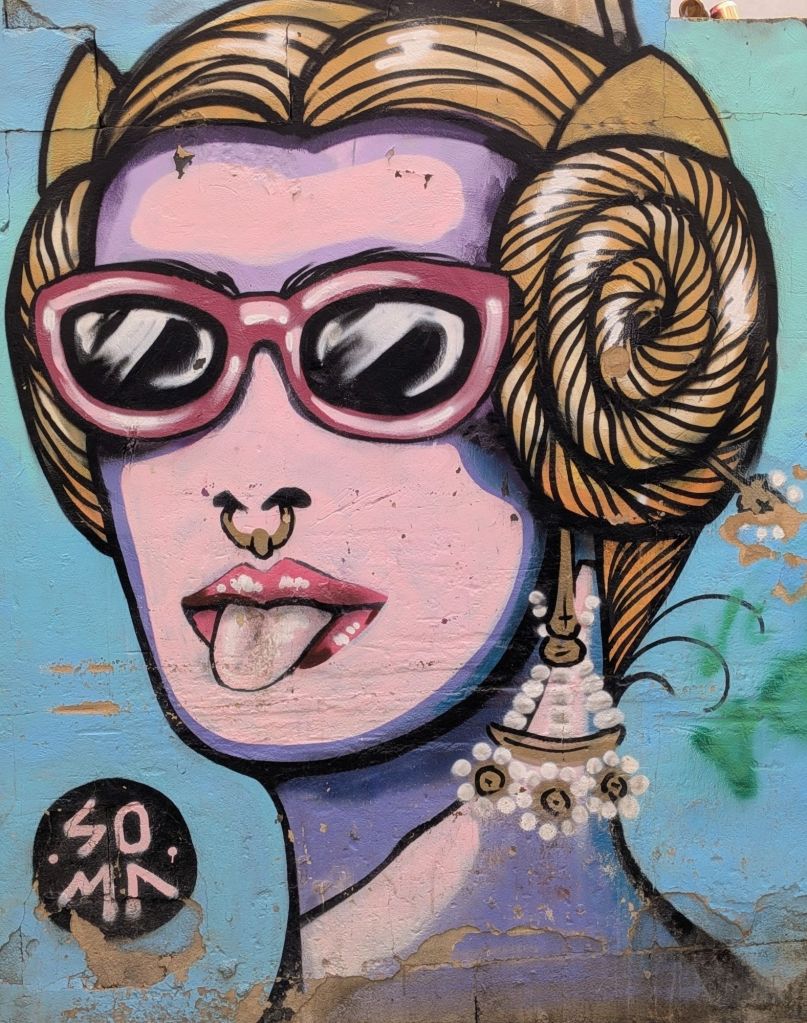
Our guide from school – Nick, above – gave us a tour of his favorites in the neighborhood. Some of the artists are locally famous and get commissions to paint people’s garage doors, businesses, etc. The greenish one where you can see Nick is, as he explained, something to do with the concept of sombre (shade / shadow) in Jungian psychology. I confess I find him hard to follow when he’s talking about coffee, never mind collaborations between urban street artists, so I didn’t get all the details there.
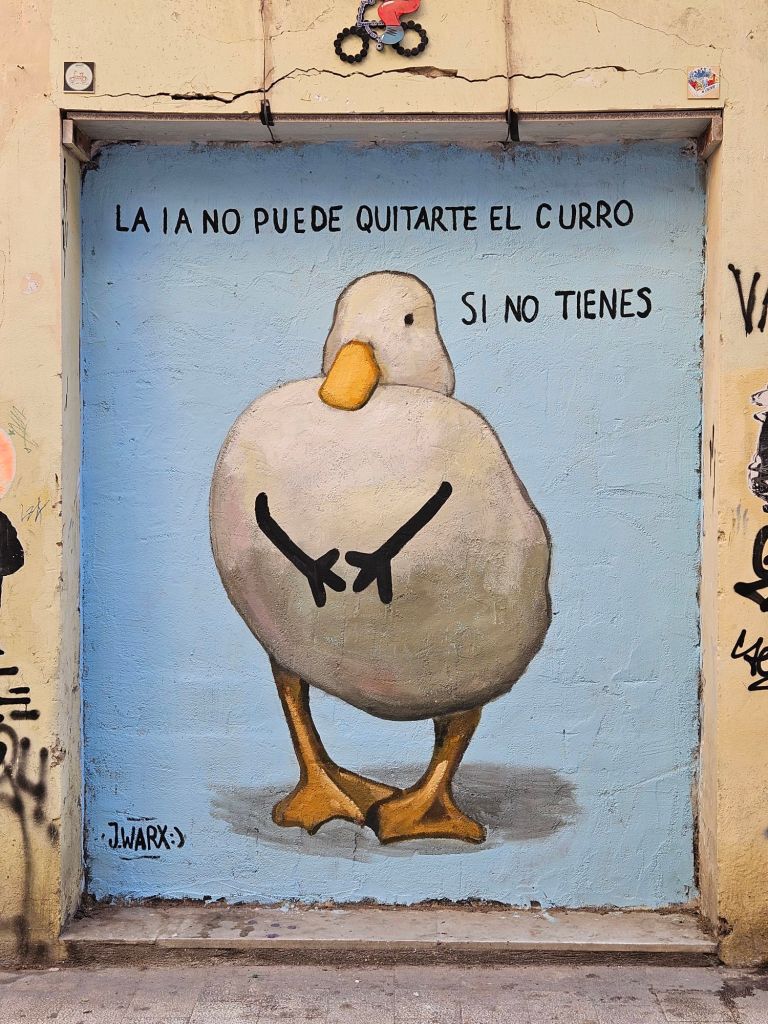
K here, adding one more below. The slogan reads AI cannot take your job if you don’t have one.
¡Haz tus deberes! (Hacer = to do, en el imperativo afirmativo = haz; deberes = homework)
Some years ago, Declan wrote a blog post in Vietnam describing a meal that pushed him to toss his cookies. After detailing some of the flavors, he added “and then my stomach said, too much information.”
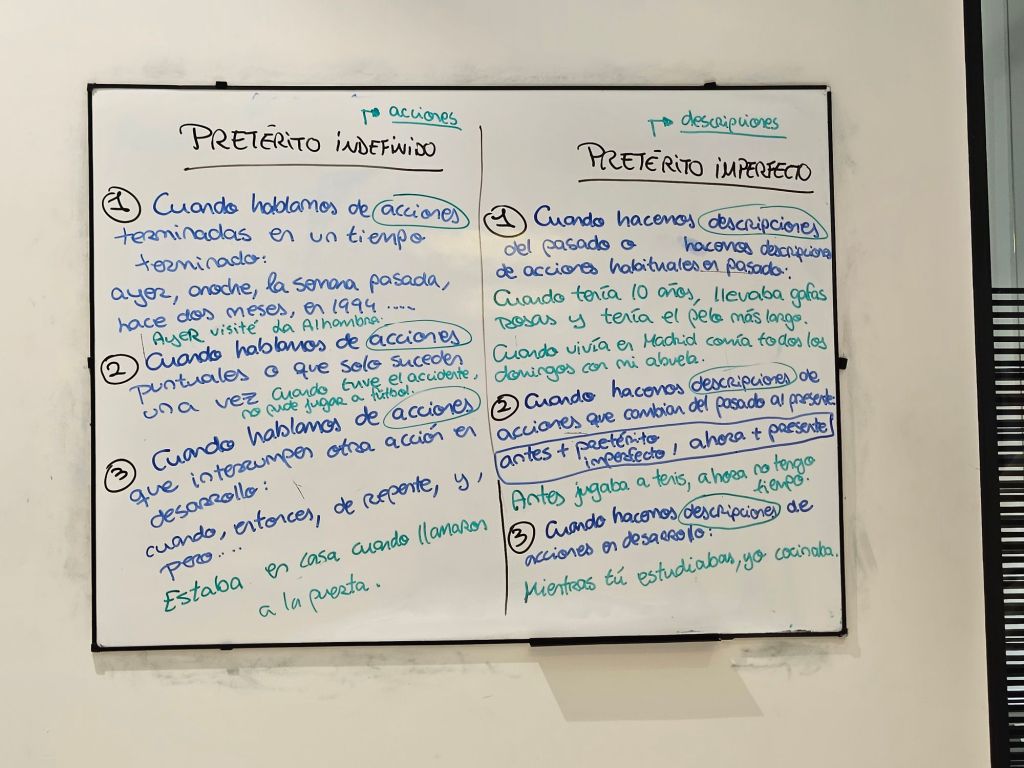
I’m not sure what the mental equivalent of cookie tossing is, but I have definitely reached the “too much information” stage with school. I had just started to think that maybe I was making a bit of progress with the preterito imperativo vs the preterito indefindo, when our teachers merrily moved on to imperatives (both affirmative and negative)(which are, of course, conjugated differently from each other and have a ton of irregularities), and direct and indirect object pronouns.
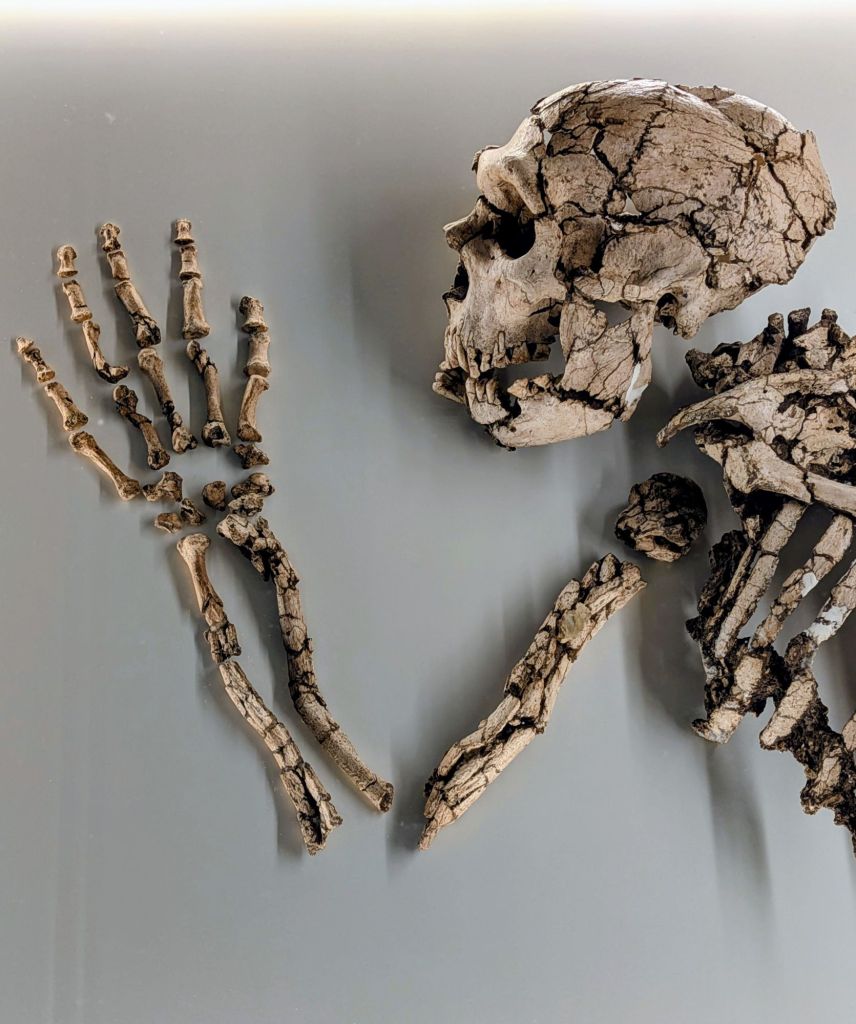
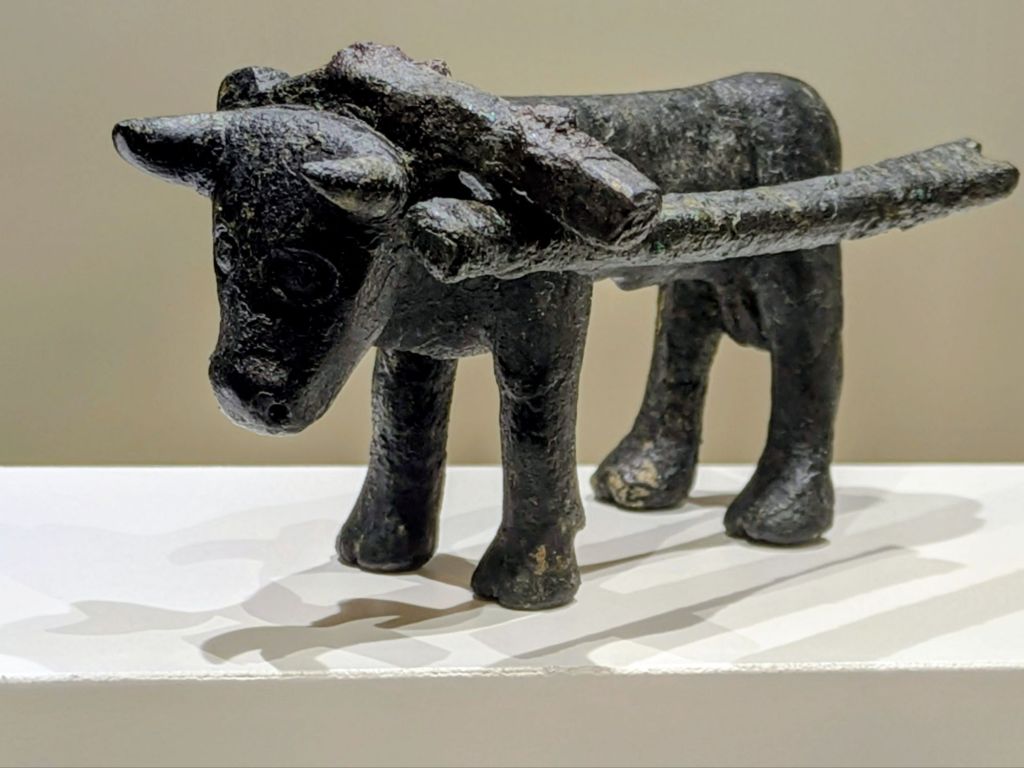
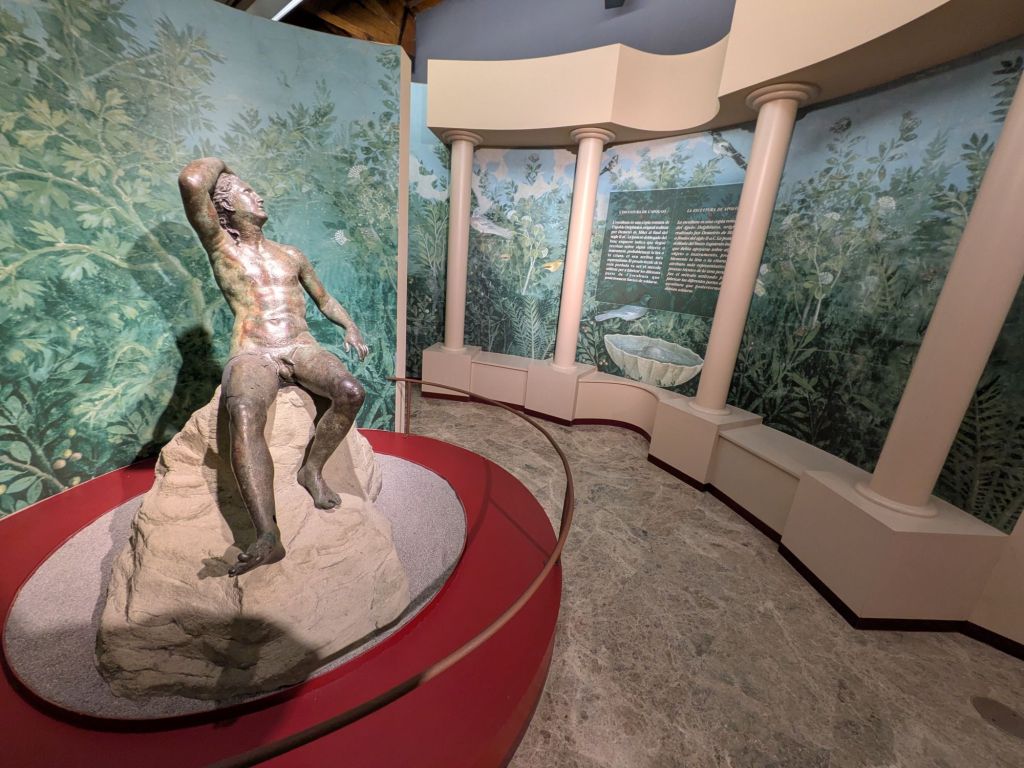
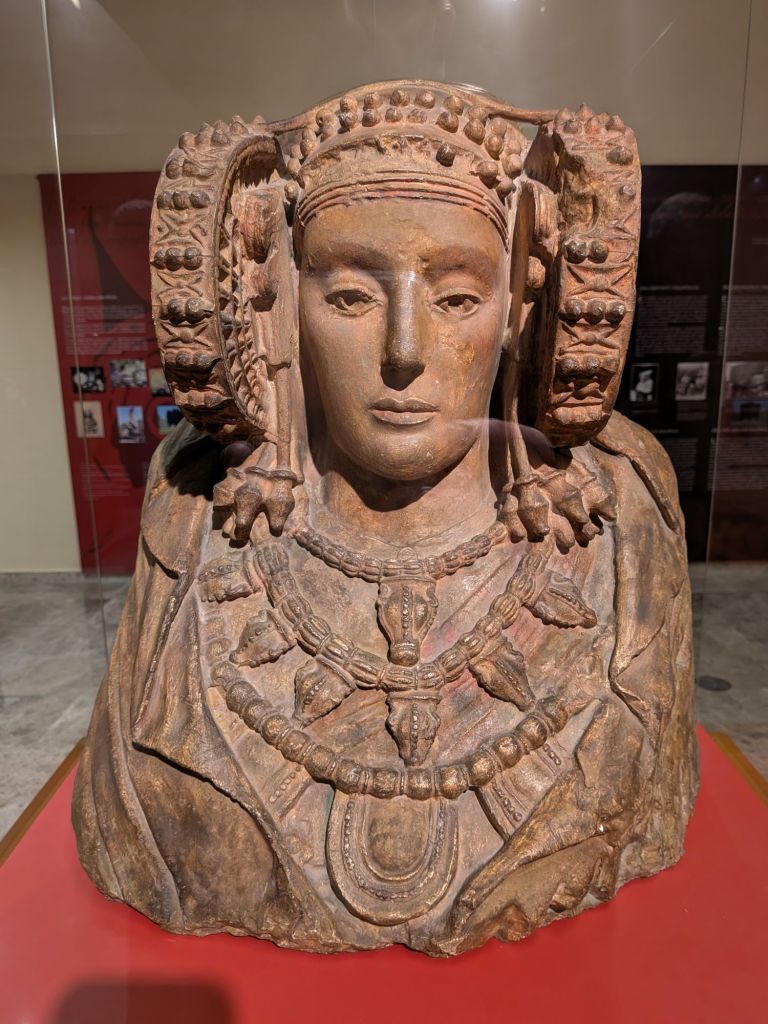
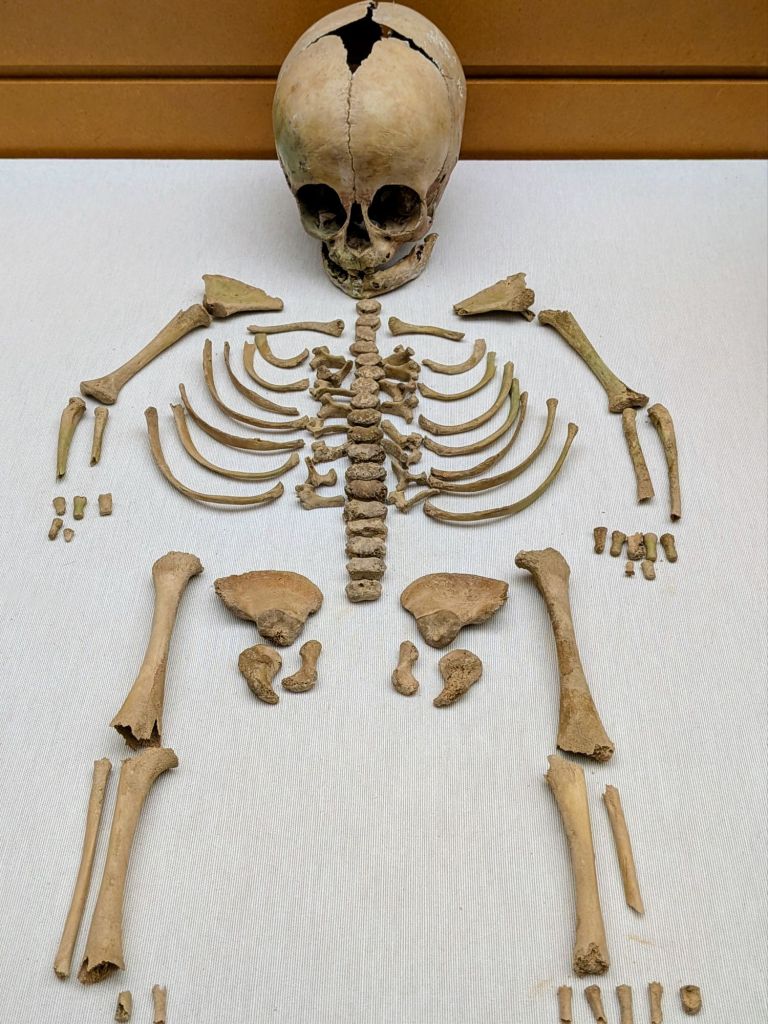
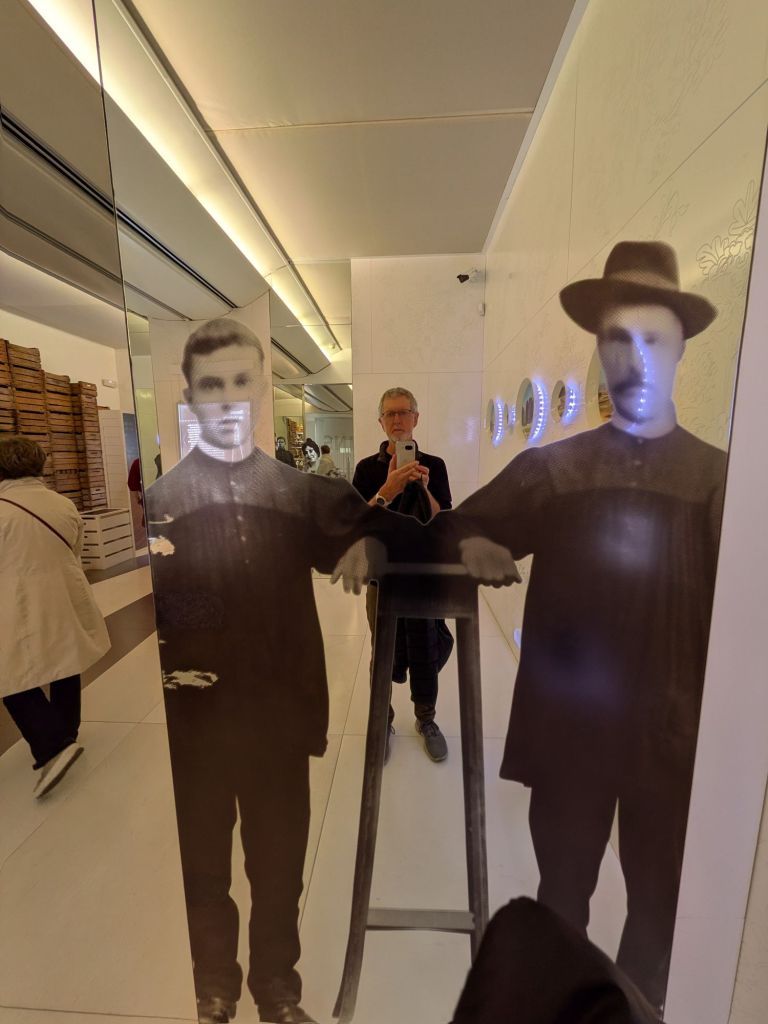
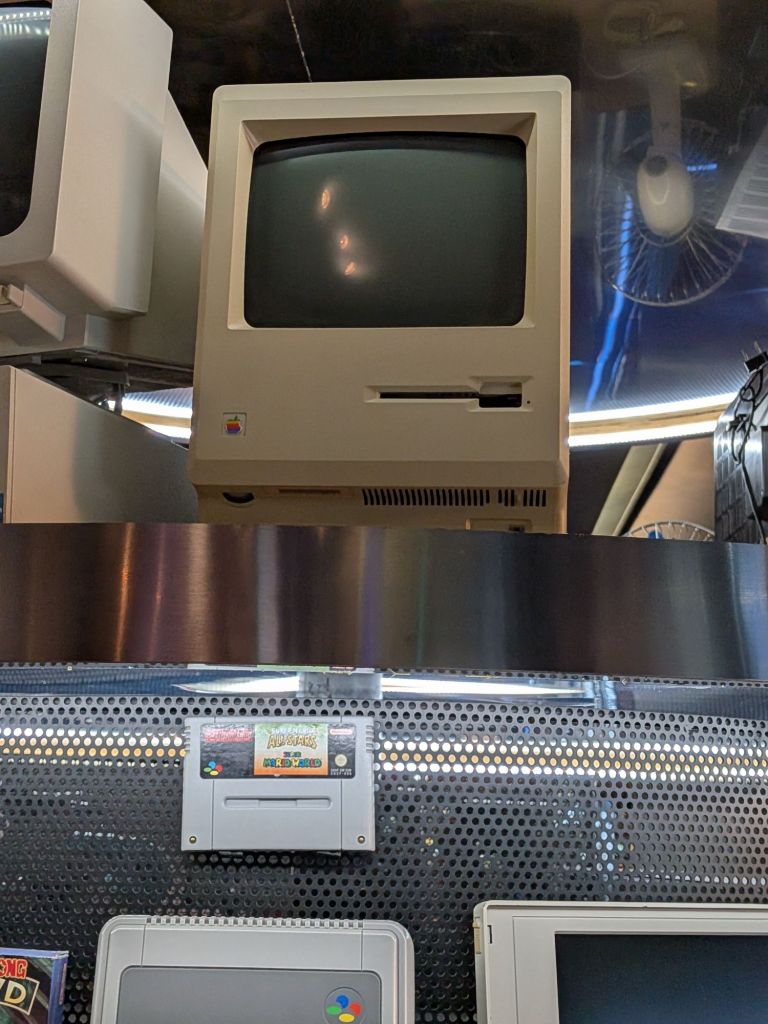
K wanted a walk and reading time; I joined a teacher and a handful of other students for a quick tour of this massive and impressive museum, which ranges from Neanderthal remains and bronze age figurines –
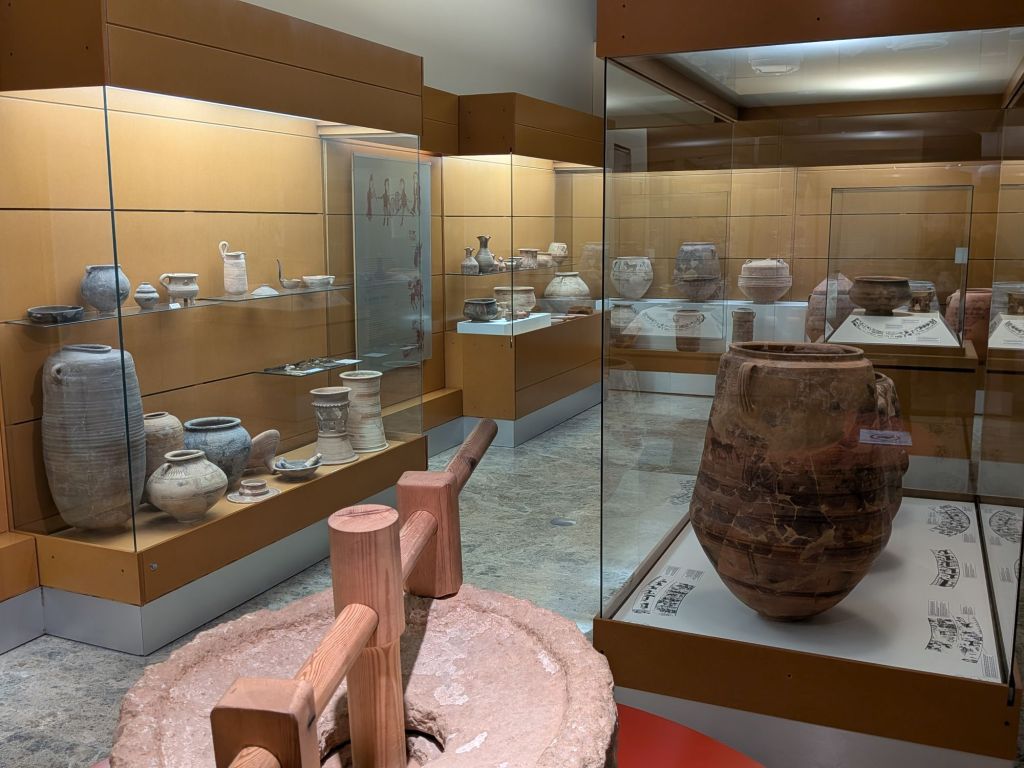
through Punic and Roman artefacts by the hectare –
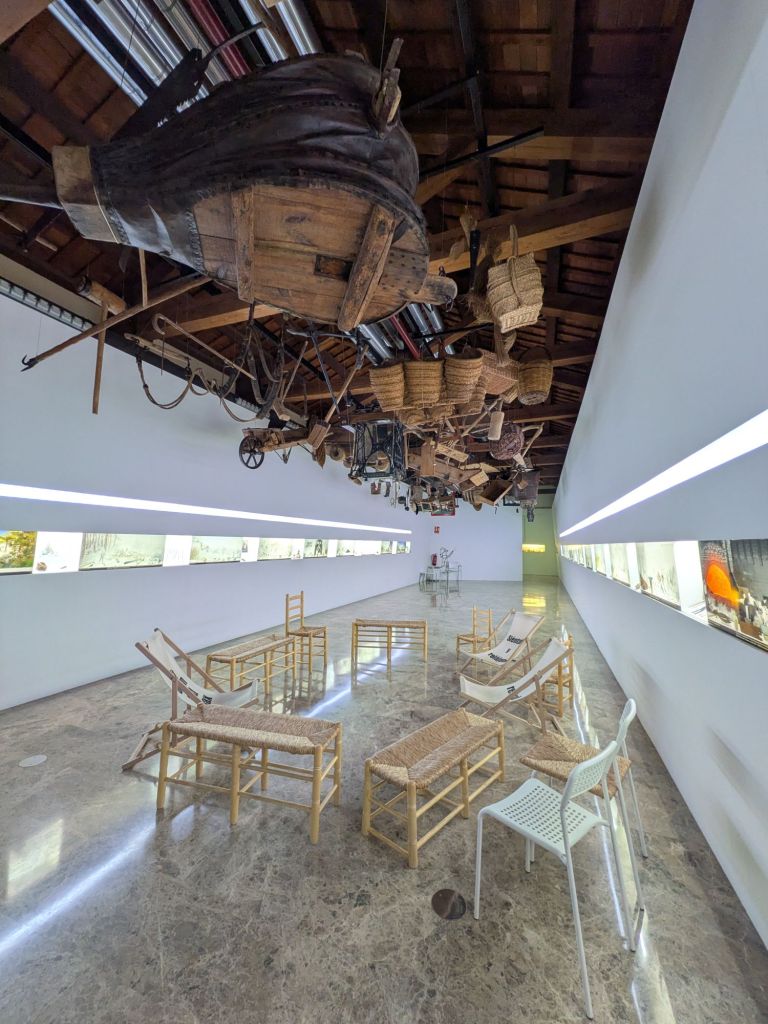
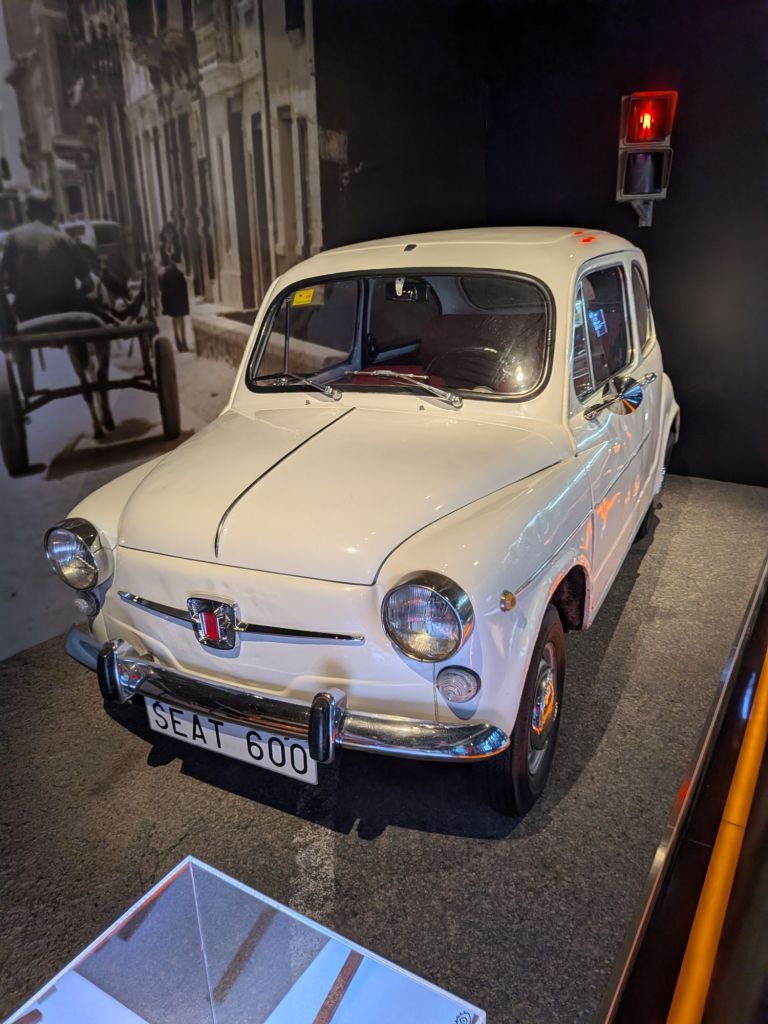
to recent Valencian social and agricultural history –
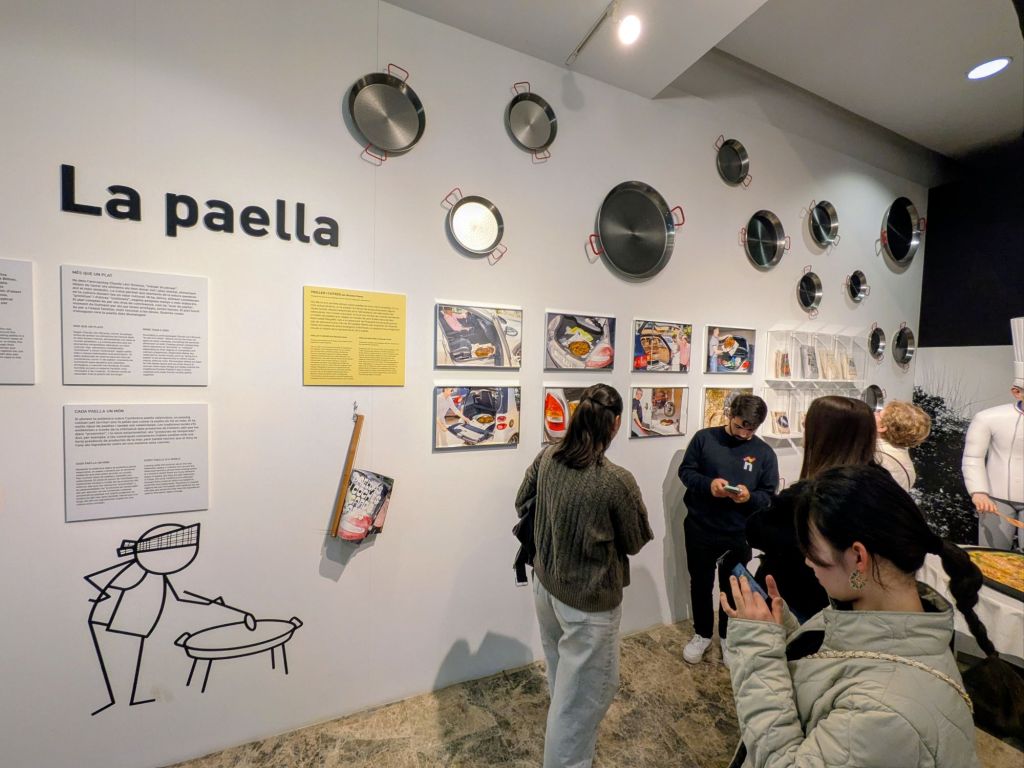
and crucial food history –
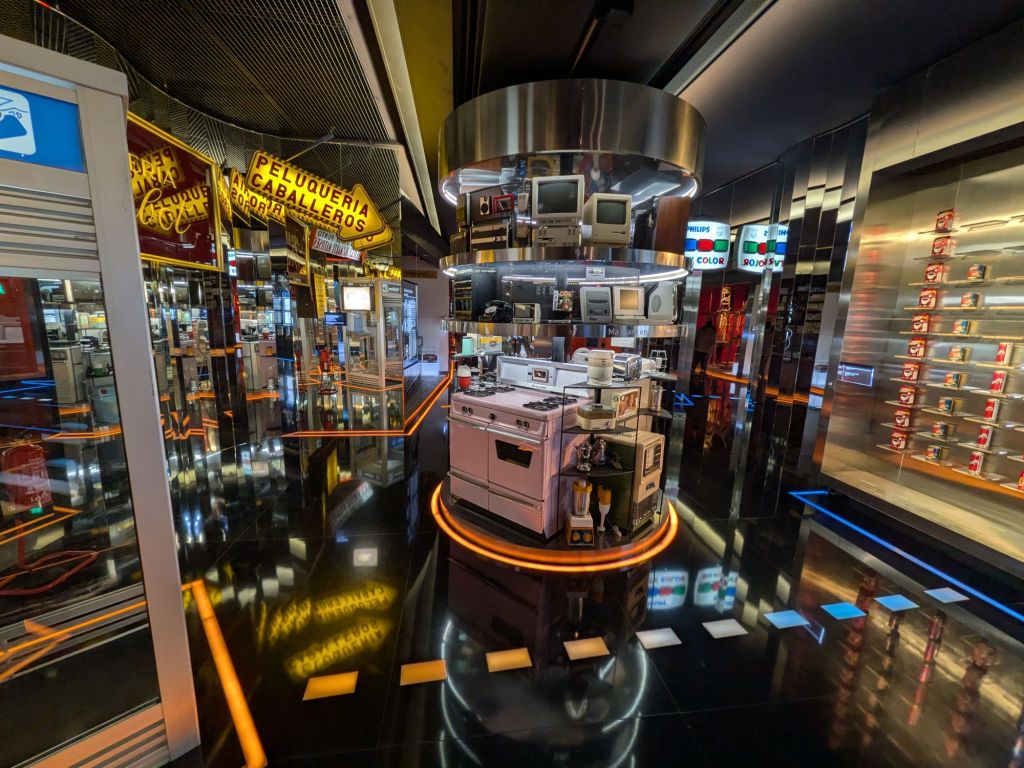
to everything modern imaginable:
Overwhelming – I must try to get back to the Prehistoric- to- Roman part and try to do it at less of a jog.
I managed to confirm (in Spanish, ish) that a paella is the pan itself, “porque paella está la palabra Valenciano para sarten” – “because paella is pan in Valenciano.”
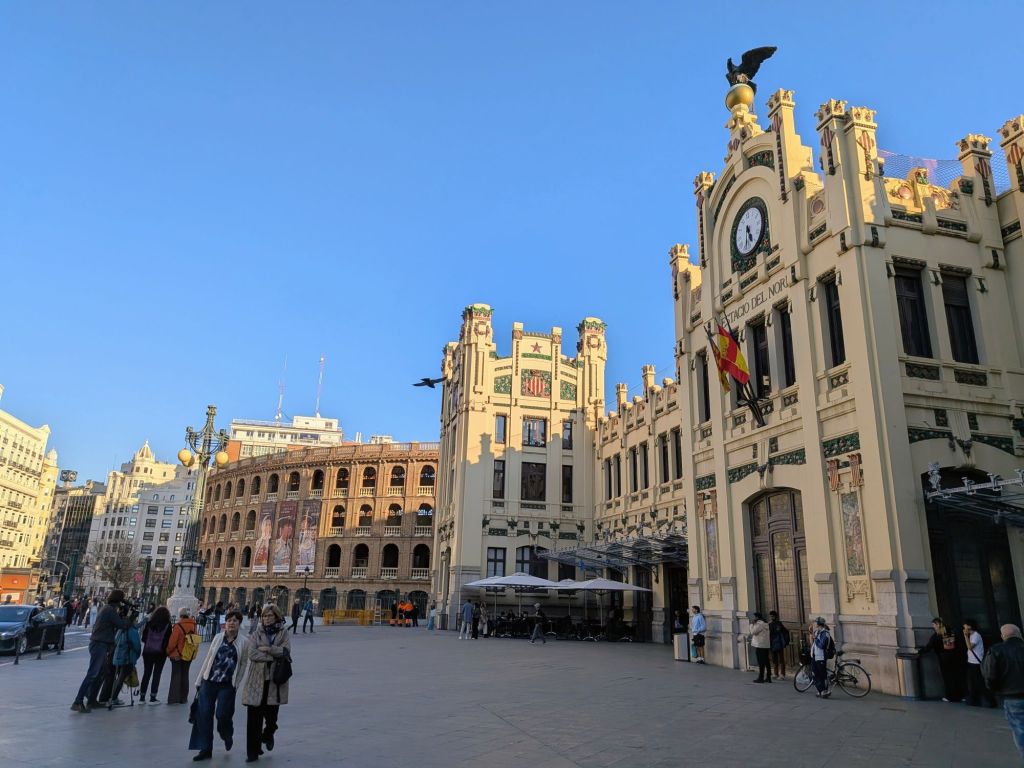
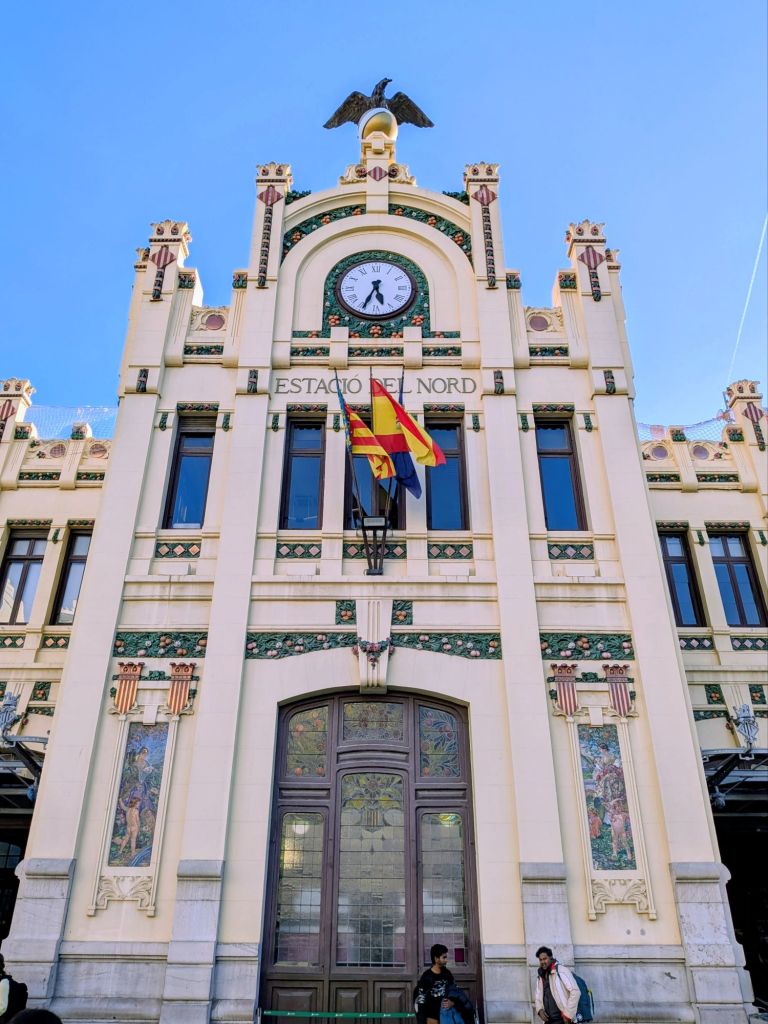
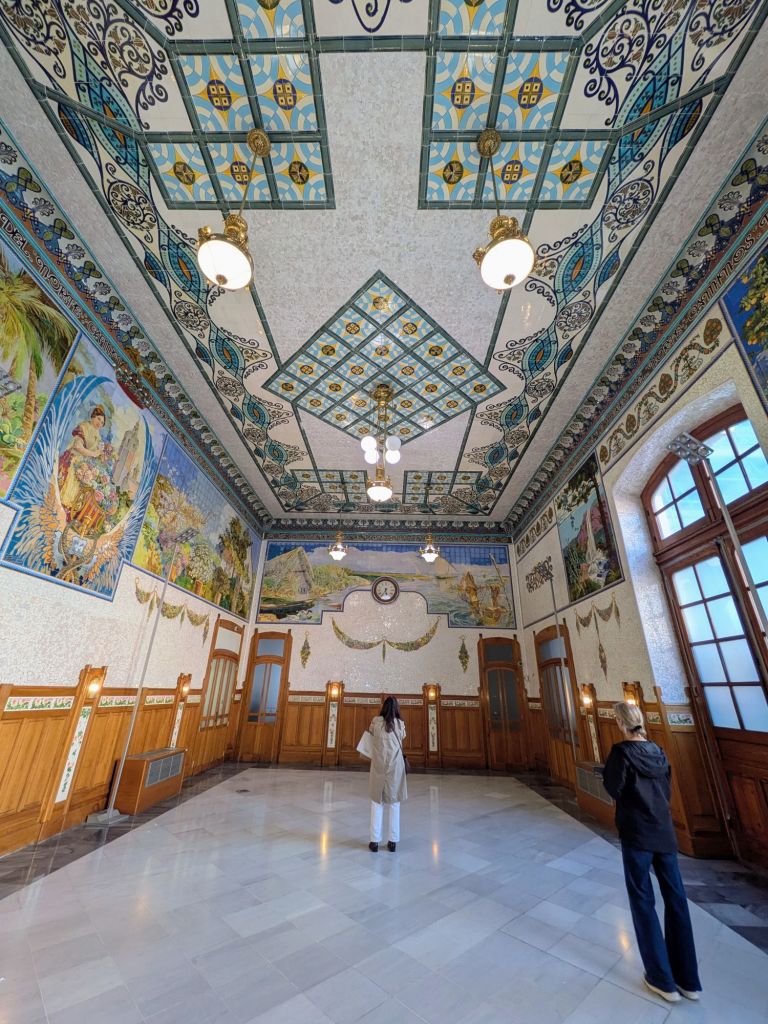
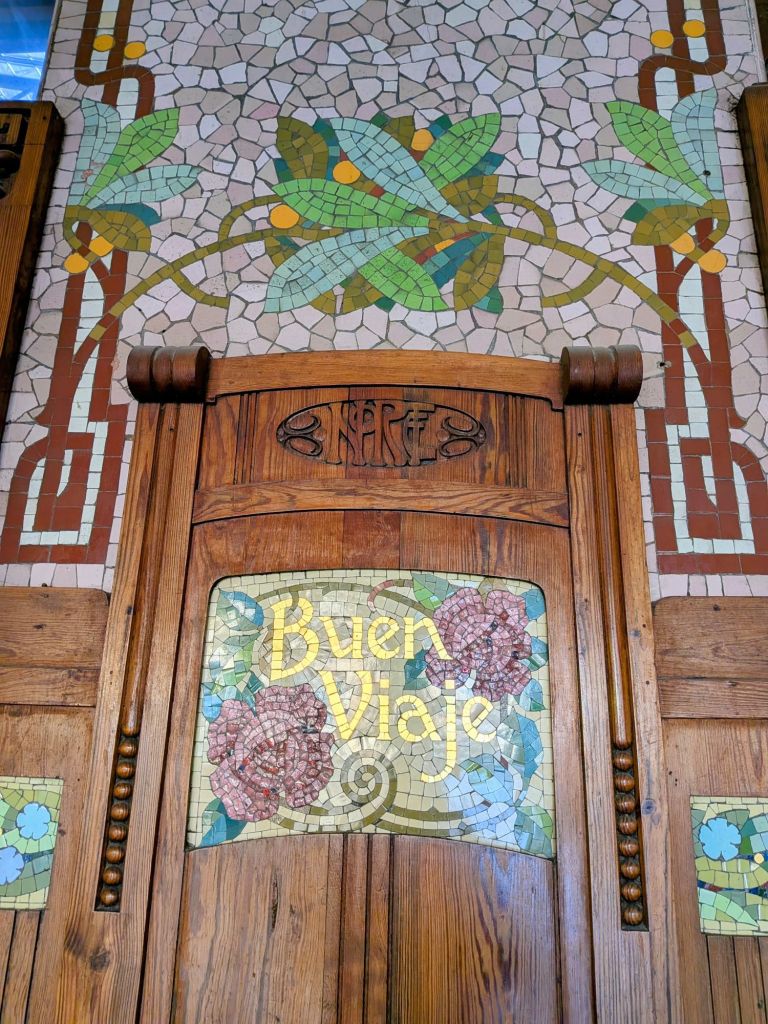
Beautiful Art Deco Estació del Nord, next to the bullring:
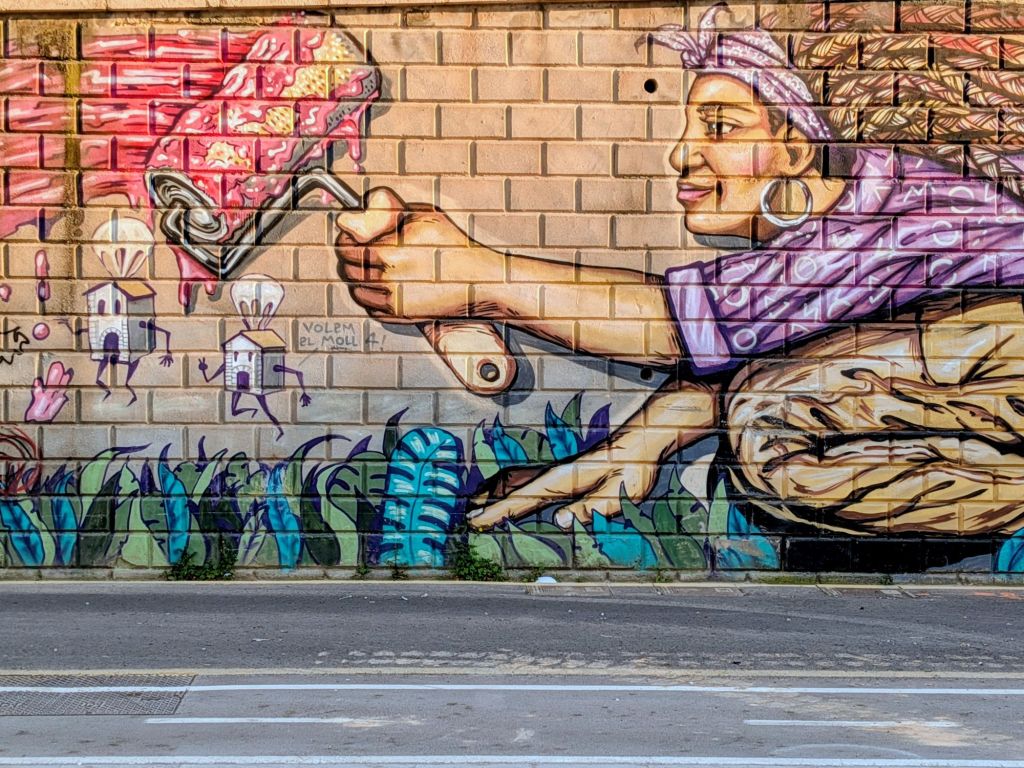
and more fun street art:
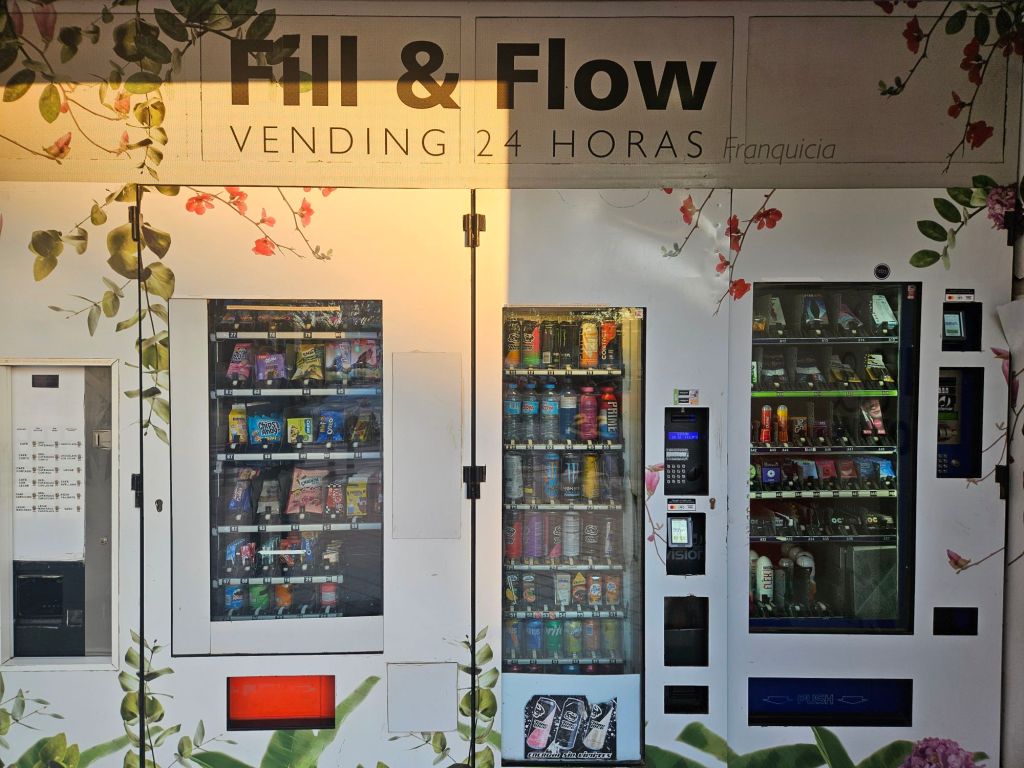
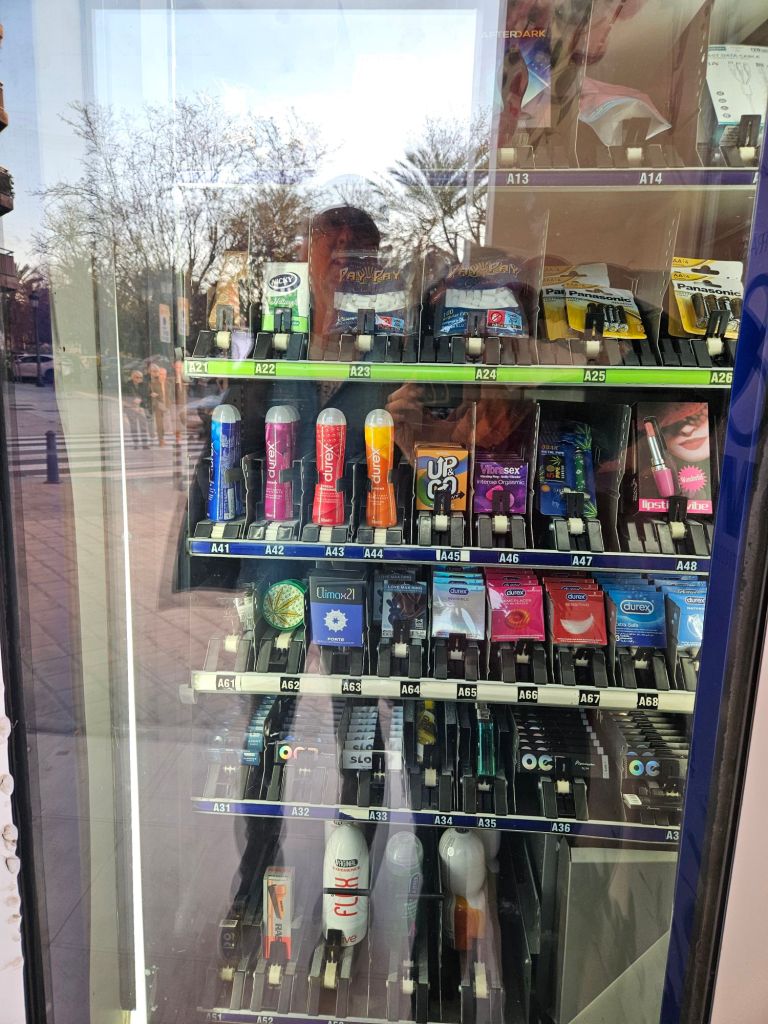
Plus, vending machines. We’ve seen several little “shops” which are in fact collections of vending machines open 24 hours a day selling the essentials. Coffee, candy bars, chips, sodas, and … sex toys?
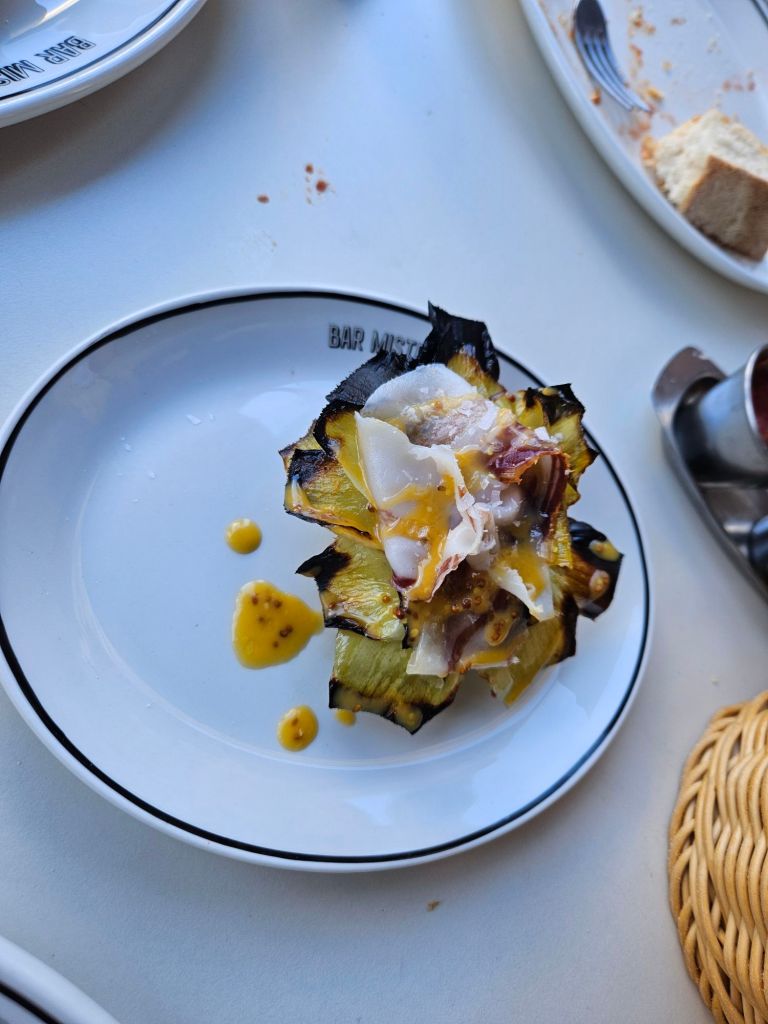
After school (giving directions and orders in Spanish – el imperativo) walked 40 minutes to a nice small restaurant well north of the Cuidad Vella (old city).
A most excellent “fleur de artichofa”
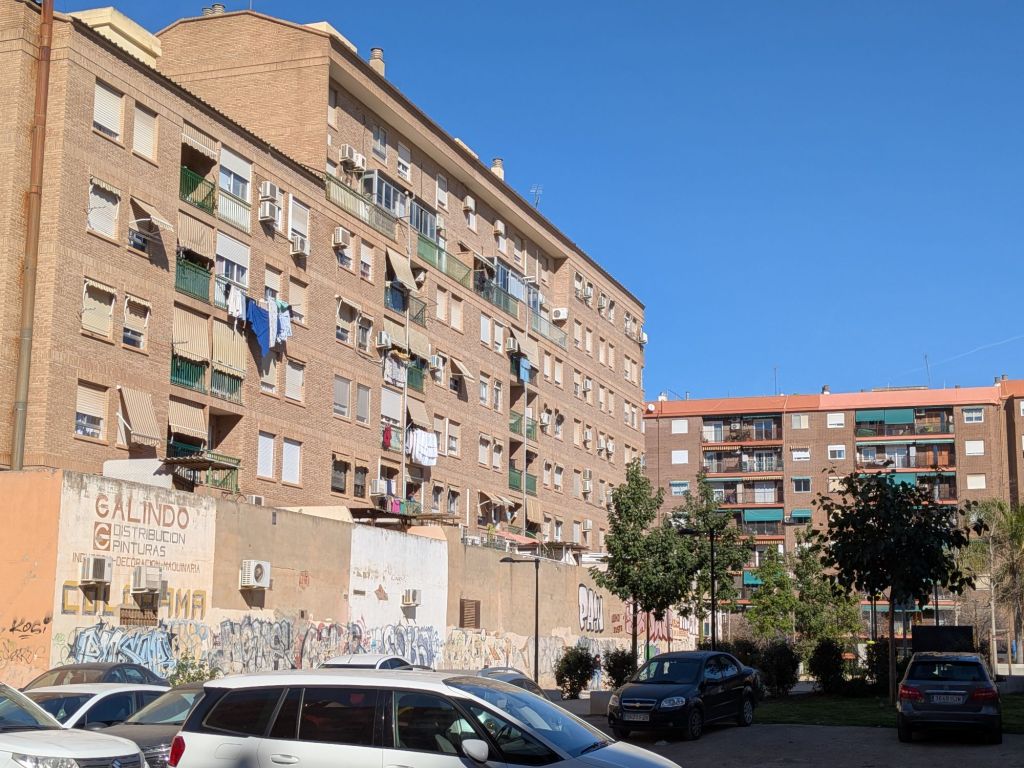
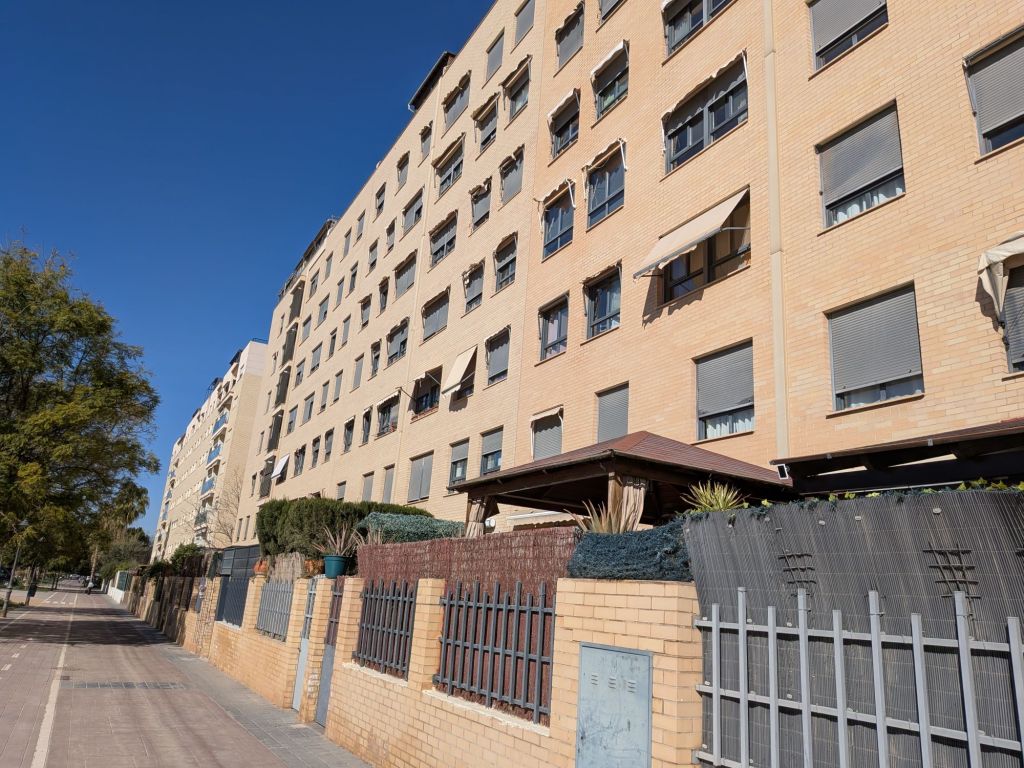
Back through the kind of neighborhood where the other 90% of Valencianos live. Not picturesque but lovely in soft warm sunshine.
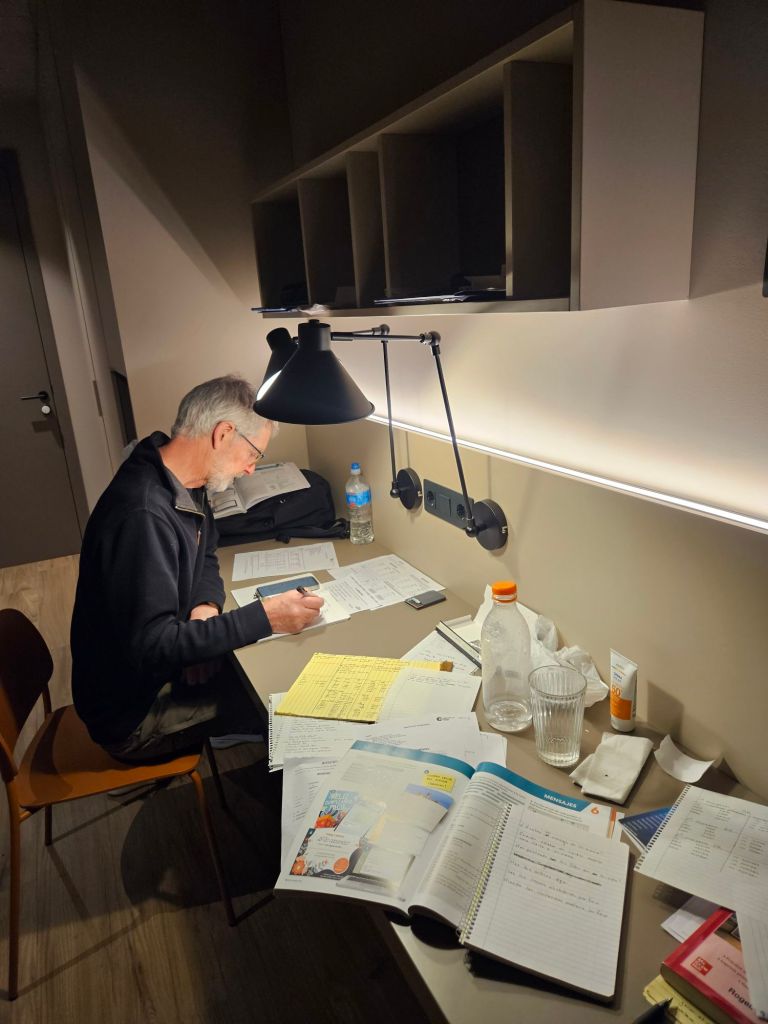
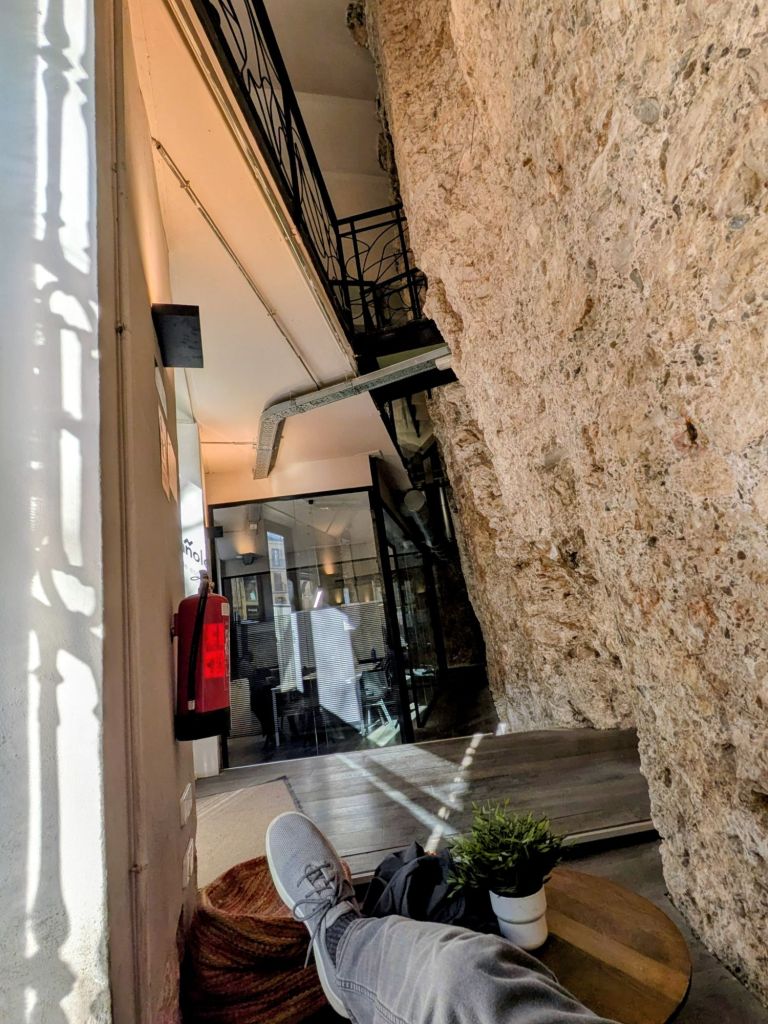
And so to a longish afternoon of homework, with me (R) hidden away in a wonderful little corner of the school – a single armchair wedged between a street scene through a 19th C window (to my left), a very 21st C glass-walled classroom (straight ahead), and (to my right) a huge section of wall built by Los Mussulmanes almost exactly 1000 years ago – 1023 I think.

 Kerry & Richard in Spain (mostly) 2026