Albarracin day 2

After our trip to see the rock art (and soak in the silence and fresh air) we returned to town for an afternoon of exploration. We refueled first with a shared bocadillo (sandwich) of tortilla and bacon. (Tortilla here is a 1 inch thick “omelet” of potato with just enough egg to hold it together. Carb on carb–R very happy.)

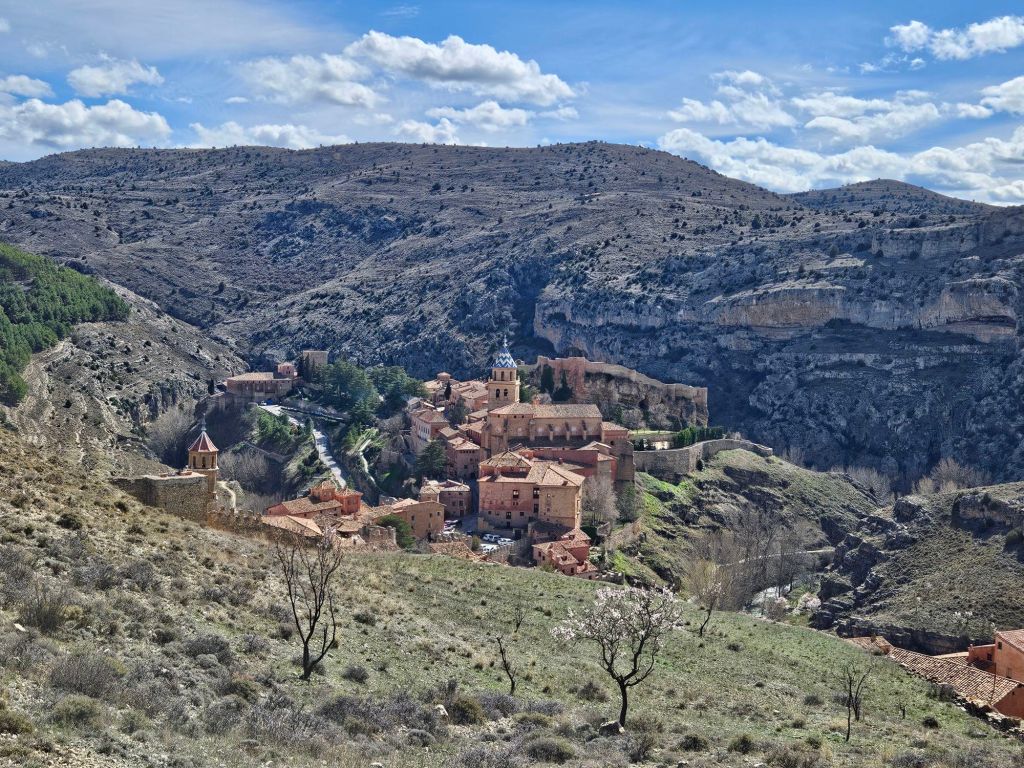
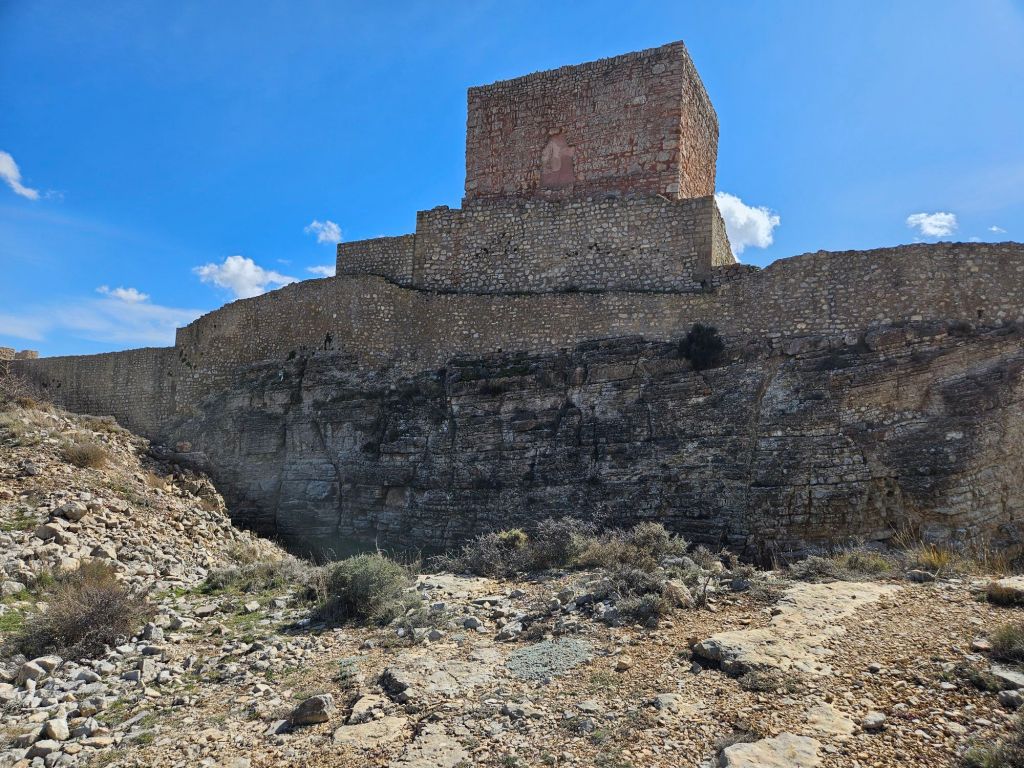
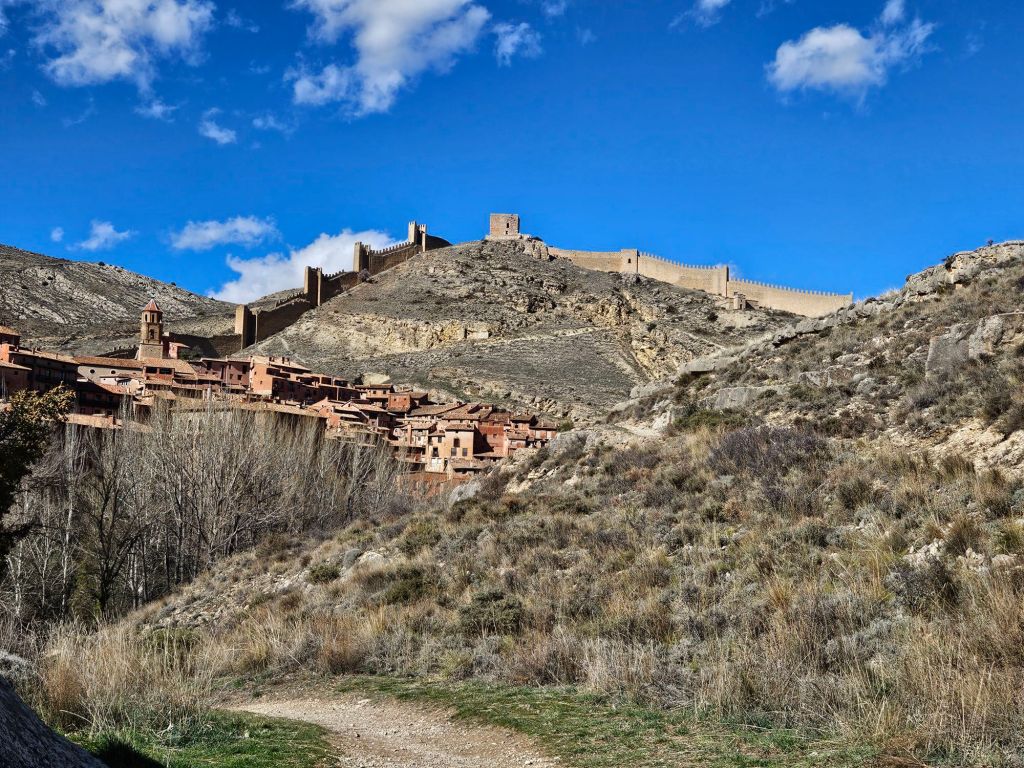
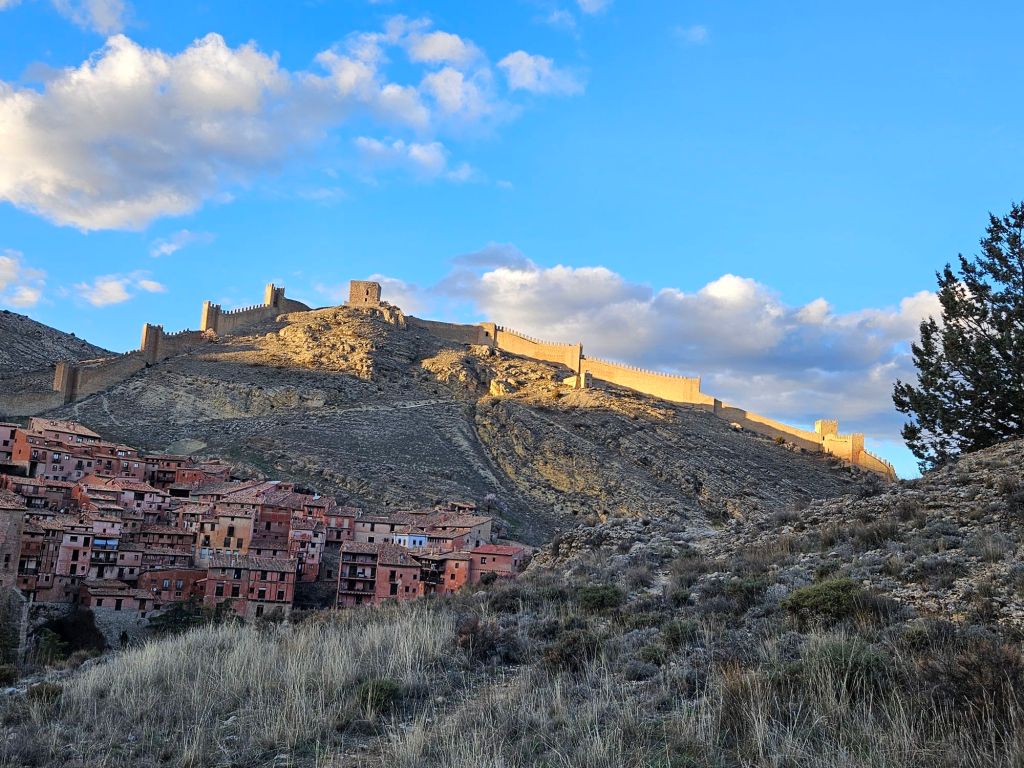
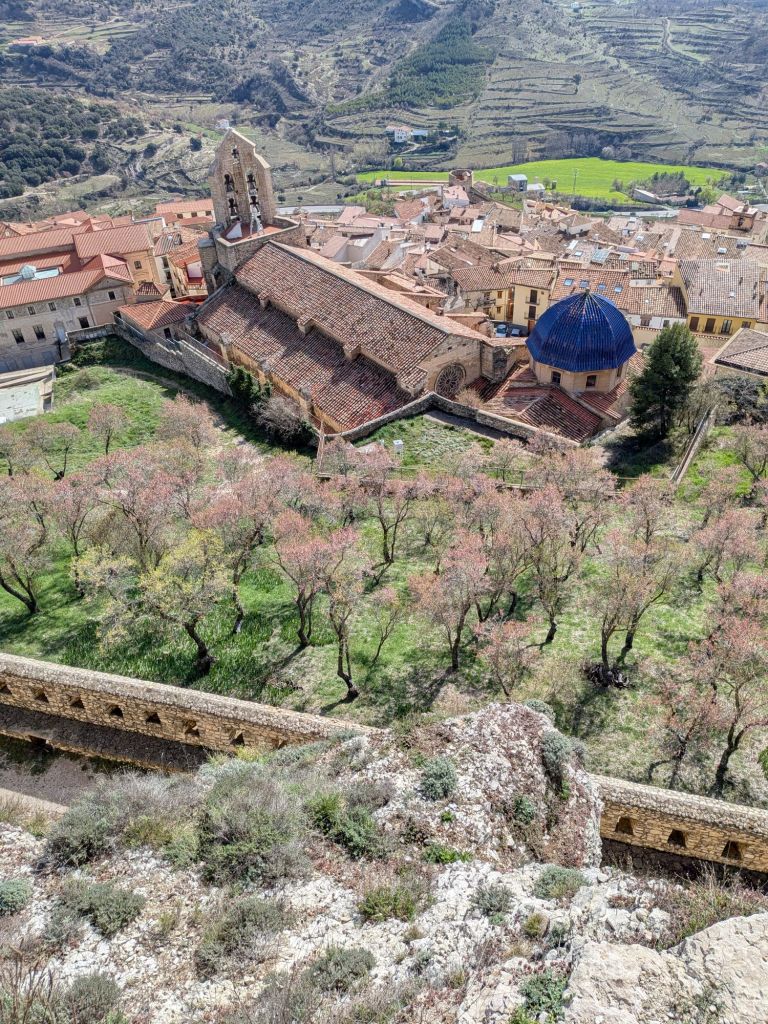
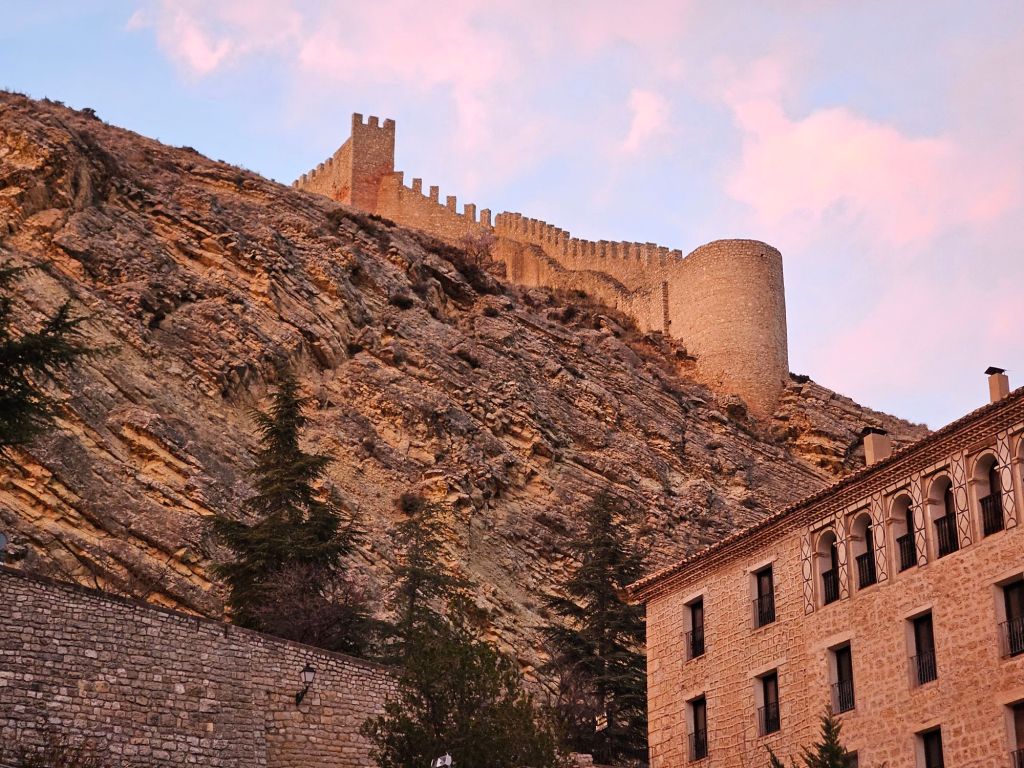
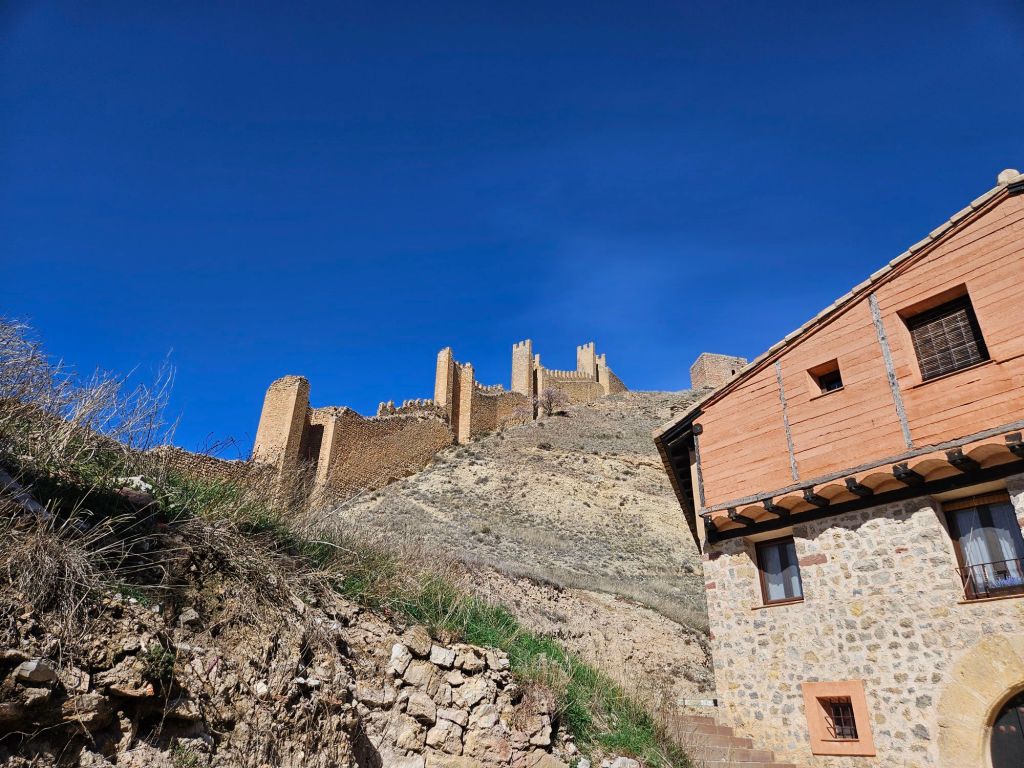
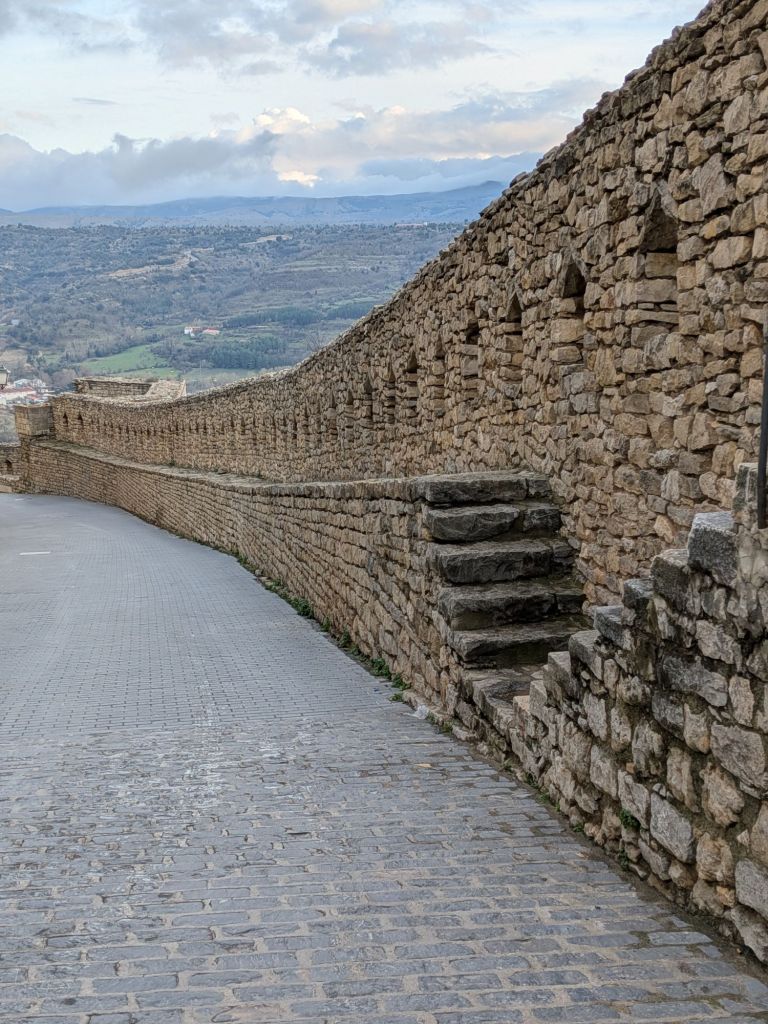
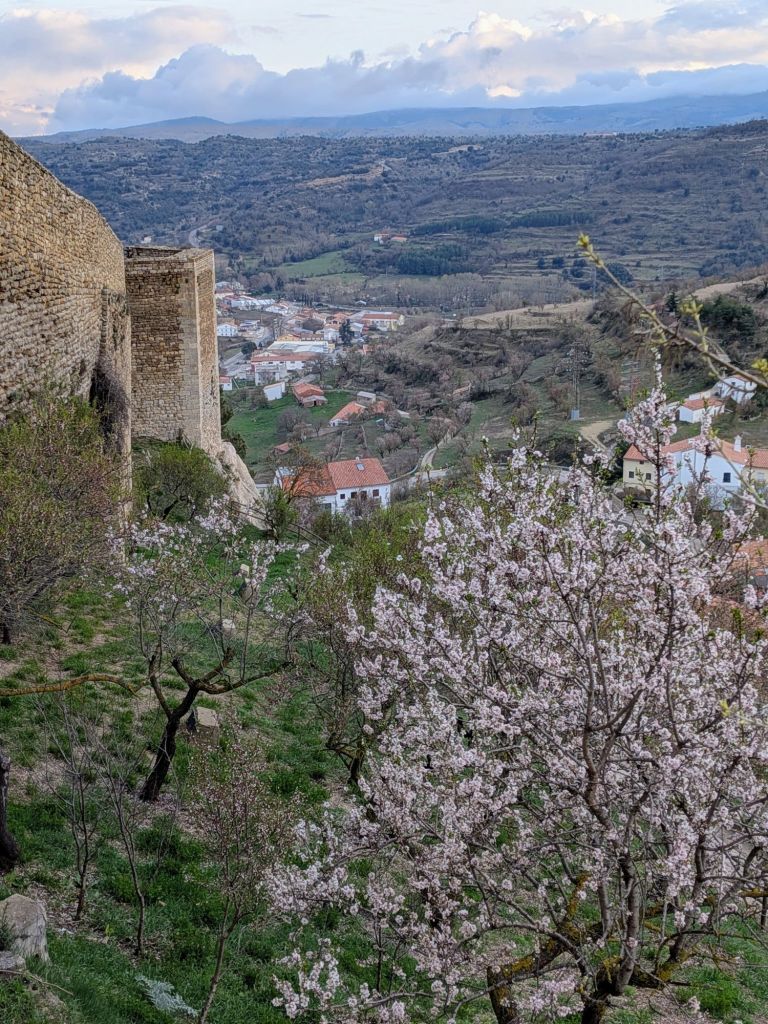
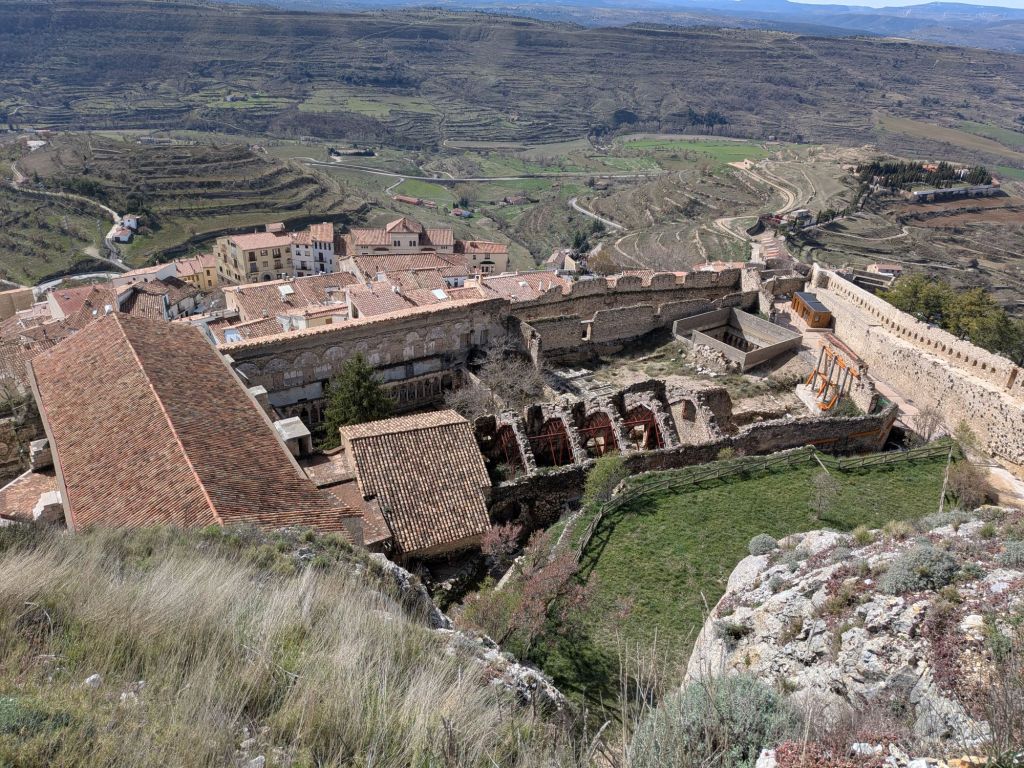
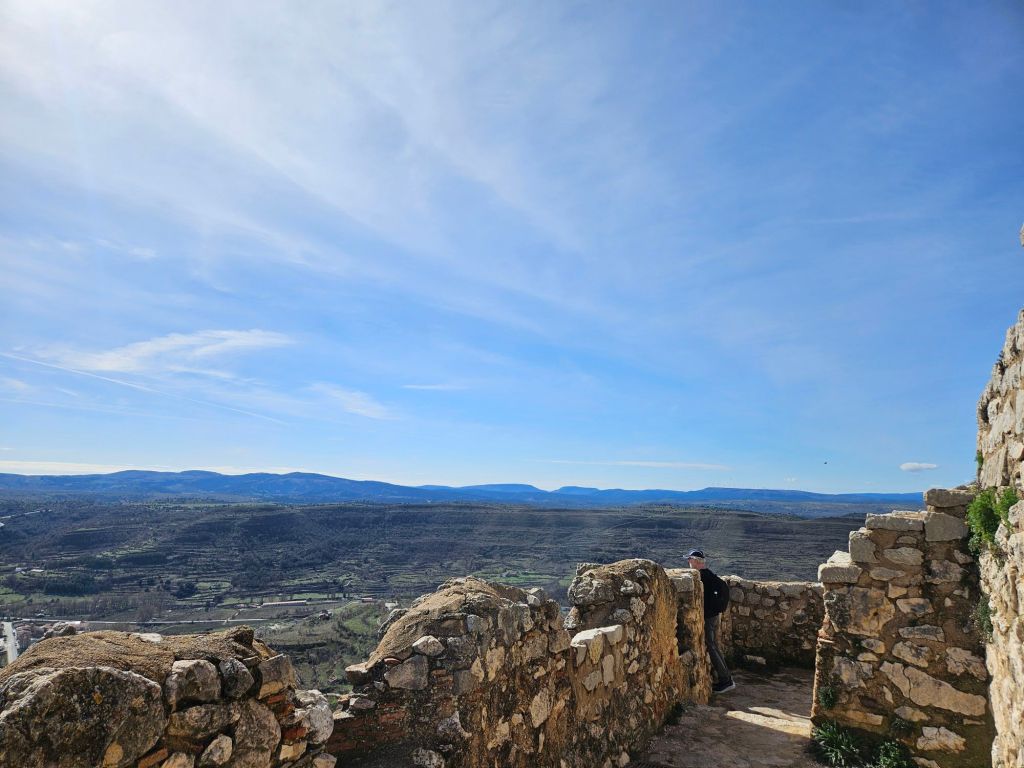
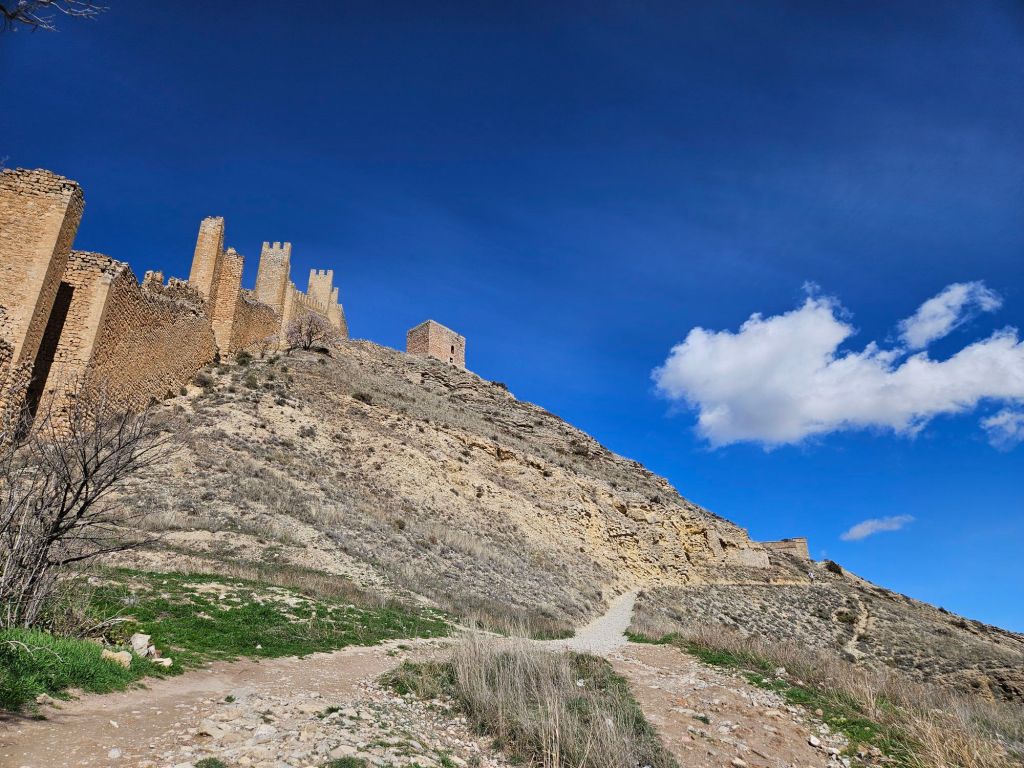
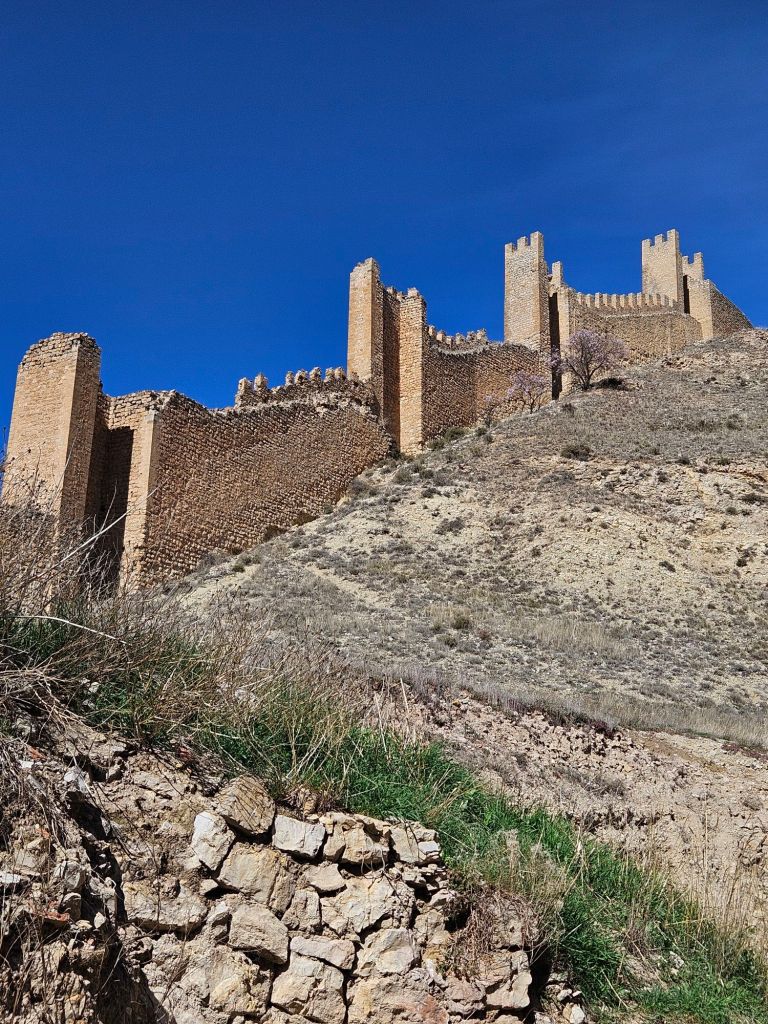
Then, yes, up the stairs to the climb all the way to the top of the walls. Incredible views, impressive construction, and a few sketchy steep paths that had me retracing my steps while R continued exploring.
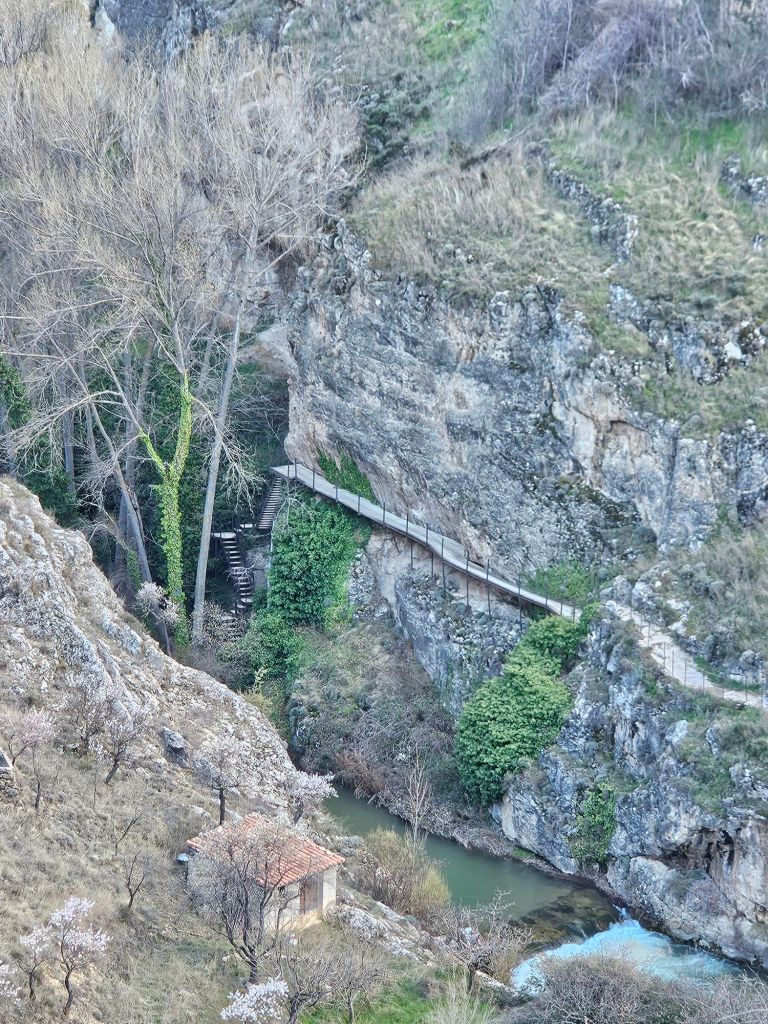
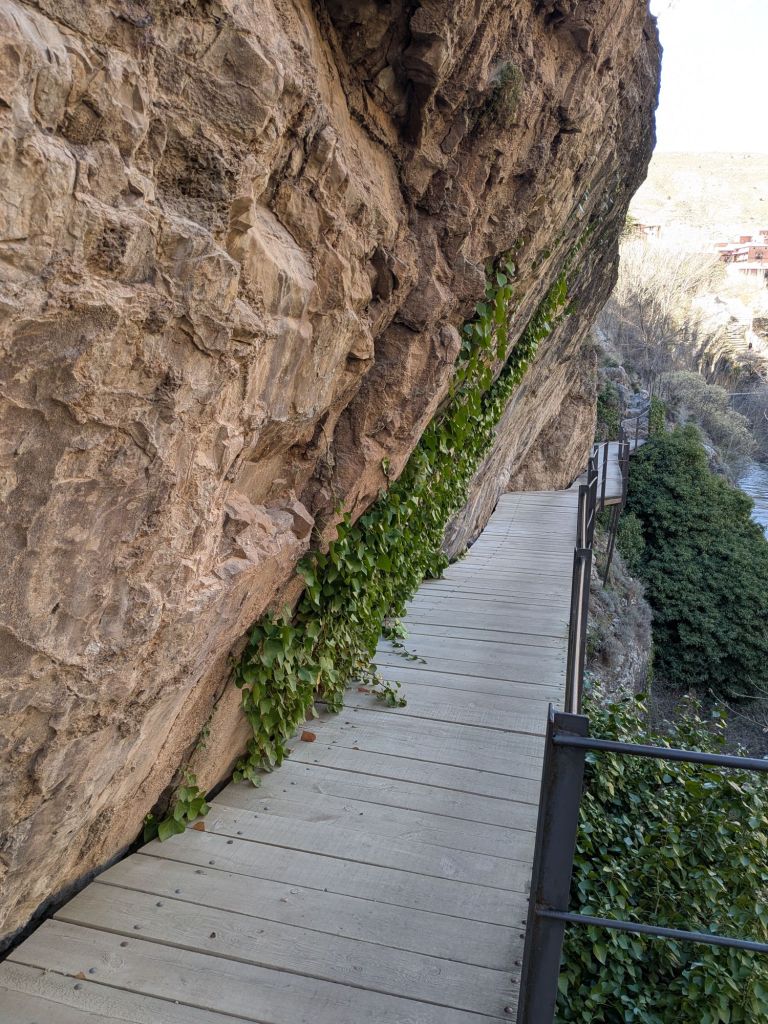
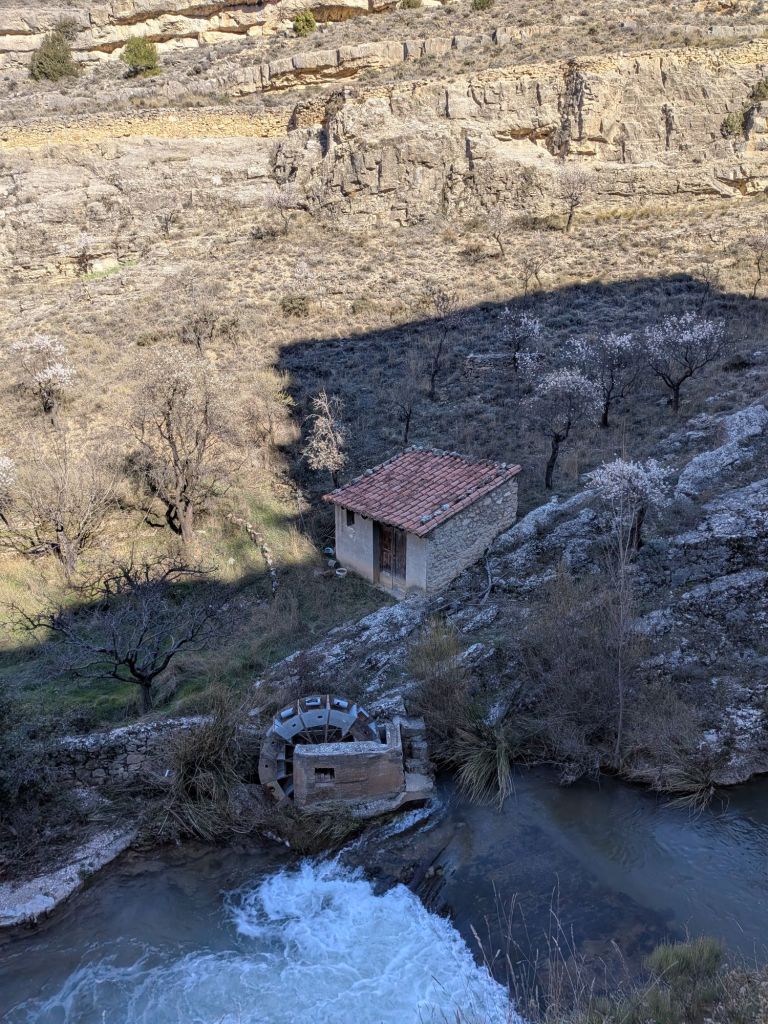
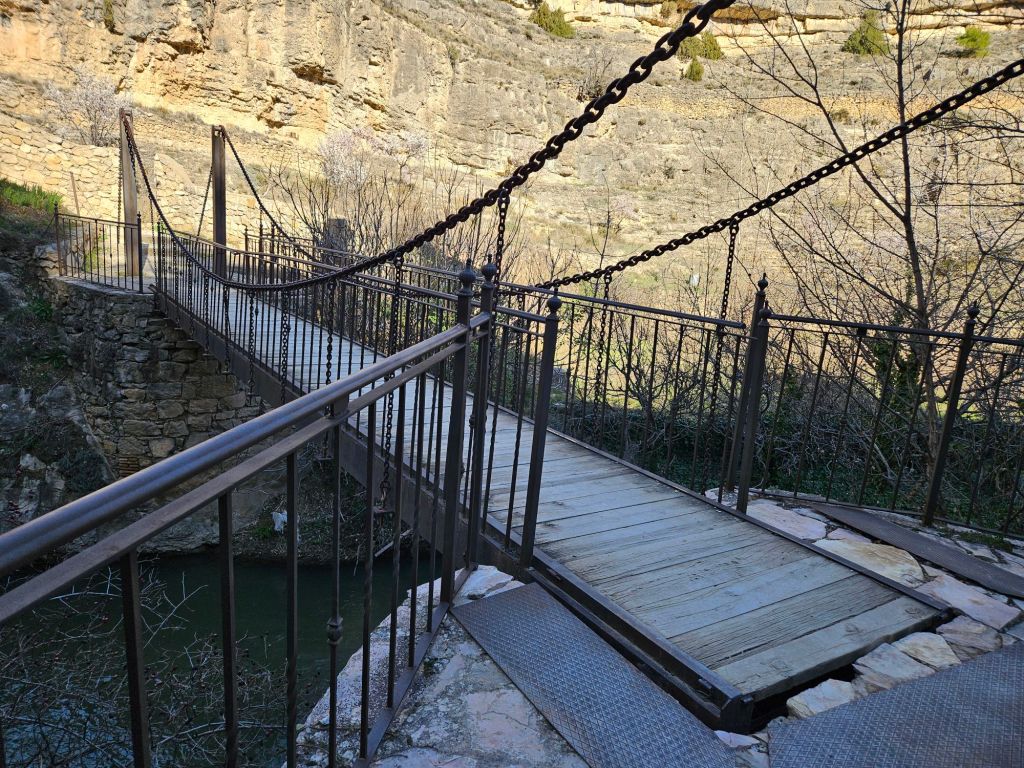
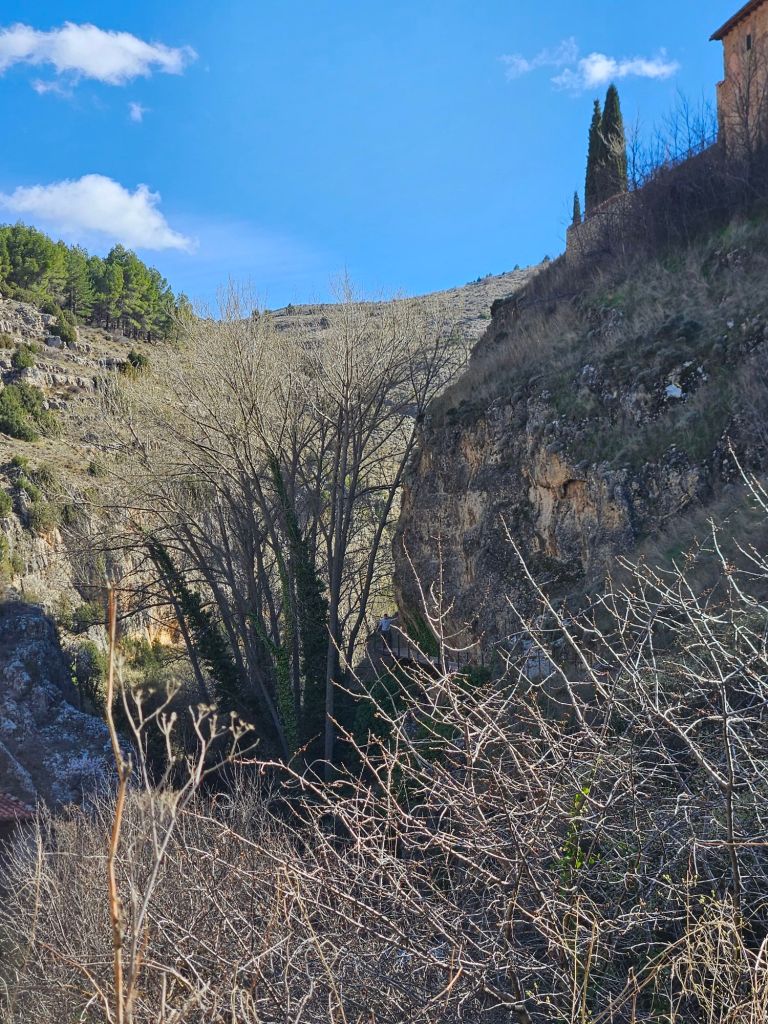
Down again to the river walk. Beautiful, but yet more sketchy paths. Enjoyed my time on a sunny rock while R continued on, around the base of the town, then up and over from the other side.
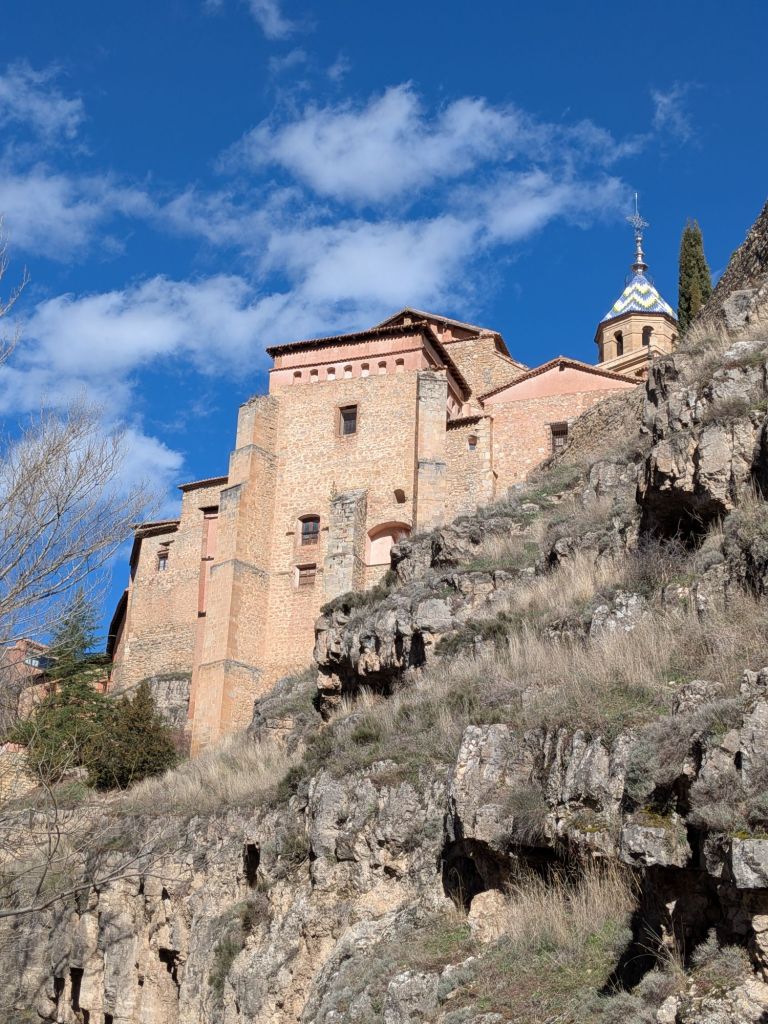
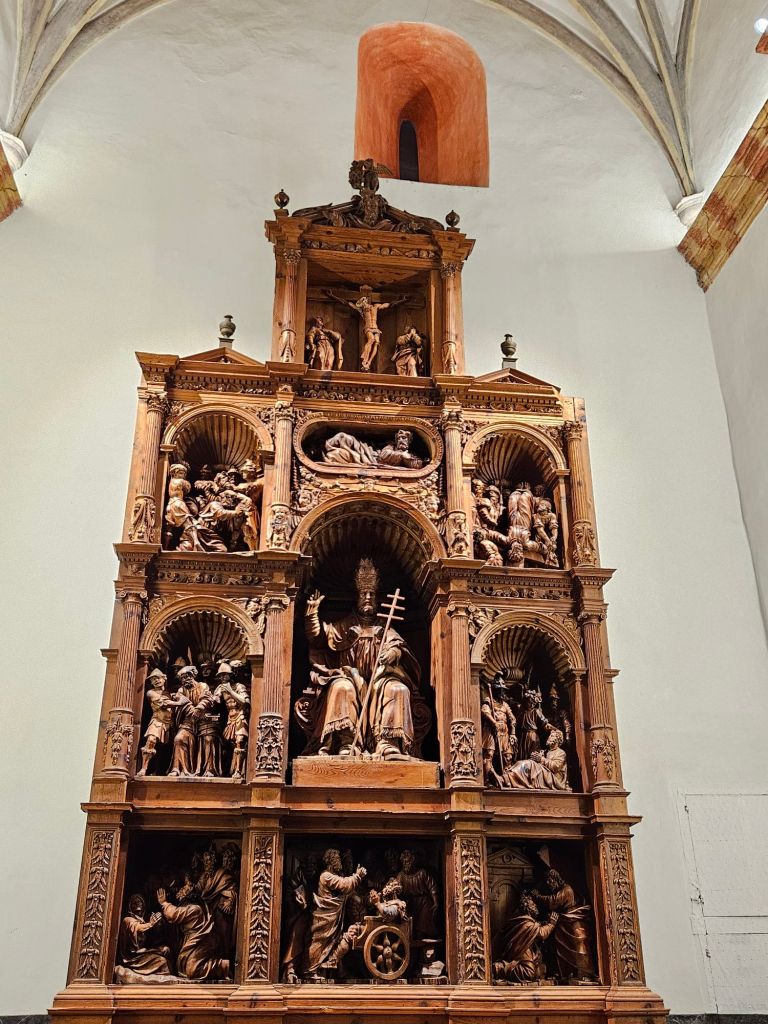
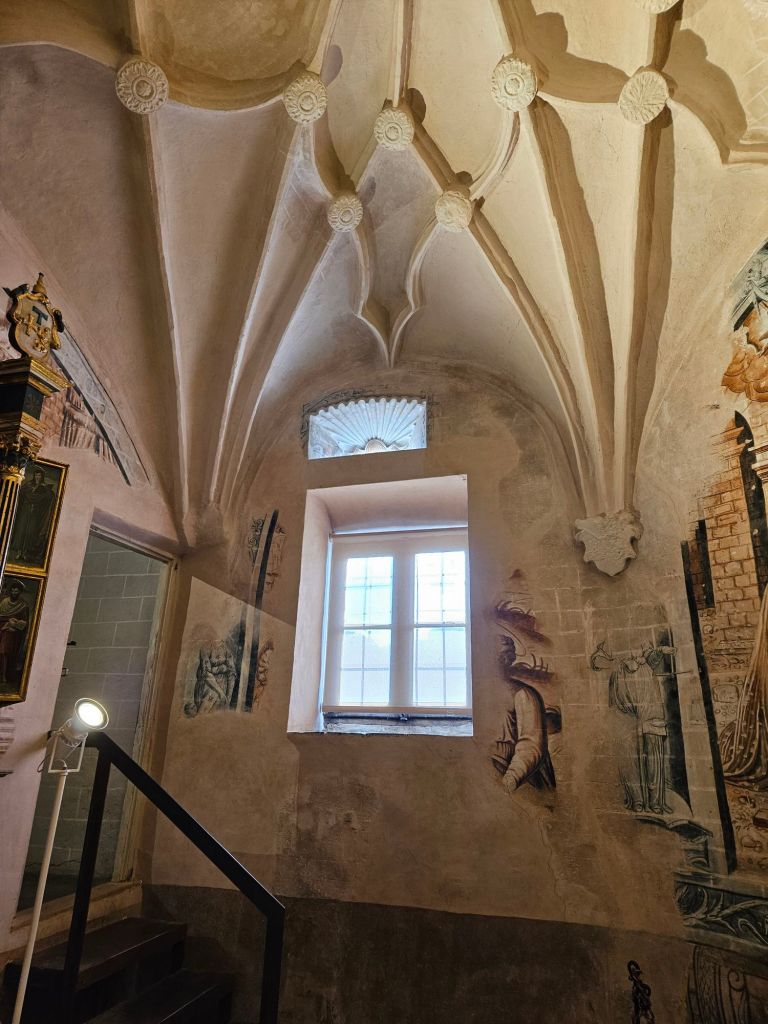
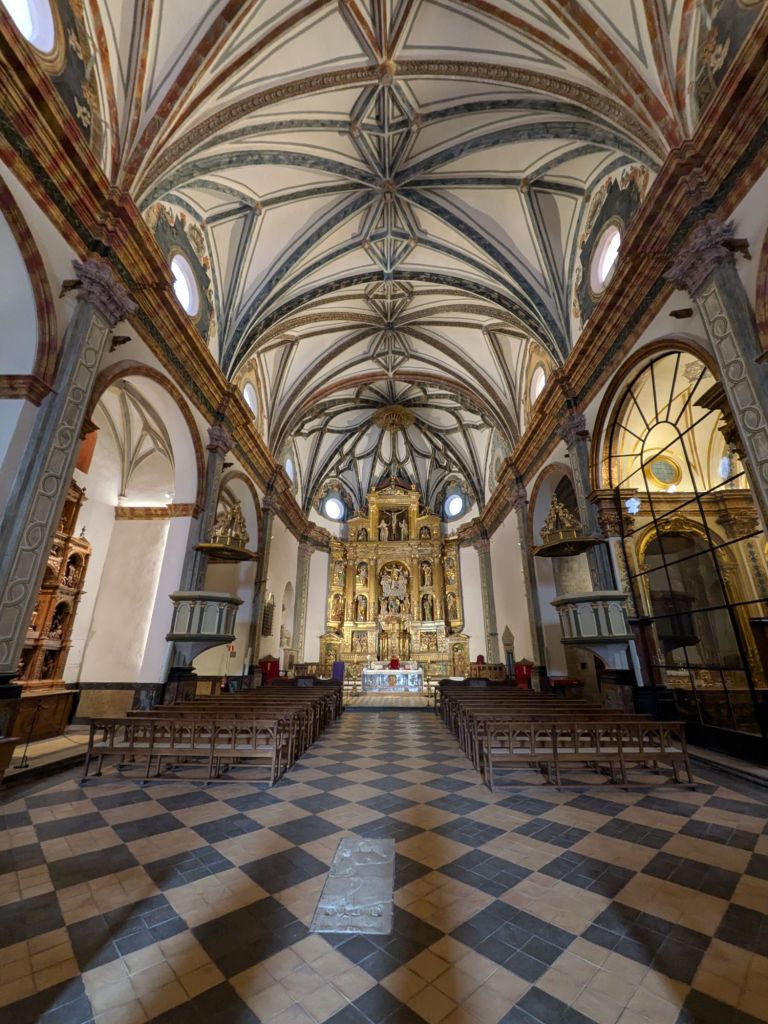
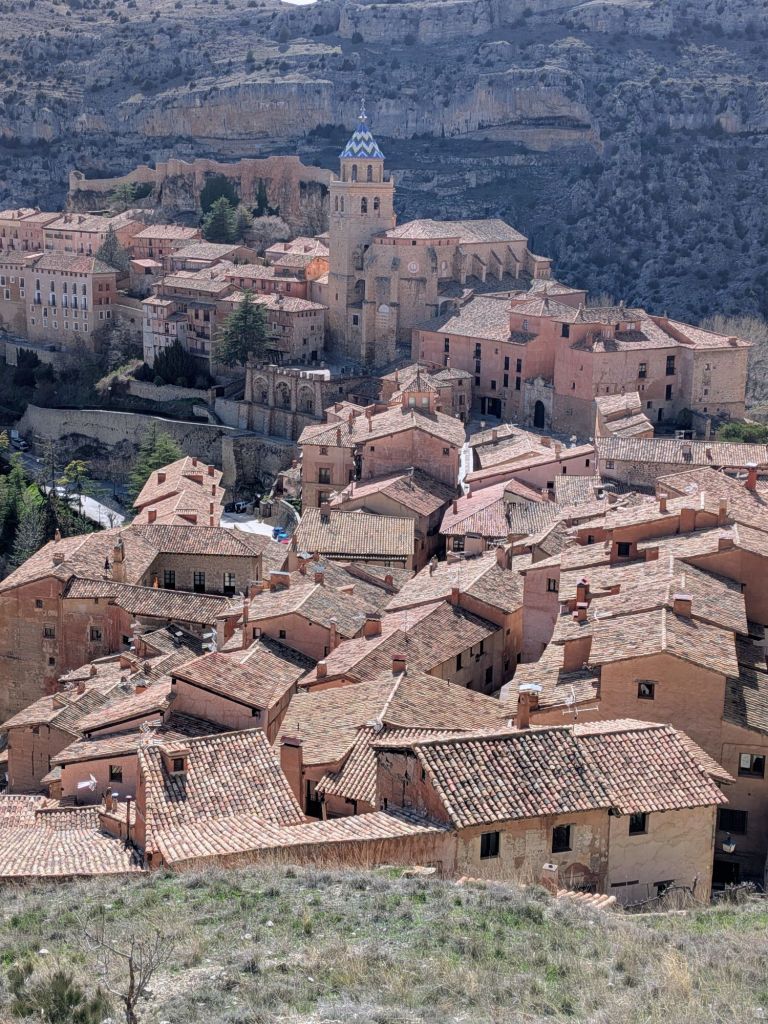
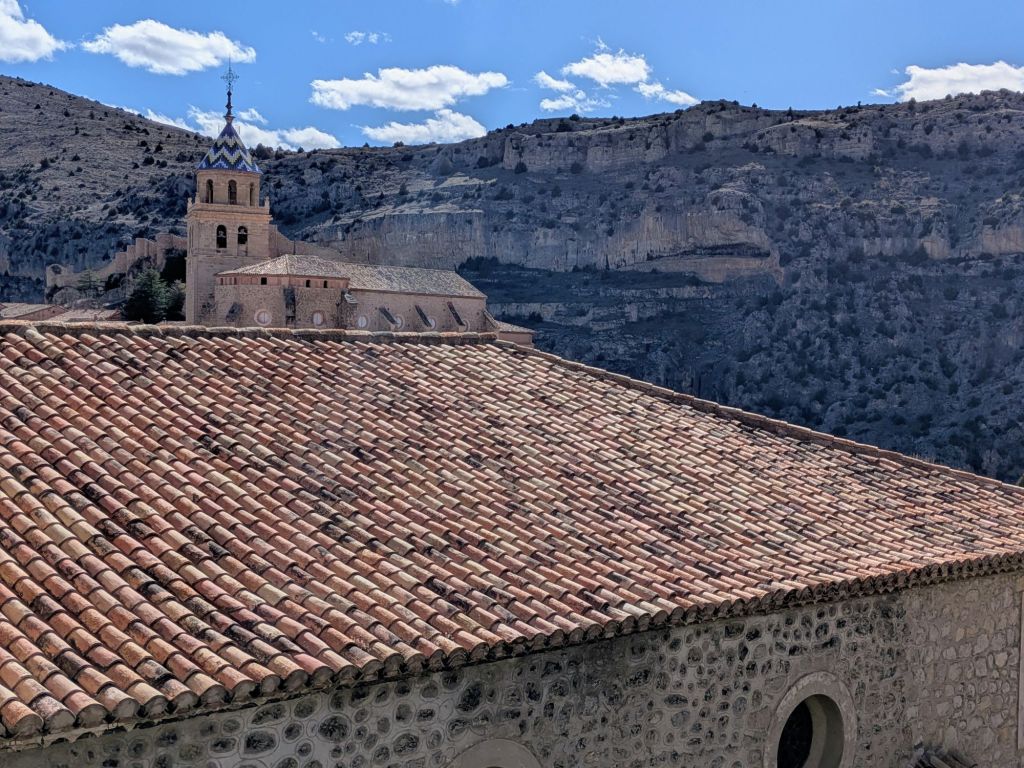
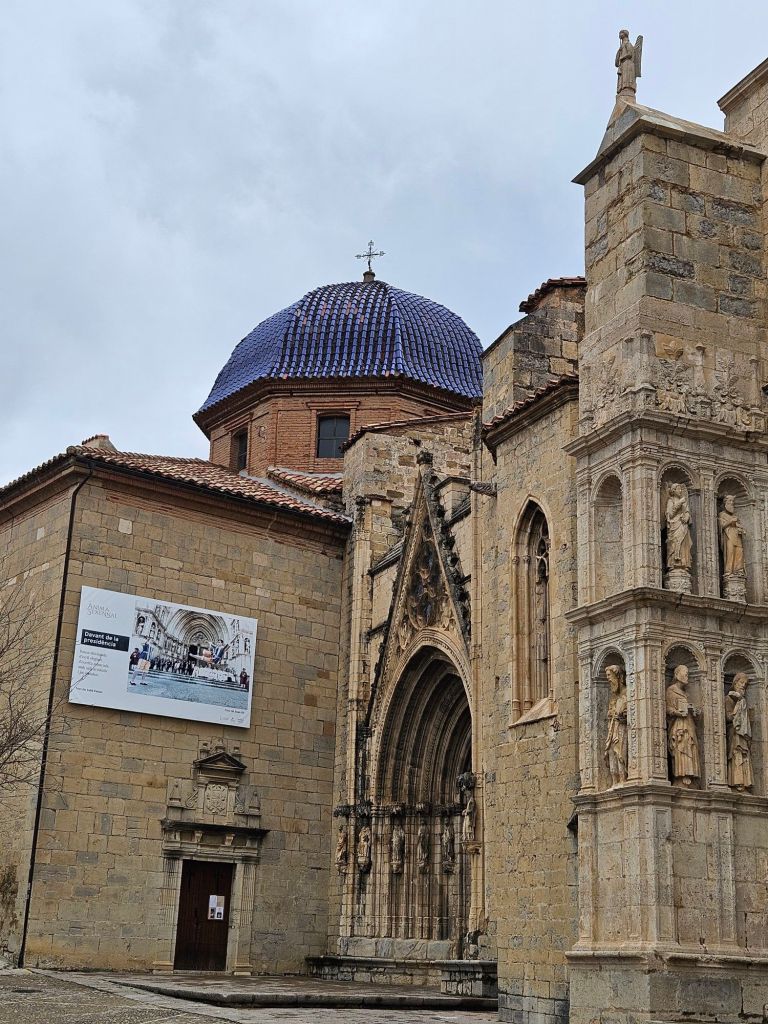
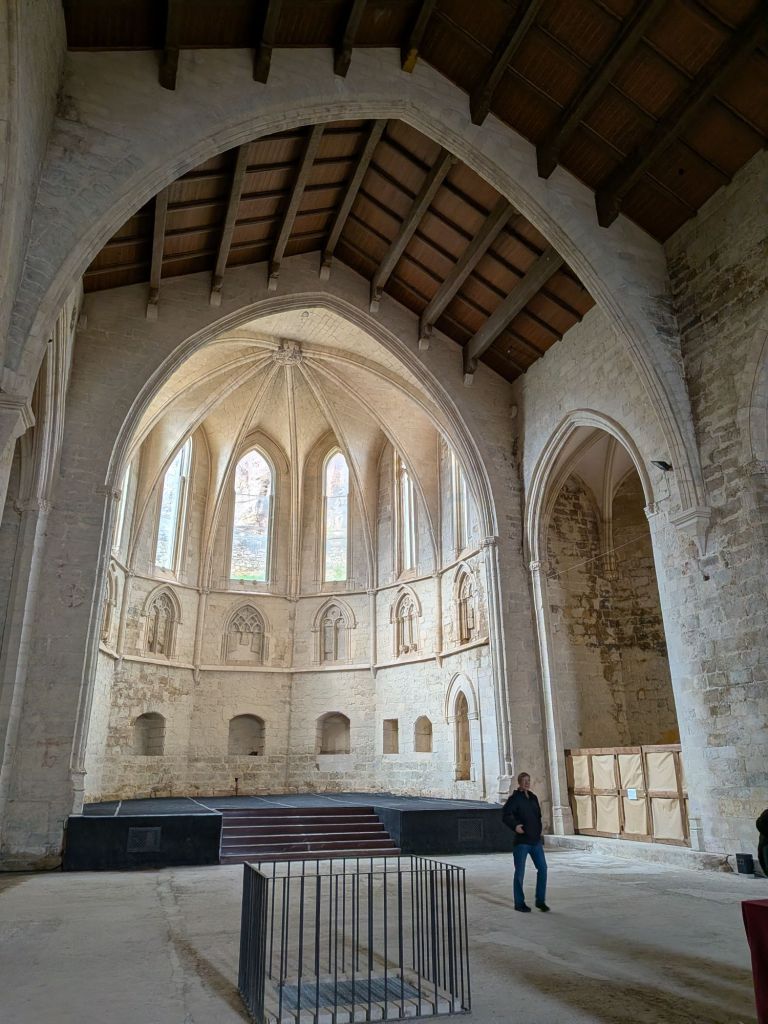
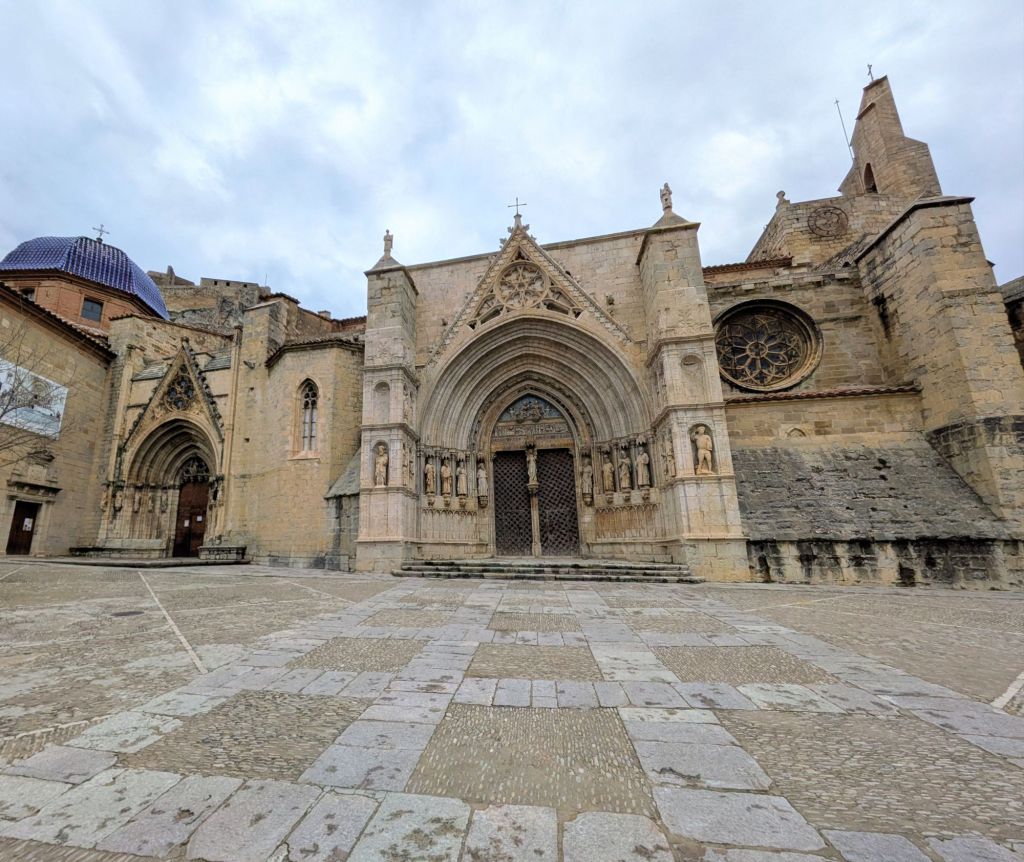
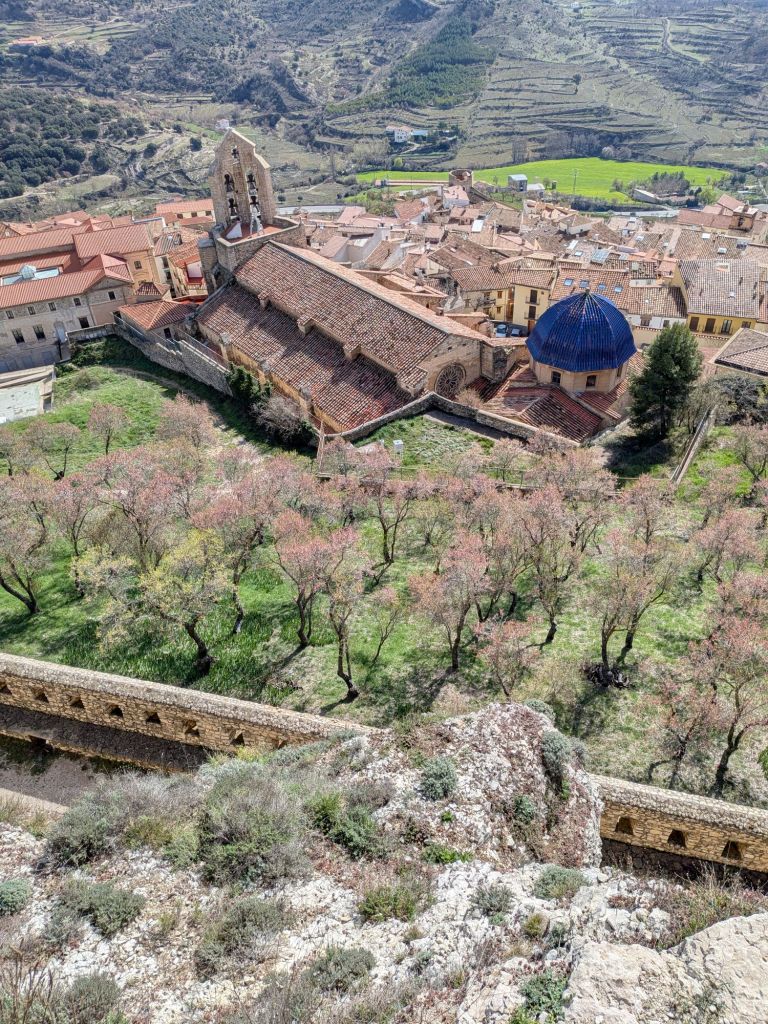
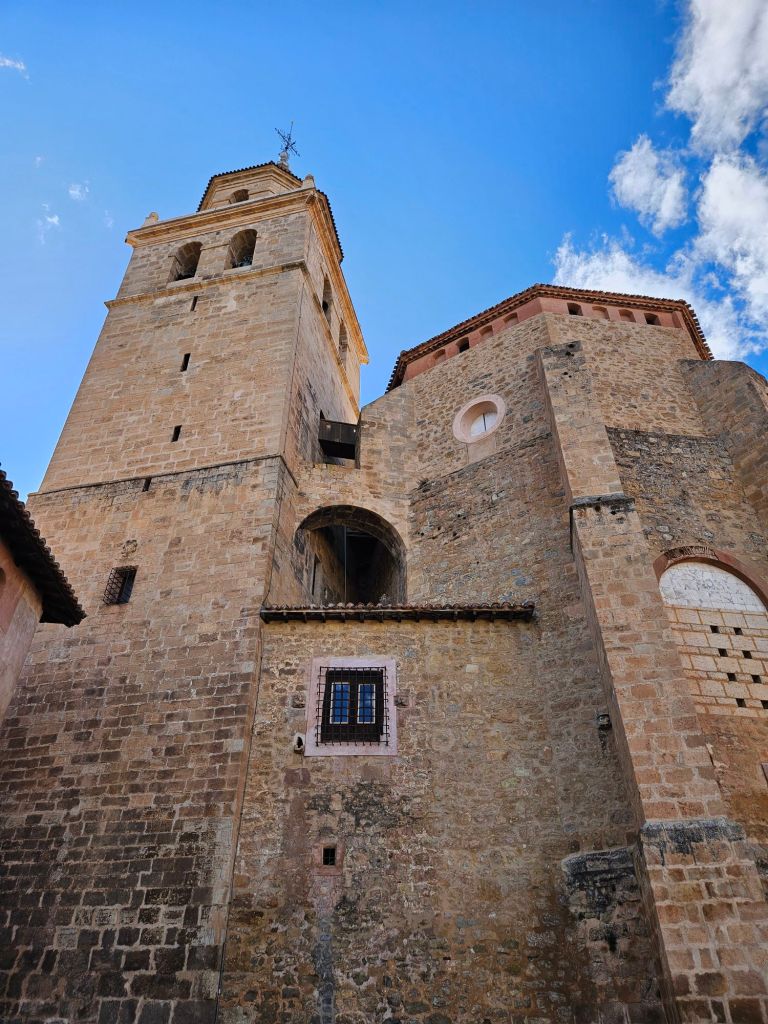
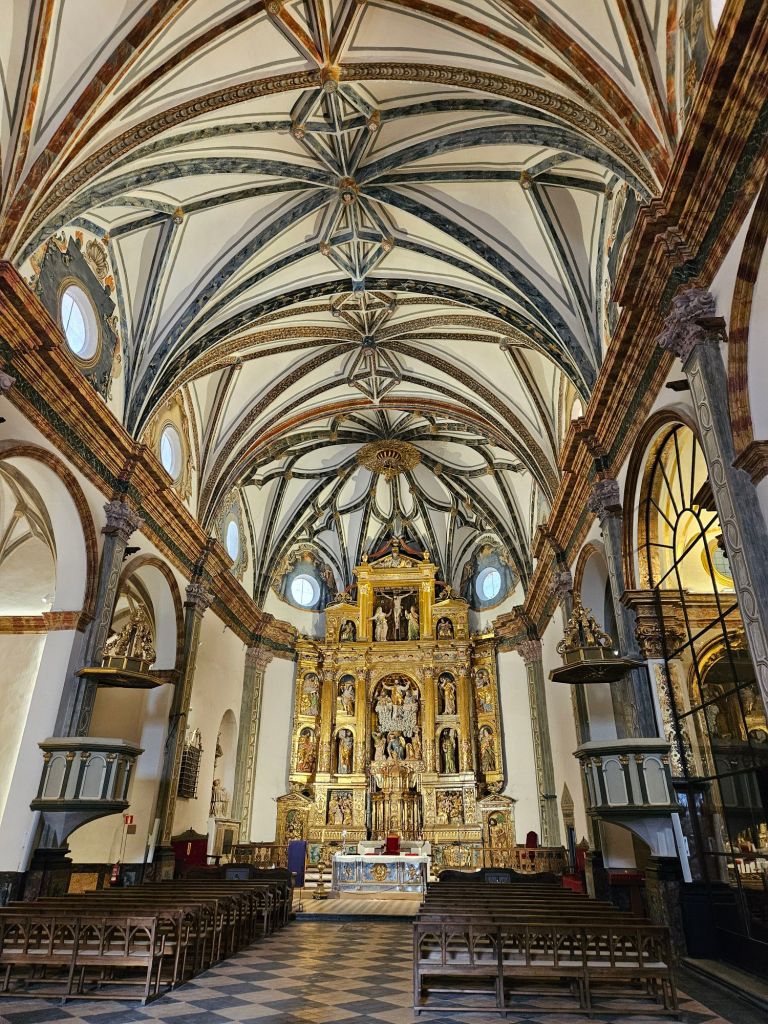
Back up again to a guided tour of the coldest cathedral I’ve ever visited. The guide noted the unusual closed cloister–this was done a few hundred years ago by a bishop who hated having to walk outdoors in the cold on his way to mass. Can’t believe it made that much of a difference given how utterly chilly the cathedral was.

It was only possible to enter the cathedral with a guide. She led the tour in Spanish and we managed to understand a lot of it. That said, we both realized that our brains time out after a few concentrated minutes and we lose the thread.

(R here. After a few minutes I thanked her for being so clear and explained that though it was fast for me I was getting ochenta por ciento – 80%. That was probably optimistic, and 10 minutes later it was varying from 50% to 5%.)

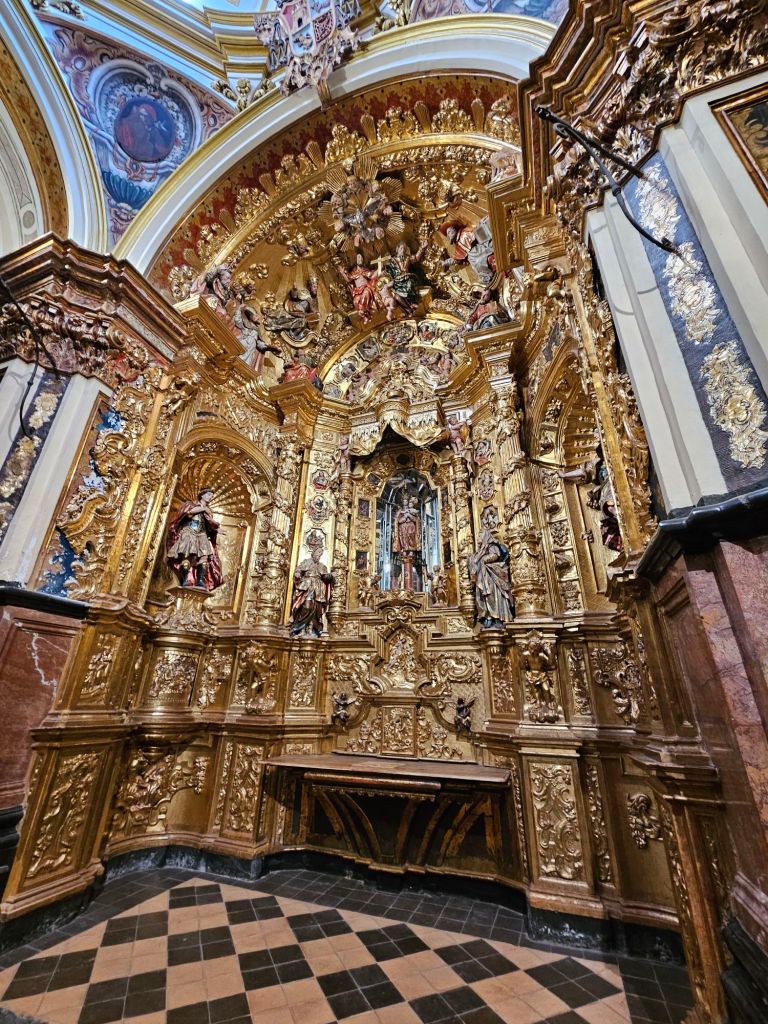
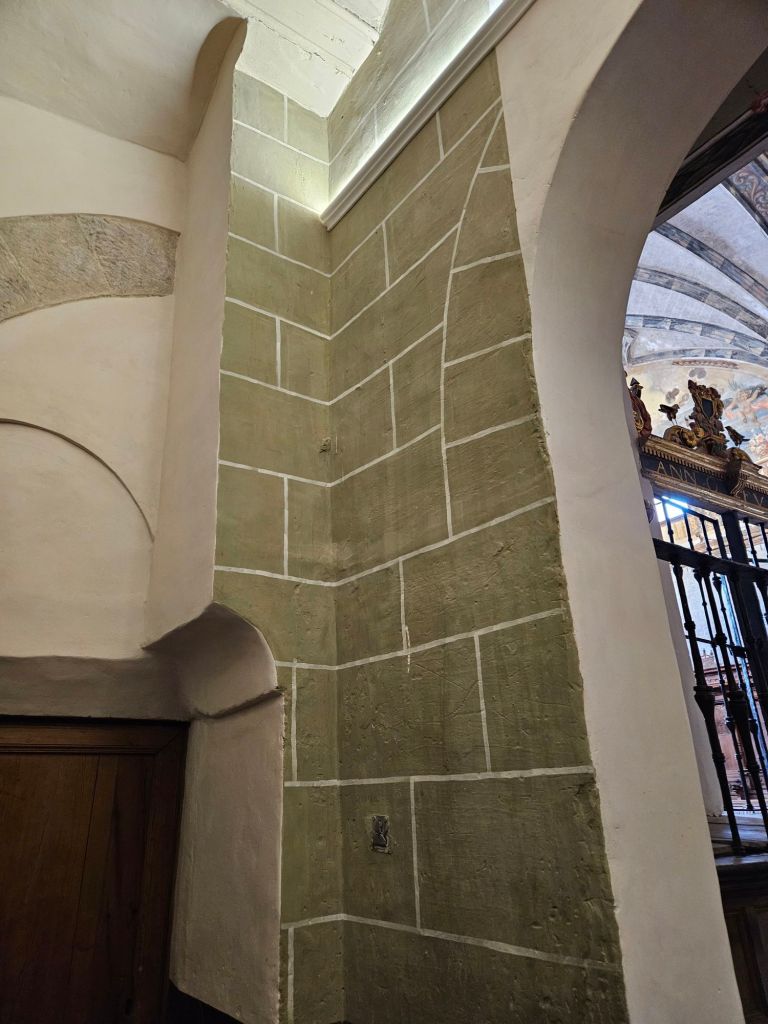
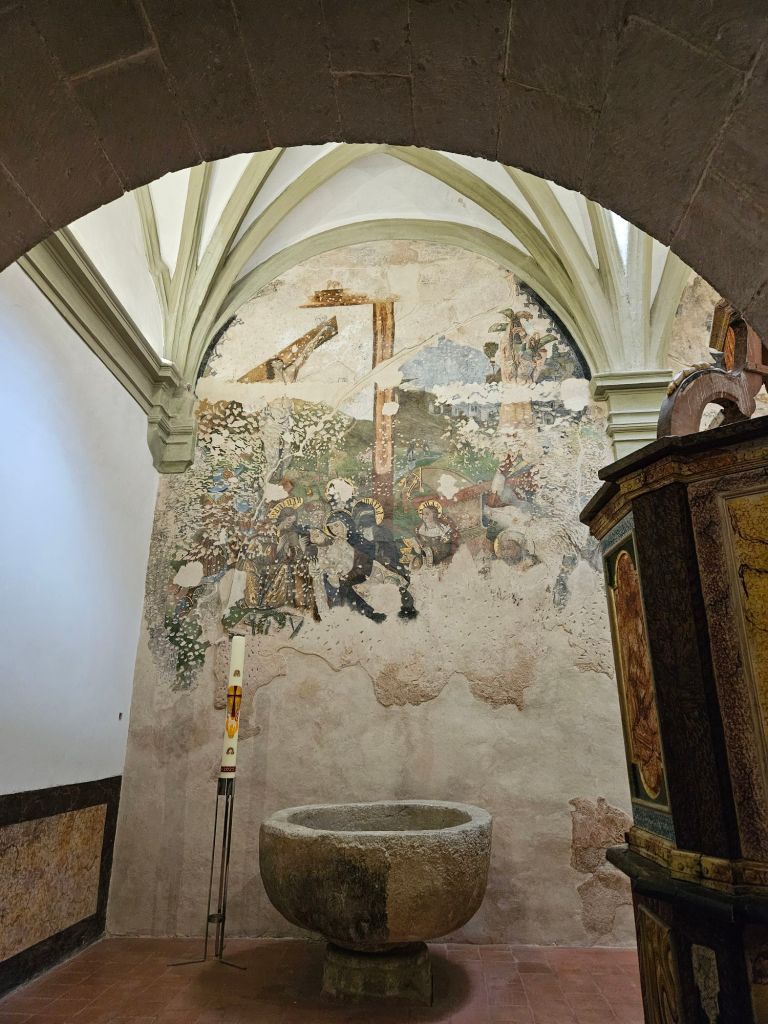
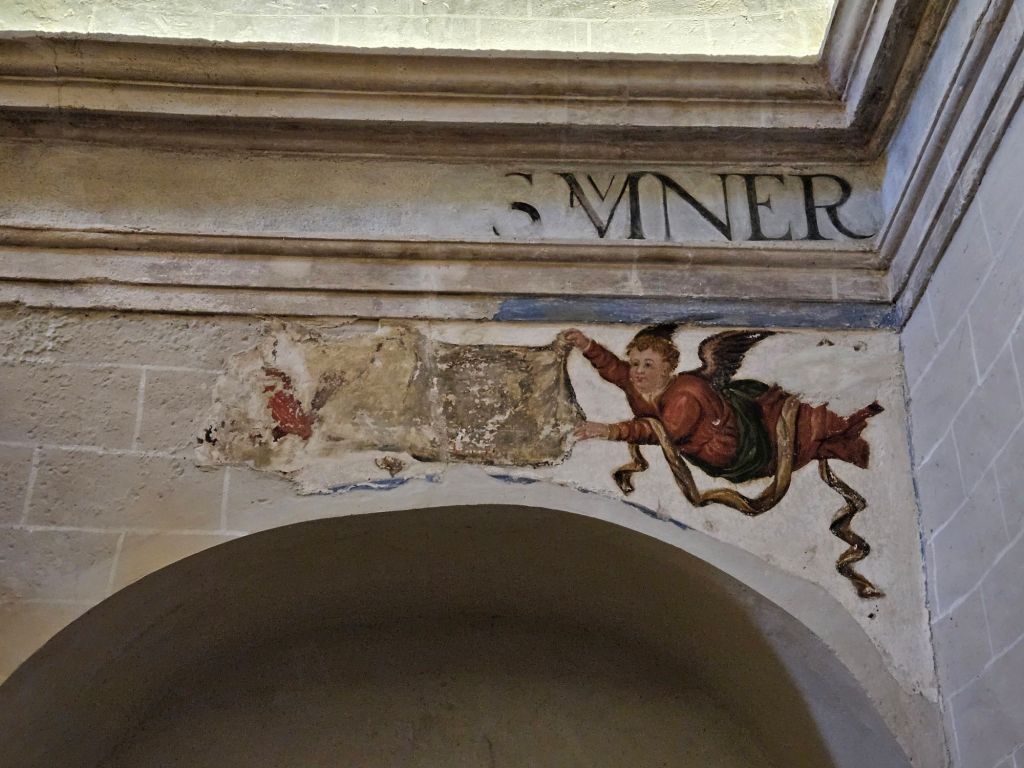
I was most interested in the guide’s description of their renovation work. She said the challenge is in deciding which era to restore to. The cathedral is no doubt built upon the remains of the Grand Mosque – although they haven’t found direct evidence of this, everywhere else in Spain the first thing the returning Christians did was build a cathedral on the site of the main mosque in newly conquered towns. Worth noting here is that this town wasn’t conquered but gifted–we both caught part of a line about a Christian having done a favor for the Arab ruler of the castle, who gave him the castle in thanks.

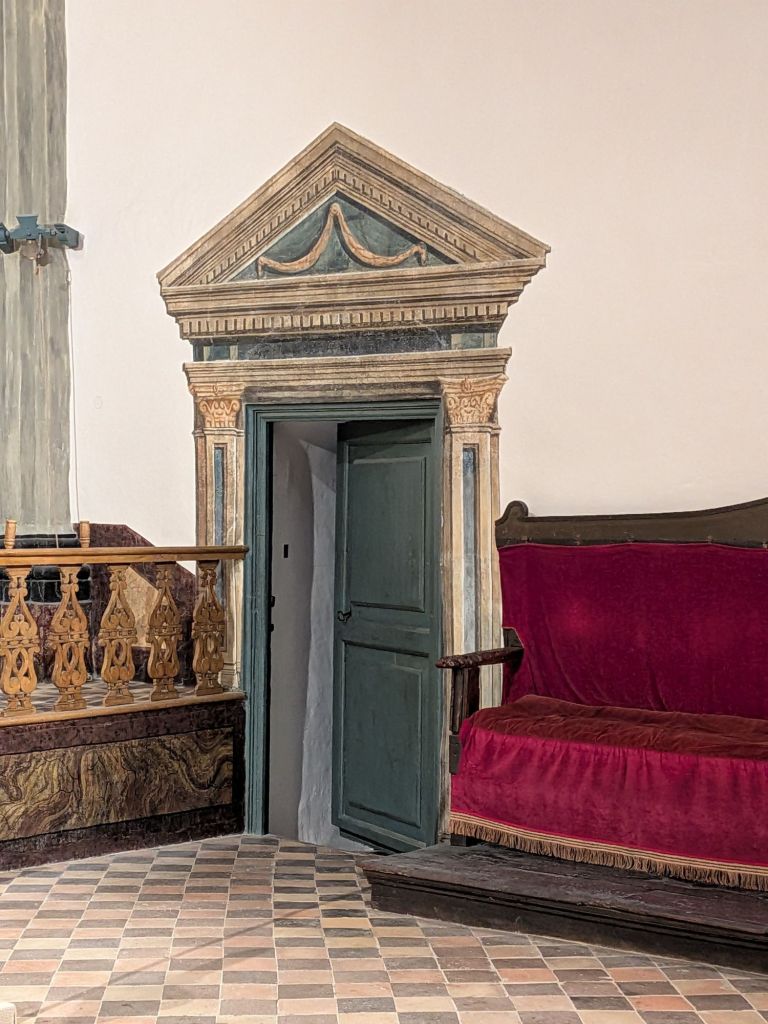
In any event, the cathedral was built over several hundred years, and remodeled and restored a few times.  In the current restoration work, they’re trying to keep evidence of each layer, while restoring to the most salvagable or most coherent layer they can.
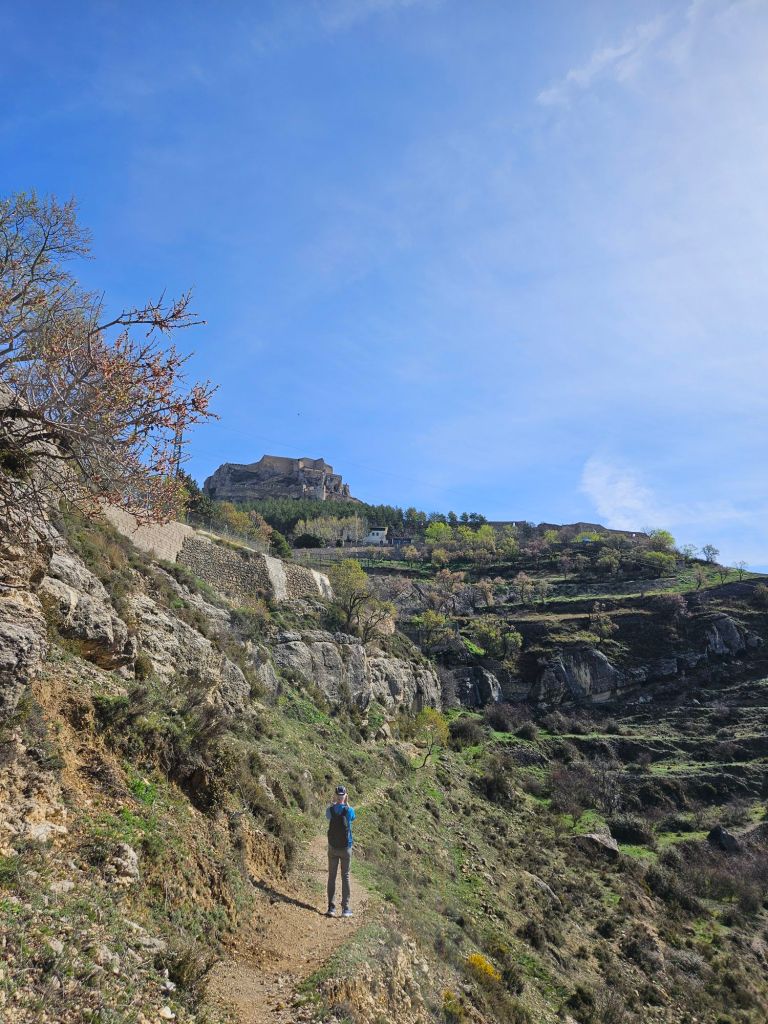
Finished the tour, walked shivering into a patch of sunlight, then headed back down the hill. Out the other side of the gorge for a quick late afternoon clamber to get views from the other side. 
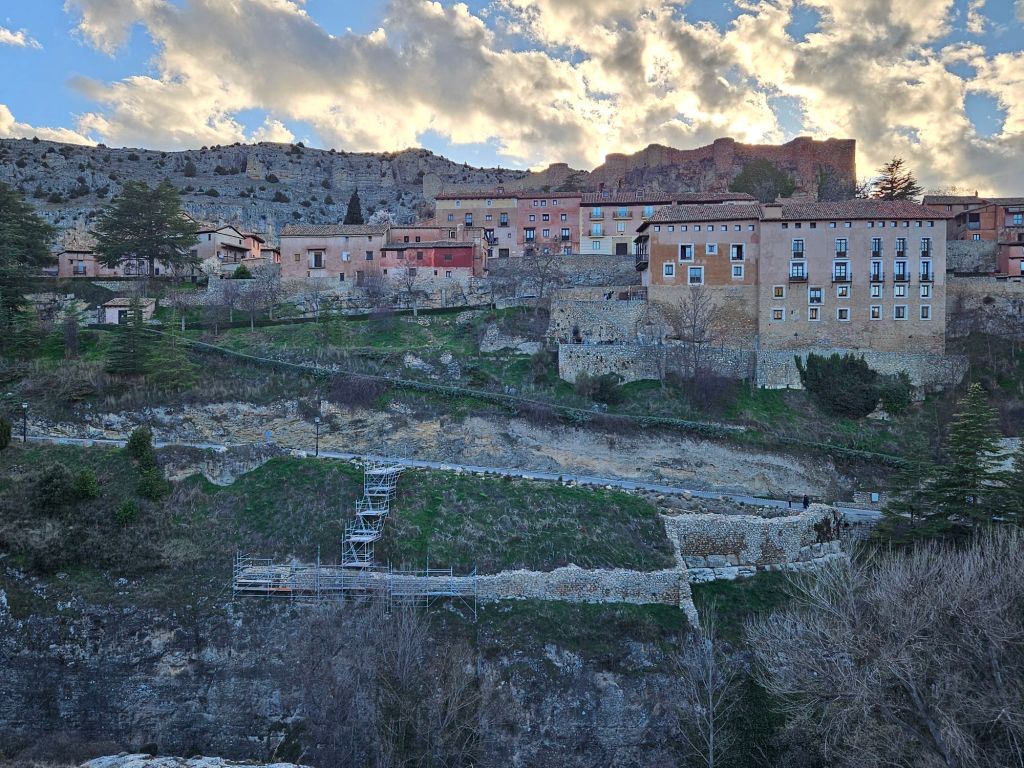
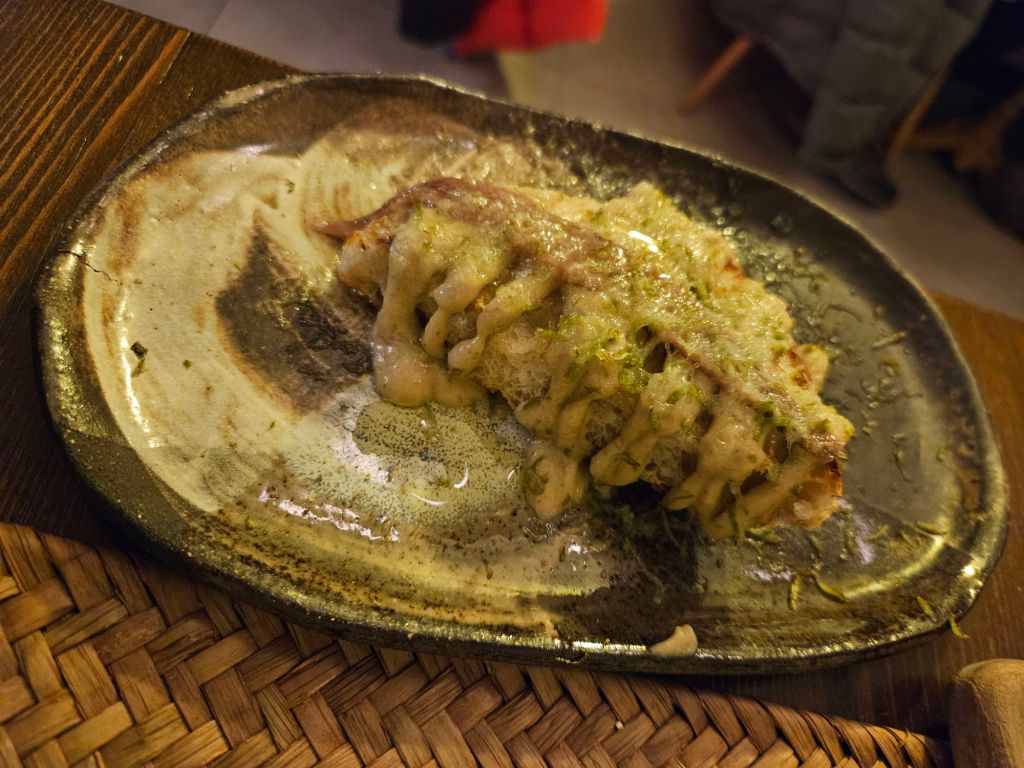
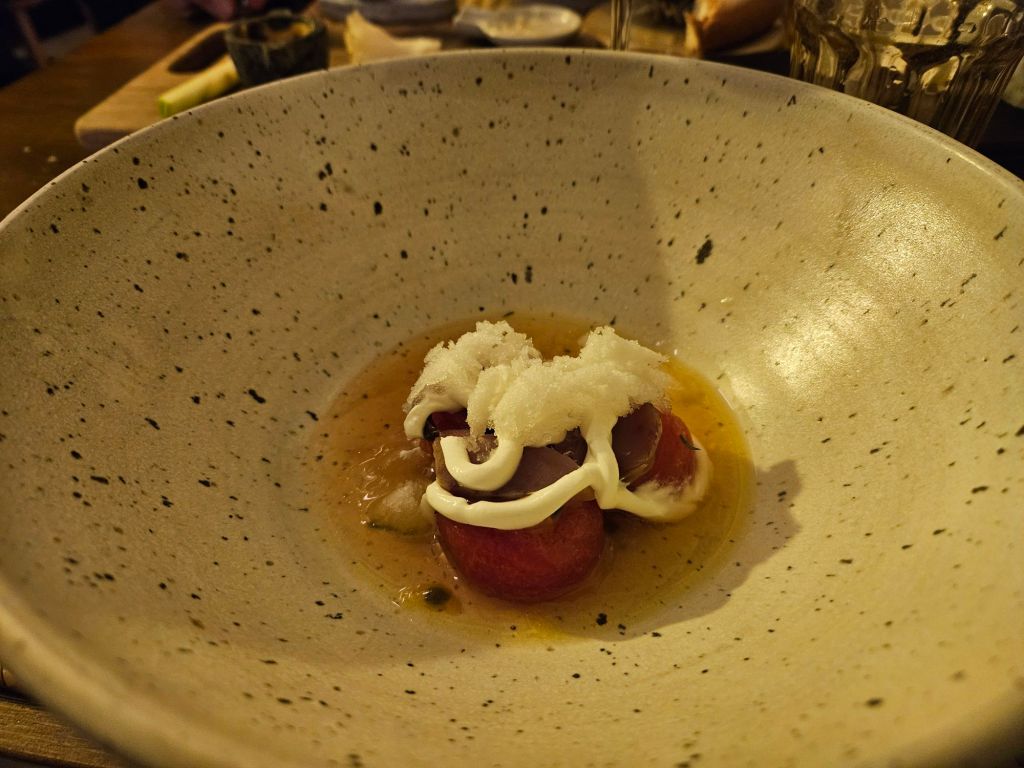
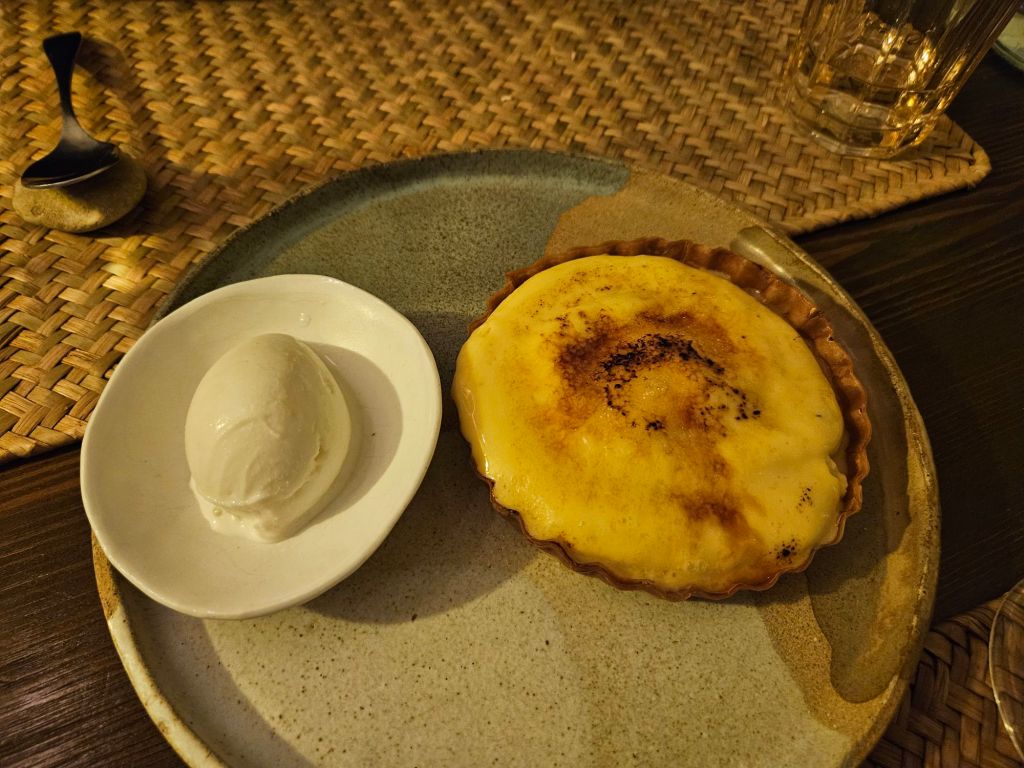
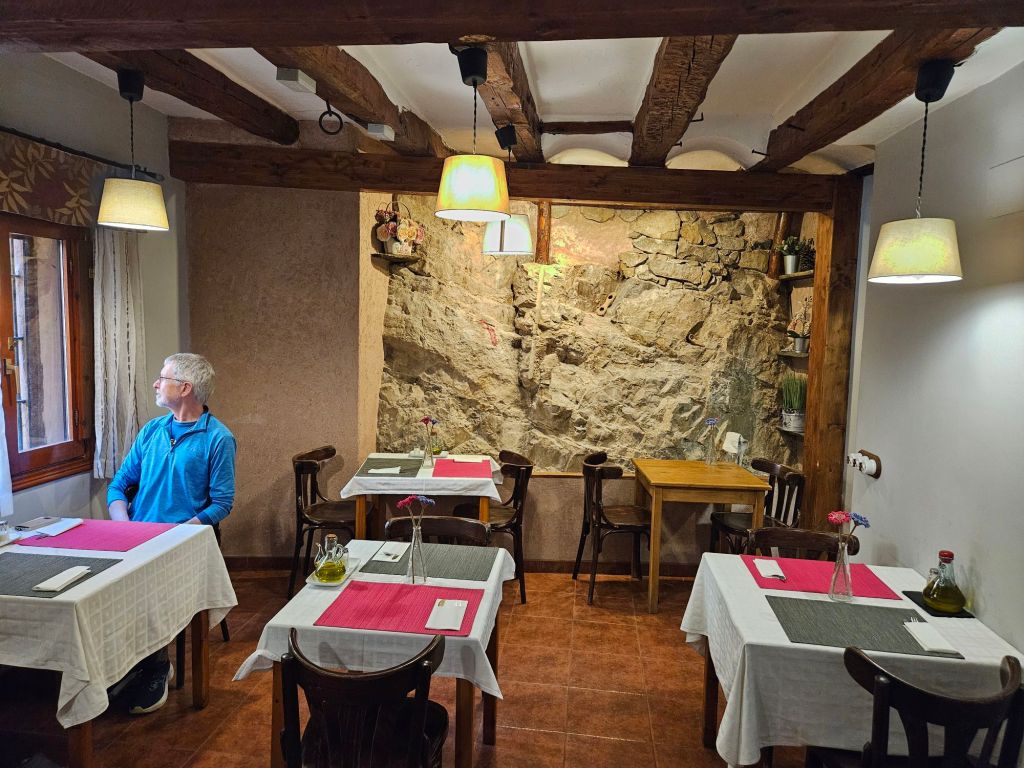
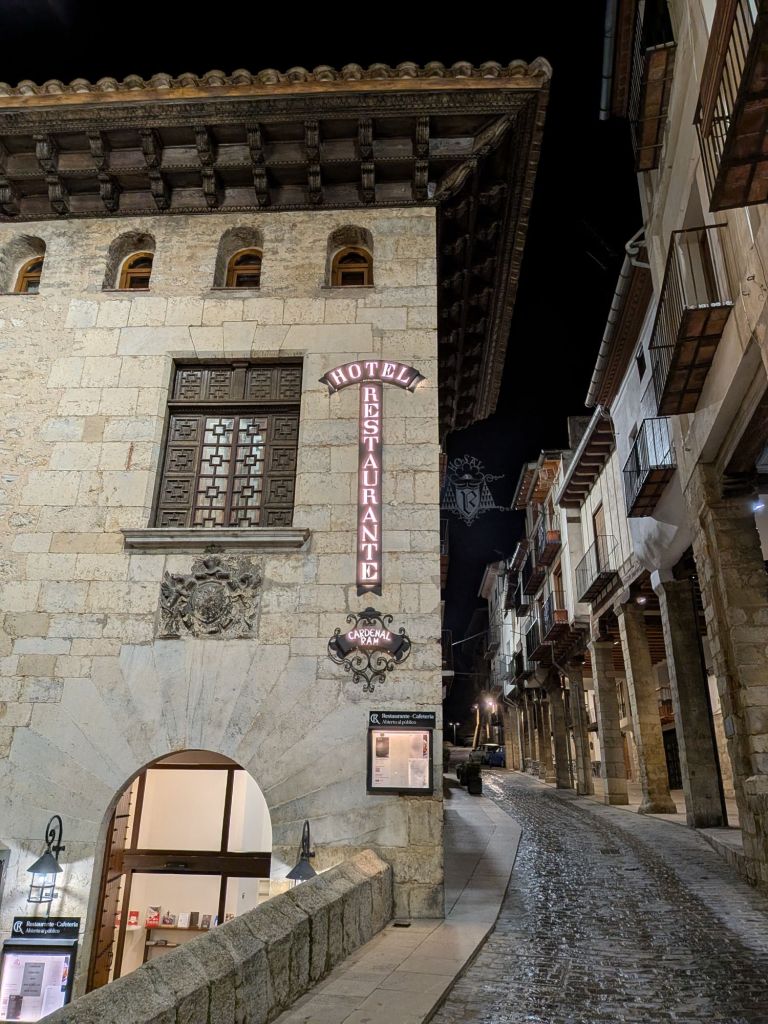
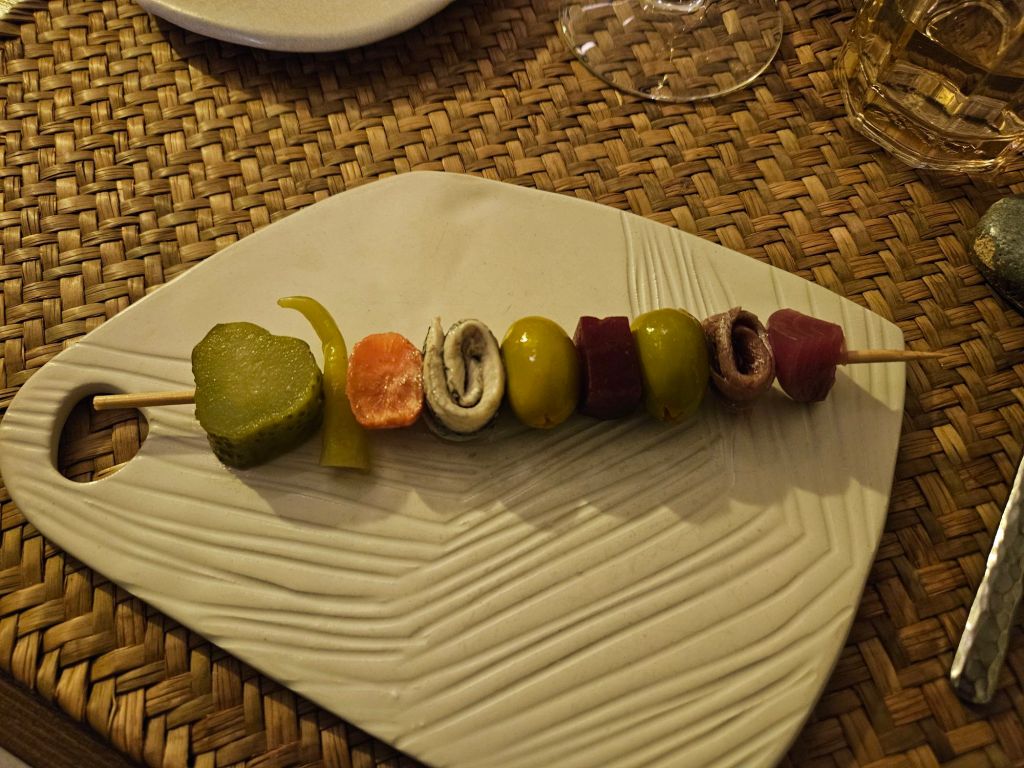
Back to the hotel, then up the hill for an unusual and tasty meal. Sadly, many of the menu offerings included either nuts I shouldn’t eat or meat bits R really wouldn’t like, but what we did eat was full of flavors and combinations that were new to us and unexpectedly delicious.
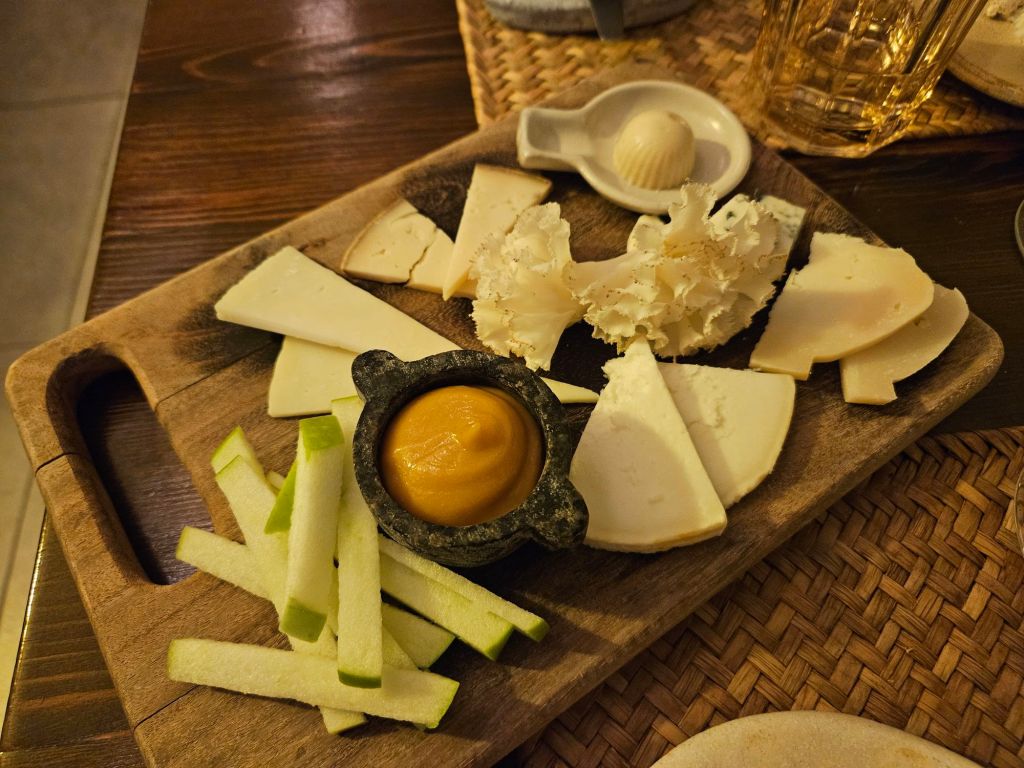
The pale, innocent-looking thing that looks like a small pat of butter, top right among the cheeses, was actually a sensationally powerful and delicious blue cheese.

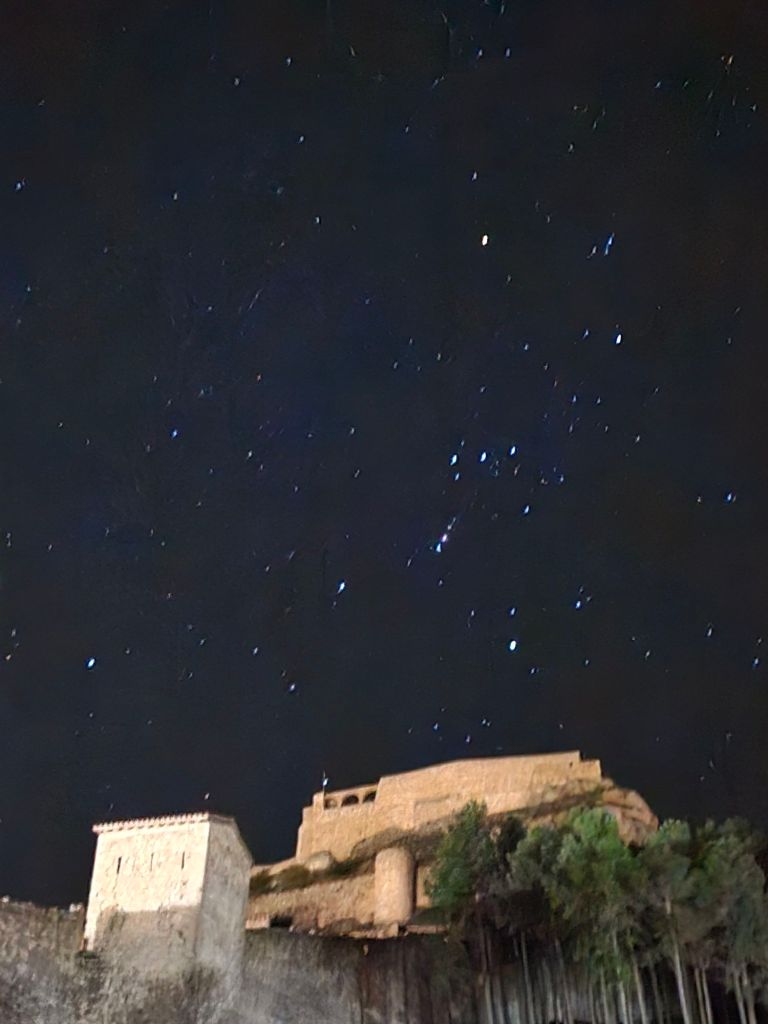
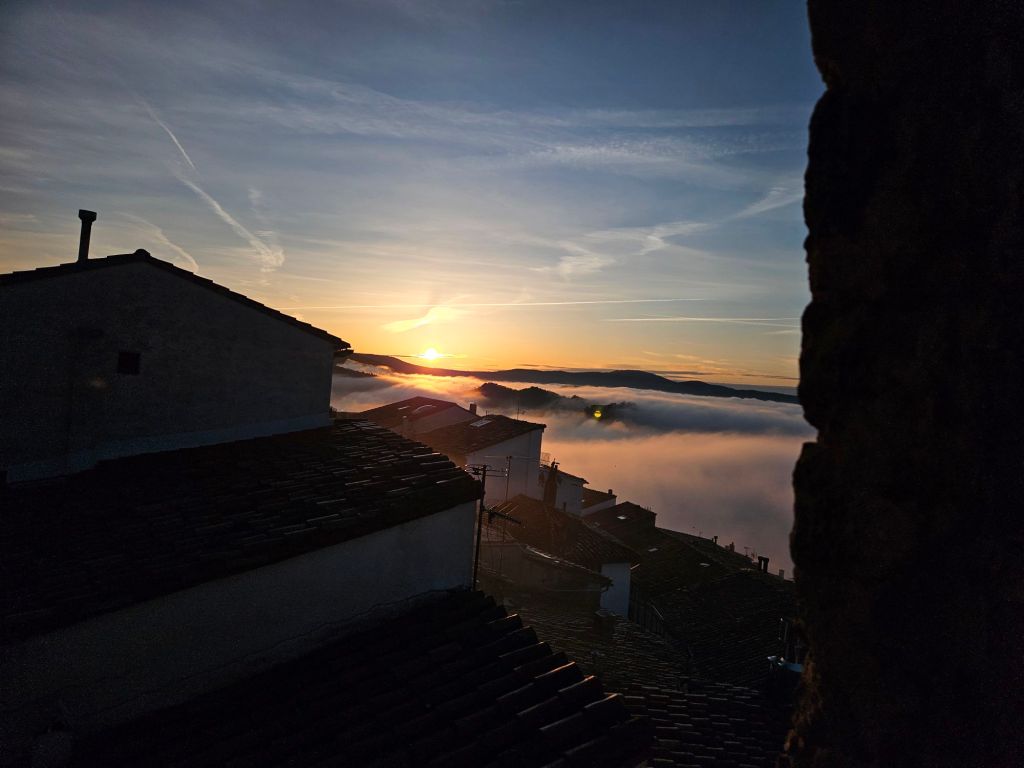
Stars out when we left–Orion and Sirius standing guard above the castle. Back down the hill–getting very chilly–to our nice warm room and bed.

R here again with a few bonus pics:
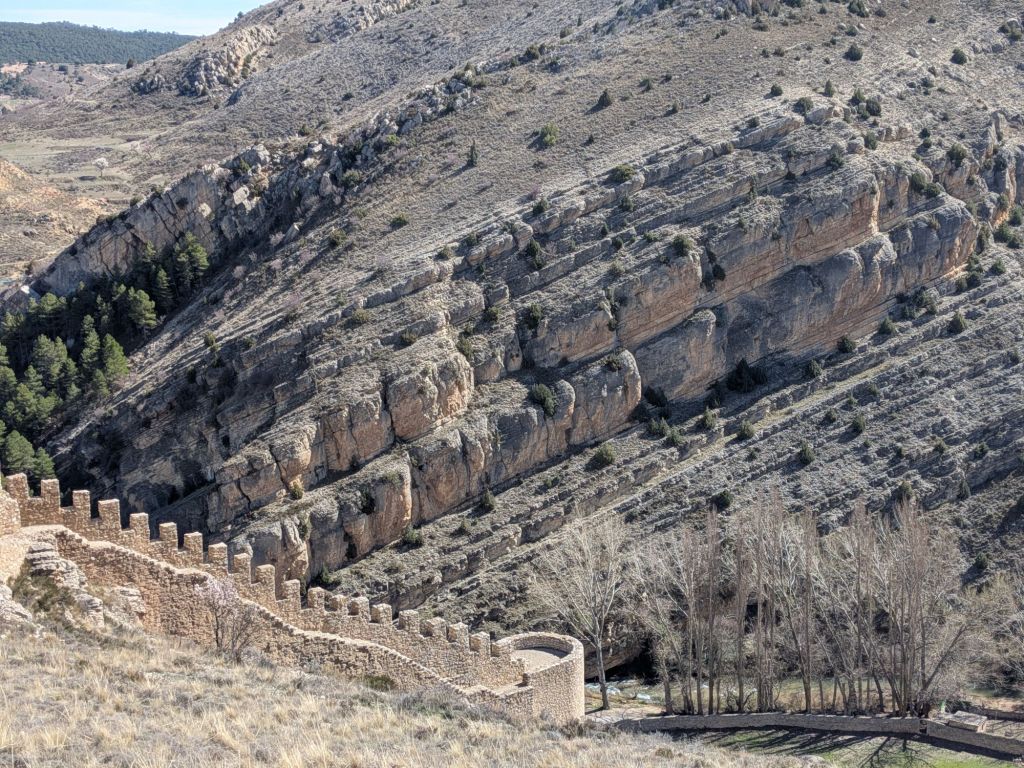
Art that lasts

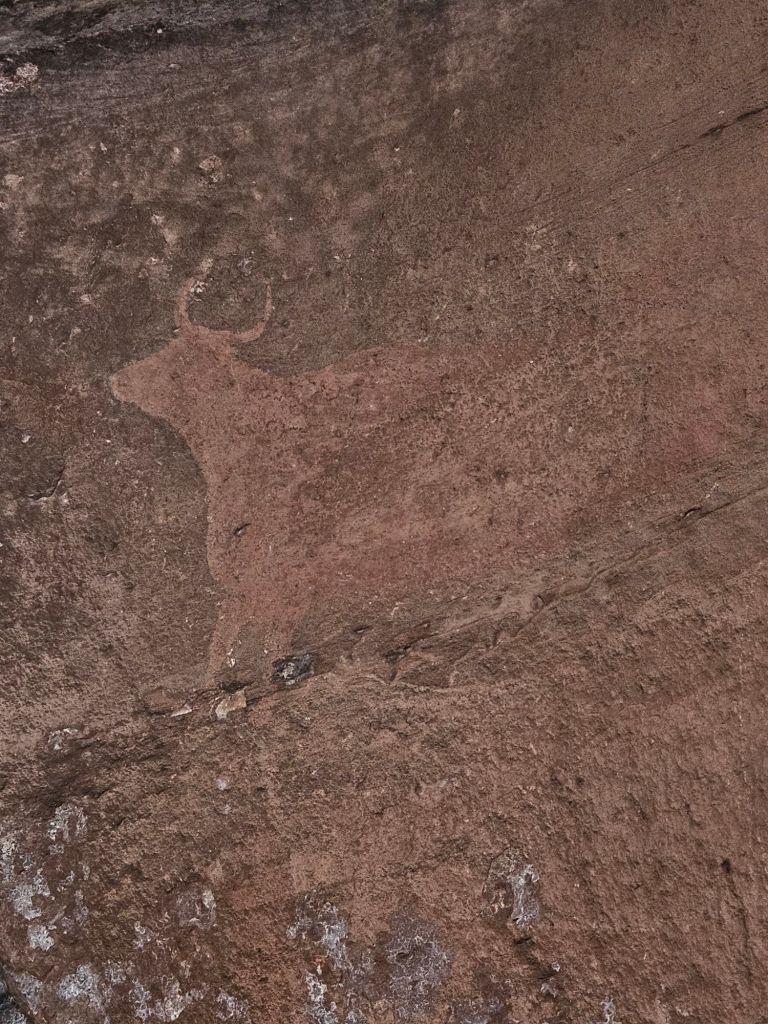
Thursday morning in Albarracín (our only full day here) I wanted to make sure we checked off the museum and cathedral – but no, K insisted on dragging us 10 k out of town to see some alleged Neolithic rock art.

It was magical.

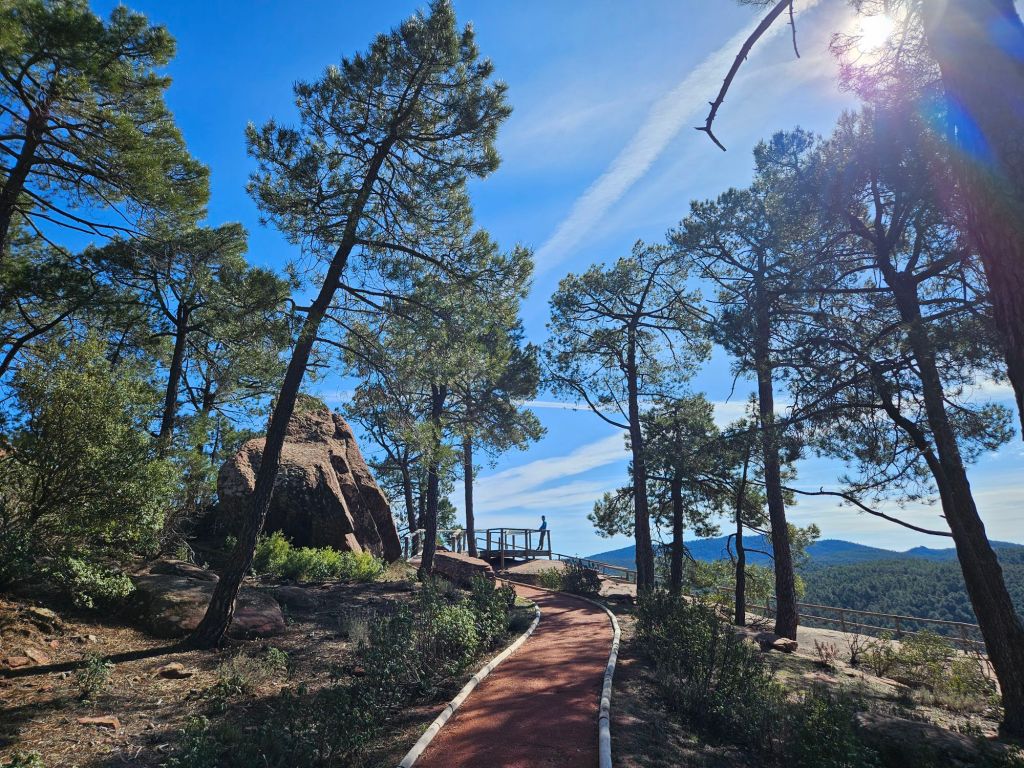
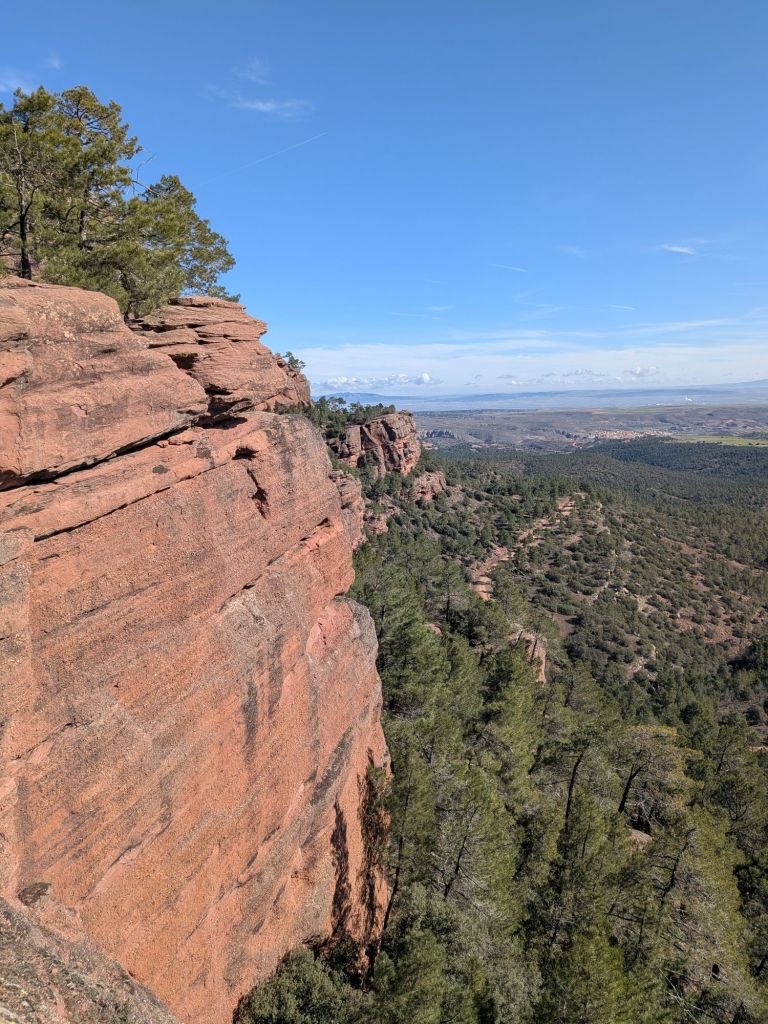
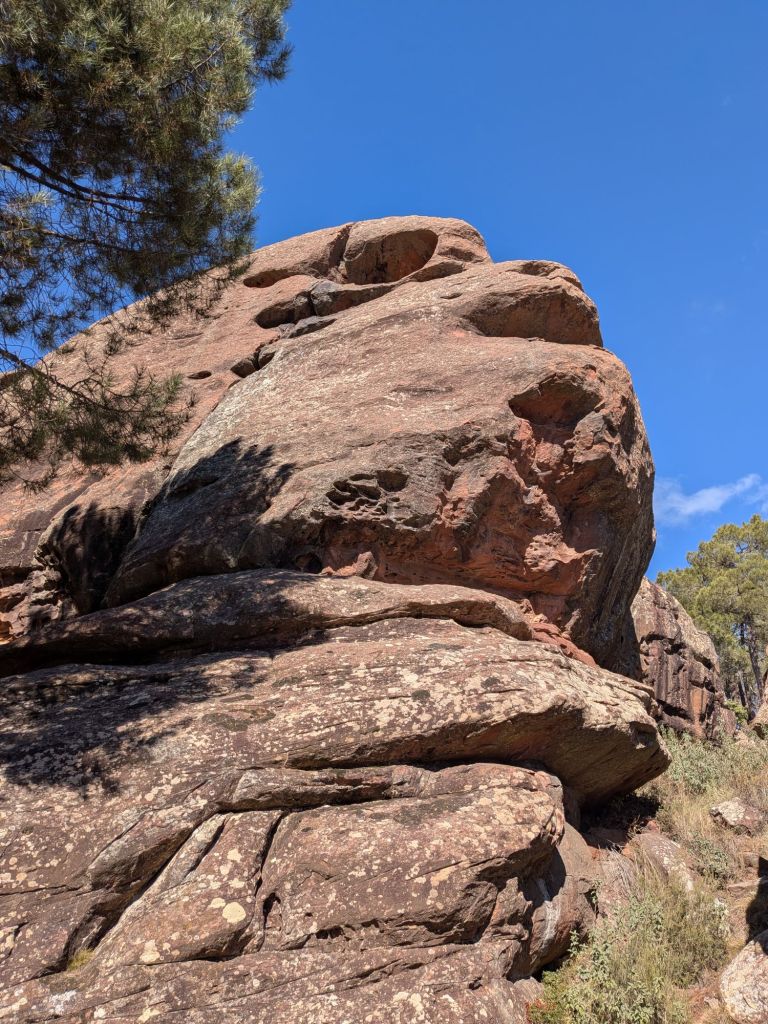
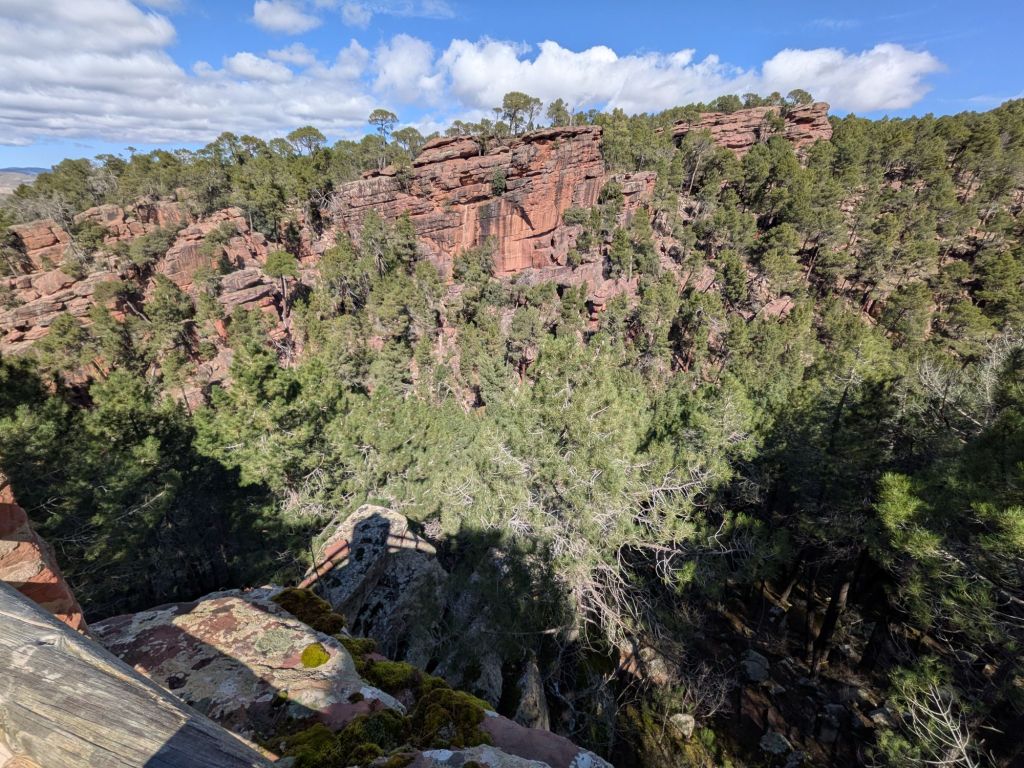
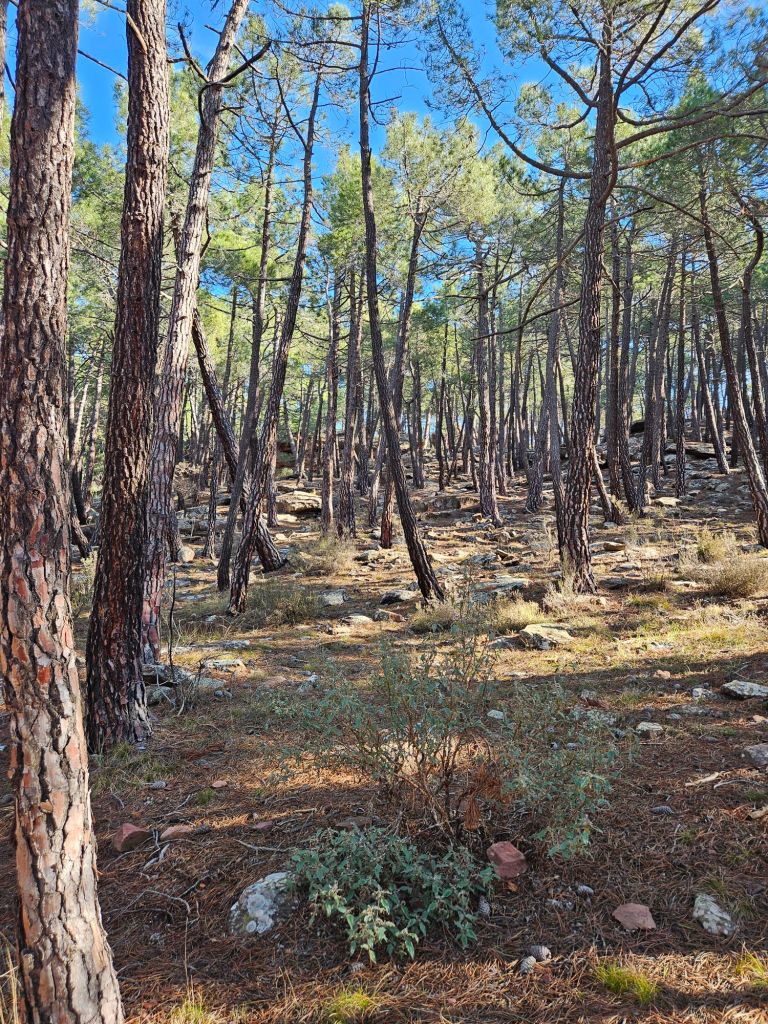
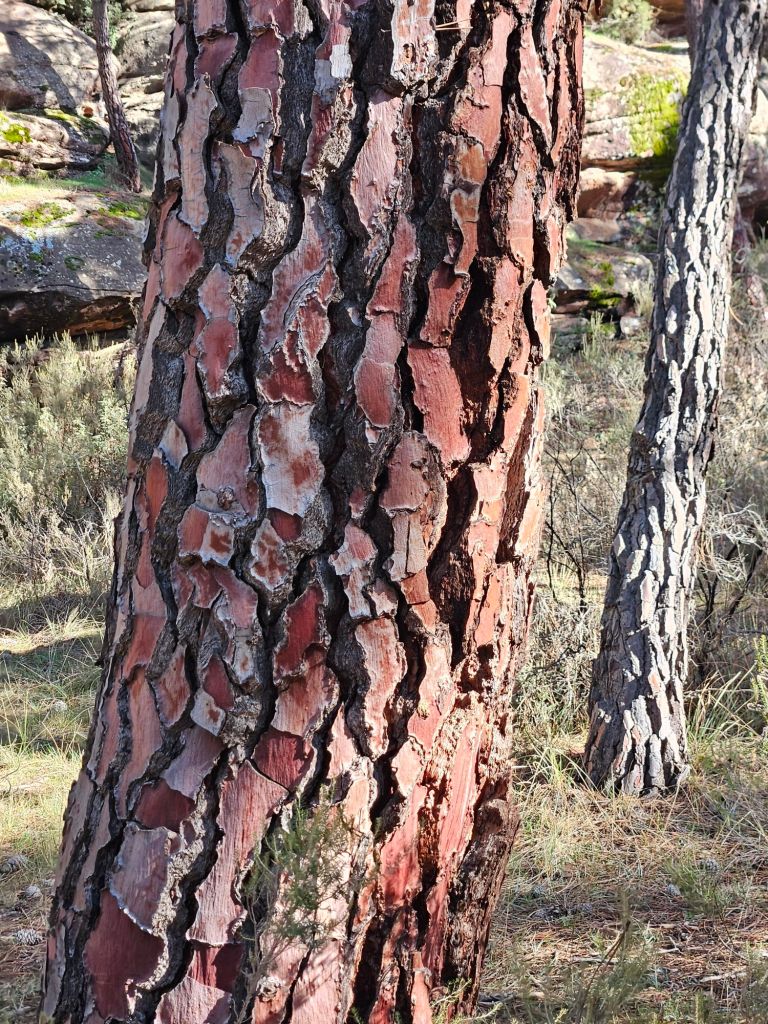
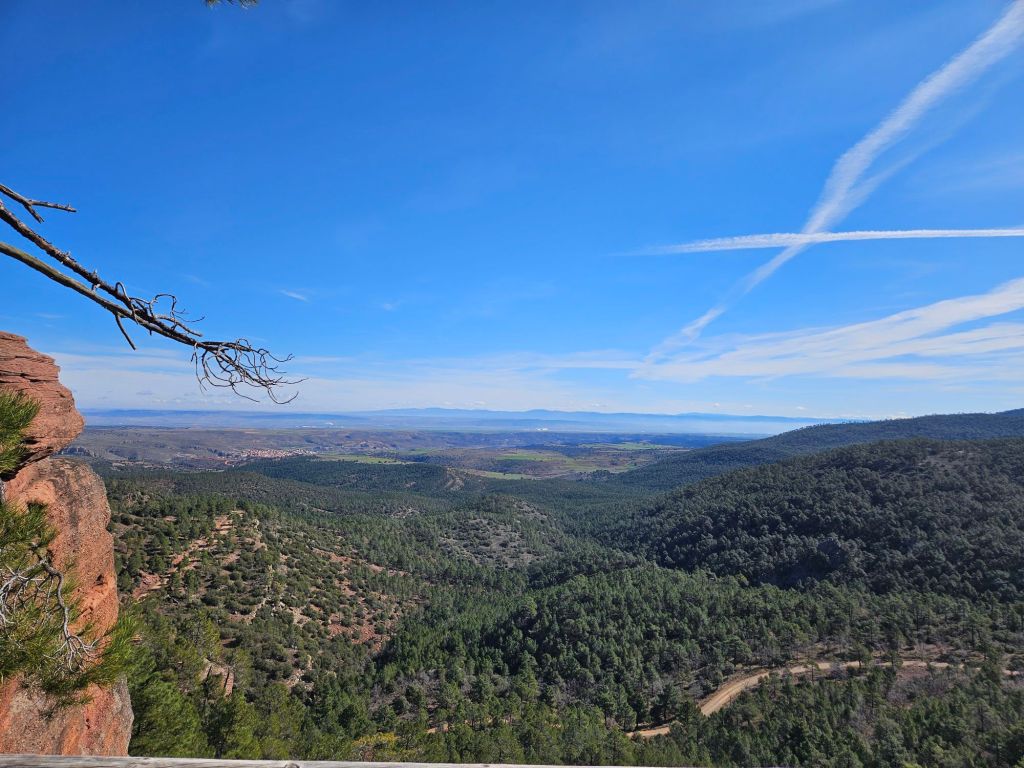
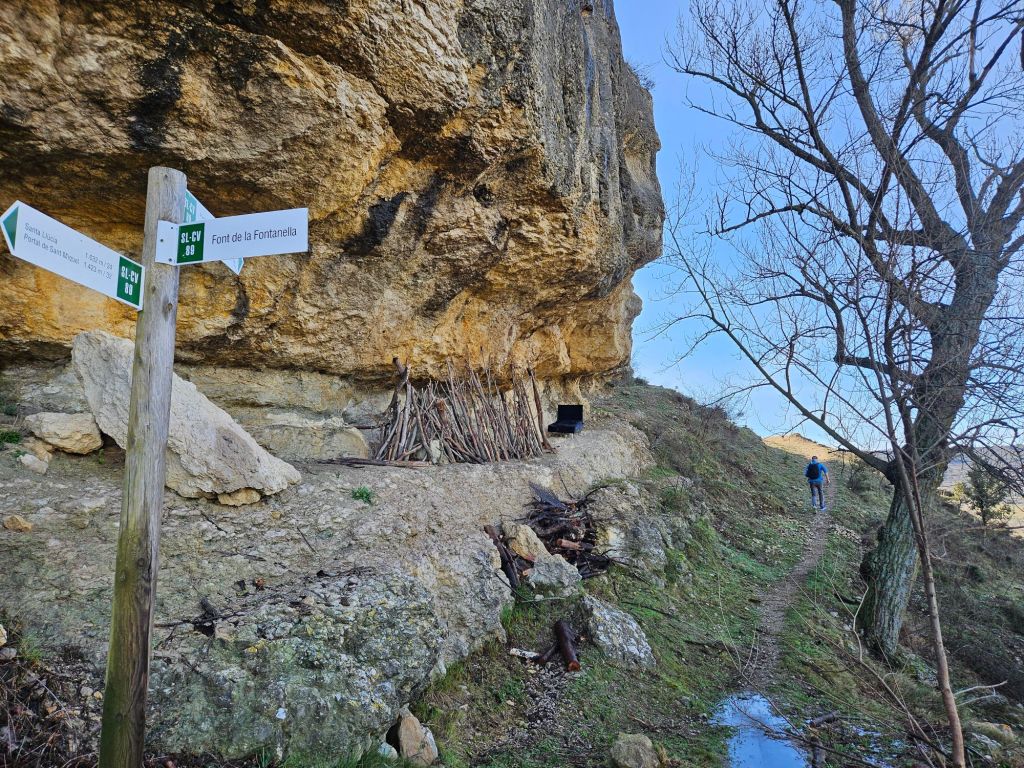
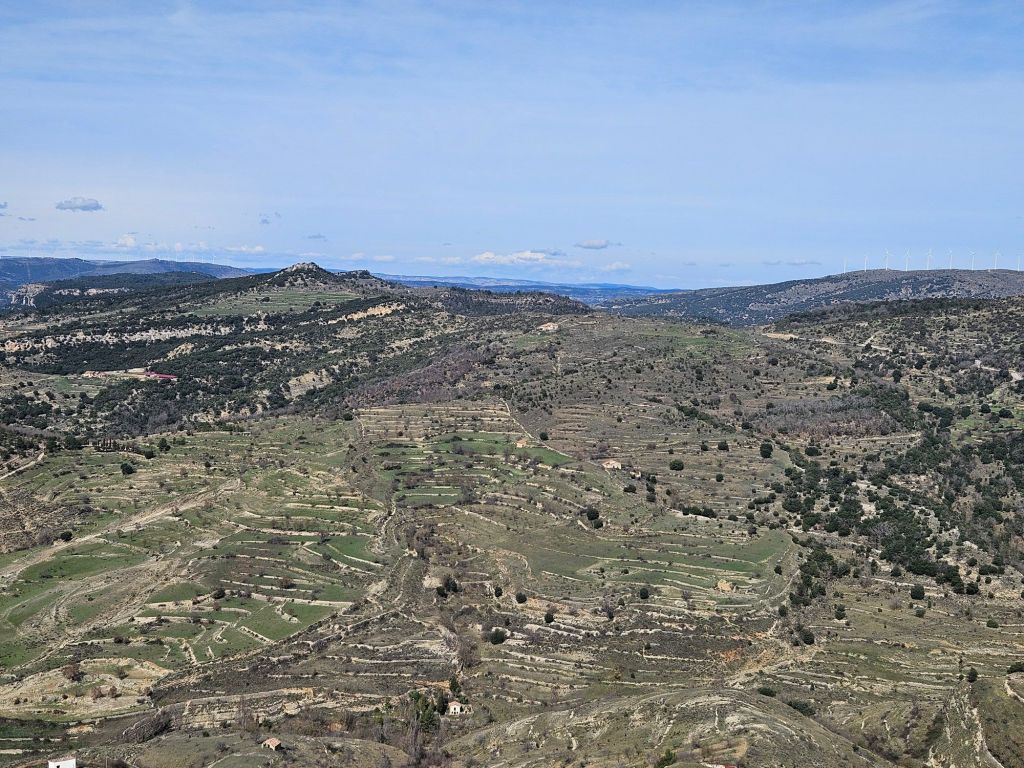
Actually the most magical part was being completely alone, on a cool  sunny morning, in the silence a dry Mediterranean pine forest, with great layer cakes of red rock, abundant birdsong, and 50-mile views from a mirador:
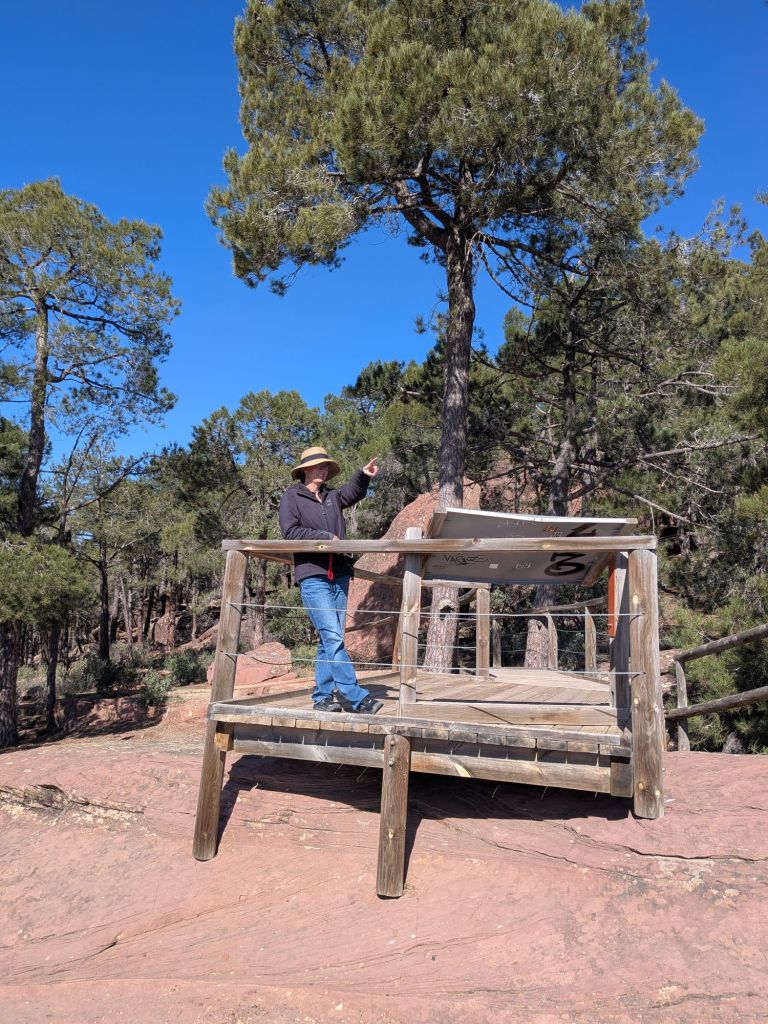
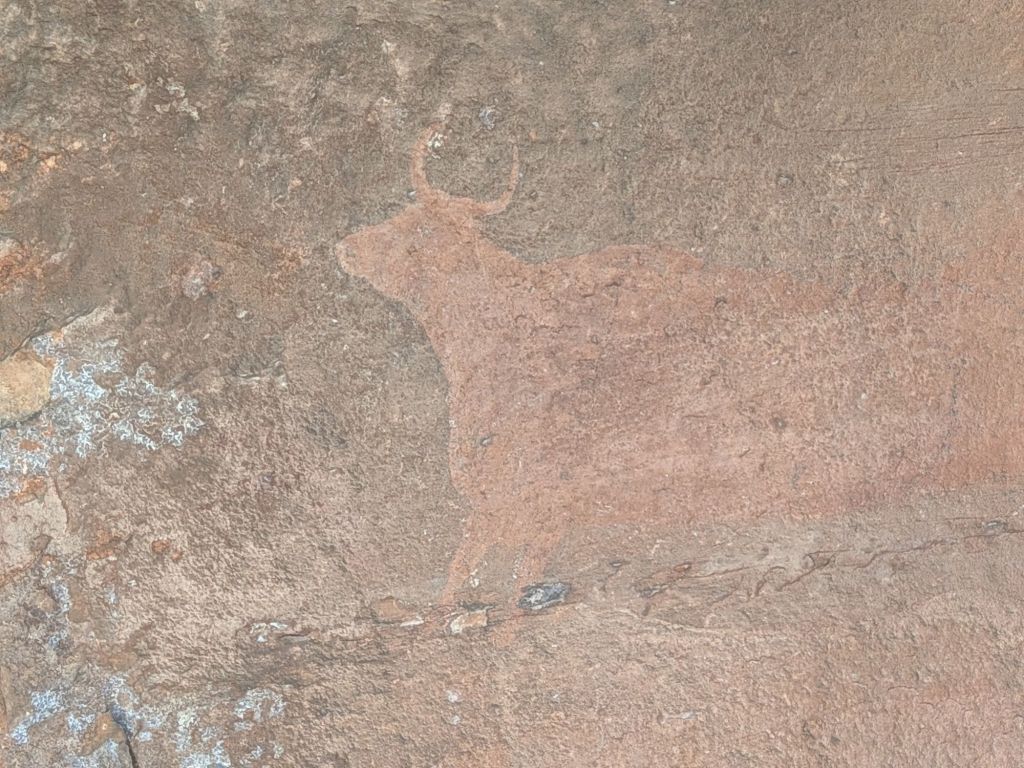
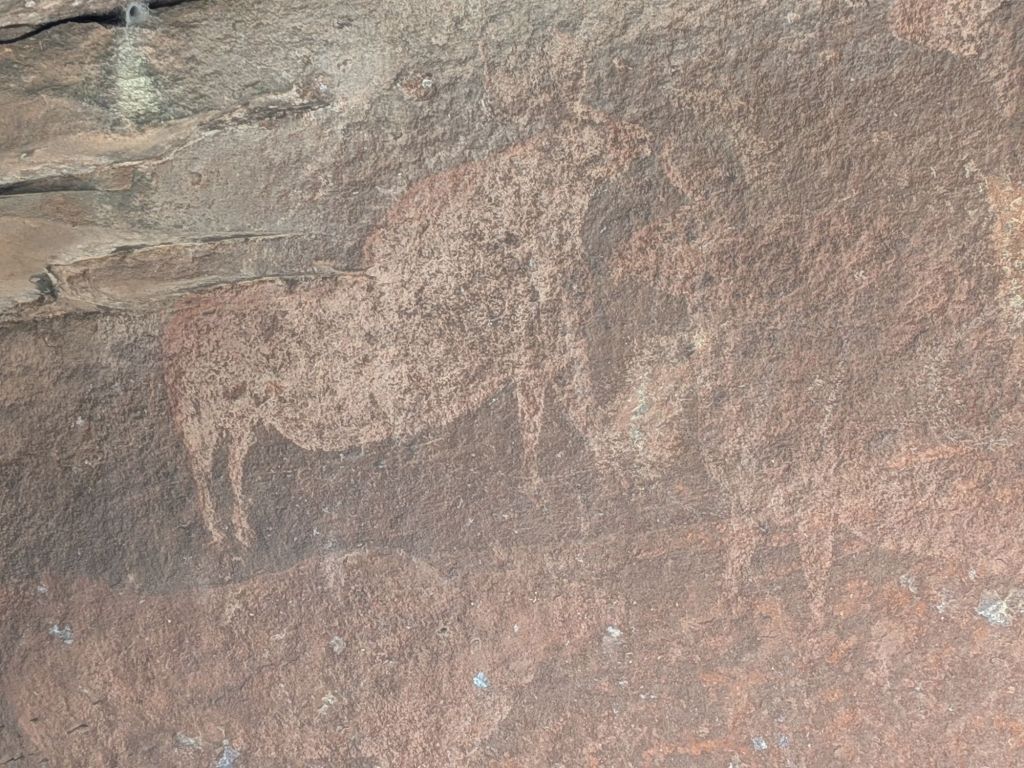
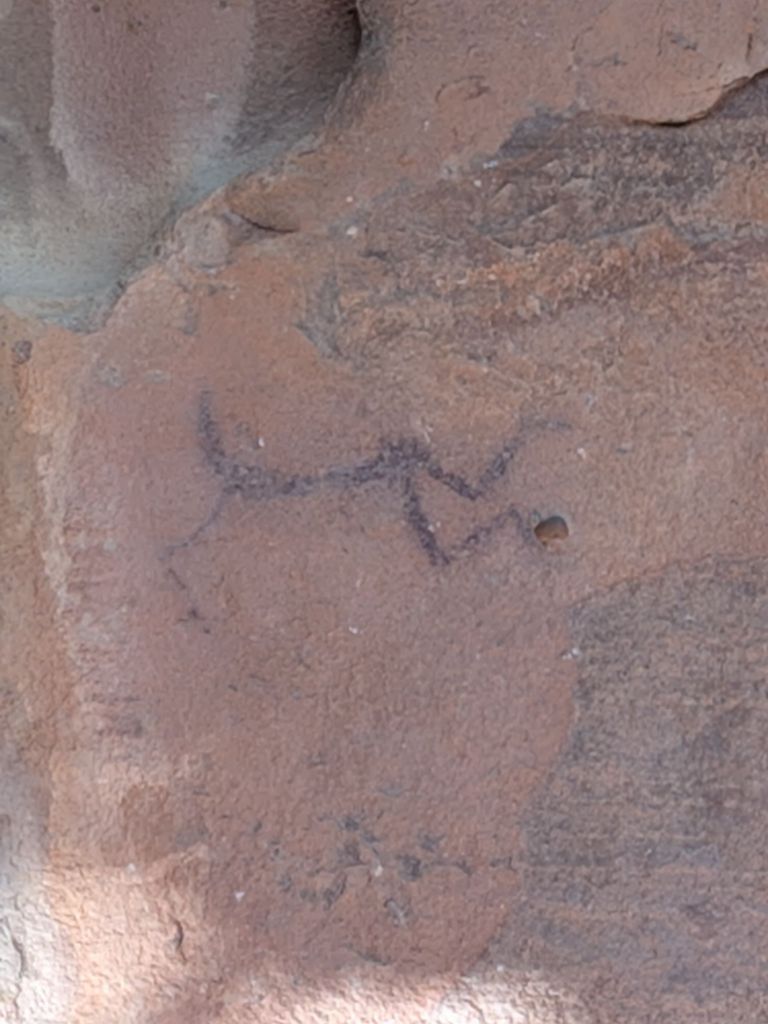
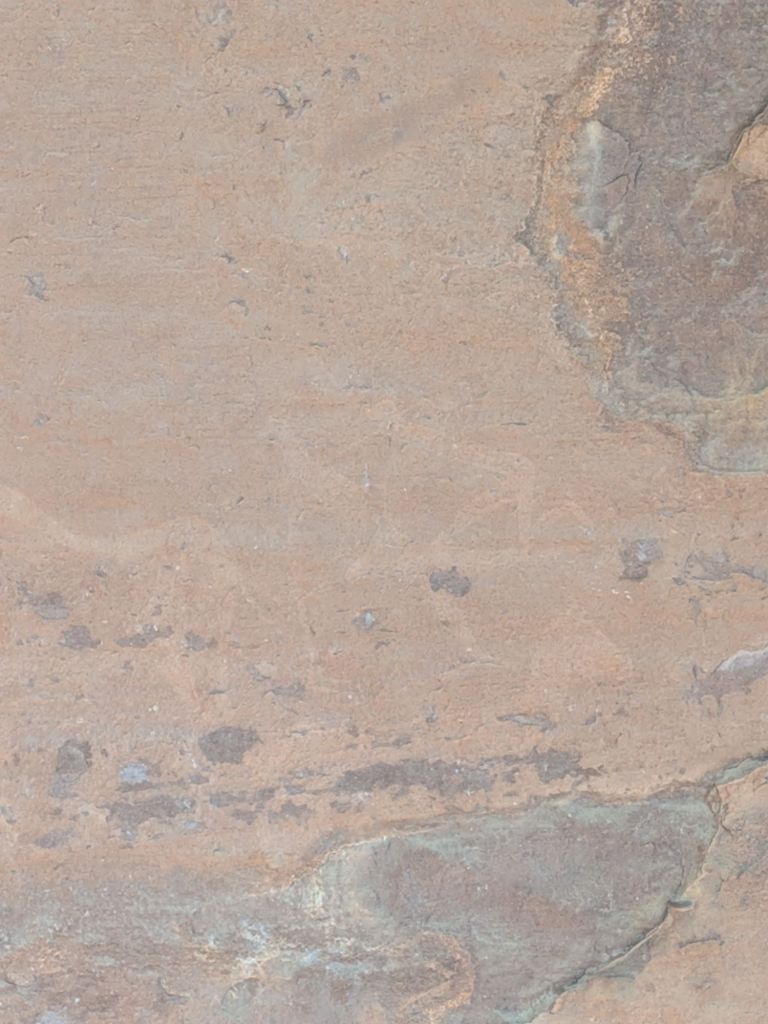
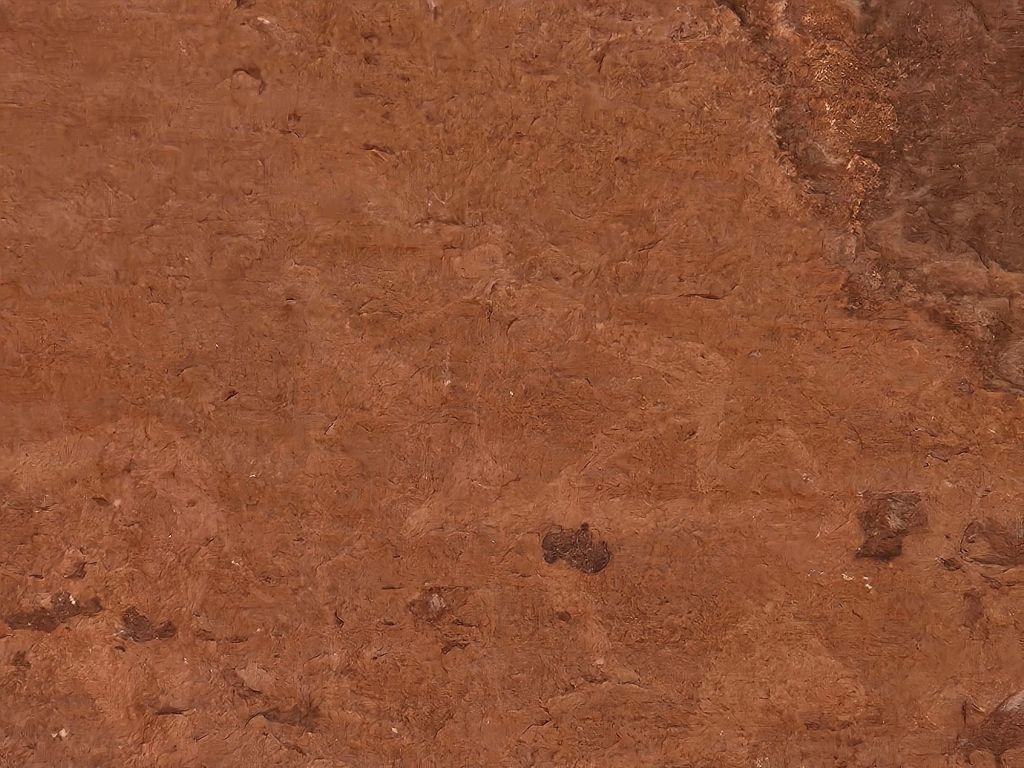
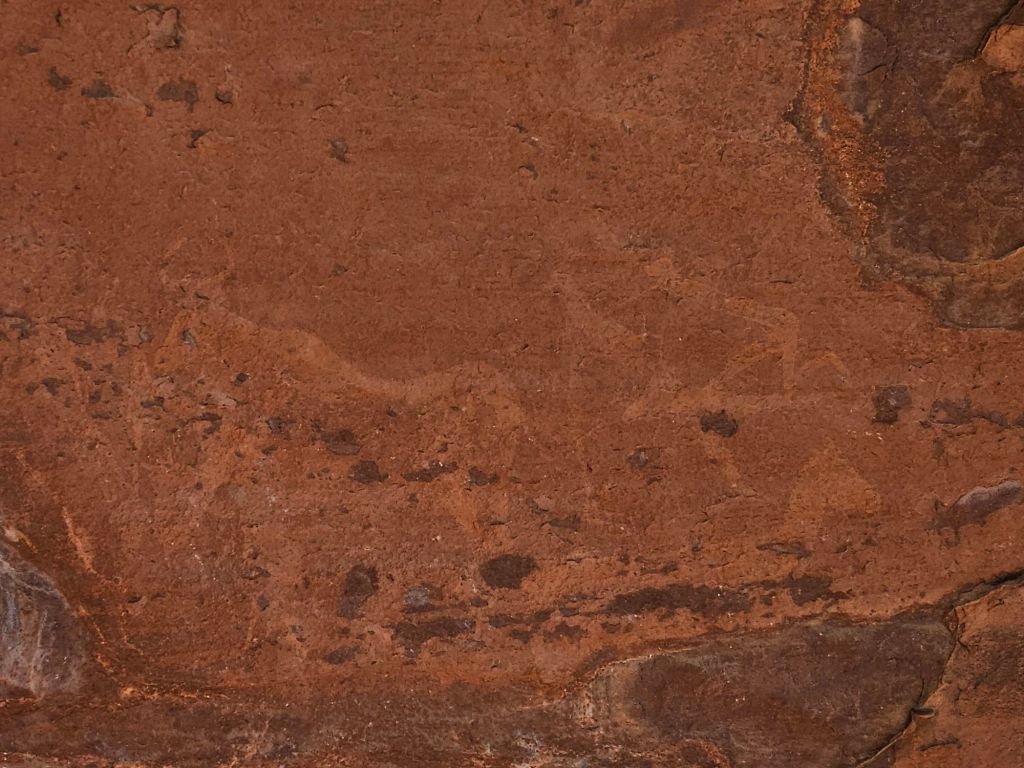
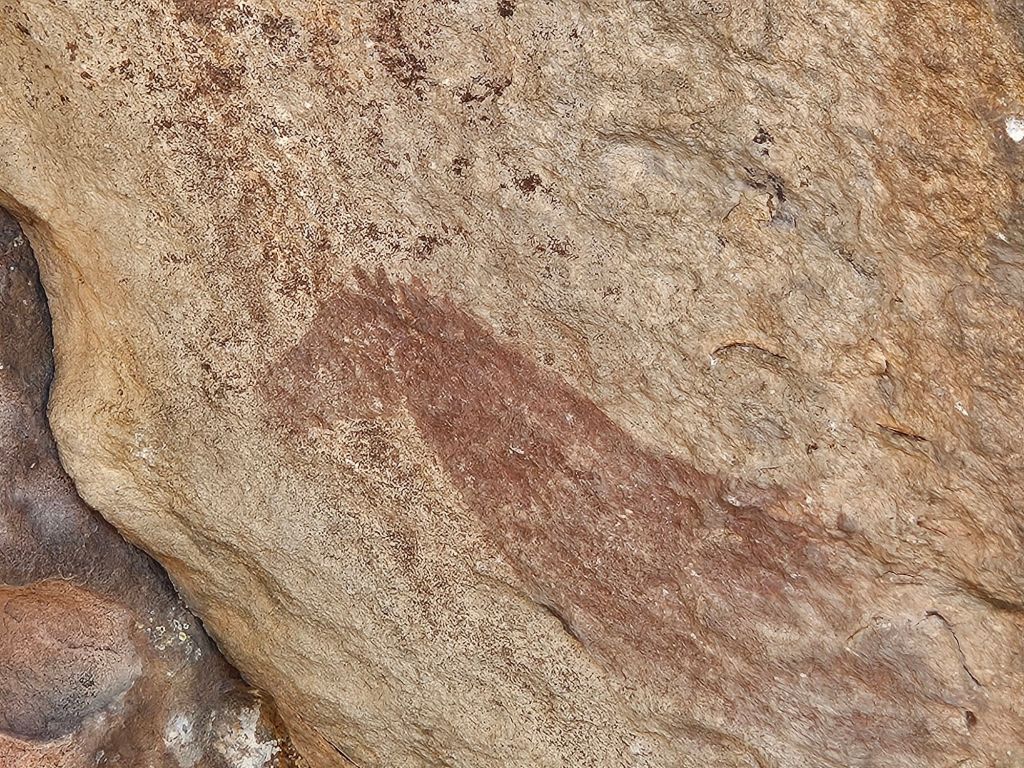
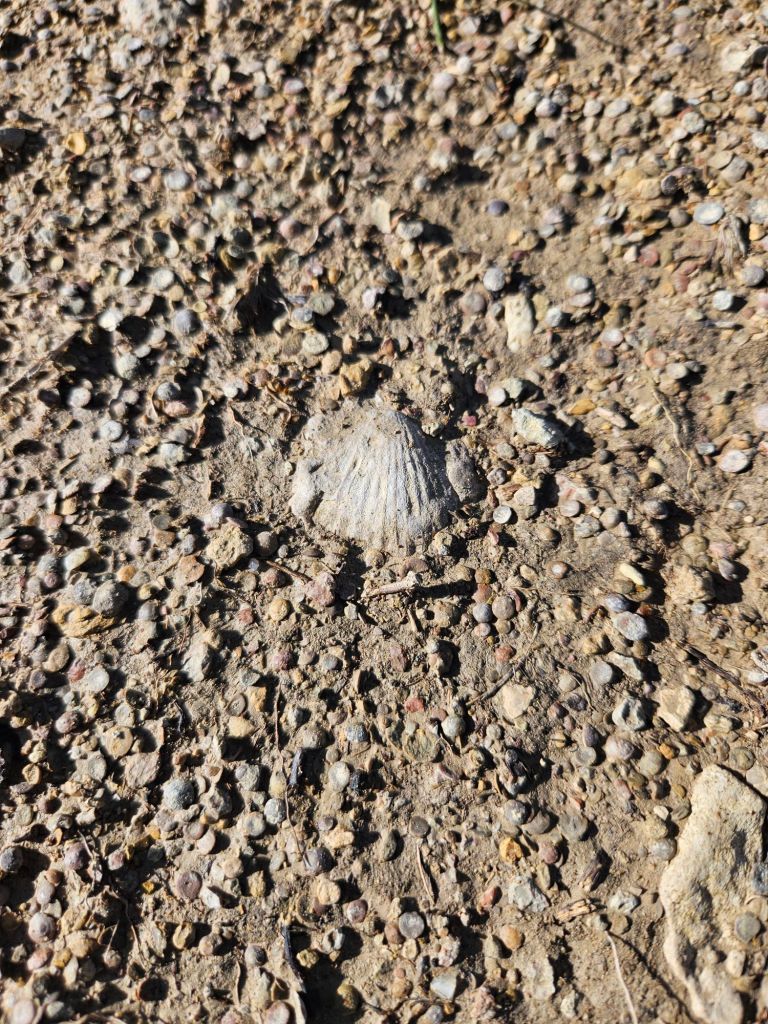
But the rock art, dated to between 4000 and 7000 years old, was pretty cool too, if mostly very hard to see:
Extra pics from K

Albarracín, day 1

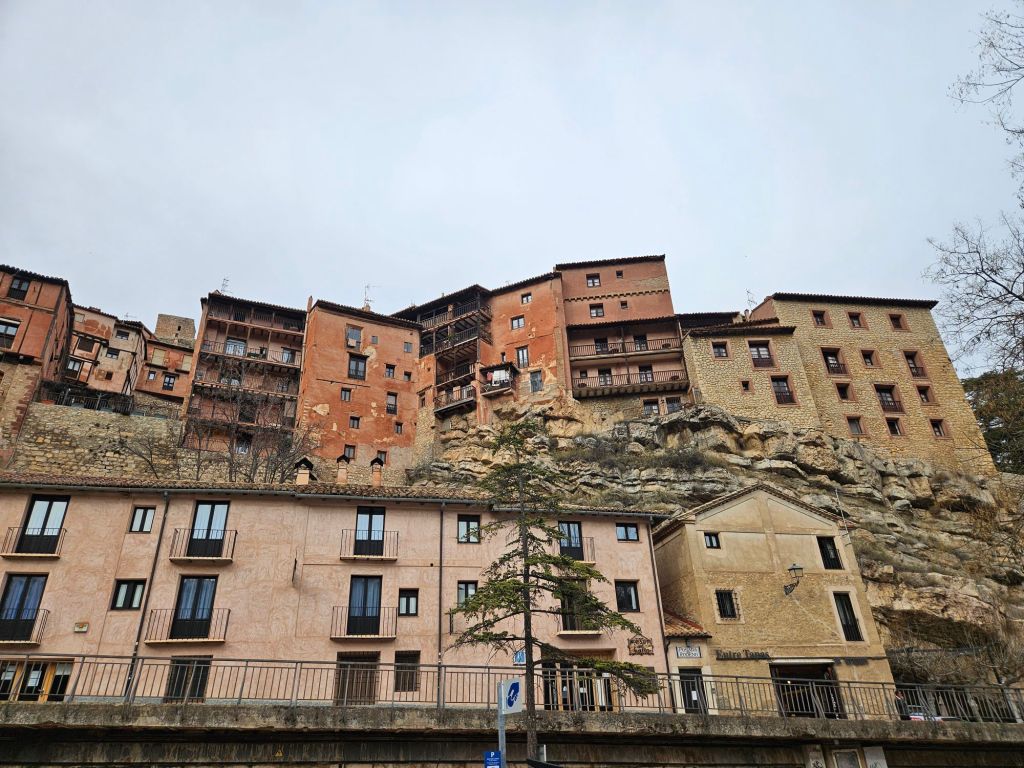
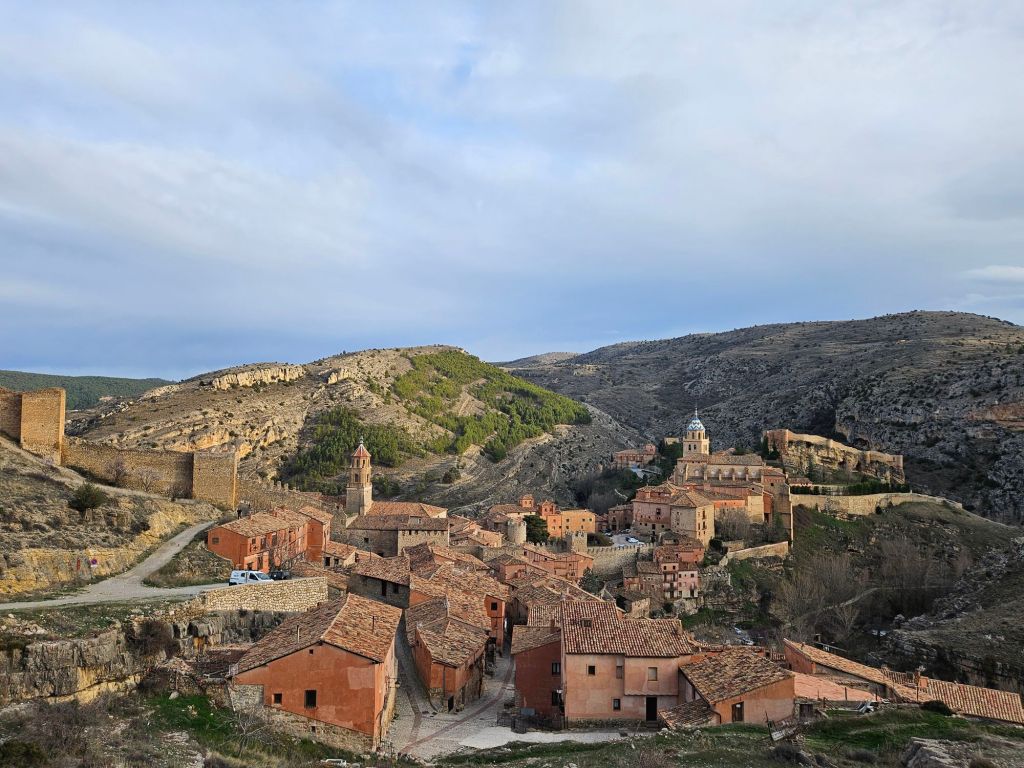
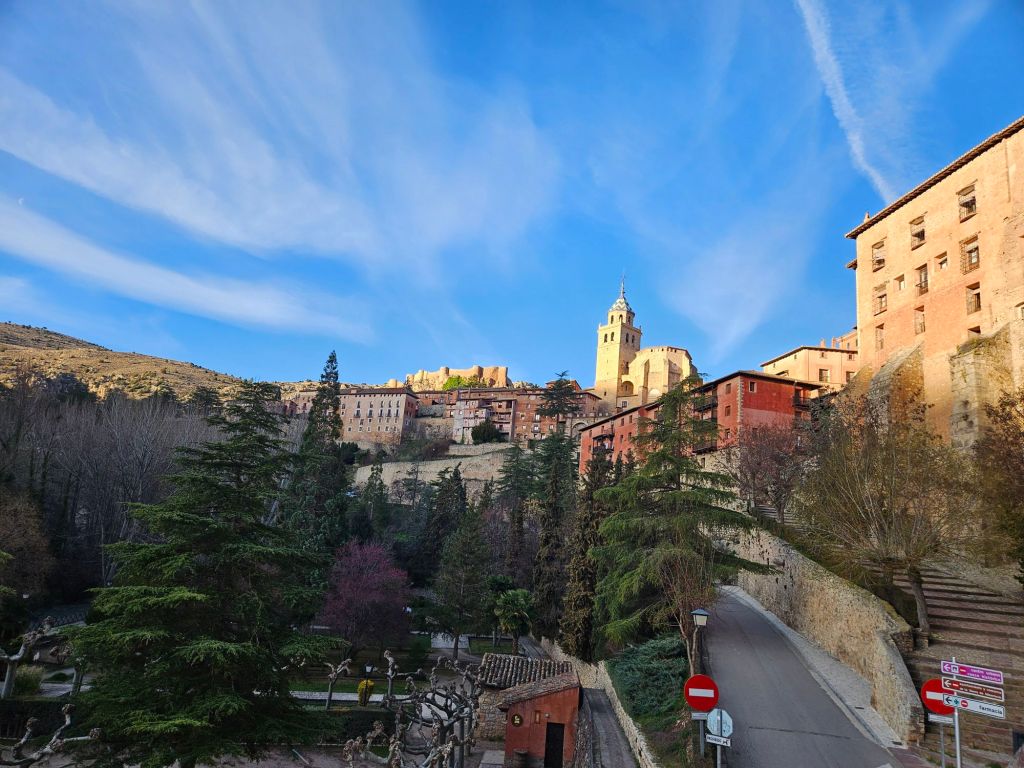
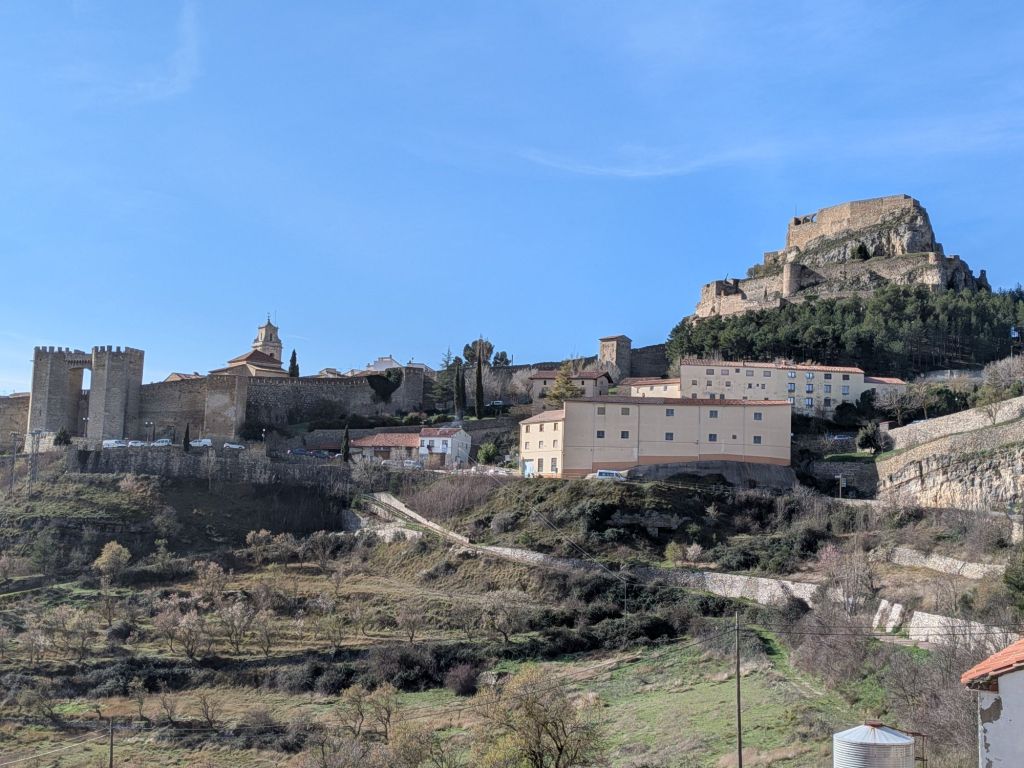
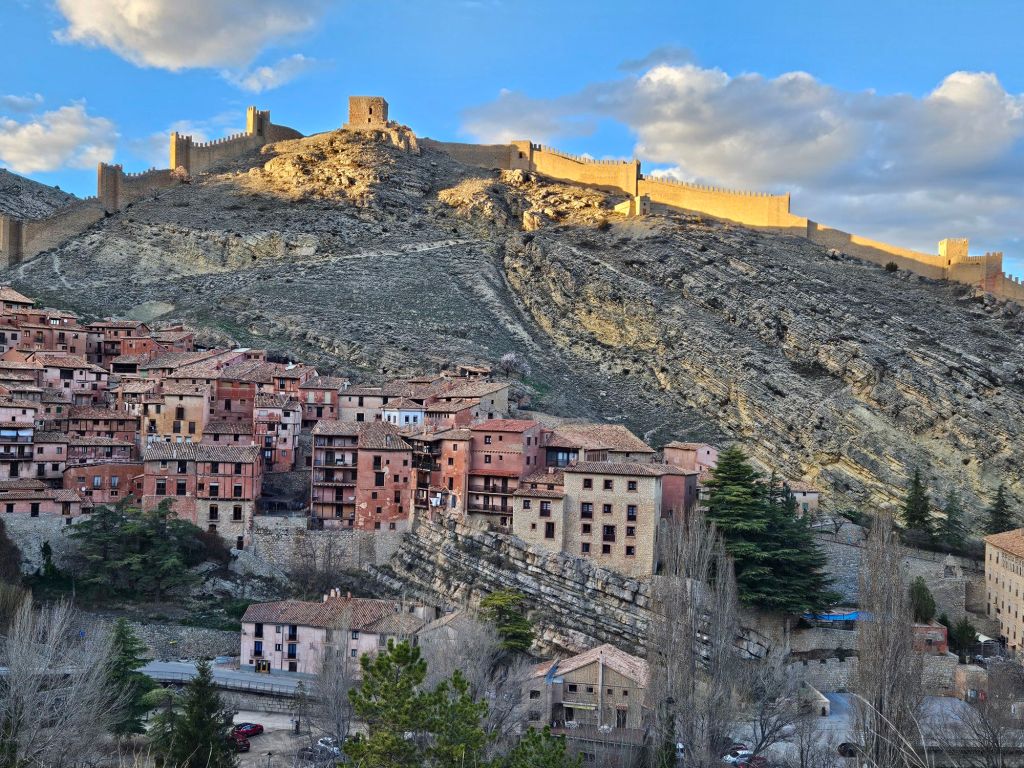
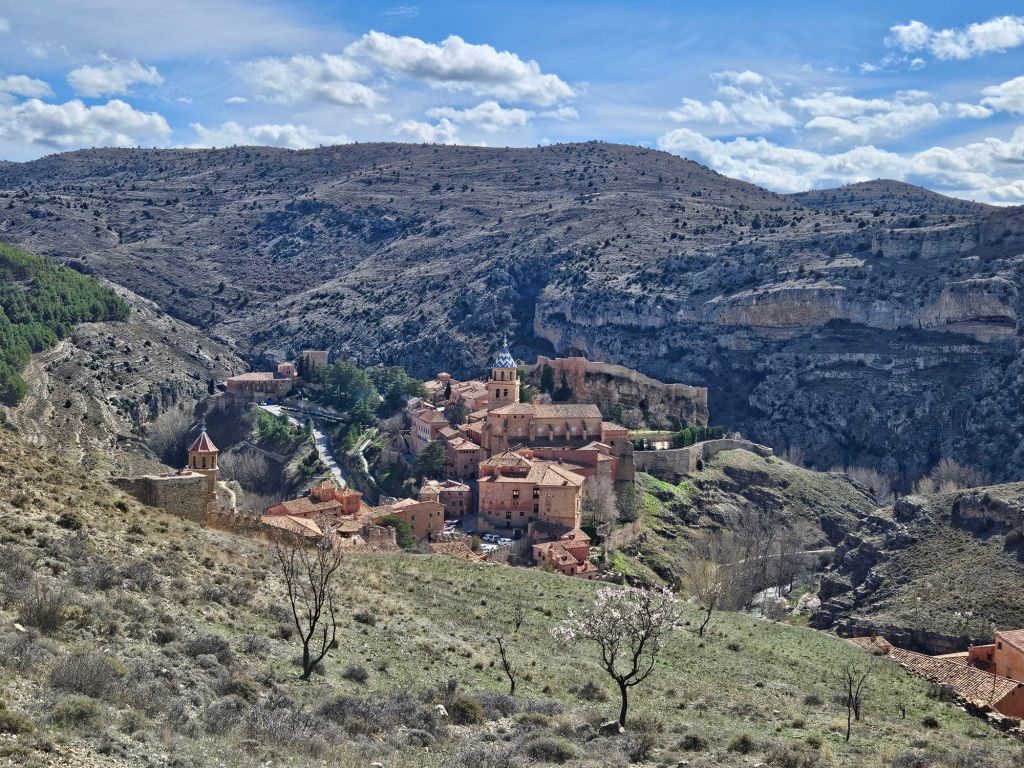
After our wrong way, steep hill, narrowly avoiding death drive into Morella (ok, it wasn’t that bad, just that stressful) I congratulated myself on having insisted on a hotel at the bottom of the hilltop town of Albarracin. That’s our hotel at the bottom of the pic above, with the first layer of the old town visible above. I took the photo from the easy access, large level parking lot just across the street.

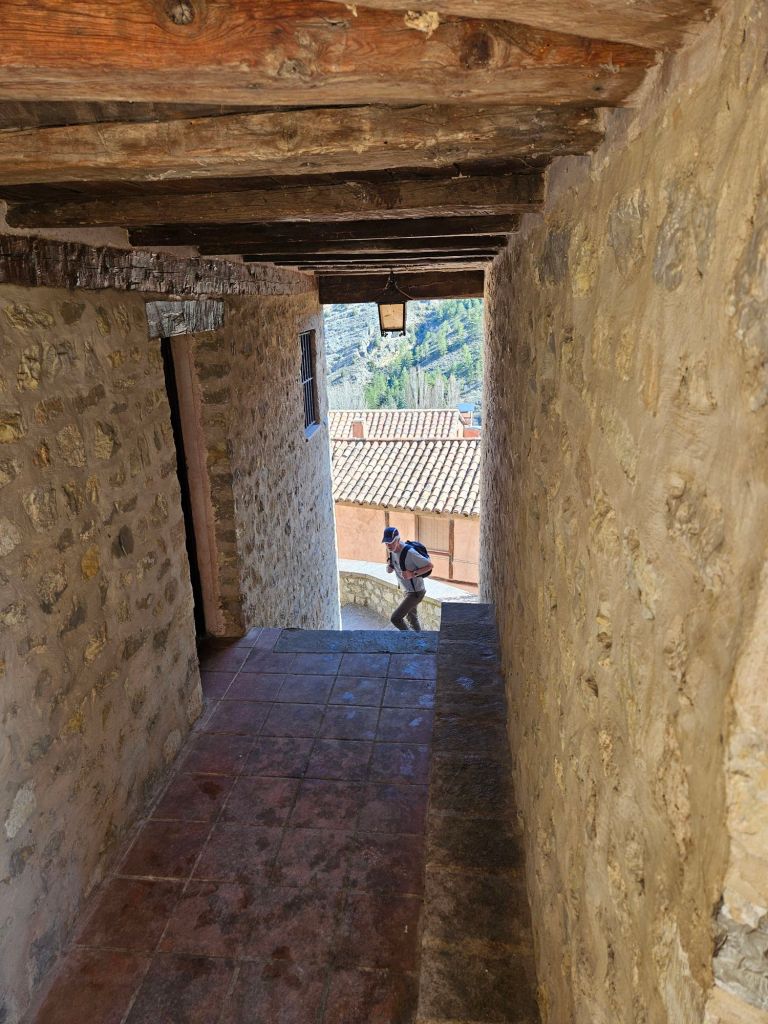
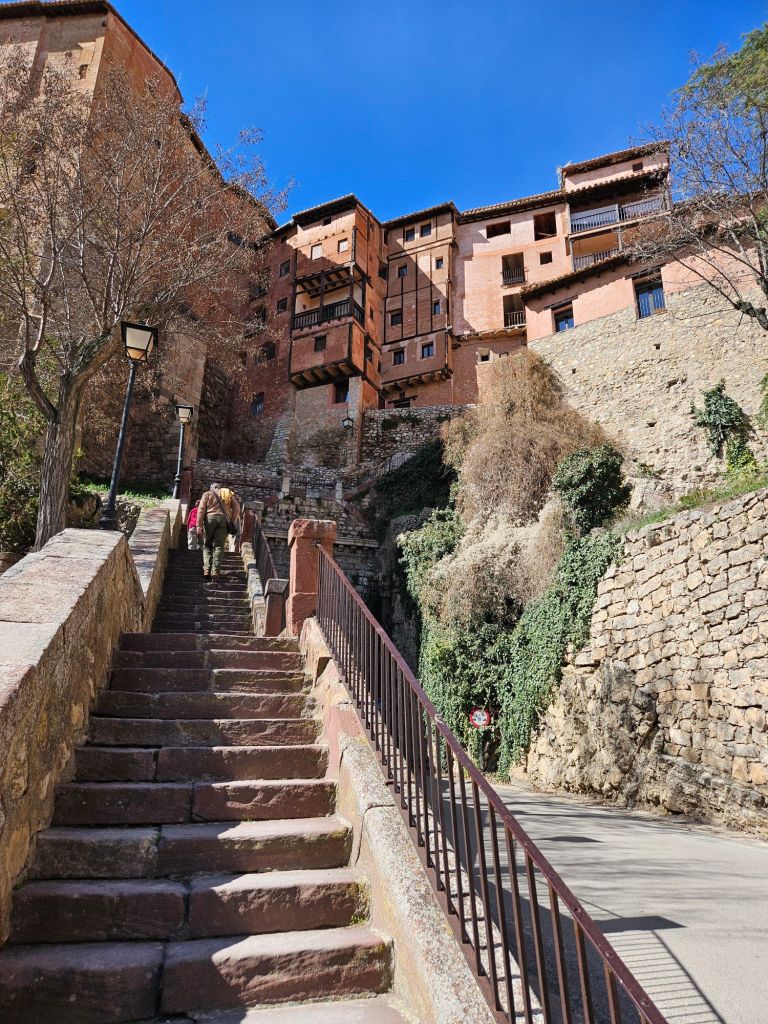
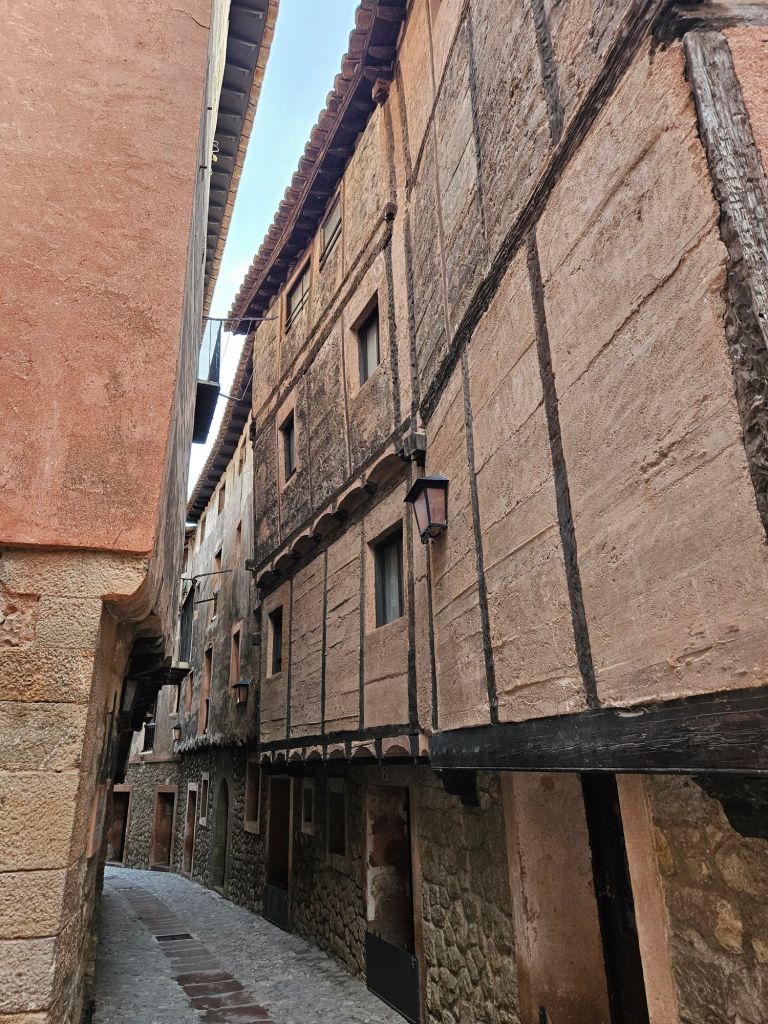
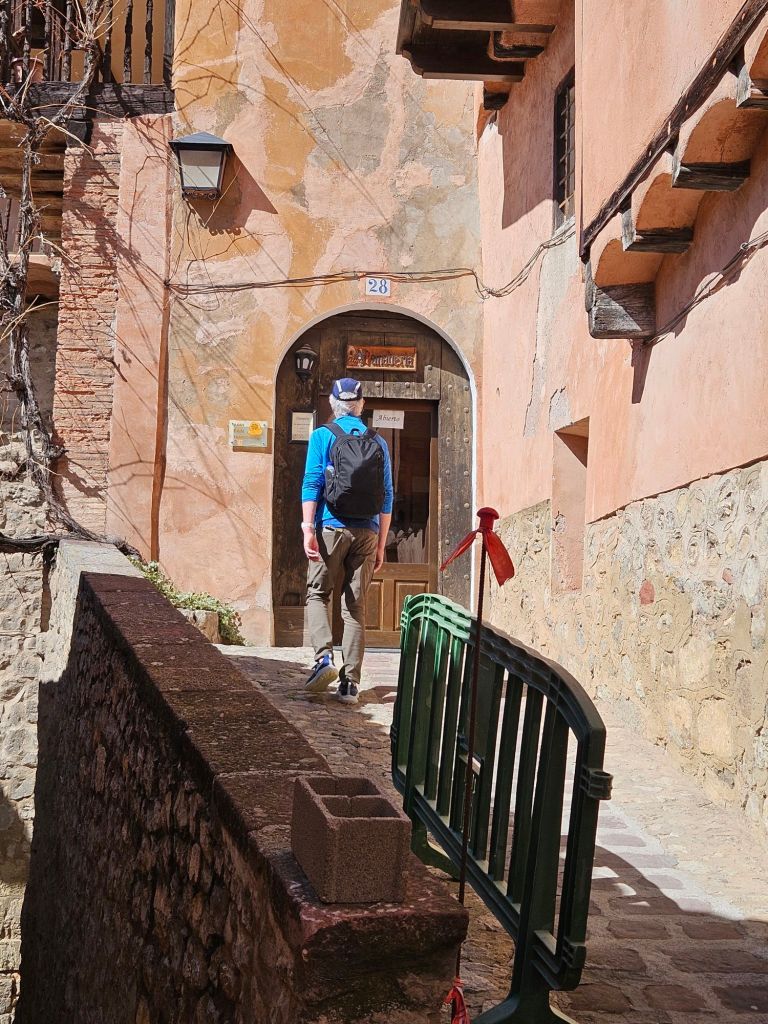
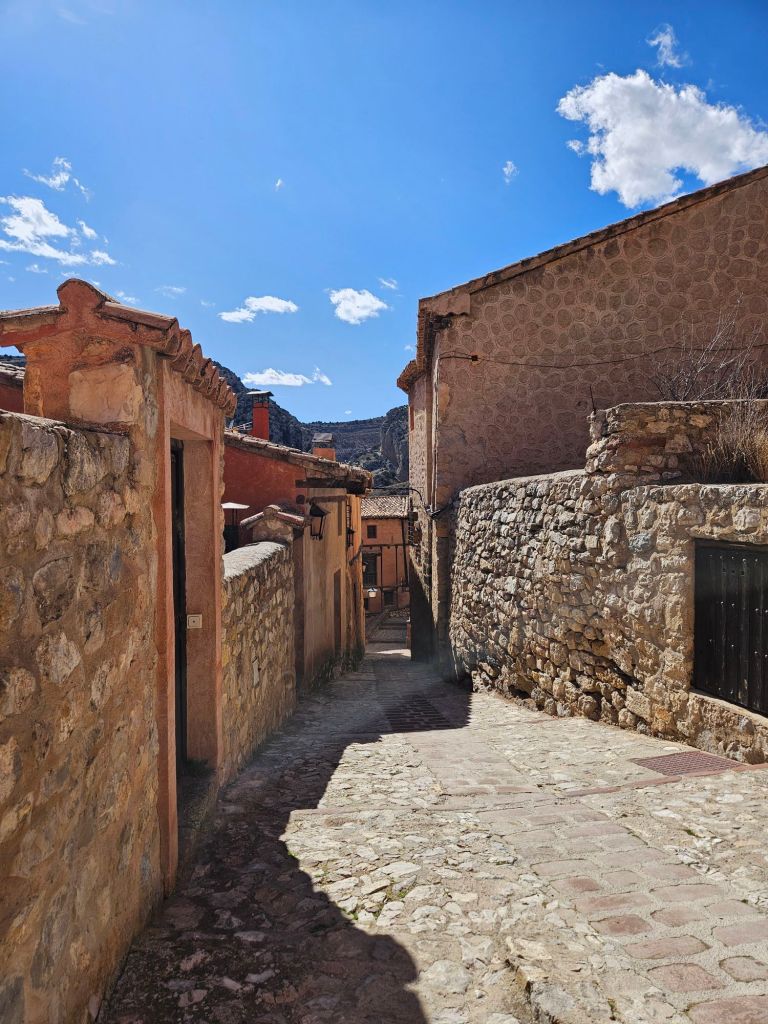
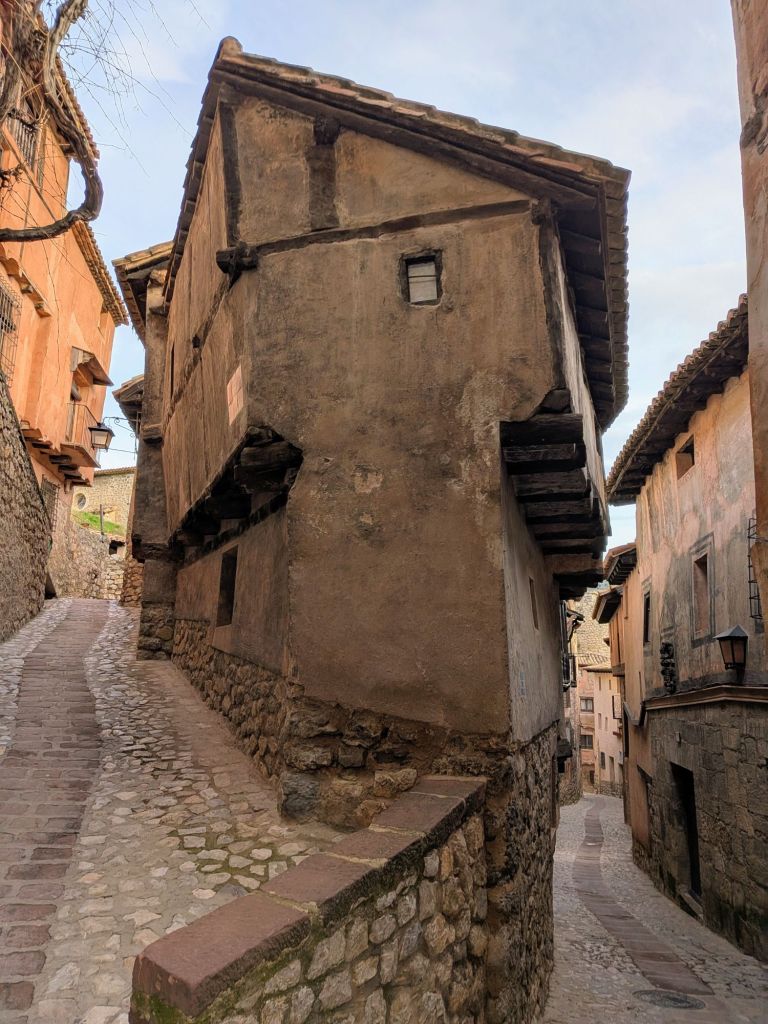
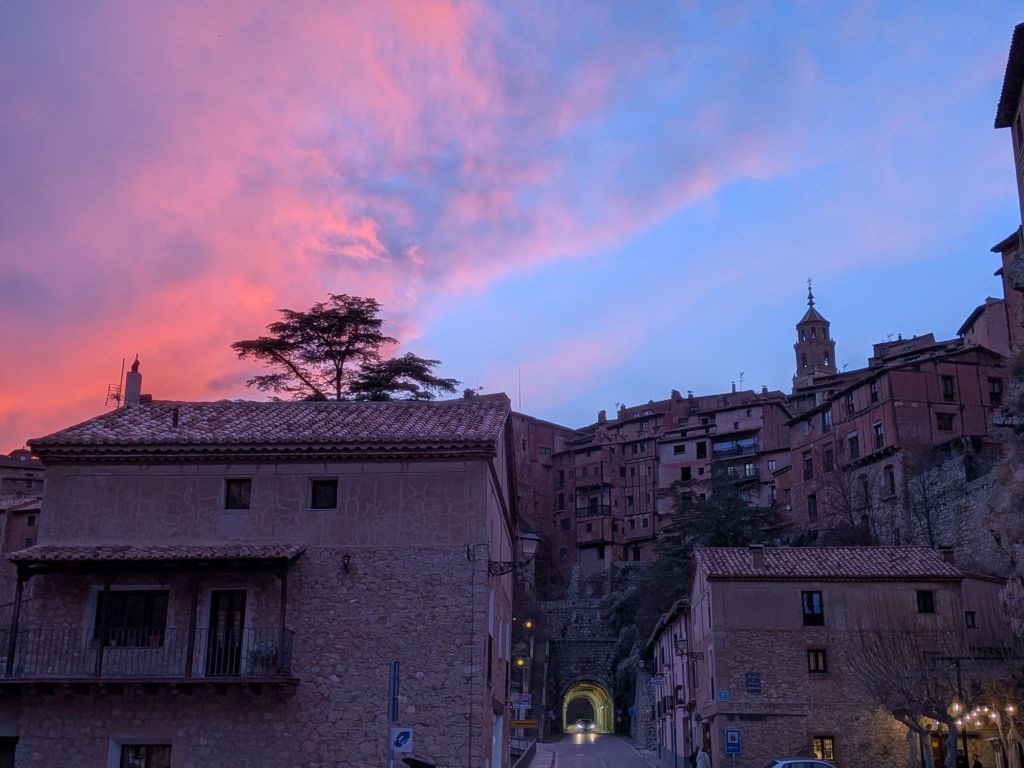
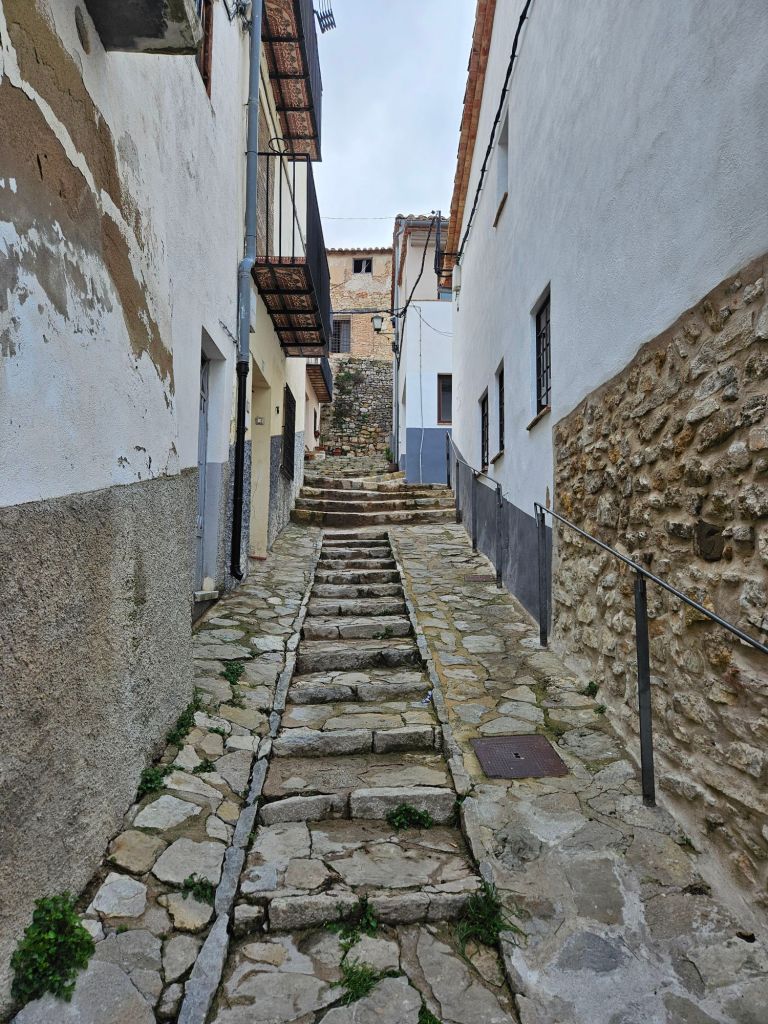
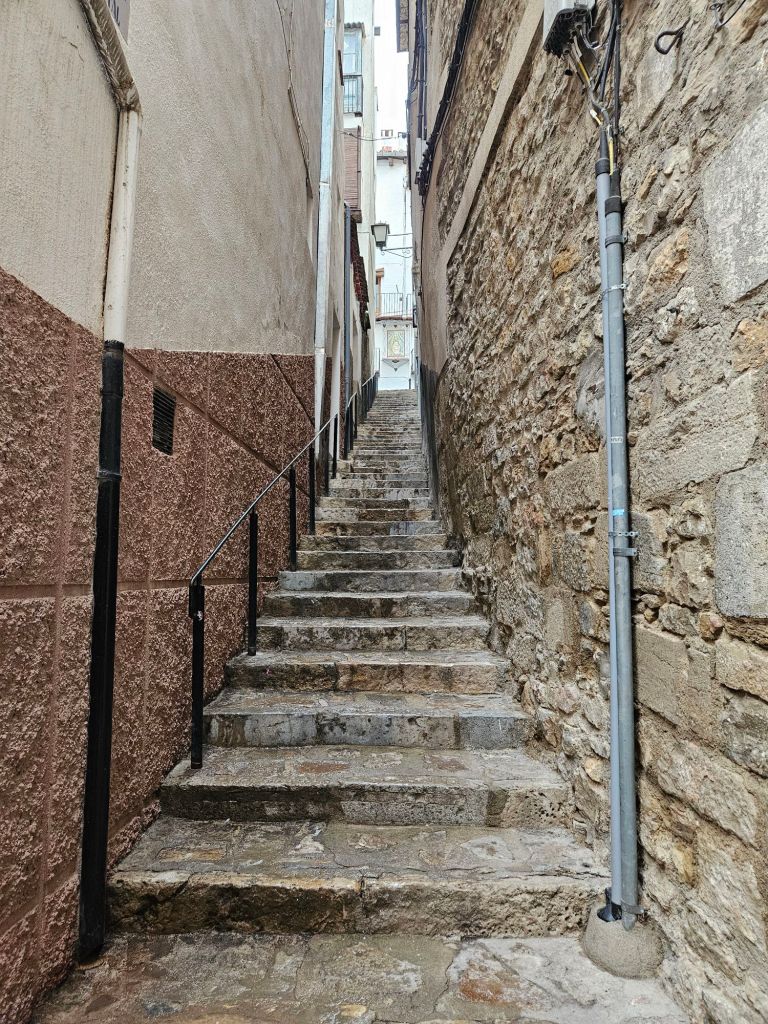
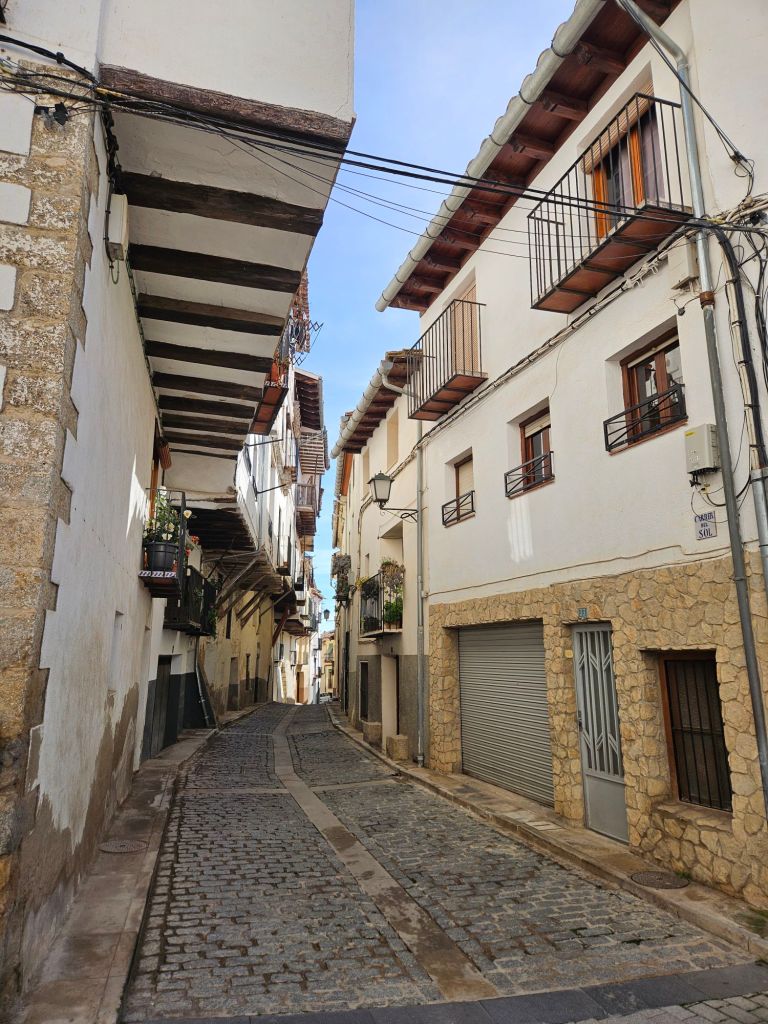
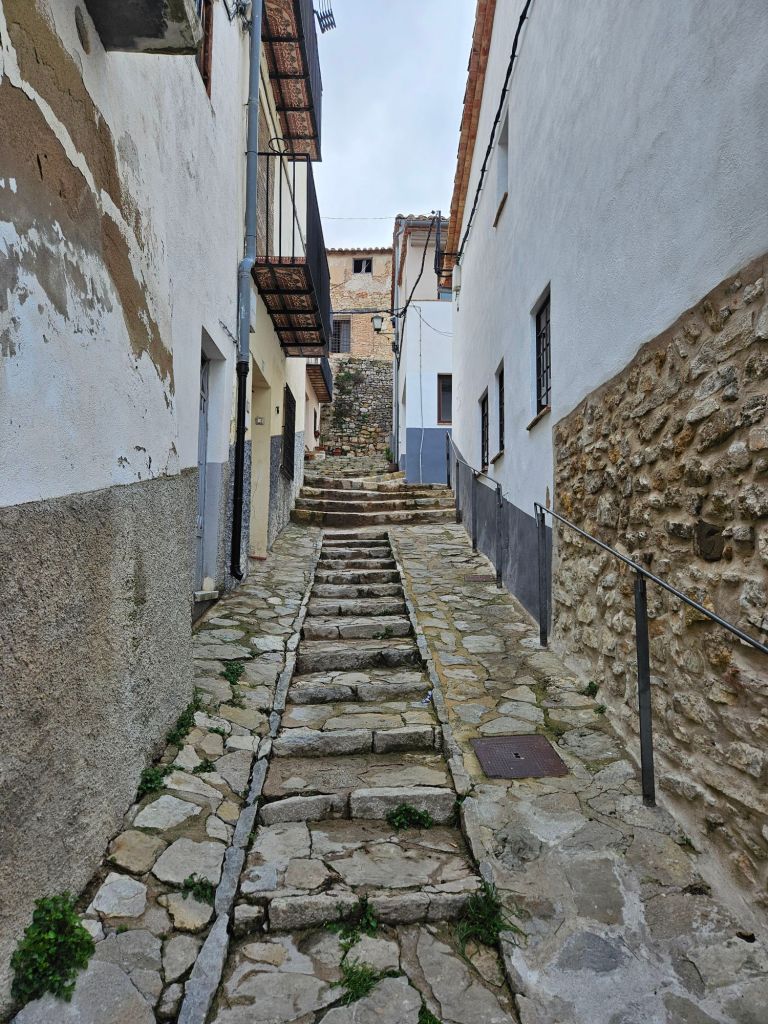
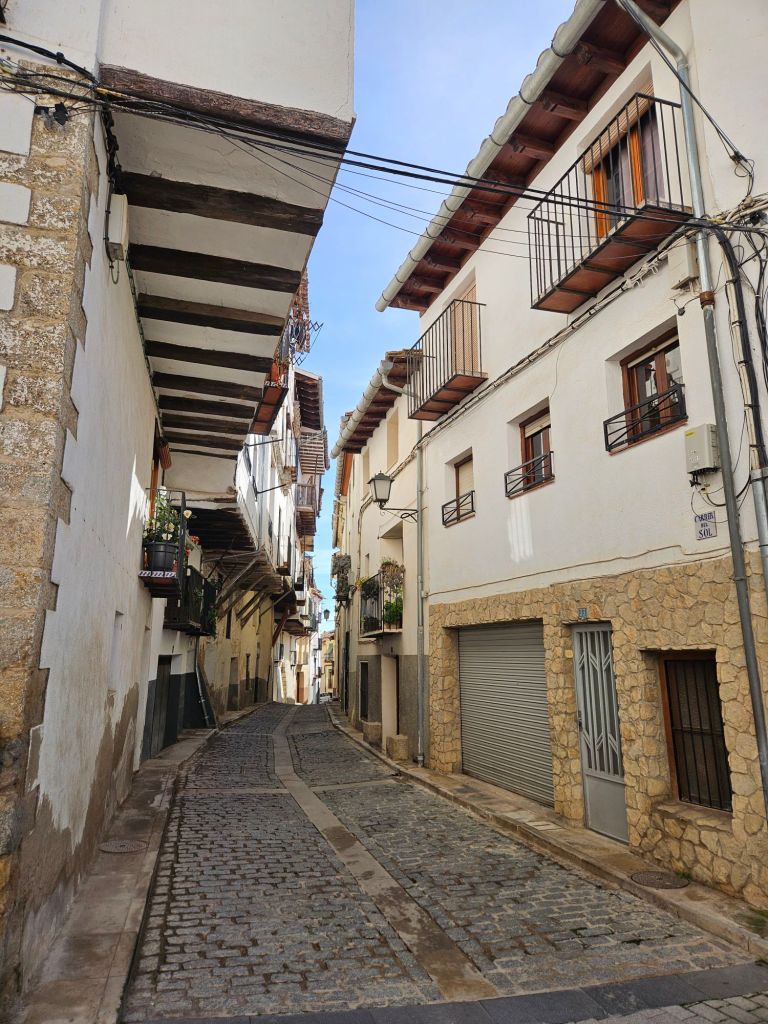
And then we decided to go exploring. Up the stairs. And up, and up, and up, through tiny cobblestone  “roads” and passageways. Over 100 steps just to get to the lower part of the old town. My thighs and lungs were questioning my hotel choice.

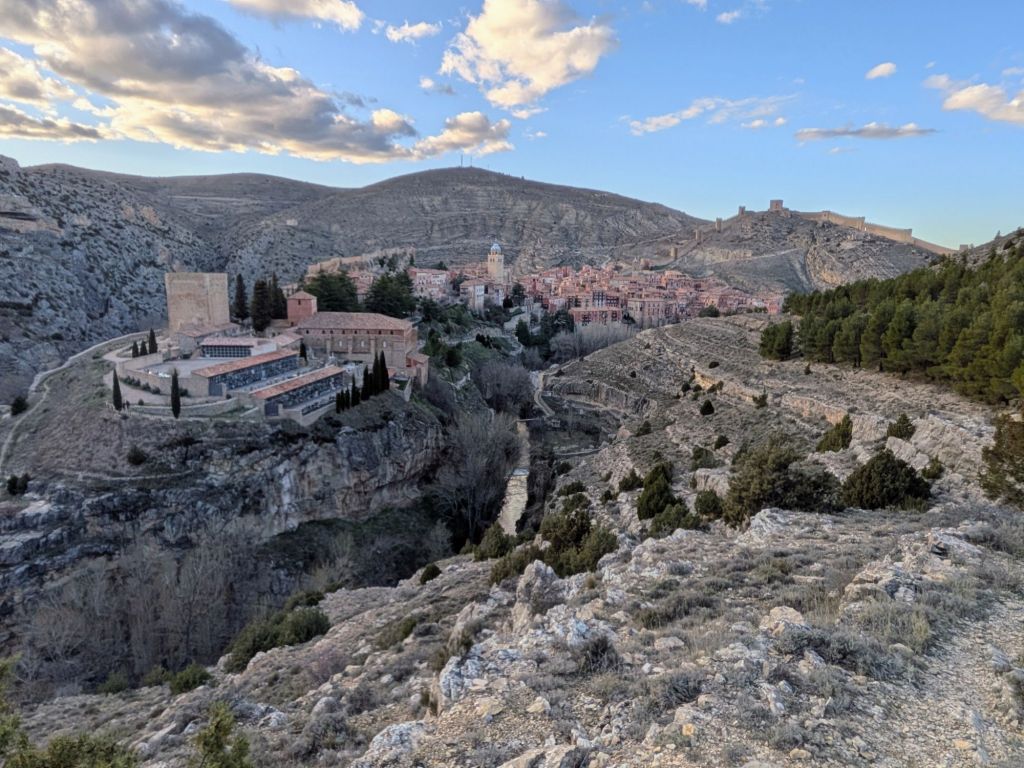
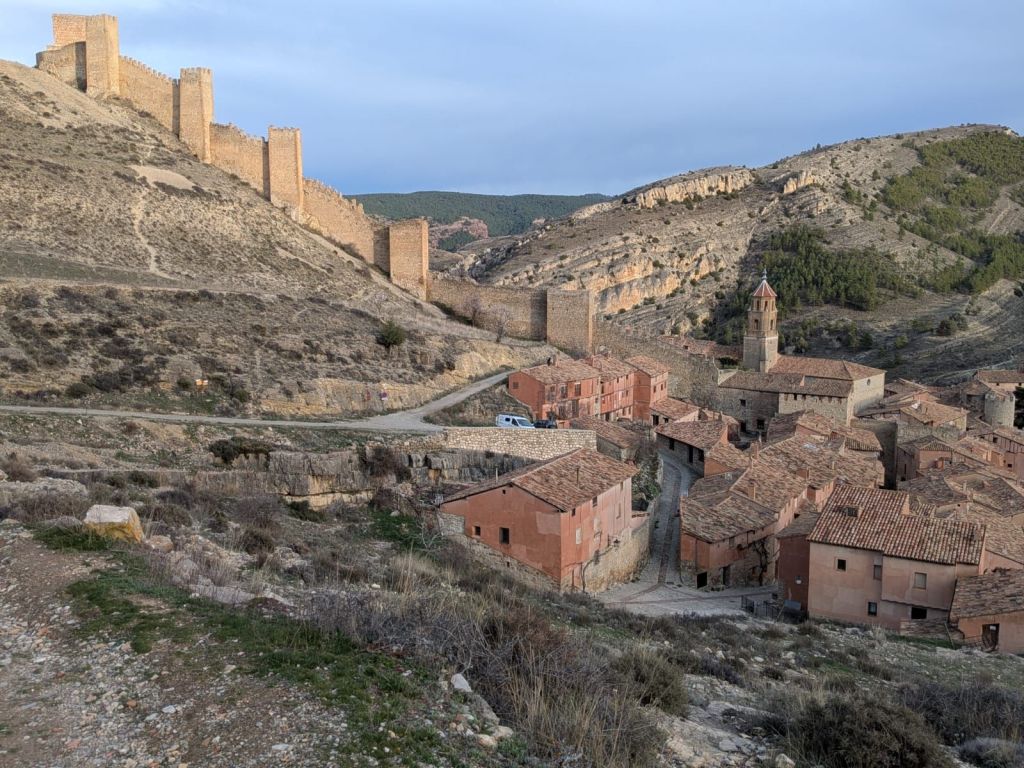
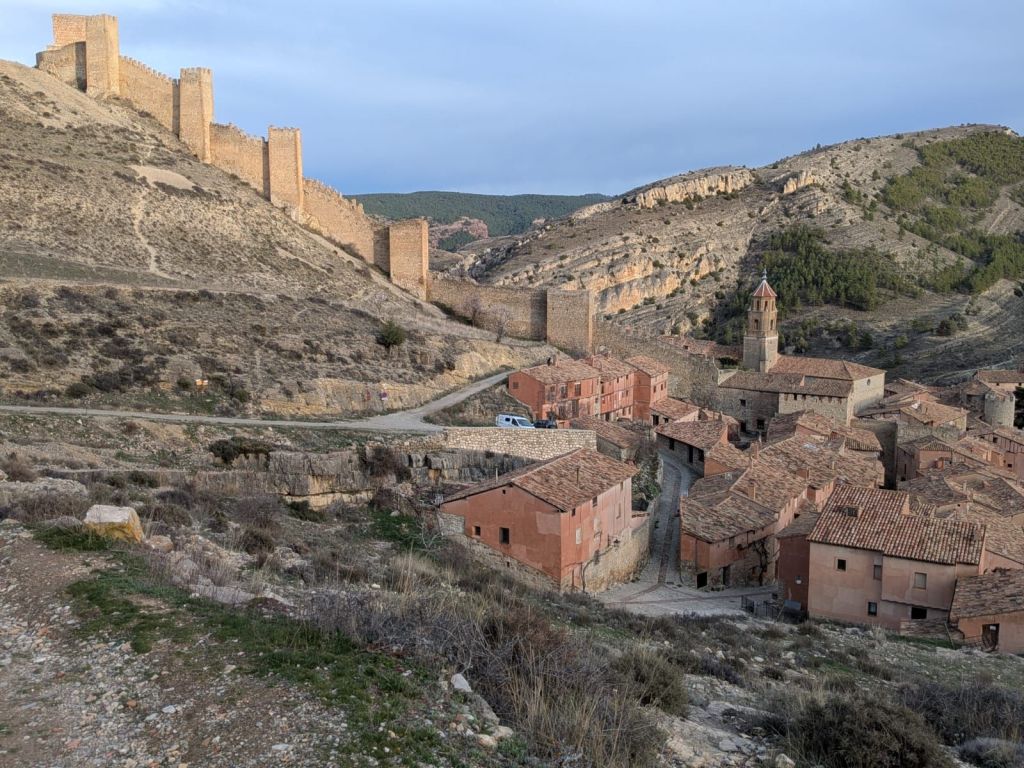
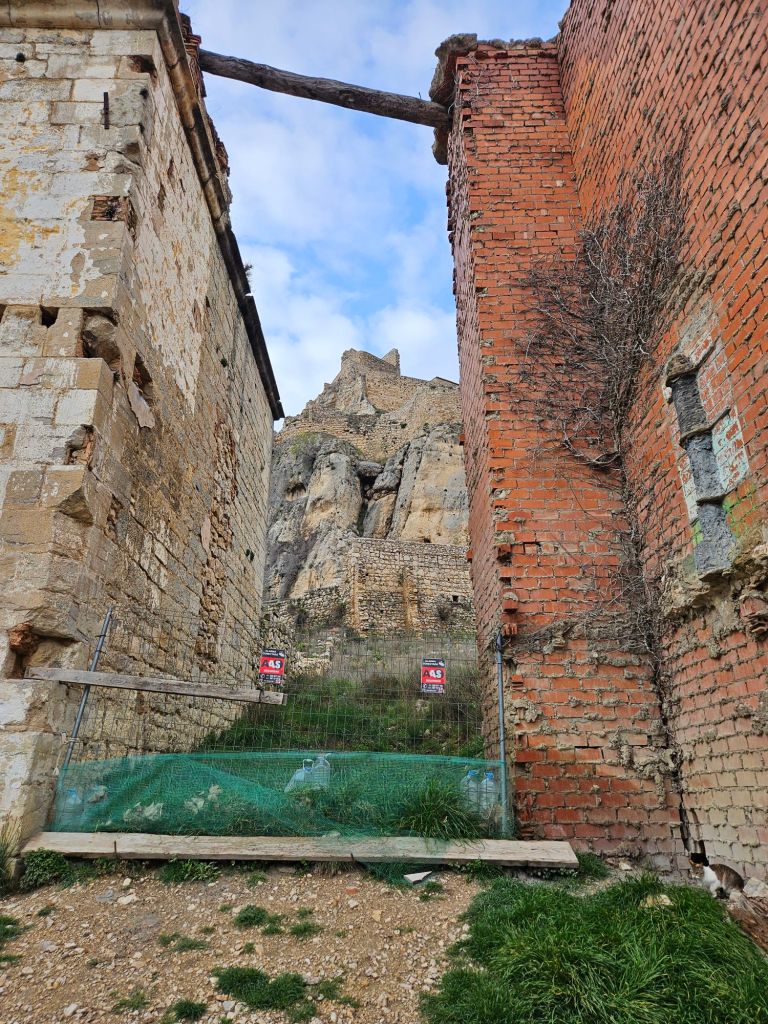
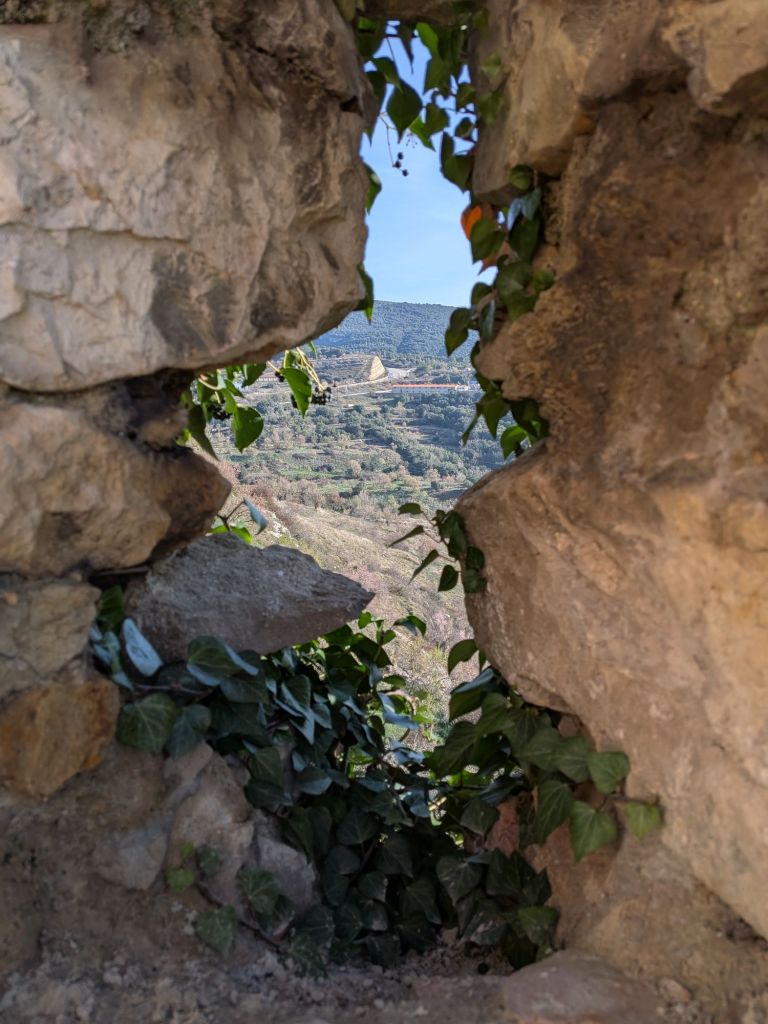
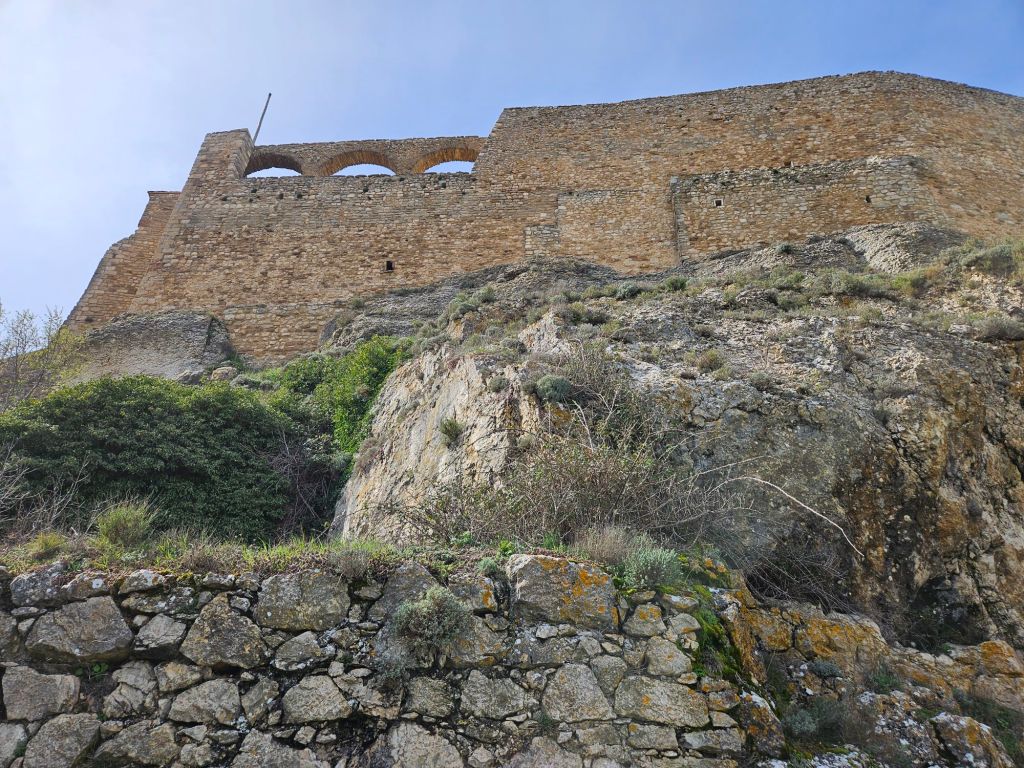
But eventually we got above the town to the walls. From there we could see the oldest castle and wall parts off to right–originally Arabic and built around 900 AD–and to our left the new walls, built around 1600 AD by the Christians. In between, in a vaguely kidney bean shape dictated by the river gorges, the town.

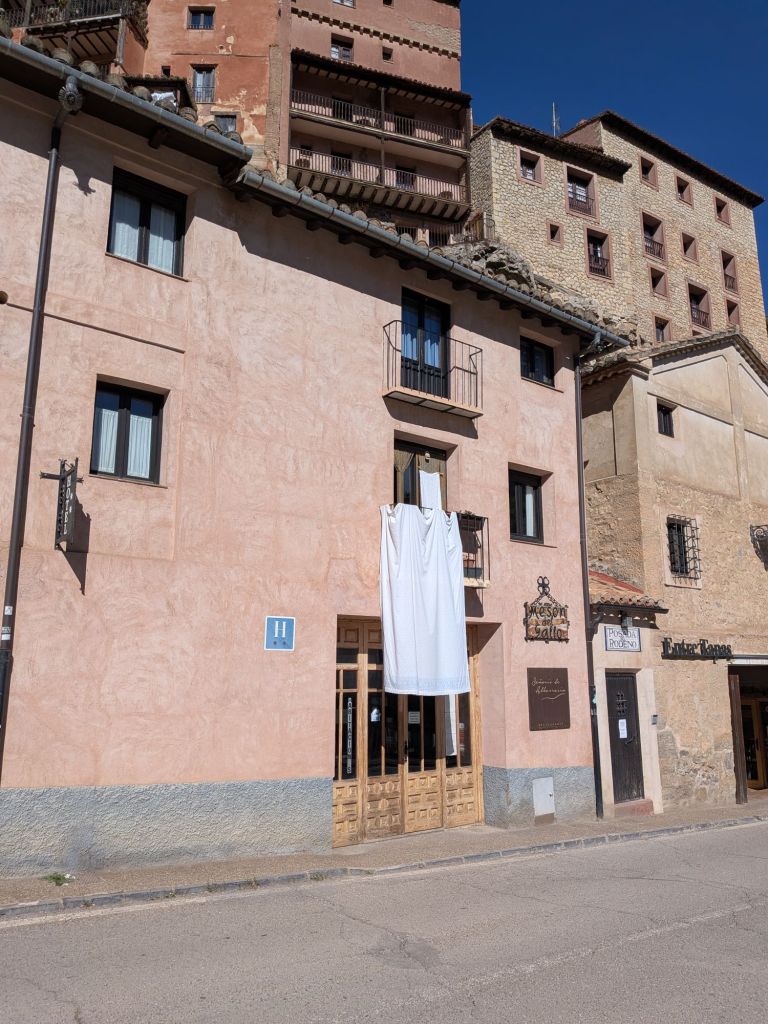
Eventually we made our way down and back to our 2 two star but very comfy hotel El Meson de Gallo. (Very grateful for the enthusiastic radiators. Went down to 32 each night.)

After a brief respite, time for dinner. Back up the stairs again, though this time we found a route with only 54 actual steps and the rest a steep cobblestone road. Not much was open (mid-week during the off season), but we landed in a delightful tiny 4 table bar, where the waitress was kind and the food basic but tasty – an excellent ratatouille with an improbably huge fried egg on top; a big mound of patatas bravas – and the walls and ceiling covered with penned in names of anyone who had ever visited.

Back down the hill and to bed.

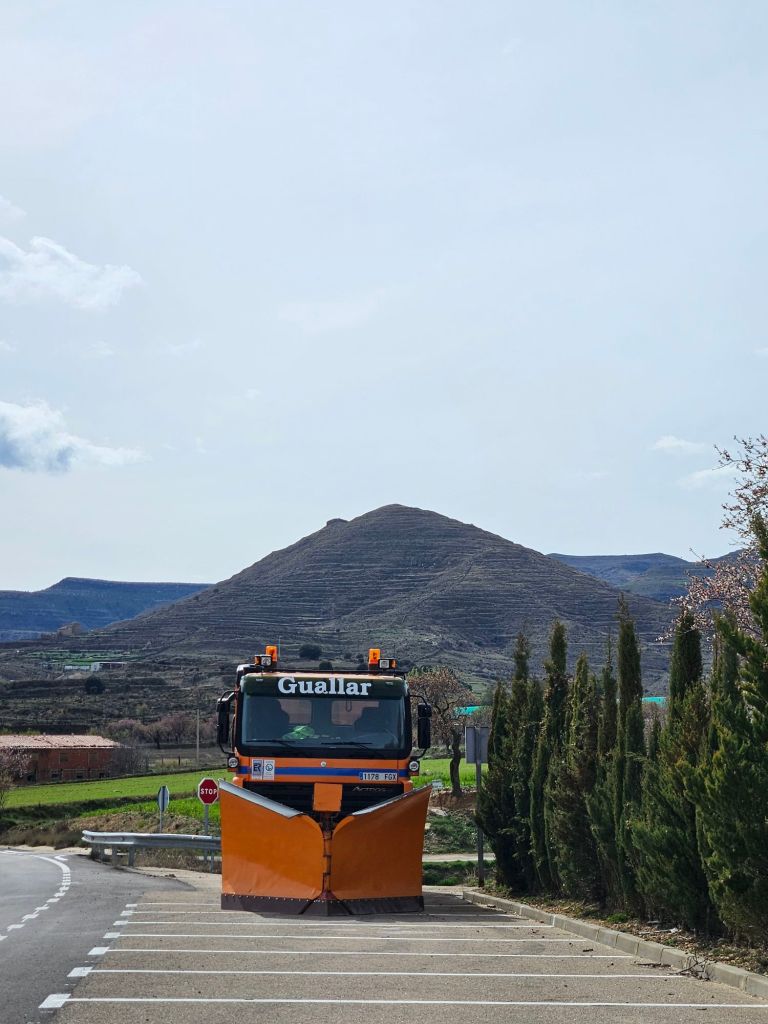
Oh look, a snow plow

I tried not to think of this as an ominous sign as we headed into the mountains.

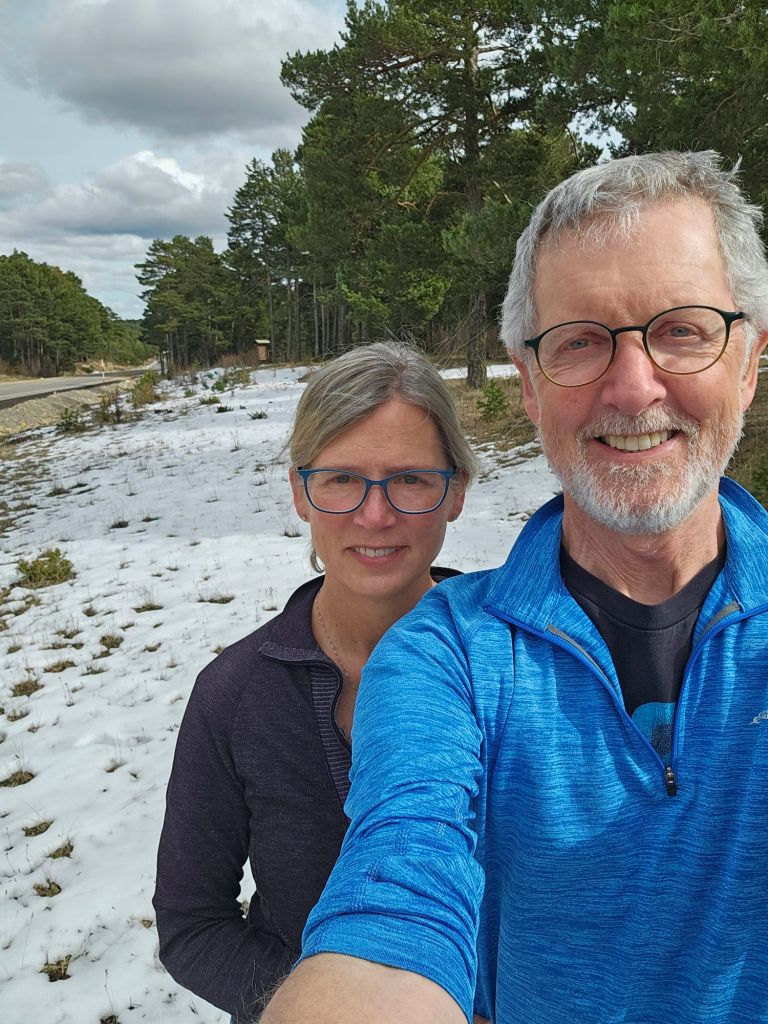
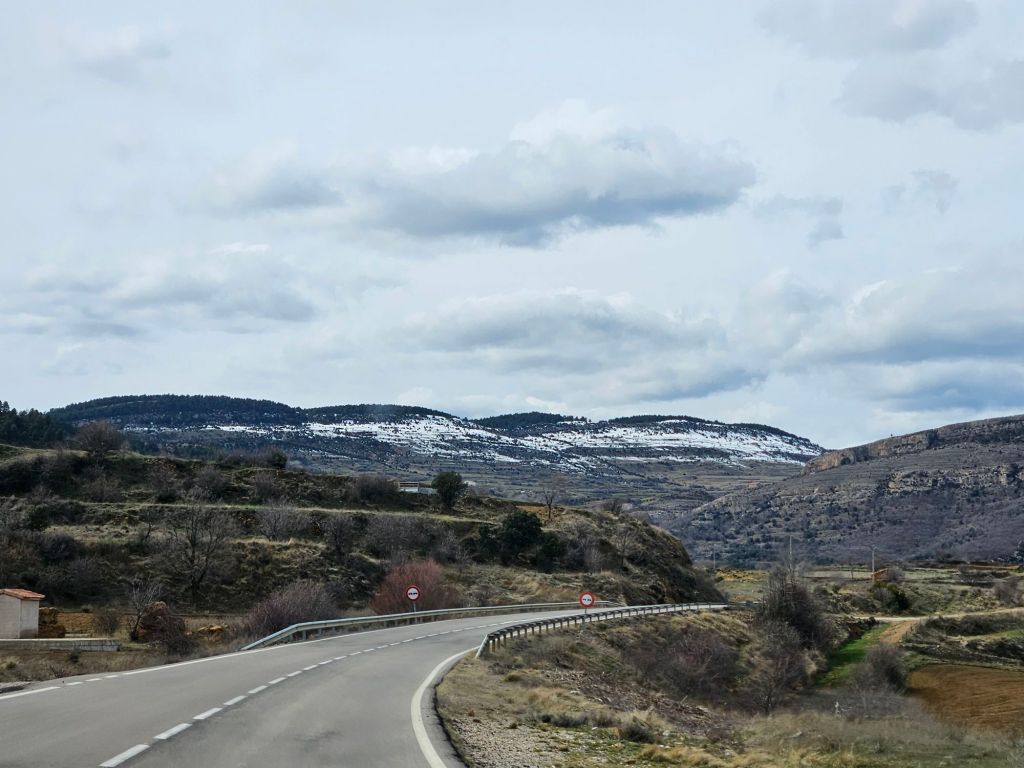
Fortunately, only small patches of snow remained at the top of the passes we drove through.

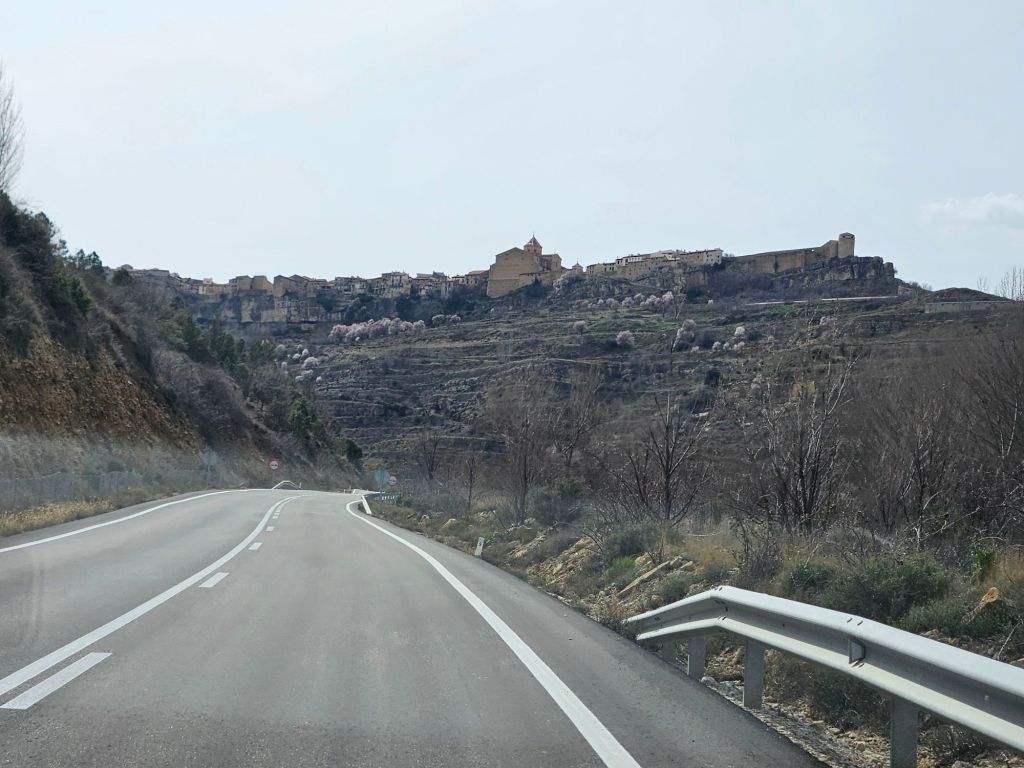
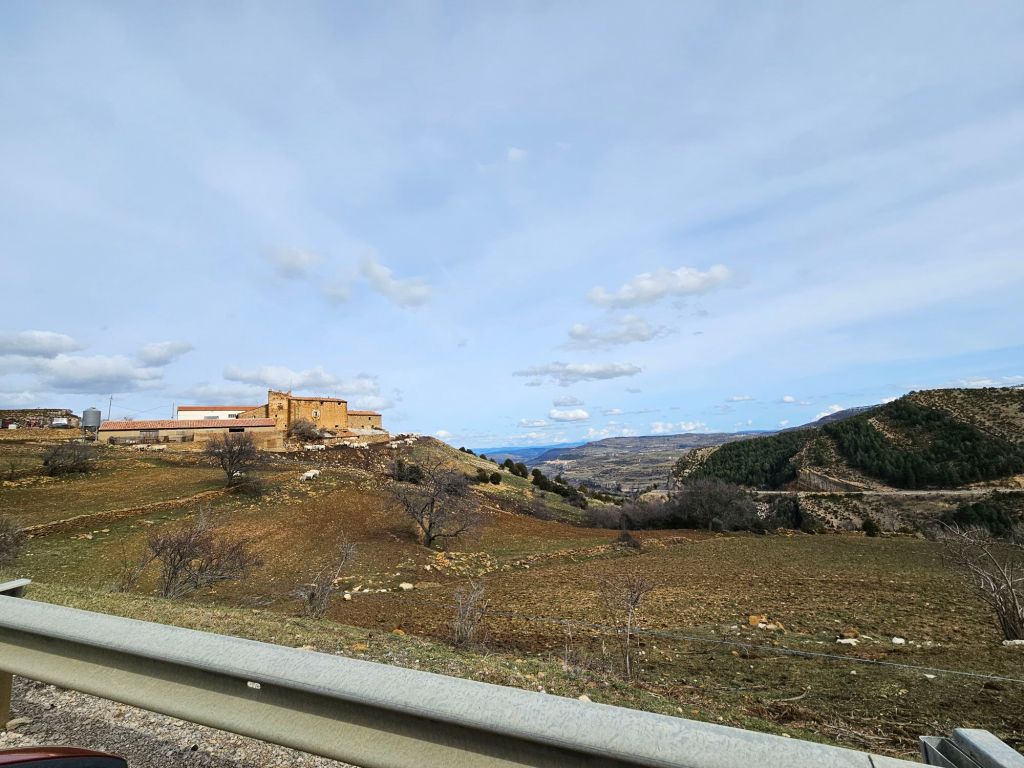
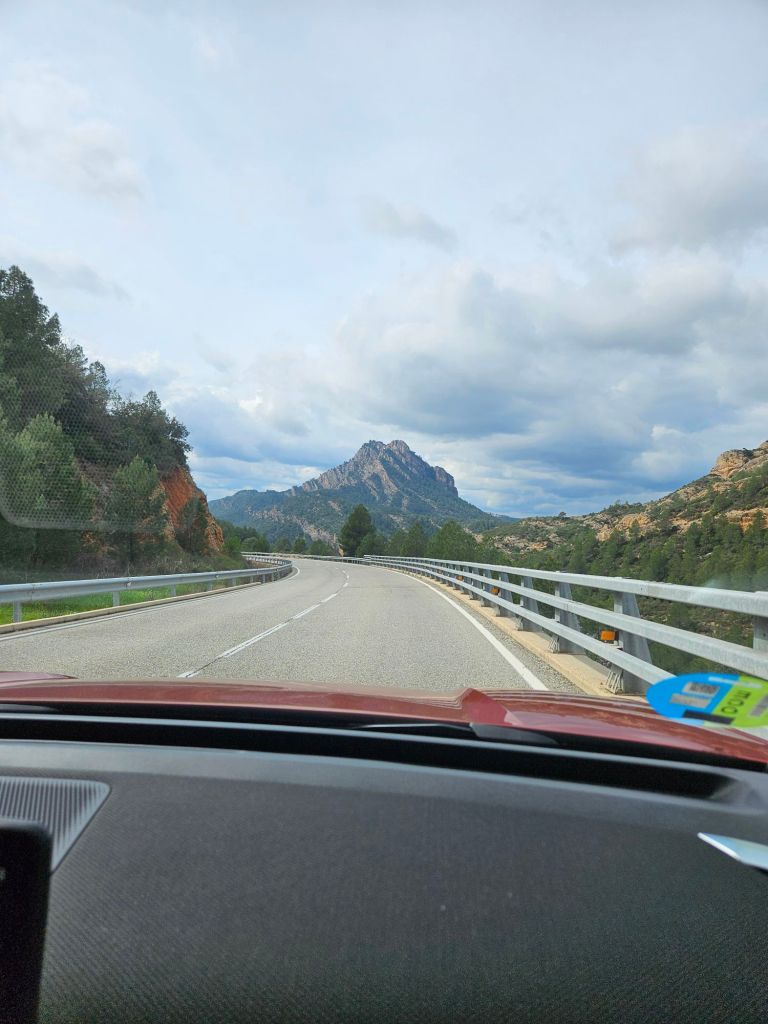
The landscape was both large and wild, yet dotted with small farms and towns in various states of repair.

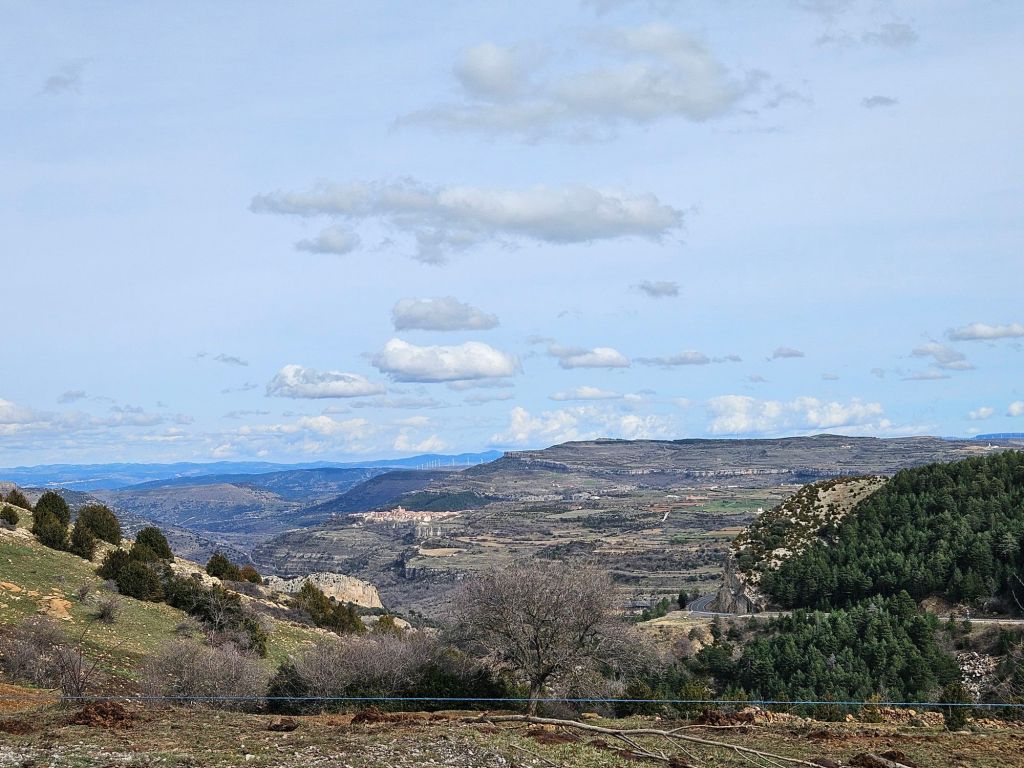
First pic above is the town of Cantavieja, seen from below, an especially dramatic place clinging to the prow of a mesa; the approach up that side is 1000 vertical feet of hairpins. But then on the other side you keep climbing, and climbing, to about 6000 ft. The last pic shows Cantavieja (left of center) far below, lost in the vastness of the landscape.

That was the first of three or four big ridges we crossed. Grateful for a brand new rental car (12 km on the clock when we picked it up) with new brakes.

El castillo de Morella

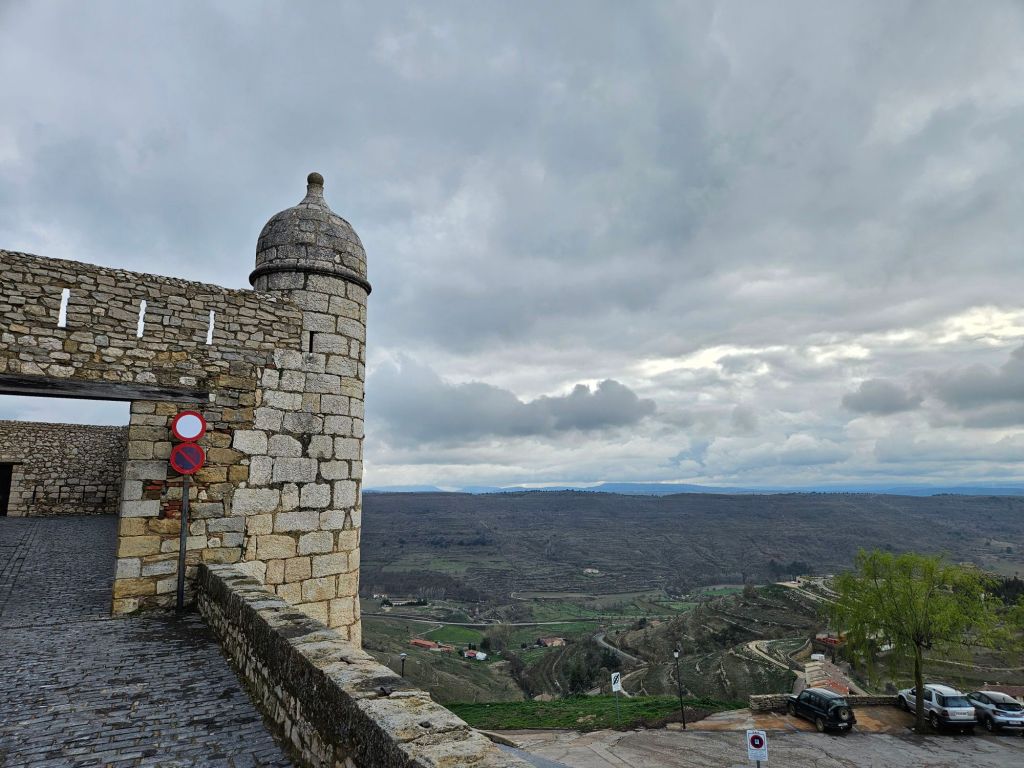
The “prettiest village in Spain” claim has some stiff competition in my experience, but Morella is certainly impressive. After our lovely, rural-feeling morning circumnavigation, we paid €5 at a little gate and climbed to the top. Gorgeous view down onto the rooftops – red Terra Cotta for nearly everything except the occasional blue dome (signifying prosperity) for the churches.

100 or so steep, steep steps to the top. Much of what’s left is C15; of that, quite a bit was torn down in the C18 to make way for cannons when the Spanish were defending themselves against the French.

Morella ruta del Dino

When we arrived in Morella, we asked for a lunch recommendation. At nearly 3pm on a Wednesday, out of tourist season, our choices were very limited. So we ran quickly into the one nearby that was still open. We ate until bursting, but in the end didn’t finish even half our mains. Far more meat than either of us was ready for.

We waddled off for a much needed exploration of the town, groaning slightly at the steepness of the streets and making note of the next day’s opening hours.  Eventually we headed back to our hotel for the night–funny how you don’t need dinner when you’ve gorged late in the afternoon.

The genuine fun began the next morning. Since nothing opened before 11, we decided to walk the Ruta del Dino.

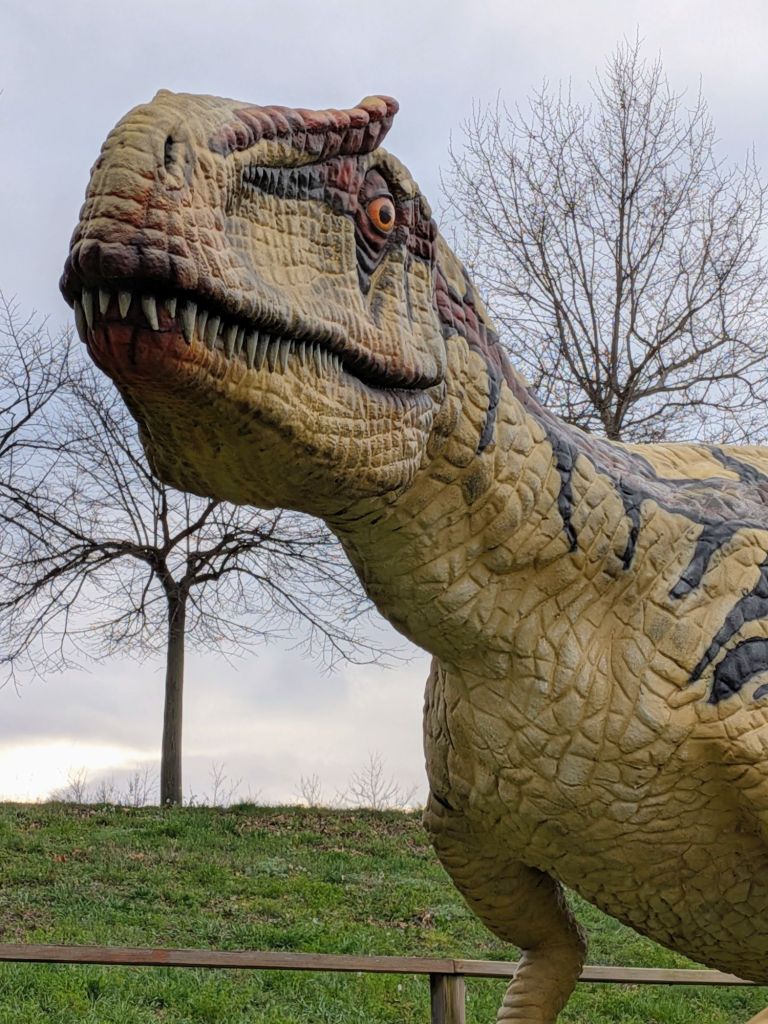
Local resident, 140 million years ago

This path was supposed to take us down out of town, under the medieval aqueduct, and out past an area when dinosaur footprints are still visible in the rock.

We found the aqueduct located next to the remains of a 13th century leper hospital.

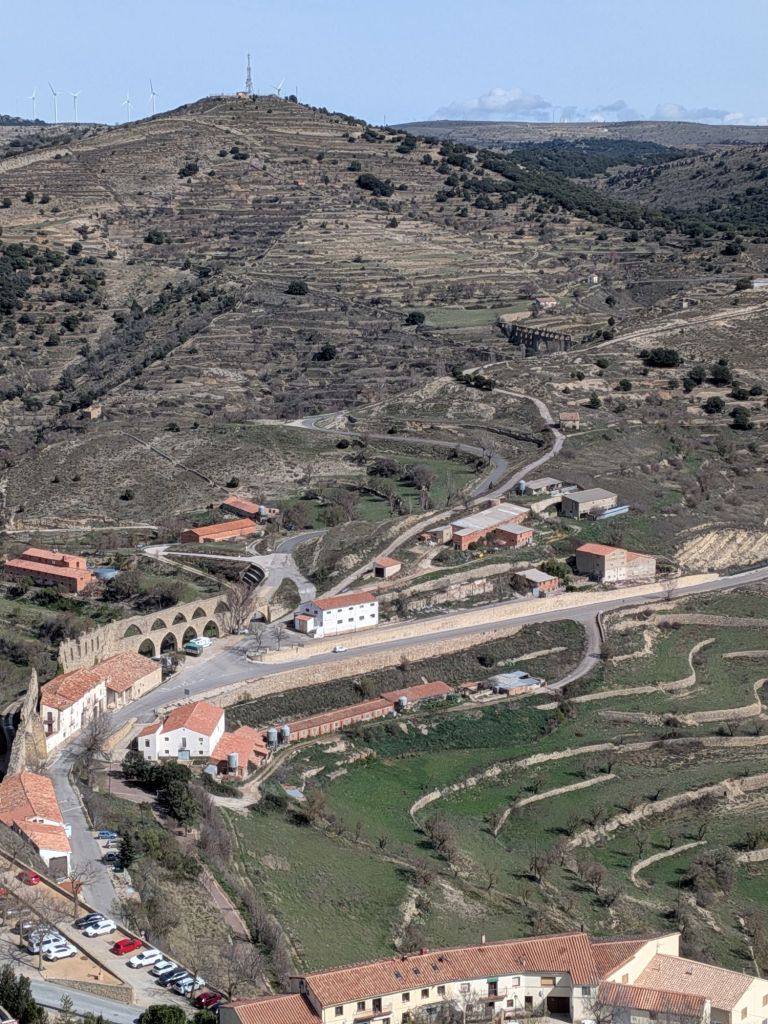
Aqueduct from above, at lower left; another bit we didn’t get to is barely visible near top

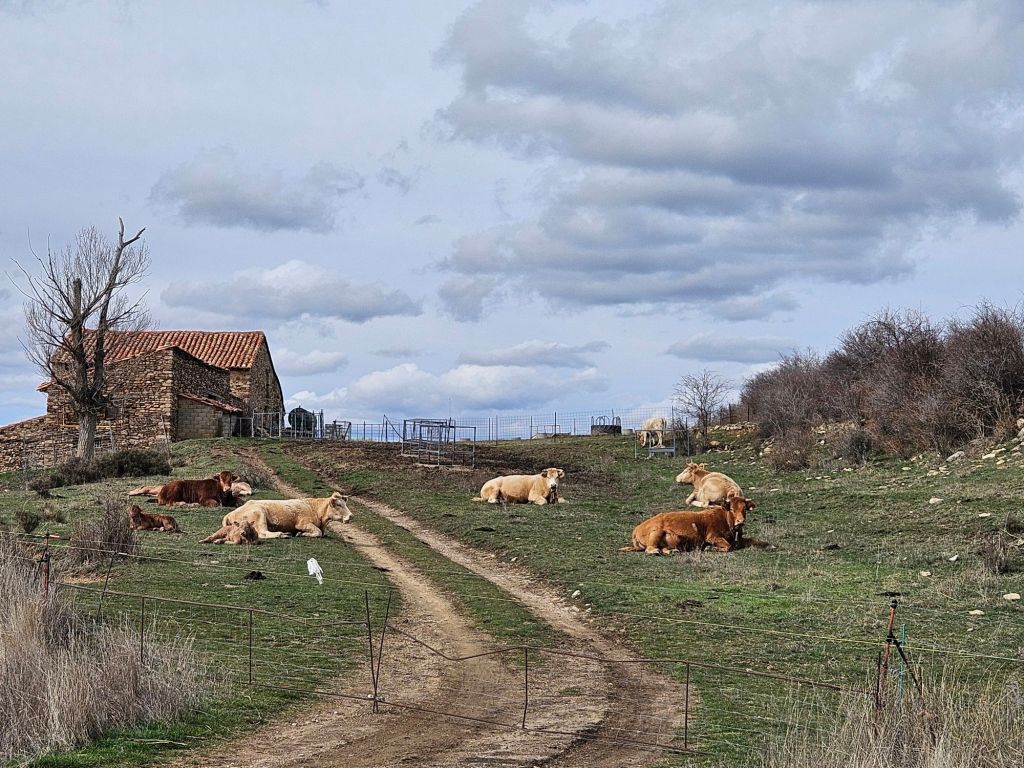
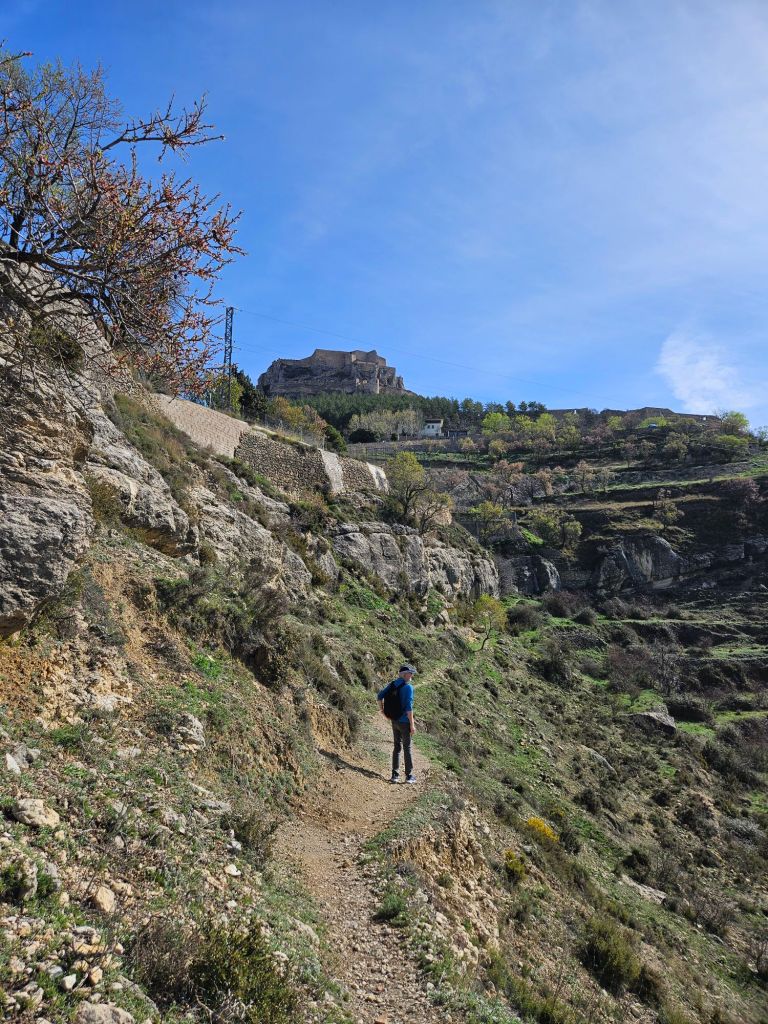
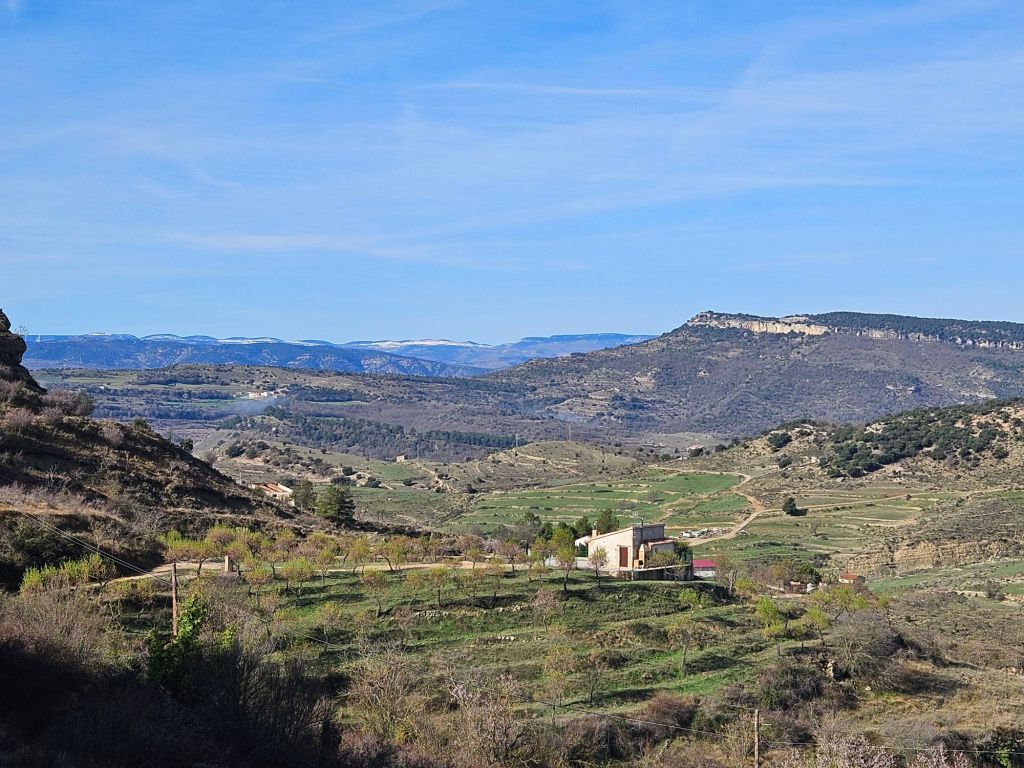
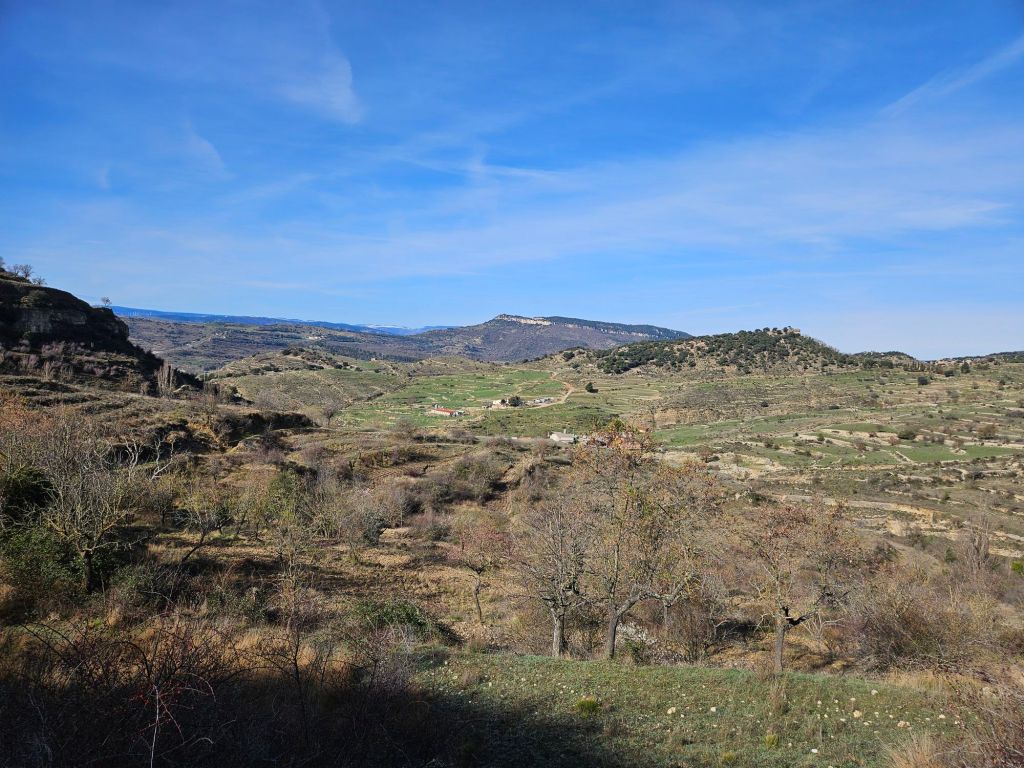
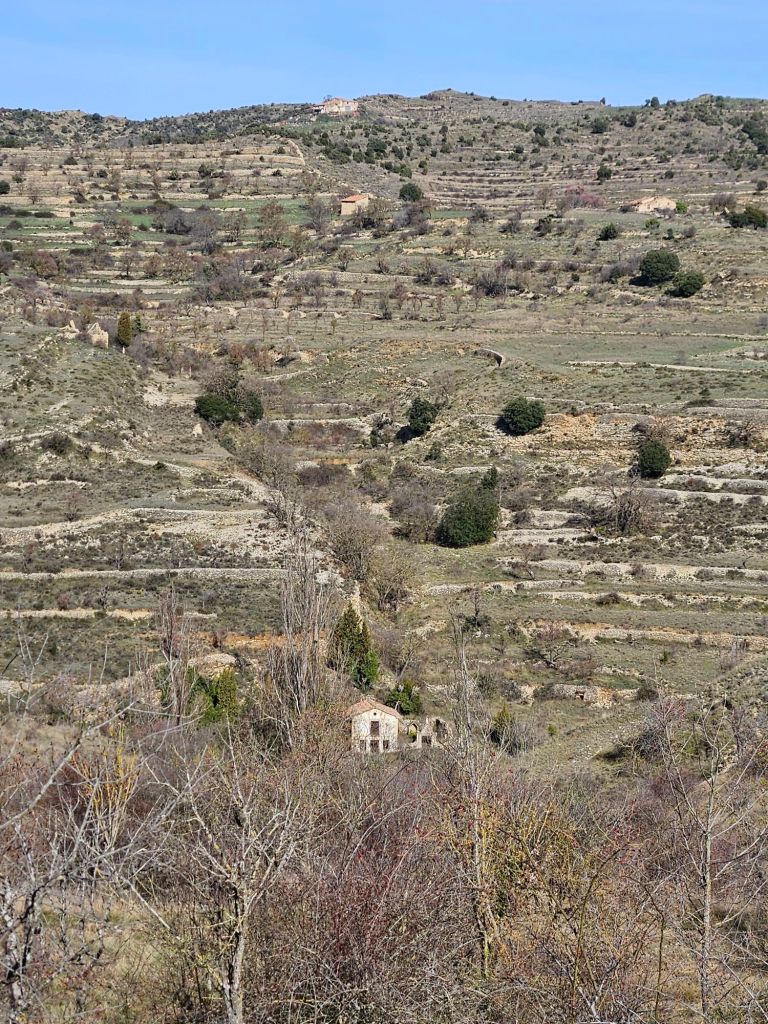
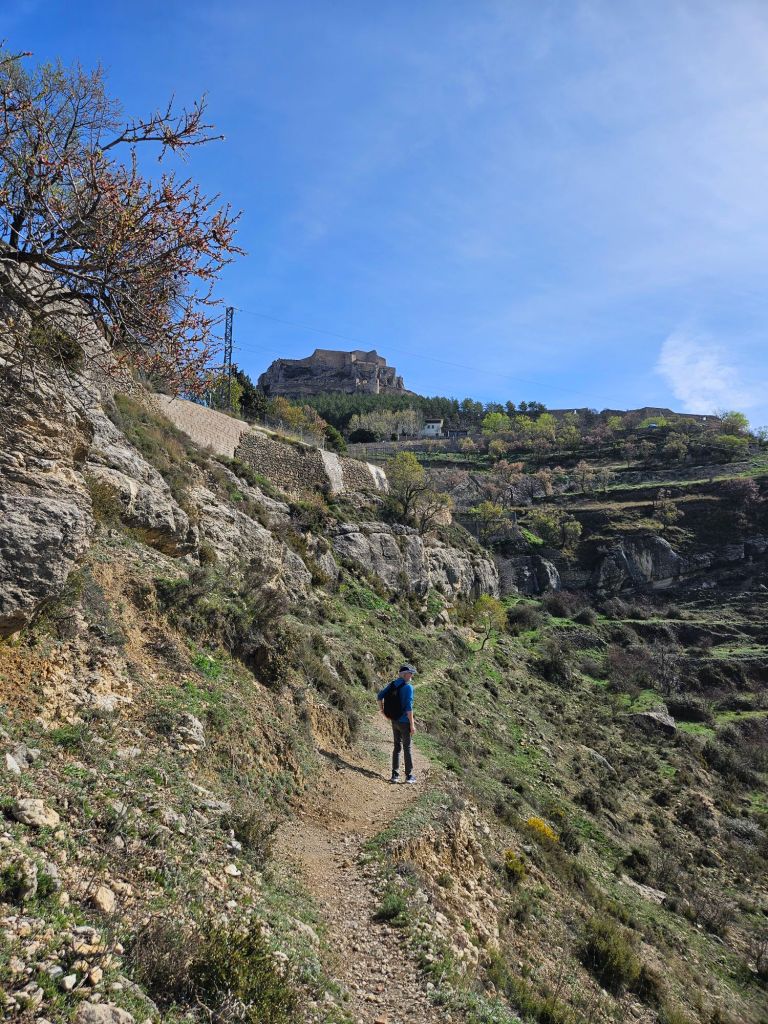
We didn’t find the dino route. We did, however, find a lovely path circling under the hill (mountain? mesa?) that the town is built atop. Long vistas, cow bells, terraces and walls wherever we looked, all bathed in sunshine.

Driving to Morella

Driving to Morella was just fine. Driving into Morella was another story.

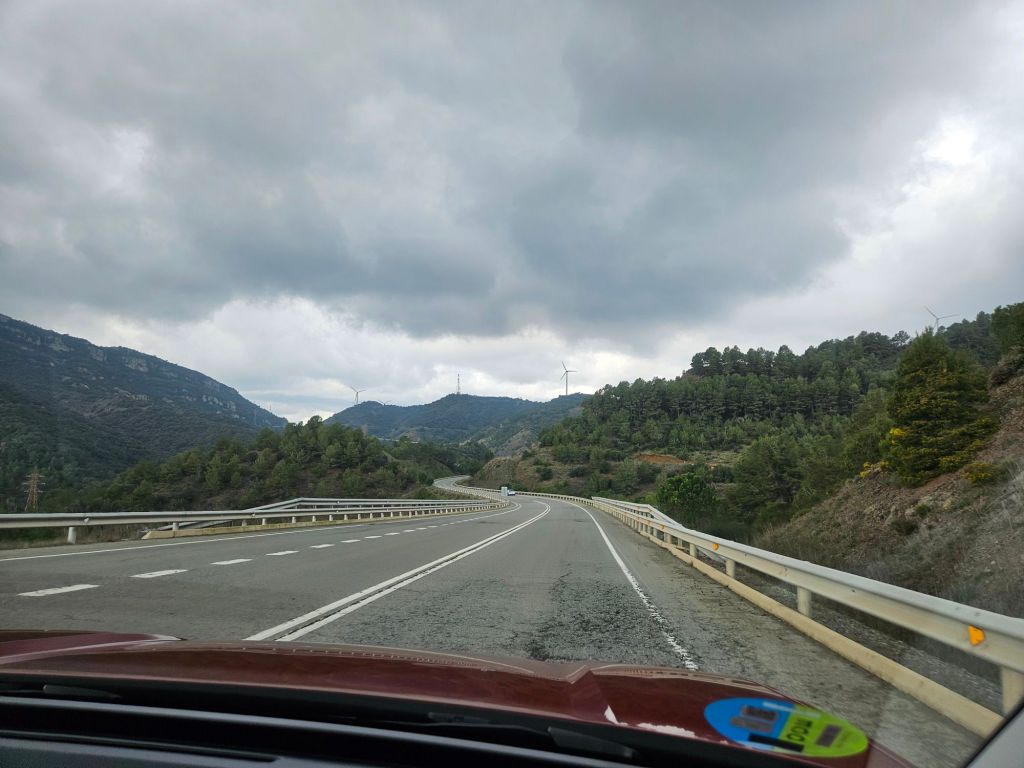
We left Tarragona by way to the aqueduct (only had to make one u-turn to find the parking lot entrance) and enjoyed good roads and scenic views along our route.

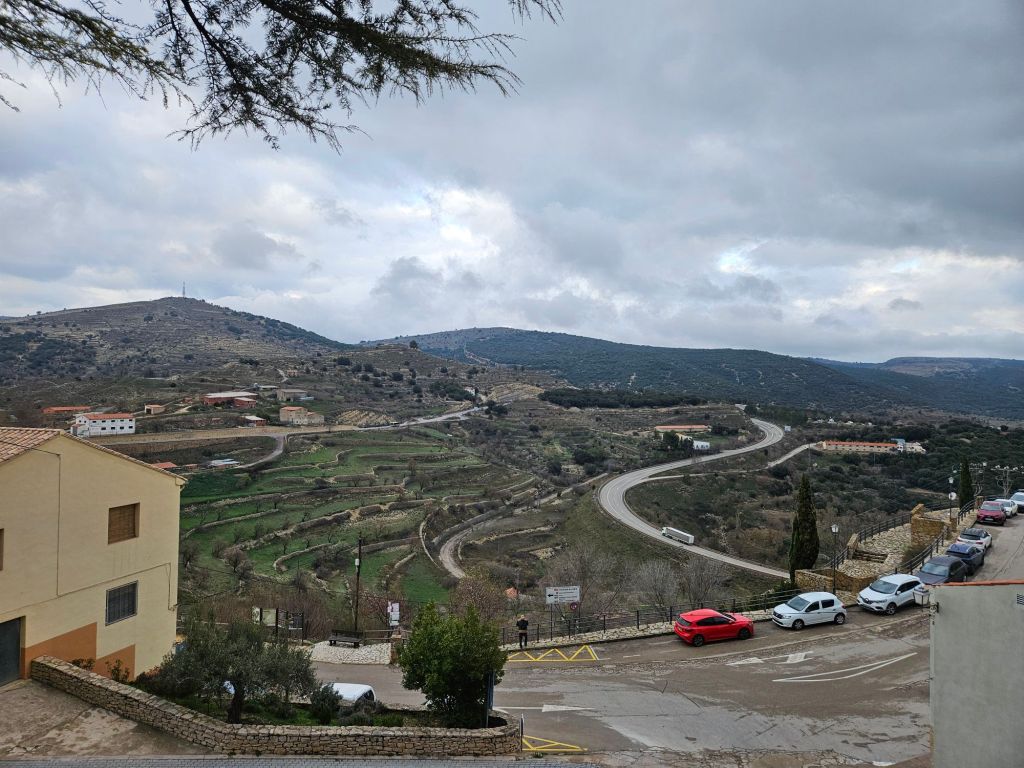
I knew Morella could be a challenge because it is an ancient city built on a hilltop–built long before cars and with a higgledypiggledy layout that speaks to organic growth, hilly topography, and the Arab preference for roads that were not straight (easier to defend against invaders). What I didn’t expect was Google maps to send us the wrong way up an increasingly narrow cobblestone street. Just as it started to rain.

R was remarkably stoic about my increasing panic as we made our way up the one lane road, but even he seemed a little tense when we encounter the van coming downhill towards us.

Imagine seeing a van just coming over the top of the hill coming towards us

R stopped, I got out and went to talk with the guys in the van. My Spanish was failing me, so the driver, with an Eastern European accent asked “what language do you prefer, English, French, German?” I gratefully chose English and he talked me through a route that would get us past him and onto the main ring road again. From there to the parking lot and a hike to the hotel.

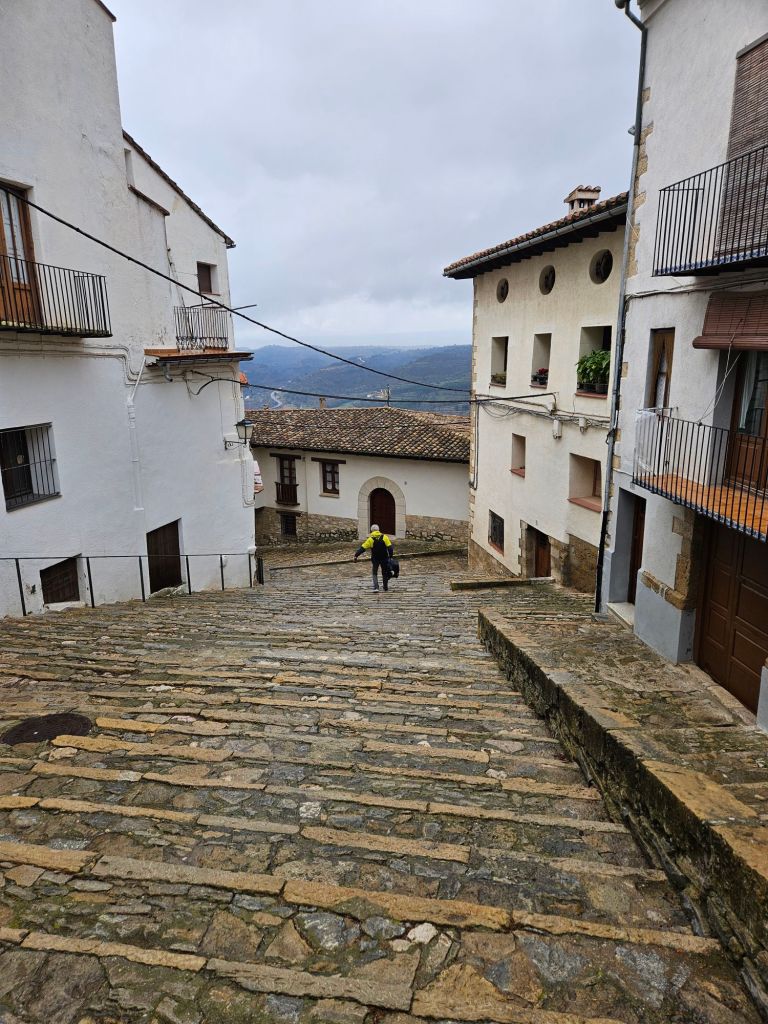
At least we didn’t try to drive these stairs.

A Roman ‘pyramid’

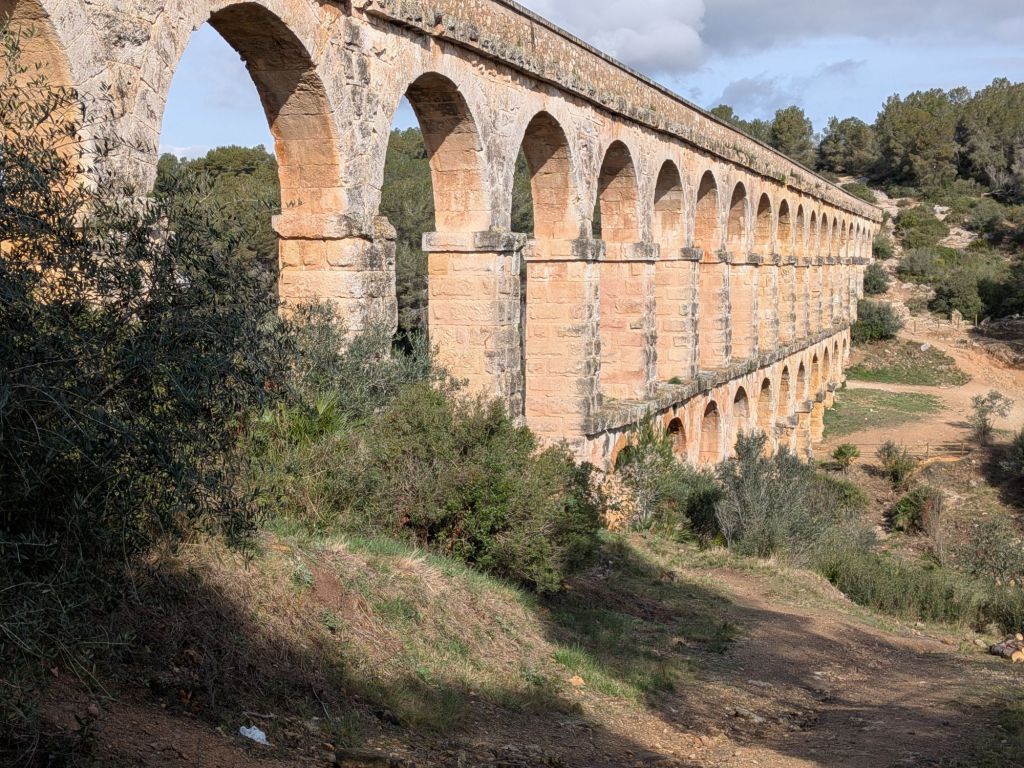
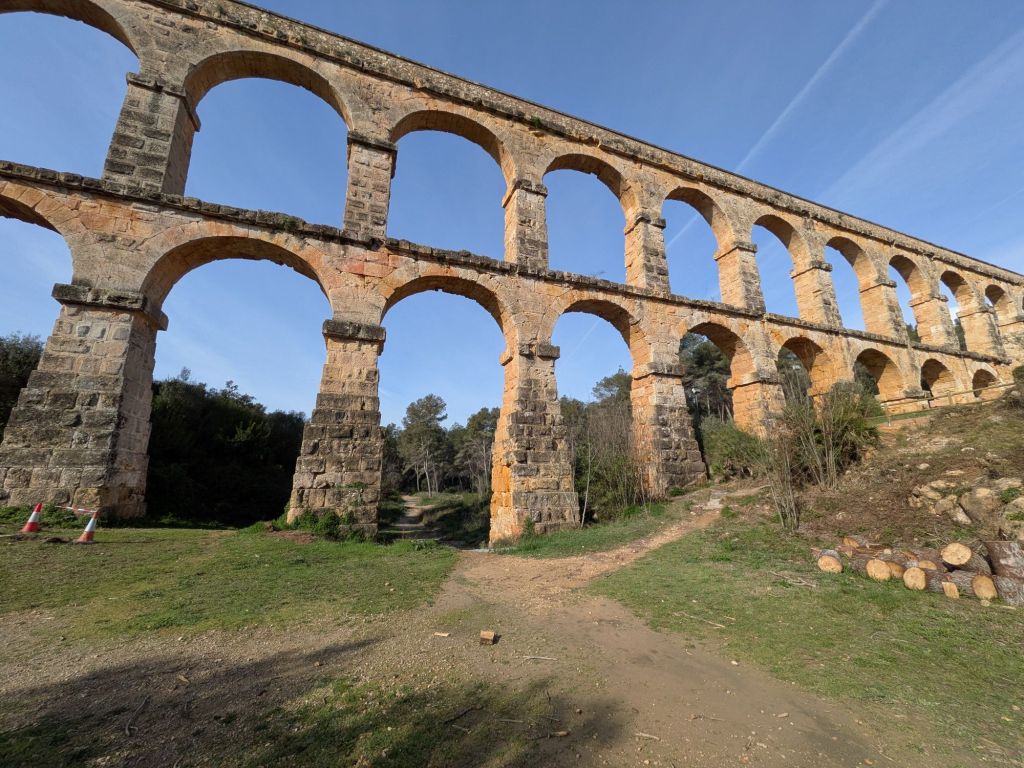
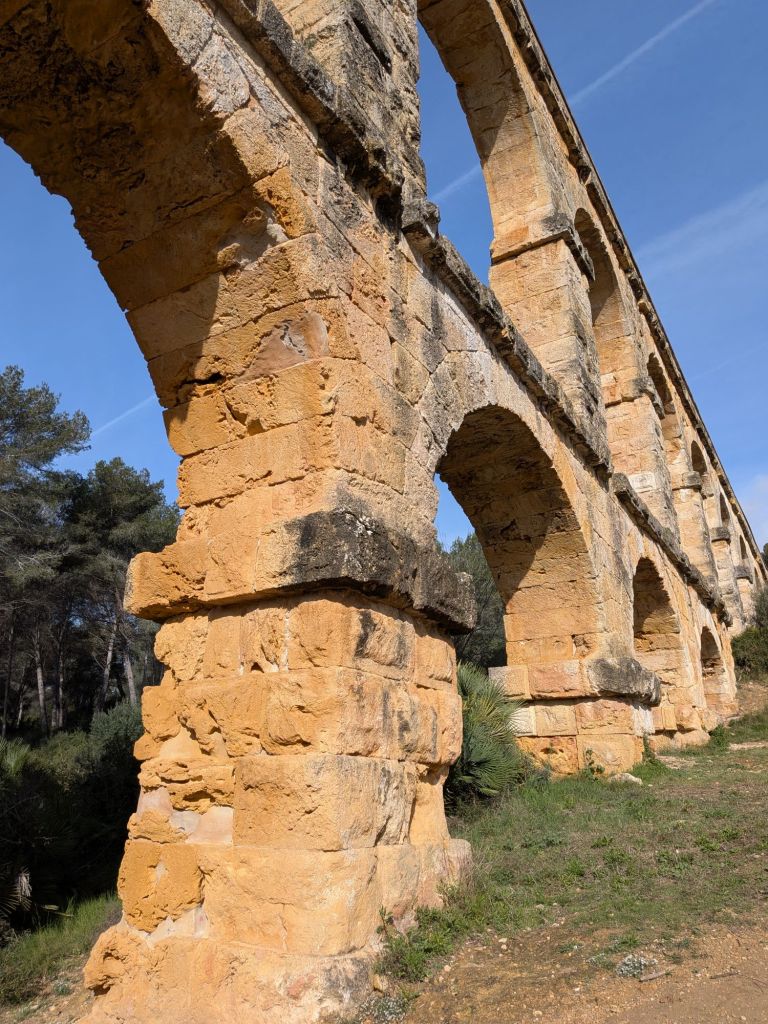
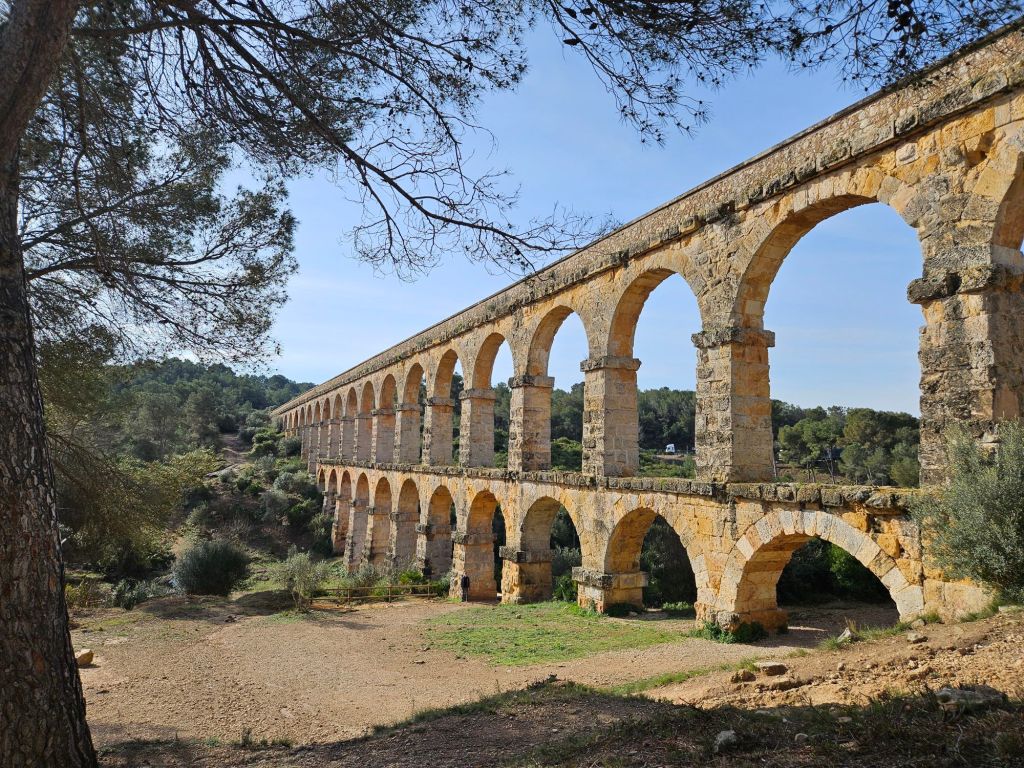
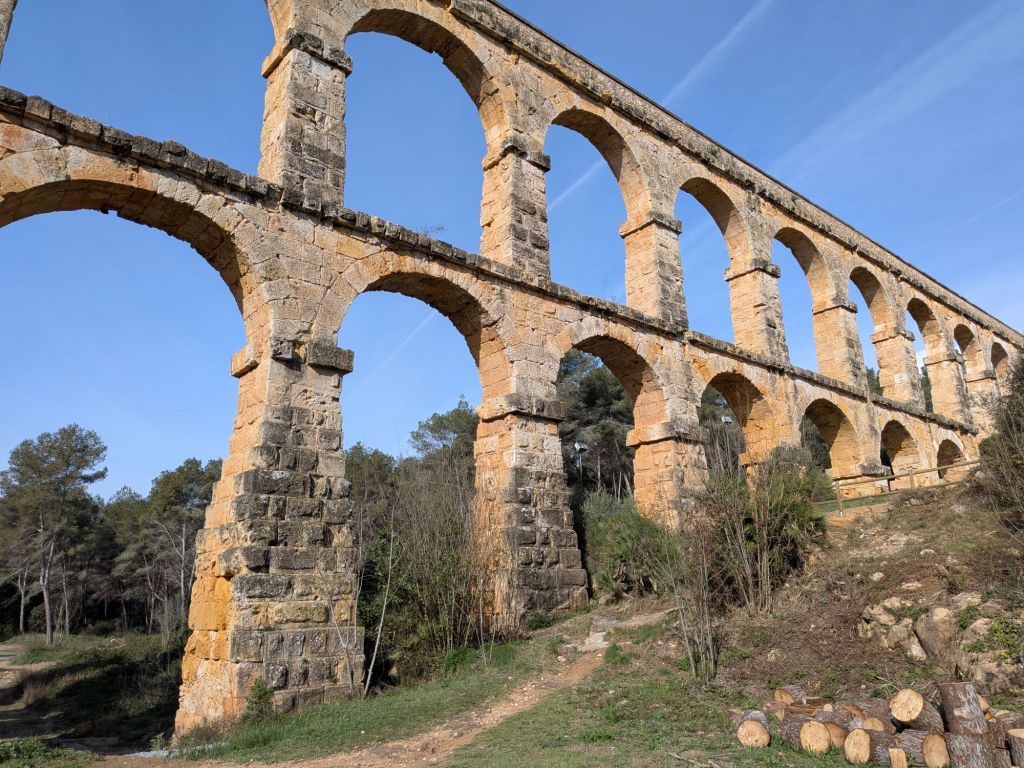
On leaving Tarragona, for a trip through the mountains of Catalunya and Aragón, the first order of business is to stop at the Ferreres Viaduct.

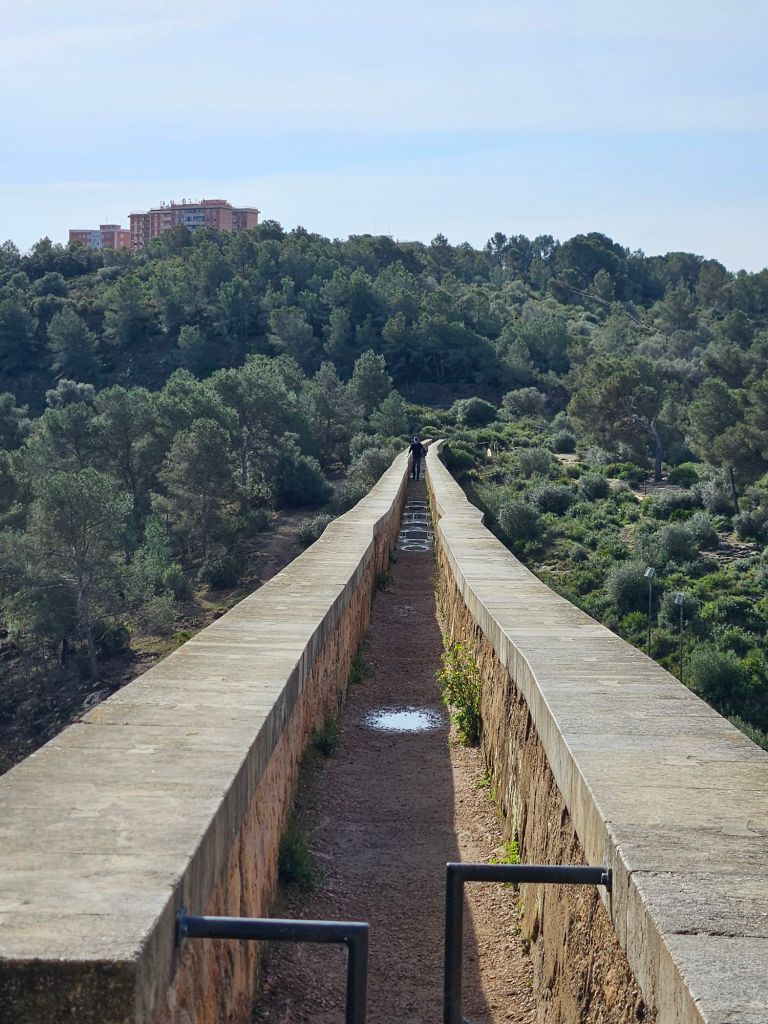
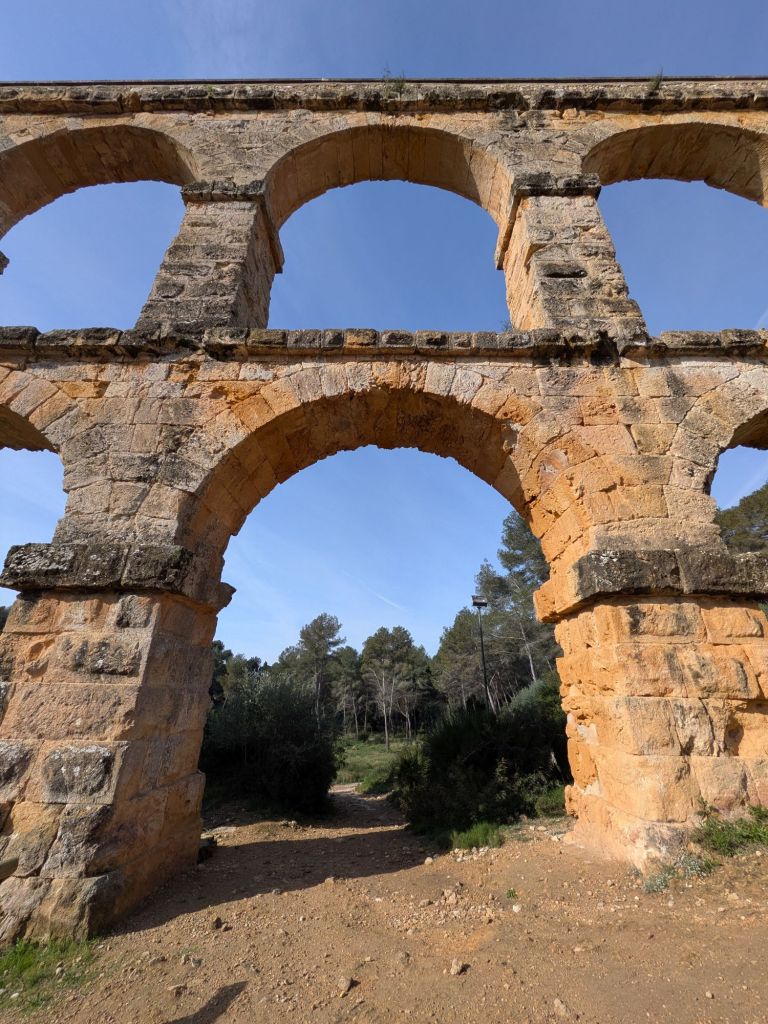
The top channel and parapet has been repaired – I saw a lone jogger cross it and so took the hint and walked across myself – but the rest is pretty much as it would have been in the 1st Century. A sign board shows what it might have looked like half- complete, with massive scaffolding and block-and-tackle machinery in place, but still the whole thing is hard to believe. You understand why the people who came along in the 5th-7th centuries might have believed in a vanished race of giants. The board had a proud quote from a Roman aqueduct inspector, Fronti, to the effect that “our pyramids are actually useful.”

K here. Below is a pic with R underneath for scale.