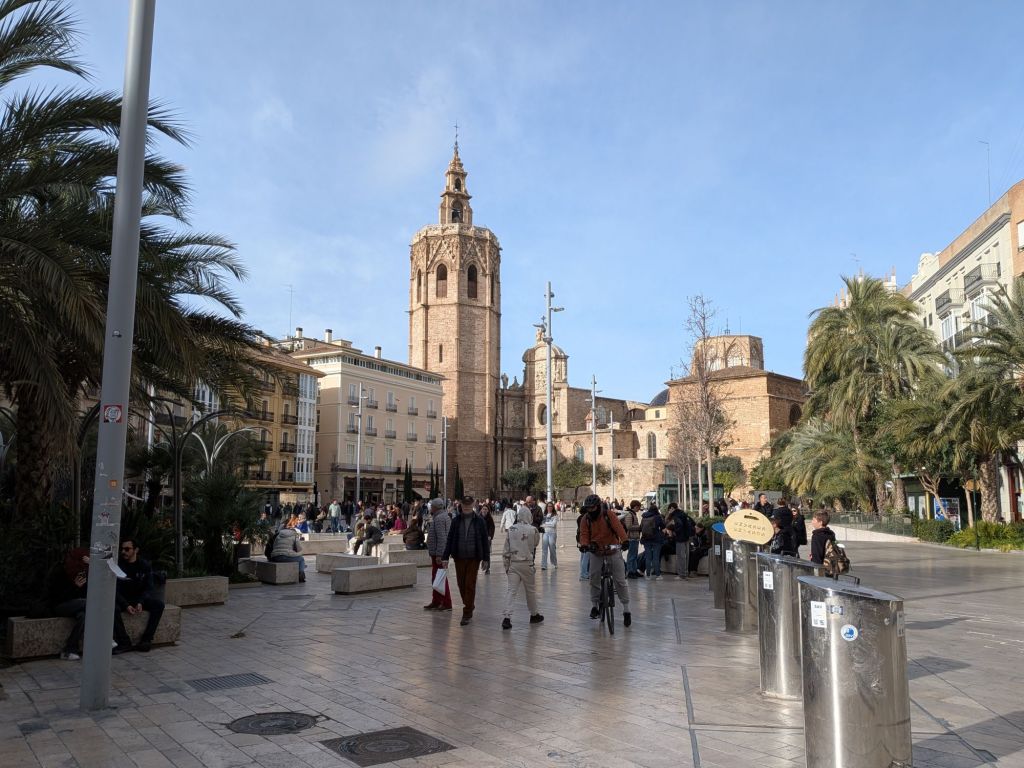
El Catedral

Taken ten days ago, in sunshine!

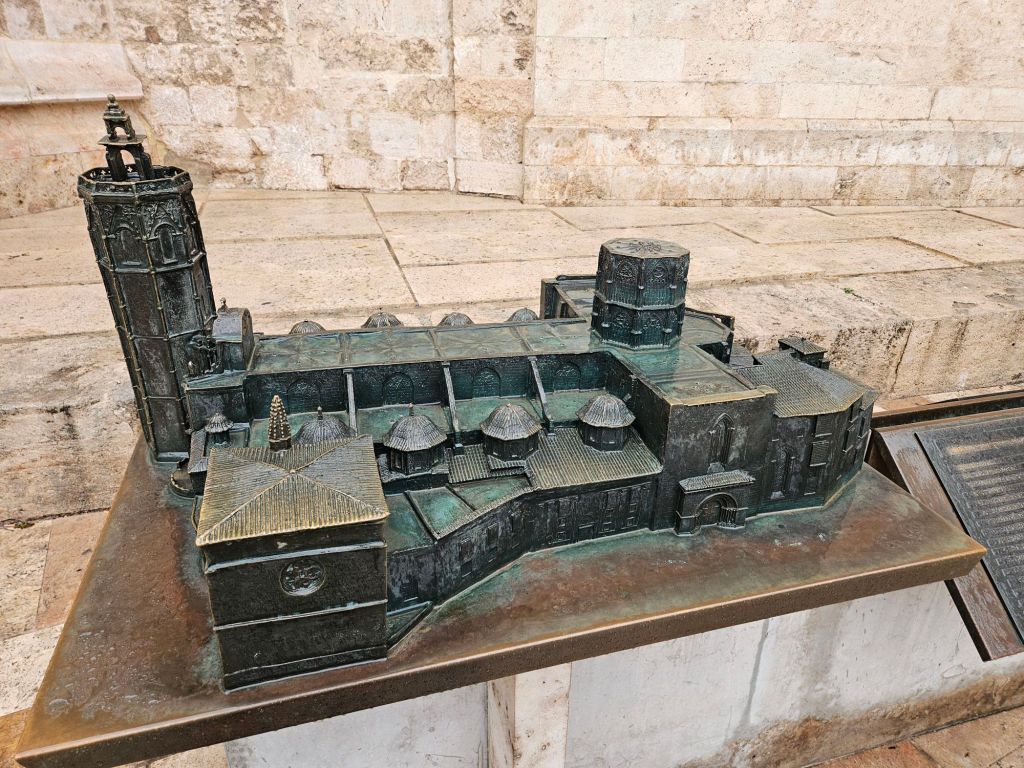
València’s huge Gothic cathedral is really three sites – the cathedral itself, the museum within it, and the bell tower. The latter is supposedly a must-do for healthy thigh-burn and views of the Cuitat Vella; alas the weather, cloudy the past few days, has turned to rain and they’ve closed it.

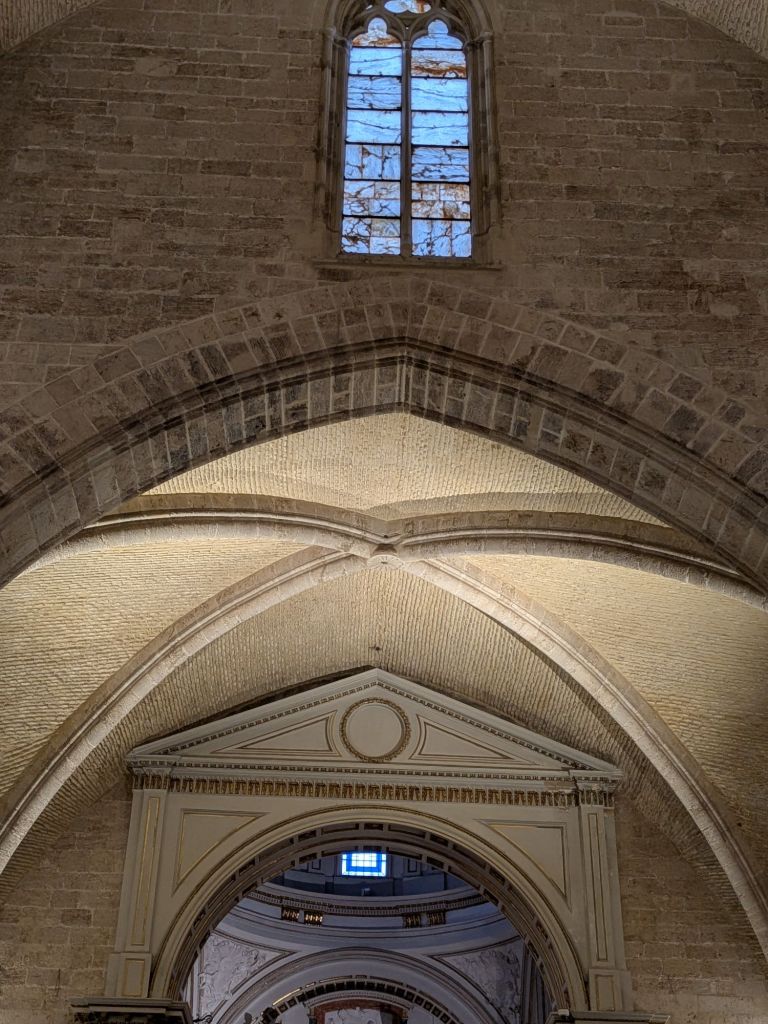
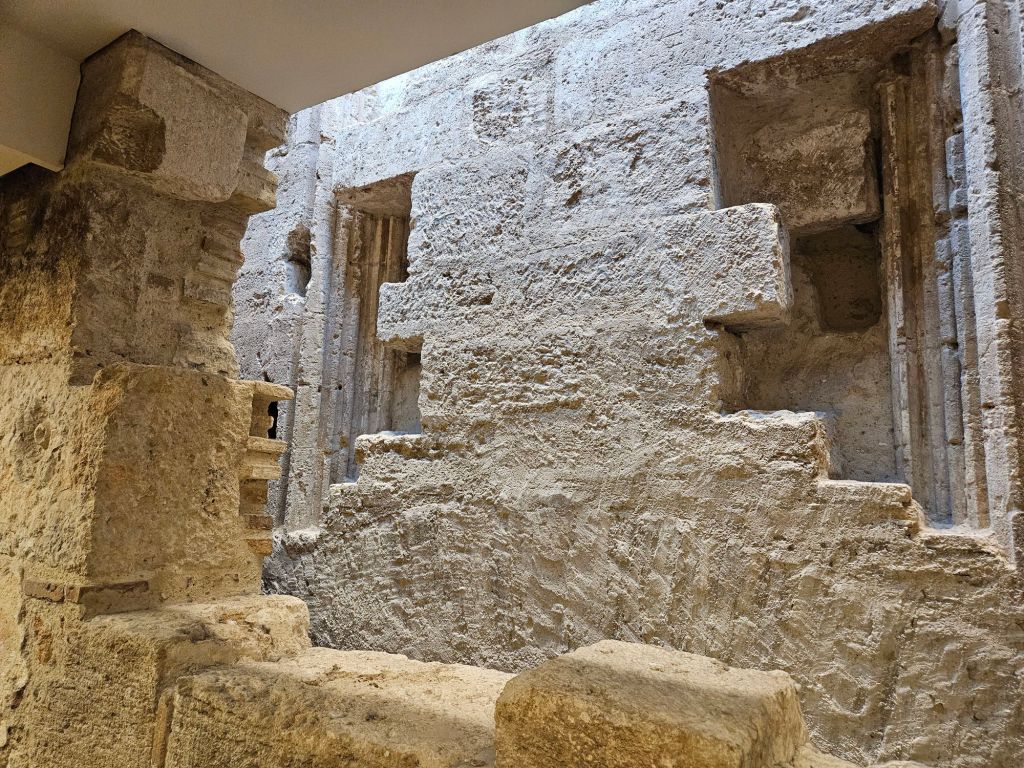
The cathedral itself is (deep breath) an 18th C Neoclassical renovation of a 13-16th C partly Romanesque but mainly Gothic structure built over a 10th C mosque built over a 6th C Visigothic church built over a 1st C Roman temple. (Dates approximate. The smart money says there’s a 50,000 BCE Neanderthal cafe and gift shop further down, still waiting to be discovered.)

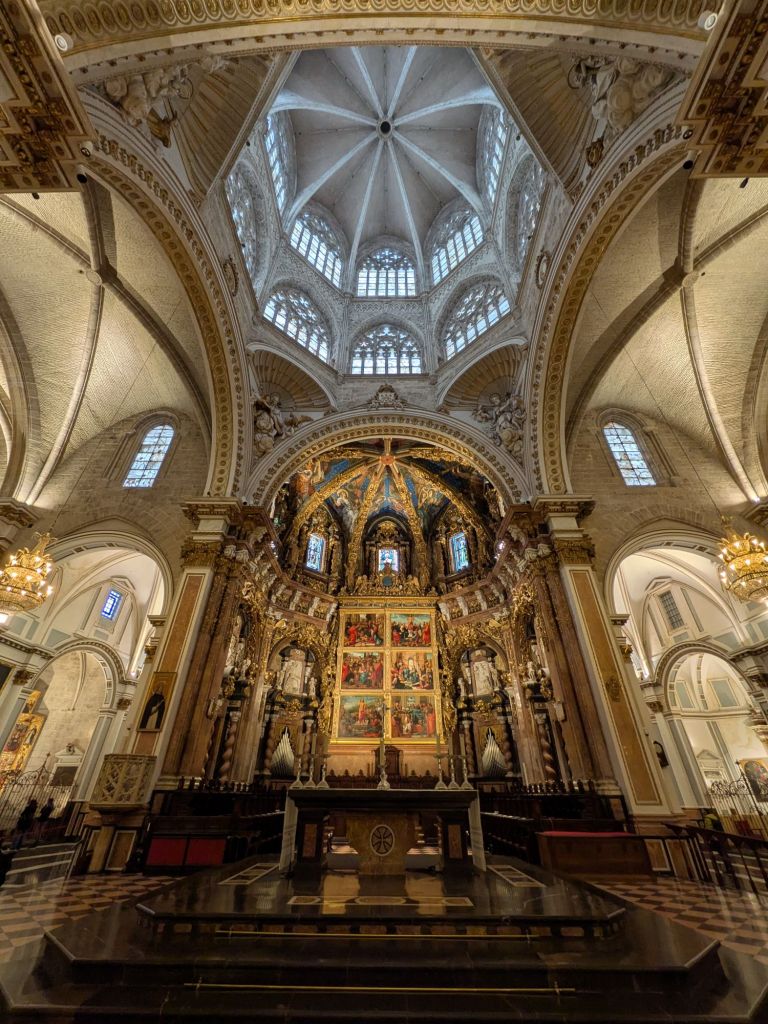
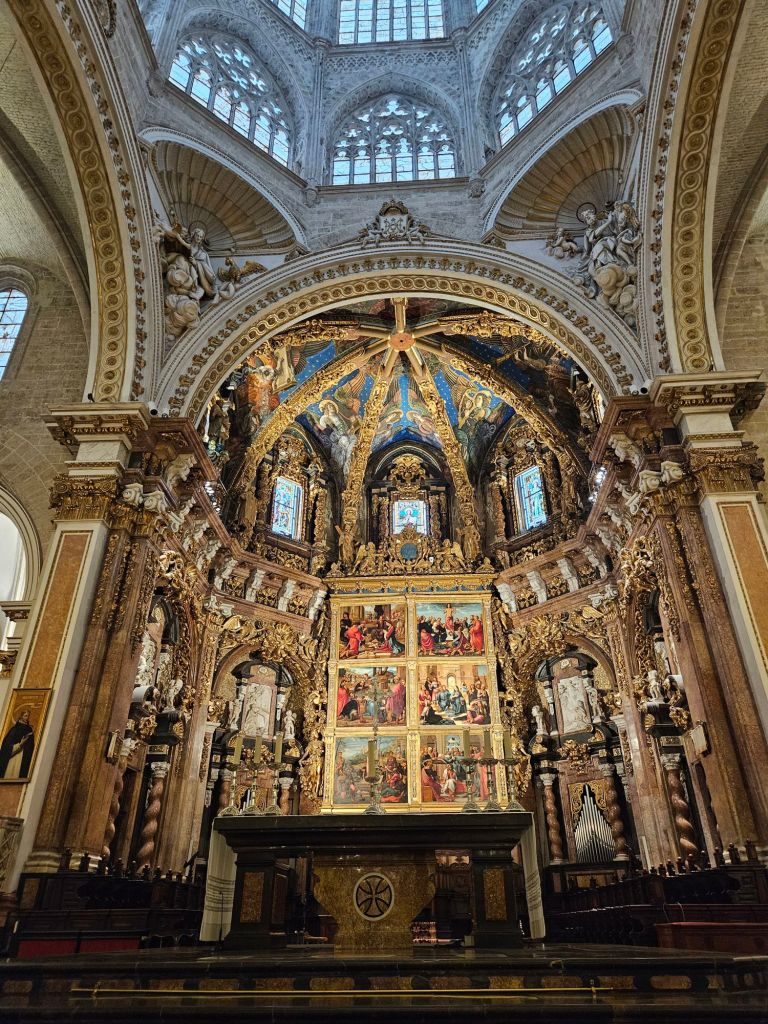
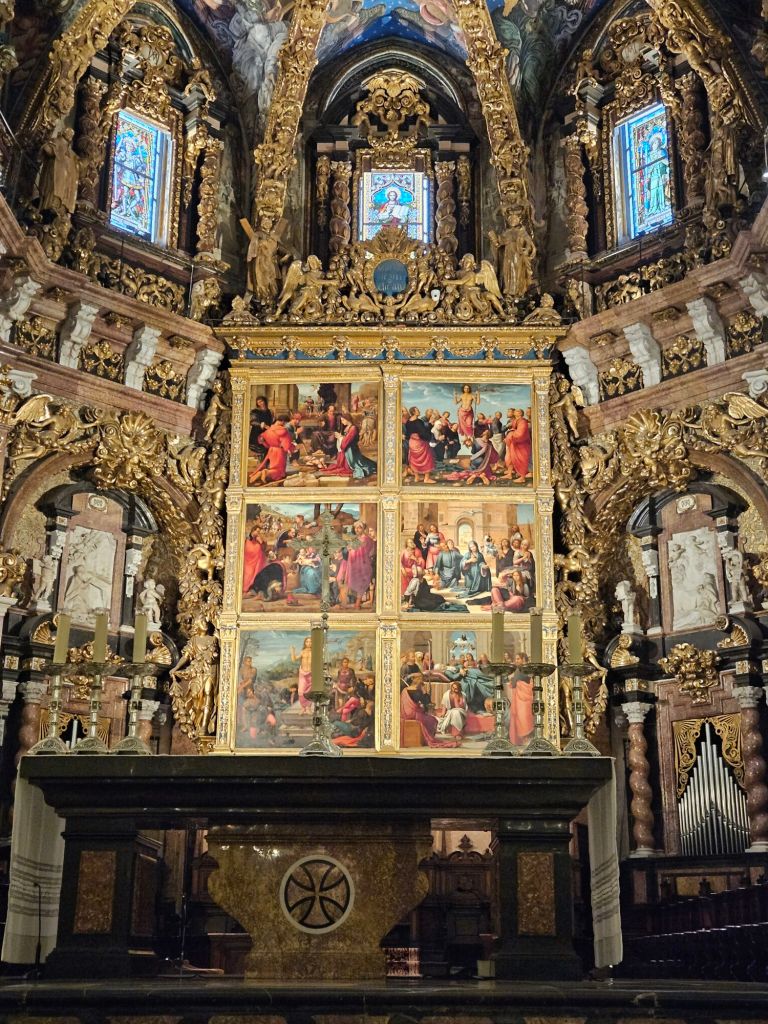
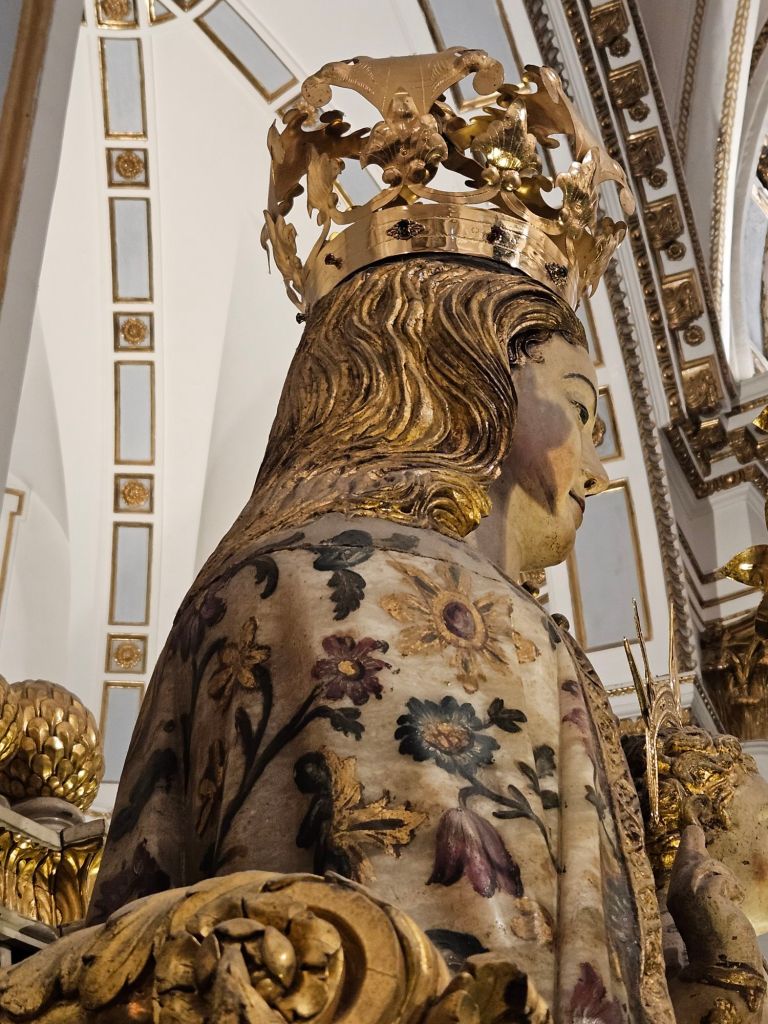
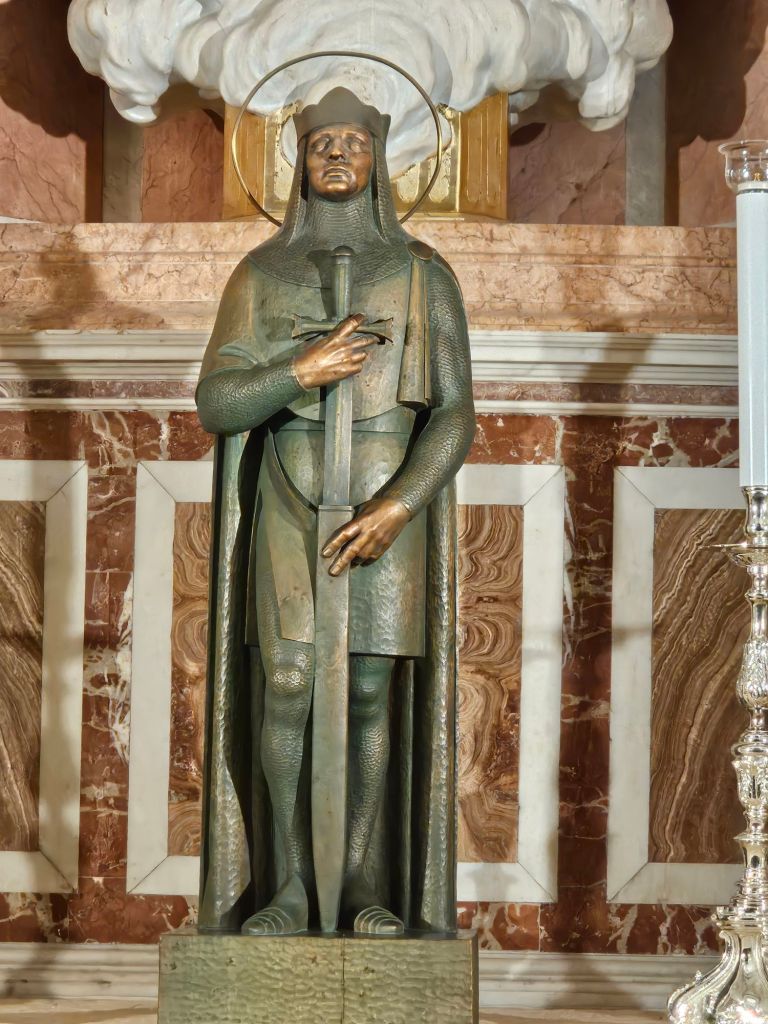
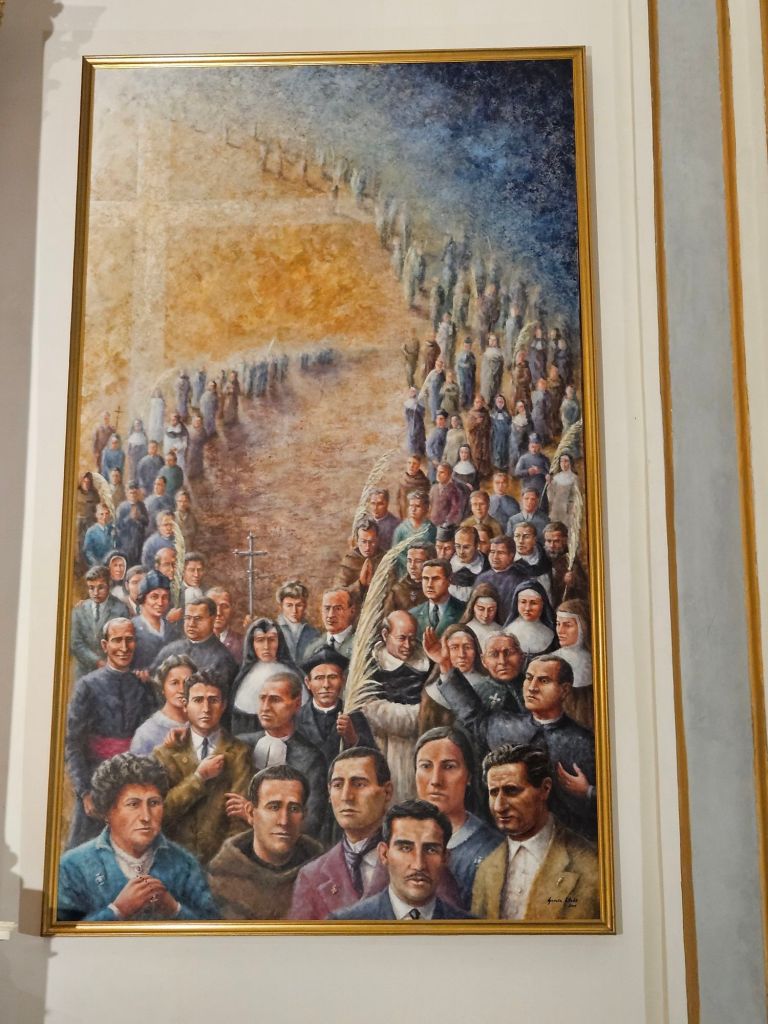
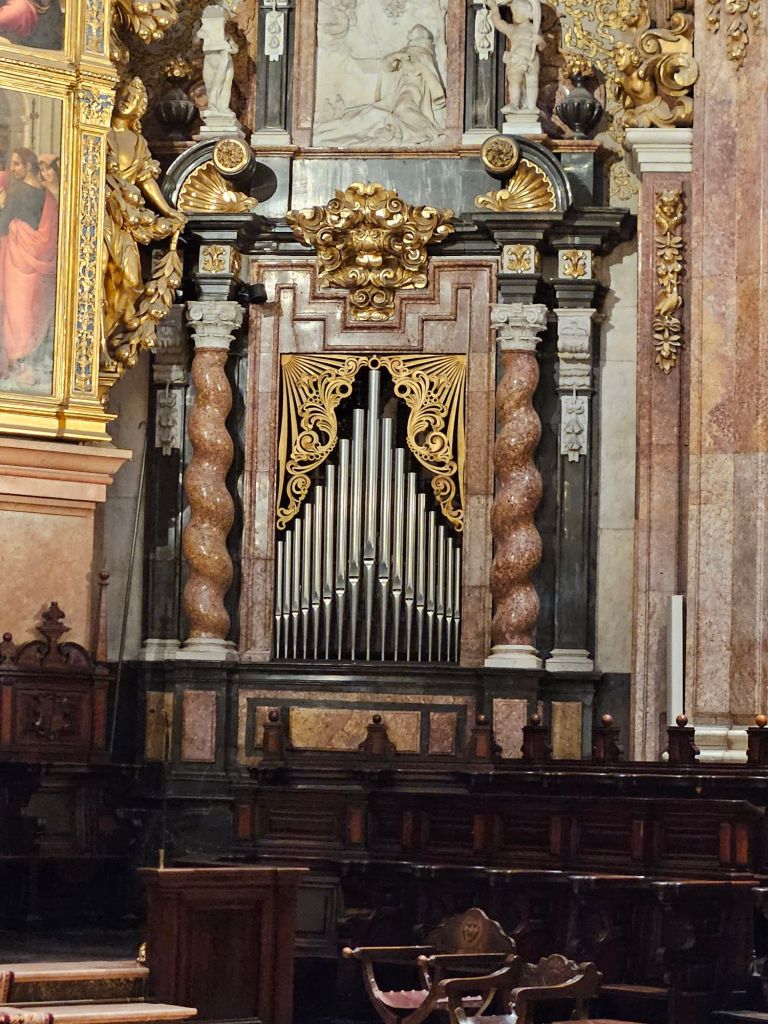
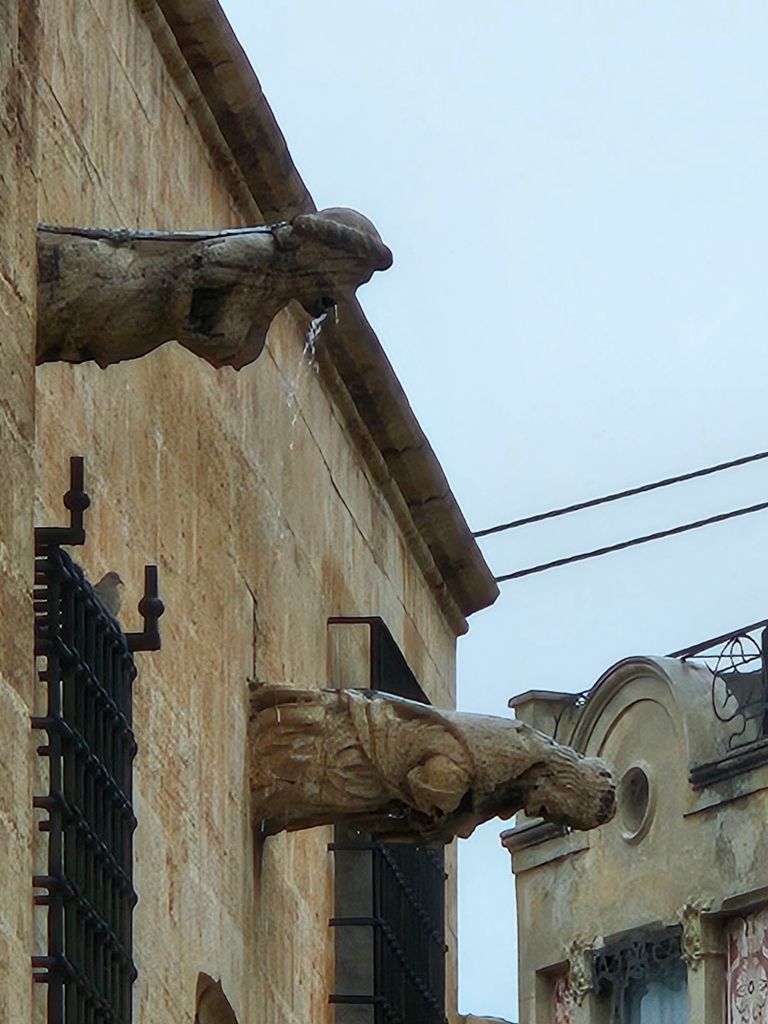
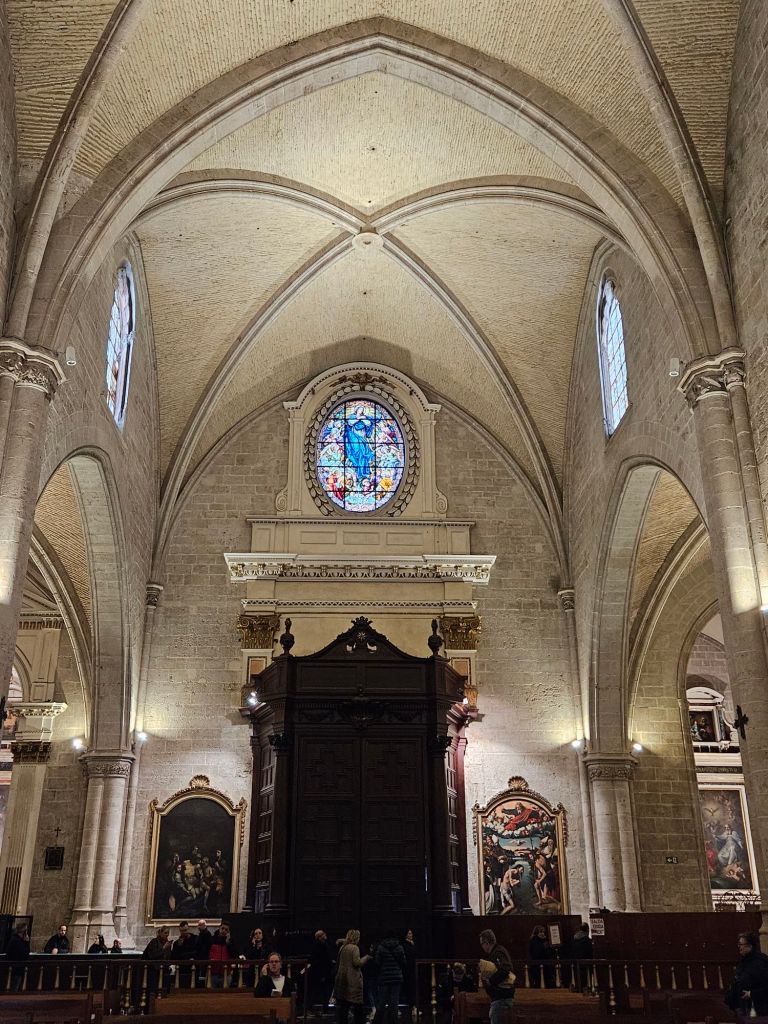
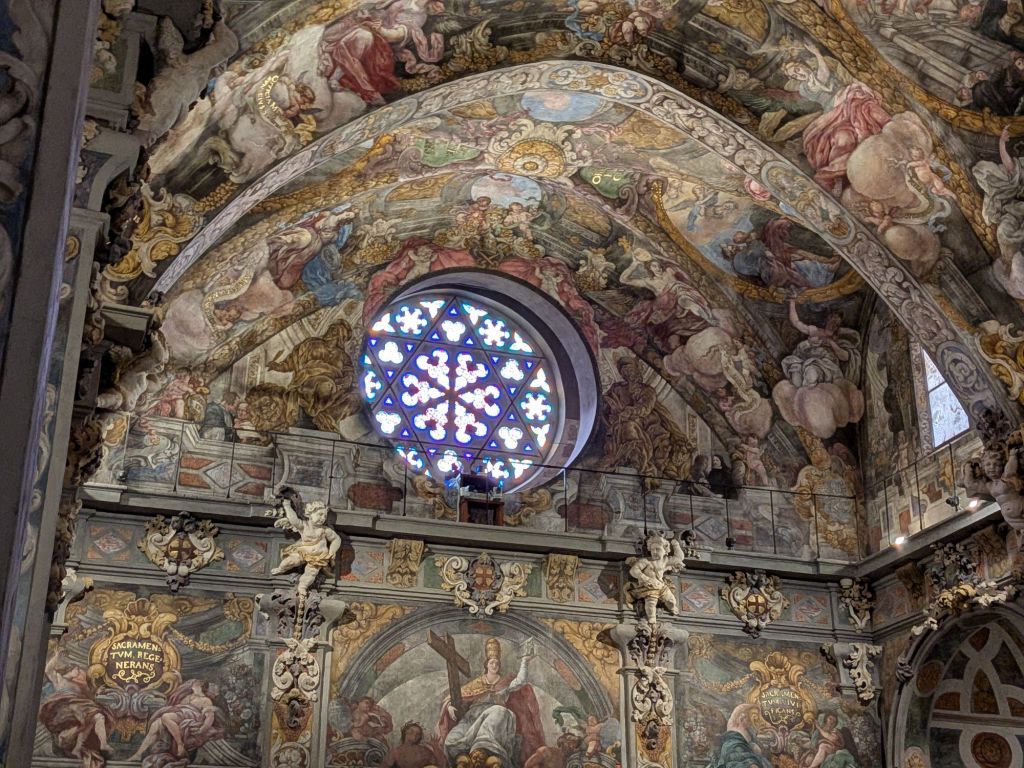
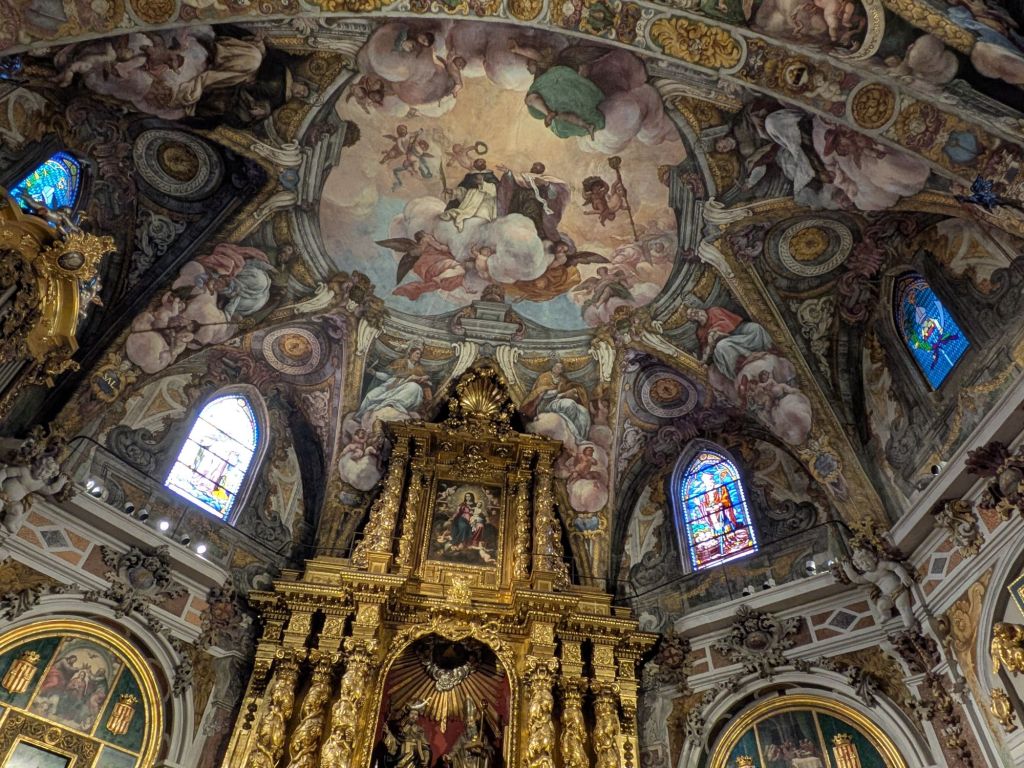
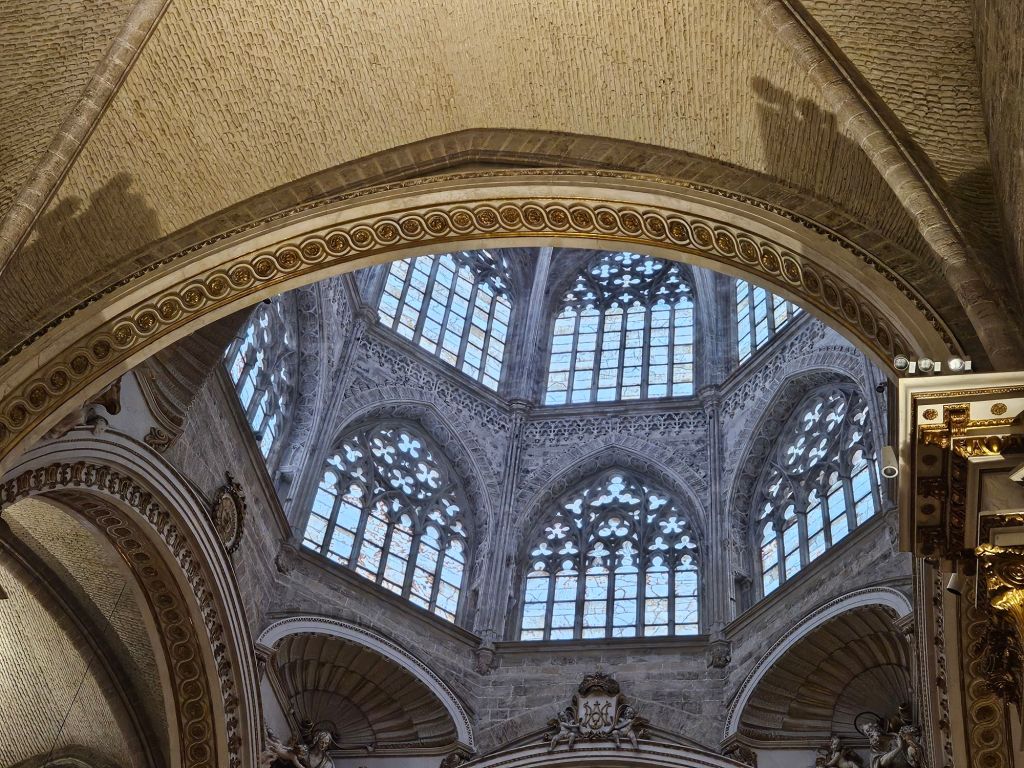
The exterior shows a variety of styles; inside, it’s glorious and feels mostly harmonious even though the C. 18 “improvements” are very obvious:
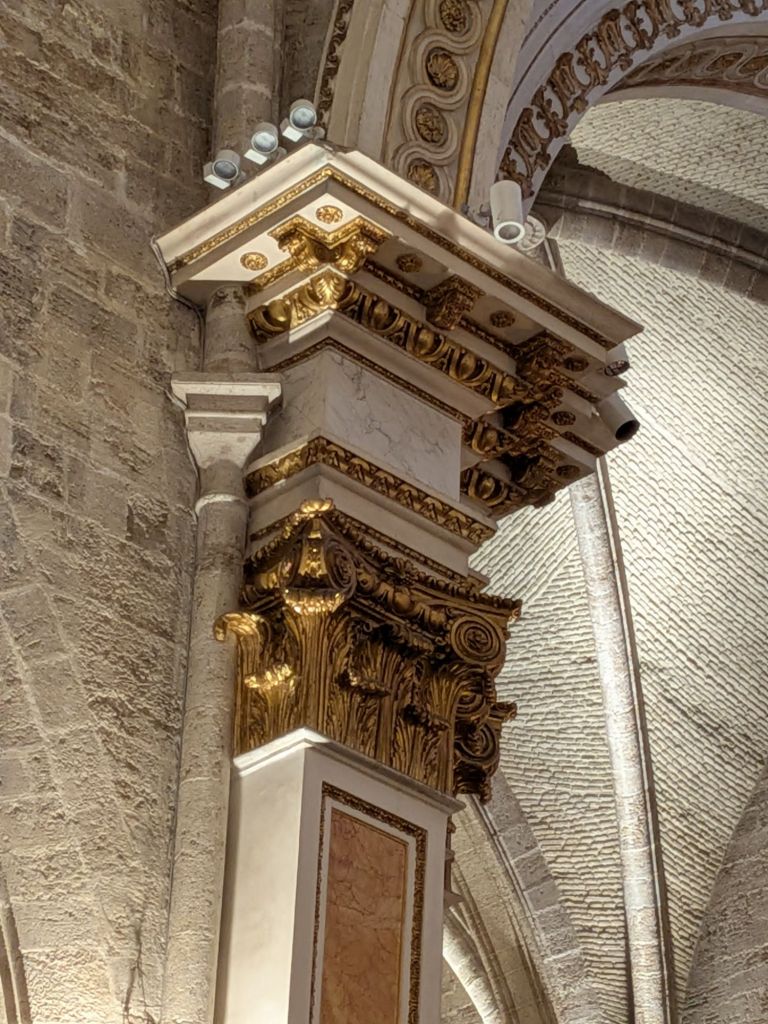
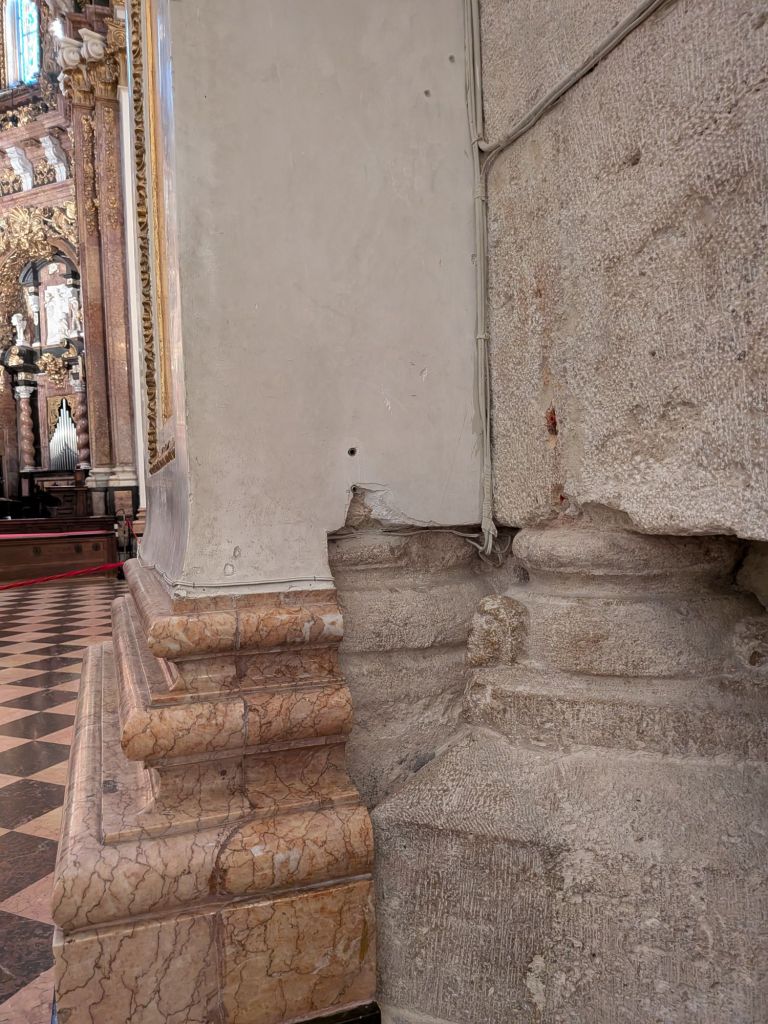
We often avoid audio guides. On this occasion we got one in English and one in Spanish but rapidly abandoned the Spanish one – too much work given the challenging acoustics and complexity of the information. The density of historical detail here made the English guide well worth it.

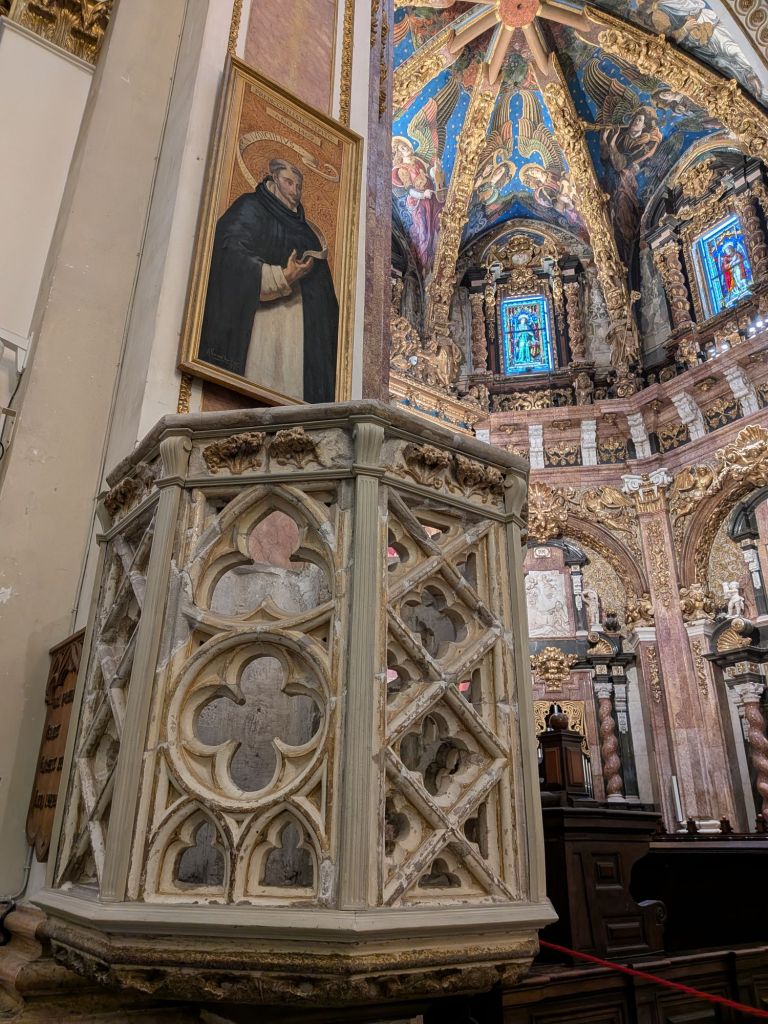
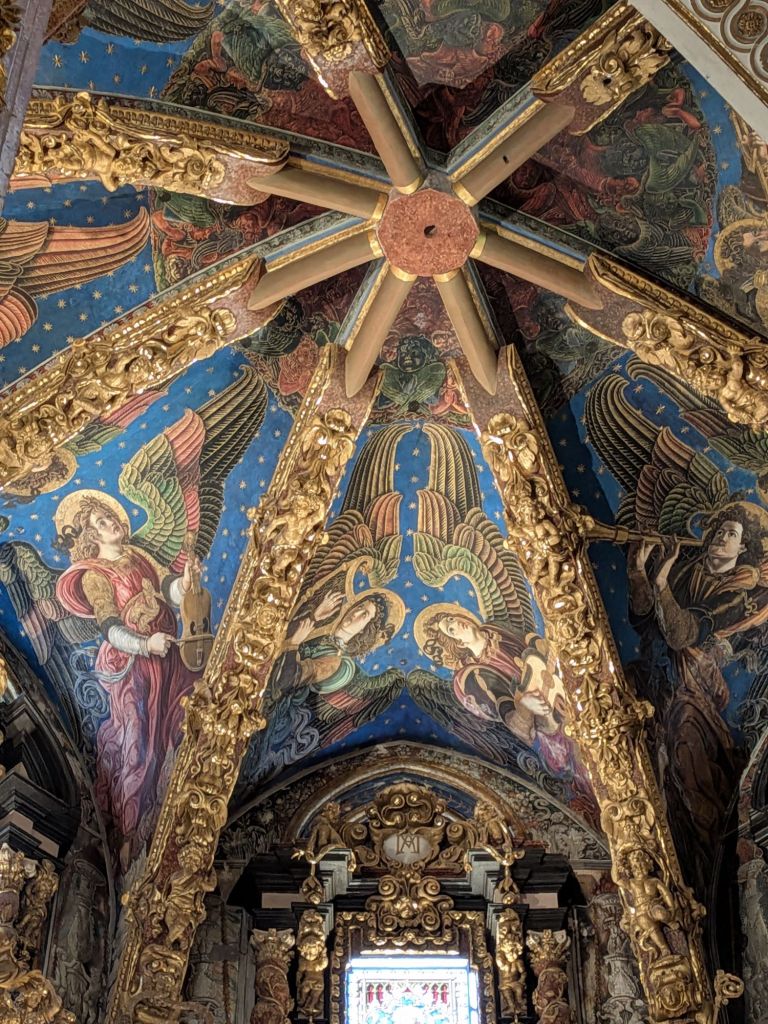
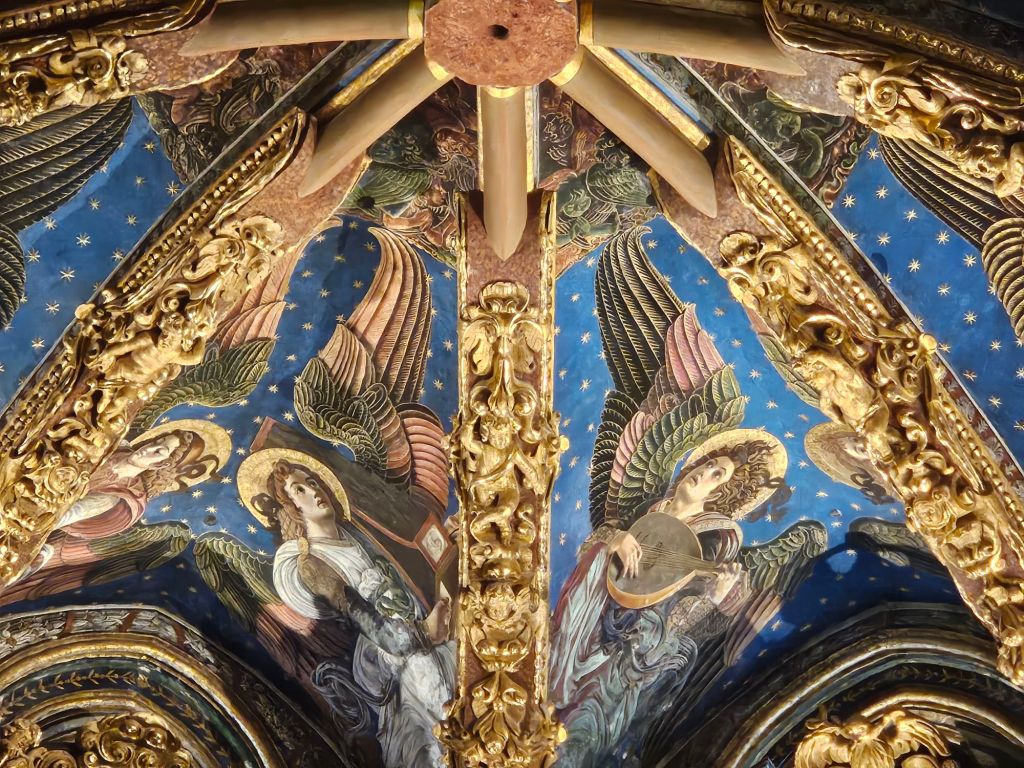
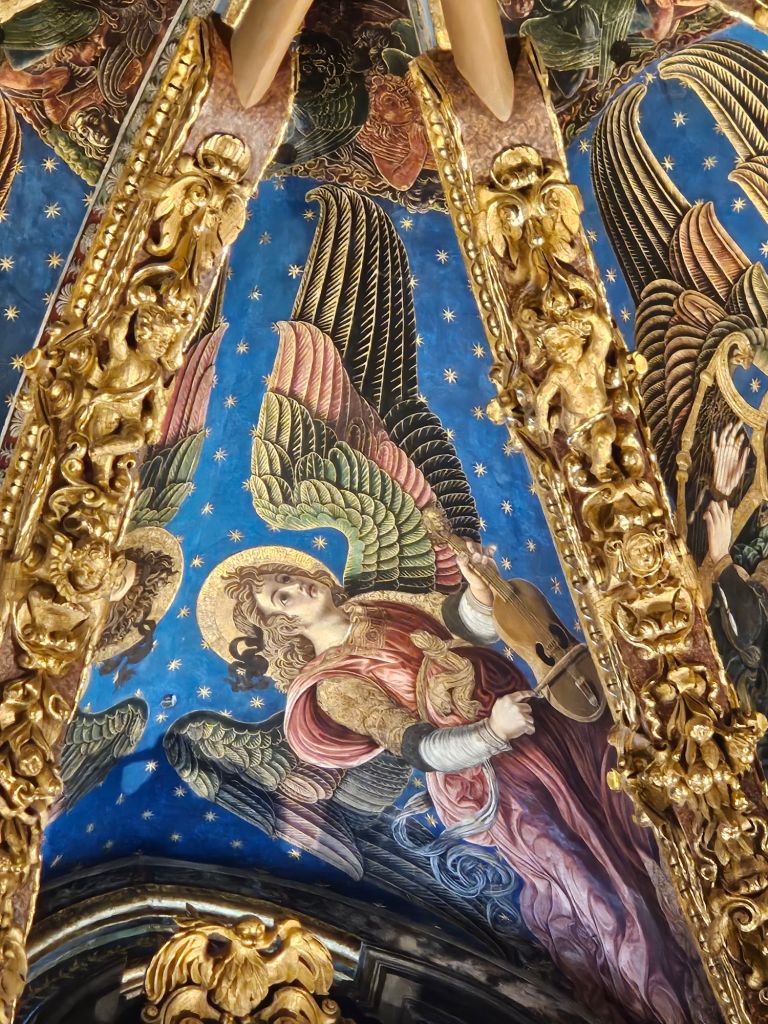
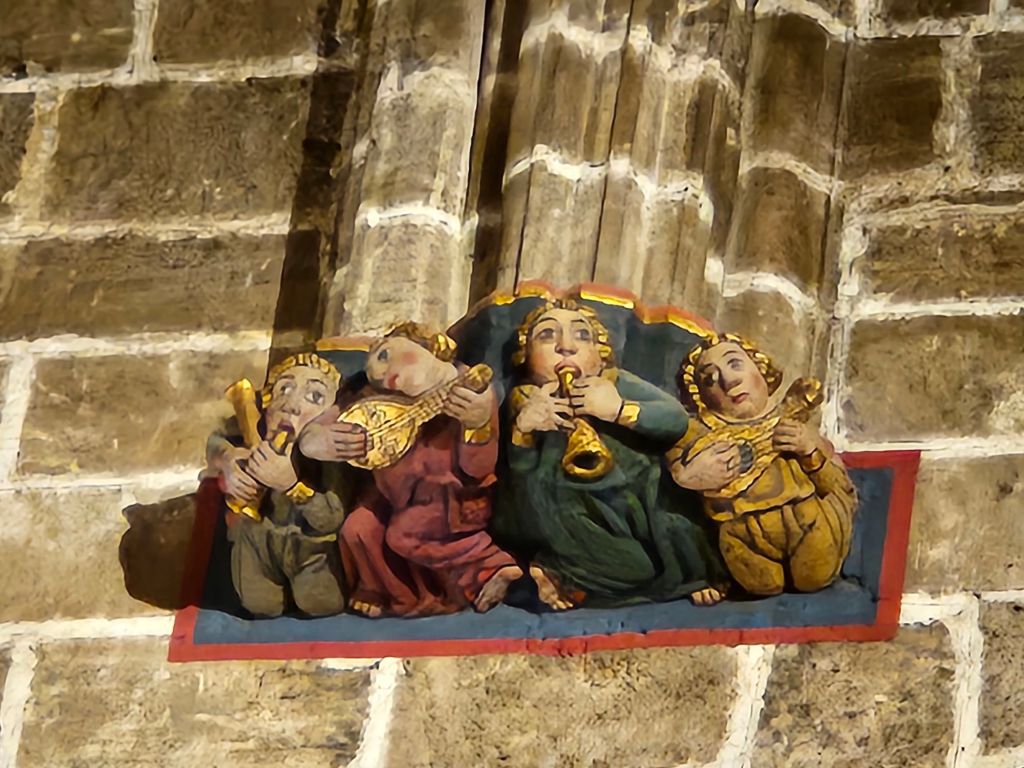
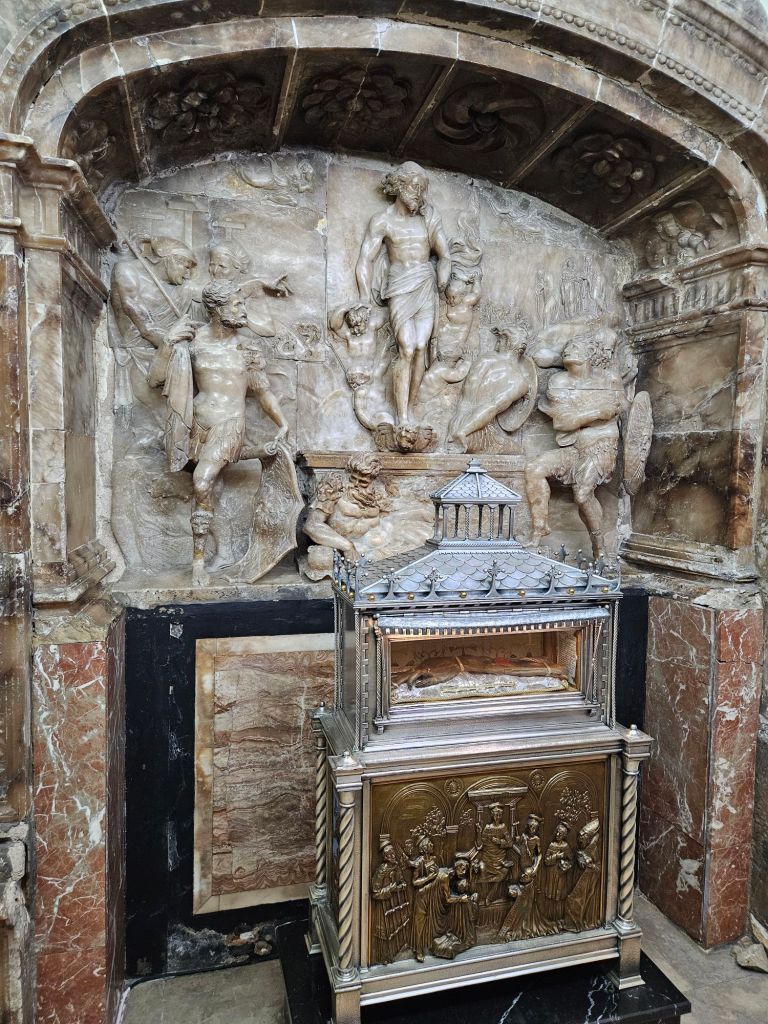
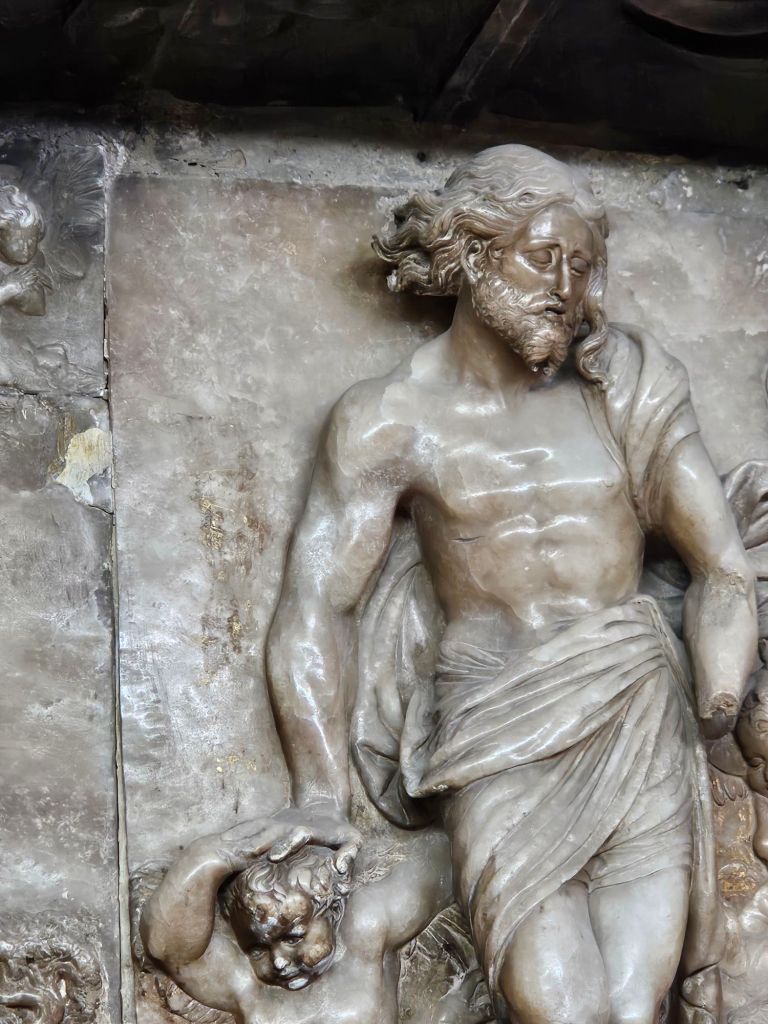
The historical riches are astounding, e.g. a couple of Goyas displayed without fanfare in one of the umpteen ornate side chapels, the elaborate stone pulpit from which St Vincent Ferrer preached in this very spot around 1410, and gorgeous C16 frescoes of musician-angels that were only rediscovered in 2004.
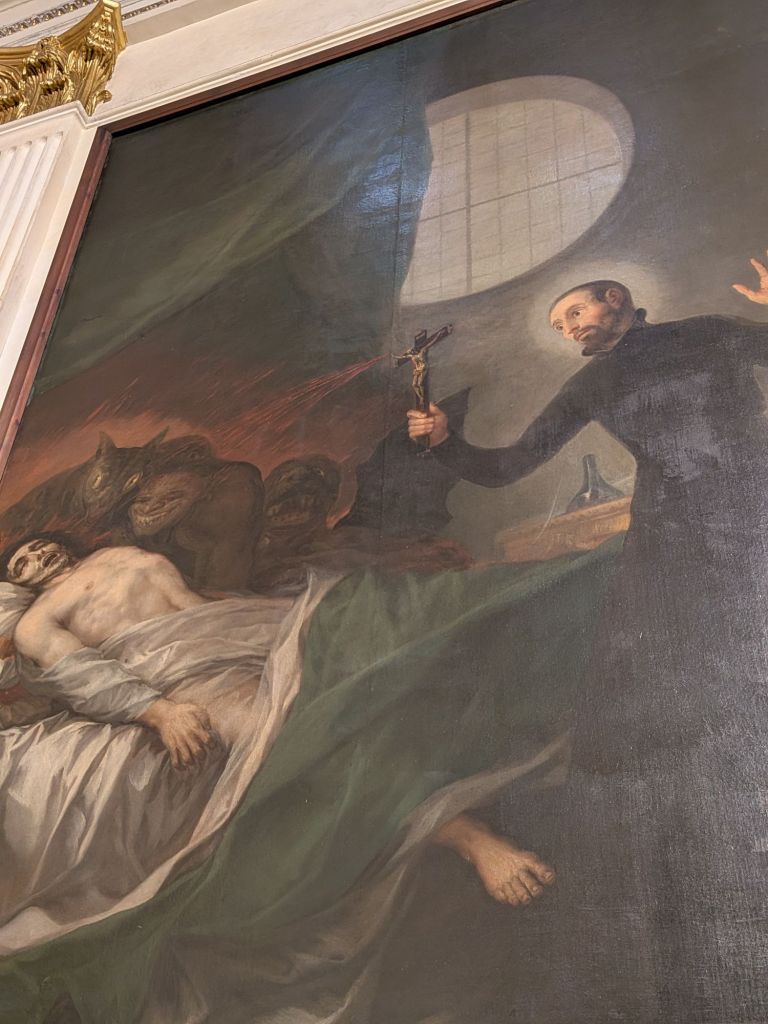
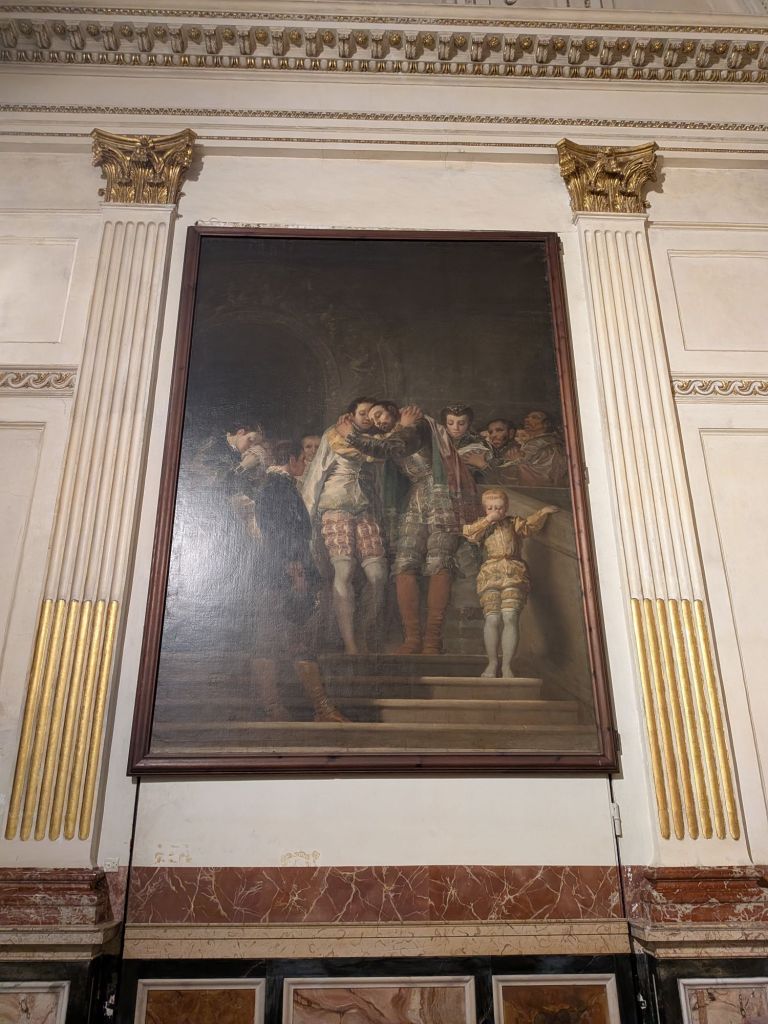
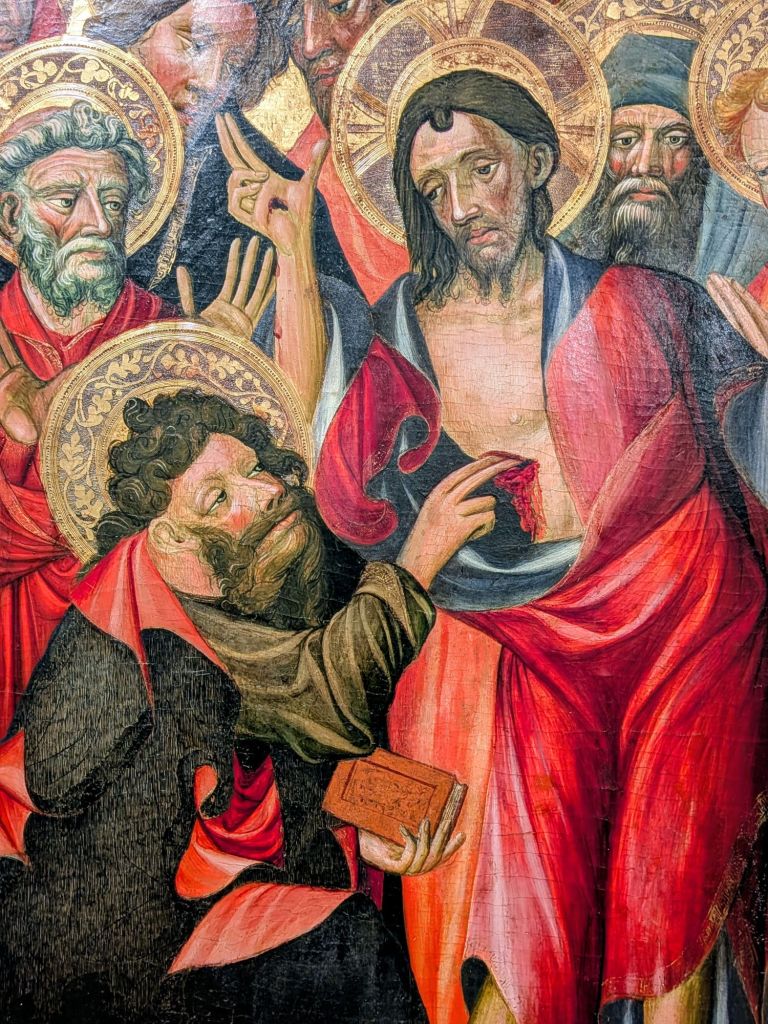
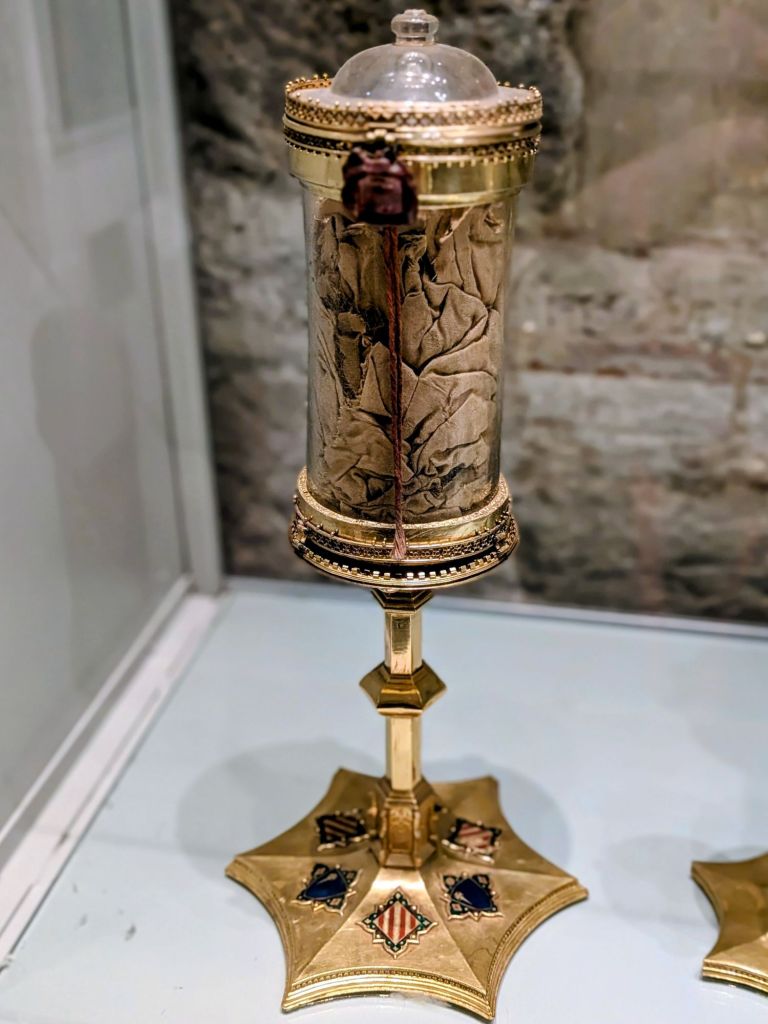
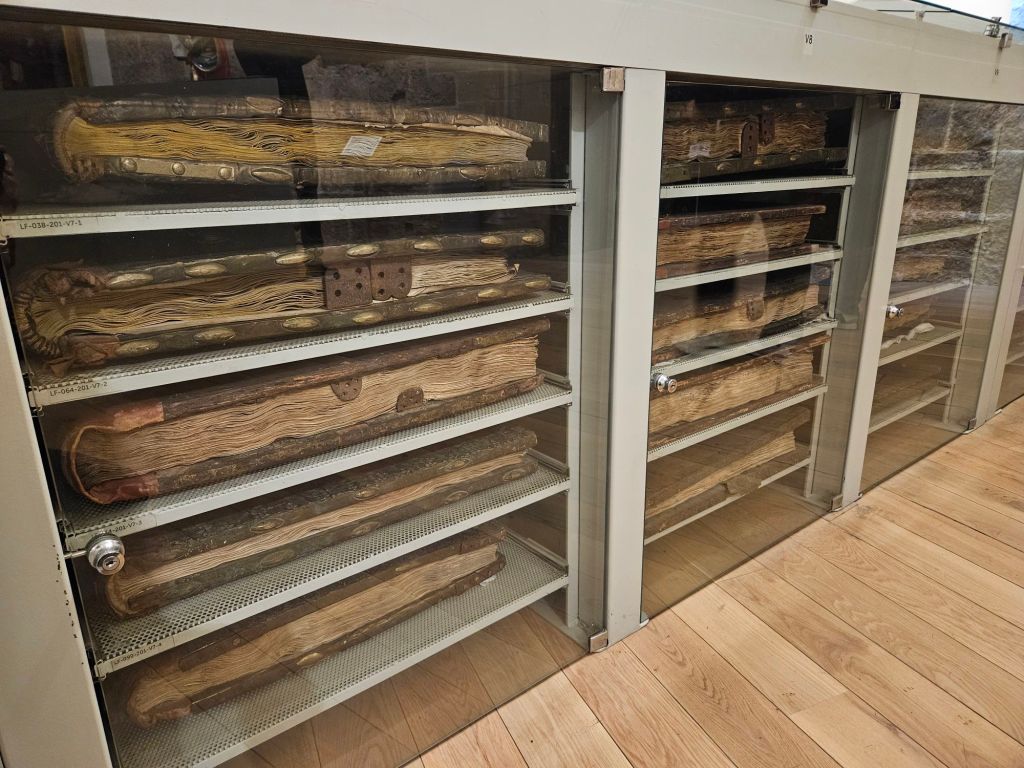
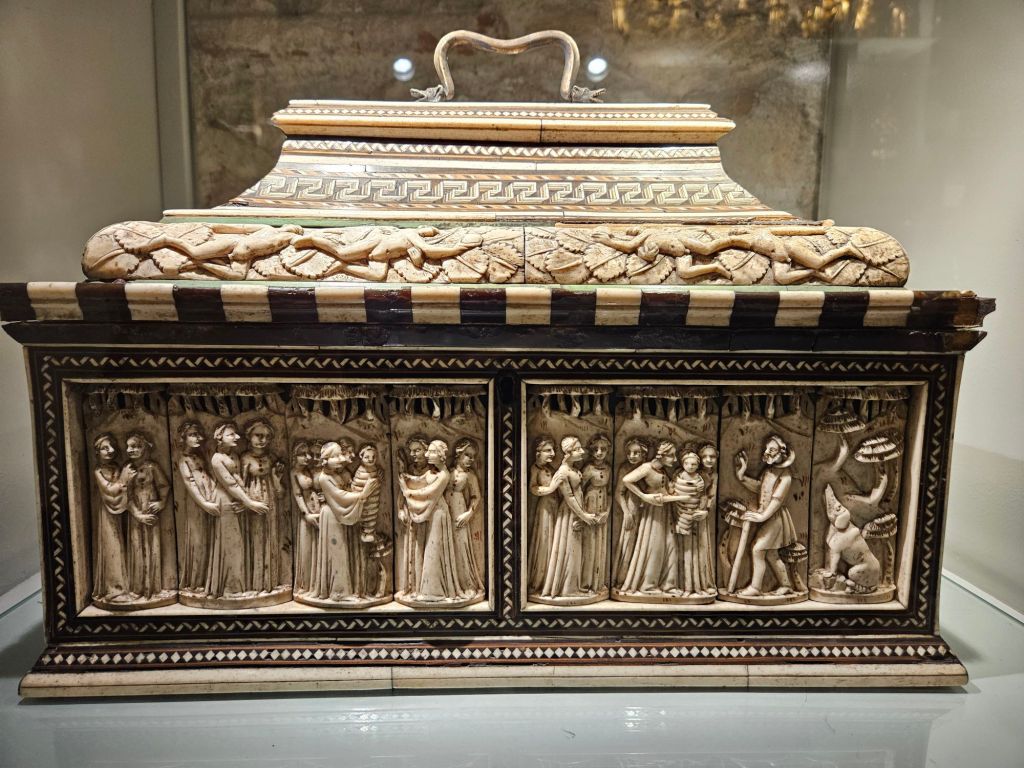
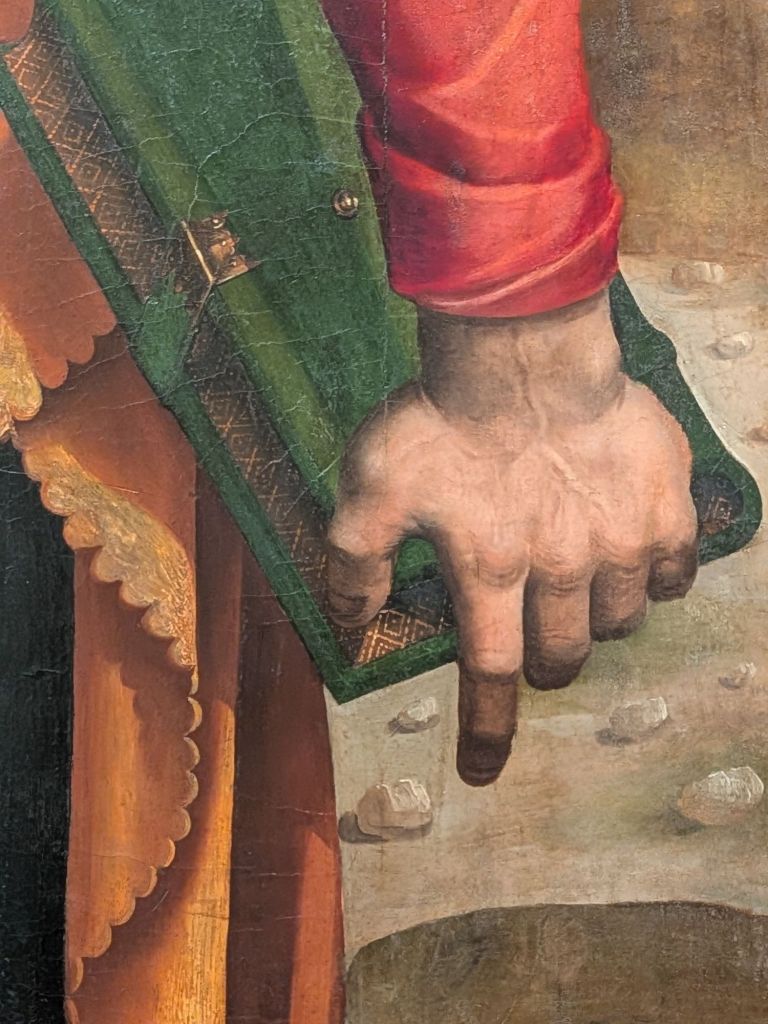
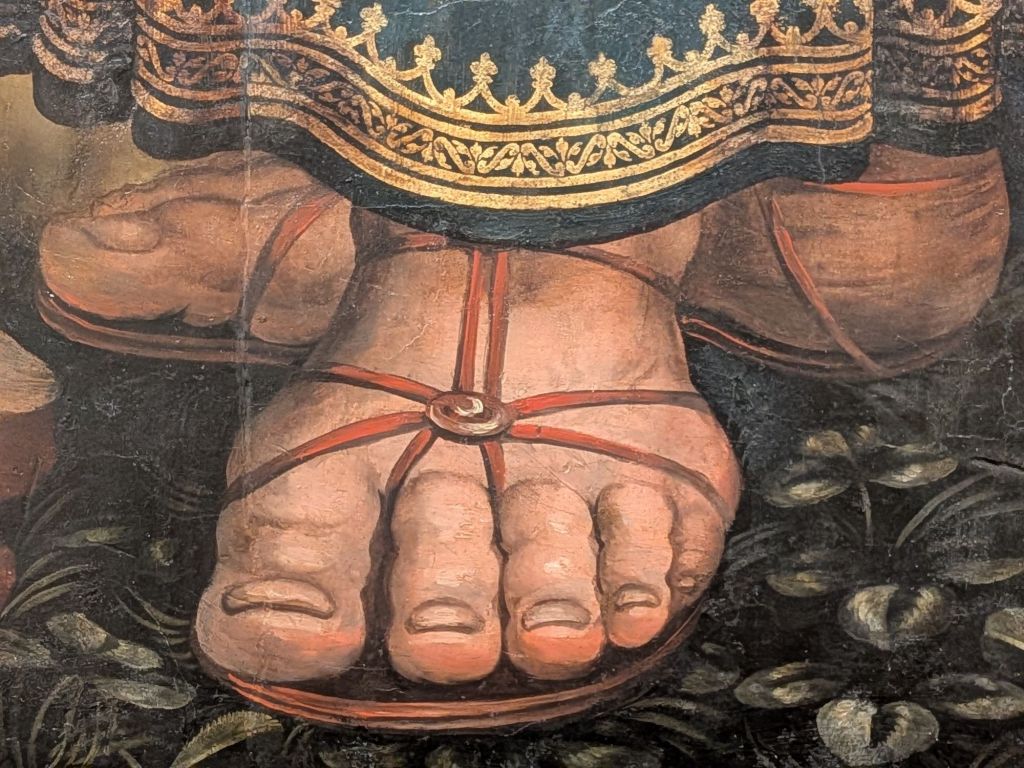
The museum is contained within an outer part of the cathedral. Tremendous riches in painting, sculpture, gold, etc., acquired in large part by gift from kings of Aragon, Castille, etc.
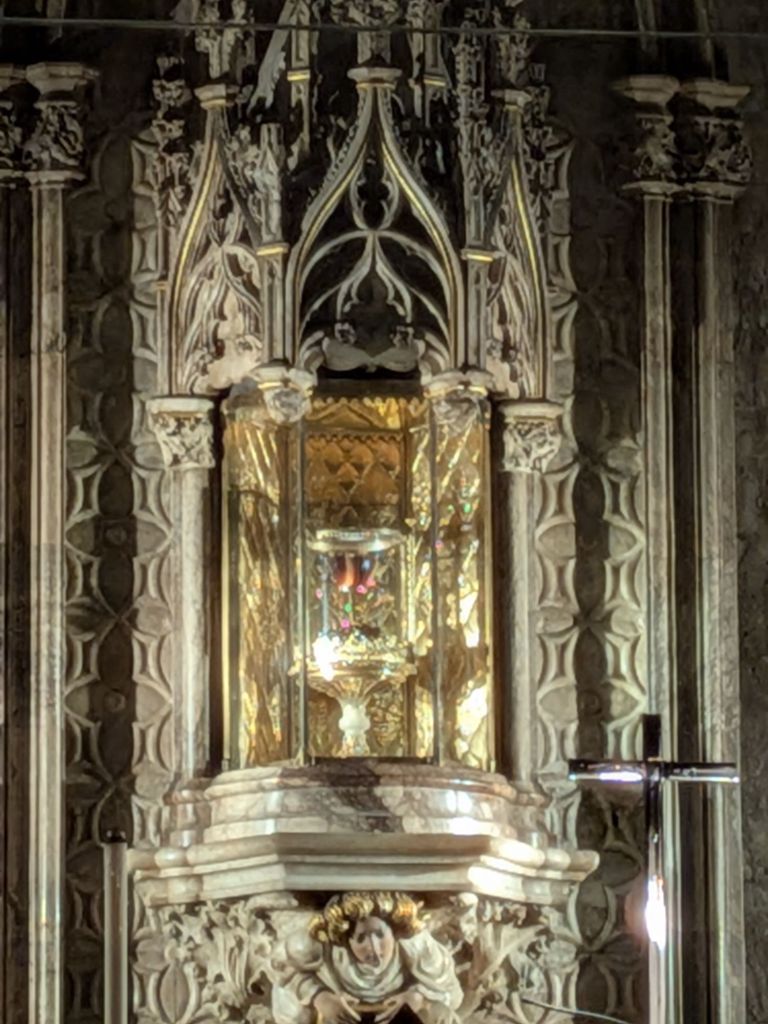
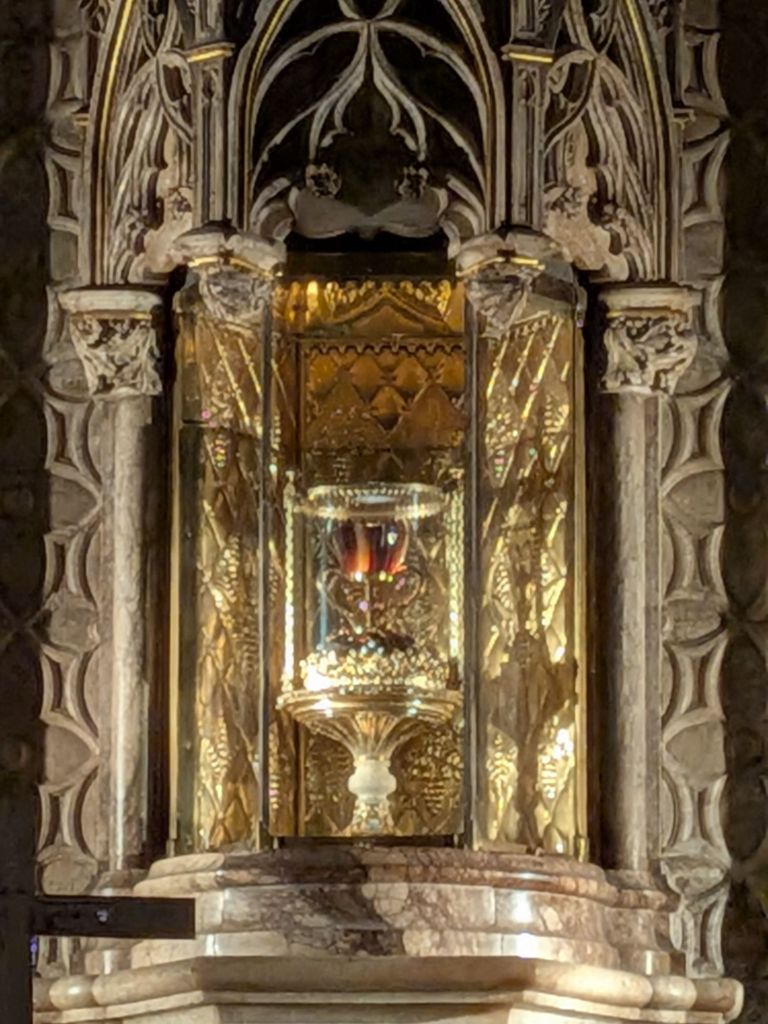
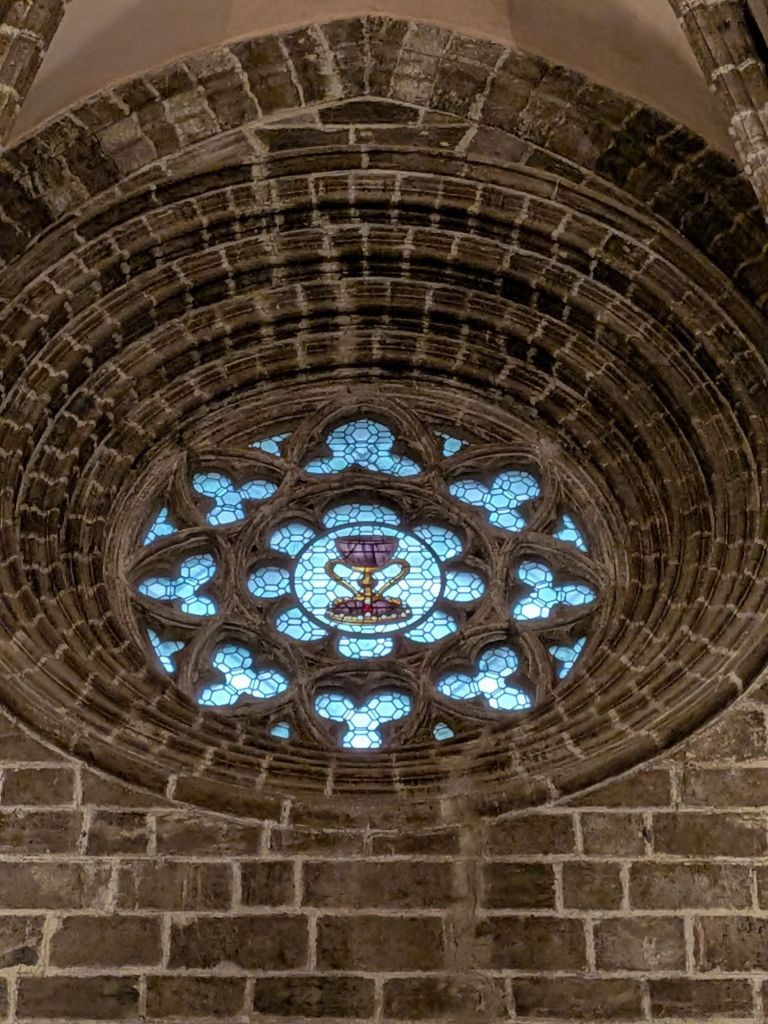
The grand finale, in a magnificent Gothic side chapel that would do as a small cathedral in itself, is (don’t say “supposedly” around here) the Holy Grail – brought from Jerusalem to Rome by St. Paul and thence eventually (insert vague history stretching over several countries and a dozen centuries) to Valencia. The gold is medieval – the Grail is the red cup you can just see in the middle.
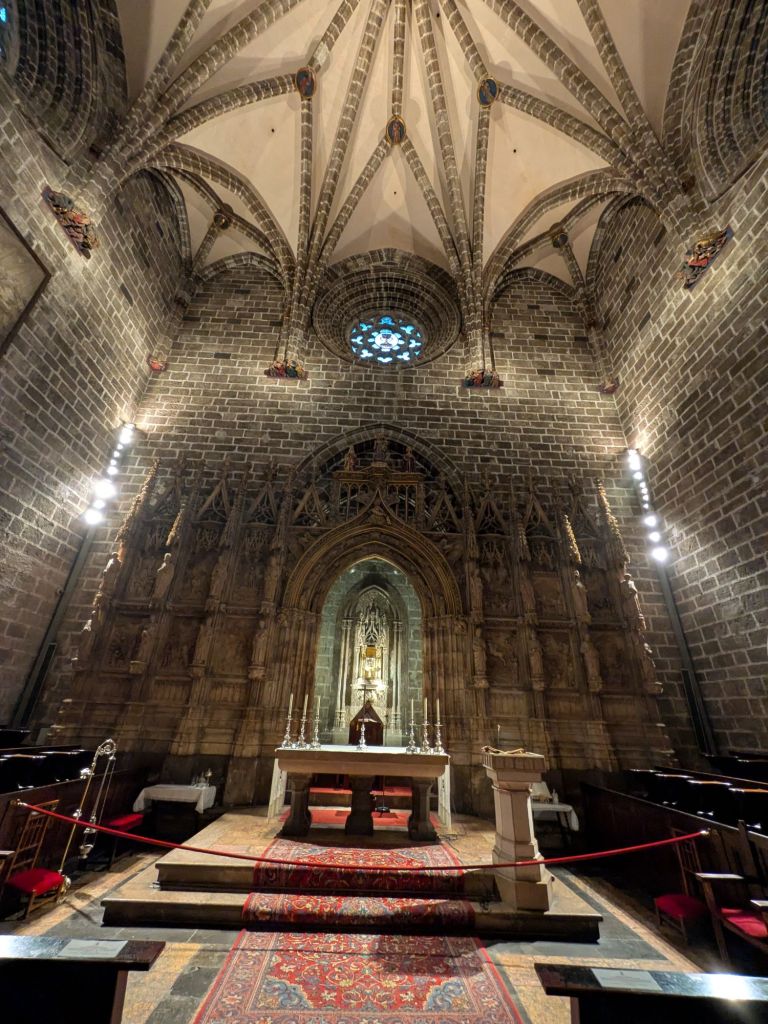
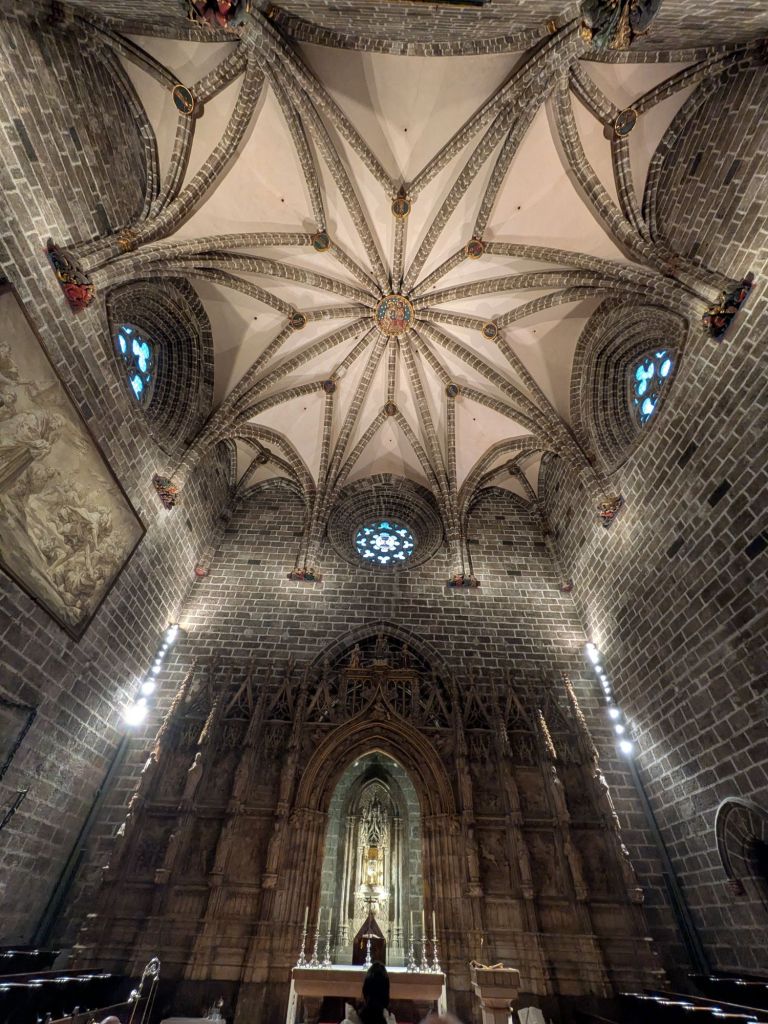
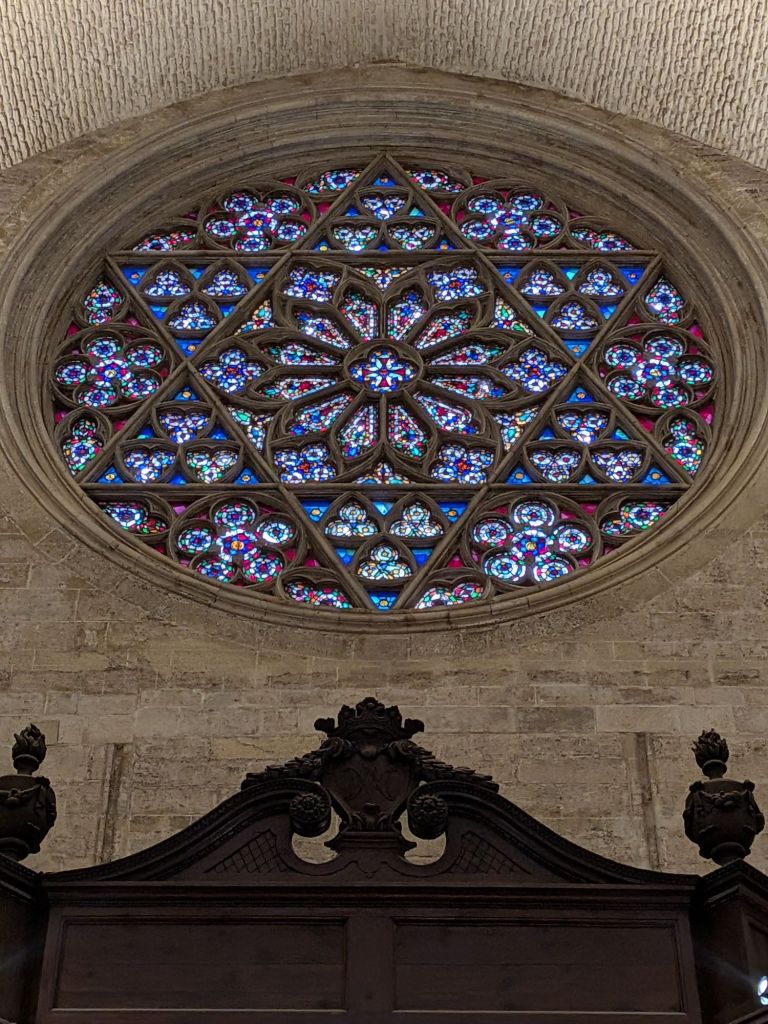
Two rose windows that the audio guide barely bothered to mention:
K here. We spent the better part of 3 hours here, slowly wandering, listening to the guide, marveling at the magnitude of it all. I kept wondering how much more rich and layered it might have been if I knew more Bible stories, more Catholic saints, more art history, more architecture. One could have picked any spot in the cathedral and spent an hour with an expert digging through the details. But then again, even without the extra depth, my brain reached saturation.

Bonus pics.
So much, so fast

Kerry and I have both noted that even in everyday life it’s easy to lose track of what you did / saw / ate even yesterday; speed-tourism in a foreign city only exacerbates the problem. So here, at 10 pm, are some very quick highlights in an attempt to pin down some of the past 48 hours or so.

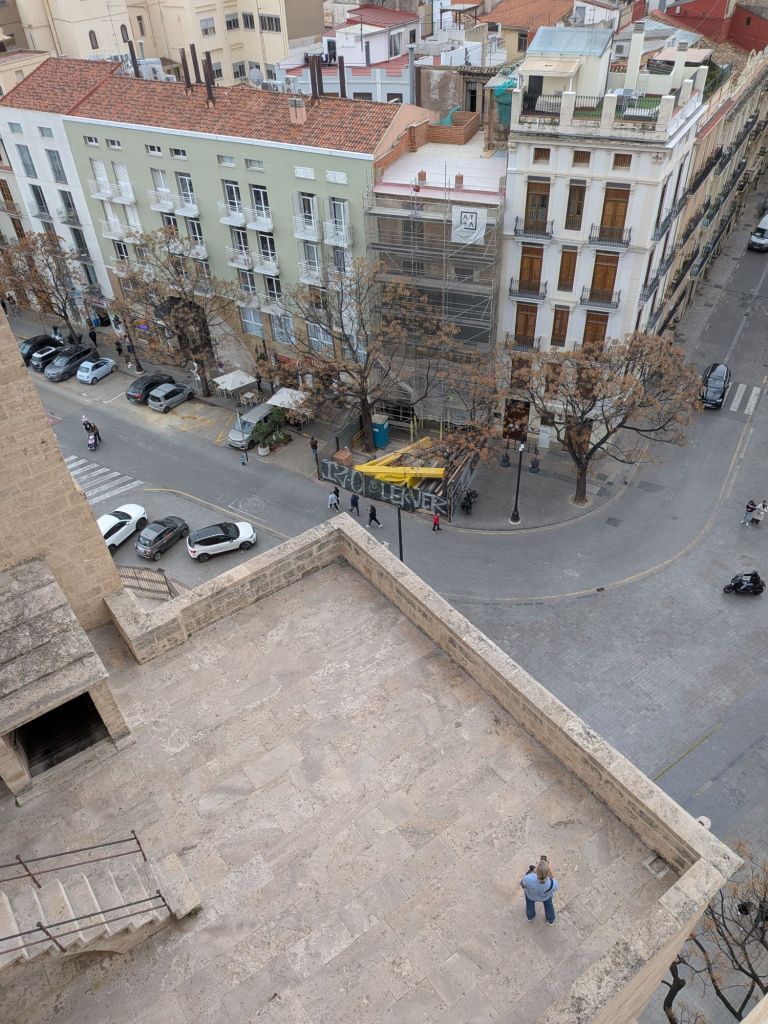
Going up the Torre Serrans (note K at bottom left):

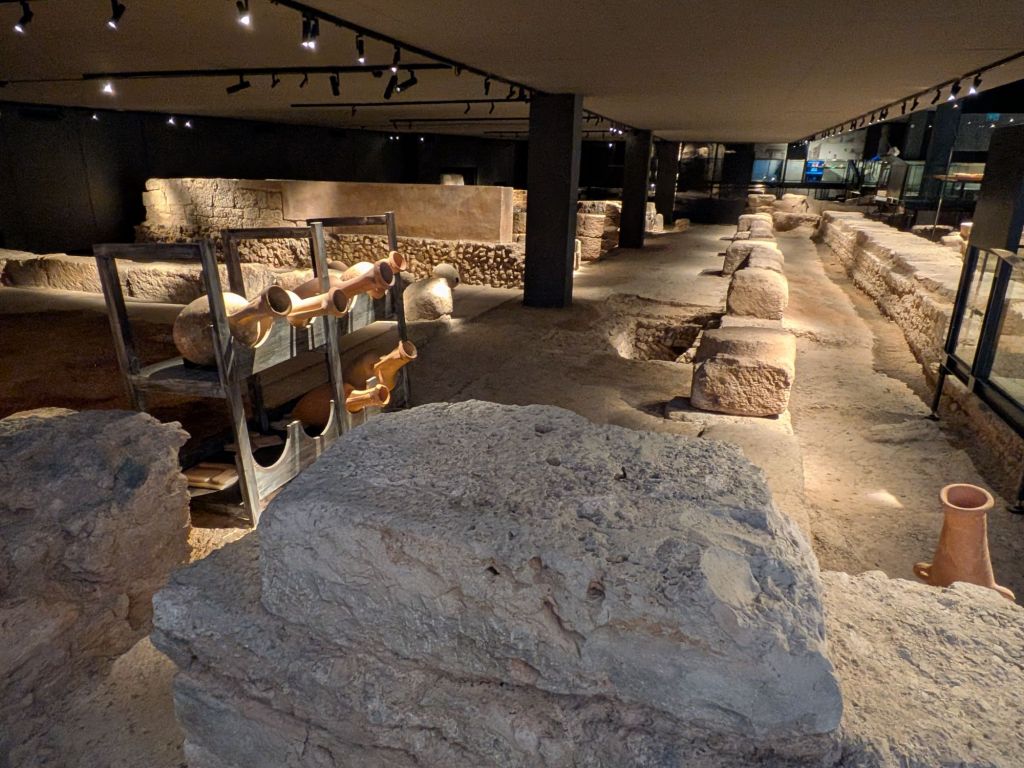
Visiting the labyrinthine ruins of Roman Valentia at the Almoina Archaeological Museum.

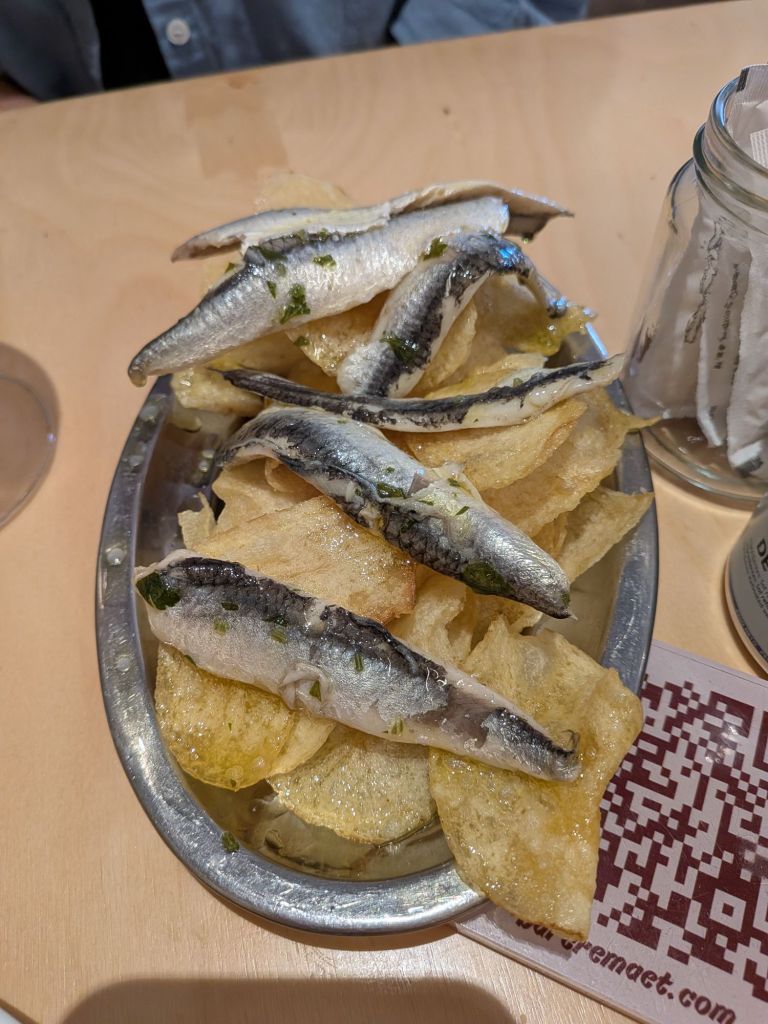
A very Spanish dinner around the corner involving boquerones (white anchovies in vinegar) served over potato chips:

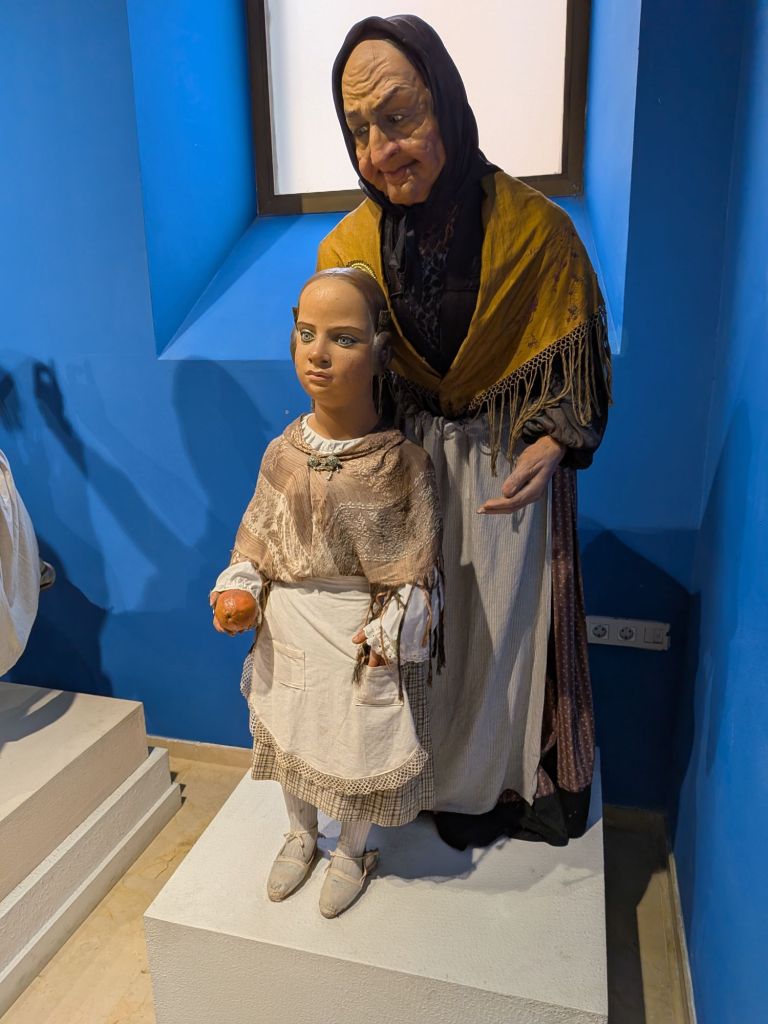
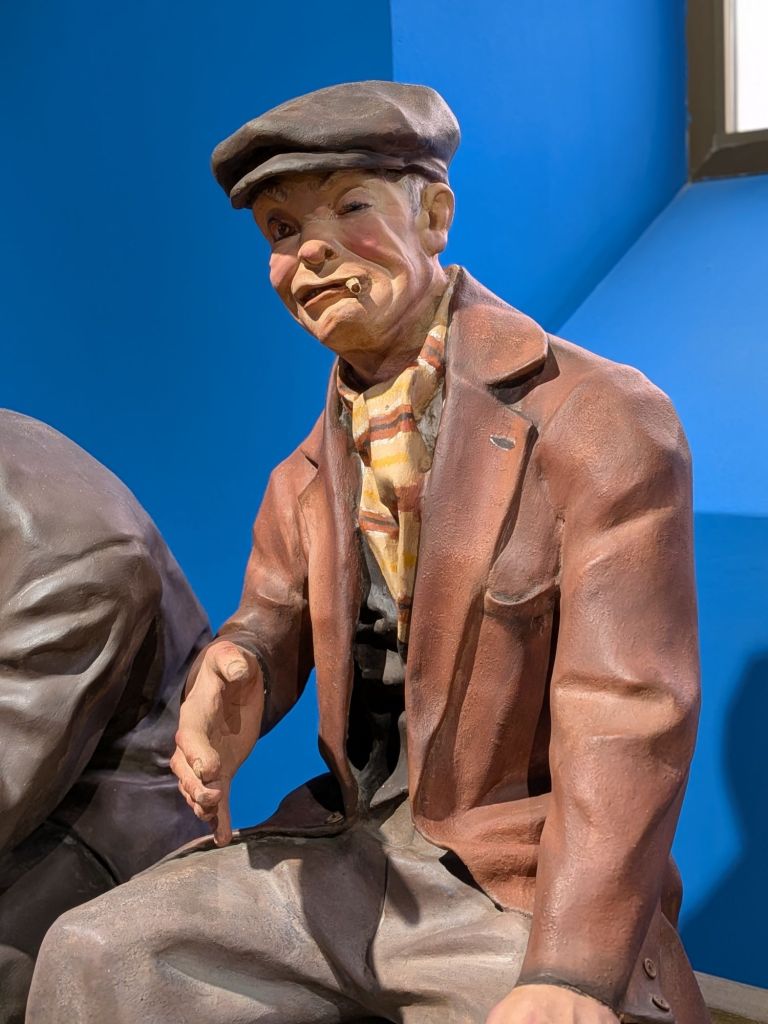
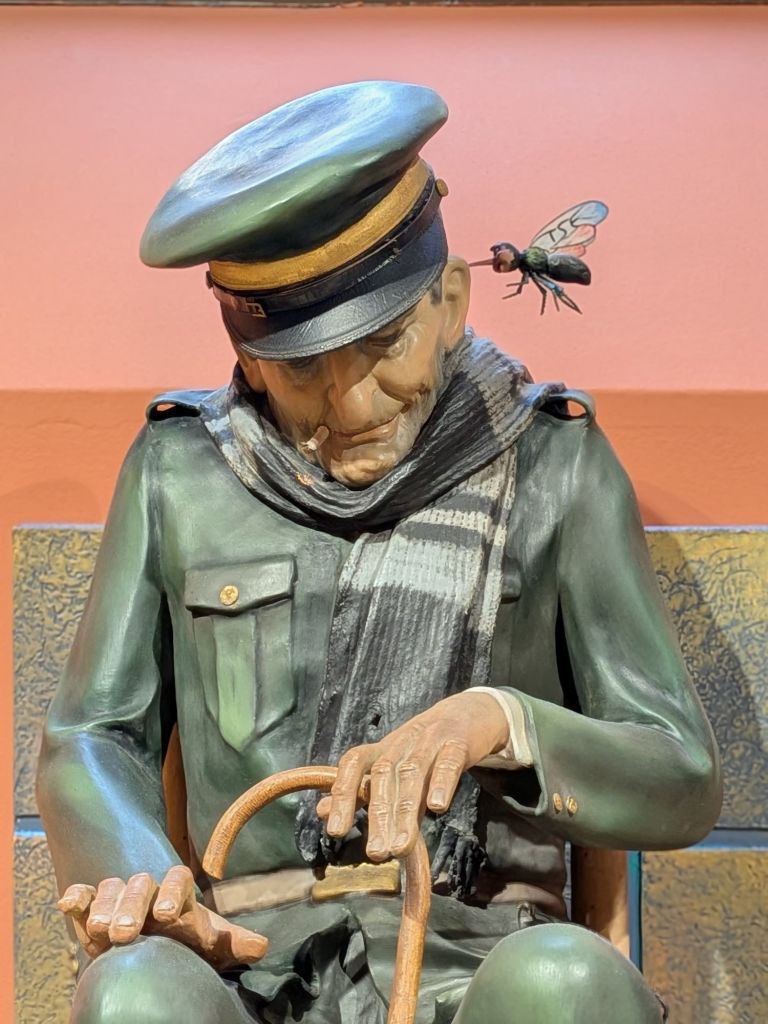
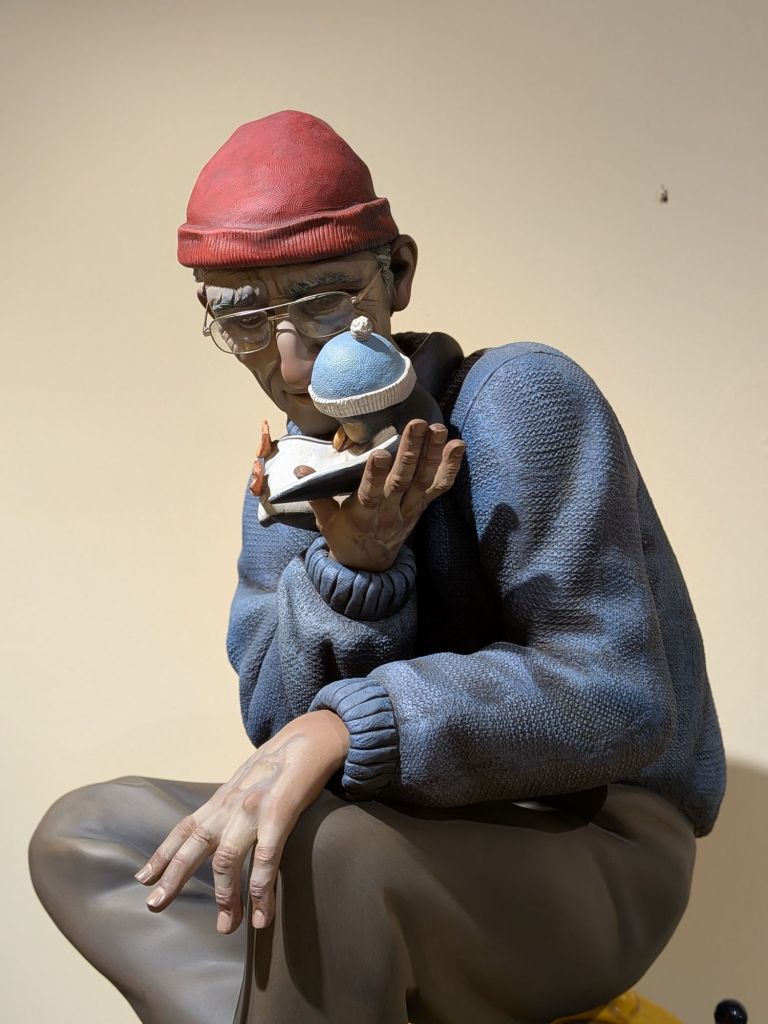
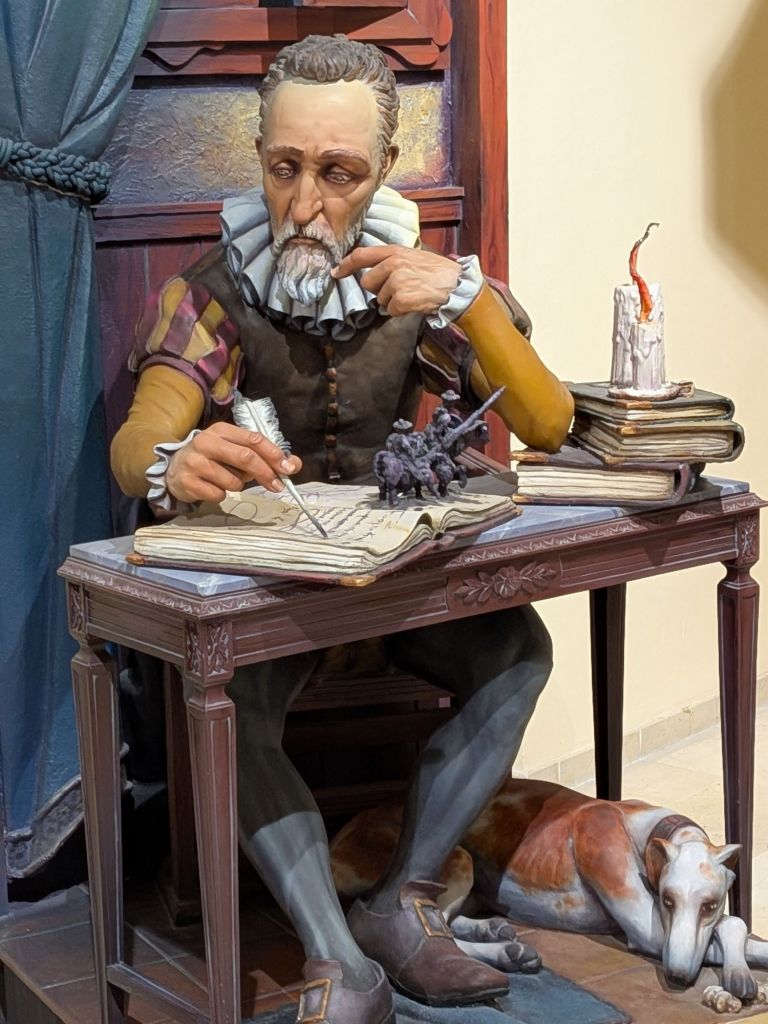
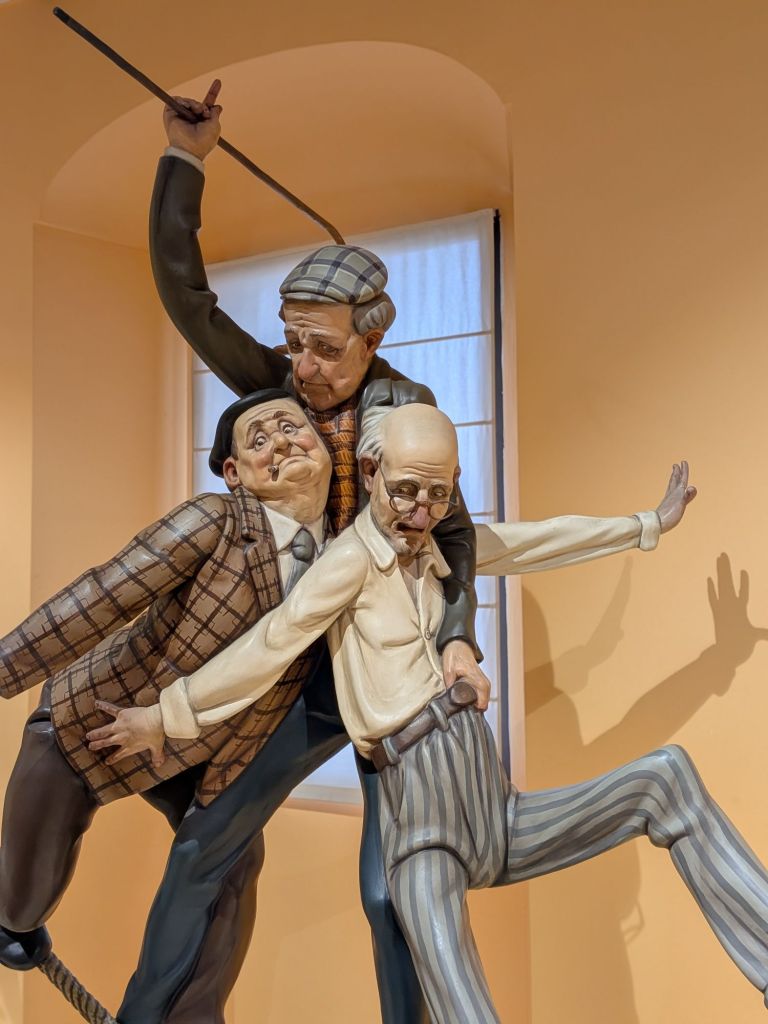
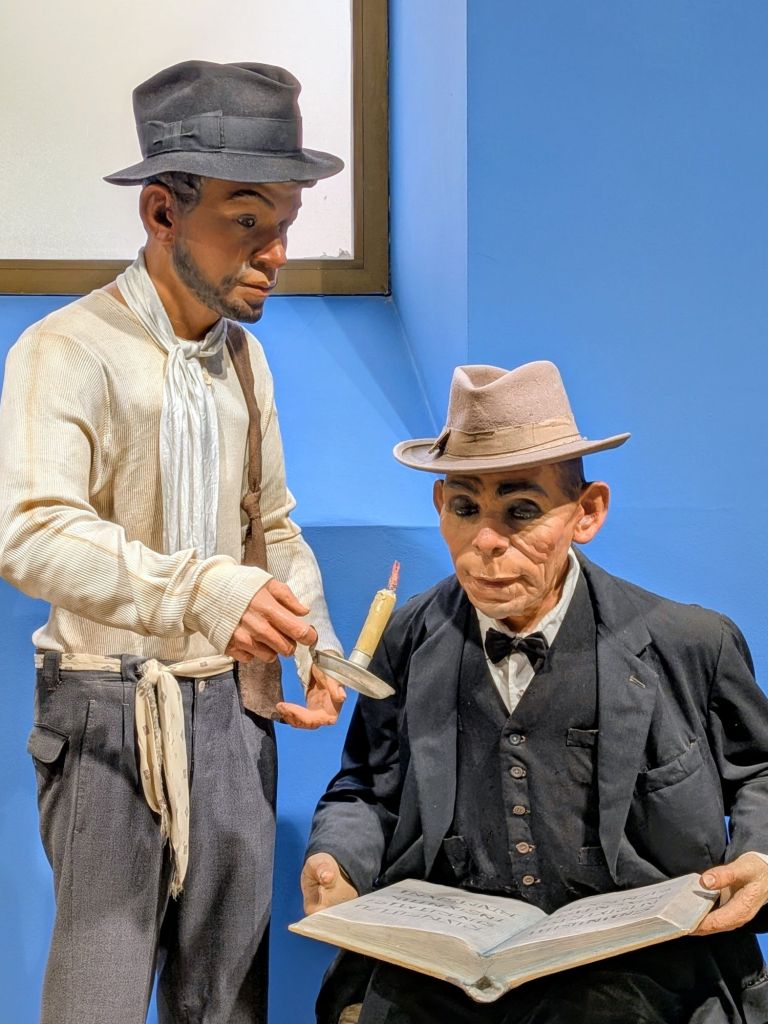
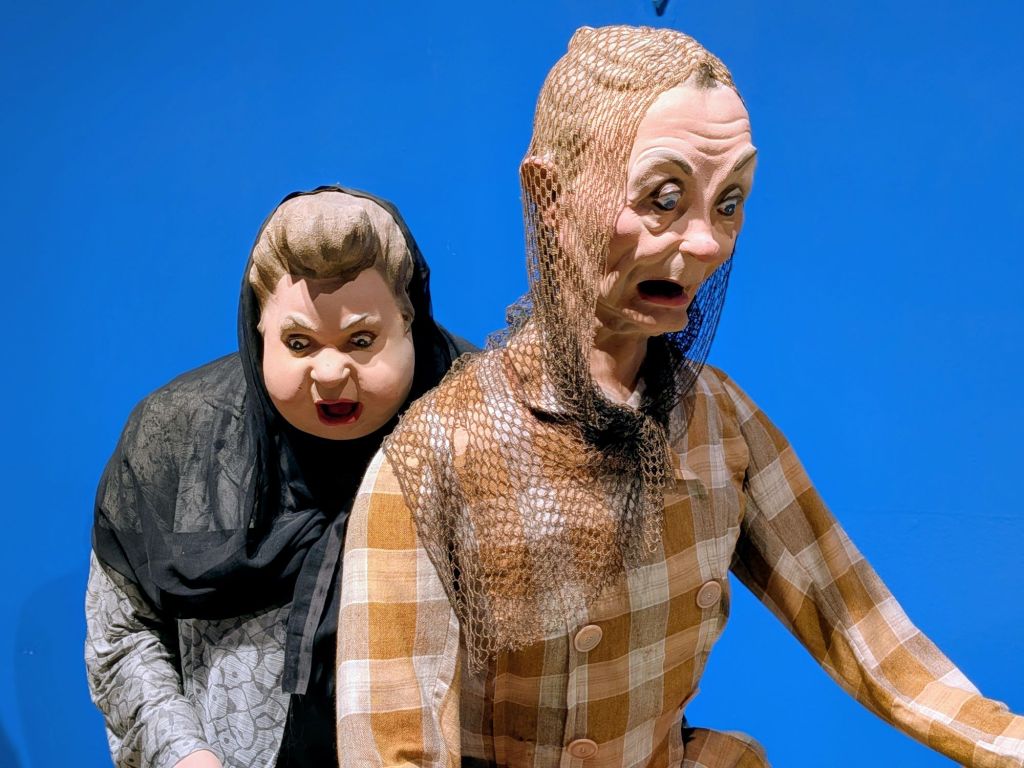
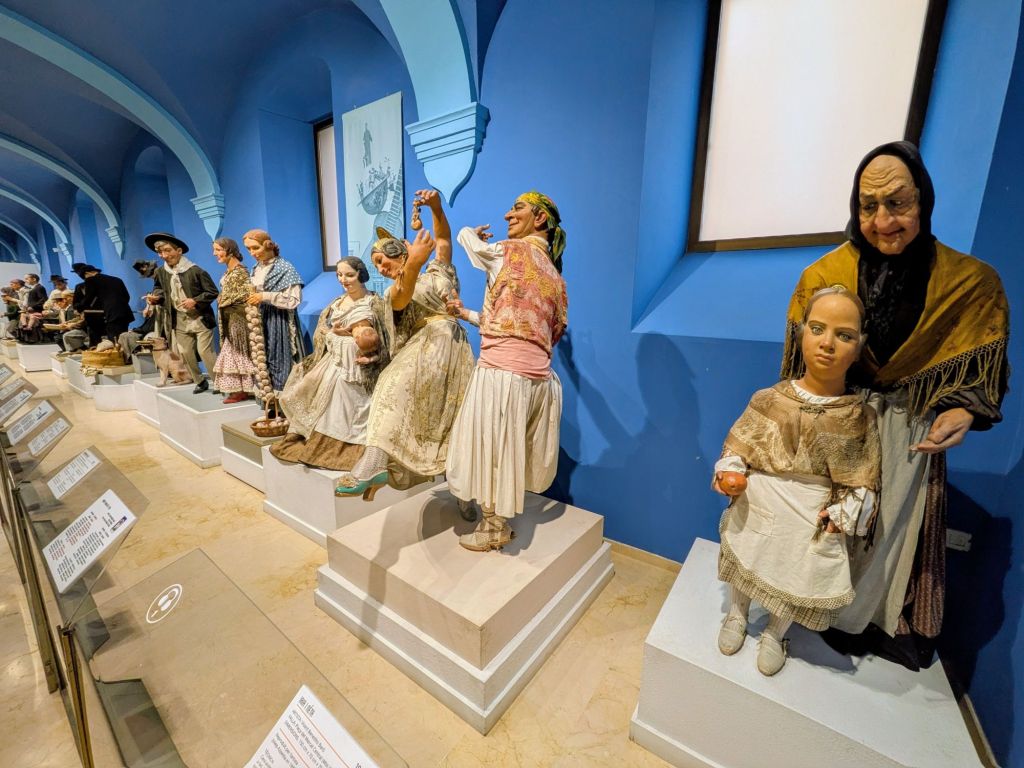
The Fallas Museum, containing every ninot saved from the flames each year since 1935 or so…

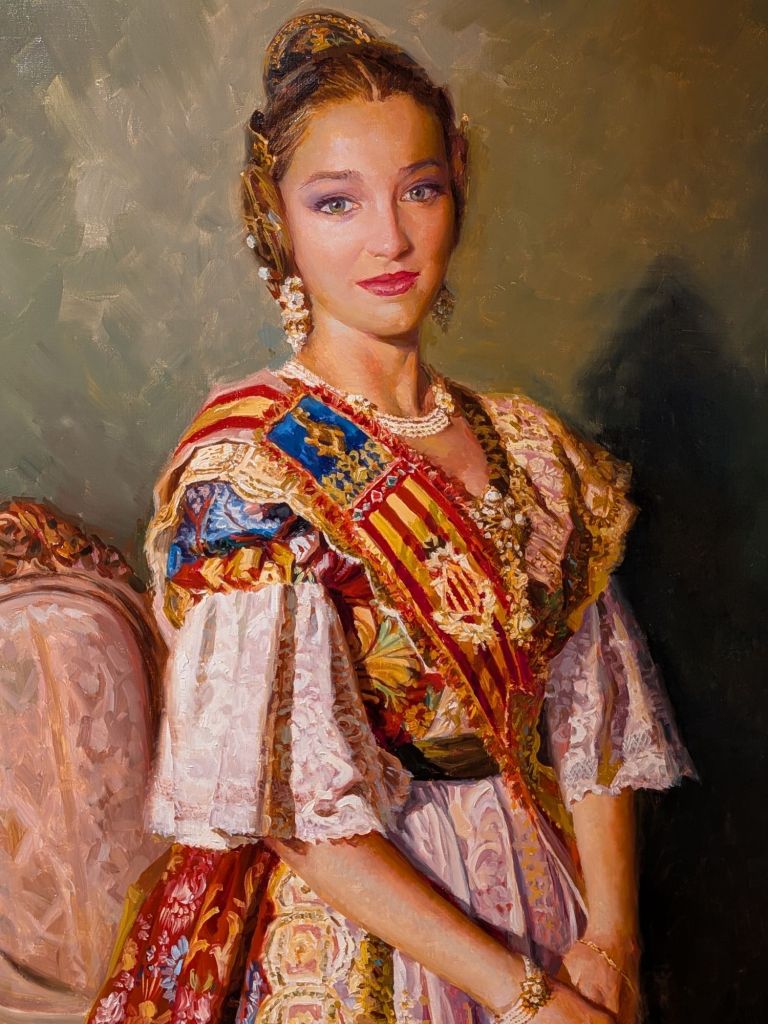
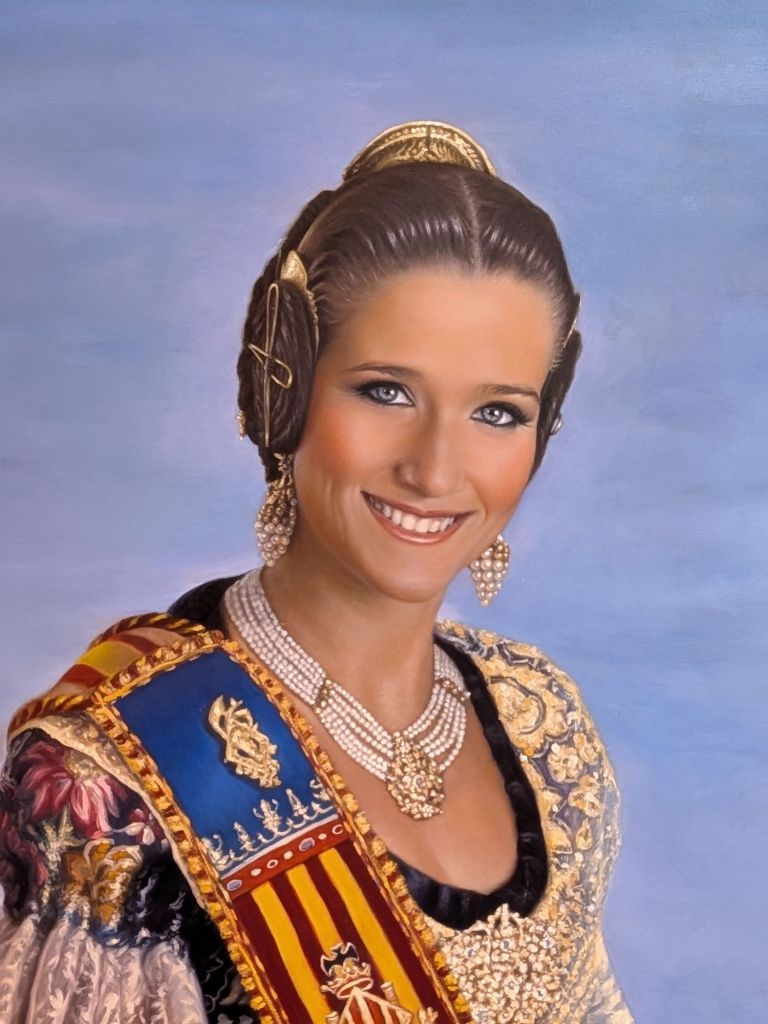
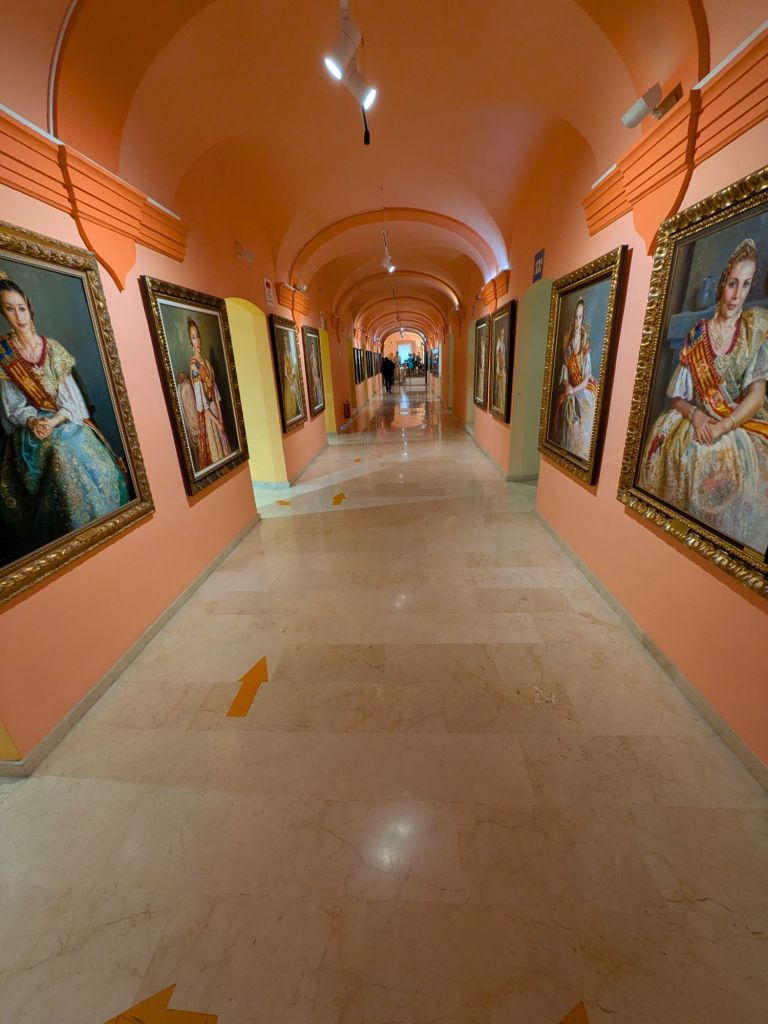
and oil portraits of every Fallera –

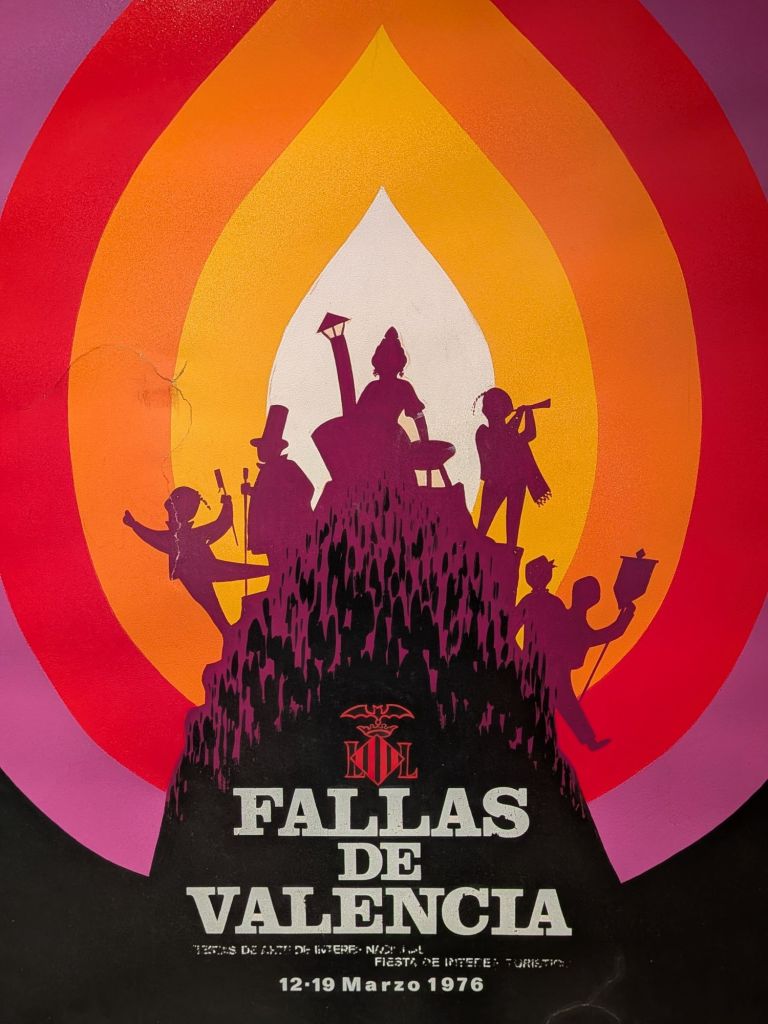
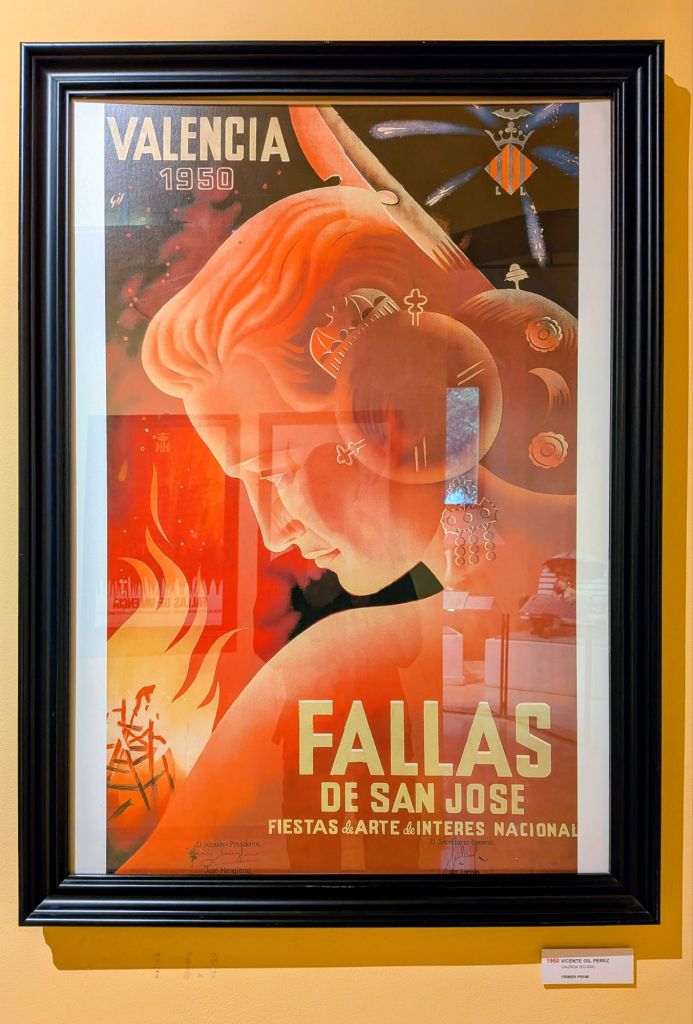
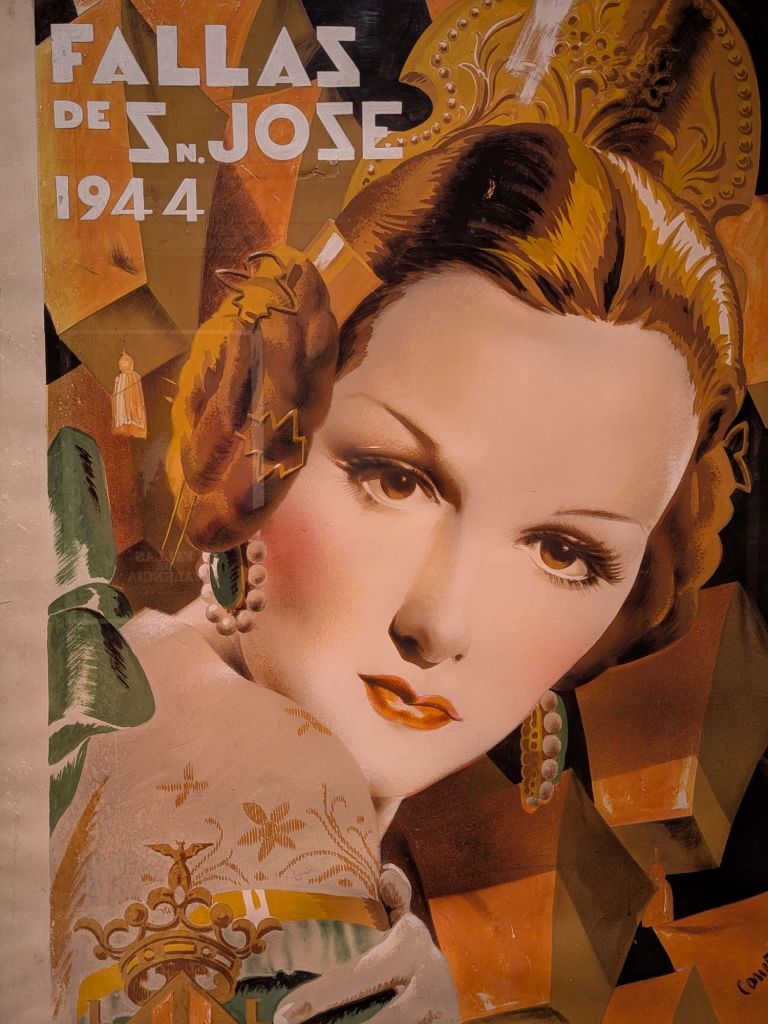
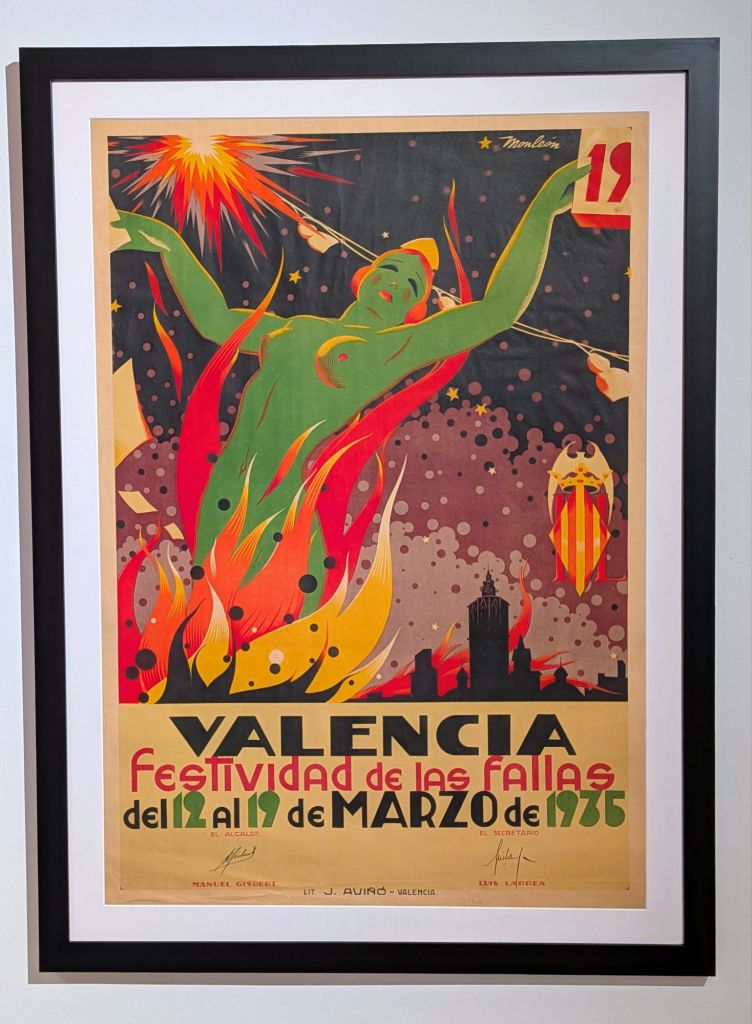
and the official poster for every year –

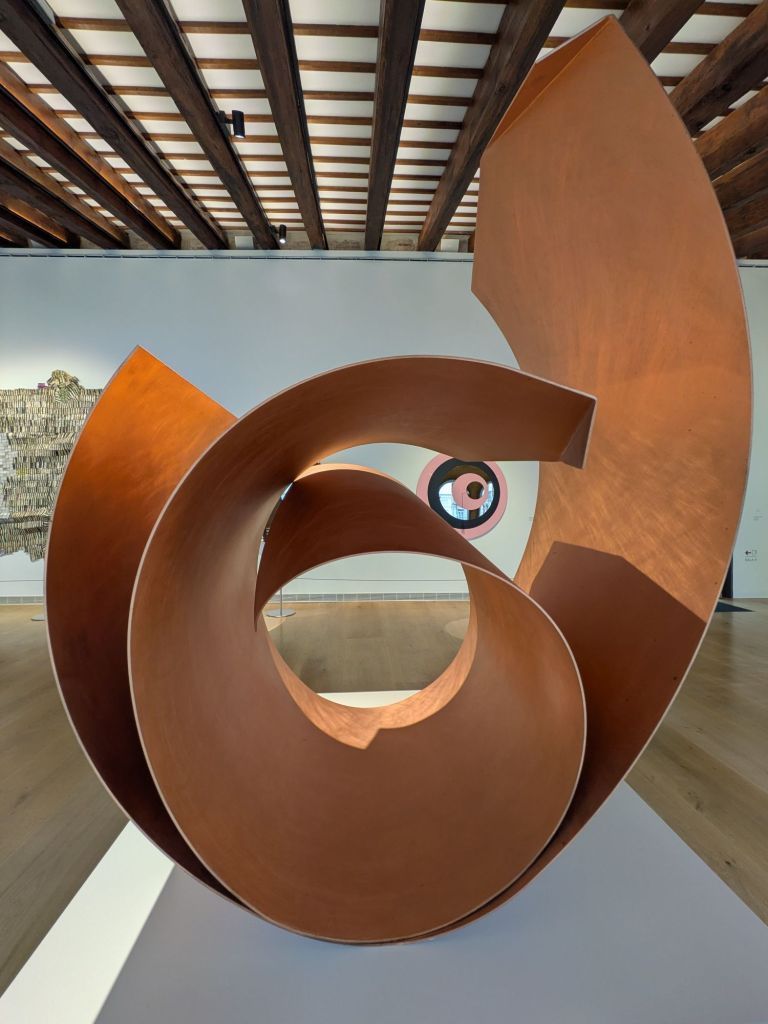
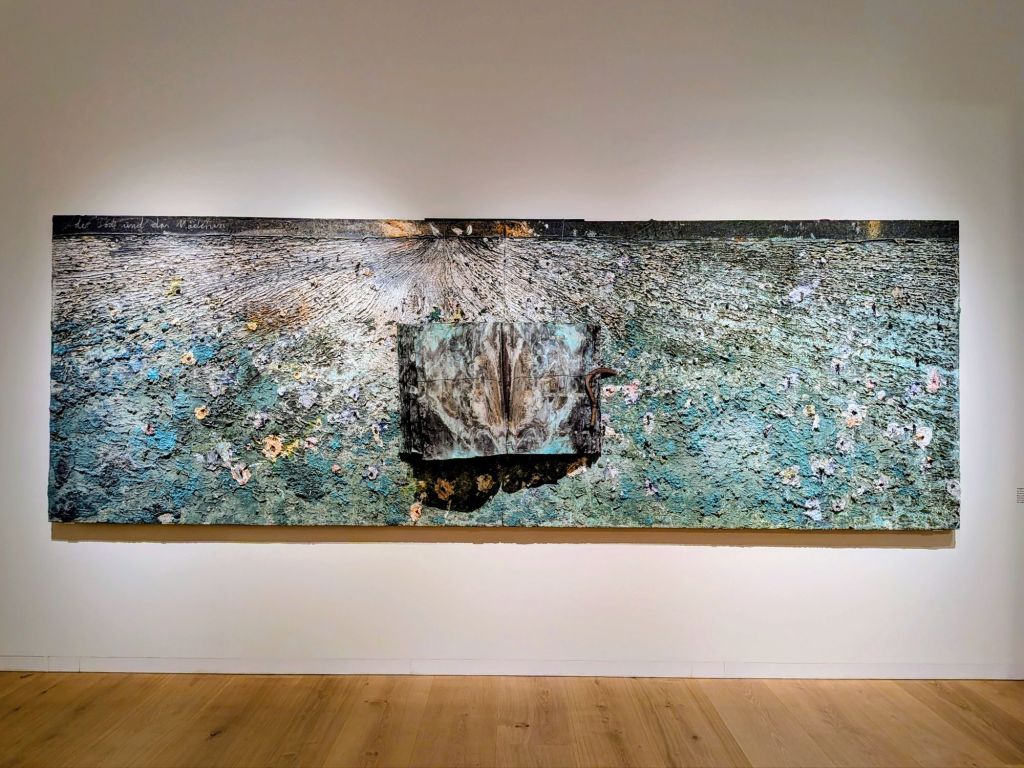
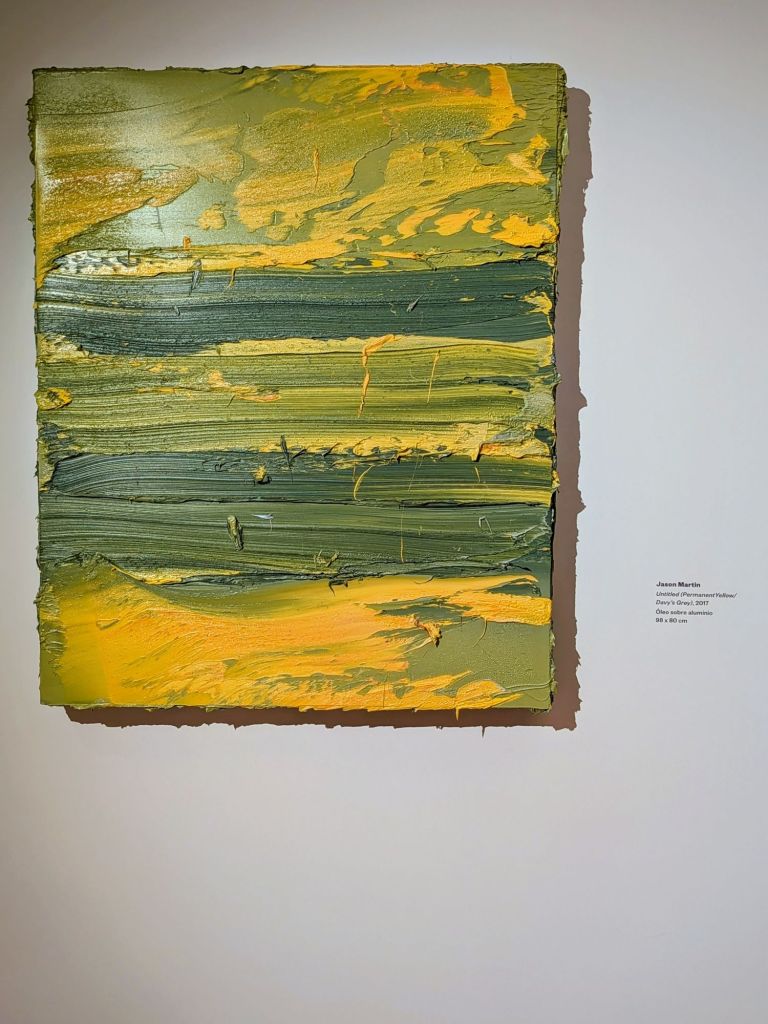
Next, one of Spain’s greatest personal art collections, in the Centro de Arte Hortensia Herrero:

(Recipe: make $3 billion in the supermarket business; spend a lot of it on art; buy a ruined C.16 palazzo; spend $50 million just on the restoration; reinforce the walls because one of the Anselm Kiefer paintings is in fact mostly lead, and weighs 4 tons.)

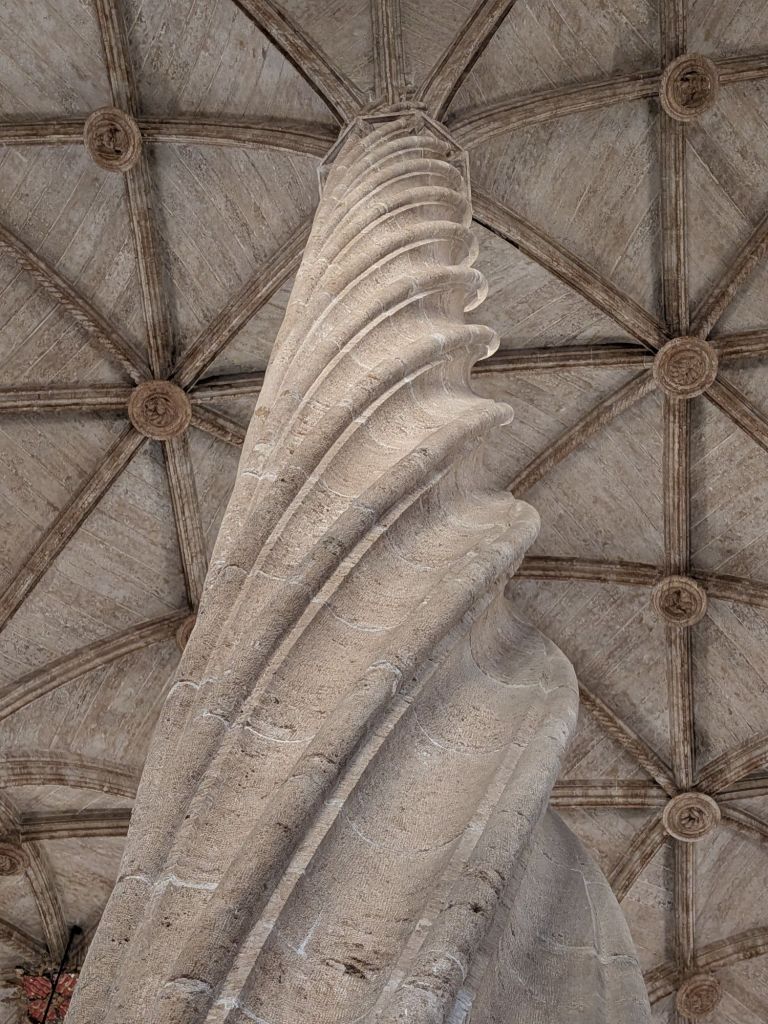
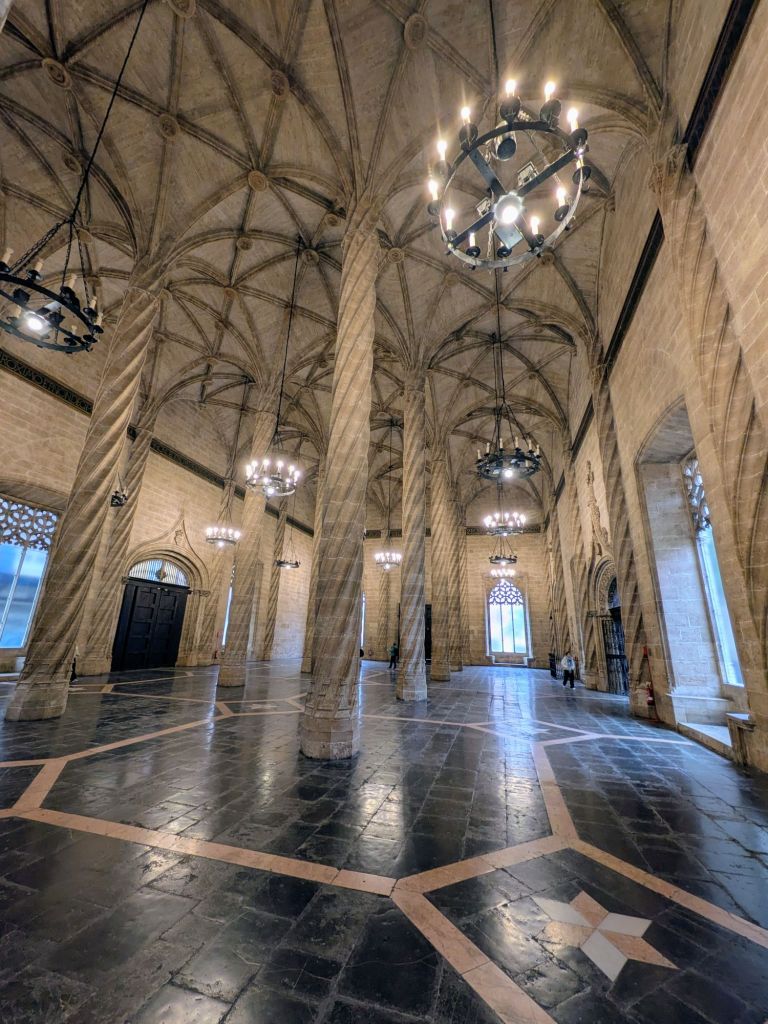
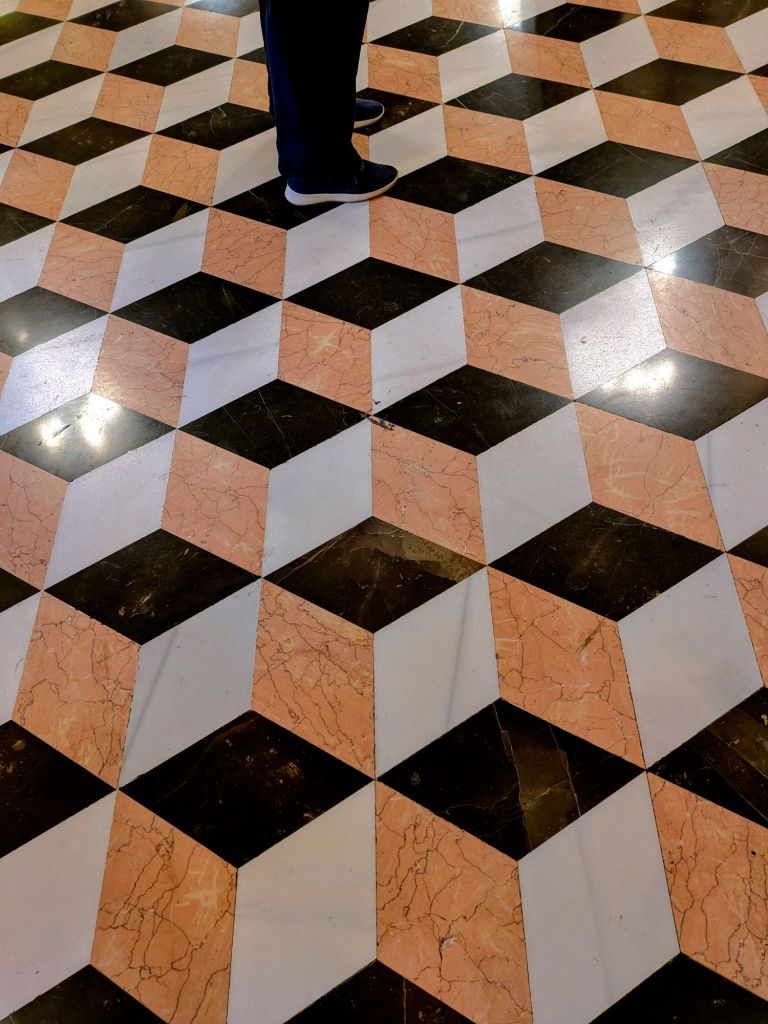
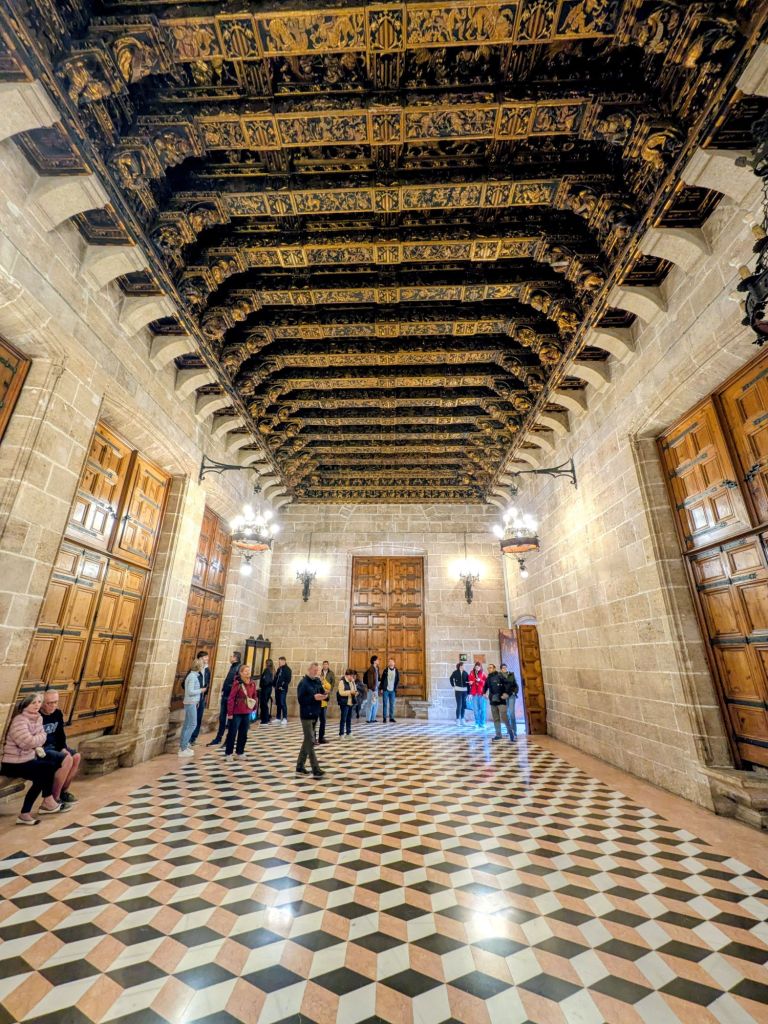
Next, built between 1490 and 1550, the spare, beautiful Lonja de la Seda or Silk Exchange:

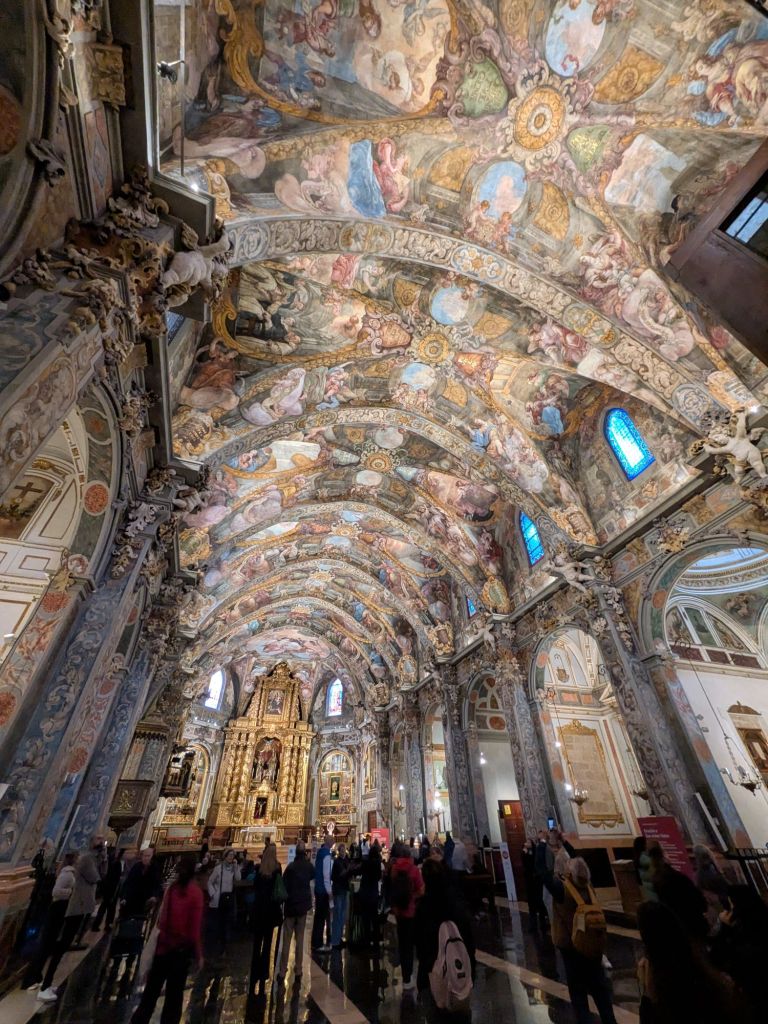
Next, the not at all spare (actually, Baroque on steroids) but even more beautiful Parroquia de San Nicolas de Bari – which the artist mainly responsible for restoring the Sistine Chapel described very reasonably as “the Sistine Chapel of Valencia”:

Next – OK, you can’t win every game – an hour at Centro Carmen, a modern at museum from which I don’t have a single picture because I felt that every single multimedia conceptual installation (or whatever) in there was achingly pretentious, self-regarding,  derivative, bordering on self-parody crap…

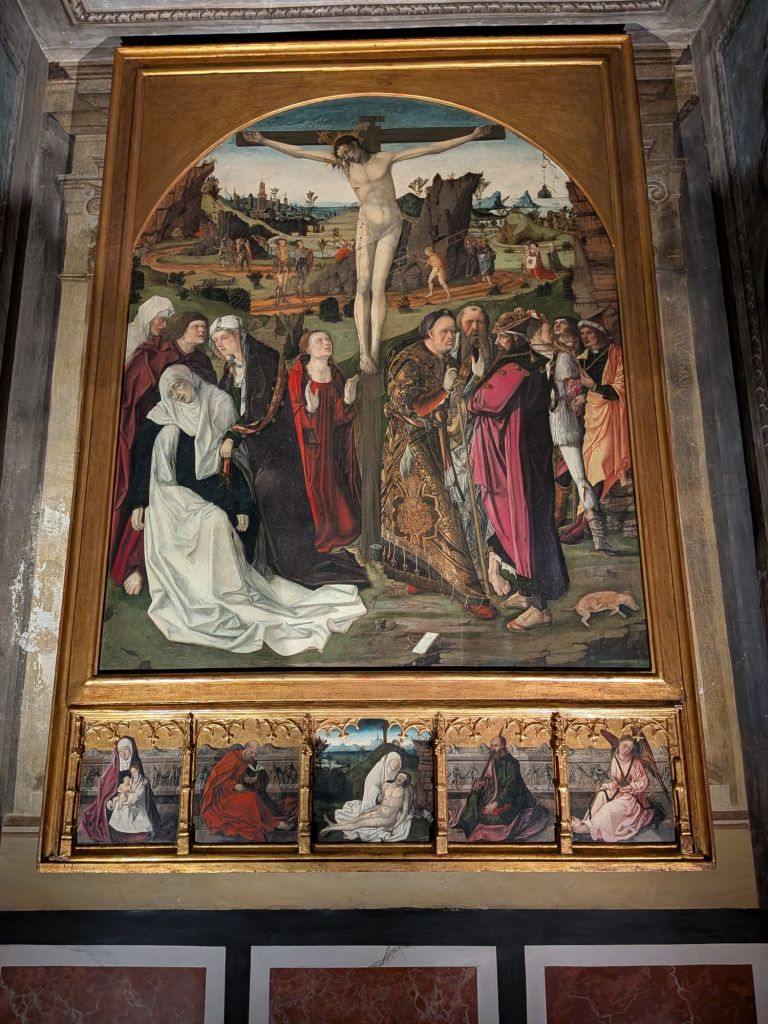
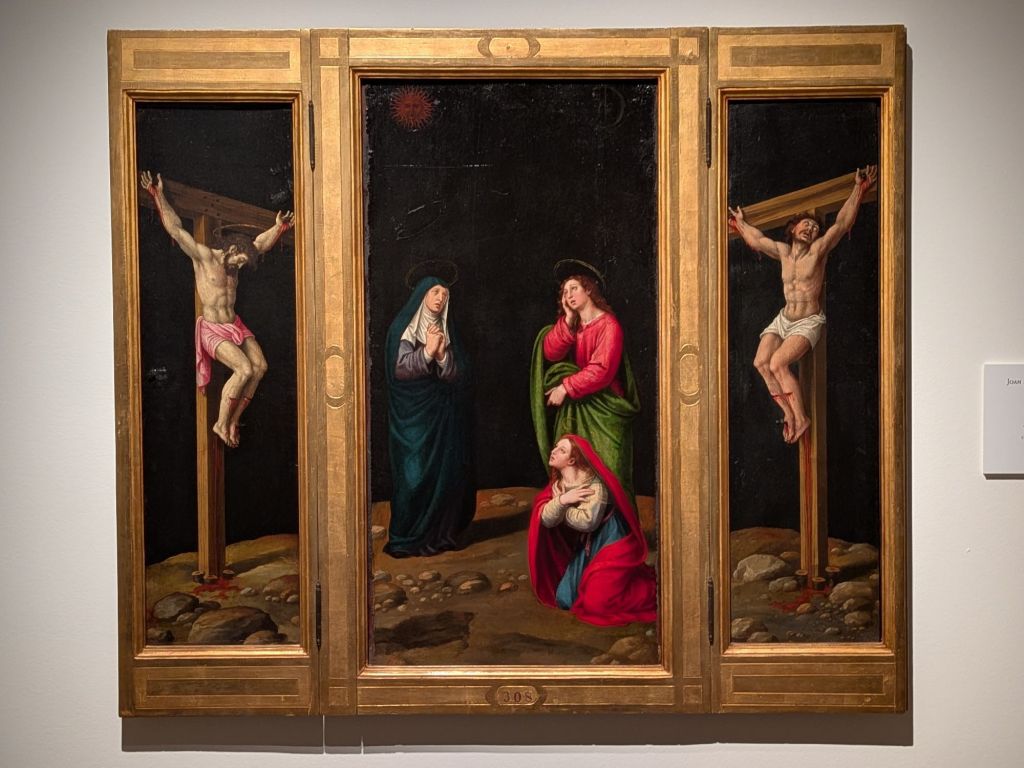
And finally a return to the Museo de Bellas Artes, where among many other things we saw this Crucification triptych with an absent Christ, c. 1570:

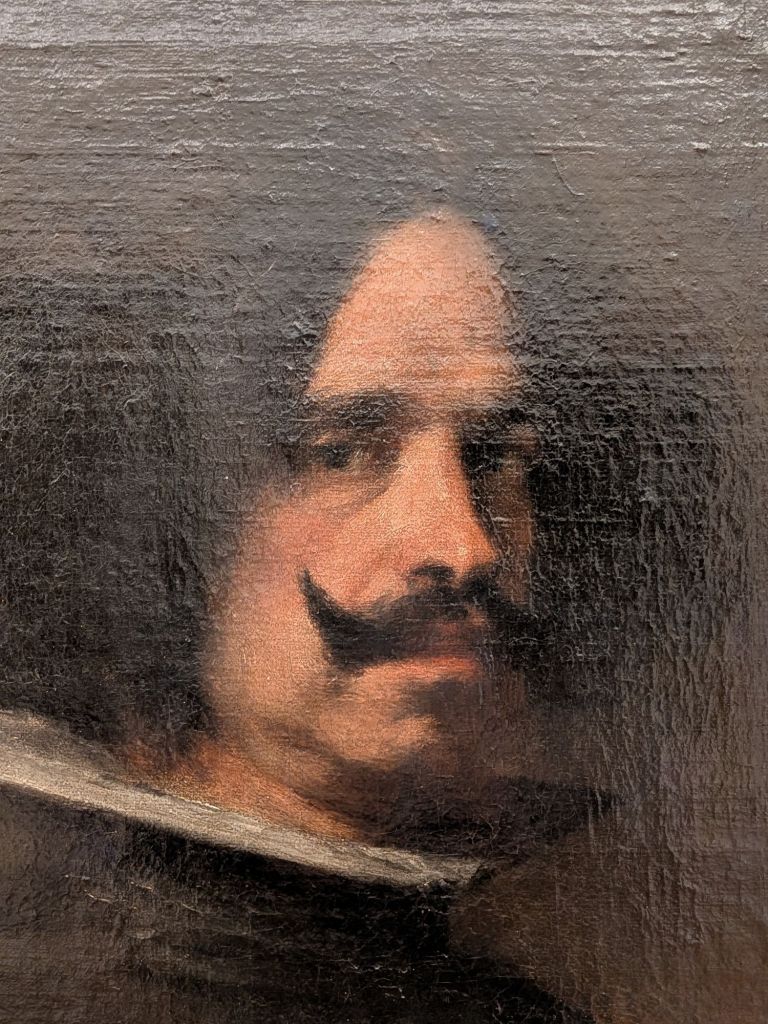
This Velasquez autorretrato:

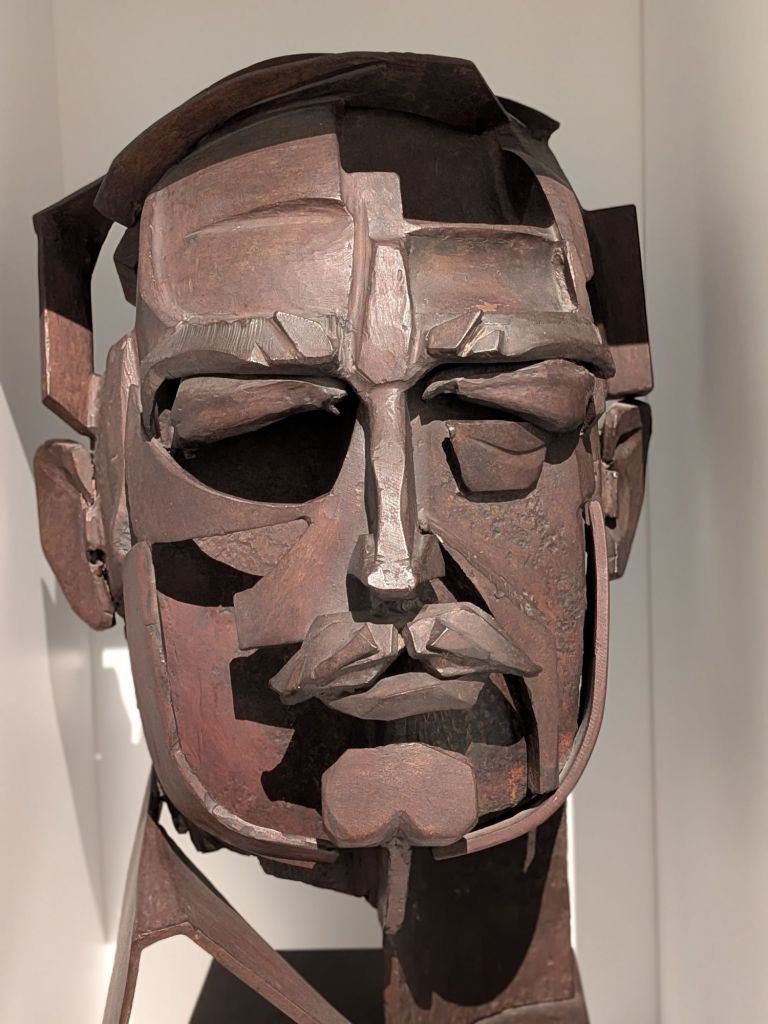
And this modernist head of the Spanish novelist Vincente Blasco Ibáñez:

We have a museum problem

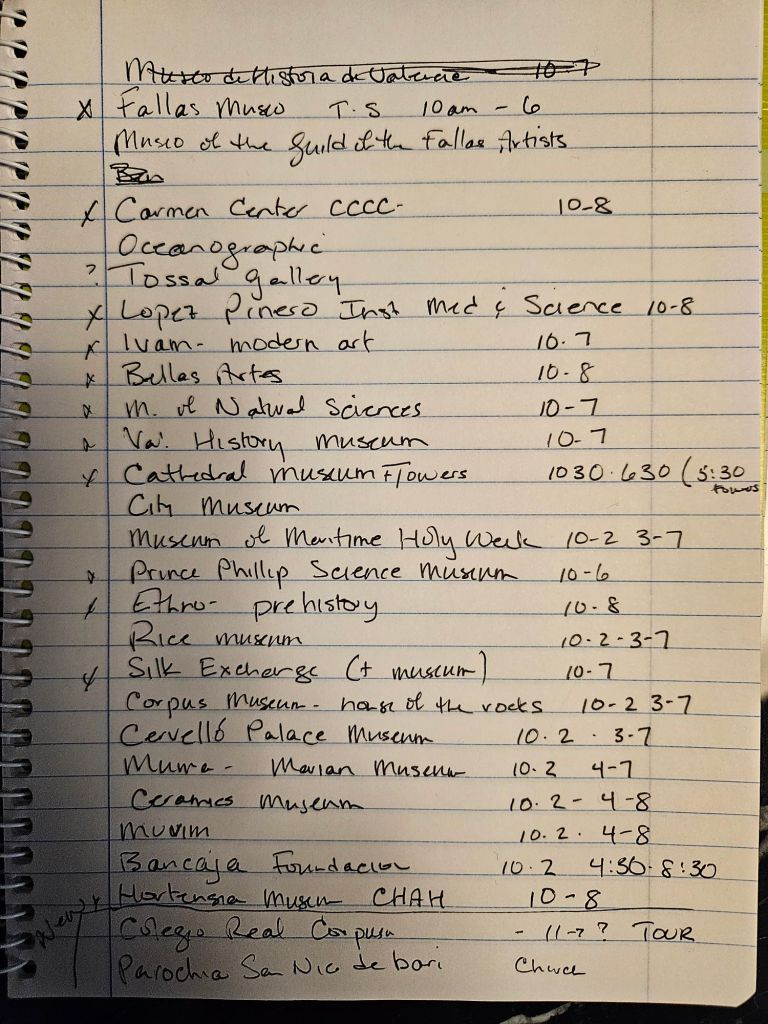
The list with opening hours

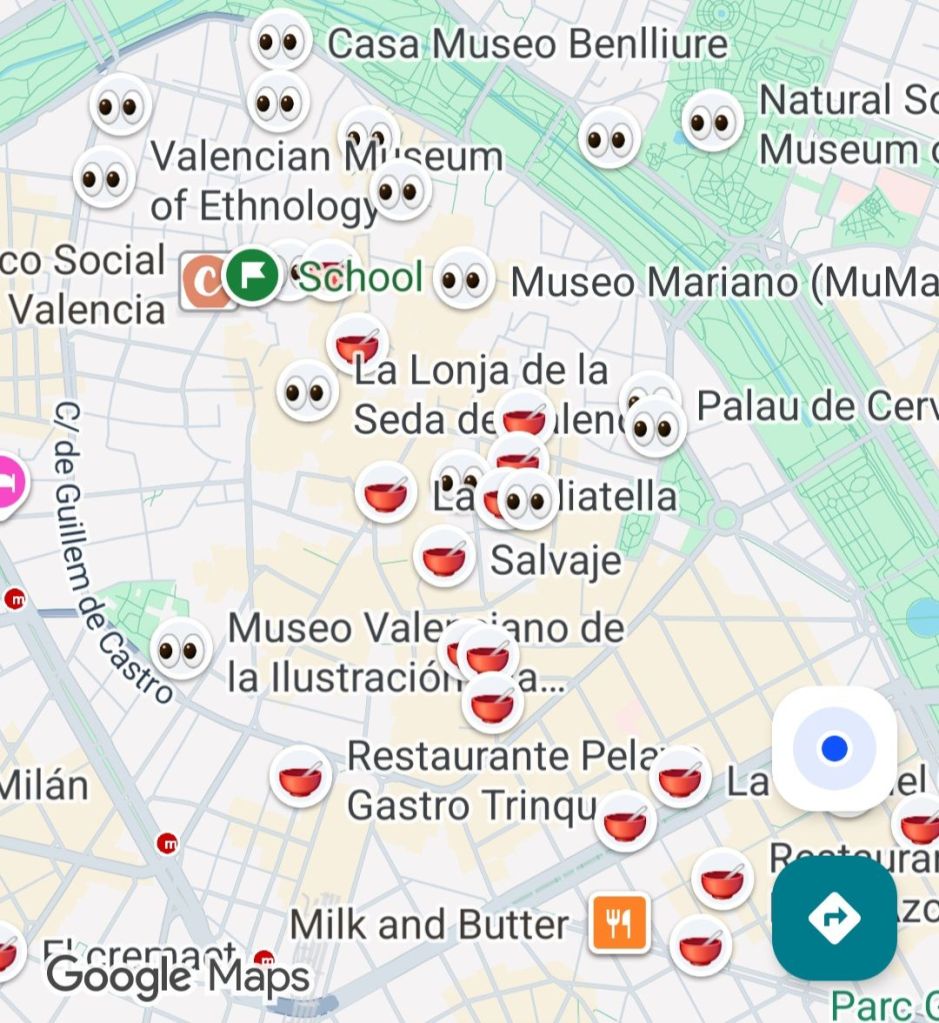
During 2 weeks of language school, we did a lot of walking to get a sense of the city but didn’t have the time or energy for art galleries, churches and museums. “No problem, we have a whole week after that.” Now we are on Tuesday of that week, have just created a Google map marking the major museums and sites we don’t want to miss – and there are 23 of them. So far we’ve “done” three and a half.
Eyeballs for museums, bowls for recommended restaurants

Kerry and I always notice that we seem to walk faster than most of the people around us. On you marks. Get set. 💥
Later: today we did the Fallas Museum – where they keep all the prize-winning ninots from previous years, the ninots indultat that were “indulged” by not being burned at the end of the festival.

Nice lunch at a Moroccan restaurant. 

Later still, to the National Museum of Ceramics – but alas I think we were too tired for it because we both found ourselves drifting around saying, “Hmm, gosh, even more eighteenth century soup tureens in this room. Are your feet tired too?” 

We came outside to strong wind and our first (light) rain in three weeks, and retreated to an Italian place for asparagus pizza with beer.

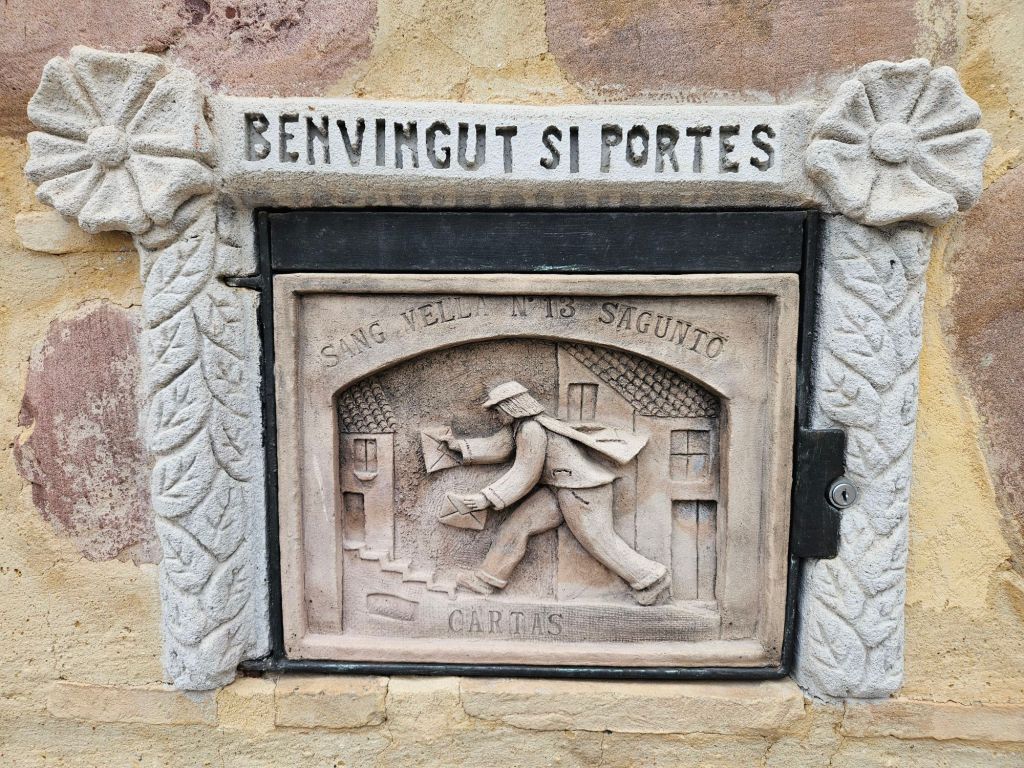
Sagunt(o)

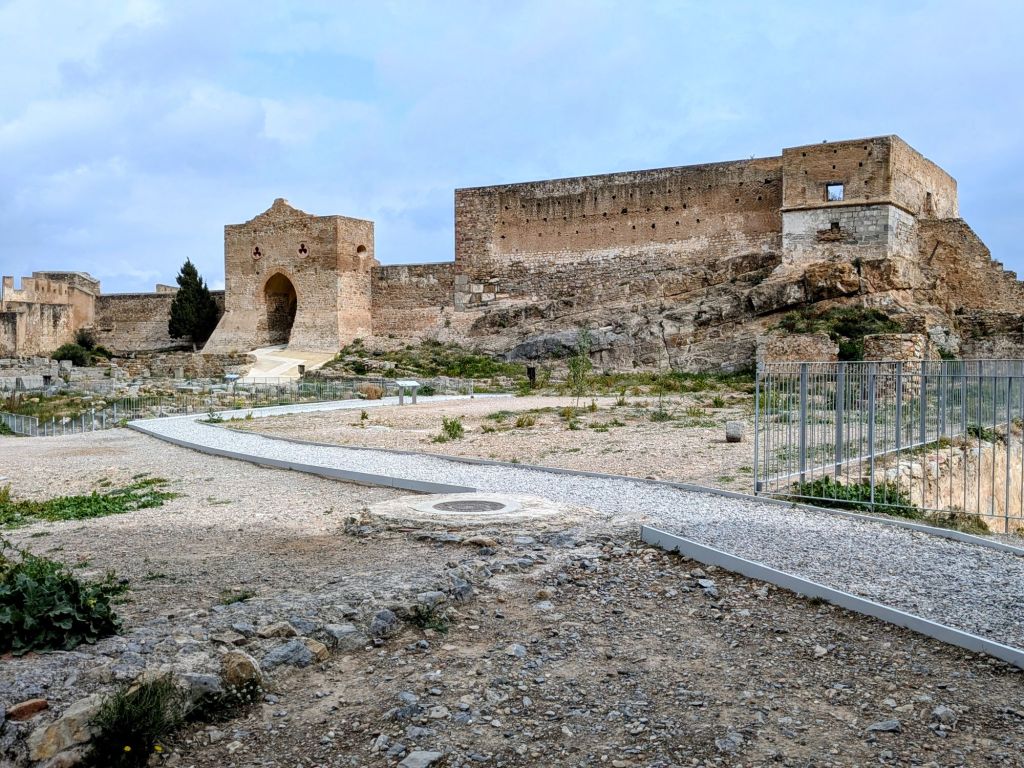
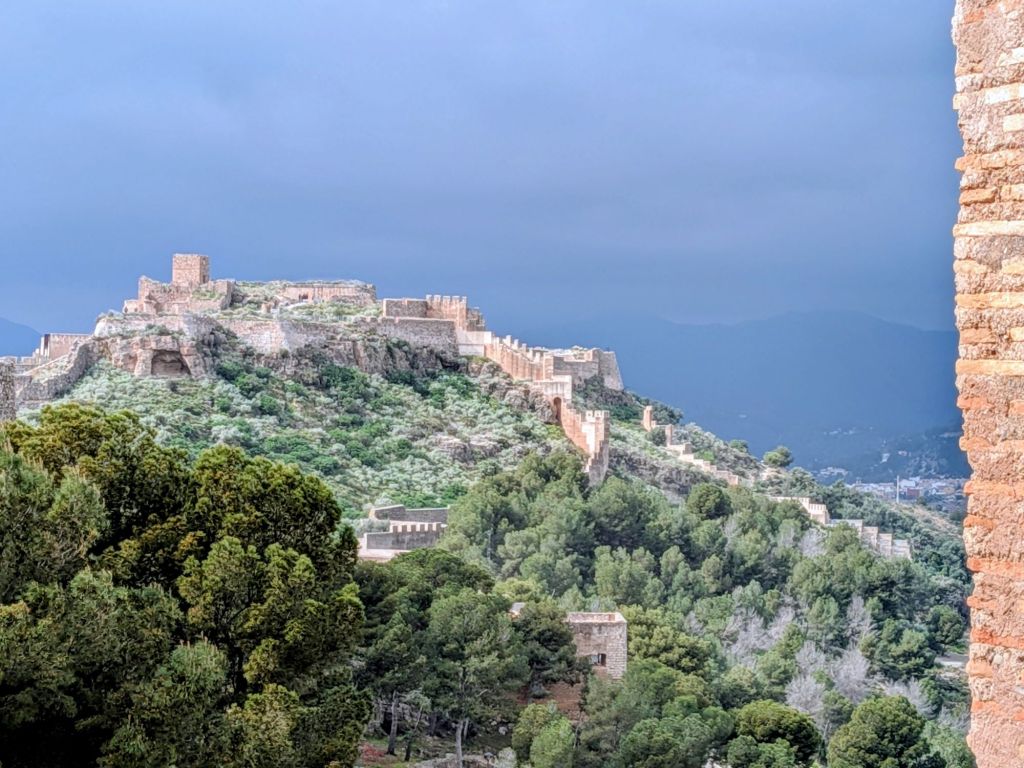
This town, a 25 minute train ride north of Valencia, was known as Sagunto by the Romans and then as Murviejo (“Old walls”) for about a thousand subsequent years of its impossibly complex history – before reacquiring the old name 100 years or so ago.

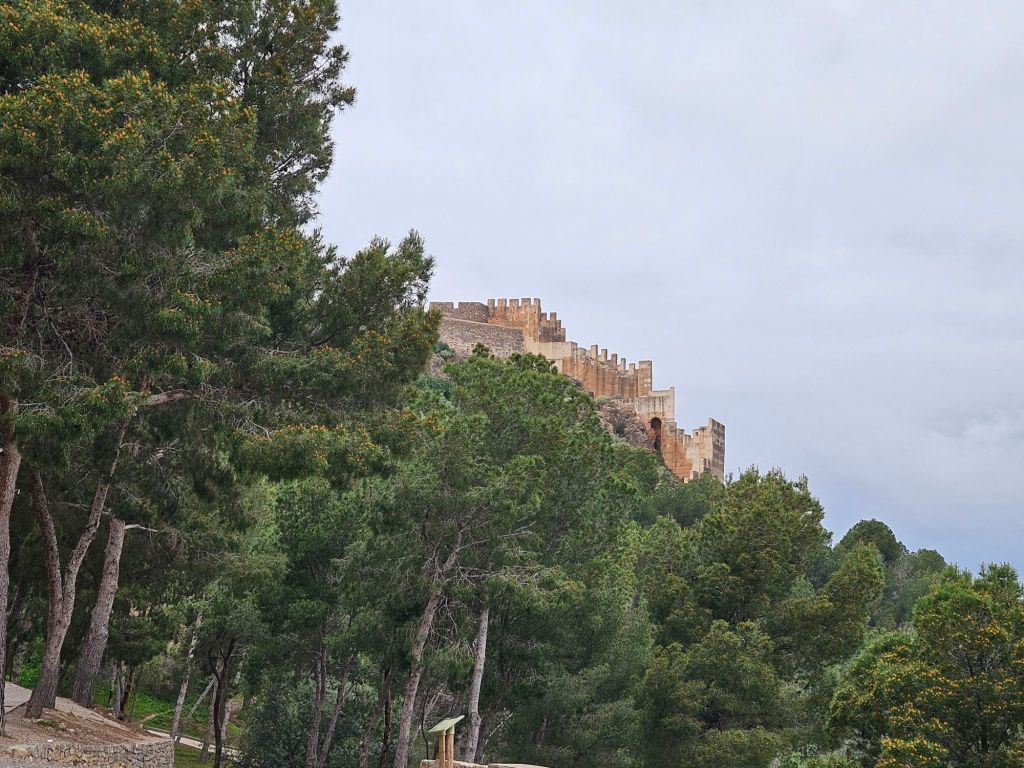
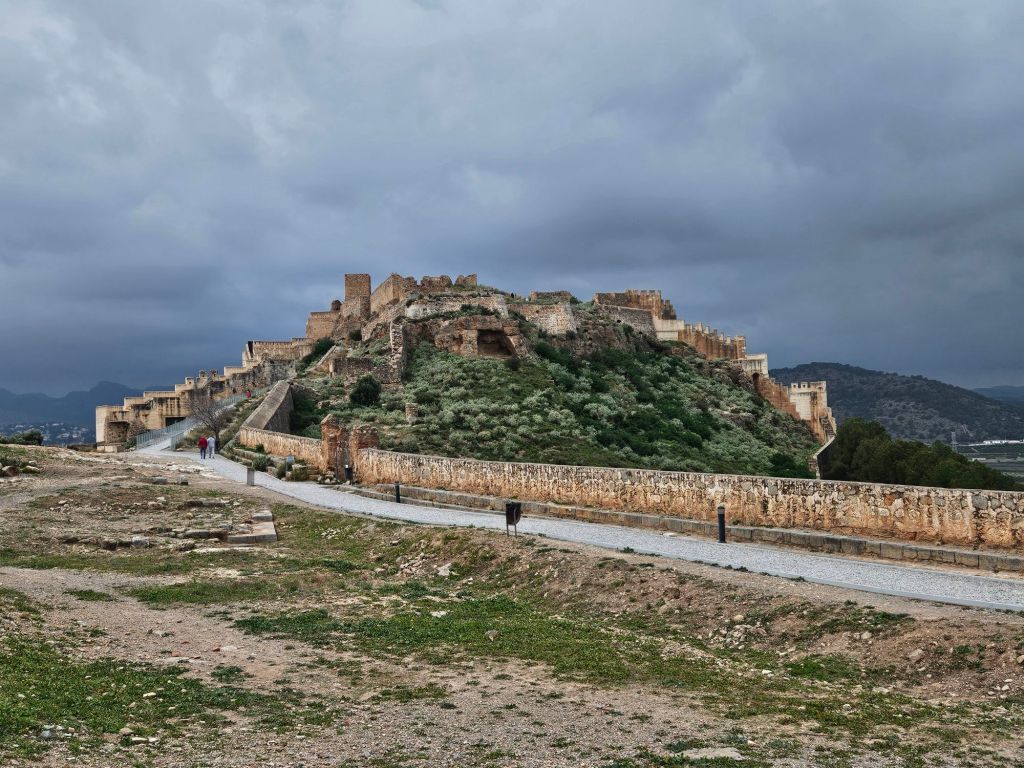
Today one visits for the chance to explore the remains of the castle/fortress/stronghold which stands above the city.

Mentioned in Greek texts from 600 BCE. Built up by the Romans. Besieged for 9 months and then taken by Hannibal. Taken back from the Carthaginians by the Romans > Visigoths > Muslims > Spanish Christians > French > Valencian Spanish (hence Sagunt > Republican anti-fascist Partisans > Franco’s Falange > tourists.

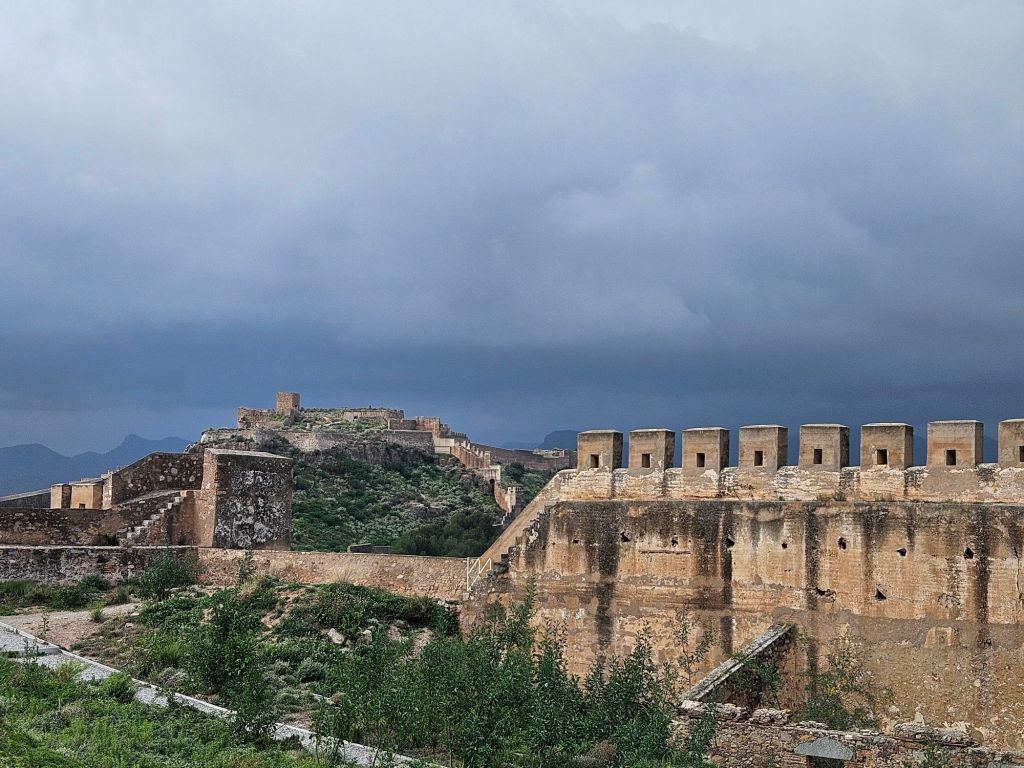
The castle complex is over 1km long. This is one end of it, viewed from the middle:

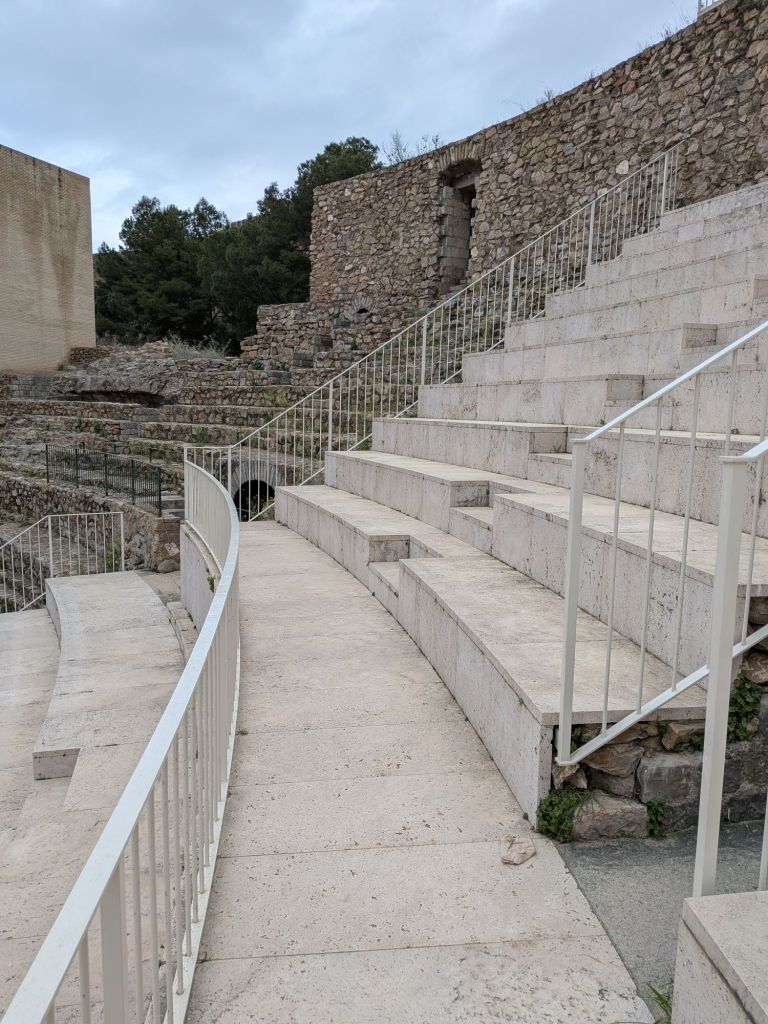
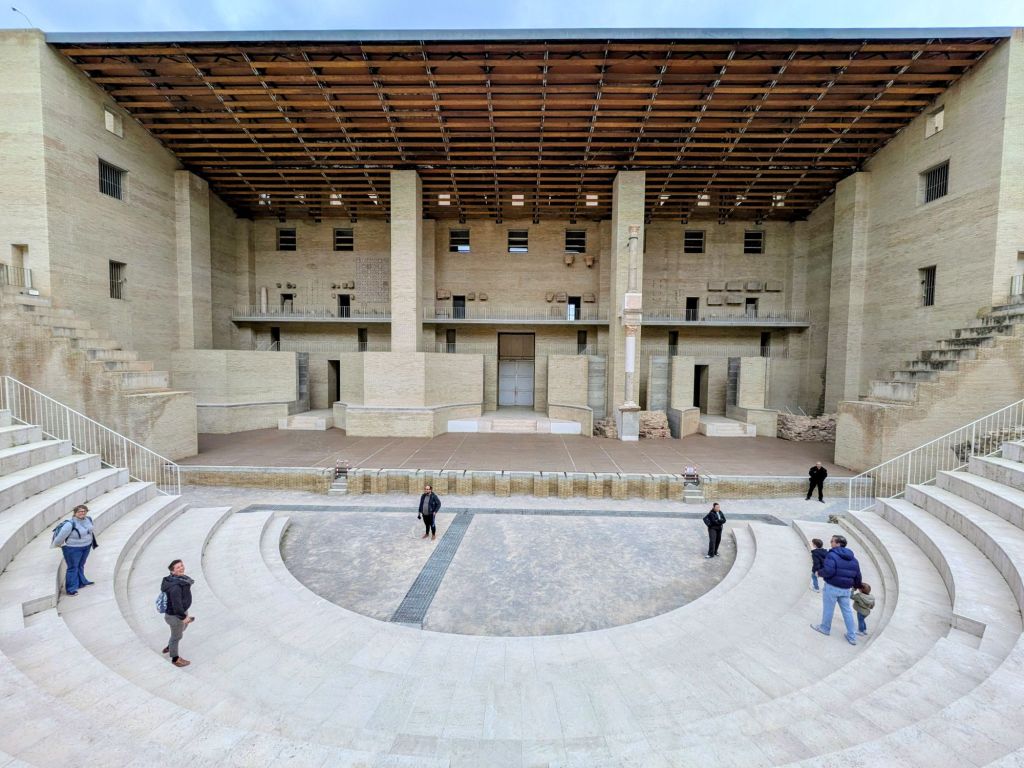
Below is the ruin of a Roman theatre (built in the first century CE) with (very controversially) a huge new brick theatre built directly on top of the ruin in the 1990s:

Great acoustics, I have to give them that.

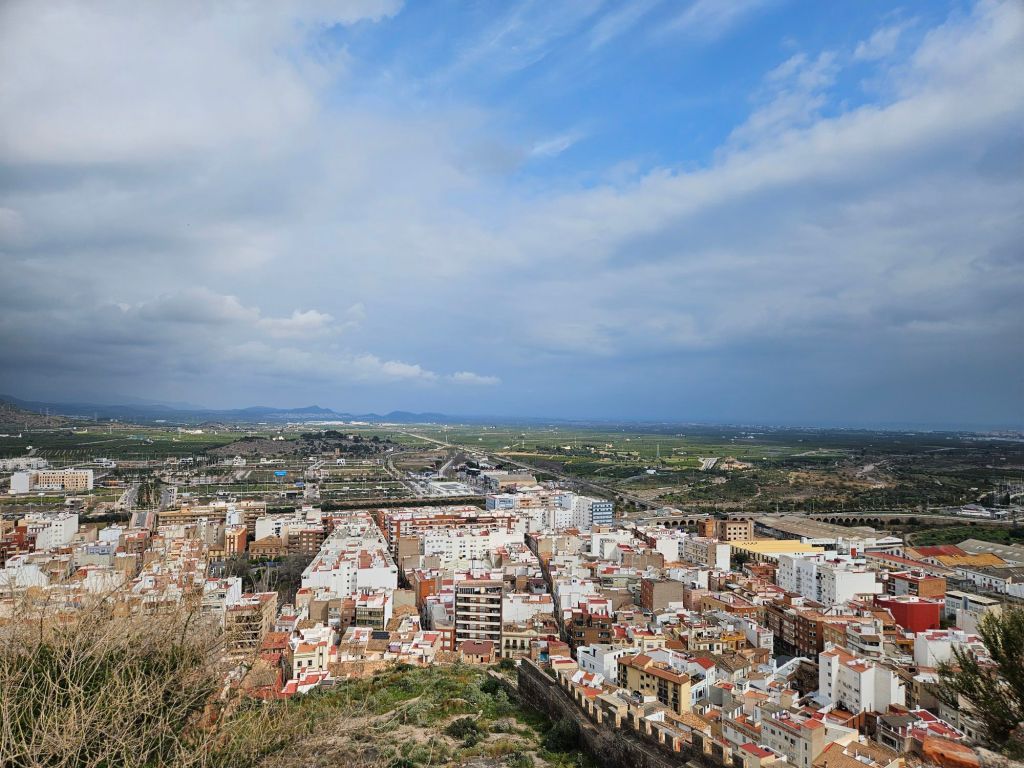
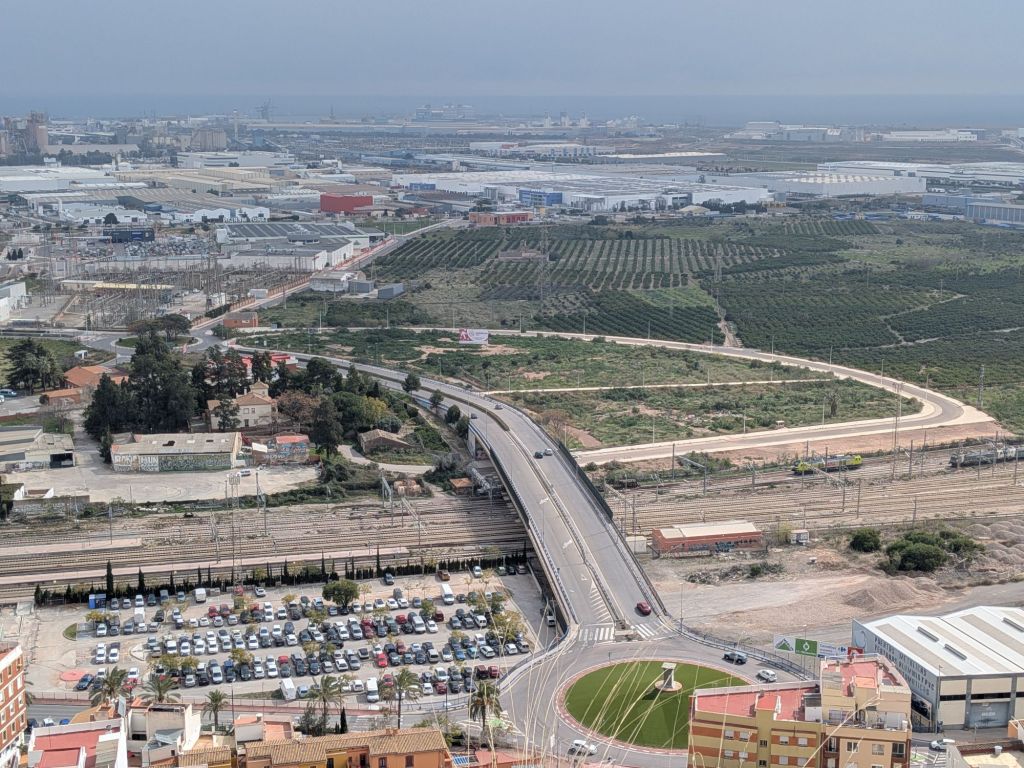
A chilly, cloudy day and alas the once-magnificent views out to the coast are an industrial wasteland:

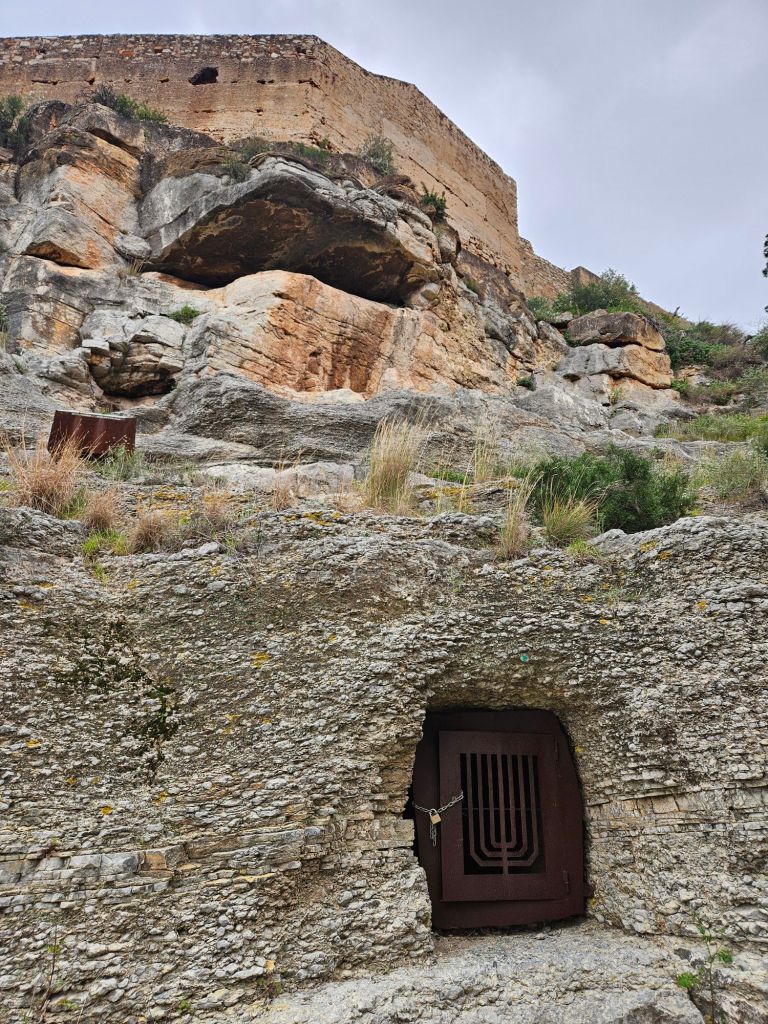
Carved into the hills below the castle are the remains of old Jewish graves. Their history is not known, other than the relative certainty that they were abandoned by the late 1400s due to the Spanish Inquisition.

One of about 15 gates protecting a grave site.

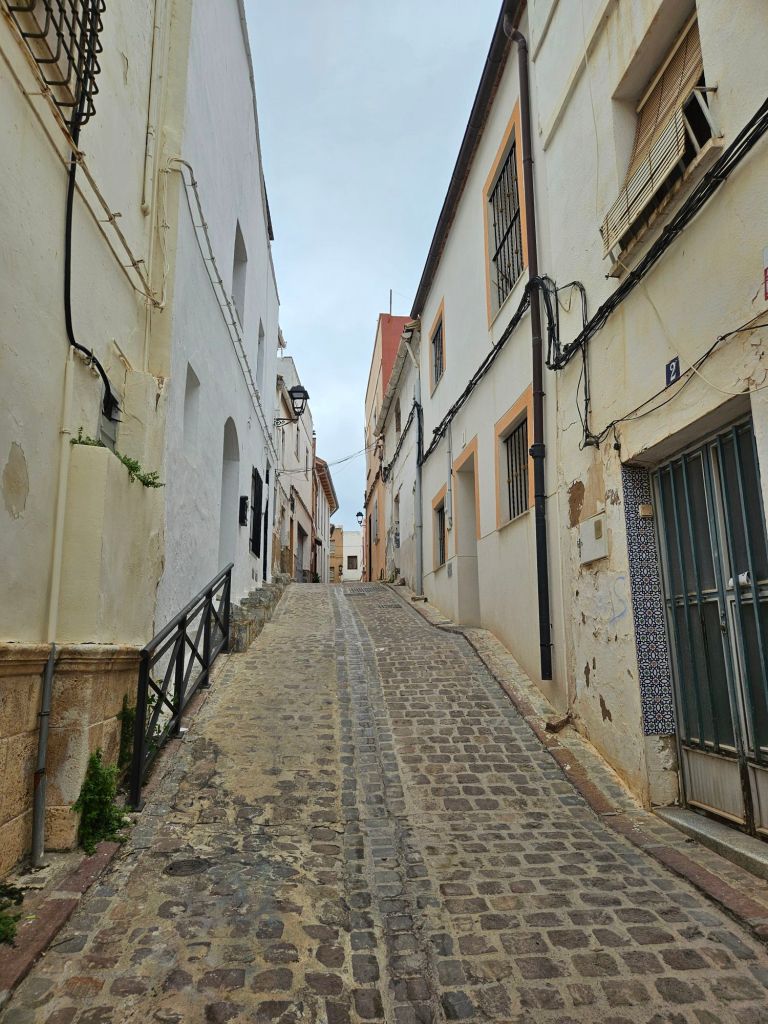
We had the chance for a bit of a wander through the old part of town before the chilly air chased the group back into the relative warmth of the train.

Now back in Valencia and, having moved out of the student residence, we are at the clean and modern if slightly utilitarian Hotel Kramer, just outside the old city.

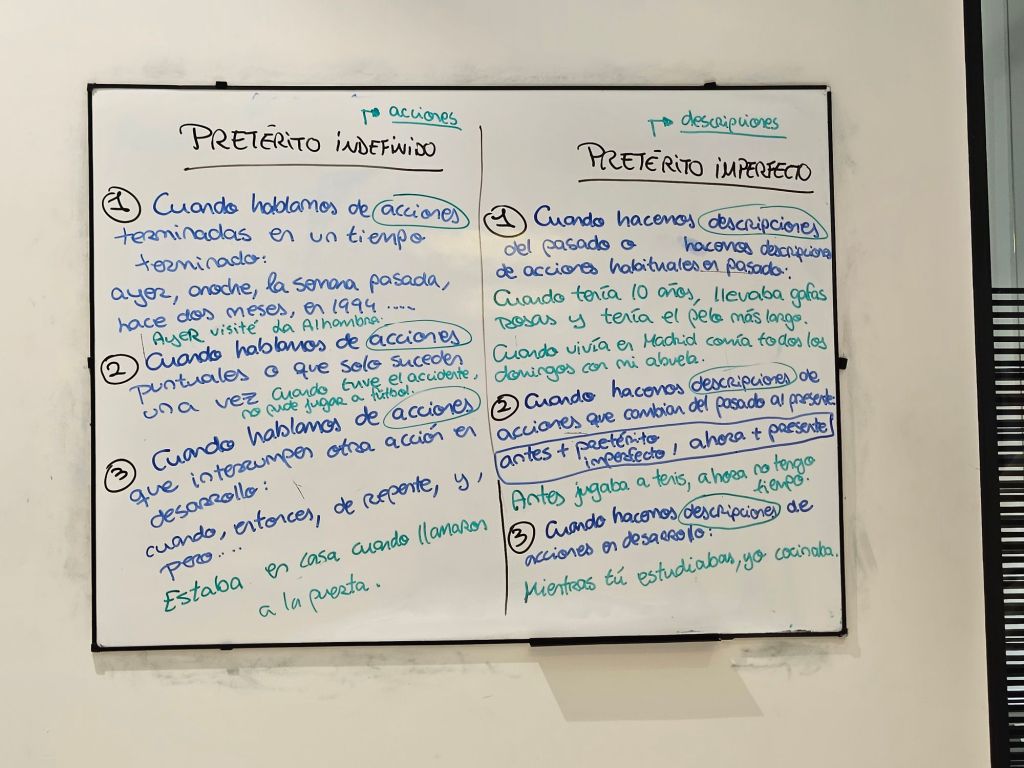
Notes on learning Spanish

Or trying to. It’s Saturday and we’re done with our two weeks of classes. The school is well-run and our two teachers, Yolanda and Rosa, were I think quite good, mostly. But I found class exhausting on the good days (as in: four hours of speed chess against an opponent who is consistently better than you) – and some days it felt humiliating and borderline useless. I’ve been pondering why I experienced it that way.

The school uses the standard Cervantes Institute layers of A1-A2 (beginner), B1-B2 (intermediate) etc, except they  distinguish also between B1.1 and B1.2. I tested  into B1.1, but probably only just, and was with students (including K) who are more solidly at that level or close to B2. It was definitely the right level for me in terms of material – in fact my vocabulary and grammar are in some respects B2-ish. But I have a shaky grip even on the elementary stuff. And the bigger problem is that I have, at least at this level, a terrible ear for what people are saying, to a degree that I felt the teachers consistently didn’t understand or make allowance for. I could have understood 90-95% of their words, in writing, but orally, at speed, I was often completely lost even after they’d repeated it three times. (I  experience this as being literally like a hearing problem: there’s a noise, and I know it’s Spanish, but the words refuse to emerge from it.)

Finally, K and others seemed much better at getting by with what they have in conversation. I can make a comment or ask a question, but when I don’t fully understand the response – or I do, but realize I’ve forgotten some basic word I need for the next step – I freeze.

I feel that for me there’s some deeply buried psychology here. Even at the age of 10 or 12 I recall being reasonably confident intellectually in every area – except terrified of French. What was that about?

Having said all this, some progress for sure. I did have simple conversations in Spanish with several people – including once while on a bicycle next to a beach. I even had kind people say “Your Spanish is good!” and know enough to say “¡Que va!” – which is roughly the equivalent of “get out of here.”

Still, the capacity for a fluent hour-long discussion of Spanish history or social issues – in which I’m grasping more than a rough outline of what the other person is saying – is a loooong way away.

Pero la solución es claro – vamos a ello: let’s get to it.

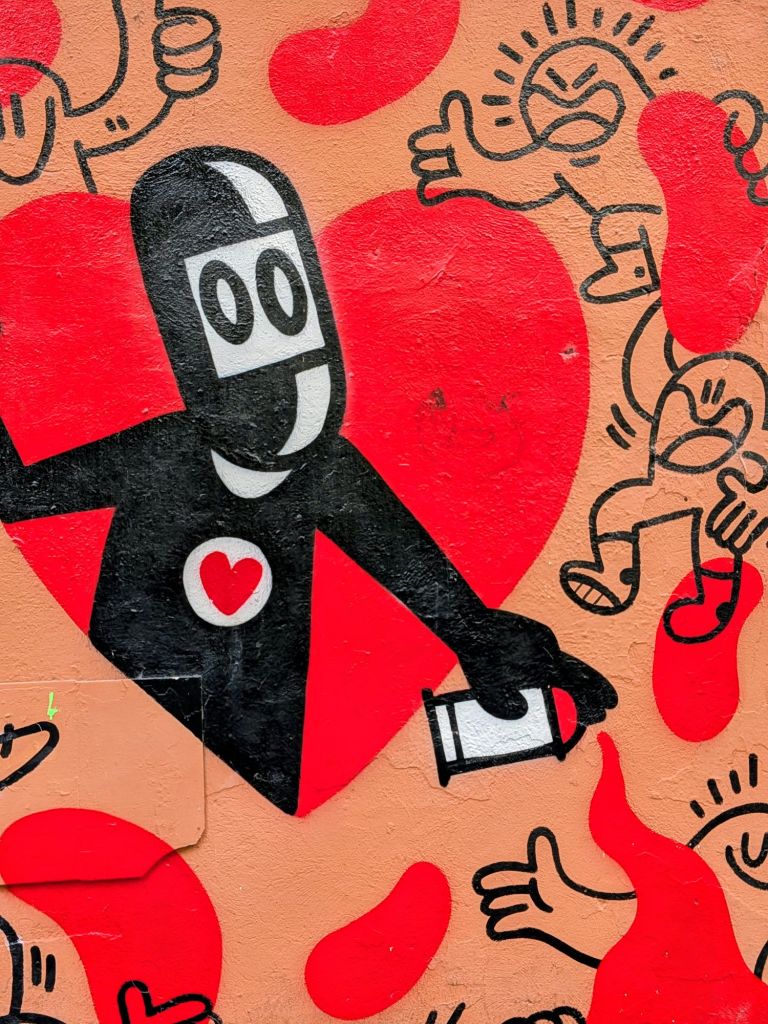
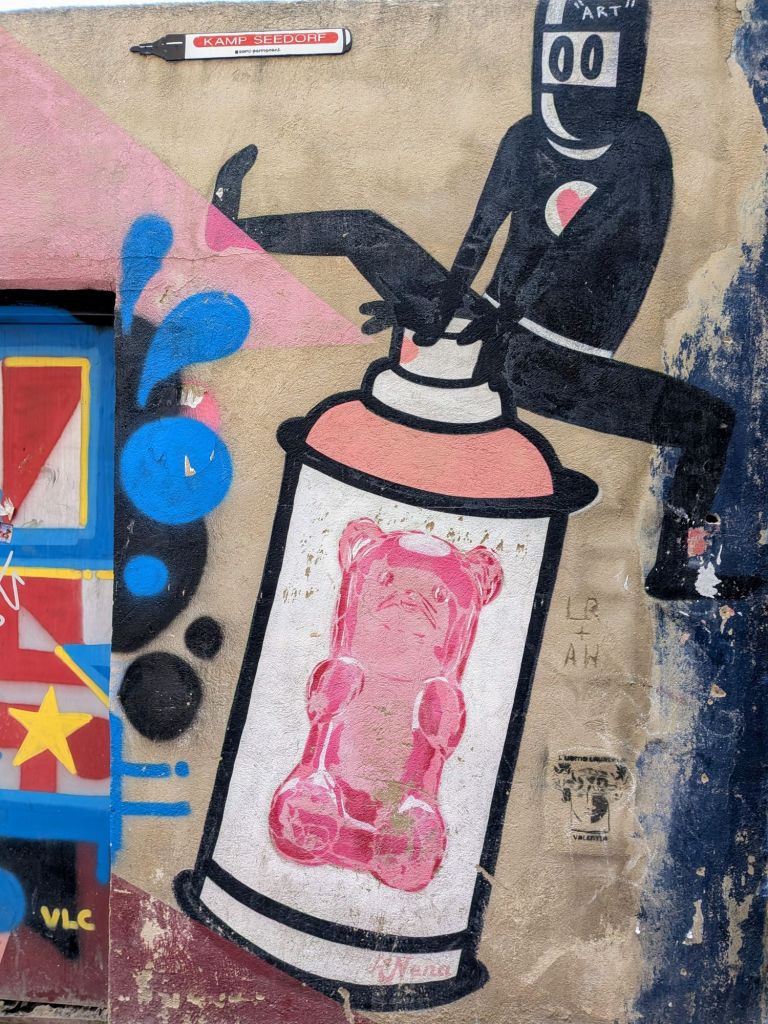
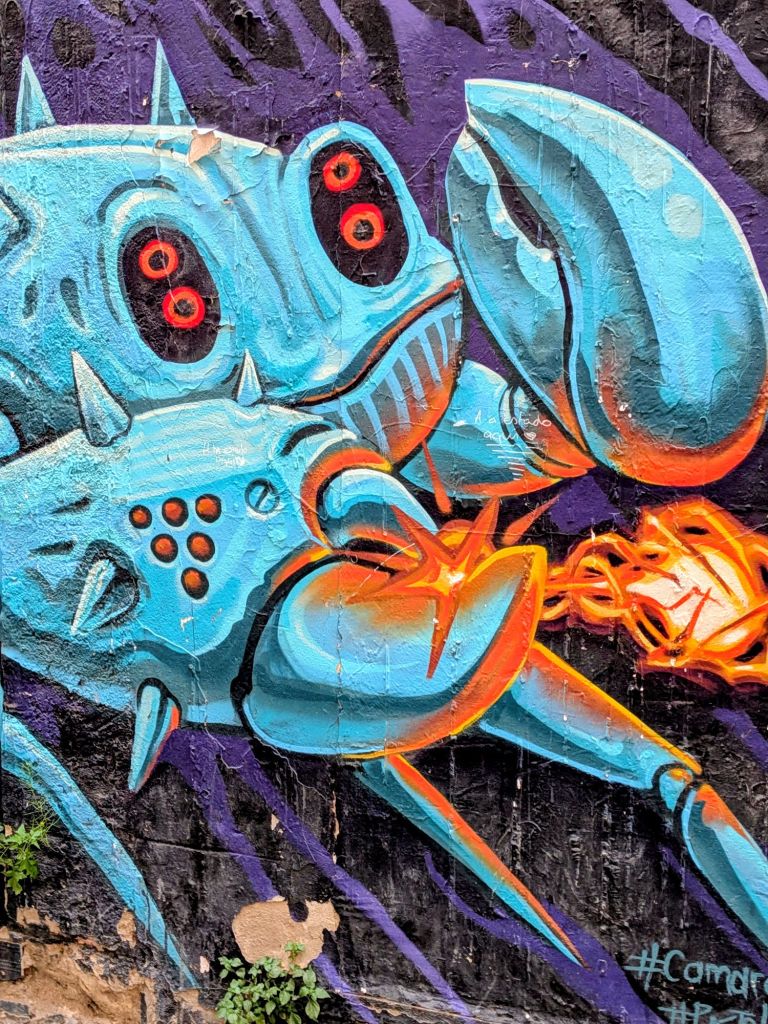
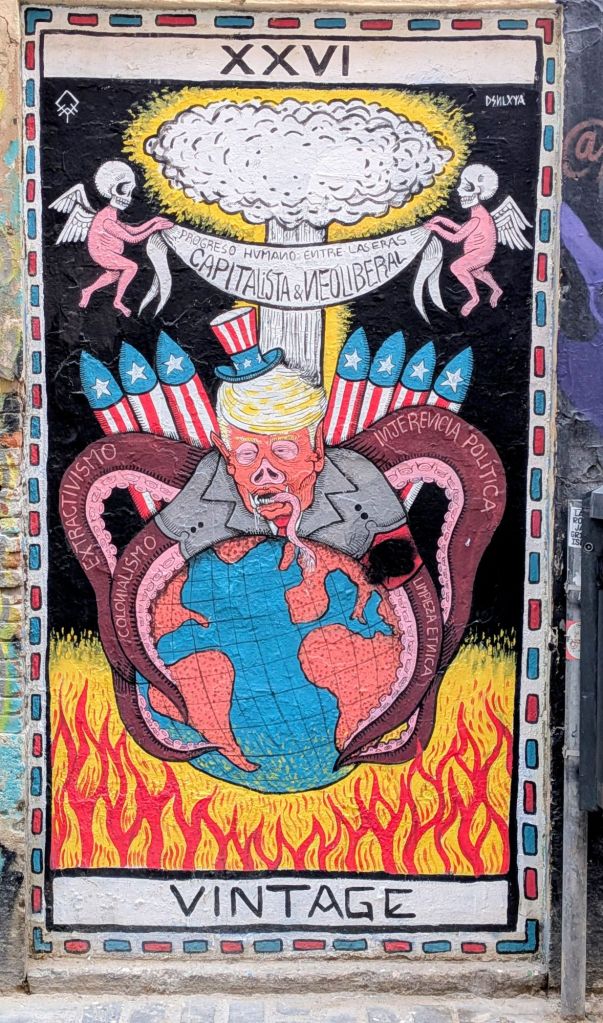
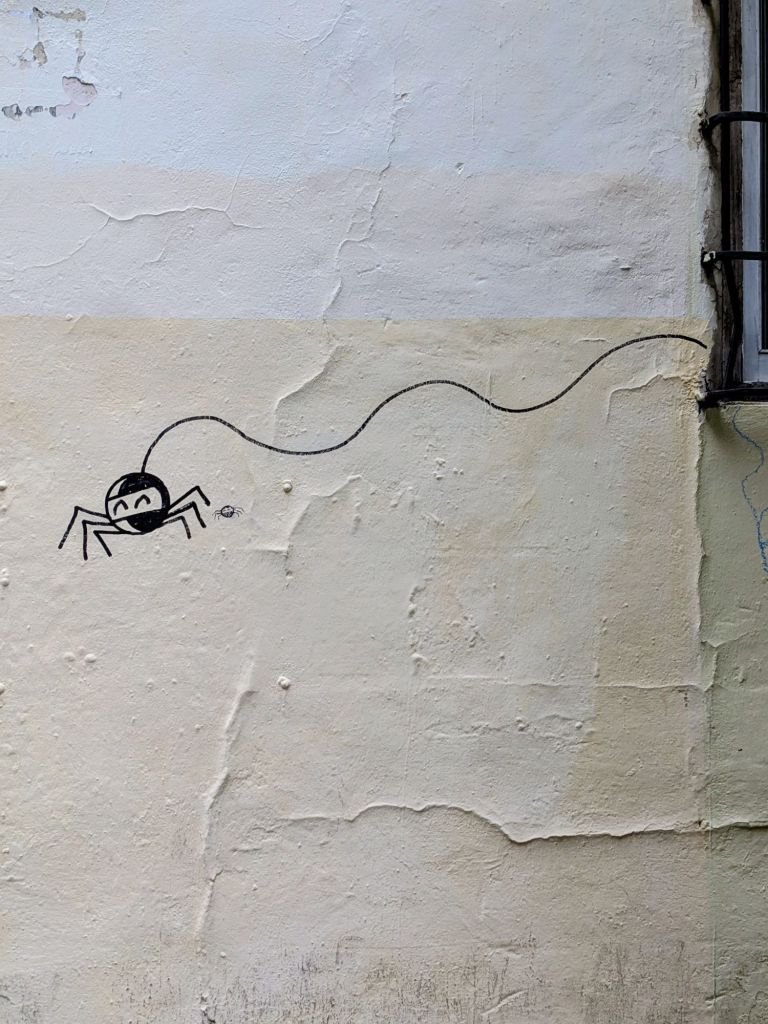
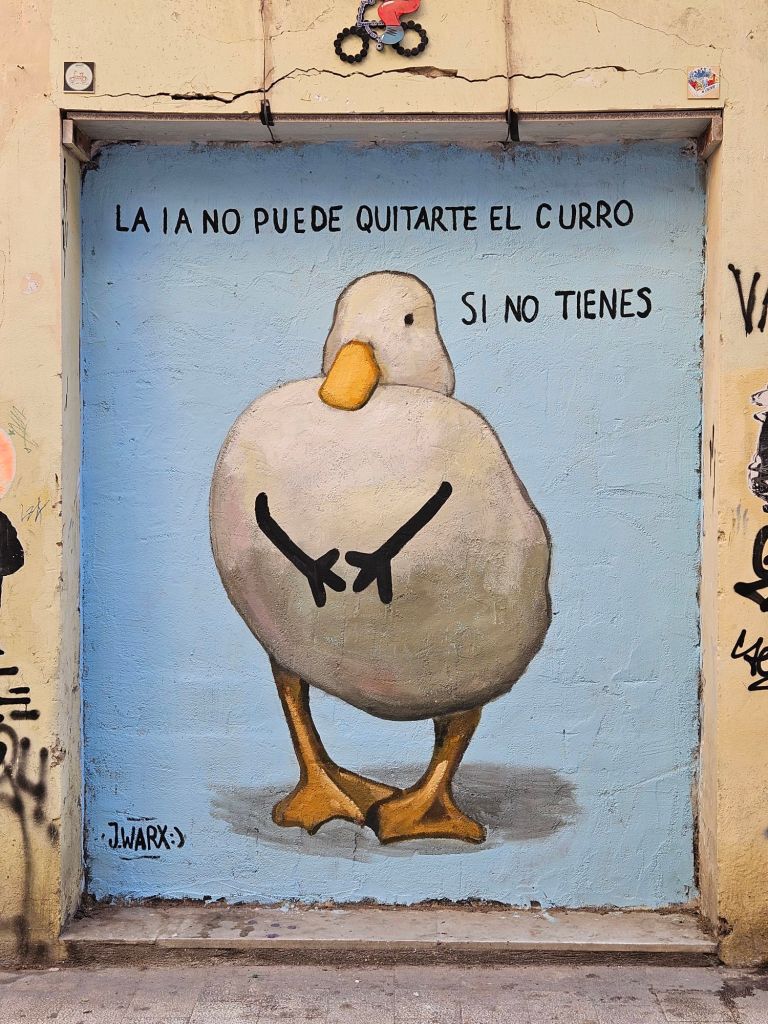
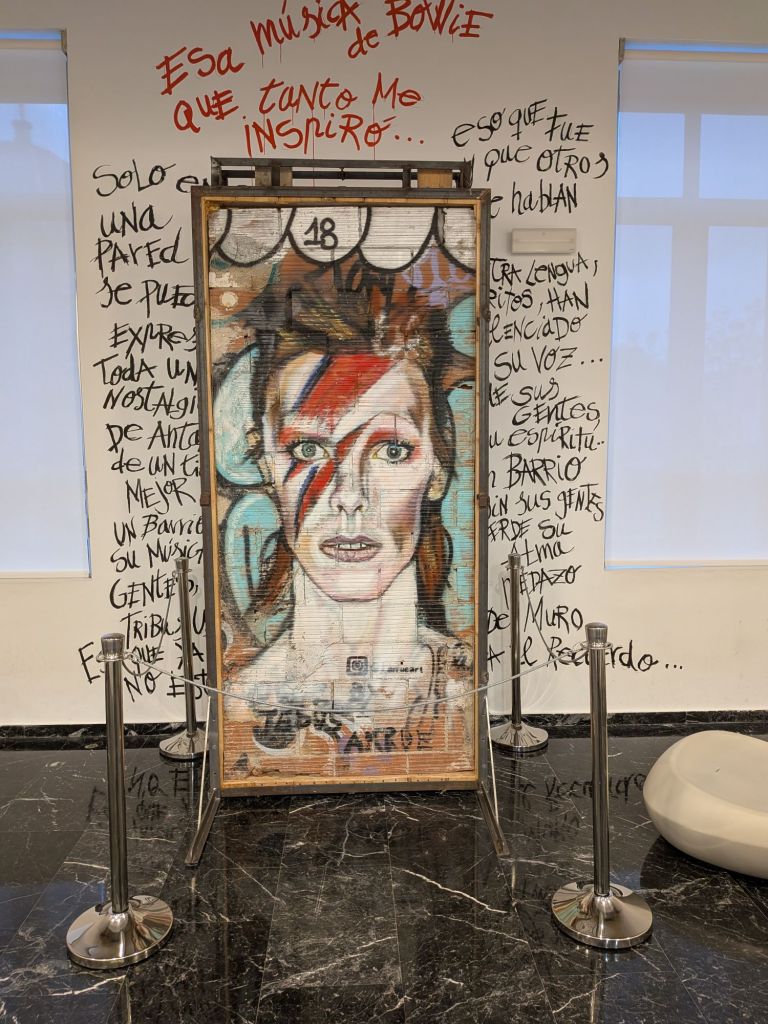
More street art

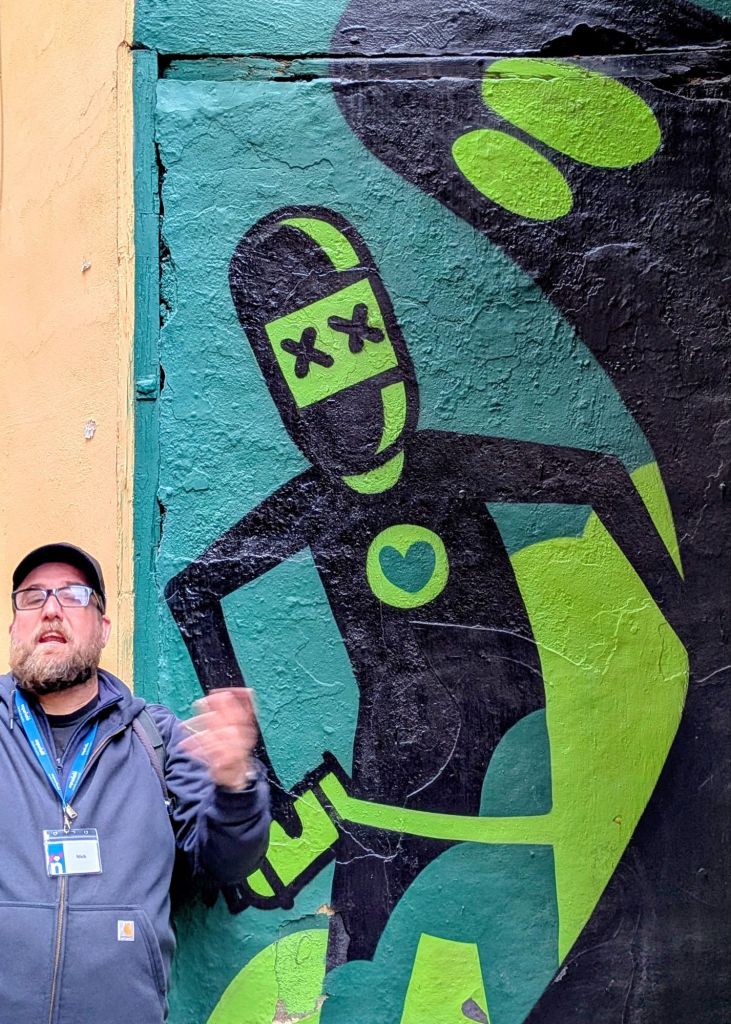
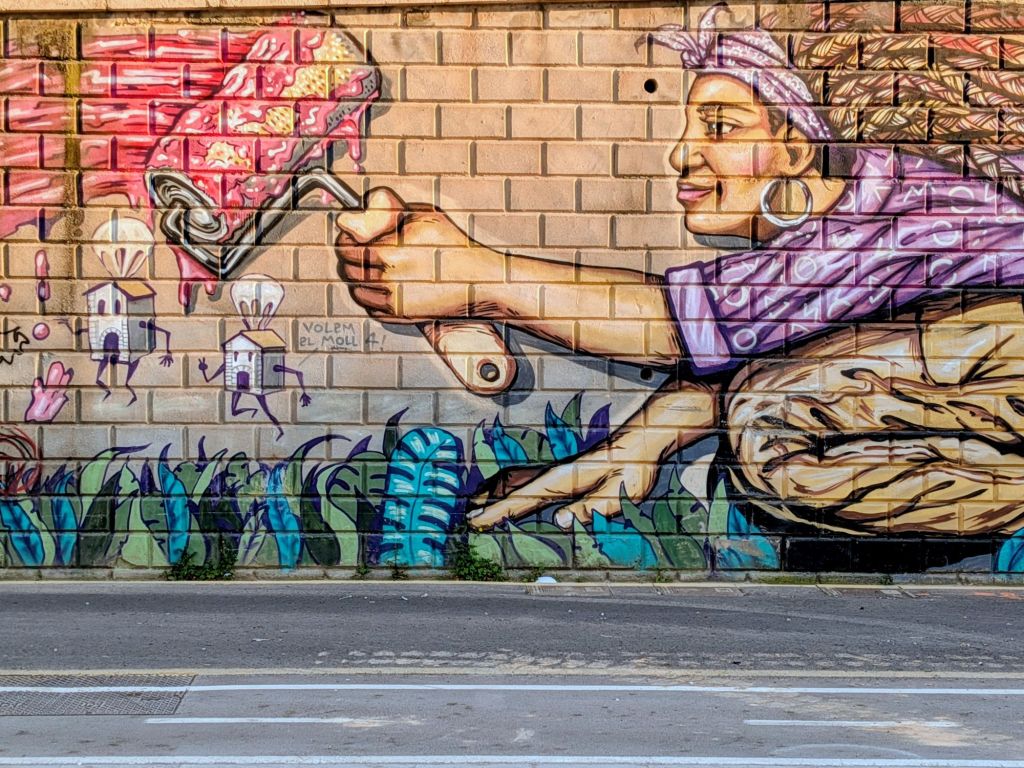
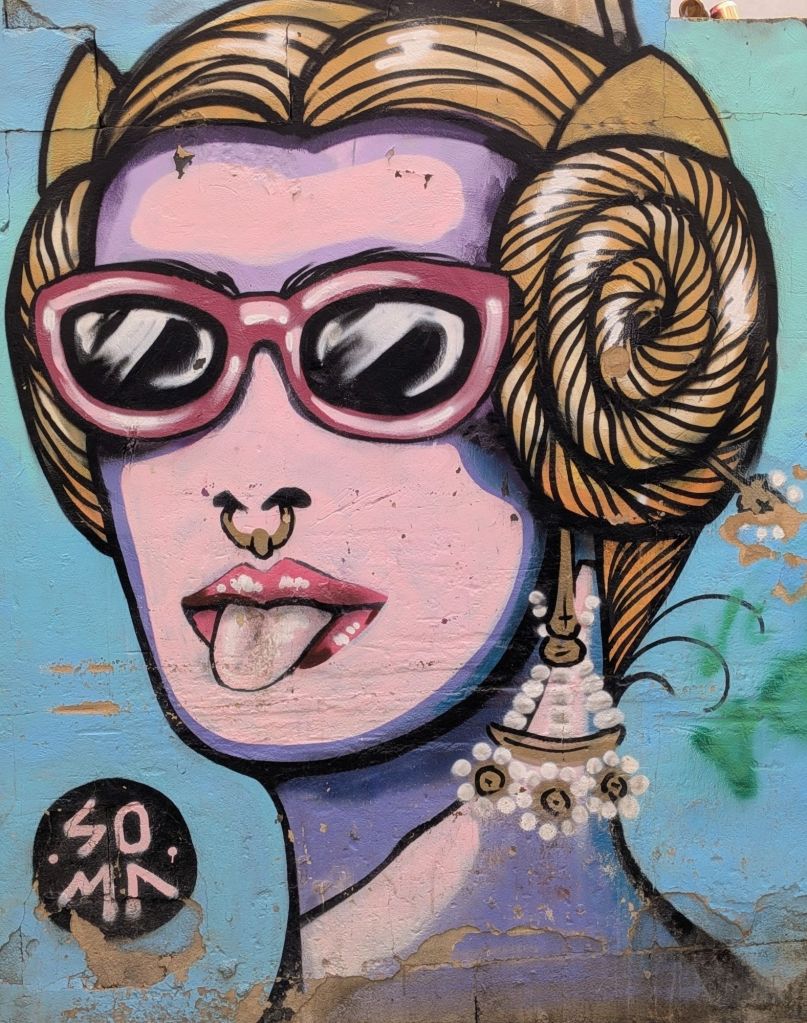
Our guide from school – Nick, above – gave us a tour of his favorites in the neighborhood. Some of the artists are locally famous and get commissions to paint people’s garage doors, businesses, etc. The greenish one where you can see Nick is, as he explained, something to do with the concept of sombre (shade / shadow) in Jungian psychology. I confess I find him hard to follow when he’s talking about coffee, never mind collaborations between urban street artists, so I didn’t get all the details there.

K here, adding one more below. The slogan reads AI cannot take your job if you don’t have one.

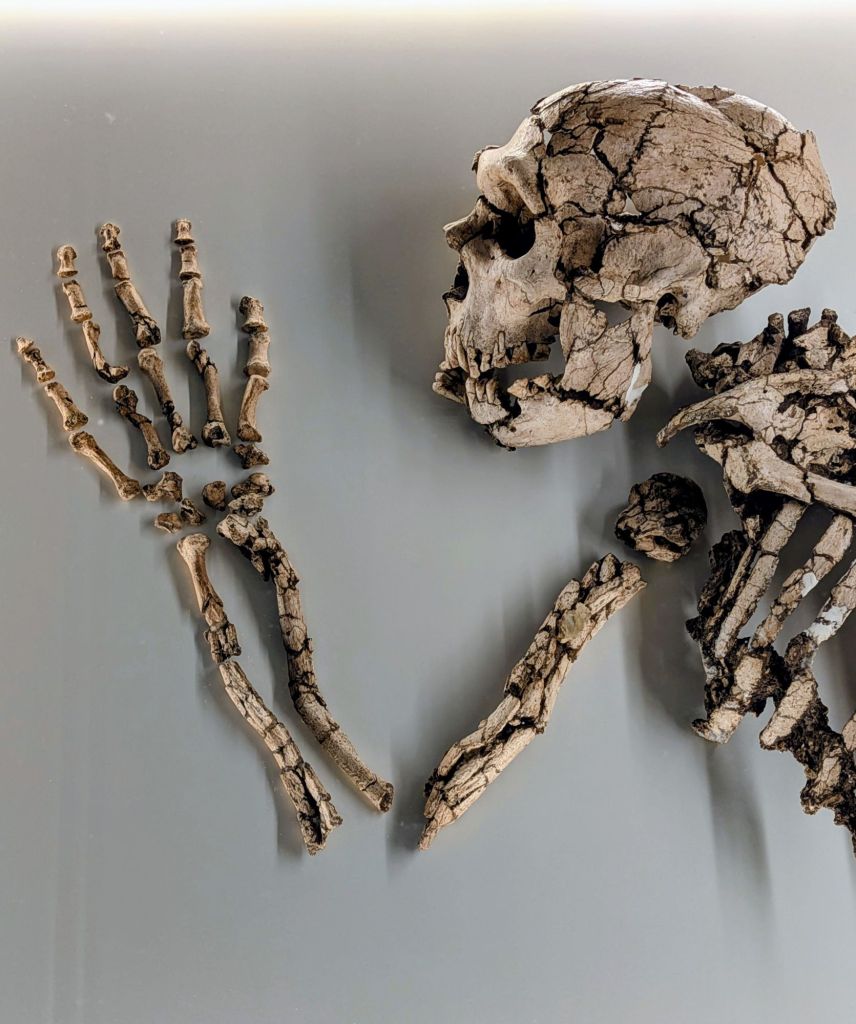
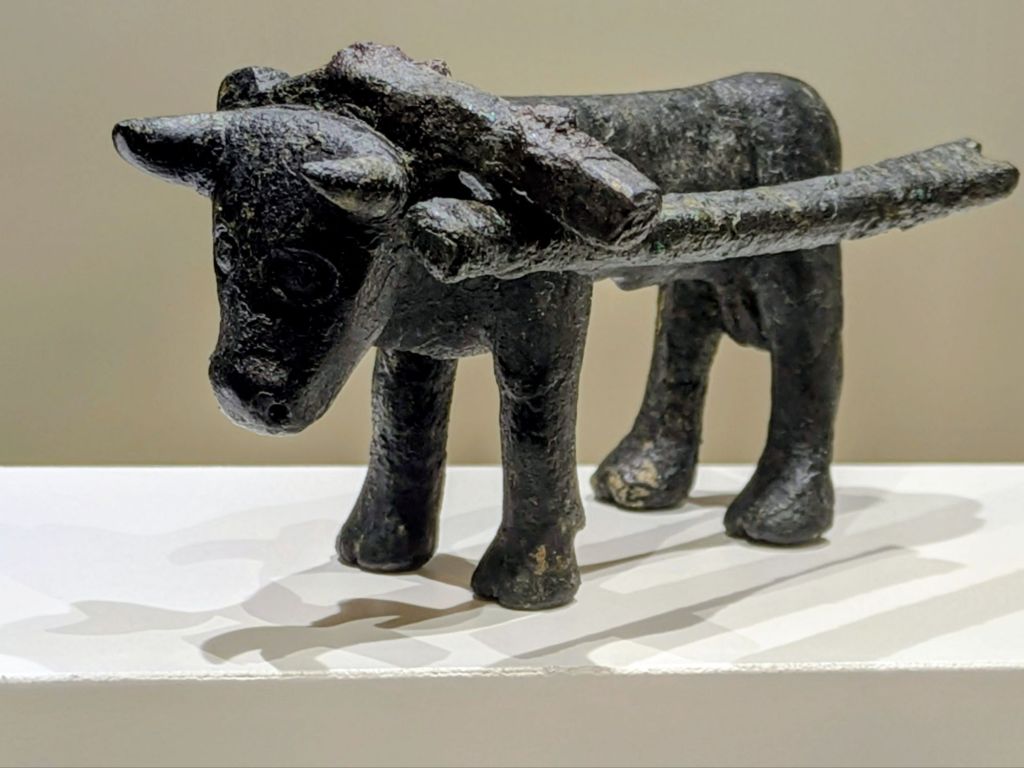
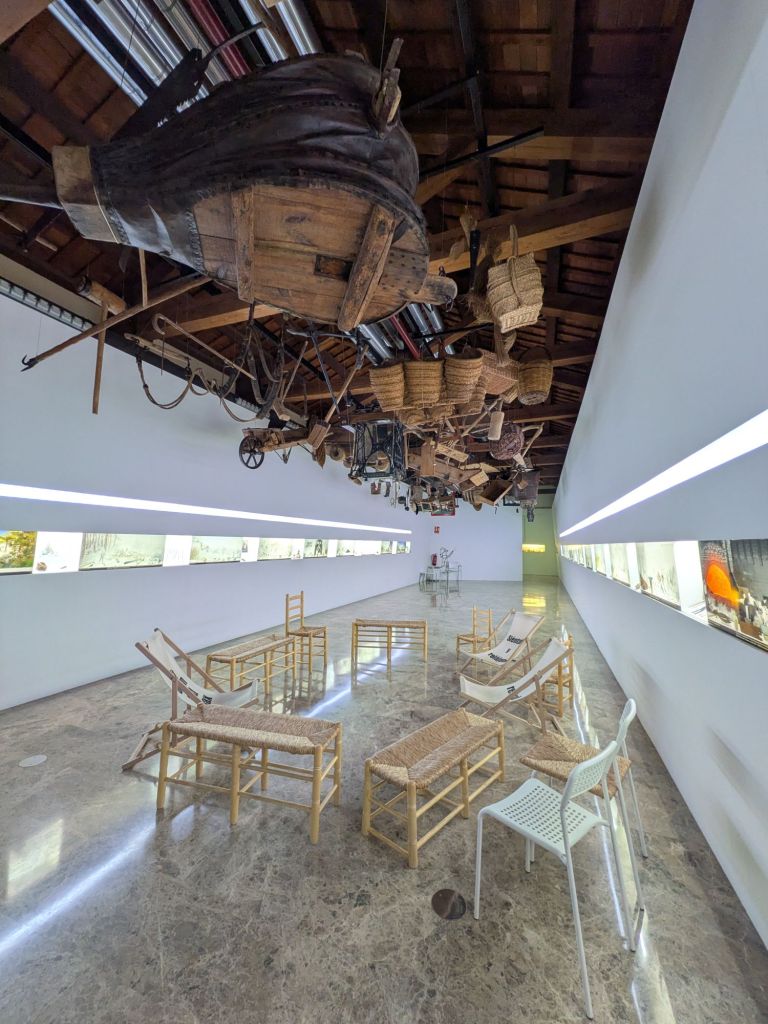
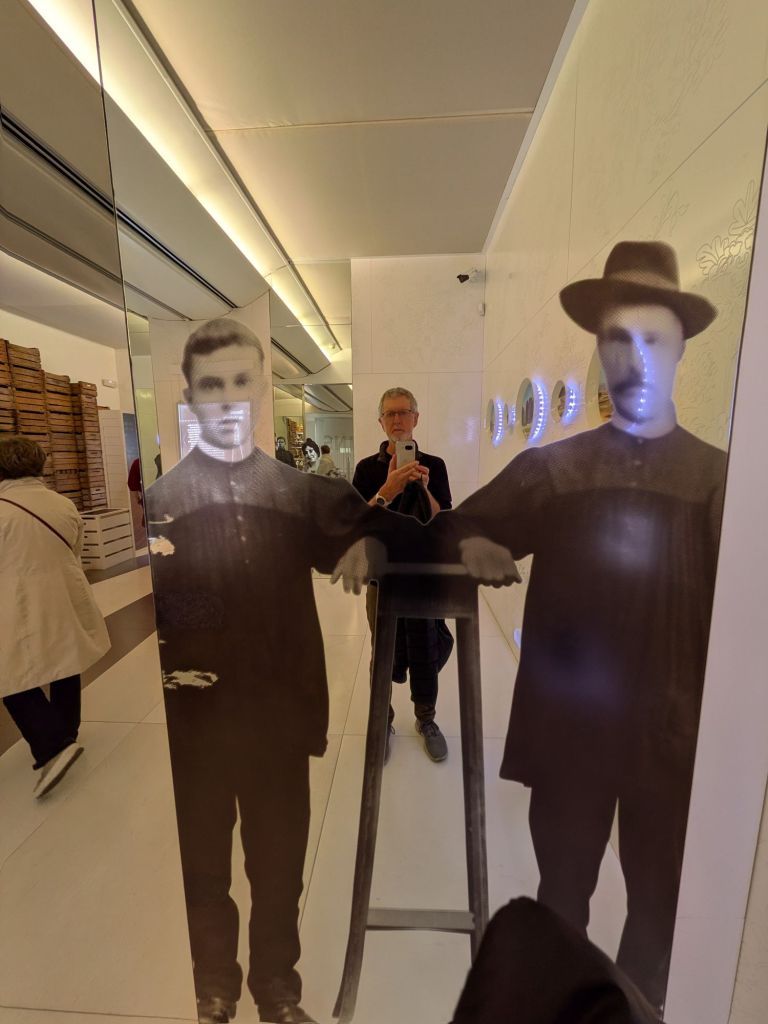
Museu València d’Etnologia

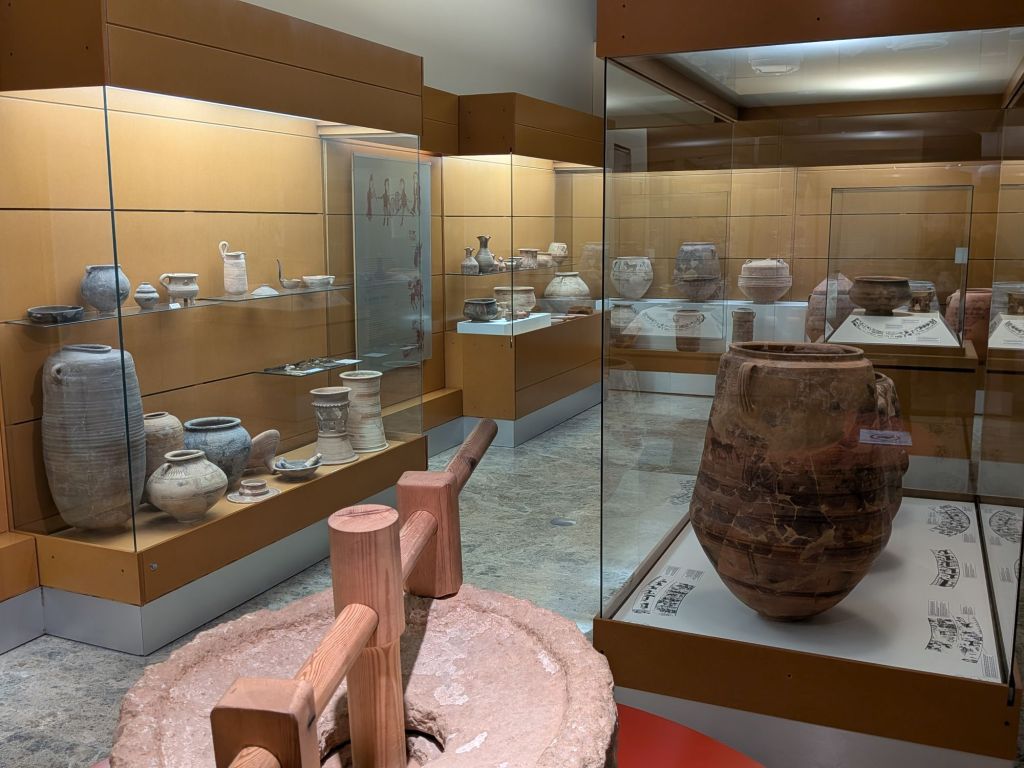
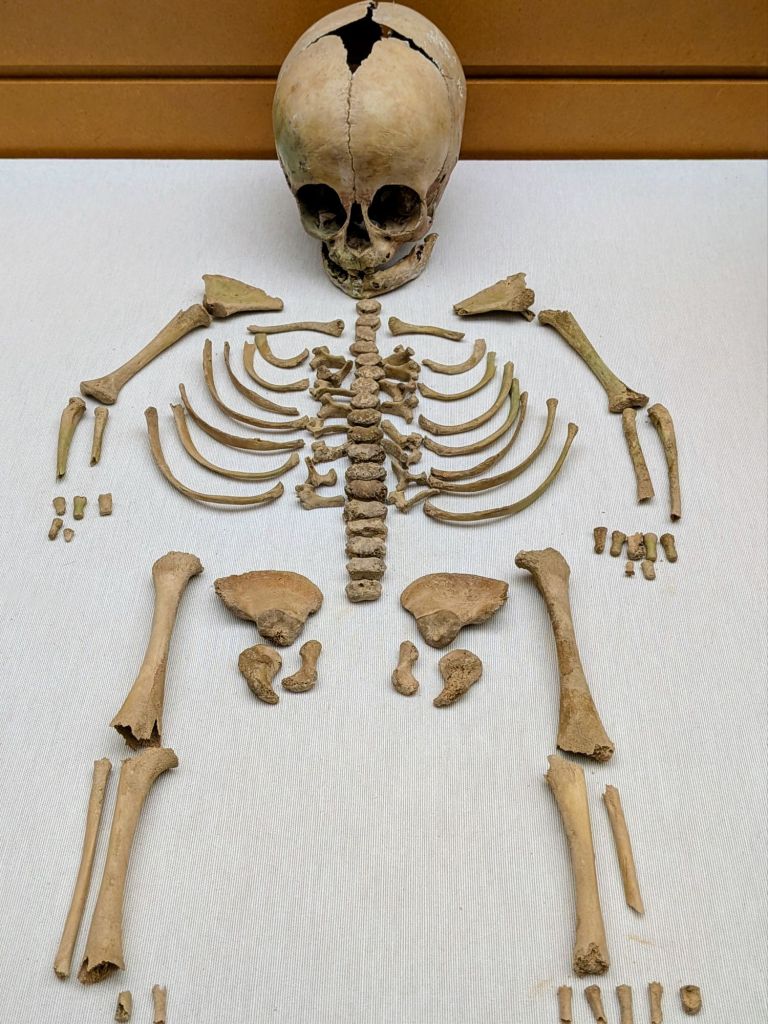
K wanted a walk and reading time; I joined a teacher and a handful of other students for a quick tour of this massive and impressive museum, which ranges from Neanderthal remains and bronze age figurines –

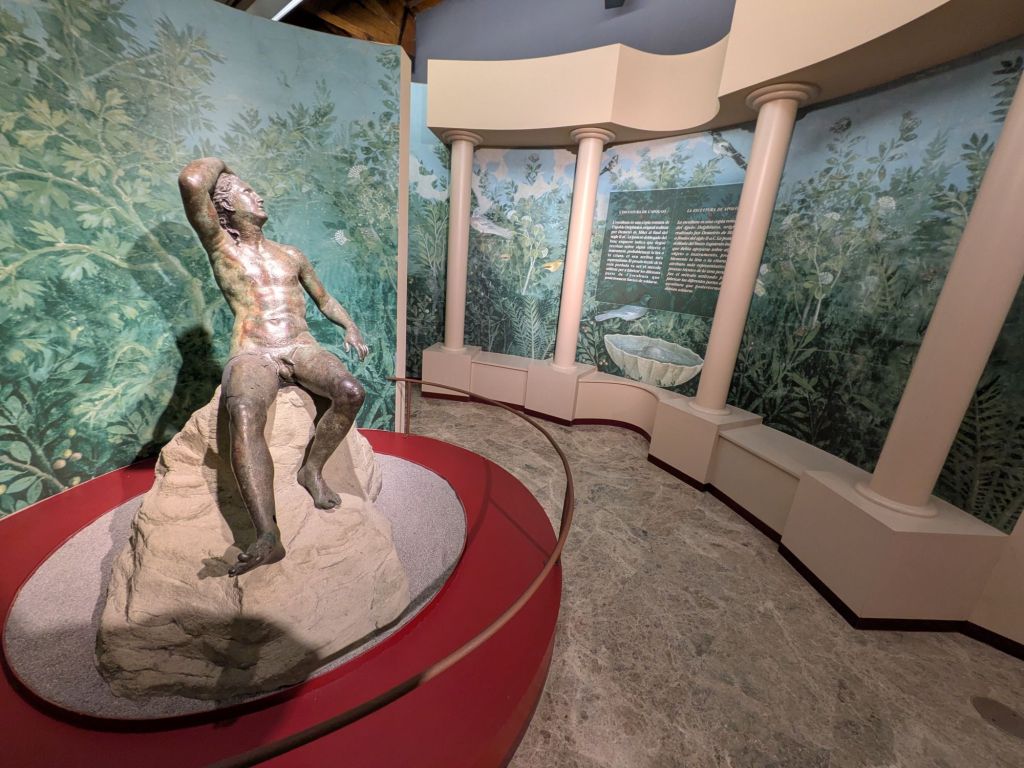
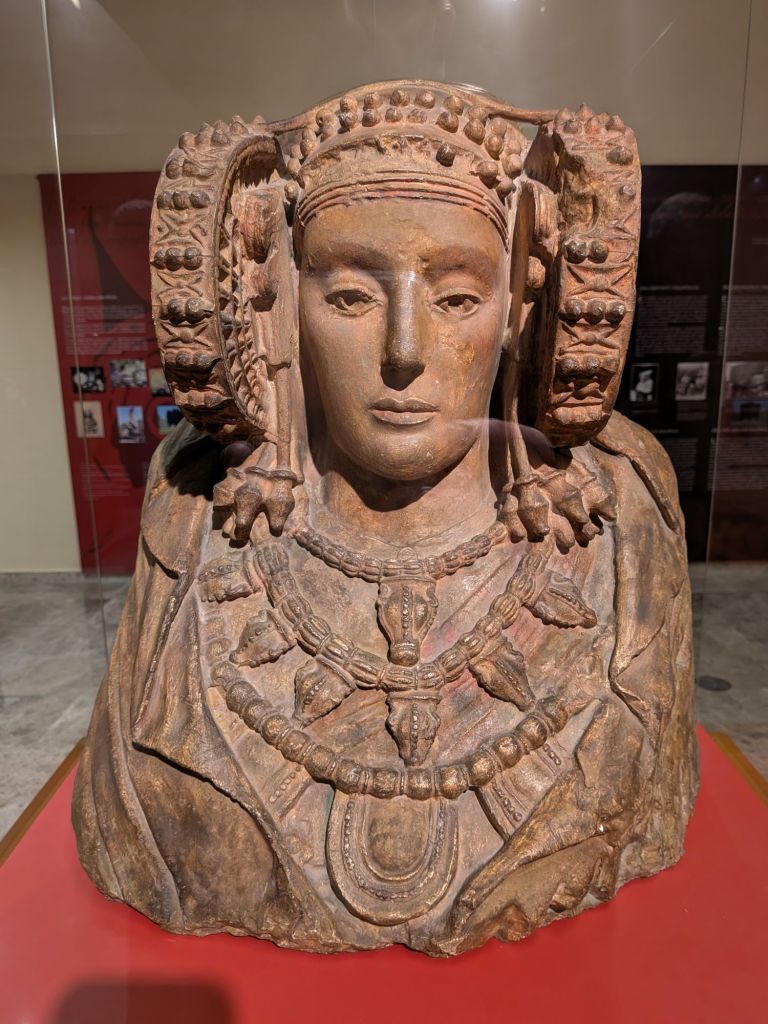
through Punic and Roman artefacts by the hectare –

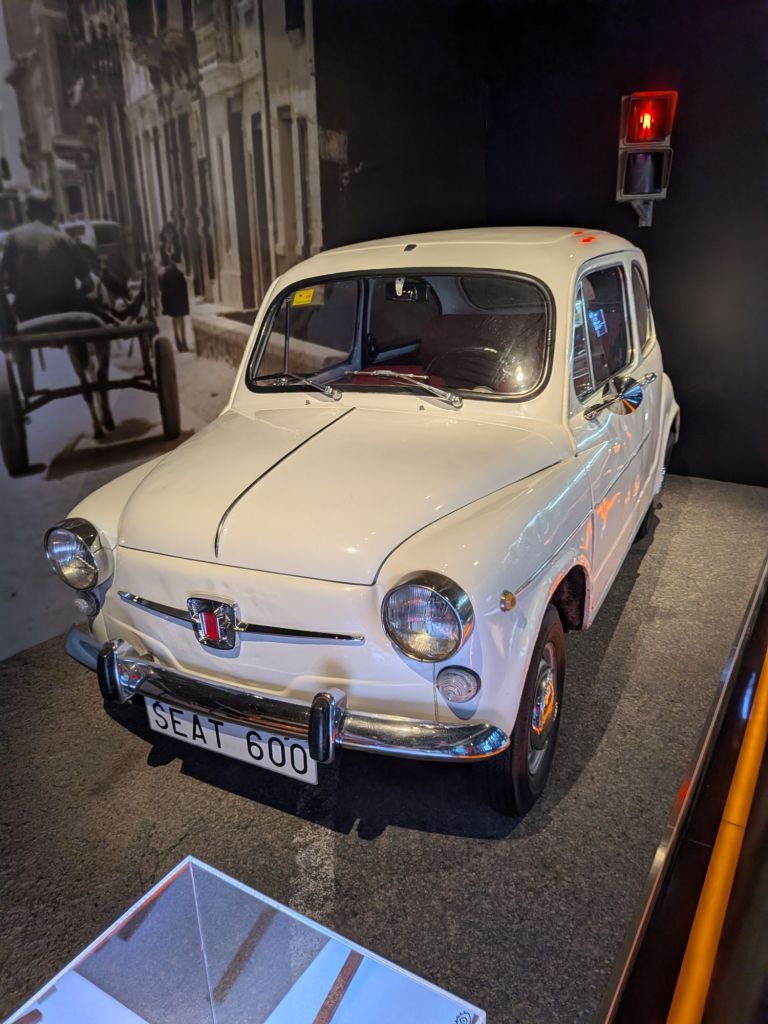
to recent Valencian social and agricultural history –

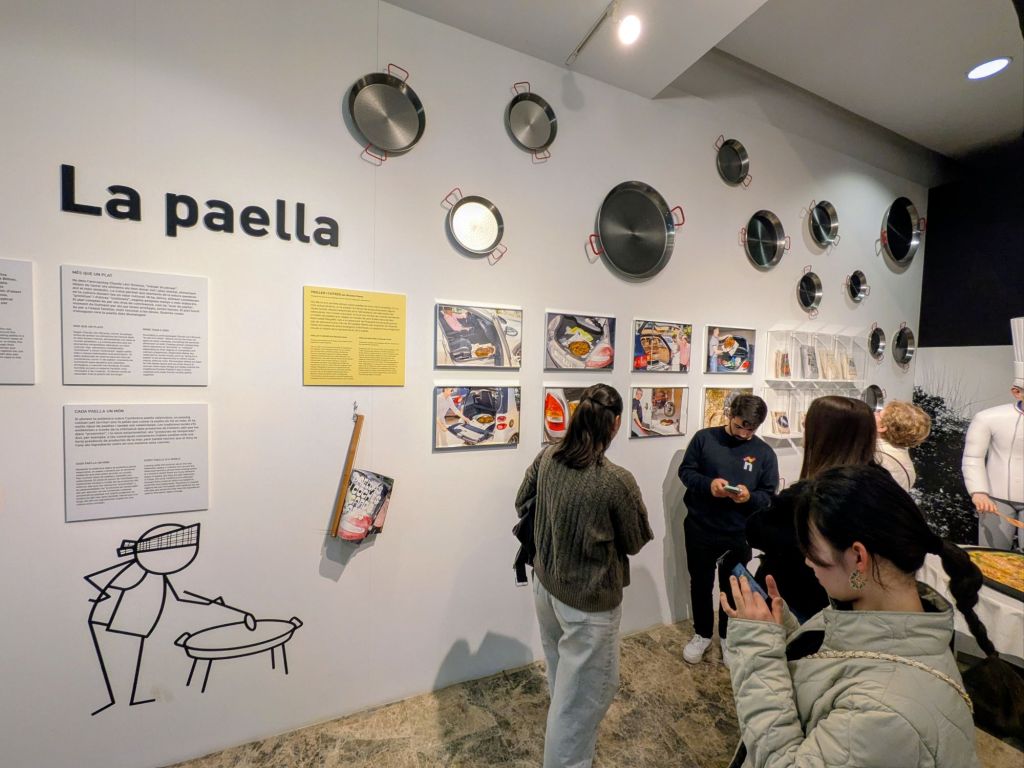
and crucial food history –

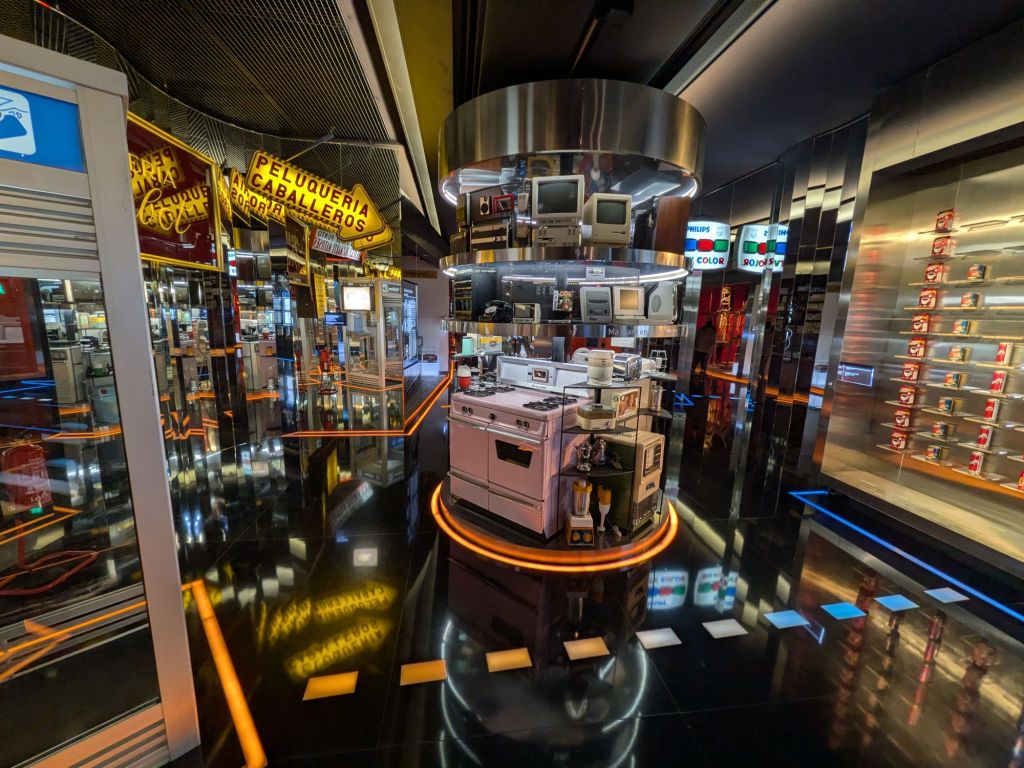
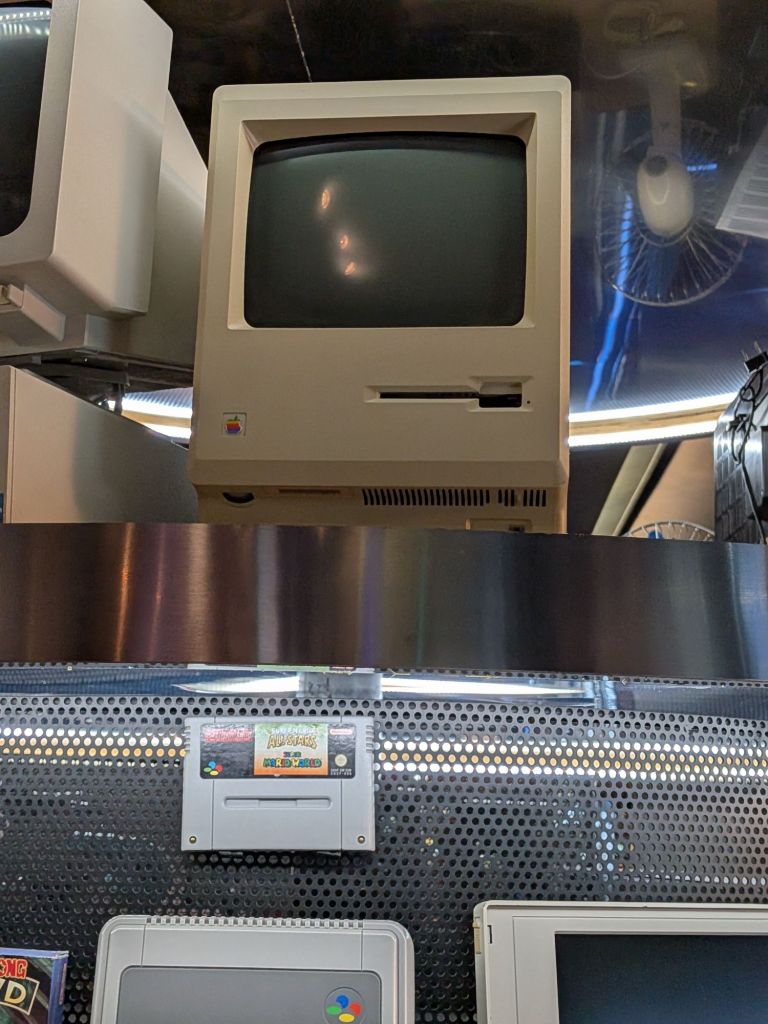
to everything modern imaginable:

Overwhelming – I must try to get back to the Prehistoric- to- Roman part and try to do it at less of a jog.

I managed to confirm (in Spanish, ish) that a paella is the pan itself, “porque paella está la palabra Valenciano para sarten” – “because paella is pan in Valenciano.”

On a walk

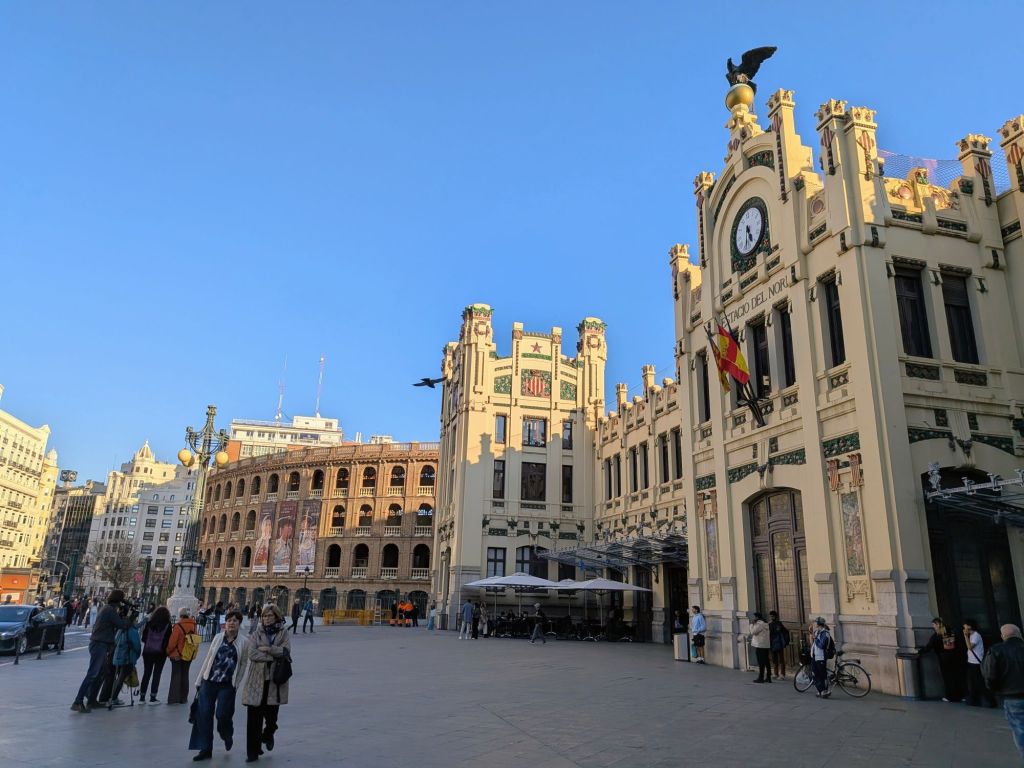
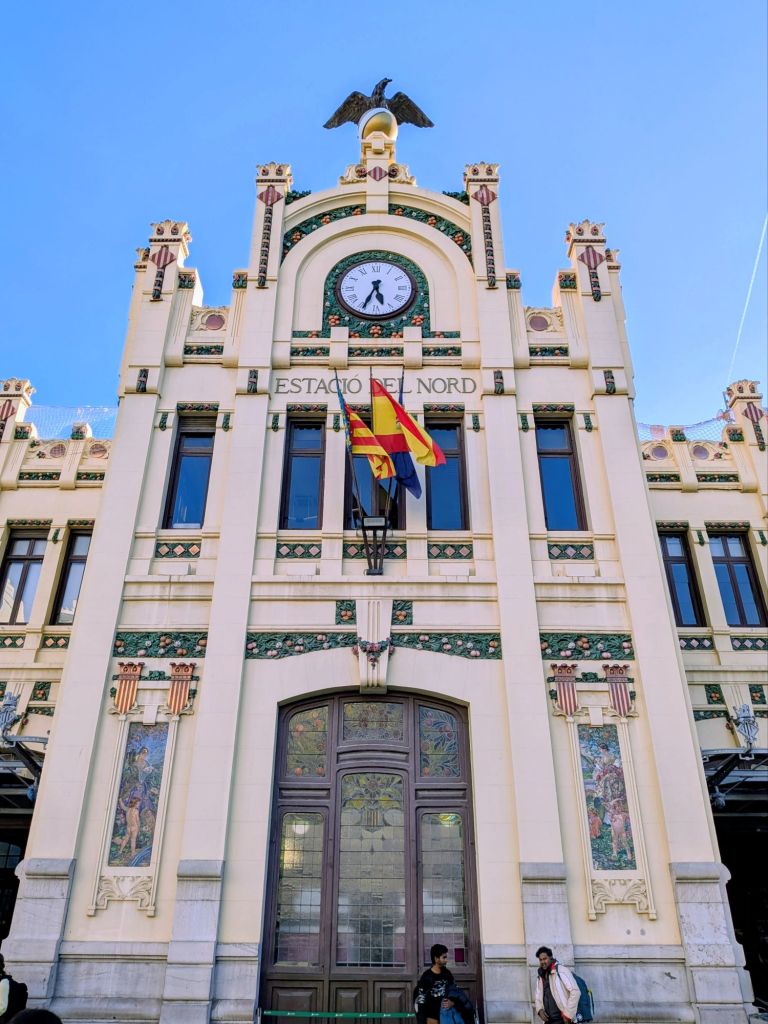
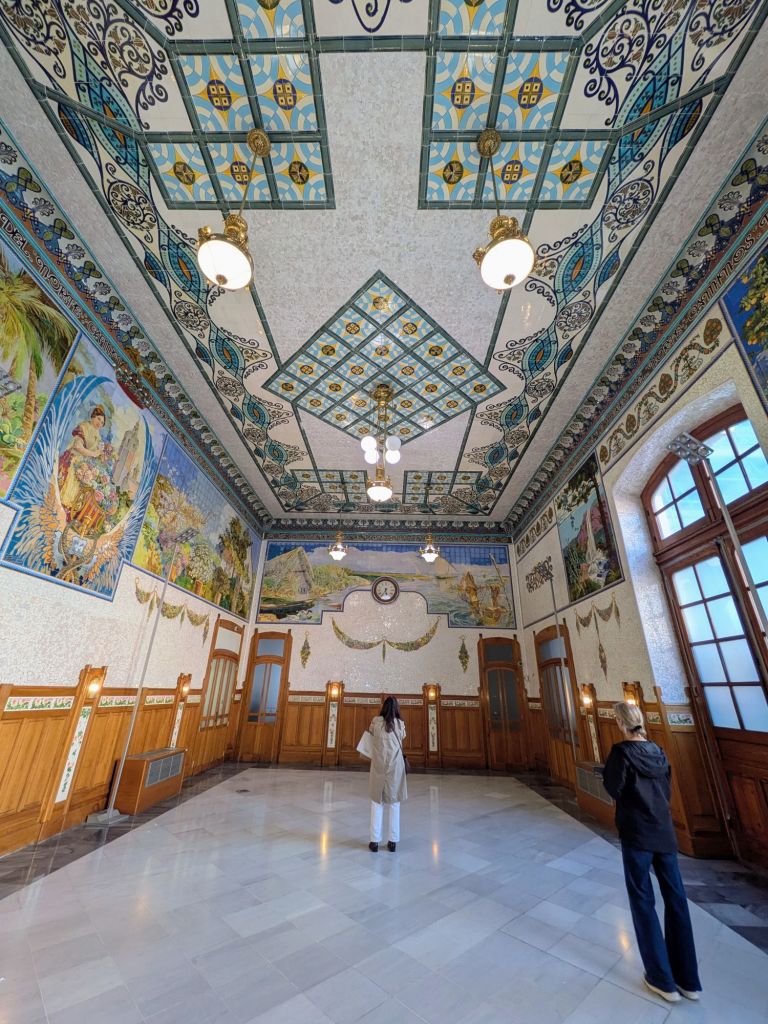
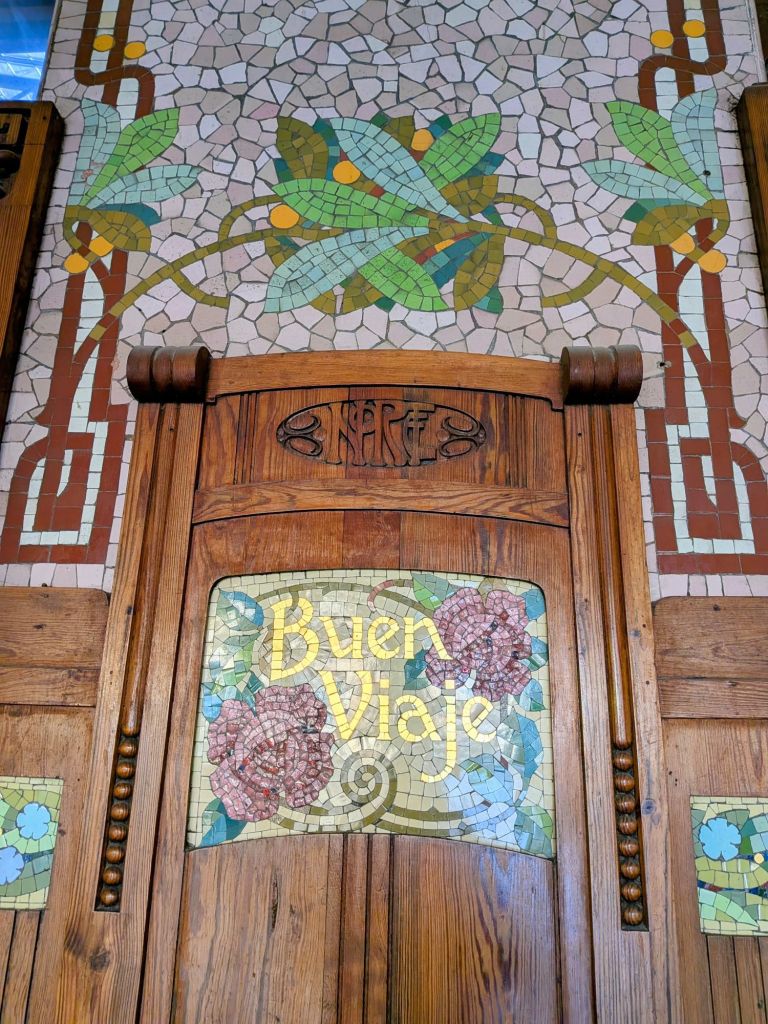
Beautiful Art Deco Estació del Nord, next to the bullring:

and more fun street art:

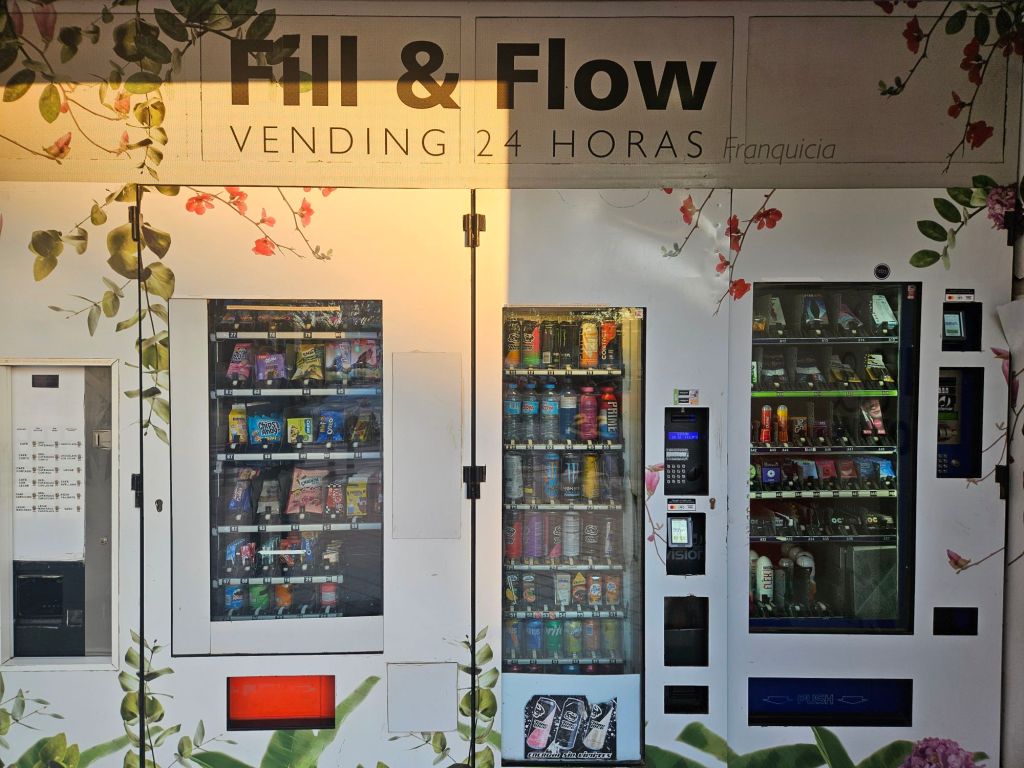
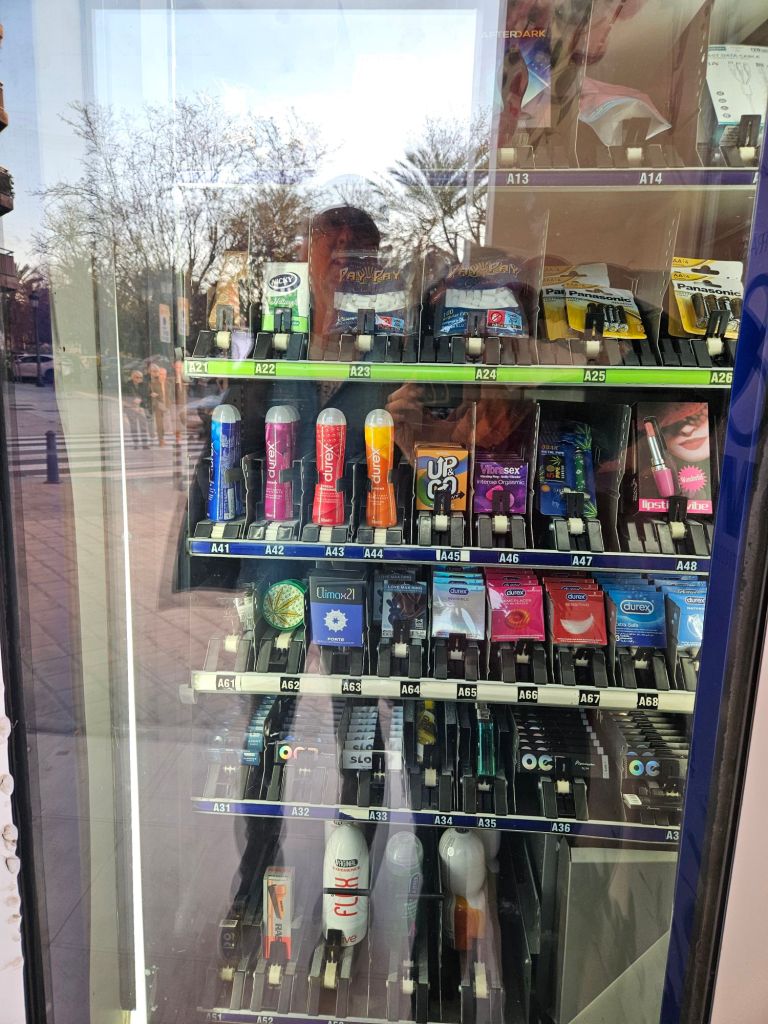
Plus, vending machines. We’ve seen several little “shops” which are in fact collections of vending machines open 24 hours a day selling the essentials. Coffee, candy bars, chips, sodas, and … sex toys?

Monday

After school (giving directions and orders in Spanish – el imperativo) walked 40 minutes to a nice small restaurant well north of the Cuidad Vella (old city).

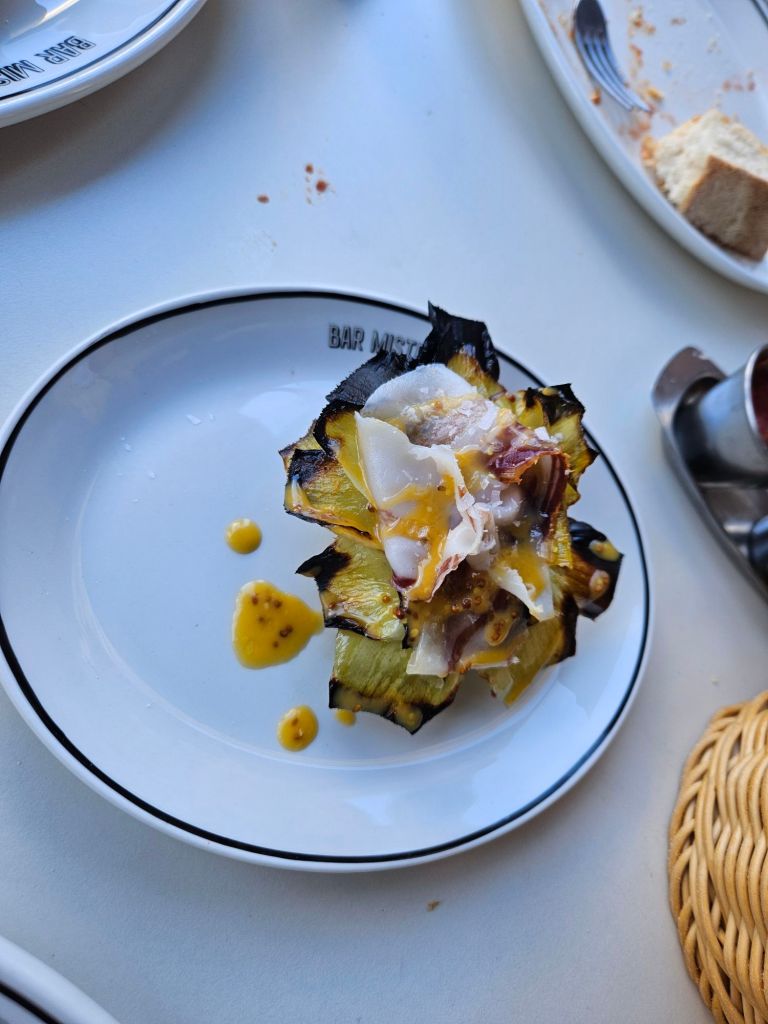
A most excellent “fleur de artichofa”

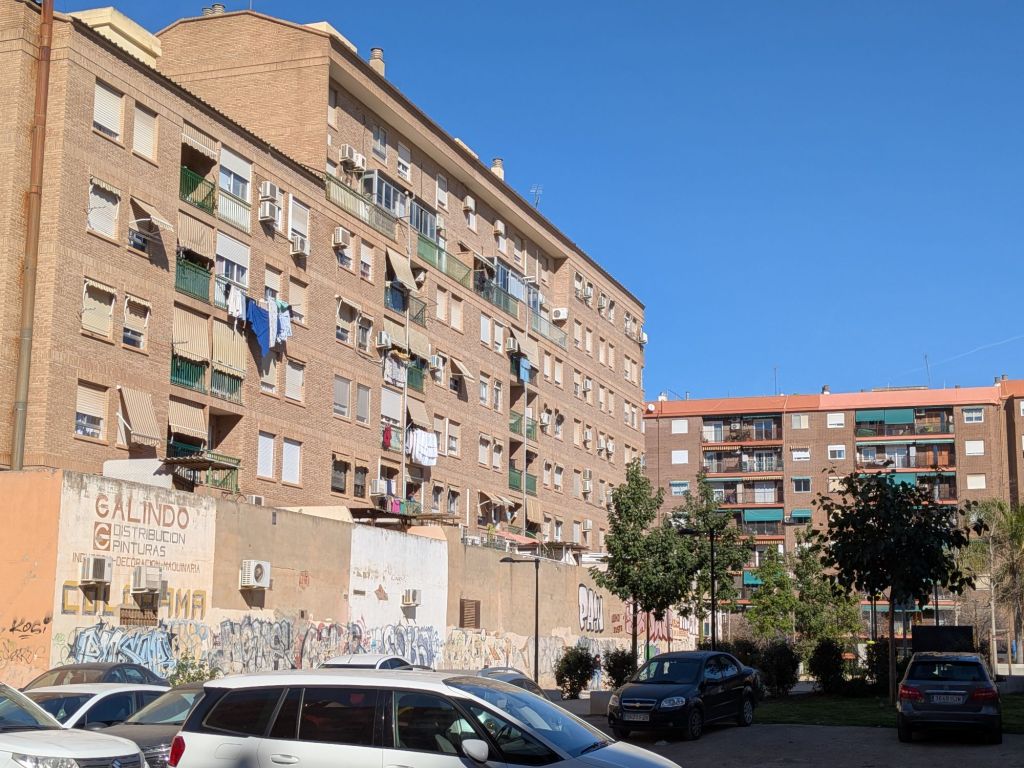
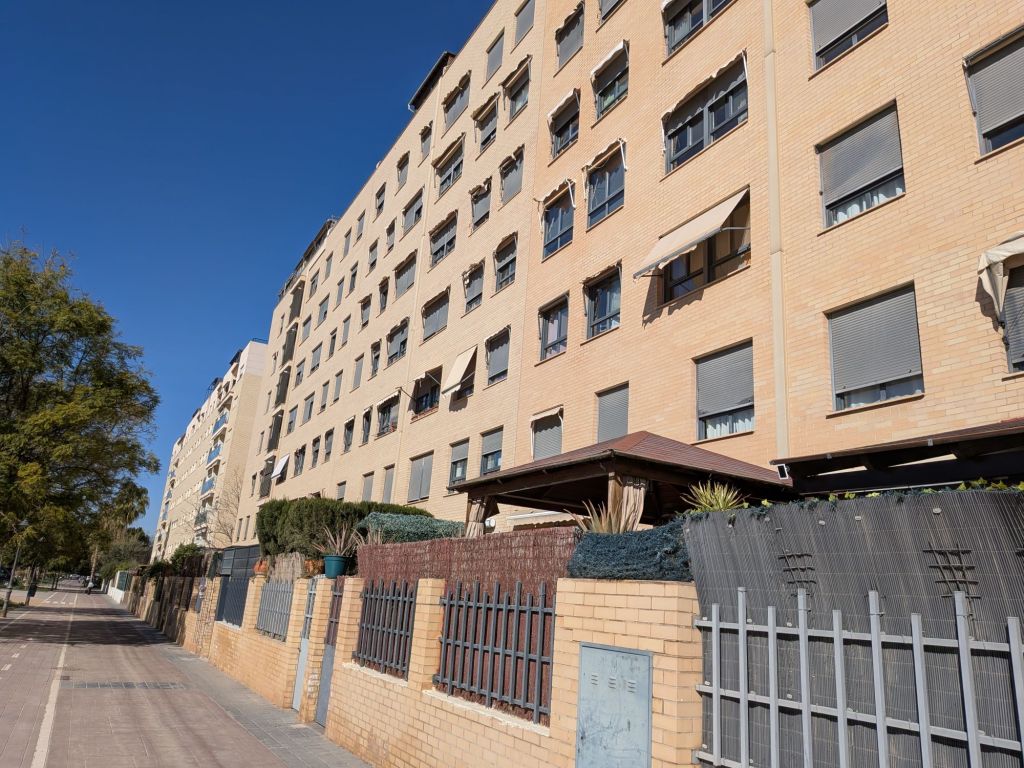
Back through the kind of neighborhood where the other 90% of Valencianos live. Not picturesque but lovely in soft warm sunshine.

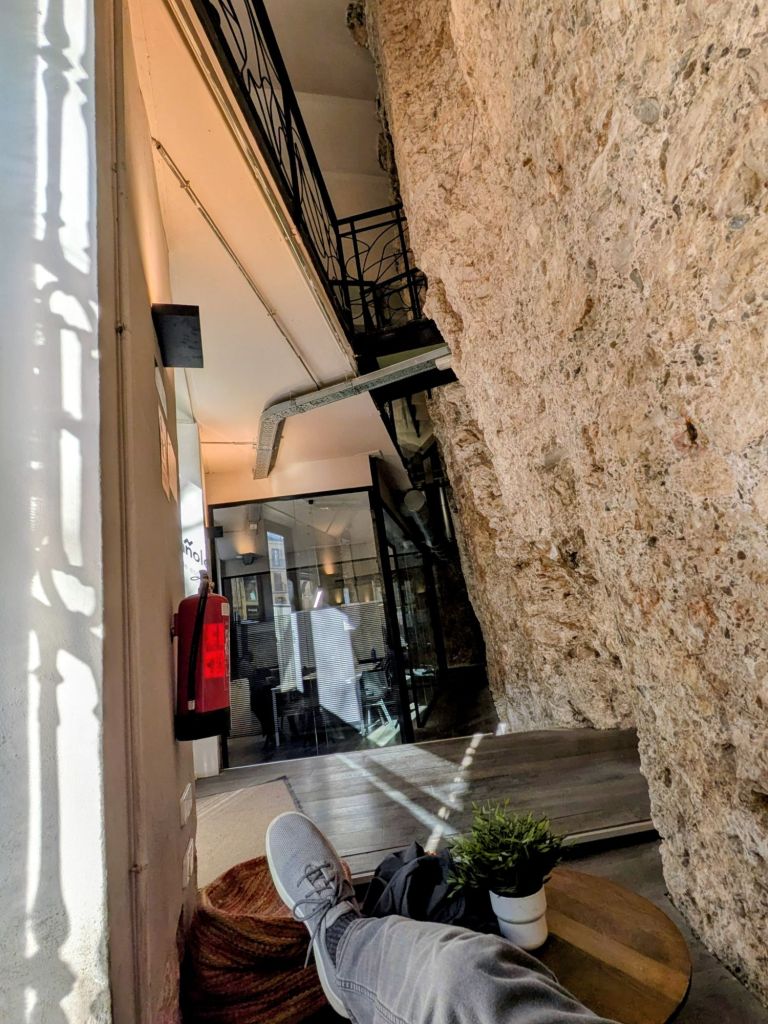
And so to a longish afternoon of homework, with me (R) hidden away in a wonderful little corner of the school – a single armchair wedged between a street scene through a 19th C window (to my left), a very 21st C glass-walled classroom (straight ahead), and (to my right) a huge section of wall built by Los Mussulmanes almost exactly 1000 years ago – 1023 I think.