Iceland Day 2

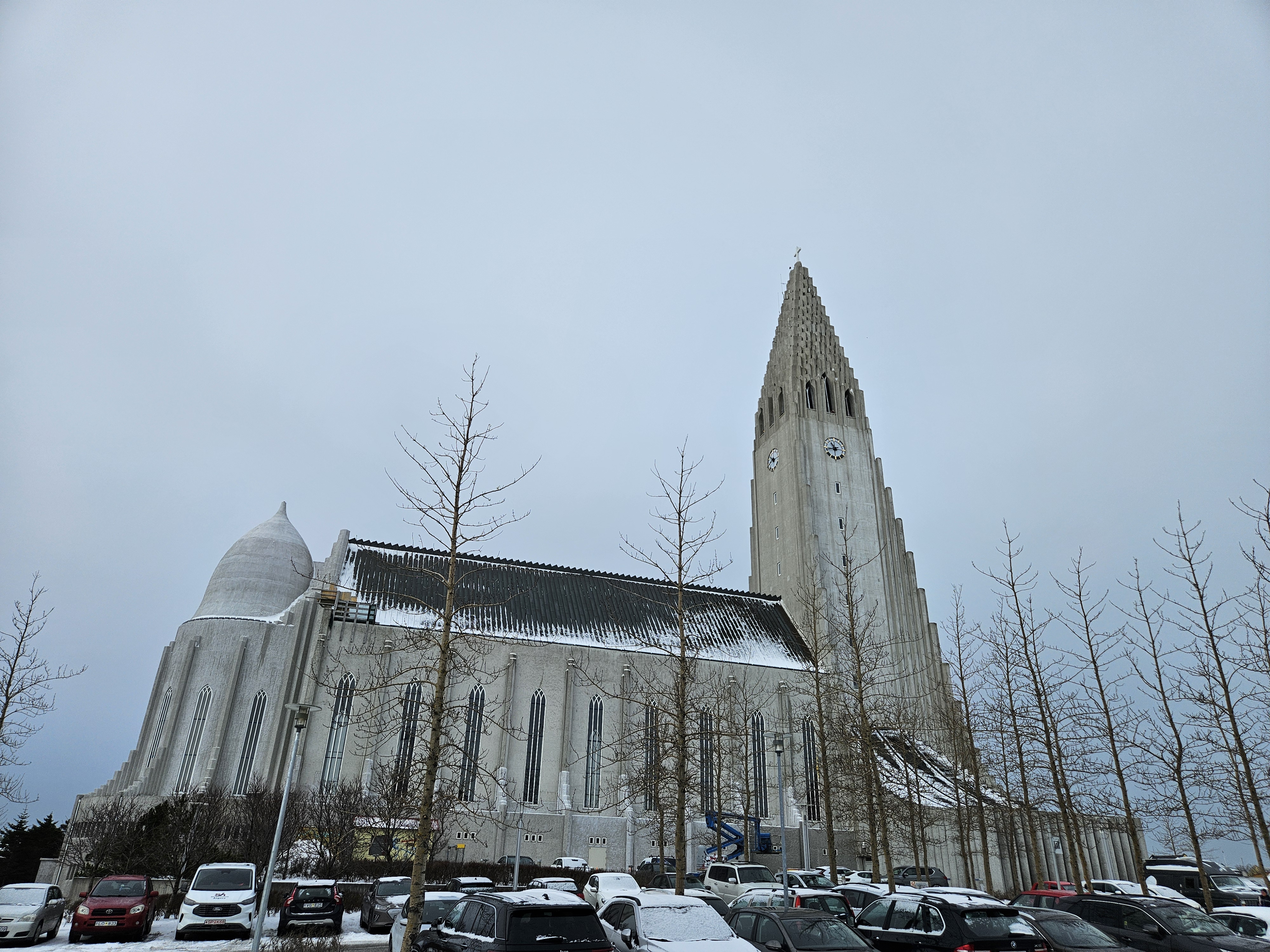
Weather more manageable today–still on the cold side, but without the wind it feels almost balmy. After another indulgent breakfast buffet at the hotel, we started our day with a walk to the Hallgrimskirkja.
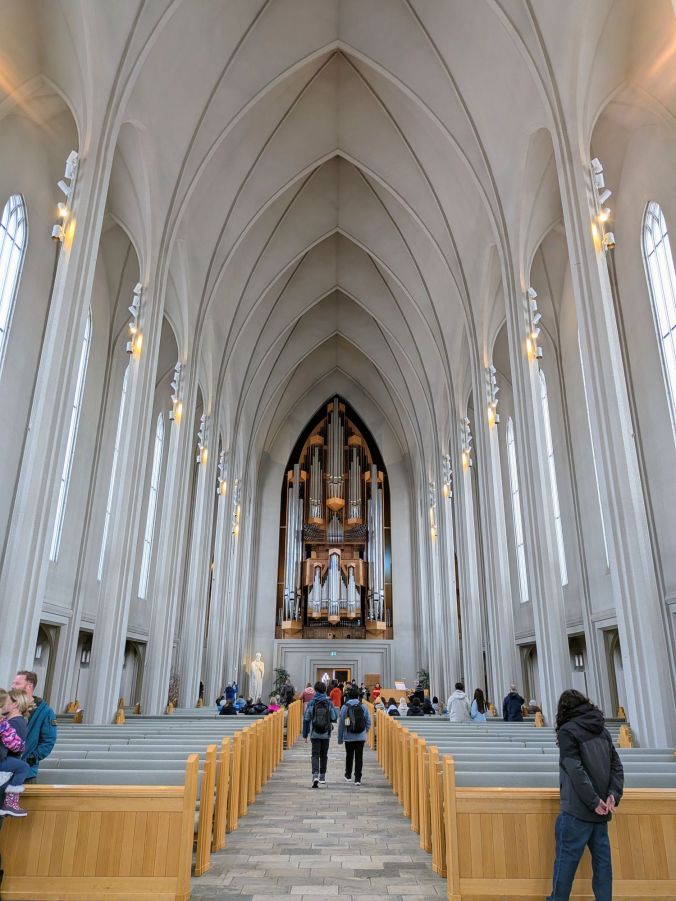
A man in an appropriately Icelandic sweater was playing the stupendous 5000 pipe organ, so we had to linger there for half an hour.
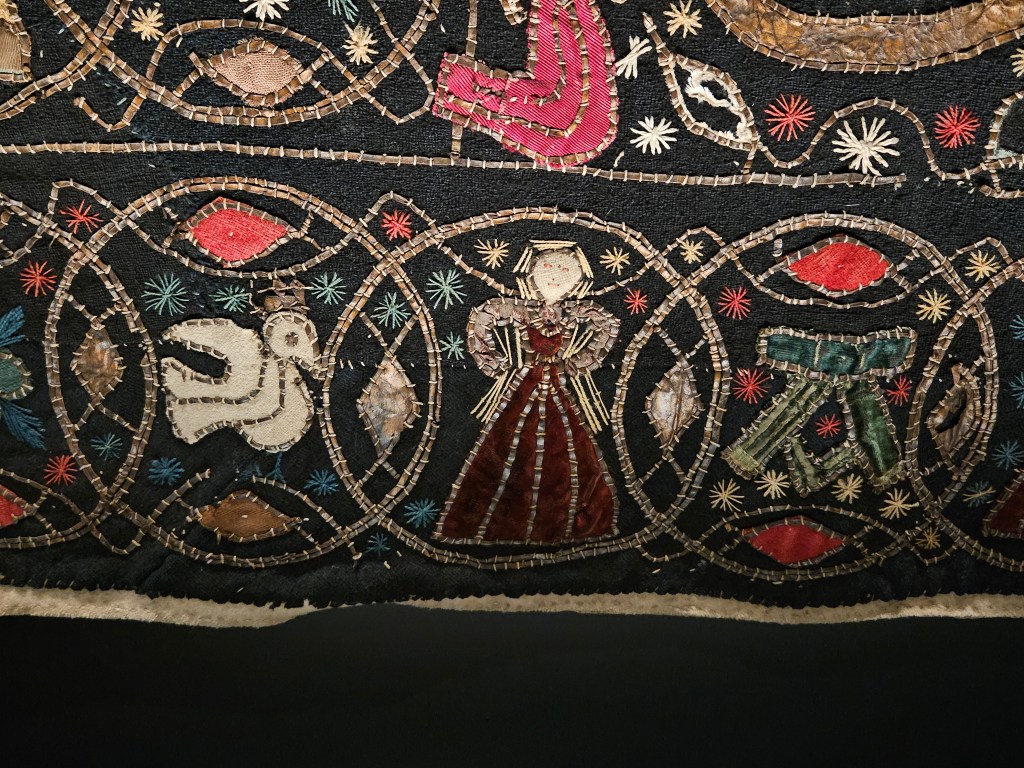
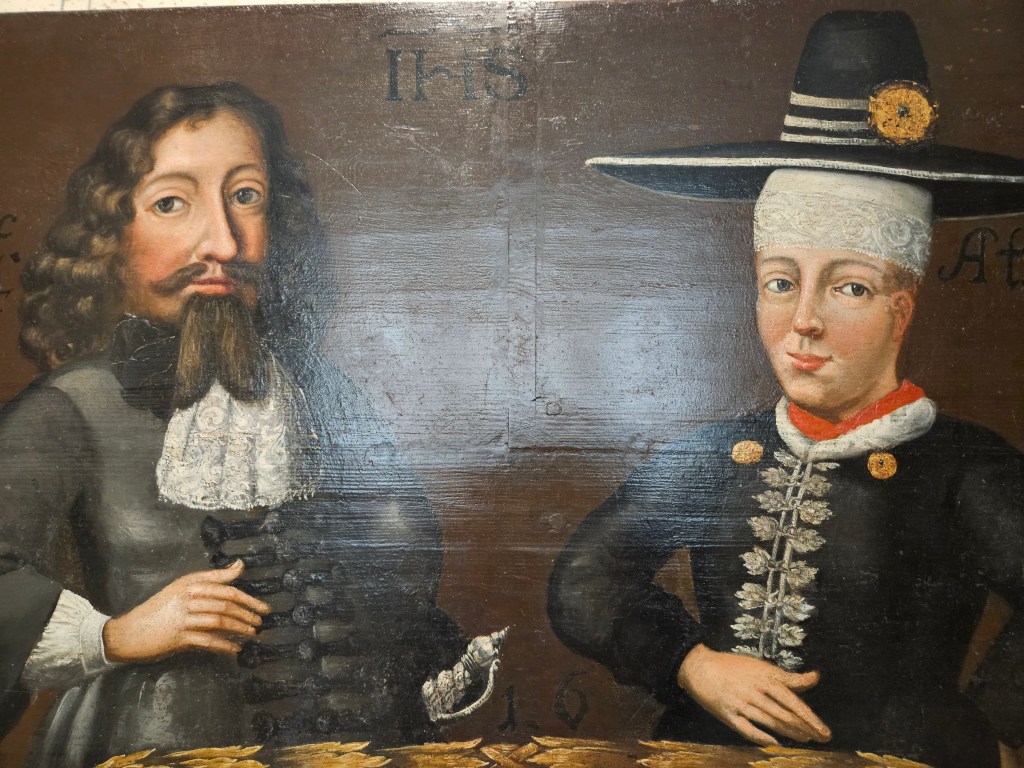
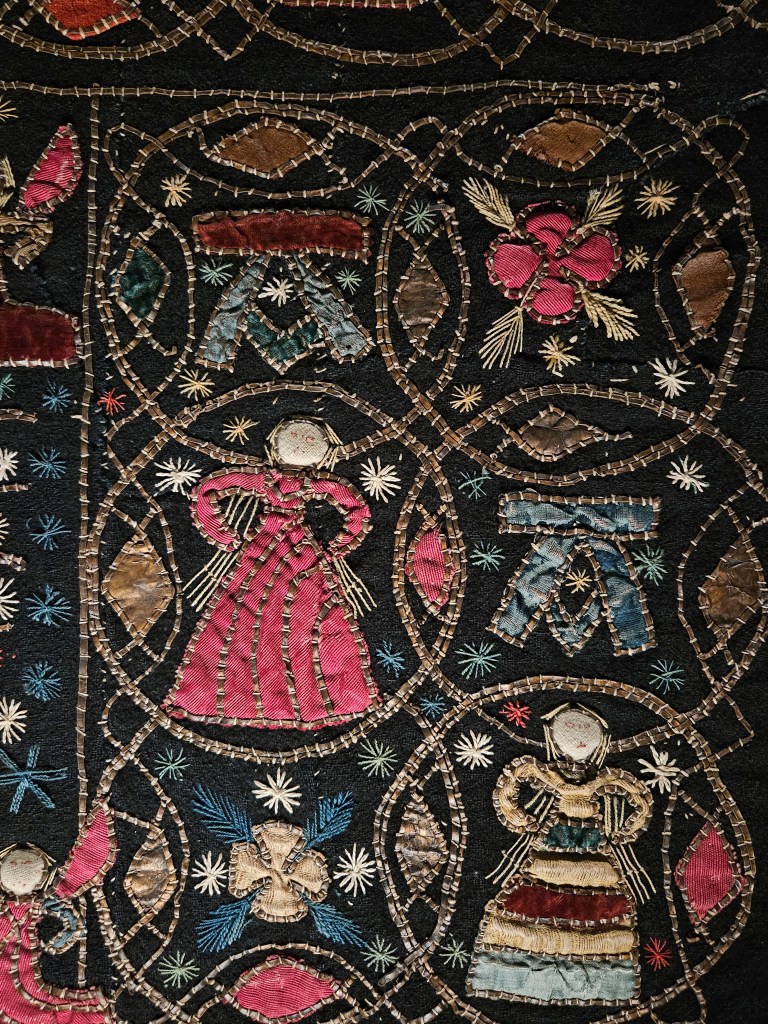
A short walk took us to the National Museum of Iceland where we took in the excellent exhibit on the history of Iceland. It is beautifully designed and traces the history of Iceland from settlement to today.

Because of several written chronicles, it is known that Iceland was settled around 870 AD, that the world’s first parliament, the Althing, was established there in 930 AD, and that Christianity was adopted around 1000 AD. At the time of the Vikings’ arrival, there were apparently extensive birch forests, but settlement building and pasture making wiped them out almost completely – what remains is probably less than 1% of the historical extent.

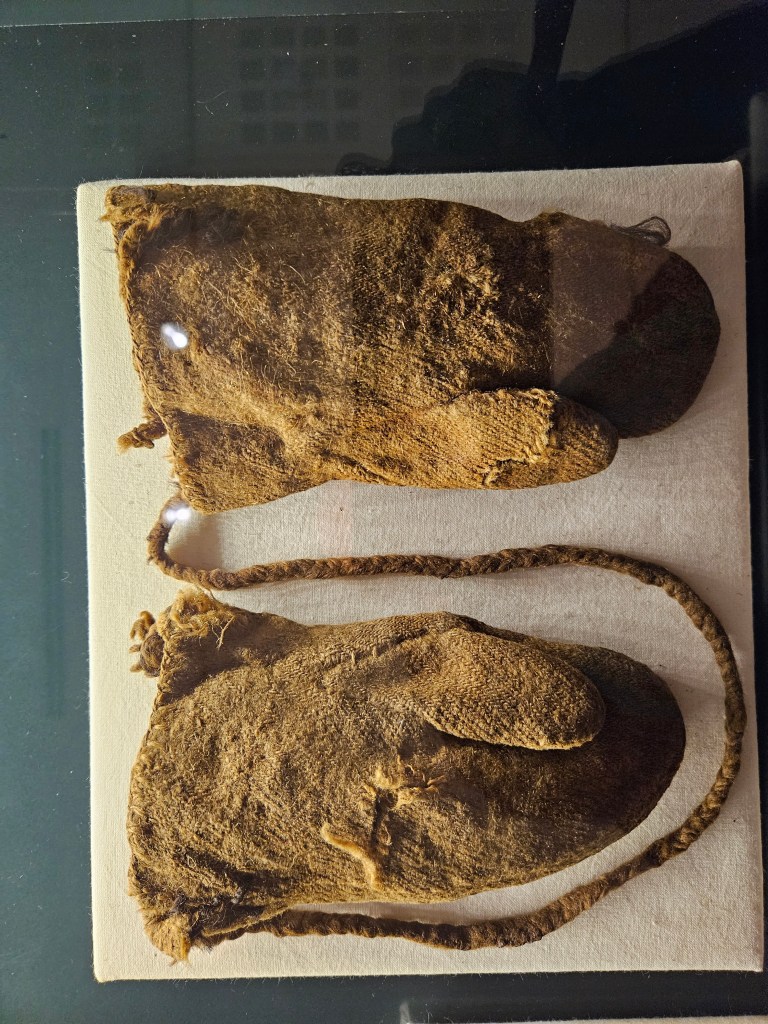
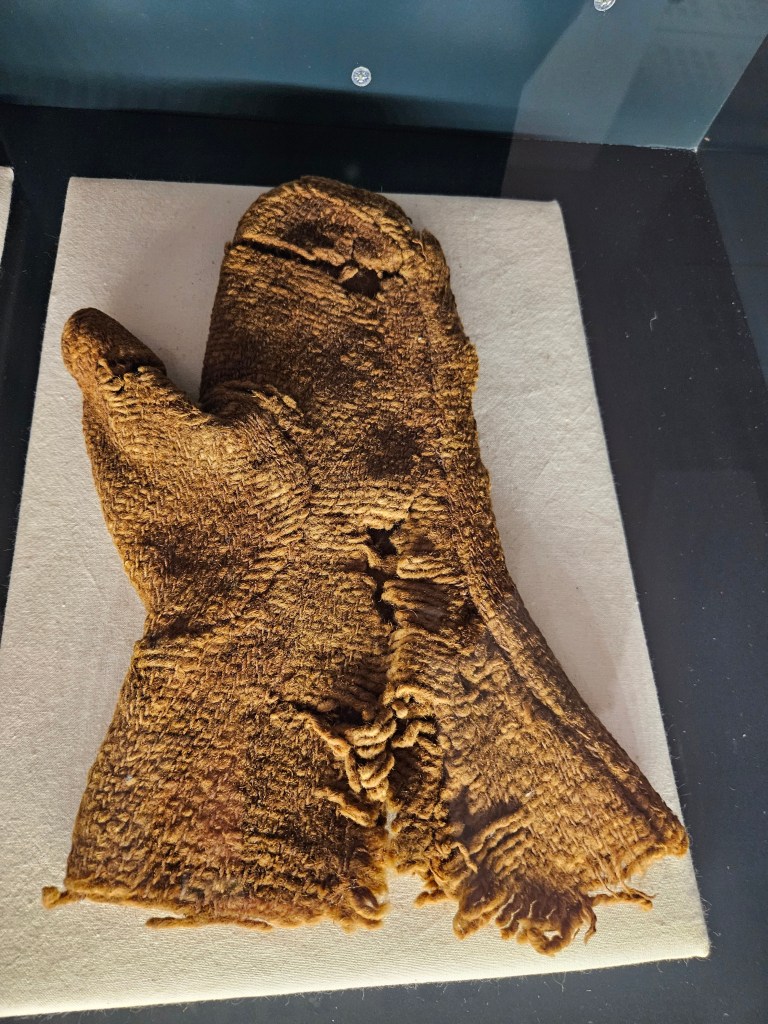
Below, among other things, a nearly 1000 year old mitten:
Impressive though this museum is, we (me more than R) were suffering a bit from overload and artifact fatigue. So instead of digging deeply into the museum, or following the plan to take in the reportedly excellent World in Words exhibit on medieval manuscripts, we decided to attempt the lighthouse walk we considered yesterday. Given the distance, we hopped on the city bus to take us to the edge of town. Thankfully a fellow passenger overheard us asking the driver if he was going the right way–the driver shrugged, but the passenger directed us to the bus stop on the other side of the road. Without her timely intervention we would have had a much longer scenic tour of the bus route in the wrong direction.
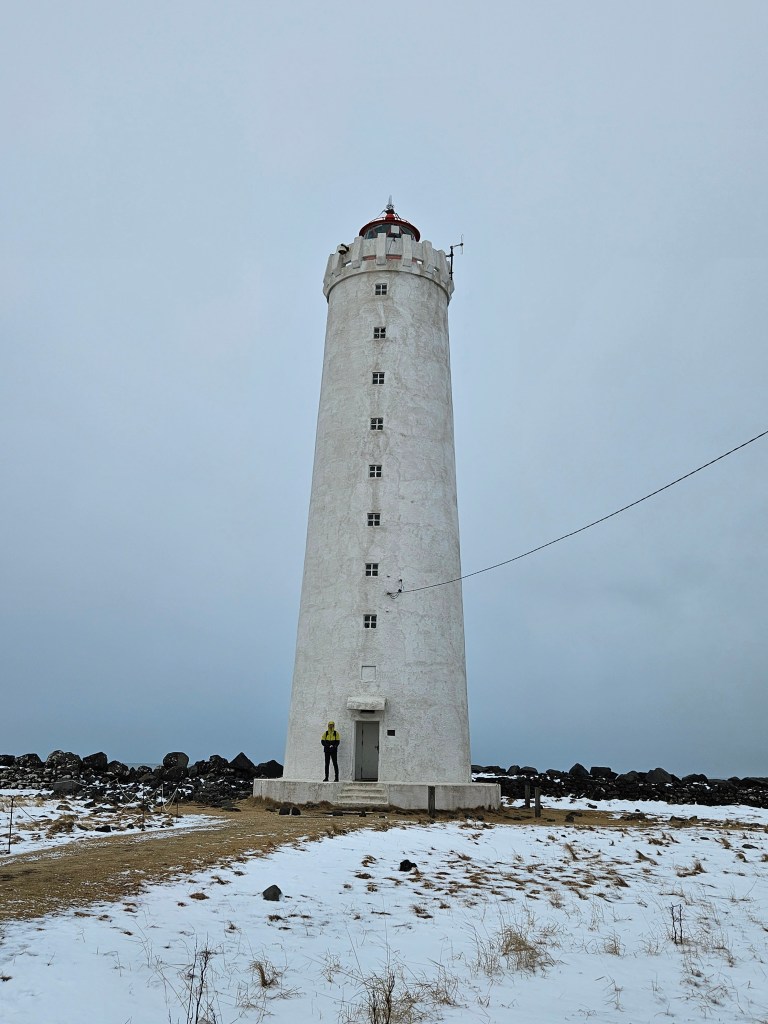
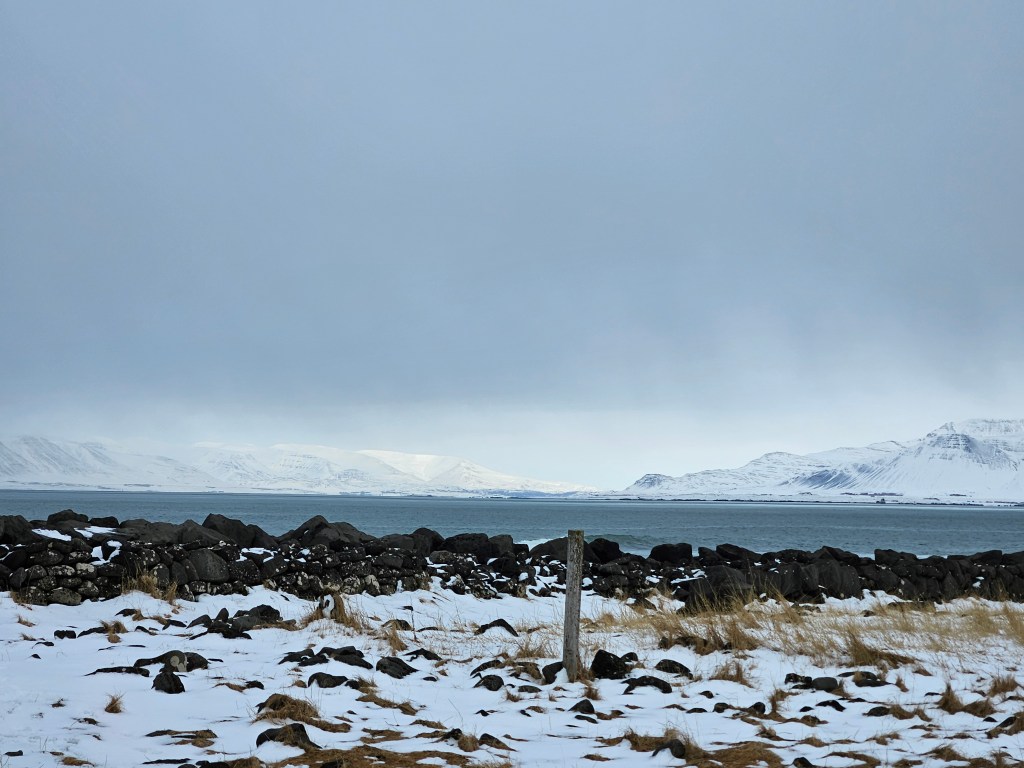
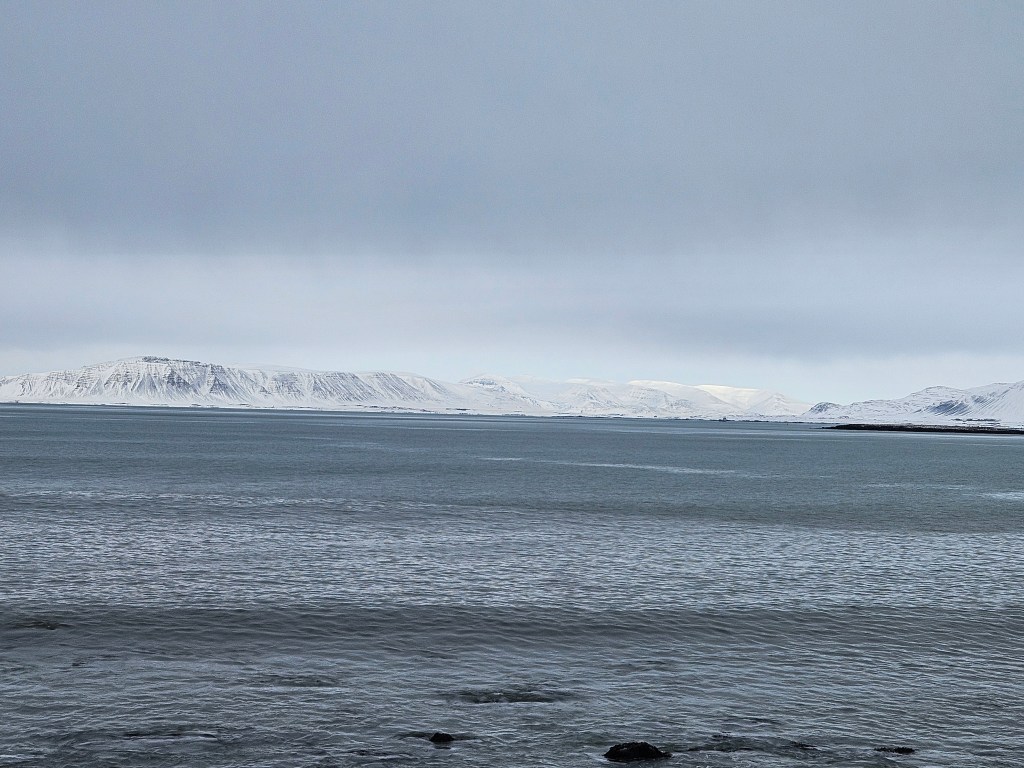
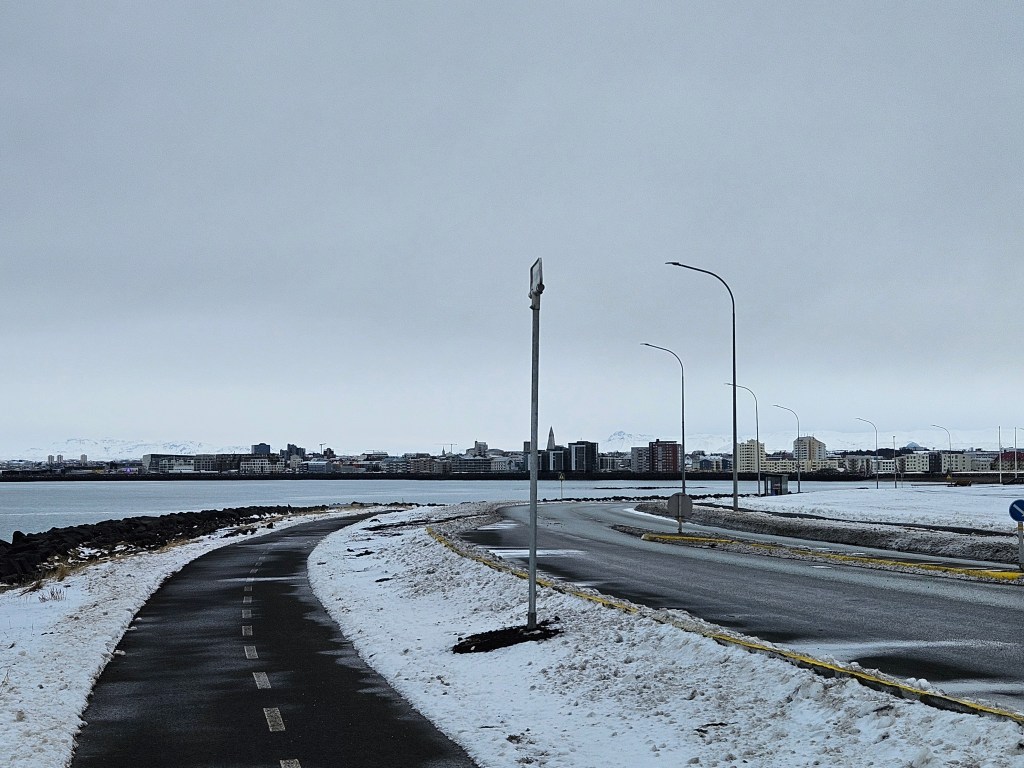
The walk was gorgeous and took us to a small lighthouse with views out to sea and back along the coastline in both directions. Clouds obscured most of the surrounding mountains and islands, but still, without the blowing wind it felt great to cover about 5 miles. Heated walking paths and bike paths are a pretty nifty invention.

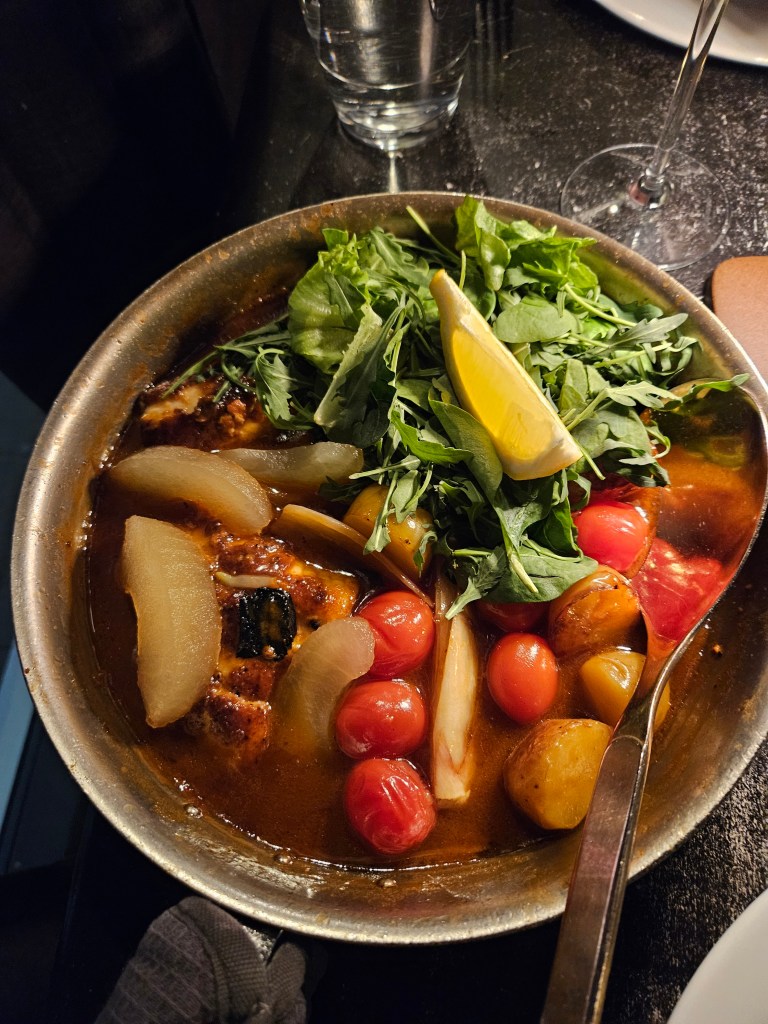
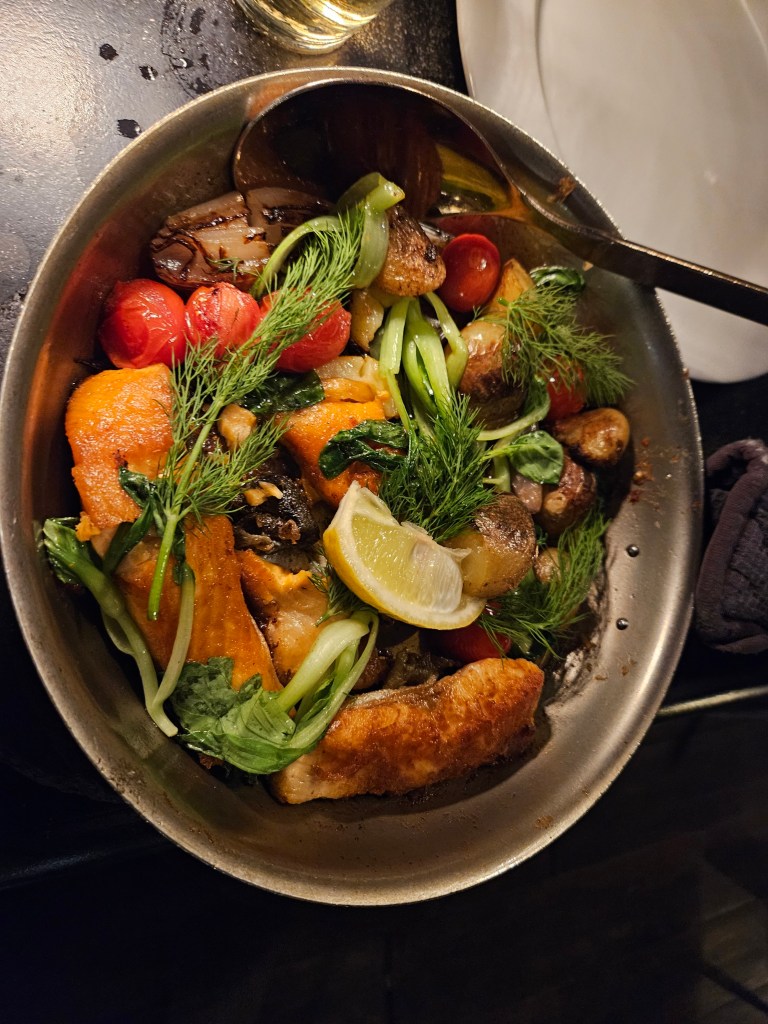
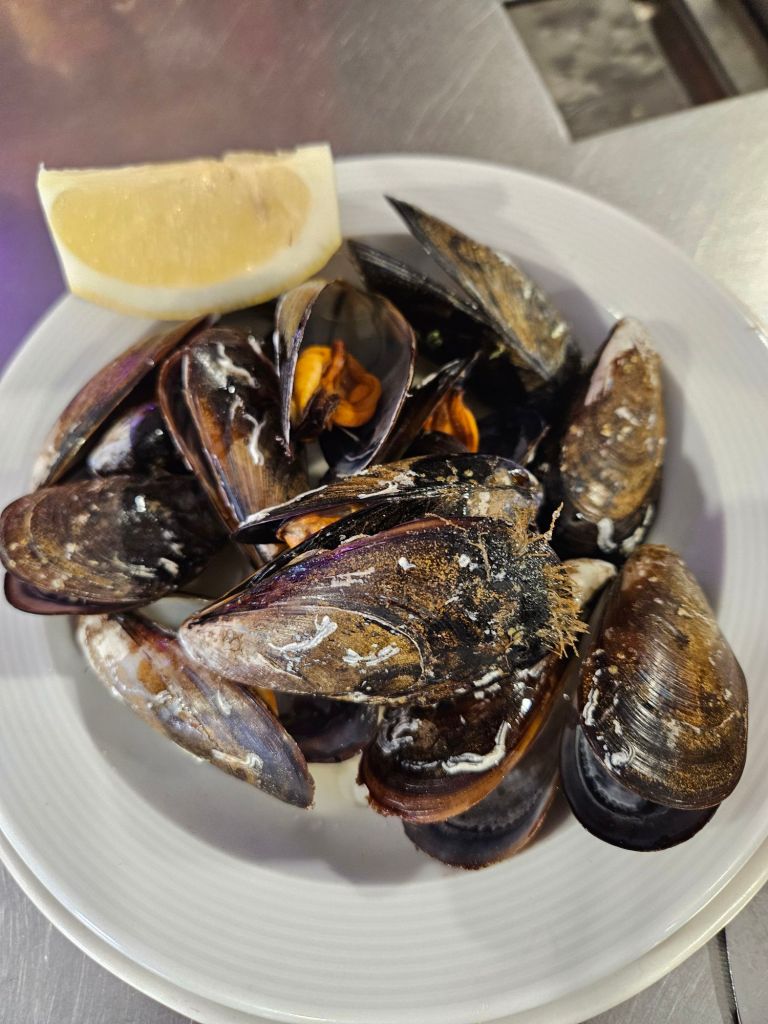
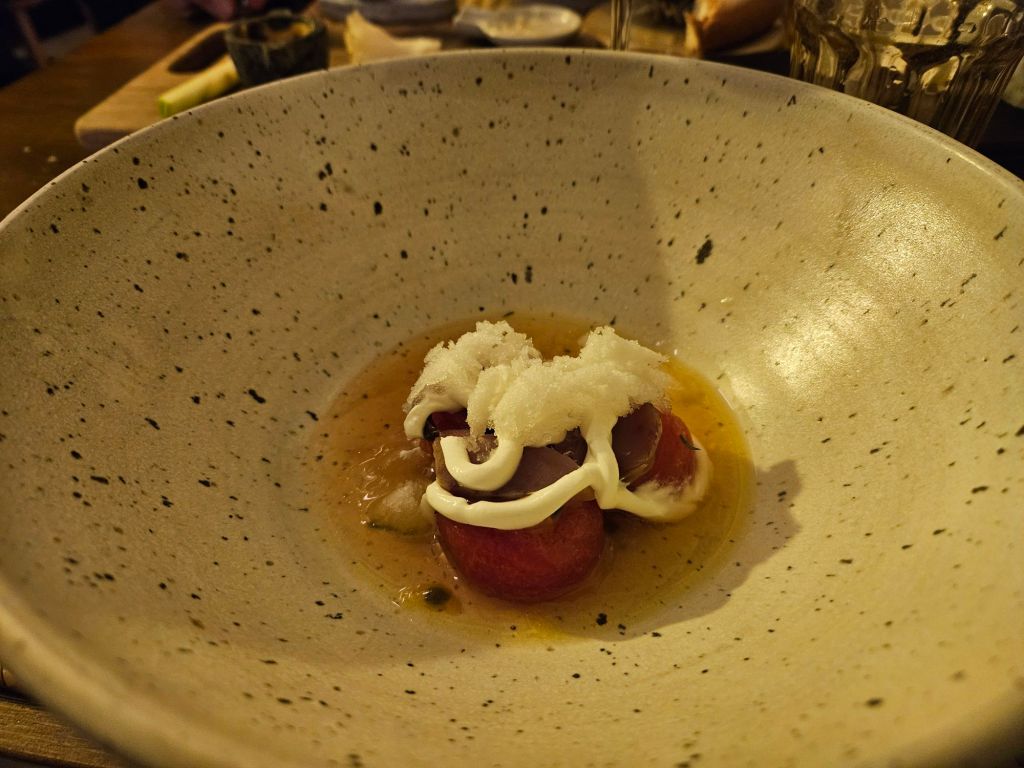
We headed back to our hotel for a little downtime and a light late lunch of crackers and cheese leftovers from yesterday, and to await the verdict on the Northern lights tour. Once again it was cancelled (high winds and clouds), so we consoled ourselves with another trip to the pools and a delicious seafood dinner at Mar. R ate the arctic char–hoping to recreate the magical plate he’d had when we were in Iceland 8 years ago–and I tried wolf fish. It was delicious and unusual and definitely checked my box of something that surprised and delighted.
And so to bed on the last night of our trip.
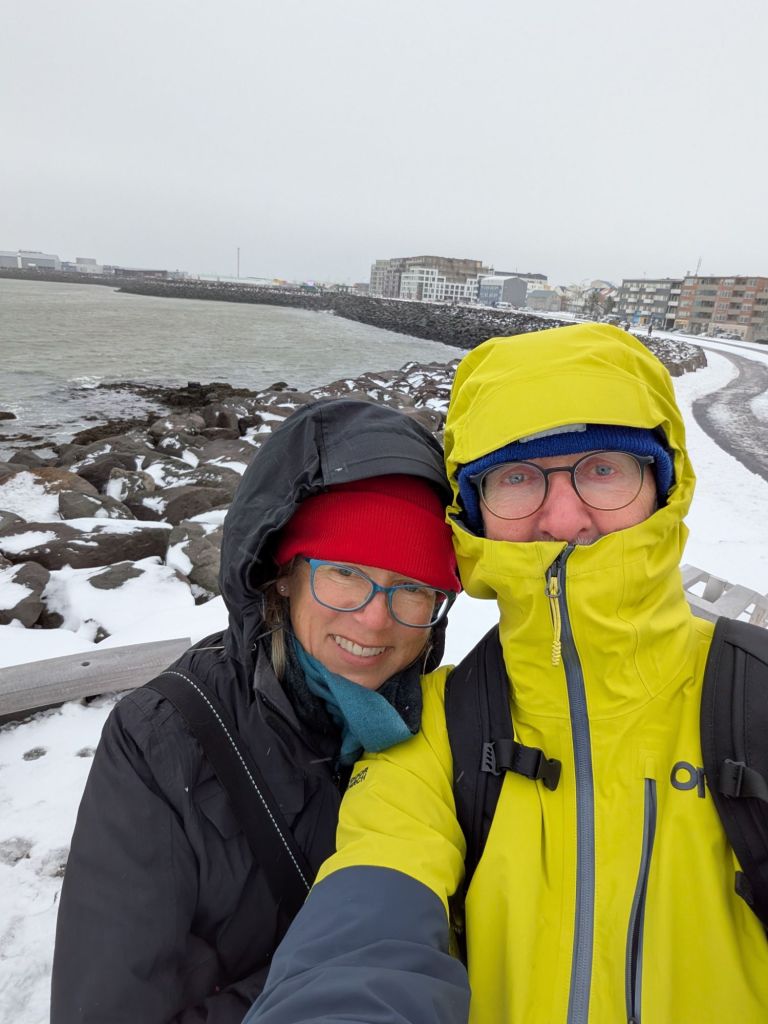
Iceland living up to its name

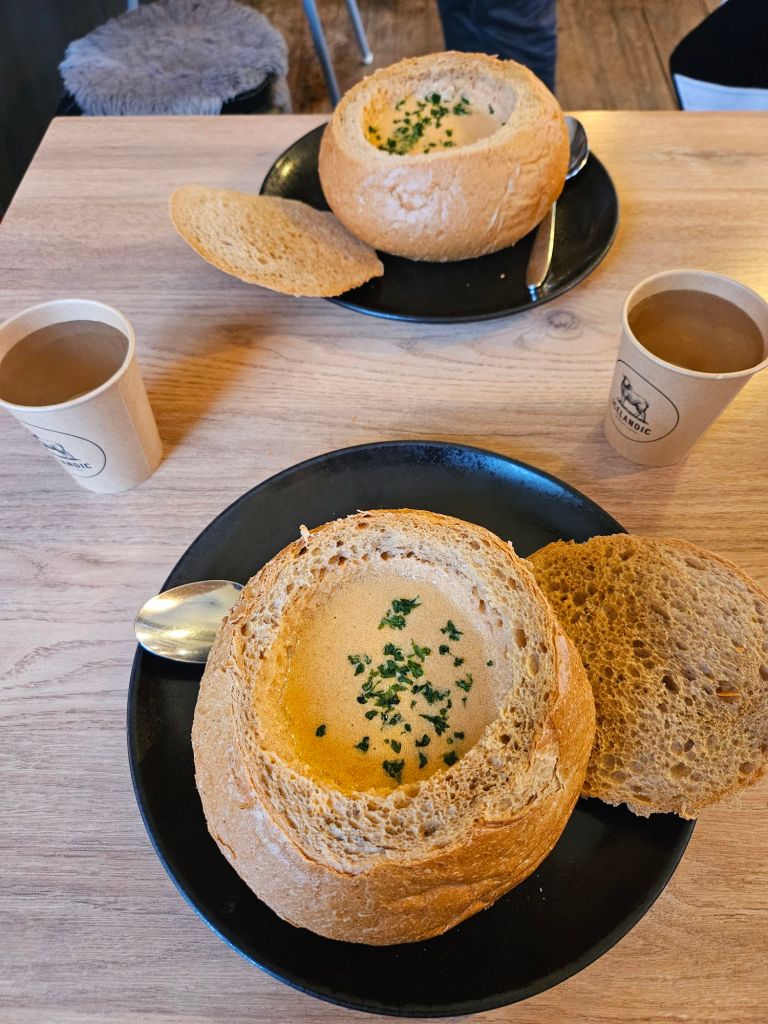
We have a little less than 72 hours here. Plan was to get off the plane Sunday night and almost immediately embark upon a northern lights tour. Unfortunately, R had a bad reaction to our bottomless bowls of soup–two huge bowls of shrimp in a “broth” made from bernaise sauce left him decidedly queasy. Heimer, owner and guide from Aurora Experts, very kindly said we could try again either Monday or Tuesday, but did not hold out high hopes with the weather. Today definitely didn’t work. We’ll see what tomorrow (our last day) brings.
It’s not particularly cold here–hovering right around freezing–but the wind is whipping along and there’s bits of snow either falling or being redistributed from roof tops. Thus, with dripping noses, weeping eyes, and hunched shoulders we spent the day battling to stay upright as we walked between museums.

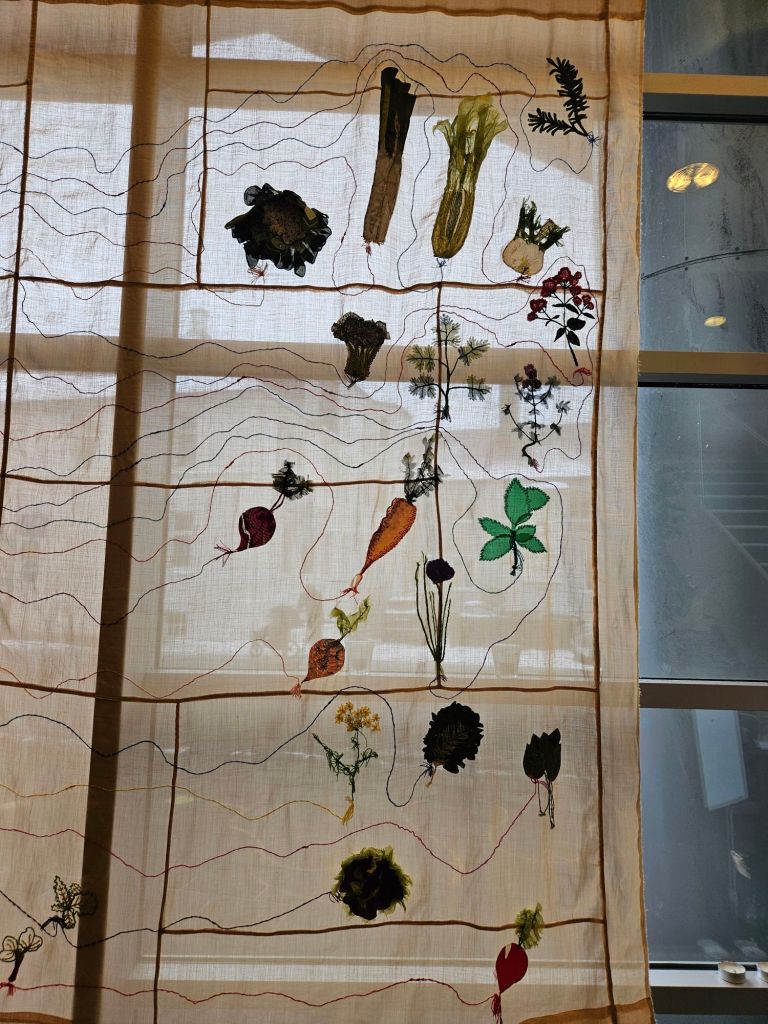
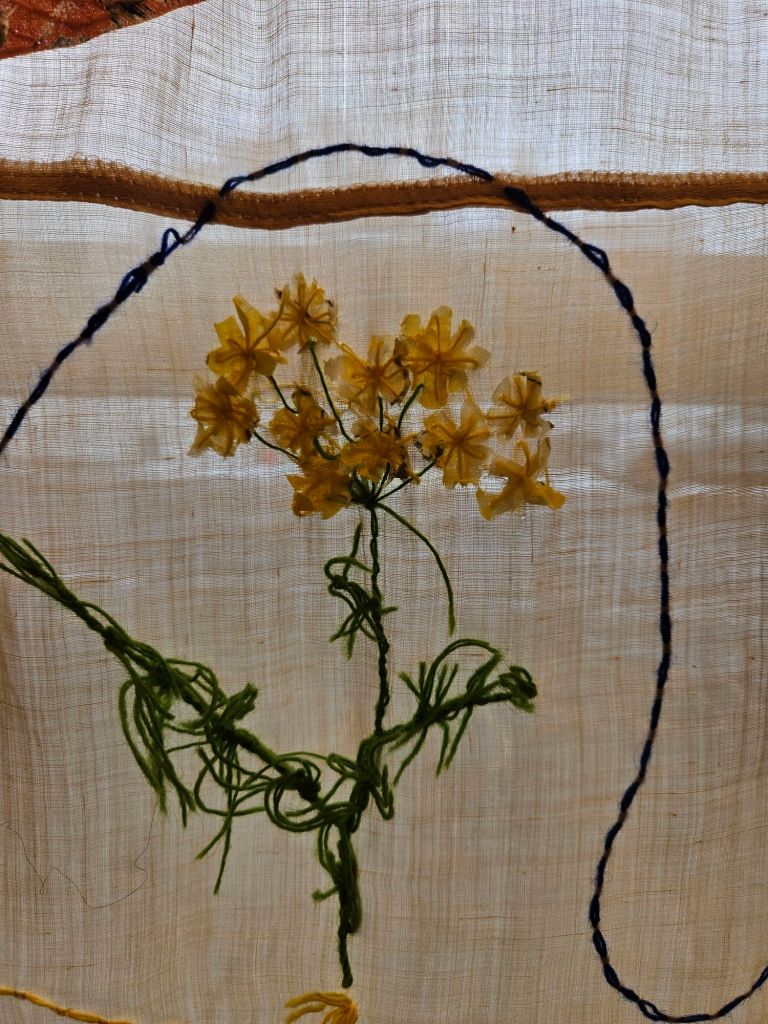
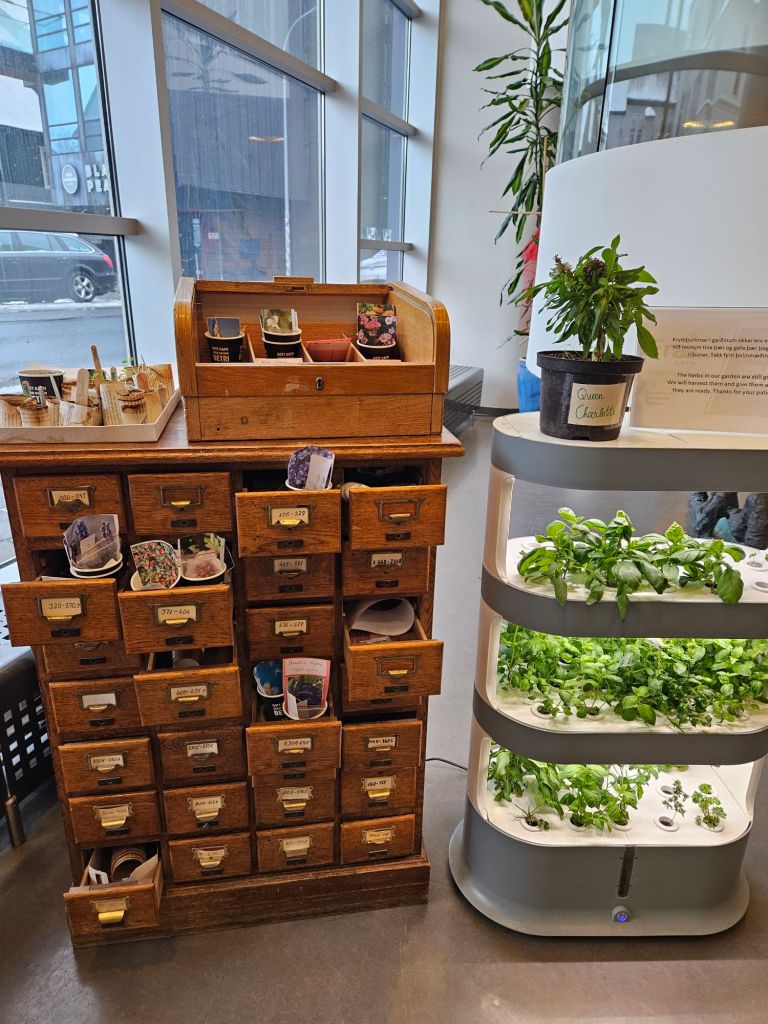
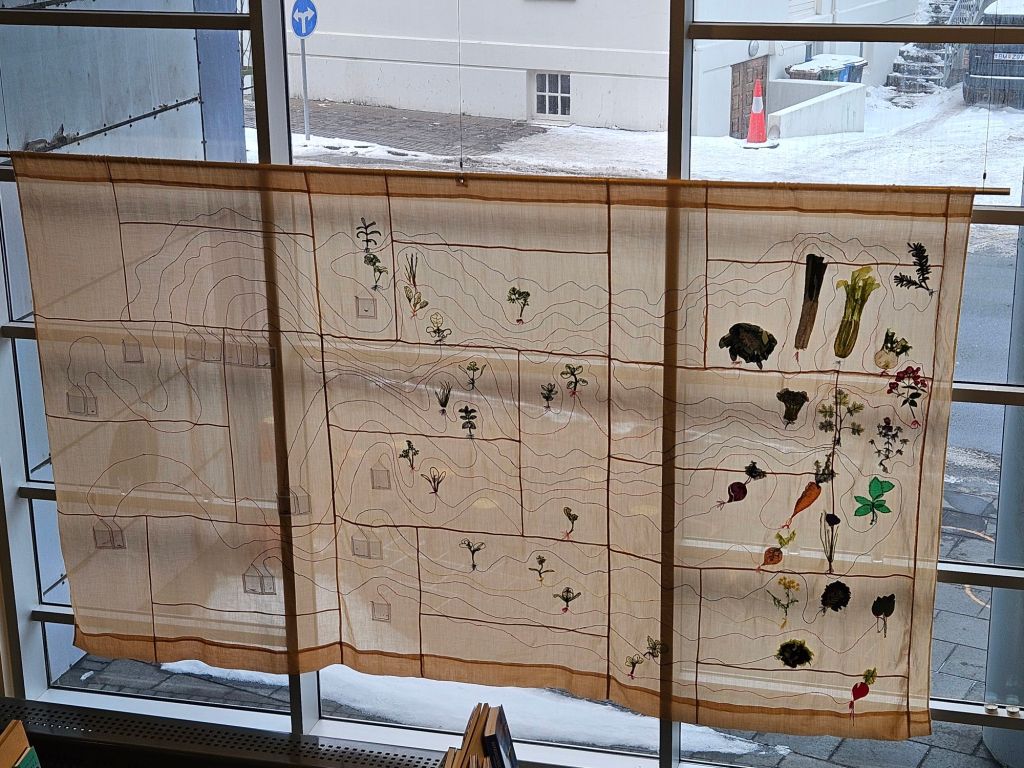
We started with the photography museum, located inside a public library. On our way in and up, we admired the seed library and a hand embroidered muslin curtain.

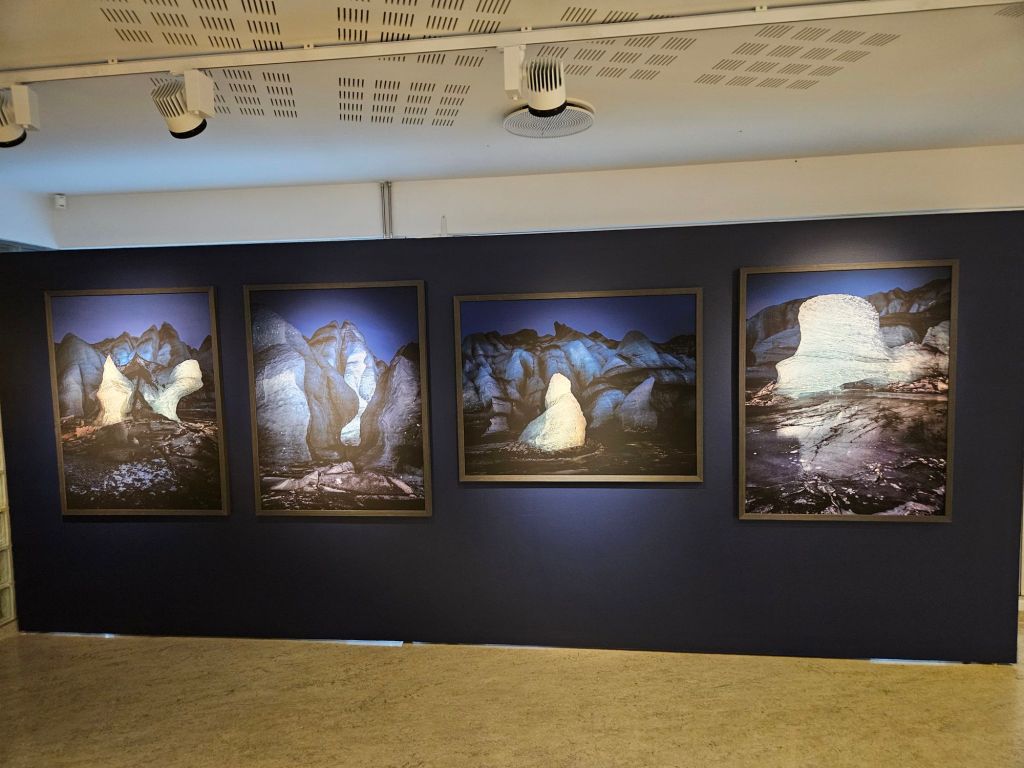
The photography museum featured stunning night time photos of glacier/ice formations. Spent some time wondering if I could magically sneak them into my carryon.

From here we made our way to the Saga Exhibit. Headphones on, we enjoyed the audio tour through the atmospheric life size dioramas of early Icelandic inhabitants.

One interesting factoid: Nearly 70% of the female population of Iceland is of Celtic heritage, while the male population is about 80% Norse. Speculation is that most of the women were originally brought here as slaves or captives.

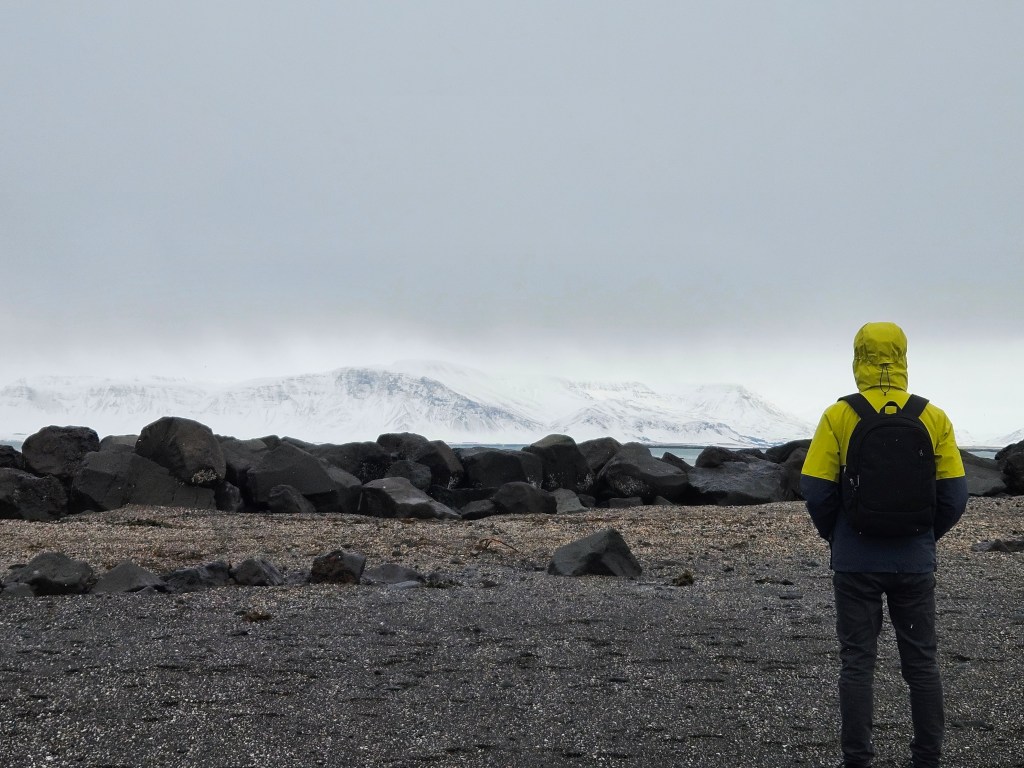
We left the exhibit with the intention of walking out to a lighthouse viewpoint. About 500 meters later we admitted defeat (see photo above, in which you can’t tell it’s gusting to 35 mph) and trudged our way to the Maritime Museum instead.

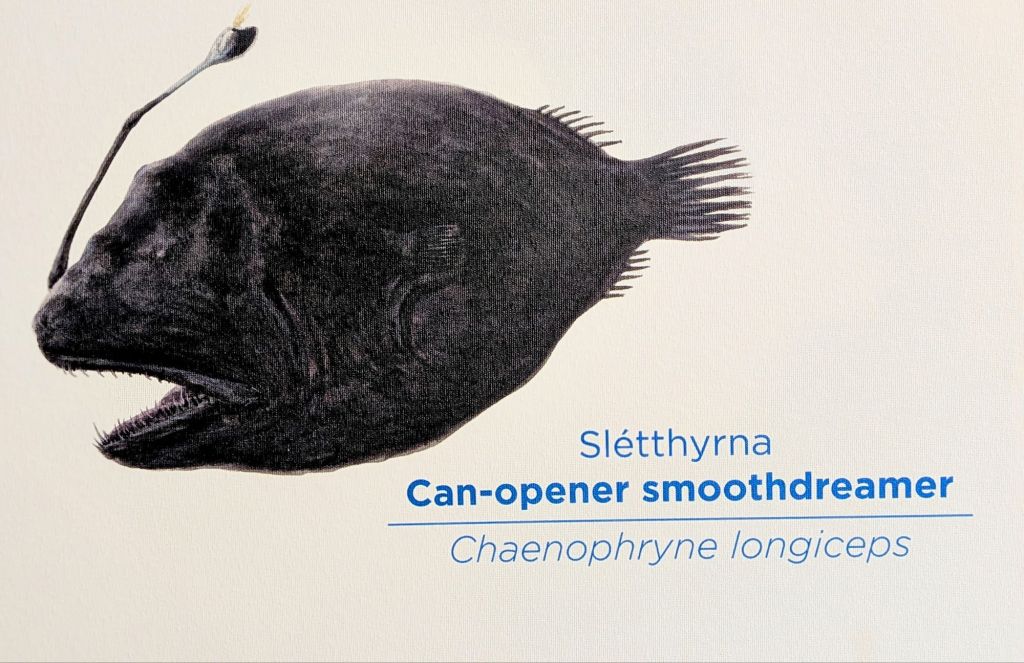
On a wall displaying all the (many many many) species of fish in these water, the prize for best name surely goes to this charmer:

A temporary exhibit traced the interesting history of a French expedition to Iceland in the 1830s. The French seem to have thought the Icelanders were noble, but savage, mainly because they lived in squalid conditions and didn’t wash often enough. At the time, leprosy was almost eradicated in Europe but still endemic here. In the best tradition of C. 19th explorers, the visitors created vast leather bound volumes of notes and scientific drawings – by far the best record of what life was like here 200 years ago.

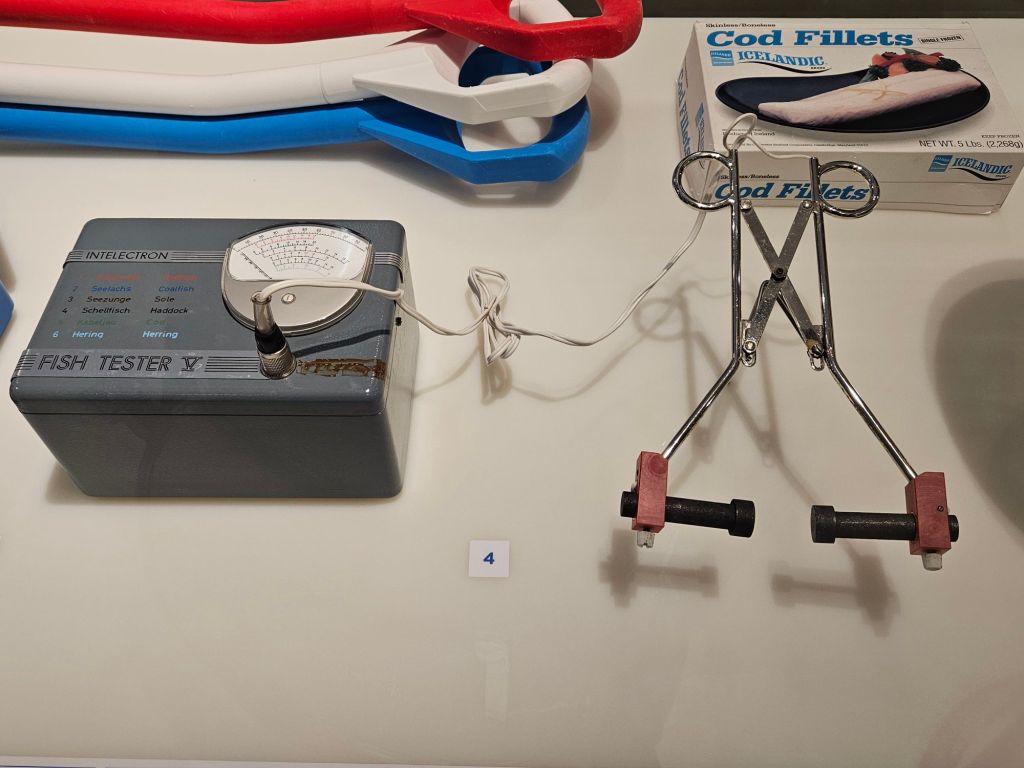
The permanent exhibit showed items related to the fishing industry in Iceland. I appreciated the historical equipment, ranging from very early handcrafted fish hooks to one of the first battery powered fish quality testers pictured below.

From there to a late lunch of very good fish and chips and then to the disappointing Phalological Museum (see the other post).

Since we could not go aurora watching, we headed to a public pool instead. Iceland has a robust swimming pool culture, though I should note that the pools were crowded with tourists (“there’s always a lot of you when the weather’s bad and your tours are canceled” said the surprisingly friendly ticket taker.)

After making our way through the locker rooms (“full shower, no suit on until you’re clean”), we scampered across the cold outdoor pool deck to squeeze into the mid-heat pool. Ahhh. Once sufficiently warmed we made our way further along the deck and up a flight of stairs to the rooftop pool. Hotter, and double ahh. From there a brief dip in the hottest pool, also roof top, but that was much too hot for us. Back downstairs to the “cool” pool and then we took our limp noodle selves home to bed.

No photos as cameras and phones are strictly prohibited.

Family and theatre

I spent the morning cuddling Isobel’s baby Hero while R gave Isobel a lesson in bread making.

After a peaceful lunch we took a walk along the river (tide was very high and it was spilling over the road in places) then headed out to the theatre.

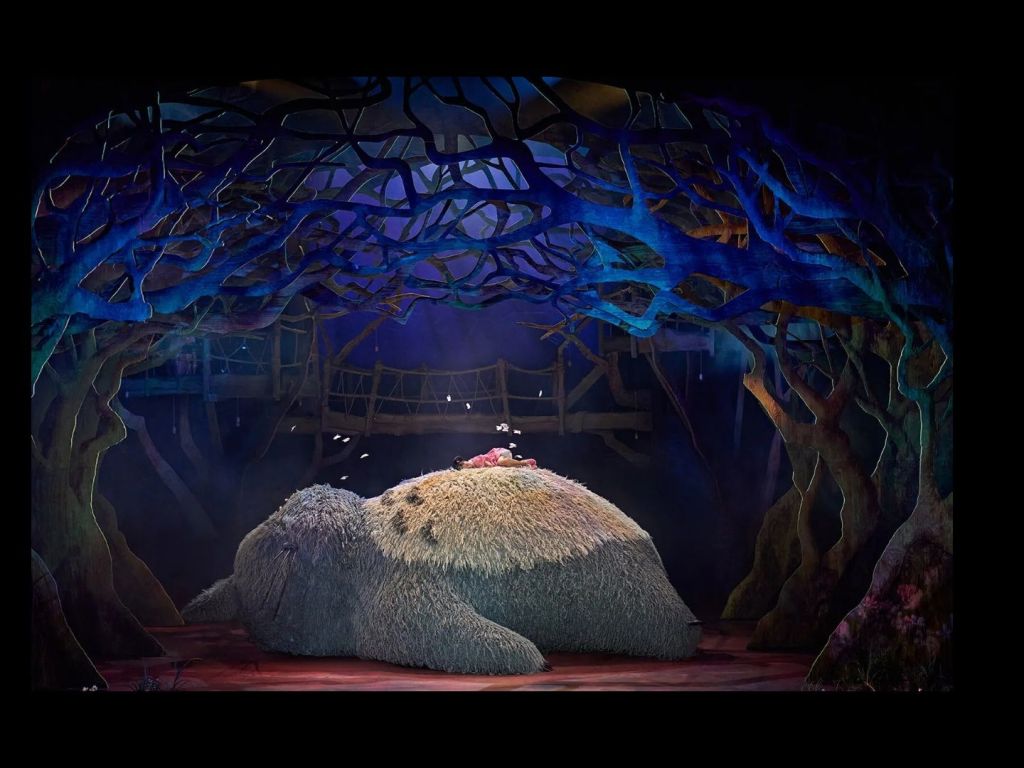
At Clarissa’s suggestion we went to My Neighbour Totoro. So glad to have seen it. The plot was a bit thin, but the staging, puppetry and effects were magical. Puppets, ranging from tiny soot sprites manipulated in groups to form flying murmurations to a 2-story tall Totoro snoring gently on his back, were worked by visible teams of black clad puppeteers.

An actor perched atop a puppet. Screenshot from the show’s website.

Even the family’s house was like a puppet, constantly spinning and reforming itself as the play progressed. Musicians were ranged around the set in platforms in the trees, and the trees themselves slid in and out of stage frame depending on how deep the action was in the forest. So very clever and imaginative.

R here:  This is based on the famous Hayao Miyazaki / Studio Ghibli animated film of 1988. Never seen it, now must. I loved Totoro’s “voice,” which used some notes so deep that they were more like a feeling in the chest than a sound but also many high, slightly querulous squeaks – expressive in the manner of whale song. Clarissa has seen an earlier stage version that she said was darker and more complex. The happy-ever-after ending we saw fits with the idea that the vast but benevolent wood spirit Totoro is an embodiment of hope. Not sure how that works if the ending isn’t a happy one.

More food

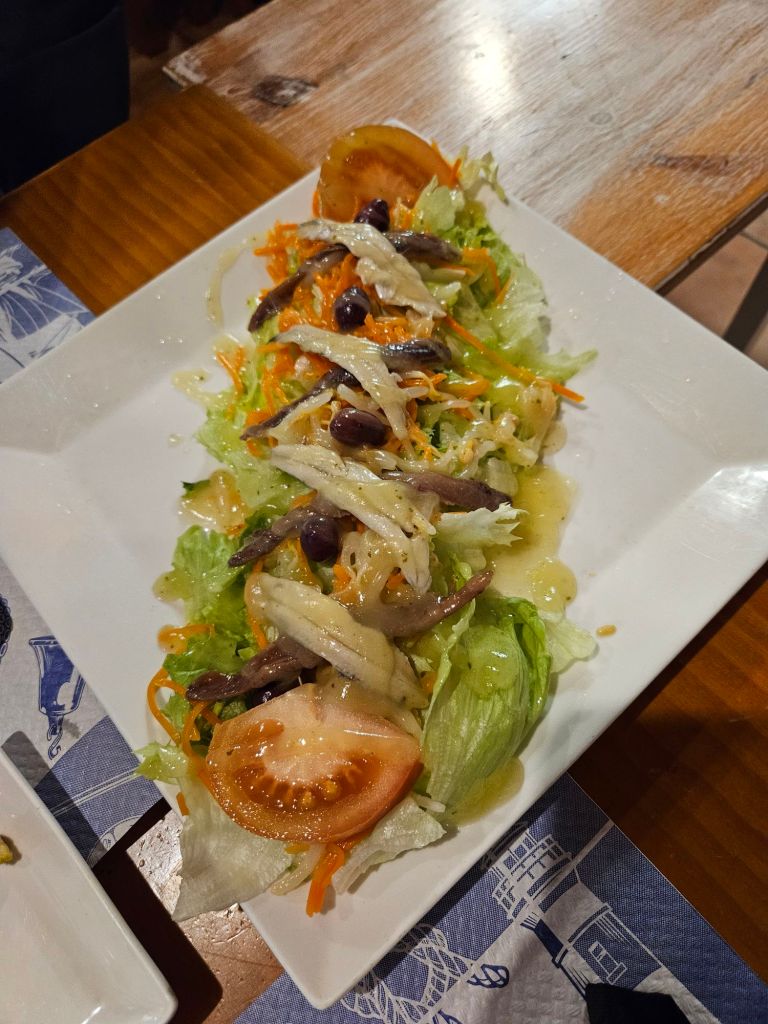
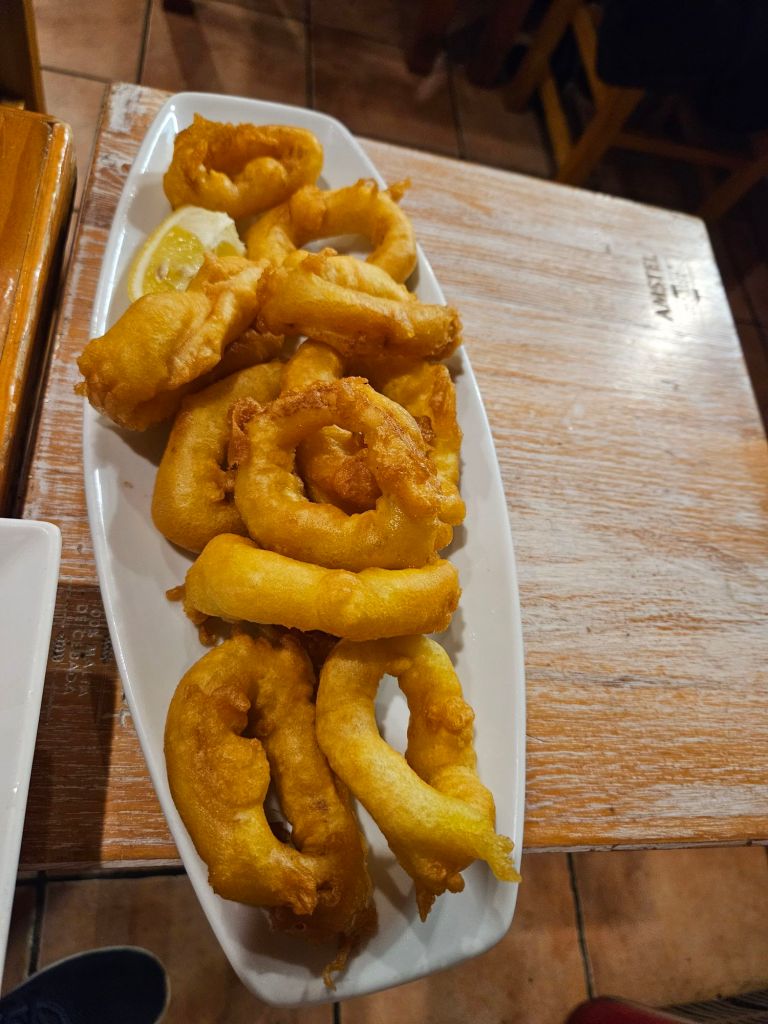
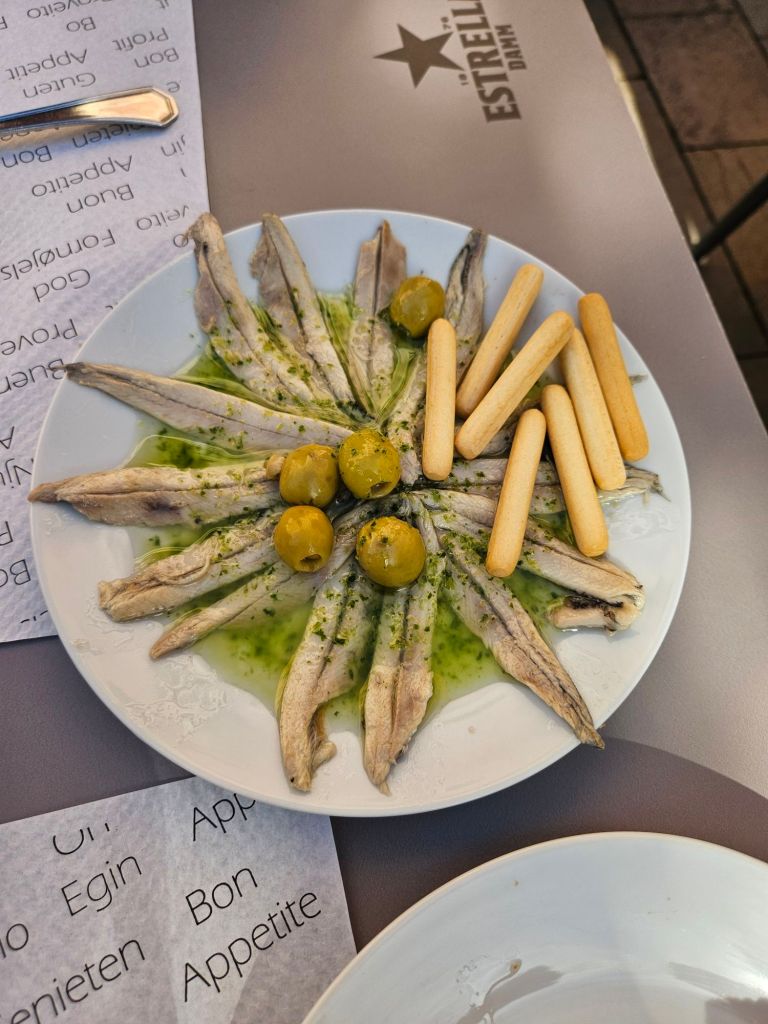
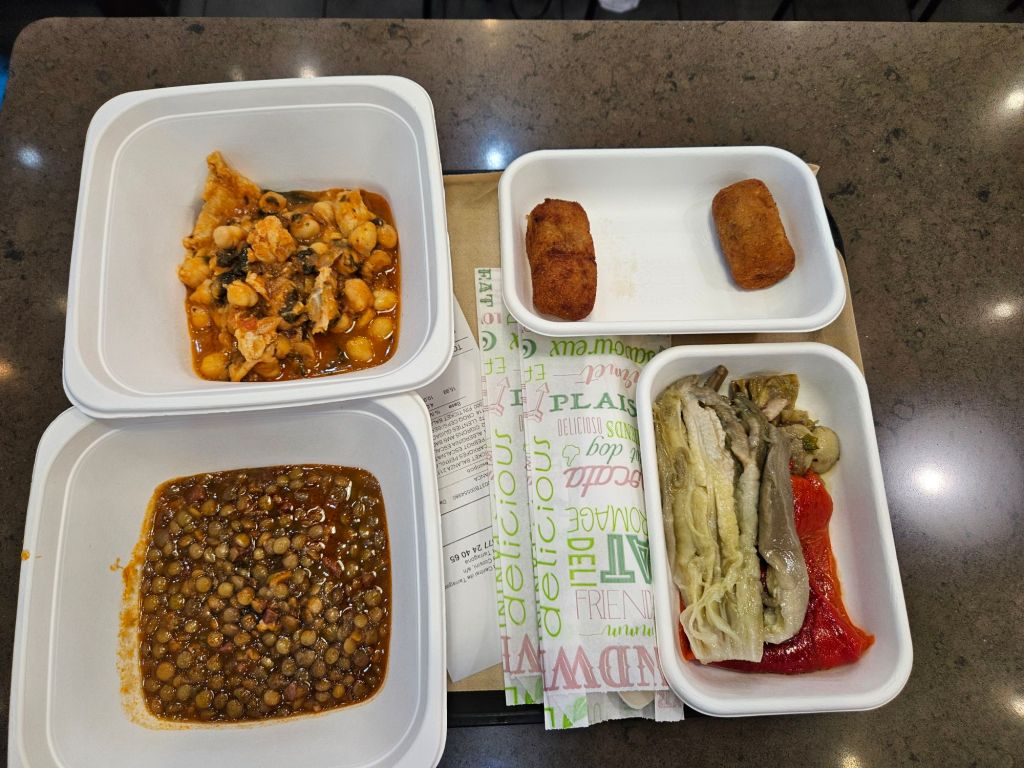
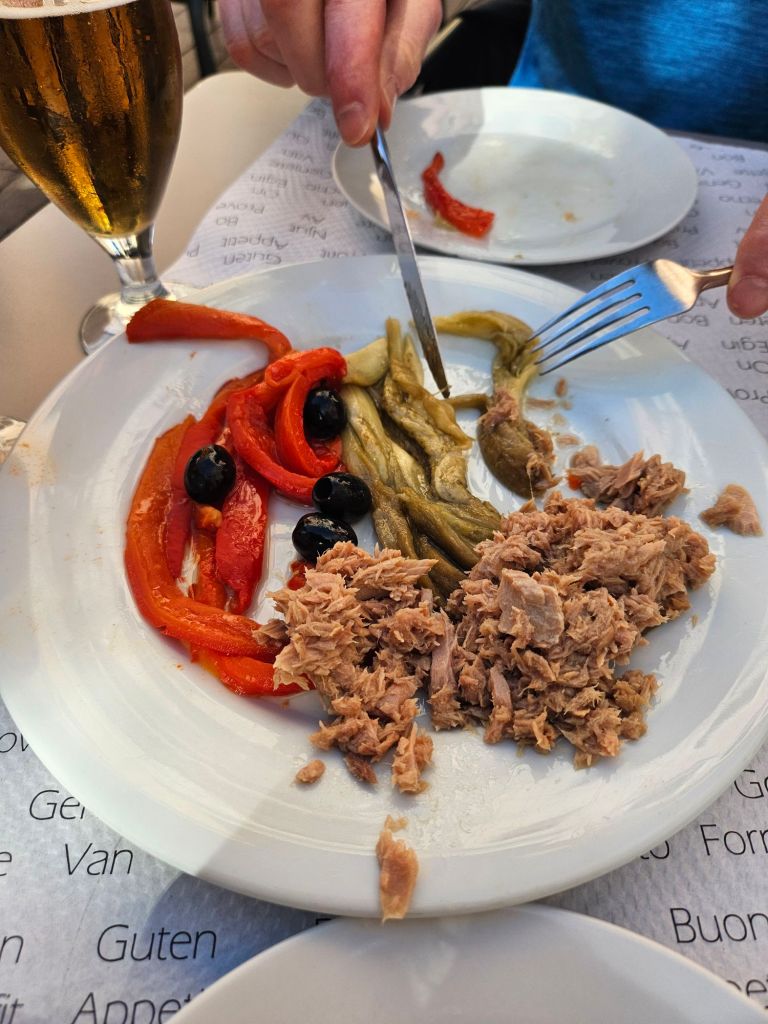
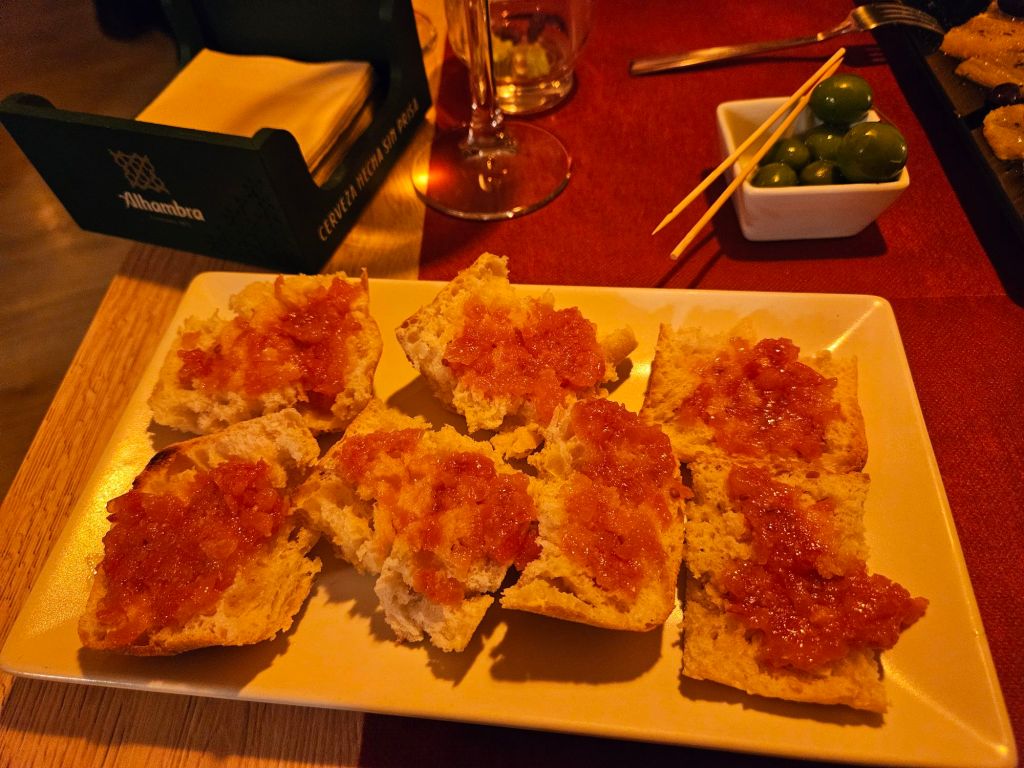
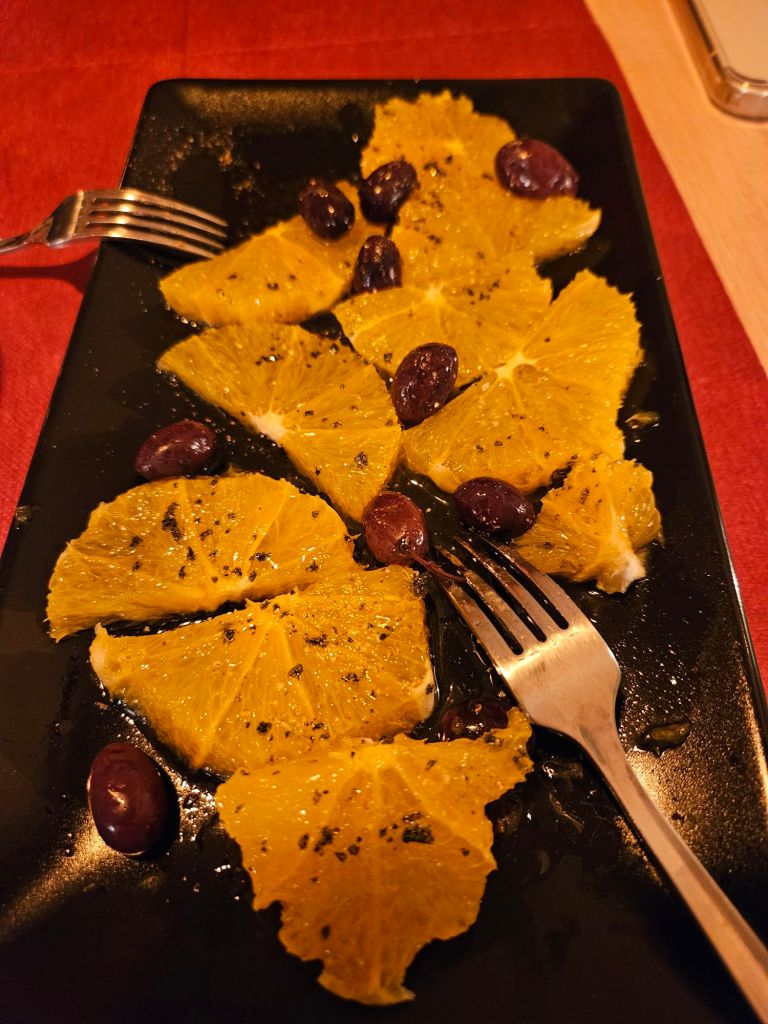
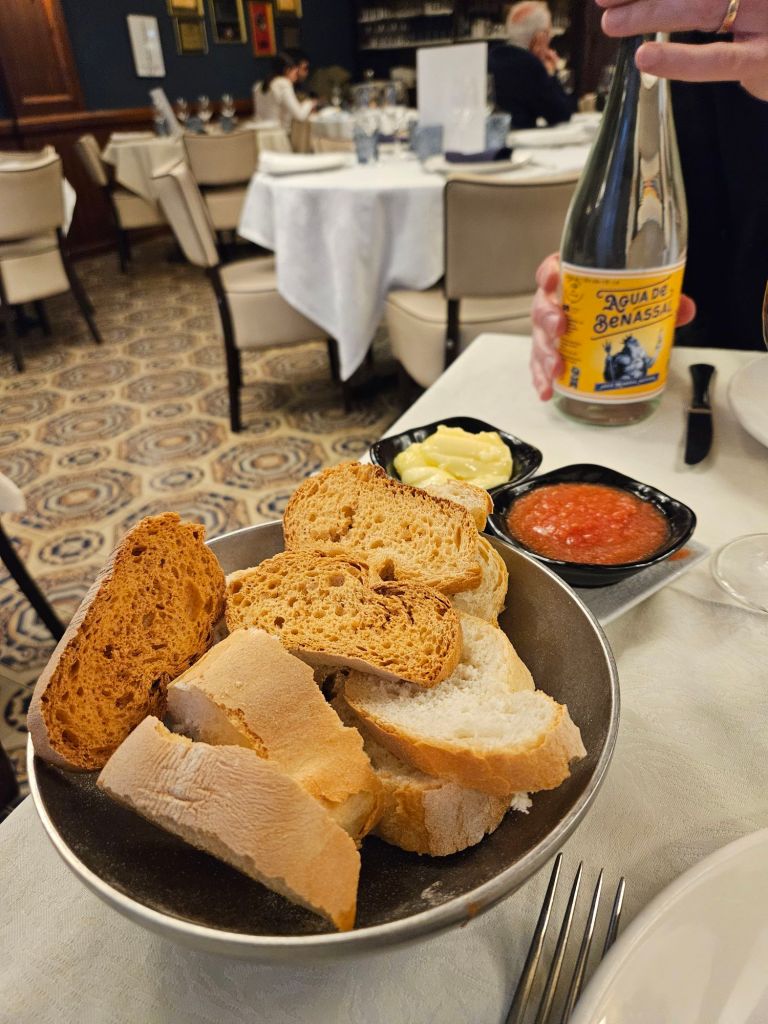
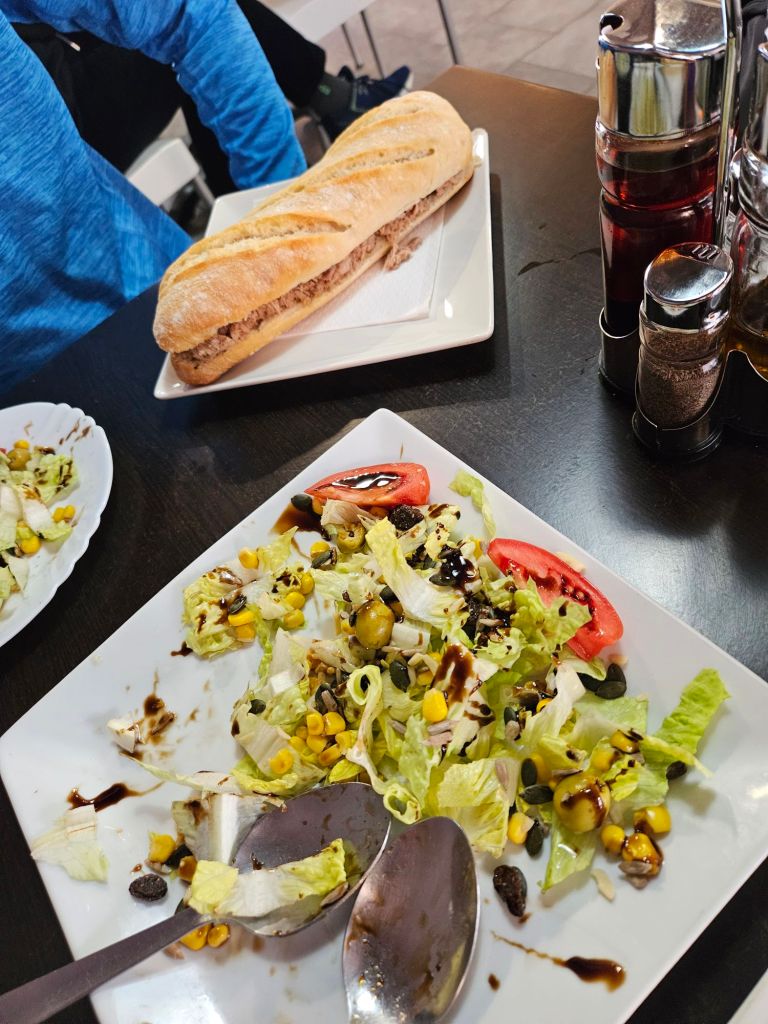
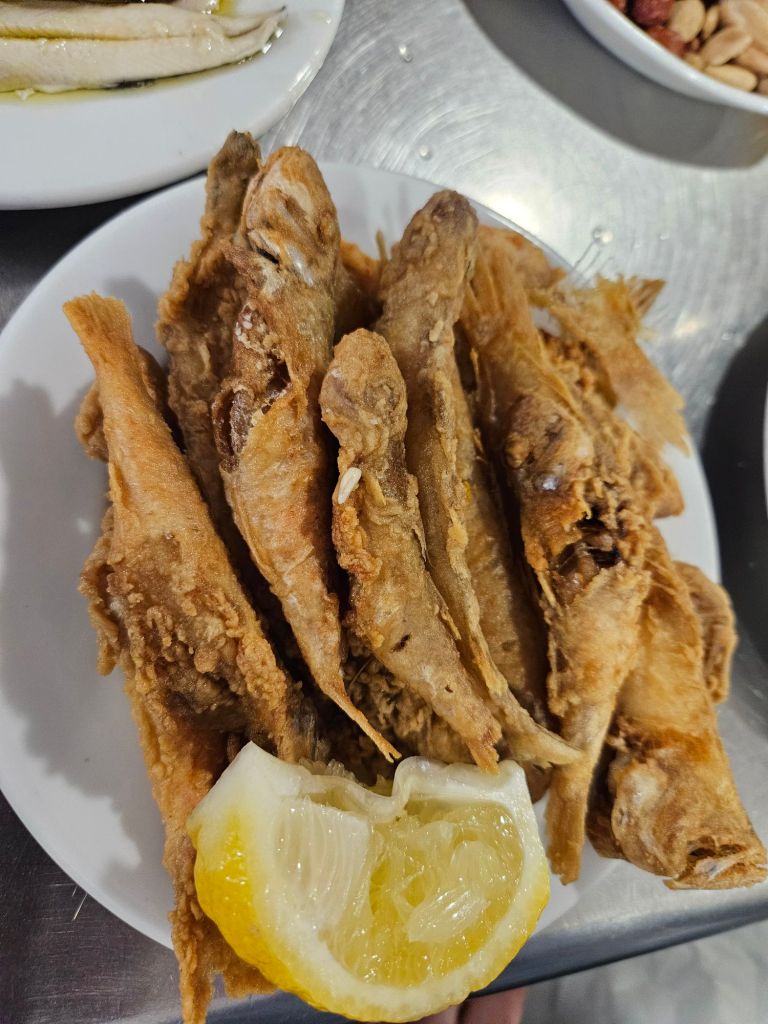
Eating here has been interesting. It’s possible to eat quite well, though not as cheaply as we could two years ago (no doubt a combo of inflation and bigger cities/more touristy areas). But overall we’ve found the food to be oilier, heavier, meatier, and less vegetably than either of us would otherwise choose.

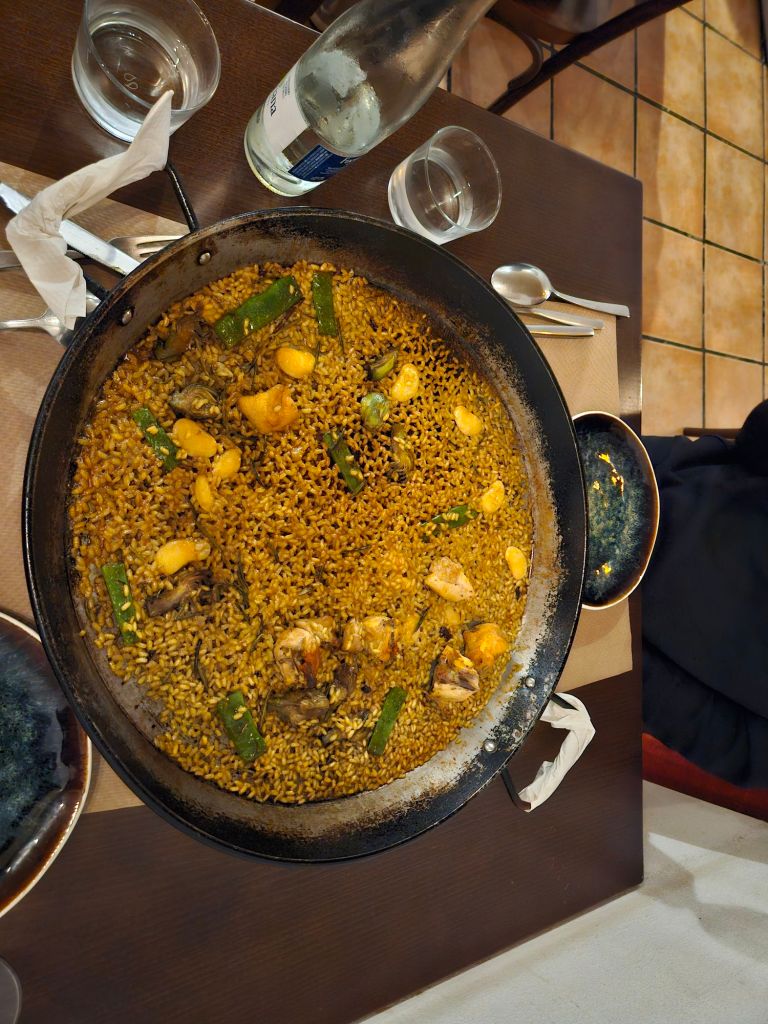
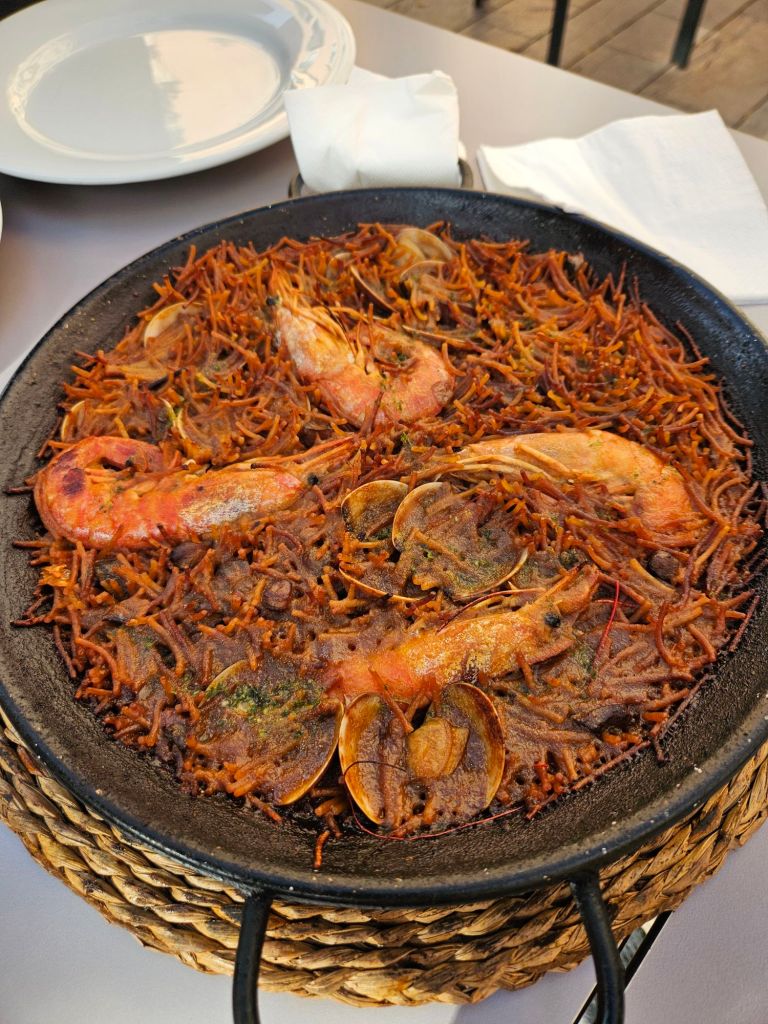
It’s perhaps heresy to admit that Valencian paella is…ok. The olive oil used here is miles better than what we get at home, but I found it hard to enjoy when it thickly coated a thin layer of heavily salted rice dotted with bits of seafood, veg, and meat. When I say dotted, I do mean dotted. A paella for two might include 4 slices of artichoke, 6 fava beans, and 4 strips of roasted red pepper, plus maybe 10 protein tidbits. With a seafood paella you may get 2 shrimp plus assorted fish, calamari or cuttlefish pieces, with a few rabbit, pork or chicken nuggets.

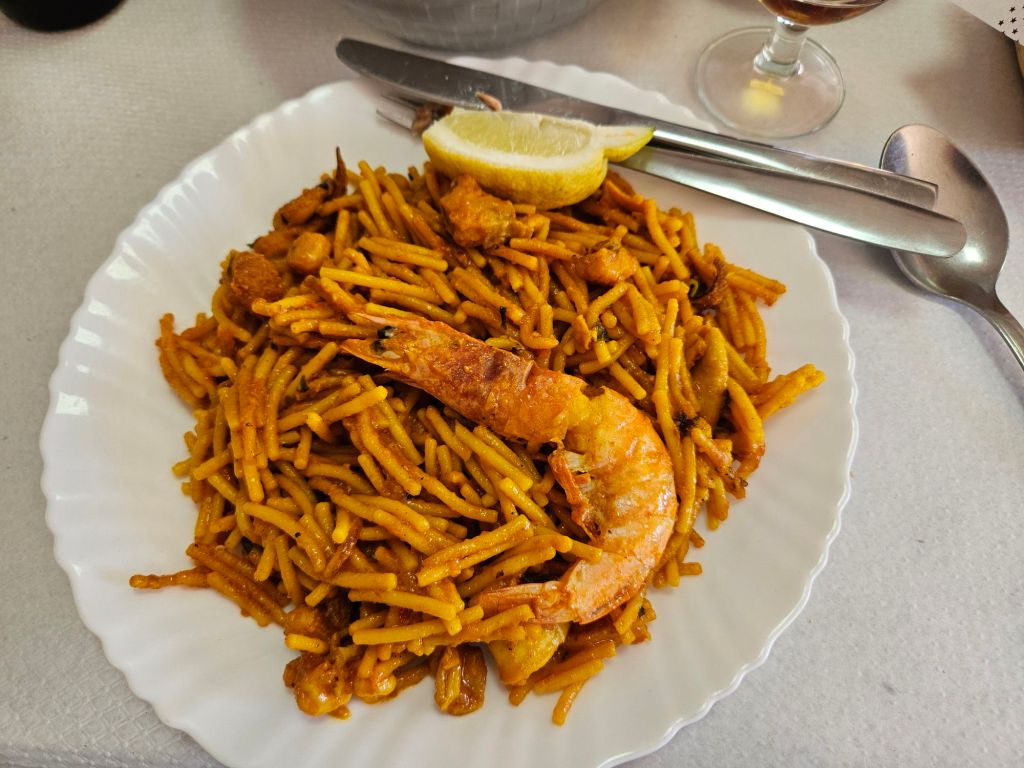
Its not all about paella. There are other arroz dishes (wet or dry styles) and fideo (or fidueo or fideuado) depending on where you eat it. Fidueo, however you spell it, is essentially paella made with short noodle pieces (spaghetti or angel hair). Same issues apply.

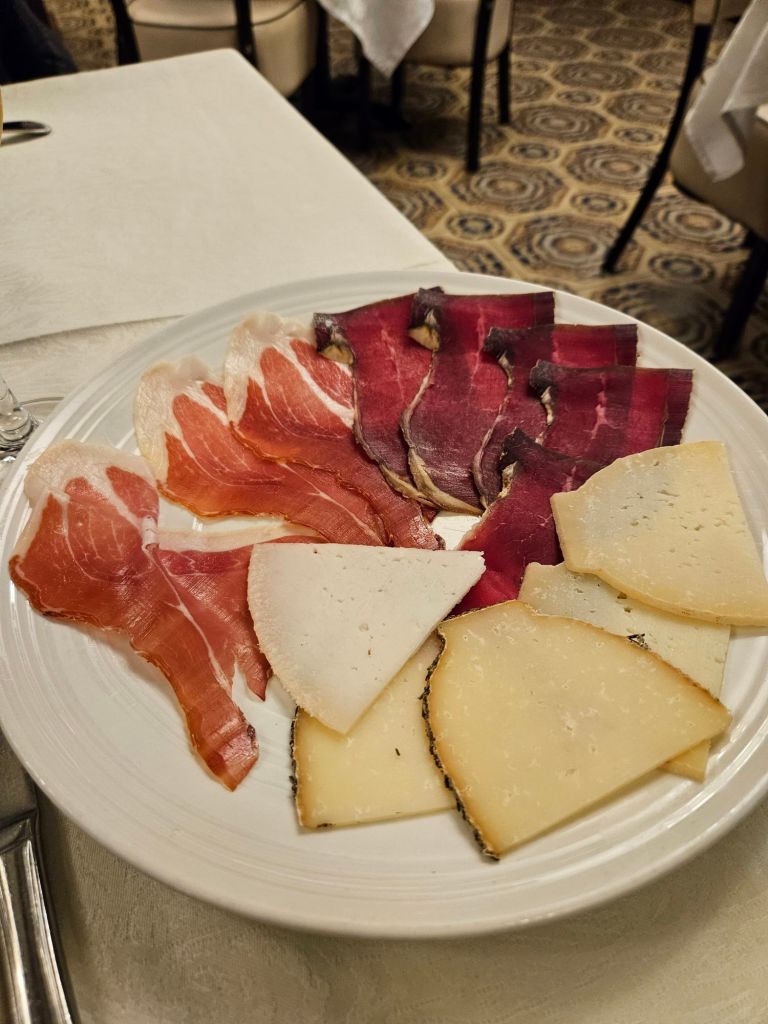
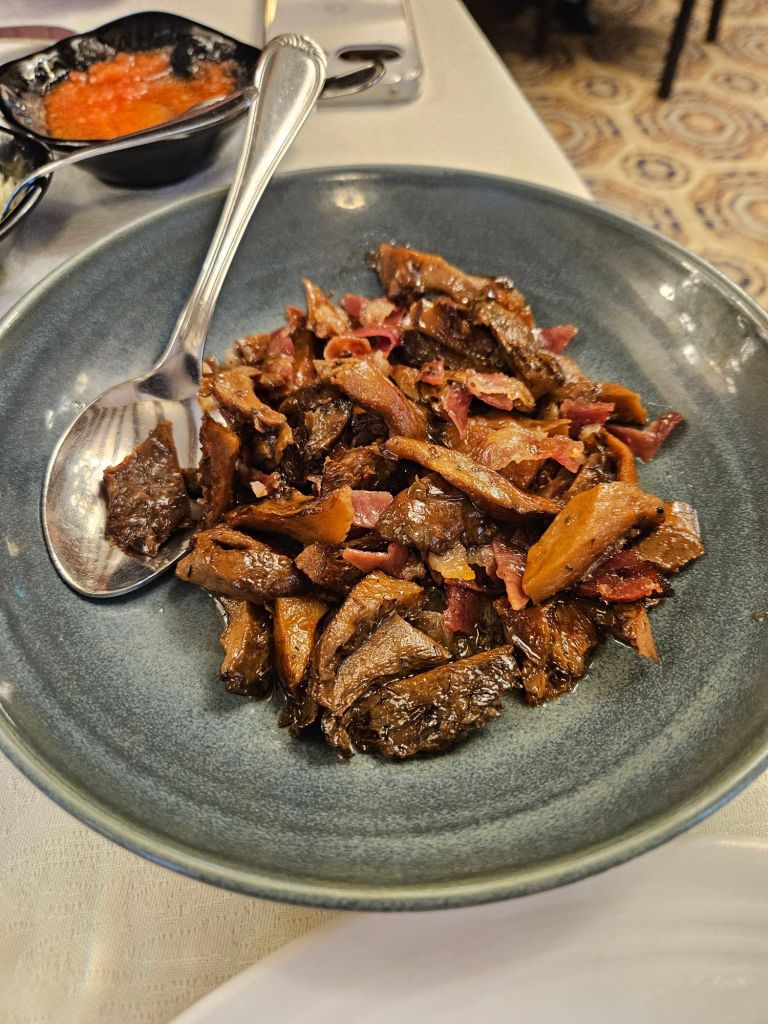
Spain is known for its jamon, and it is pretty magical. Intense, though, and expensive, so you only eat a few slices at a time and its a special treat. In Morella we encountered a plate of mixed elaboraciones: in the mountains, they have access to beef and goat as well as pig, and cure them all beautifully. (Still, though, rich and intense and meaty. I was more ok with them than R.)

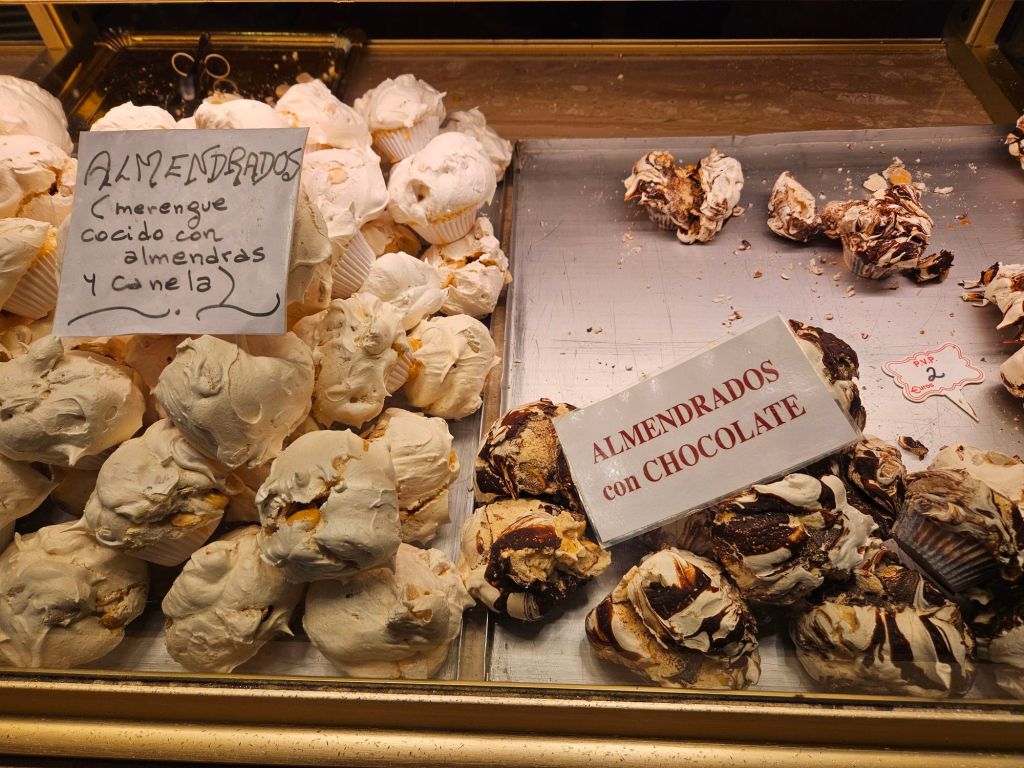
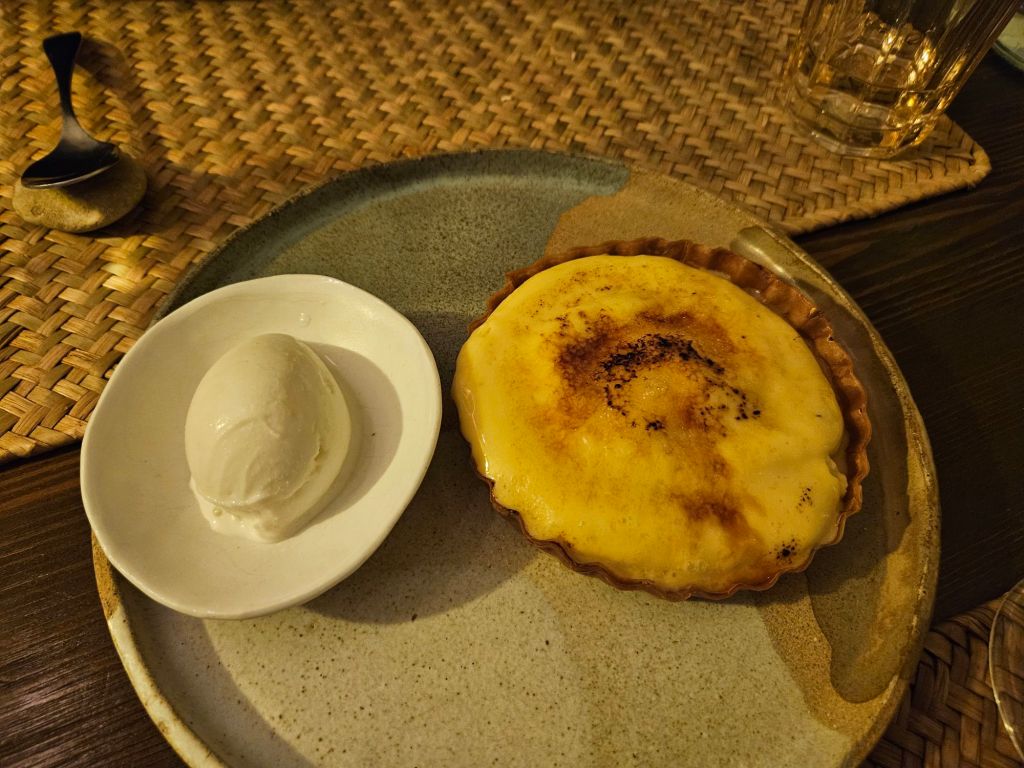
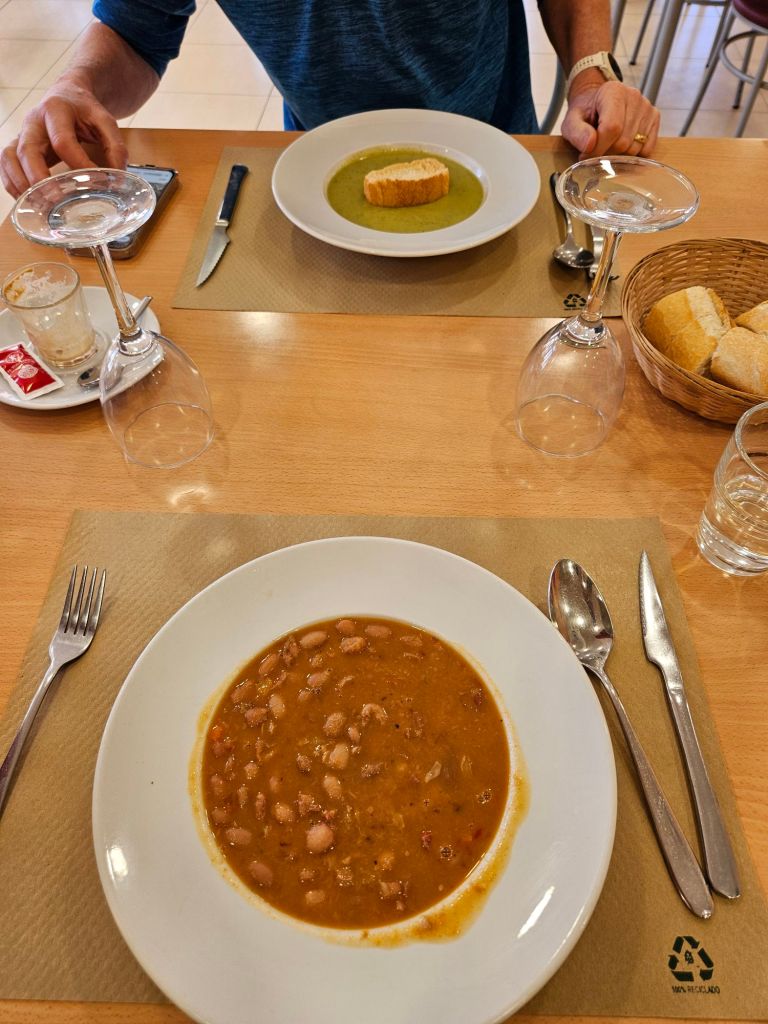
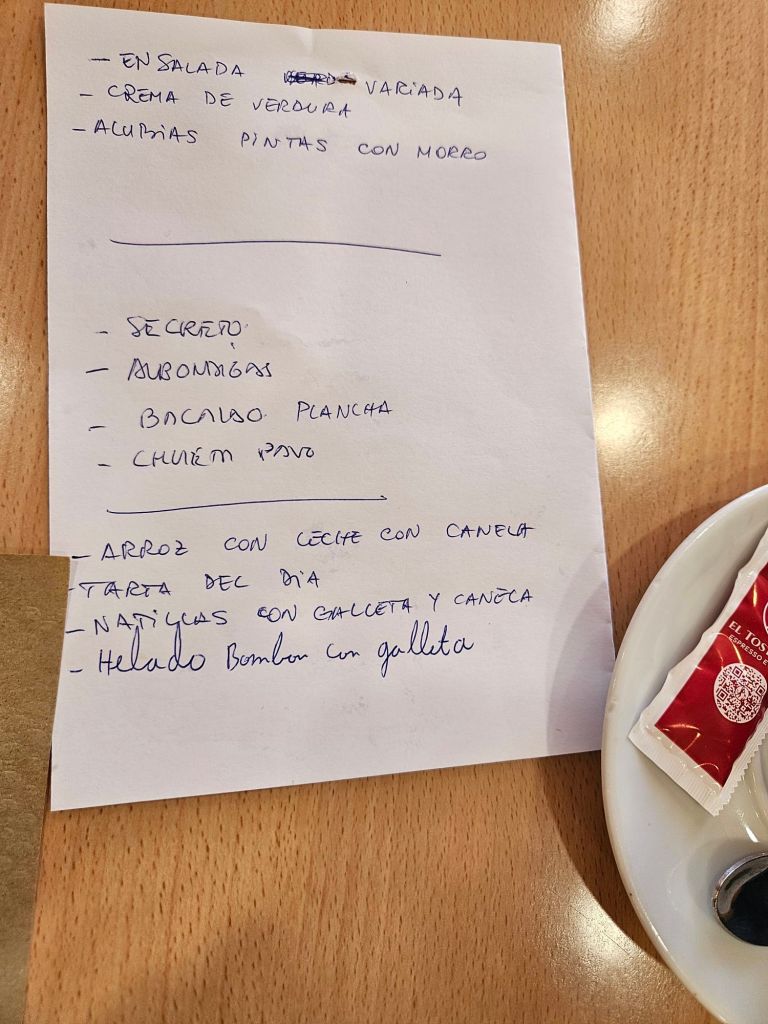
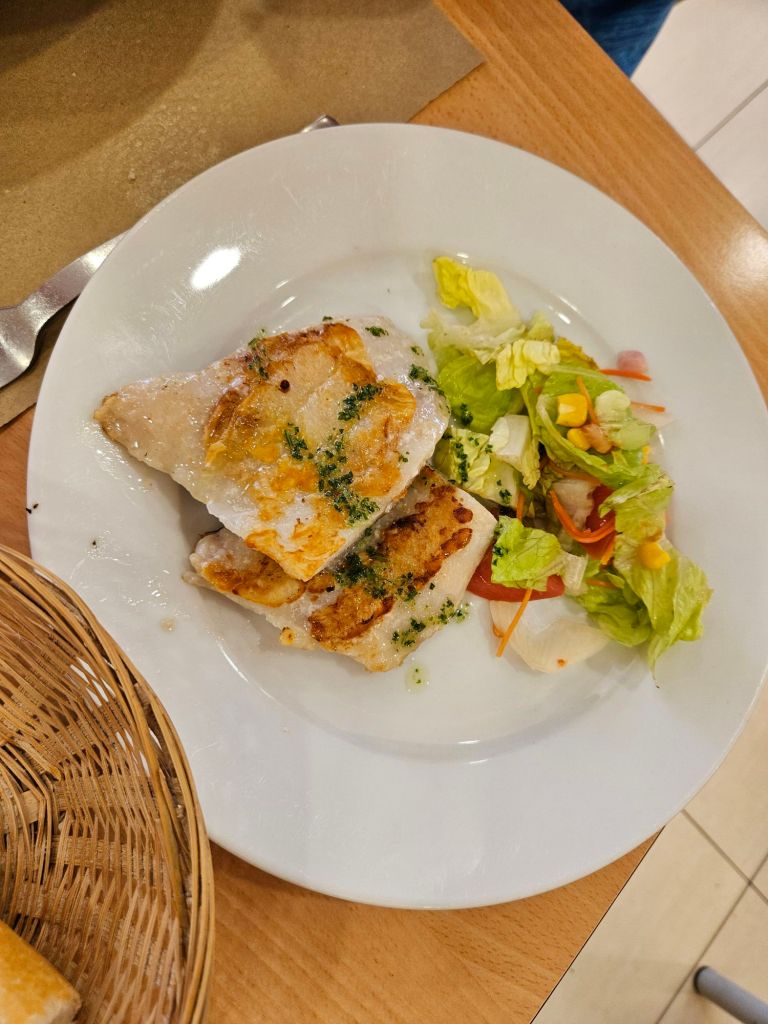
Because we ate a “menu del dia” most lunches, we regularly ate dessert (included in the price). Mostly they were familiar sweets, but cuajada was new to us. It’s essentially a plain milk pudding served chilled. I enjoyed the light sweetness of it; R preferred cheesecake. I also tested a number of tiramisus.

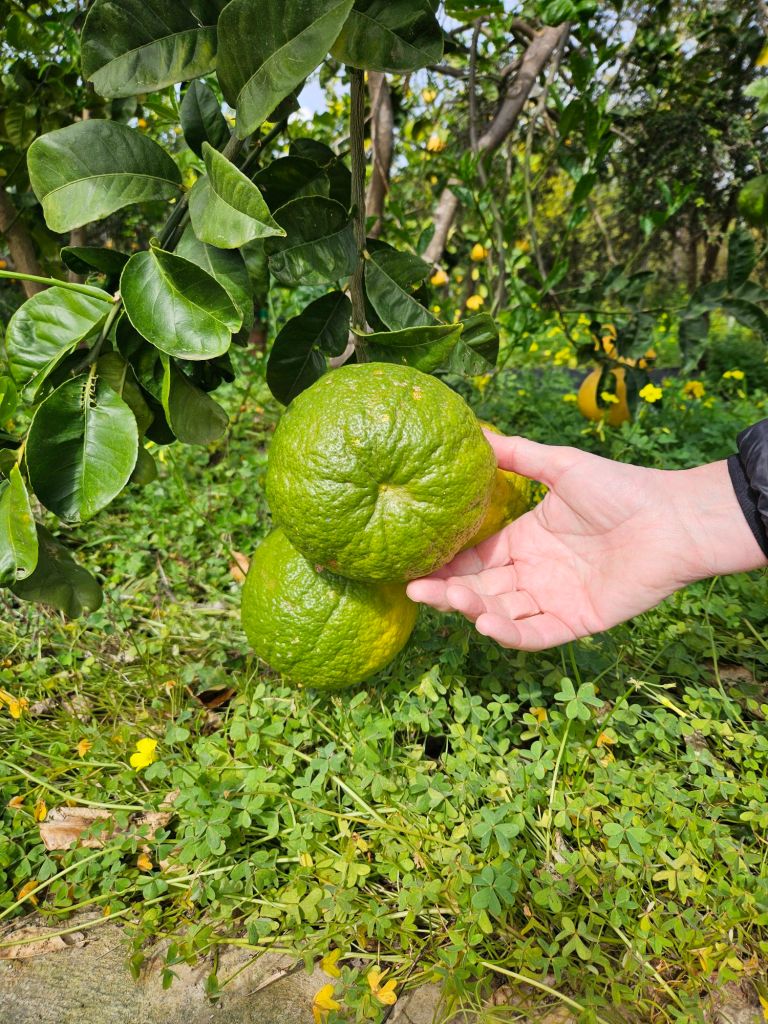
Citrus, citrus, citrus!

A few months before we left, I read an article about the Todoli Citrus Foundation in Spain and immediately resolved to visit. R had proposed a more northern driving route, but I insisted on a stop in Gandia. So glad I did.

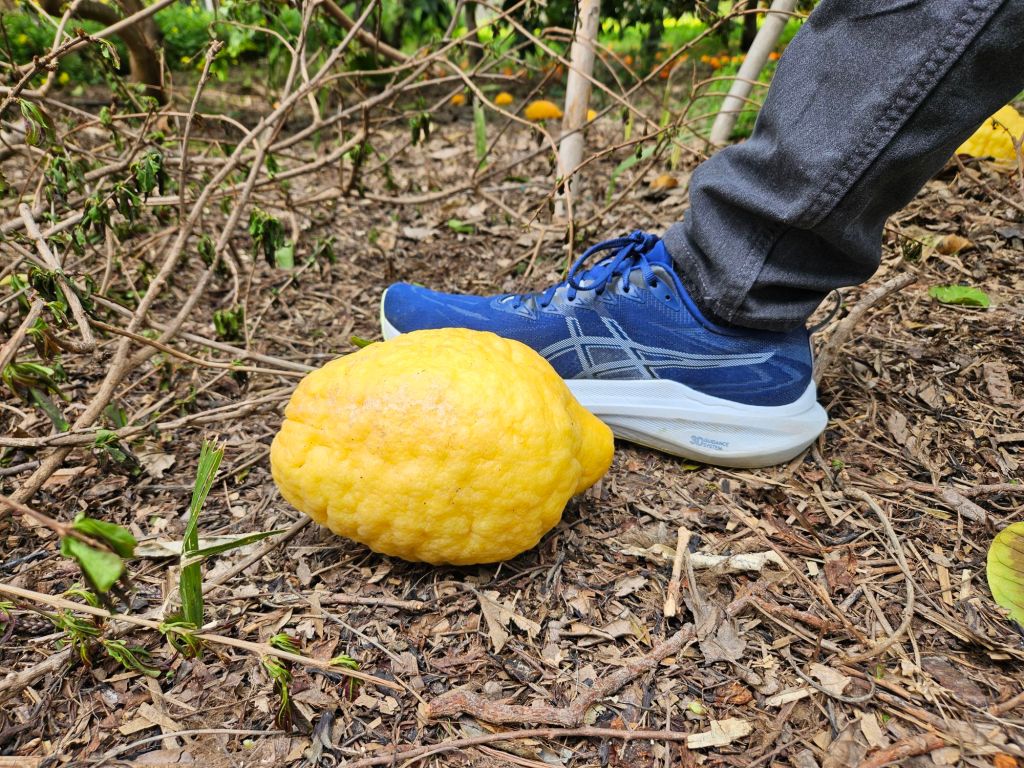
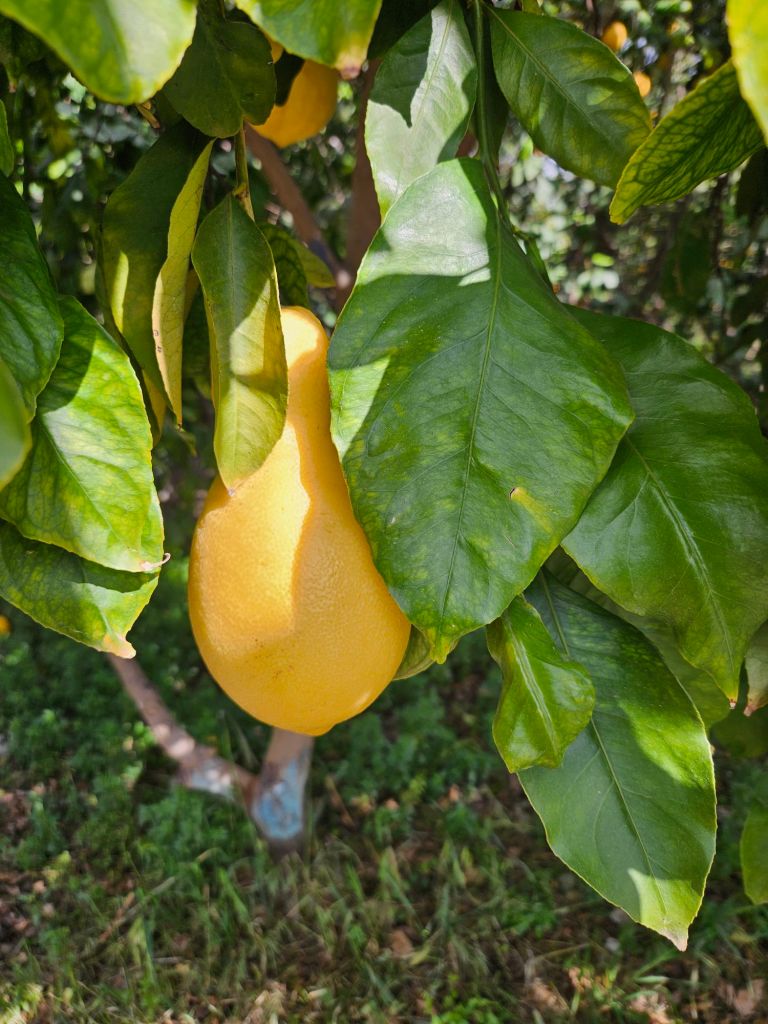
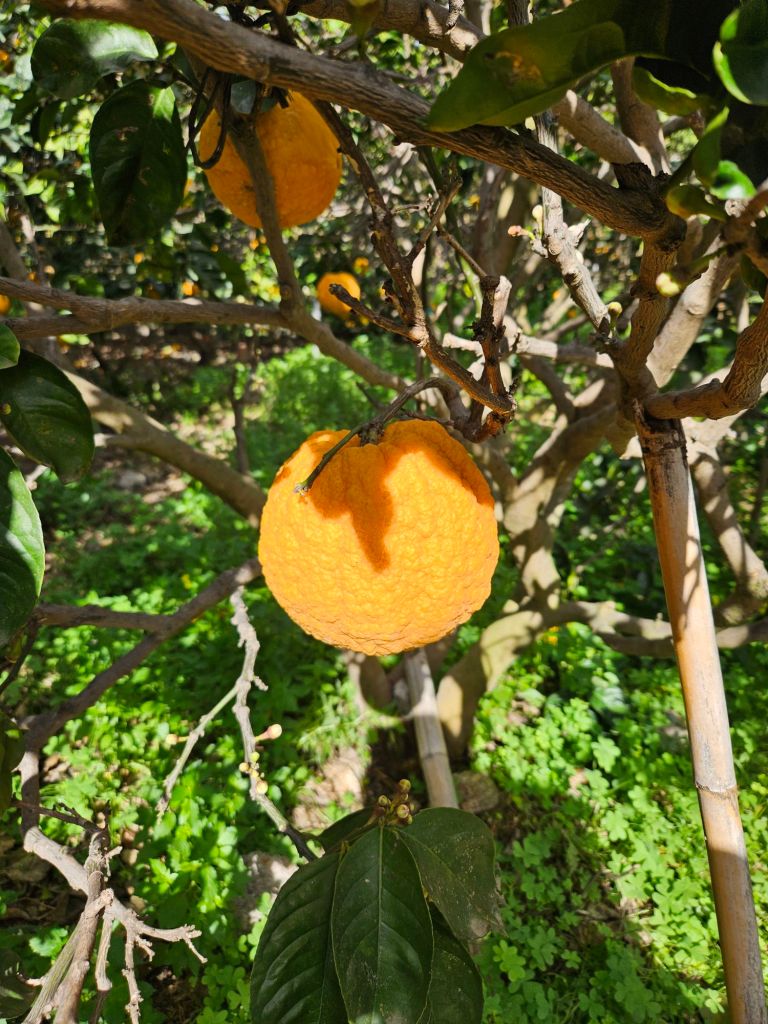
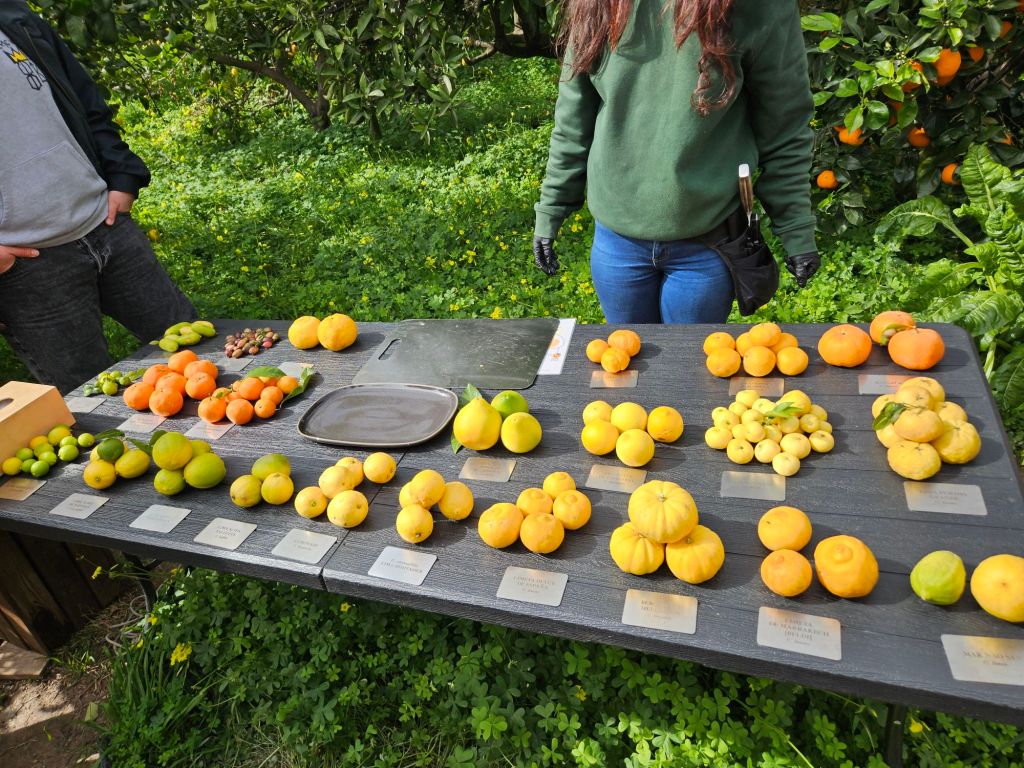
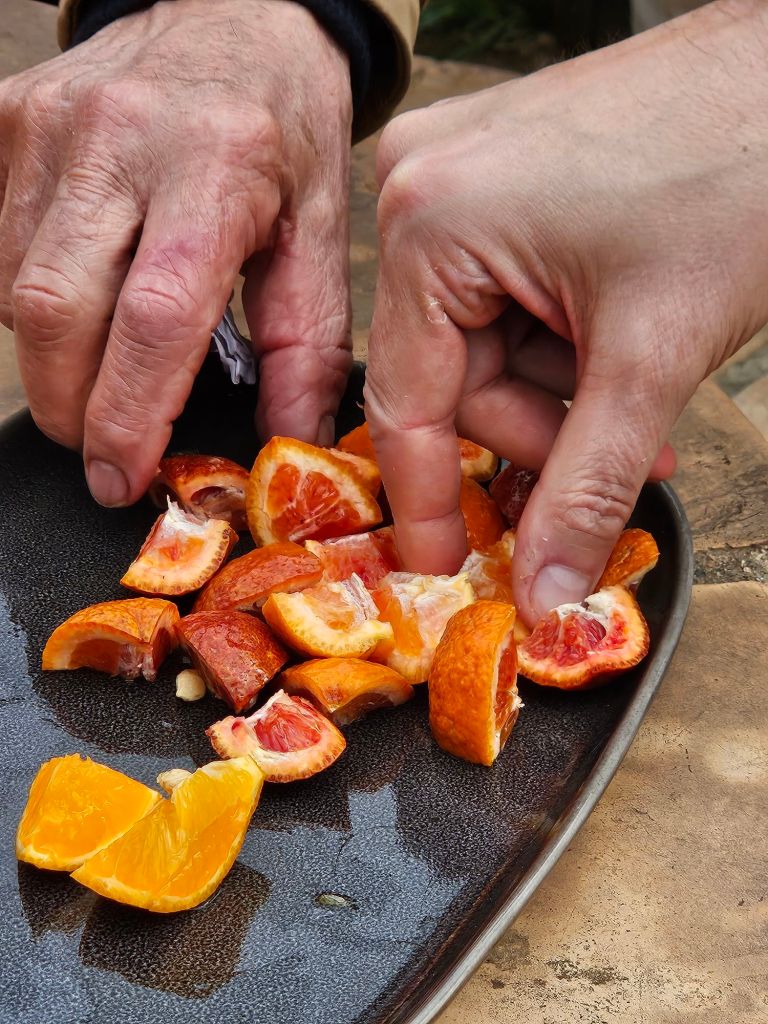
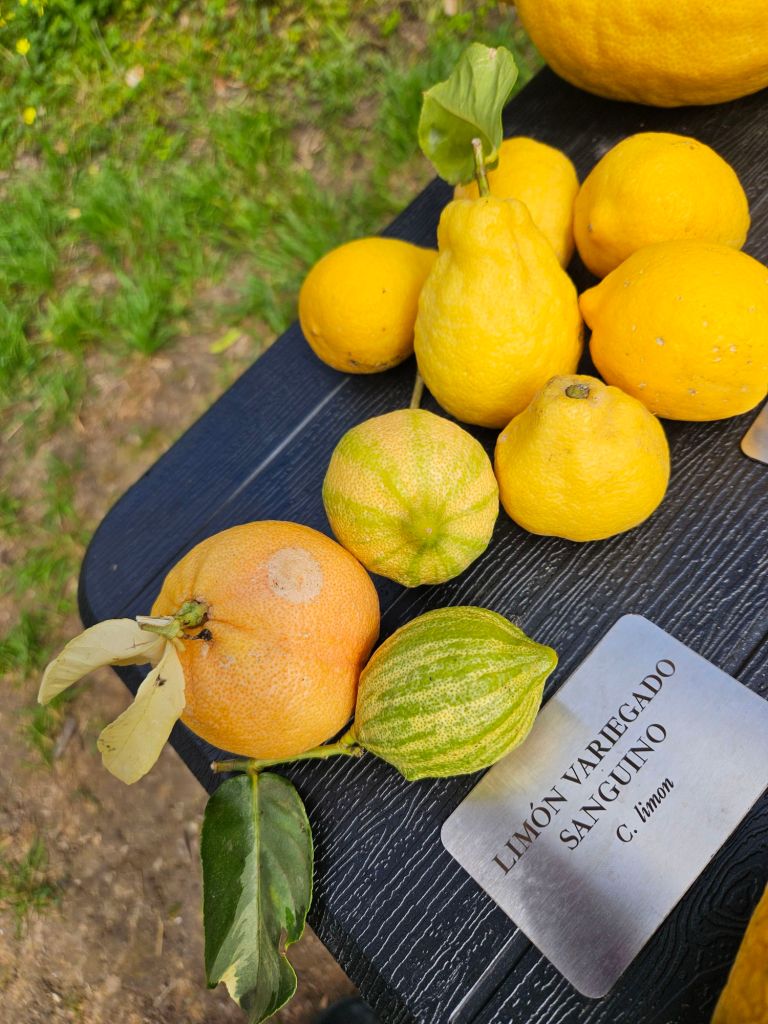
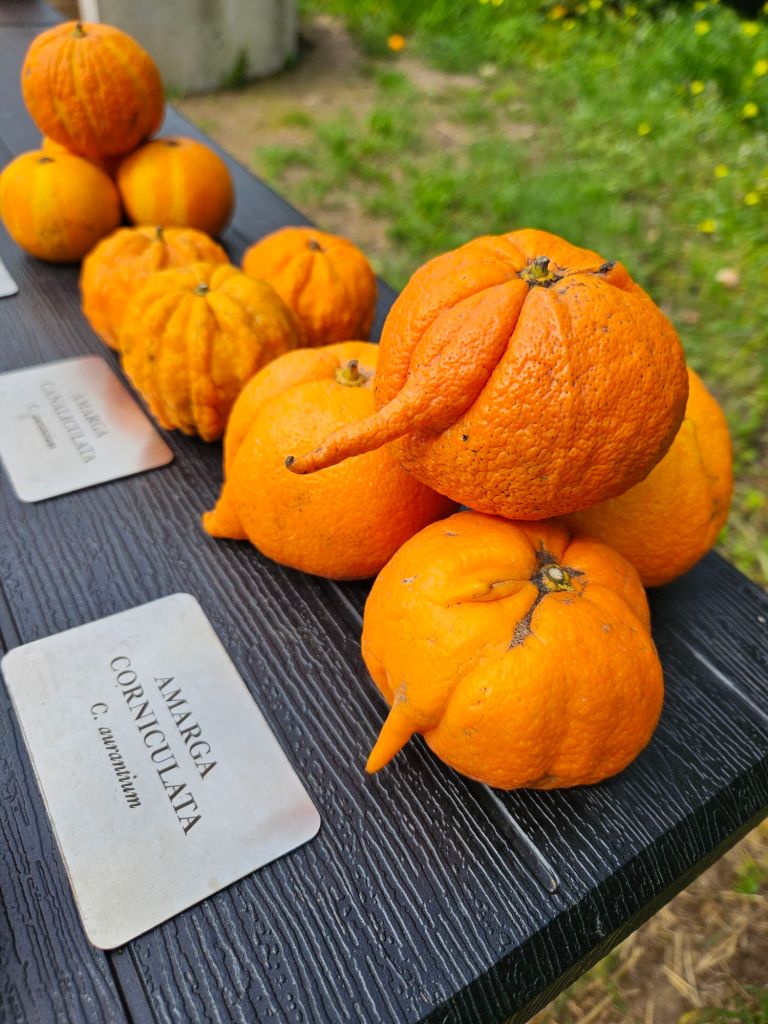
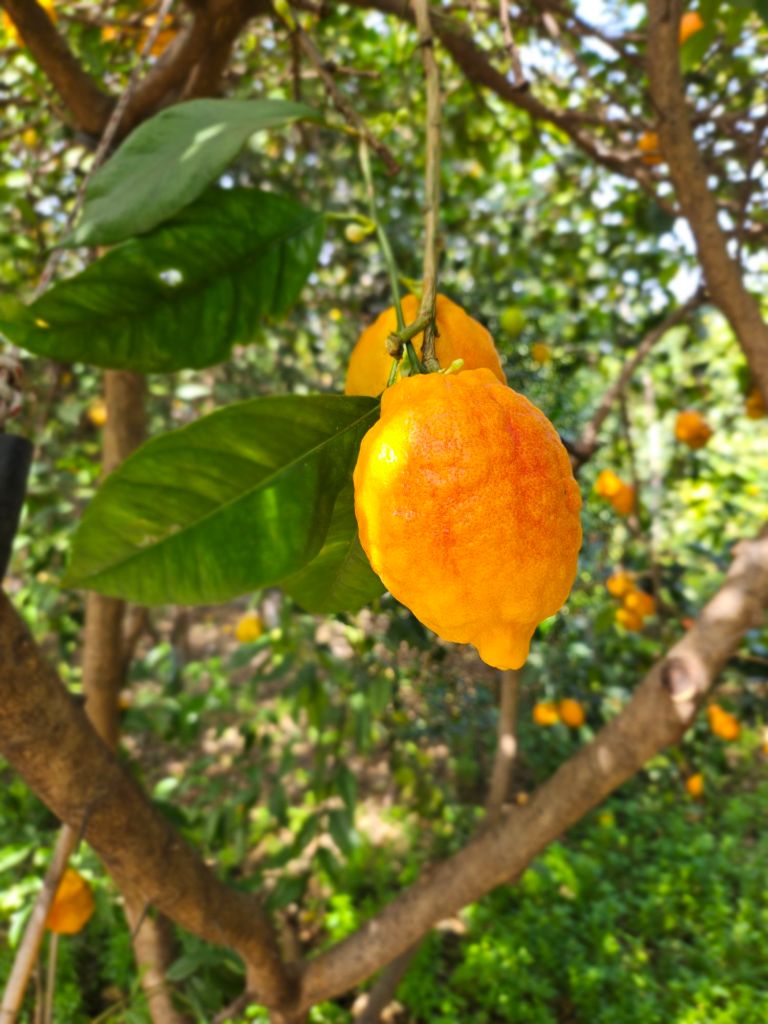
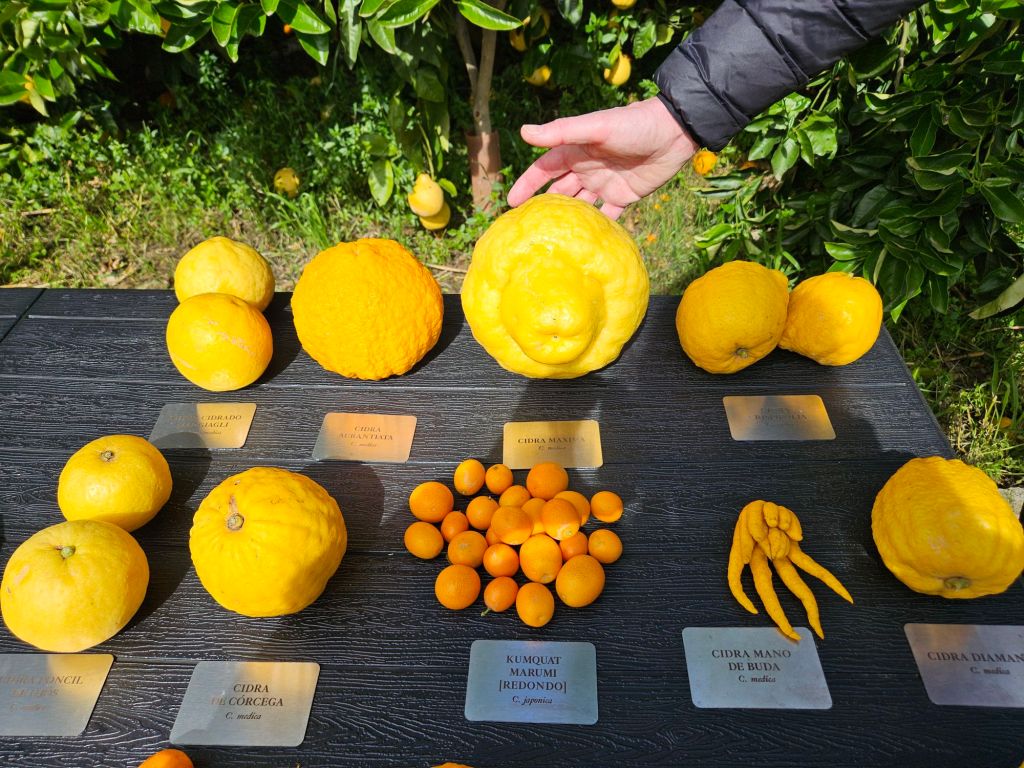
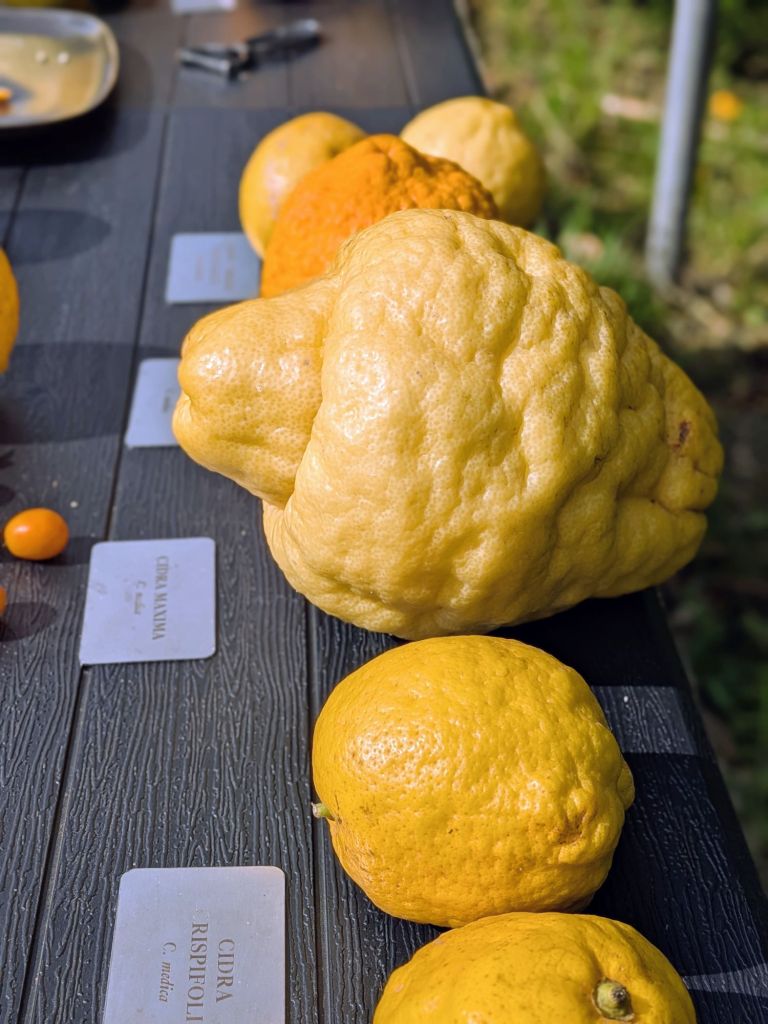
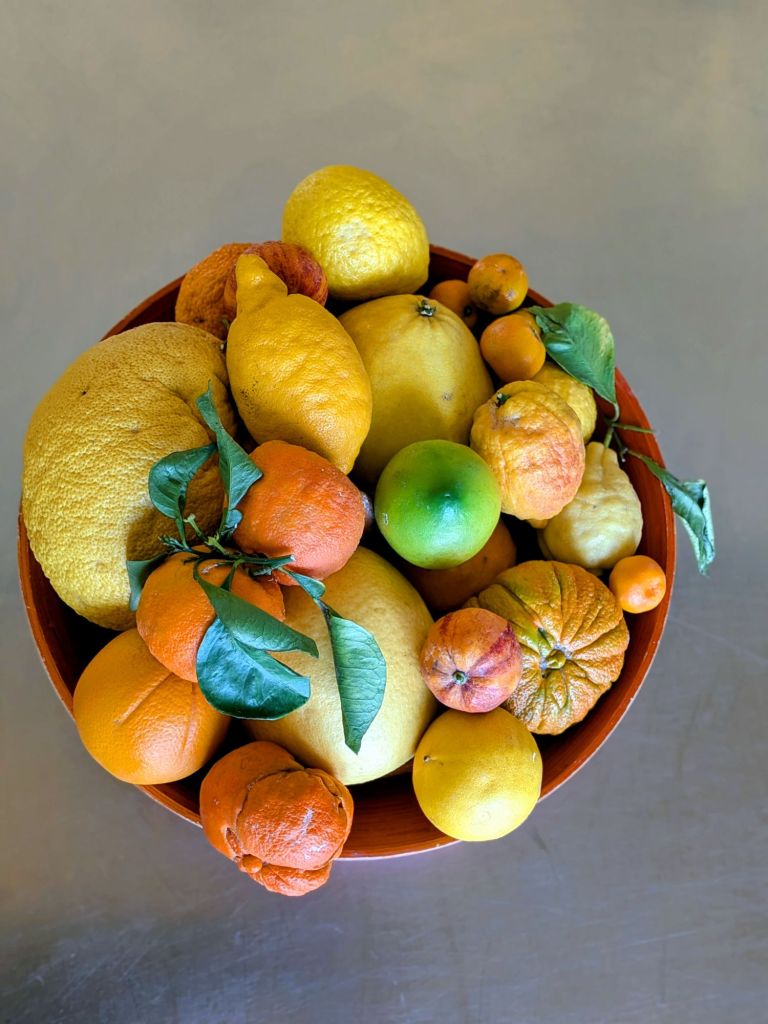
The Foundation grows over 500 varieties of citrus, preserving antique varieties, testing climate resilience, and hybridizing new varieties. On the tour you get some explanation (in Spanish, but we followed mostly) and–the best part–the opportunity to try some 15-20 varieties of citrus.

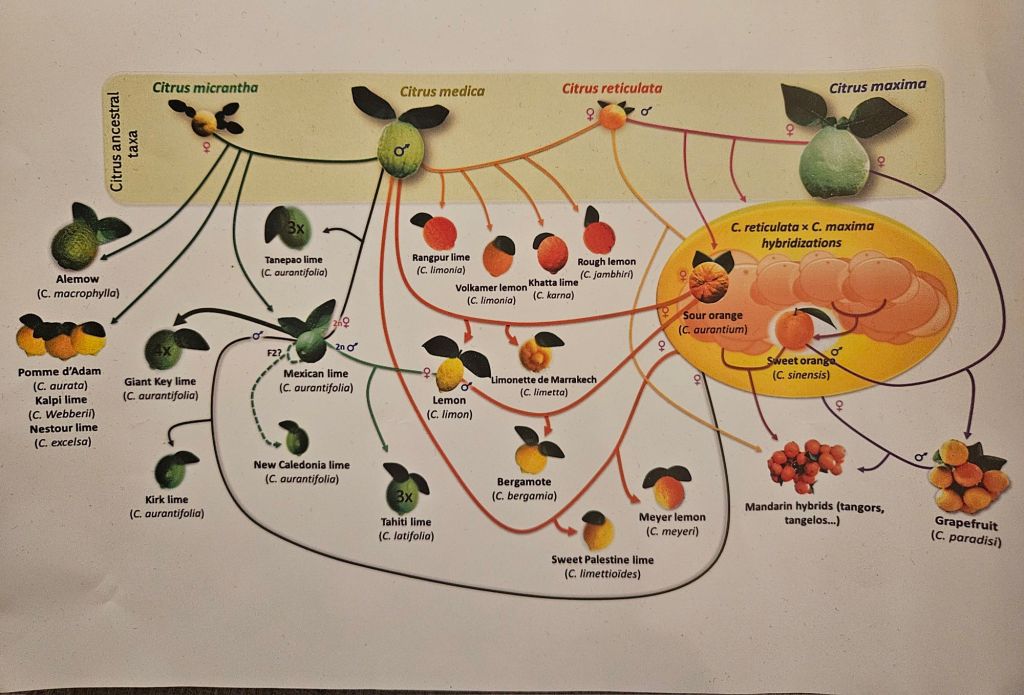
All modern citrus comes from just 4 ancestors, and are divided (roughly) into sweet and acid. Within each of these, sizes, shapes, colors and flavors are amazingly different.

At least some of the trees come from varieties that were, some 1000 years ago, introduced in Spain by the Moors for their ornamental and aromatic purposes. Later, the Borgias were big collectors of beautiful citrus trees. Today, you walk into the garden and experience sensory overload of smells, colors and tastes.

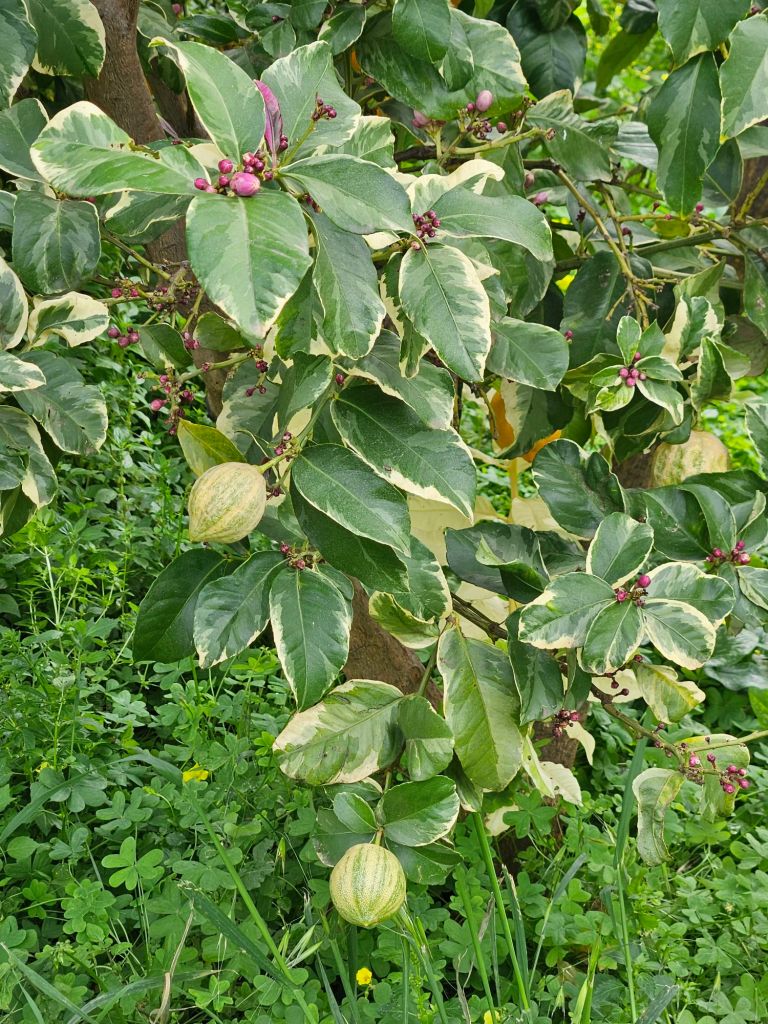
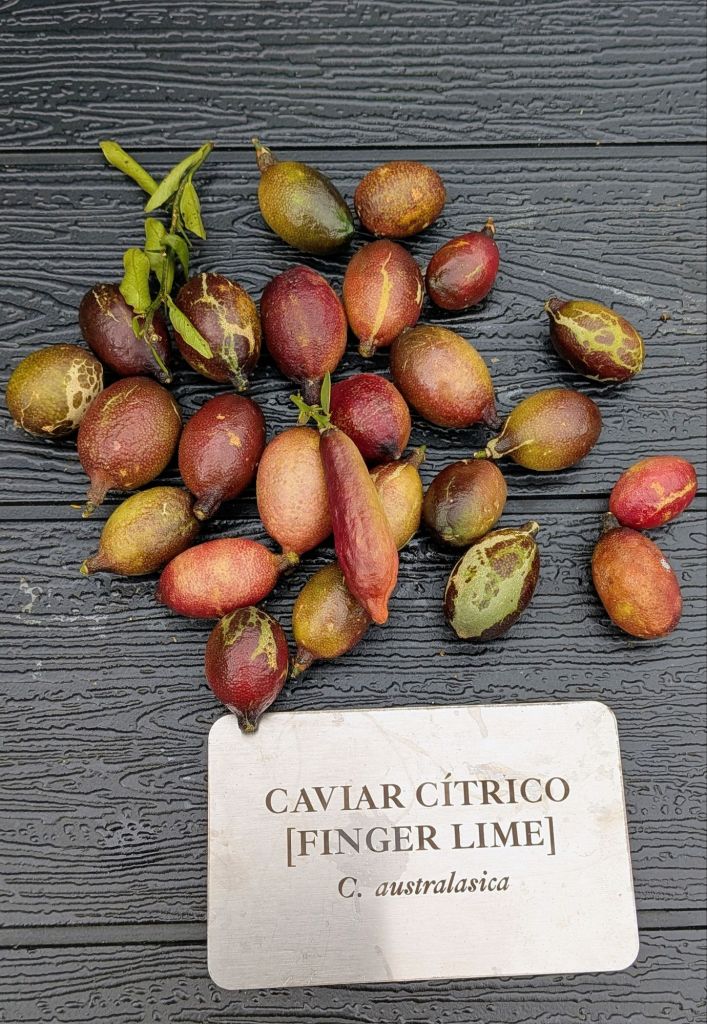
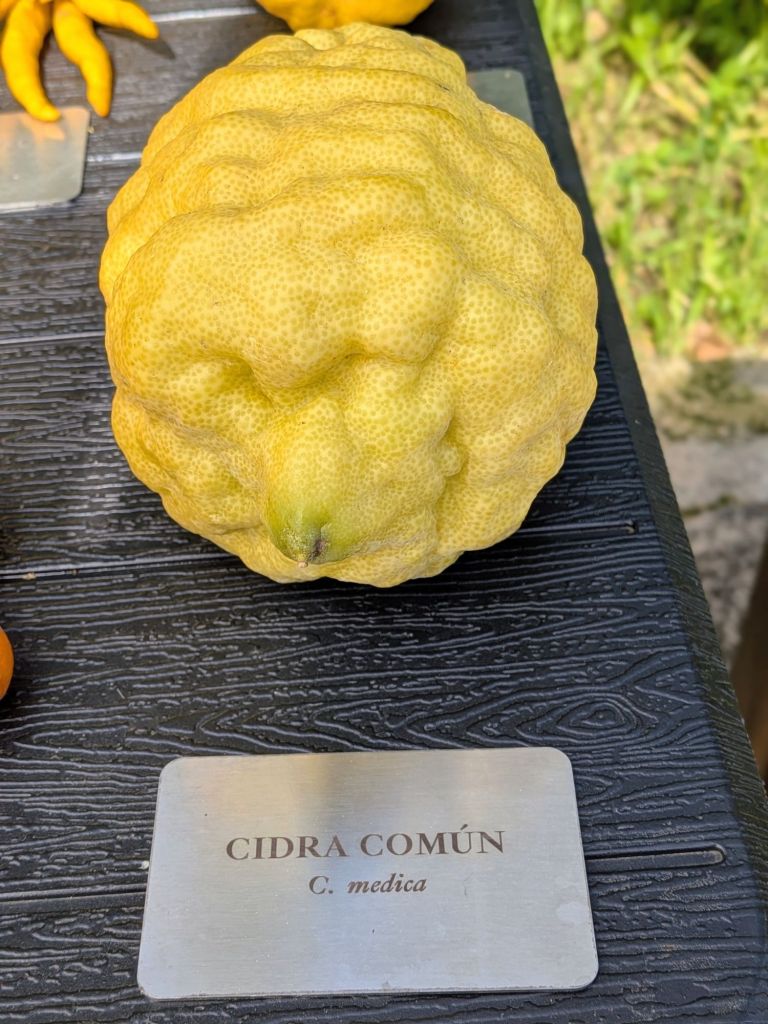
We were both blown away by the “citrus caviar” also known as Australian finger limes–a fruit the size of a walnut containing salty-sour-sweet granules unlike any other citrus we’ve ever tasted. I also, at our guide’s suggestion, dropped a piece of bergamot peel into my purse. Still getting lovely wafts of scent every time I open the bag. We also both regret not remembering the name of the citron that had a very acidic, small central pulp, a bitter orange exterior skin, and a thick phenomenally sweet and flavorful white pith.

R here: I did a deep nerdy dive into citrus genetics afterwards. Complicated. The four main naturally occurring citrus – pumelo, true mandarin, micrantha, and can’t remember the other one – emerged from a common ancestor 12 million years ago in the Himalayas. The seeds of one of these crossed the Wallace Line from SE Asia into Australasia 4 million years ago, so the three wild Australian species are pretty distant, genetically. All our familiar varieties are hybrids.

A different kind of Roman aqueduct

“Well that was strange and unintelligible” said R as we returned to the car.

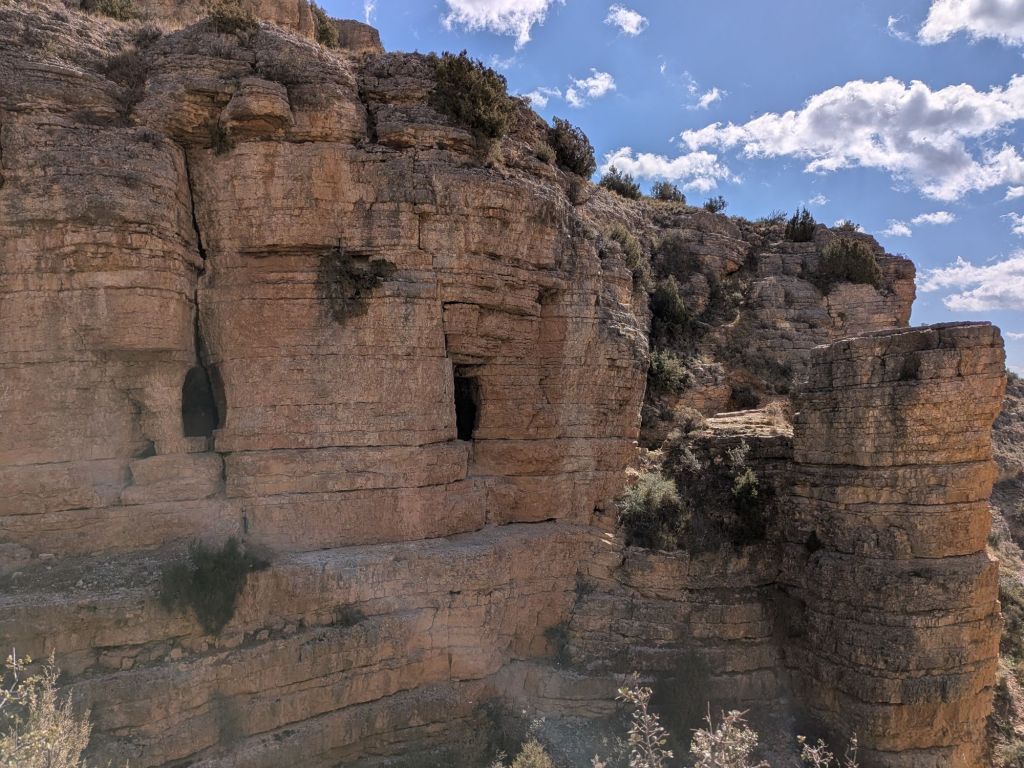
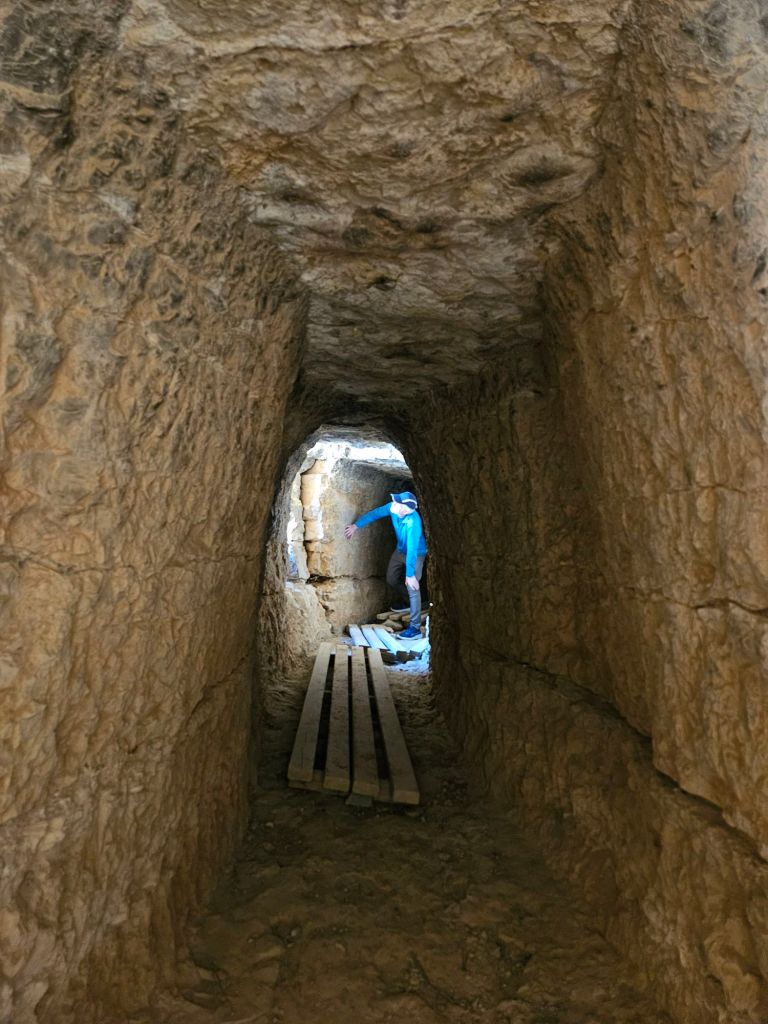
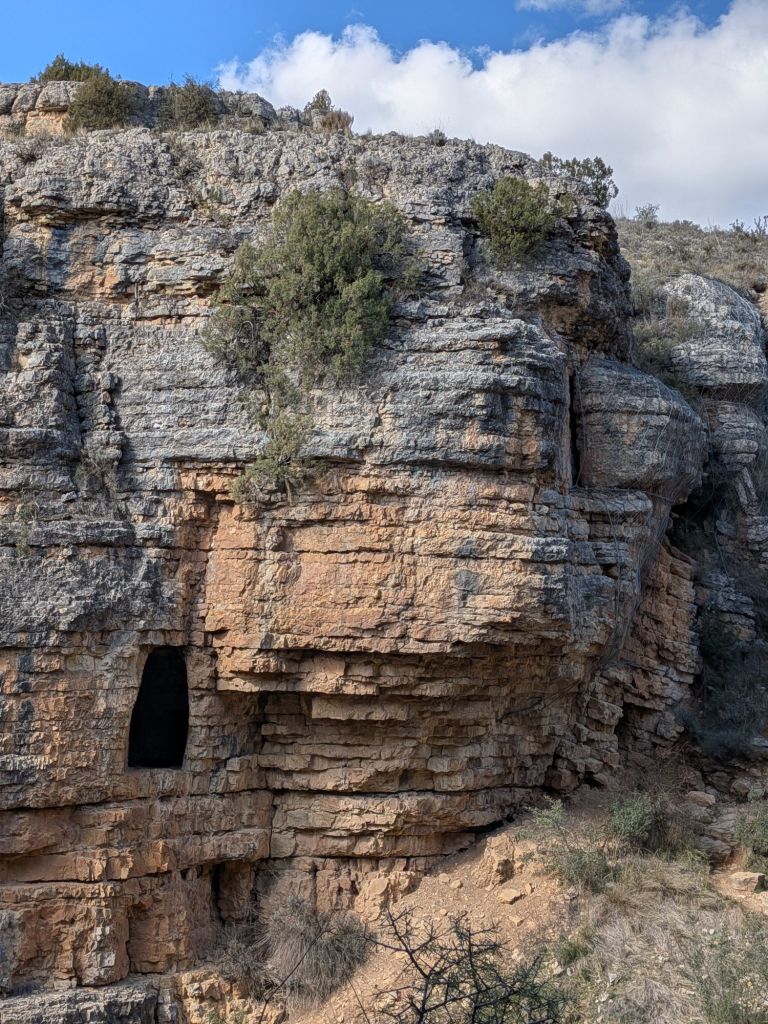
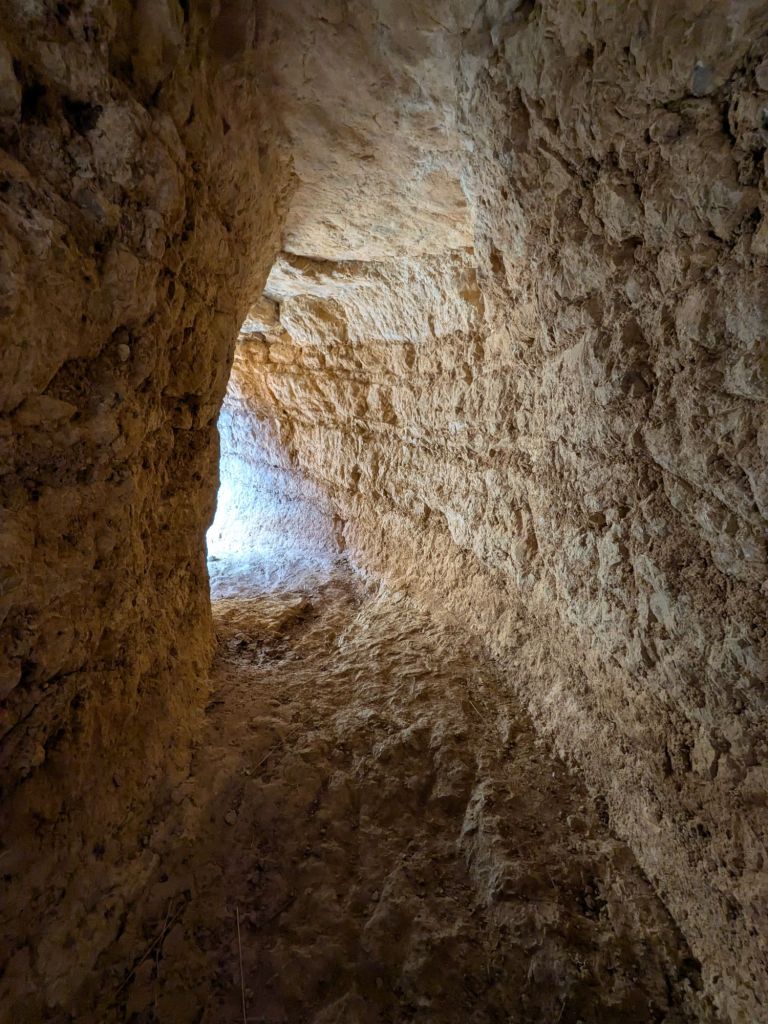
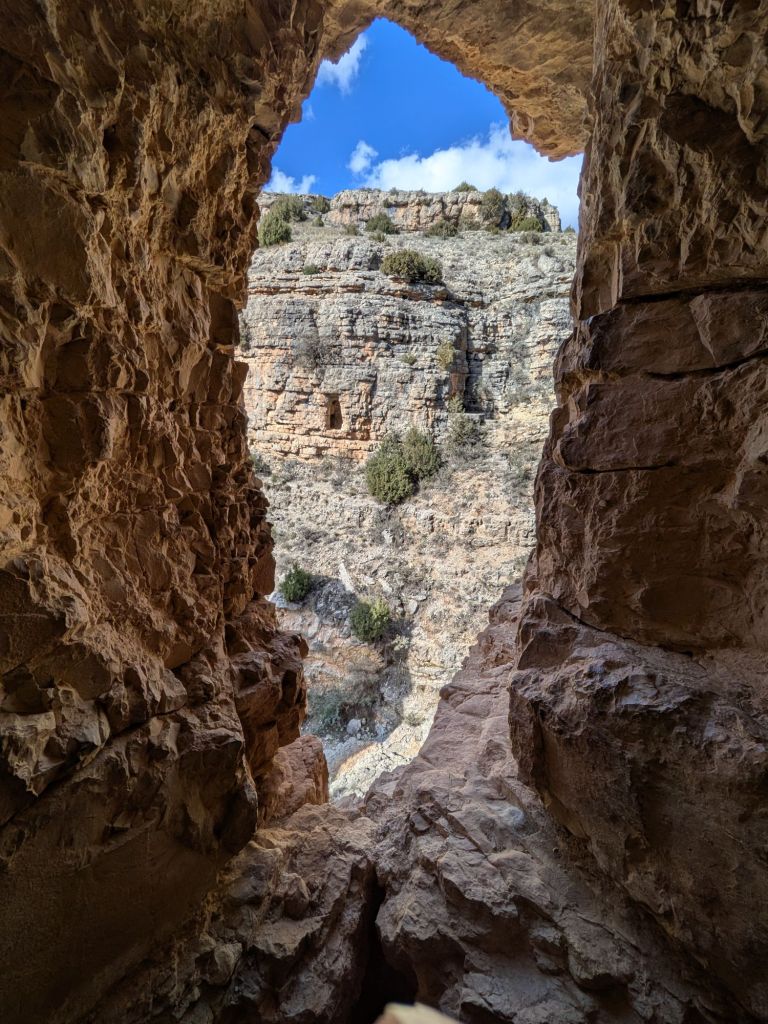
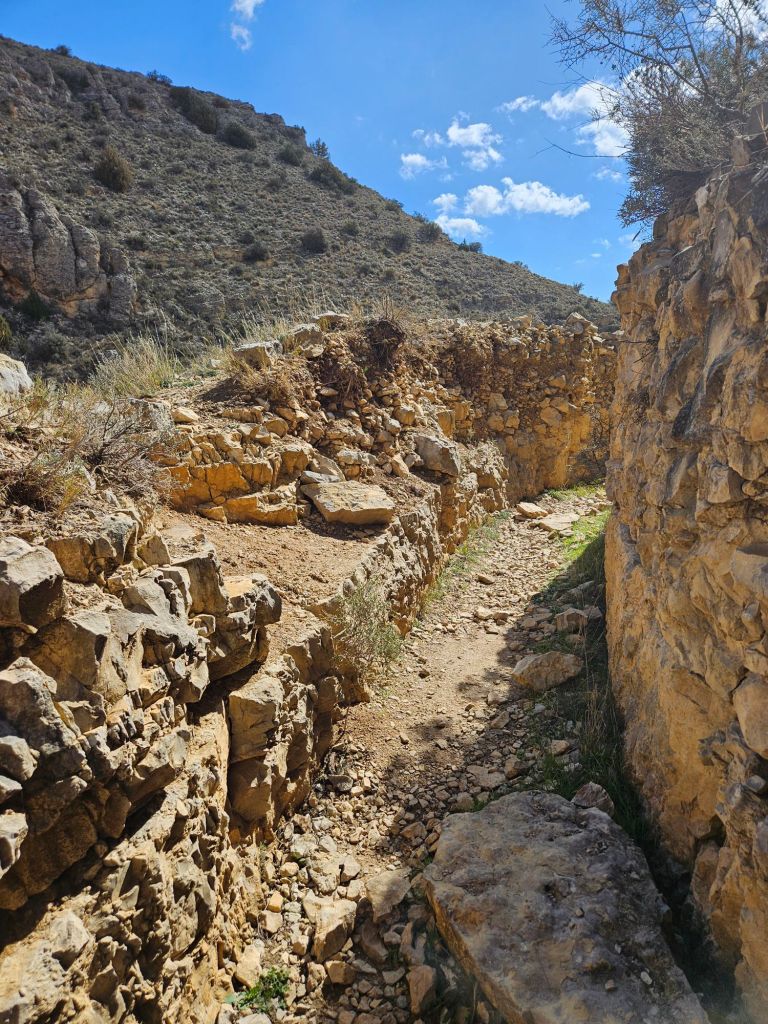
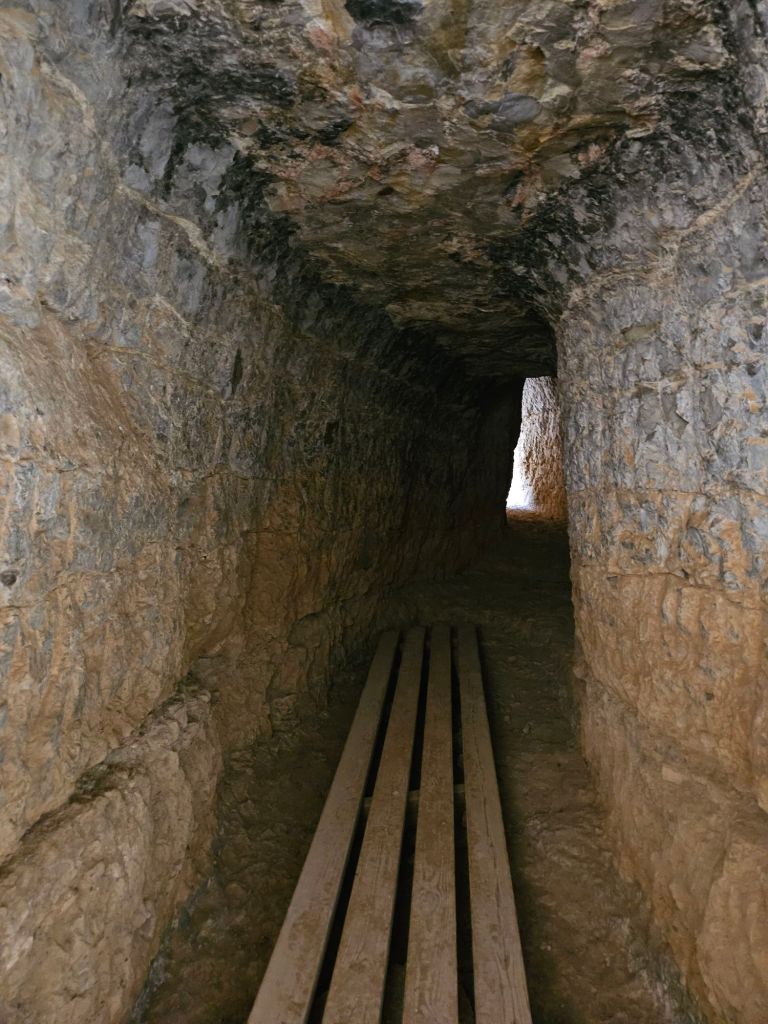
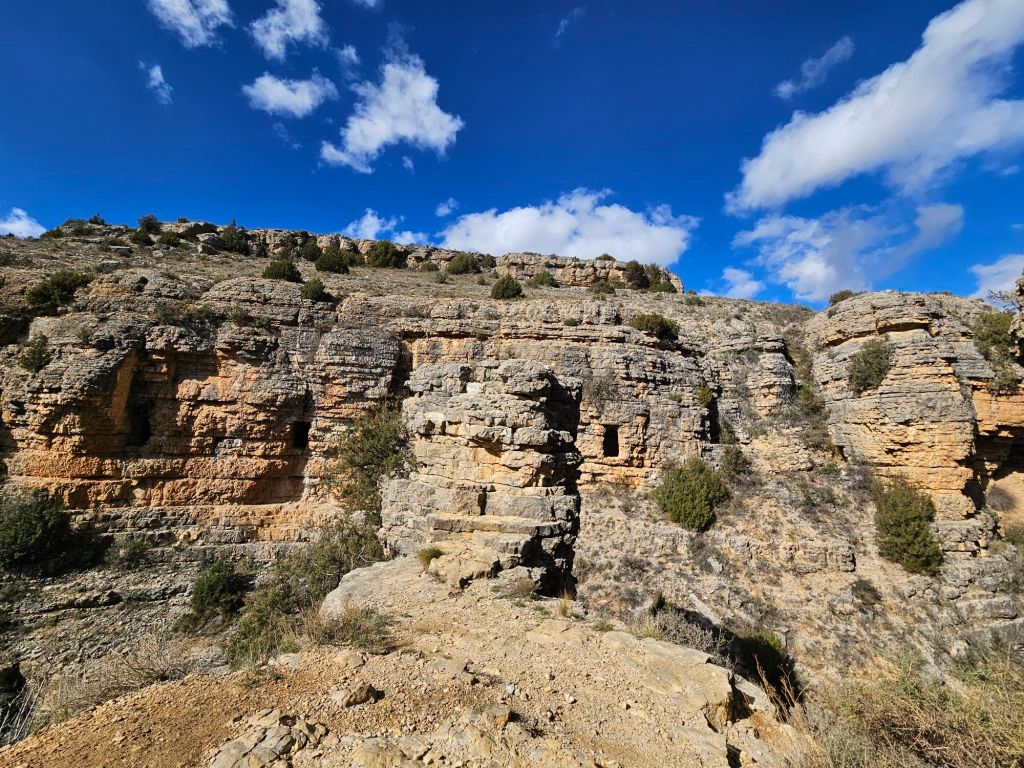
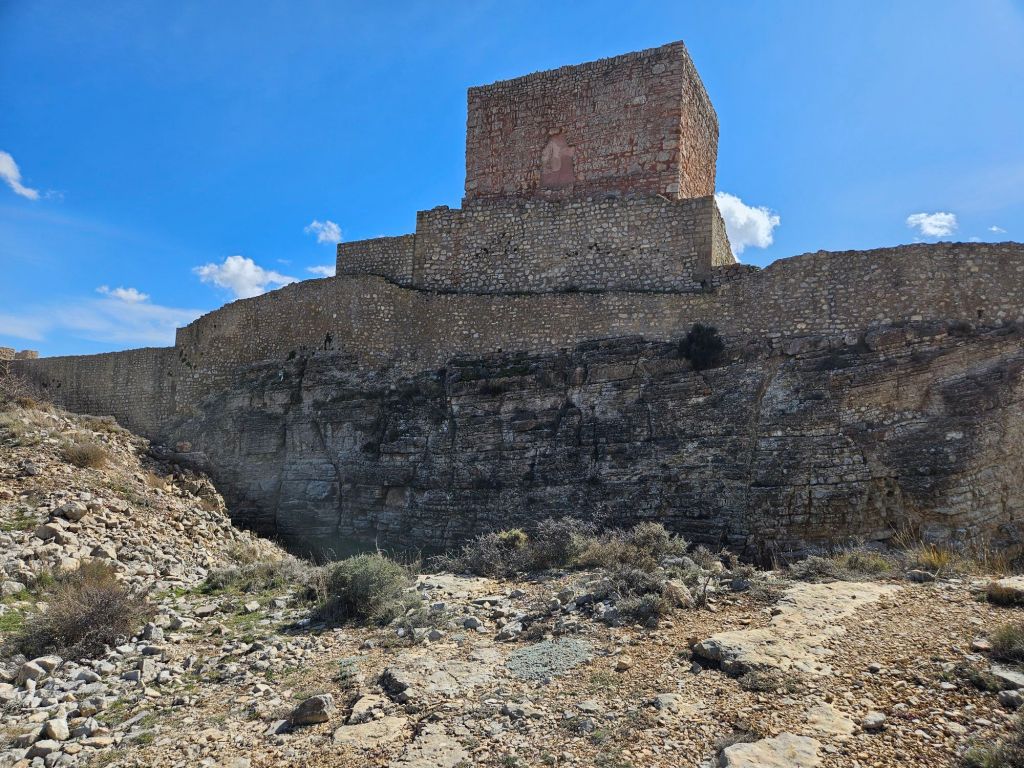
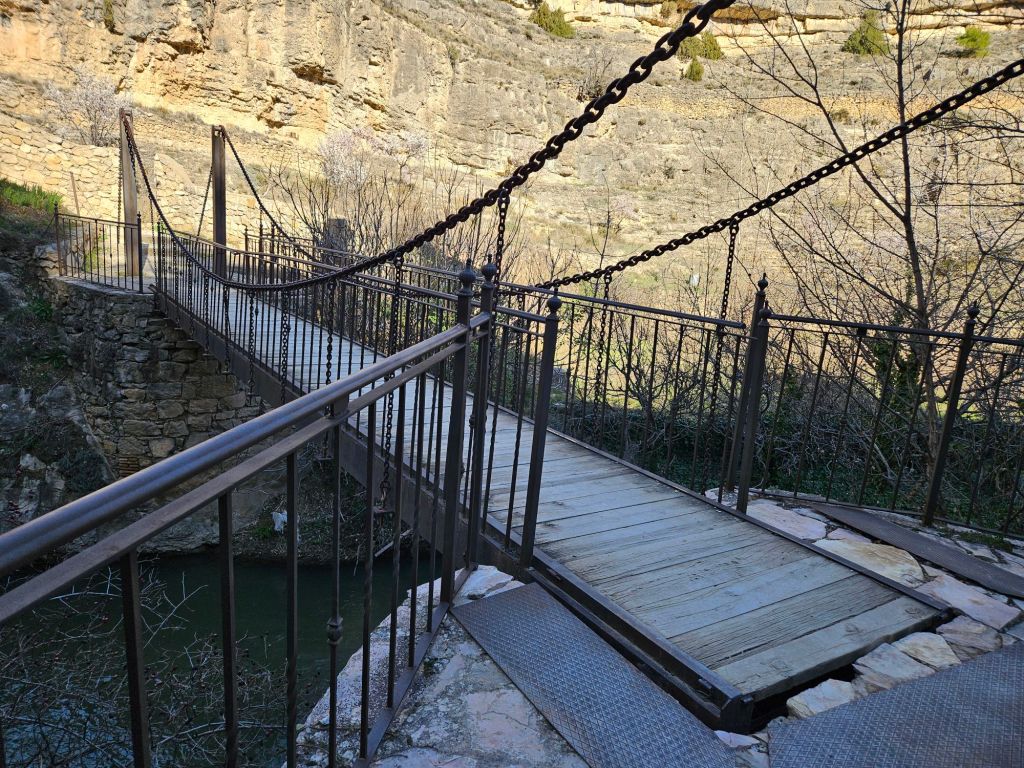
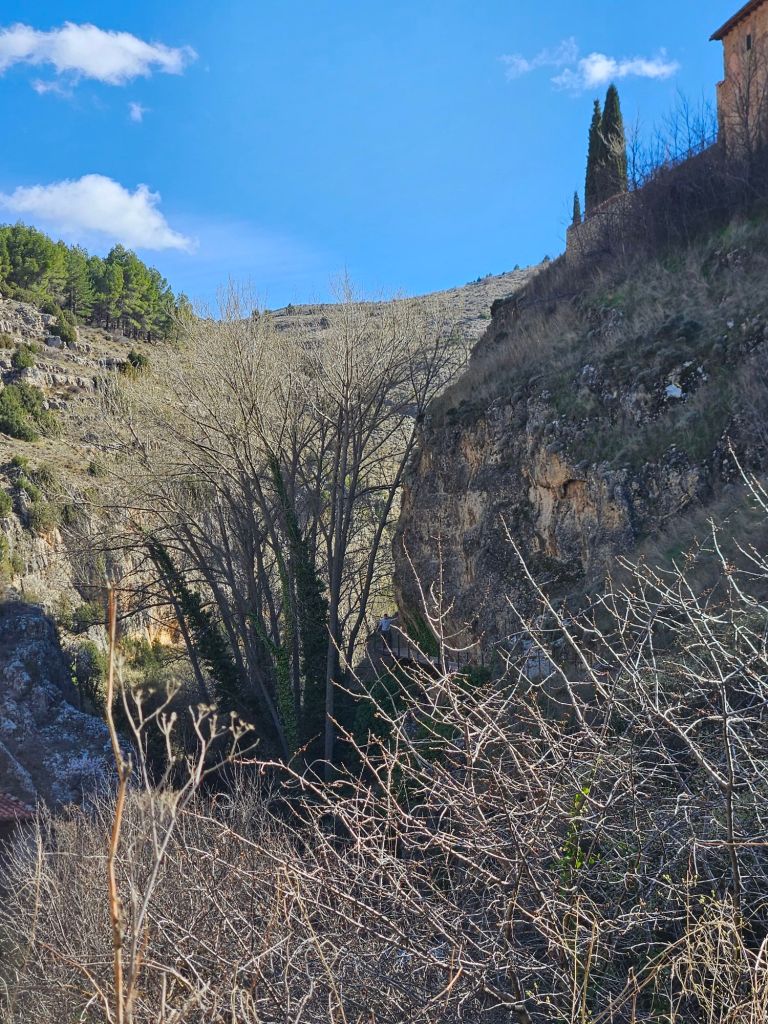
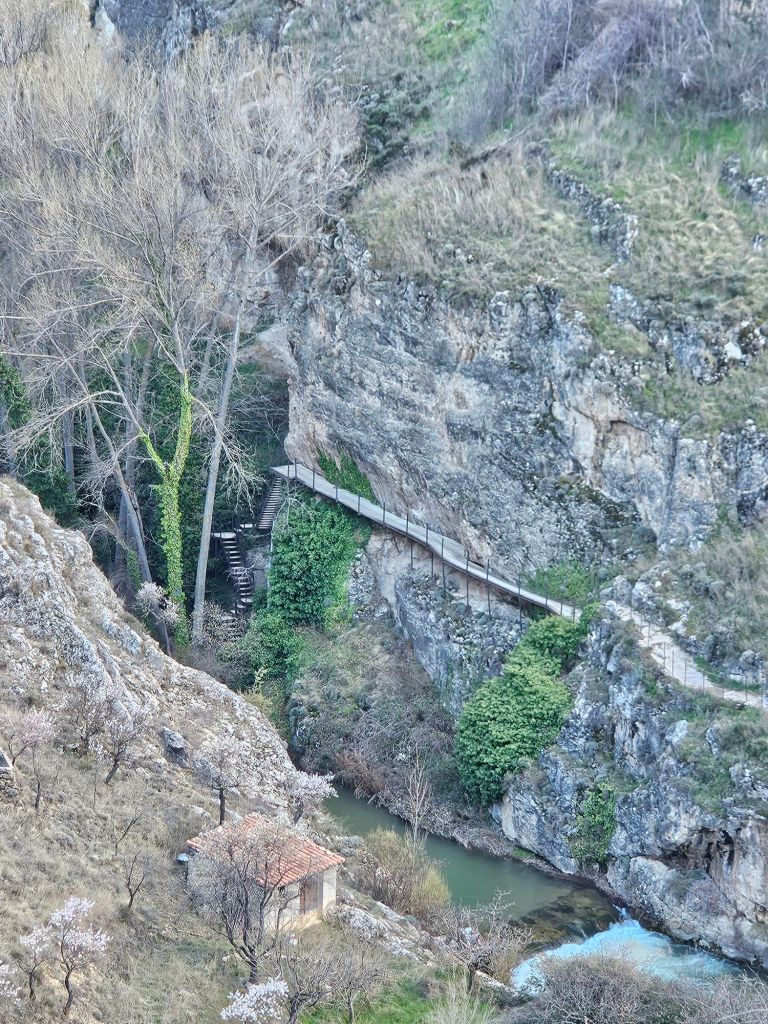
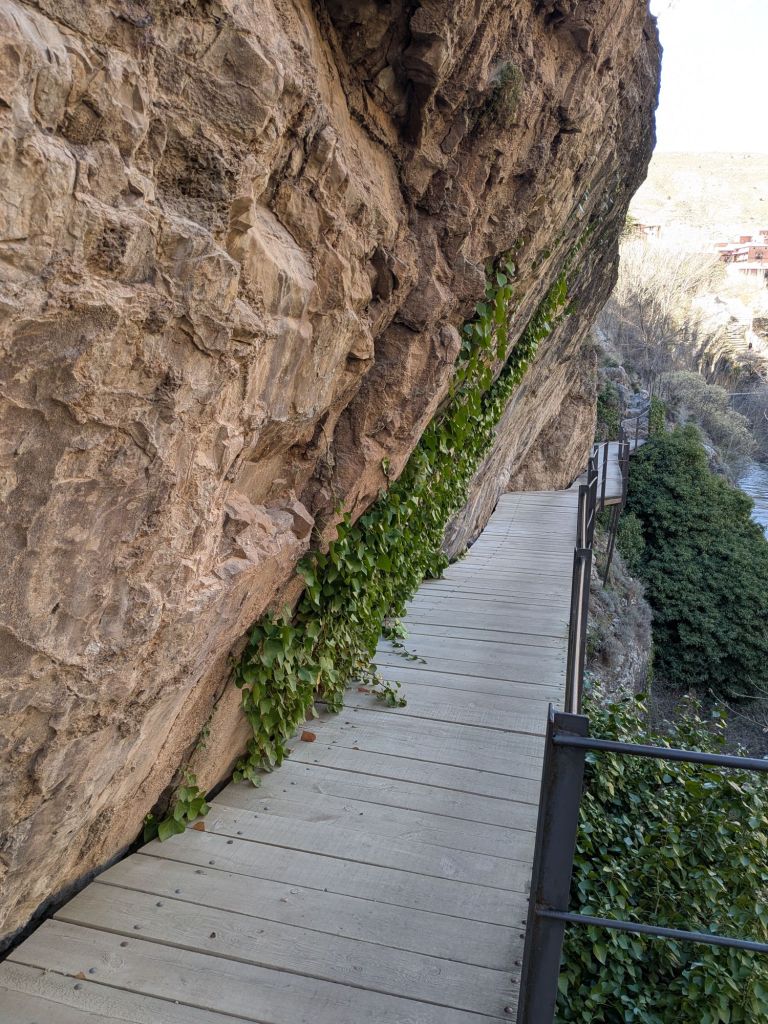
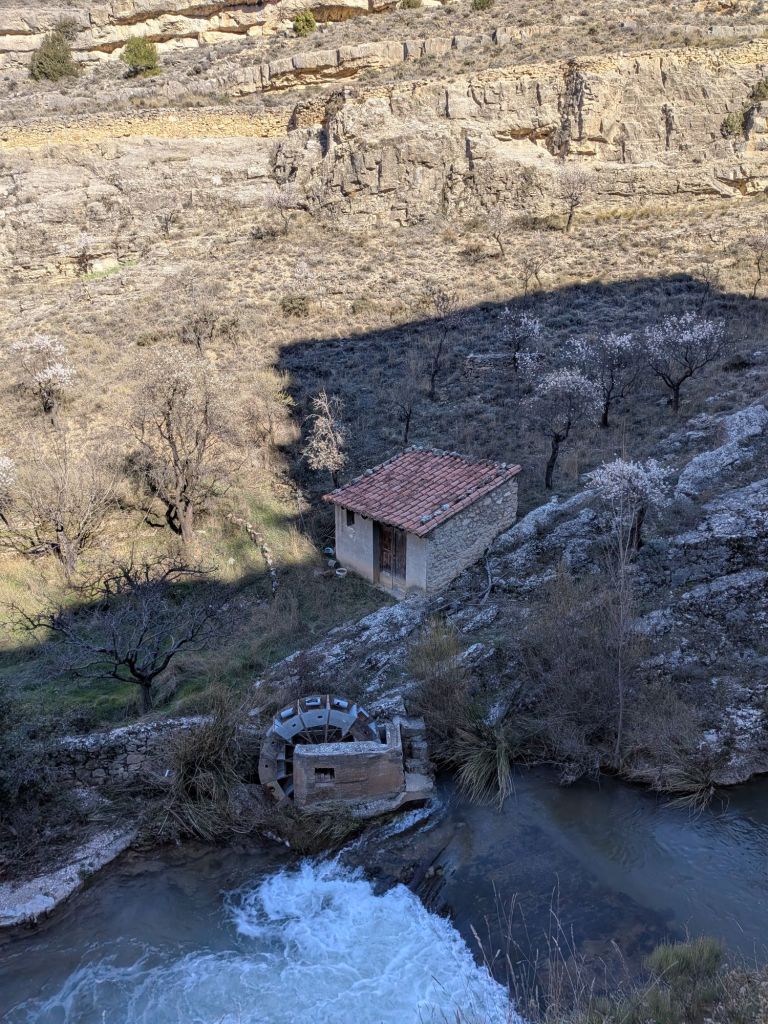
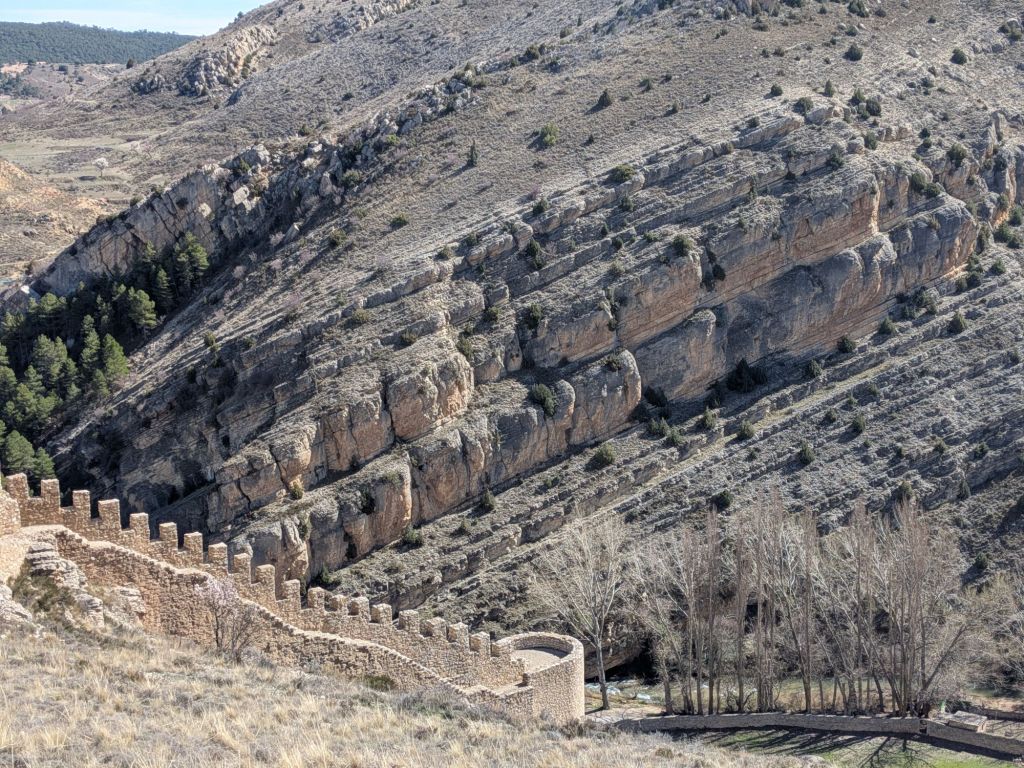
On our way out of Albarracin, we made a quick stop to view a section of the Roman aqueduct that connected the Rio Guadalaviar to the town of Cella, some 25 km away. At this viewpoint, the Barranco de Burros, it consists of a series of rock tunnels lining a canyon, with windows cut for ventilation and maintenance access. One can now hike past the modern retaining wall (protecting from flash floods in the gully) to access the tunnel system. You can walk, not quite upright through them, and marvel at the labor it took to plan and build 25 km of it.

Modern estimates are that this viaduct carried 16 gallons per minute. This massive undertaking was used for centuries. No one knows for sure when it was abandoned, but there is, per the signage, no mention of it in Christian records from the reconquest of Cella (one end of the aqueduct).

Albarracin day 2

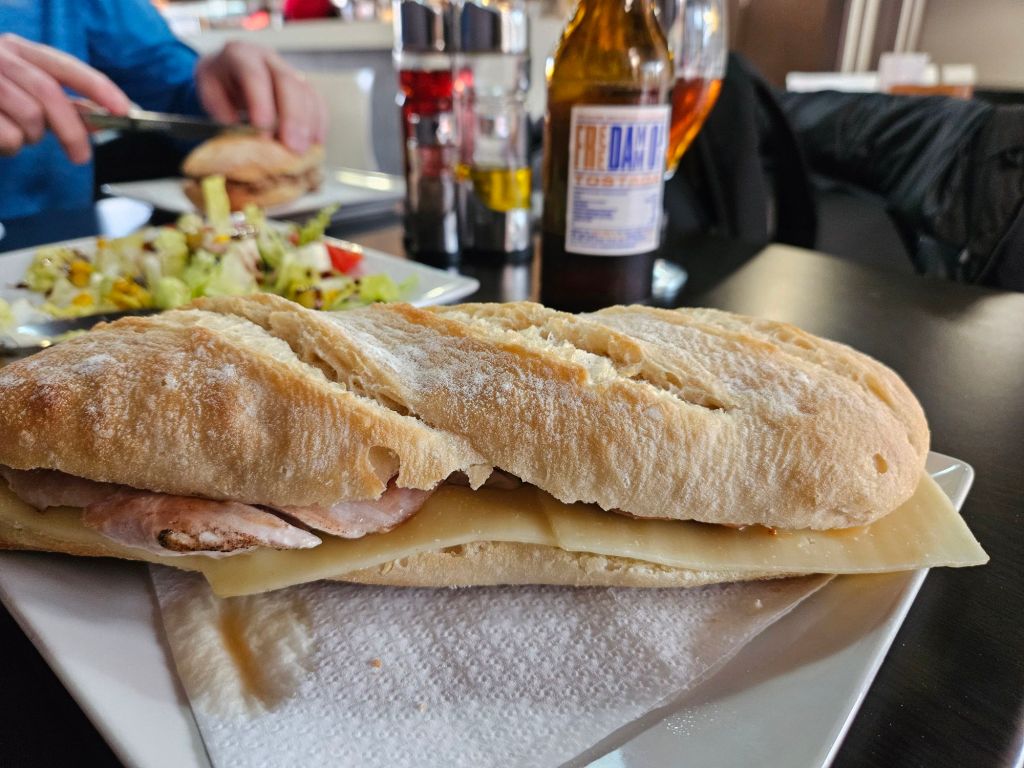
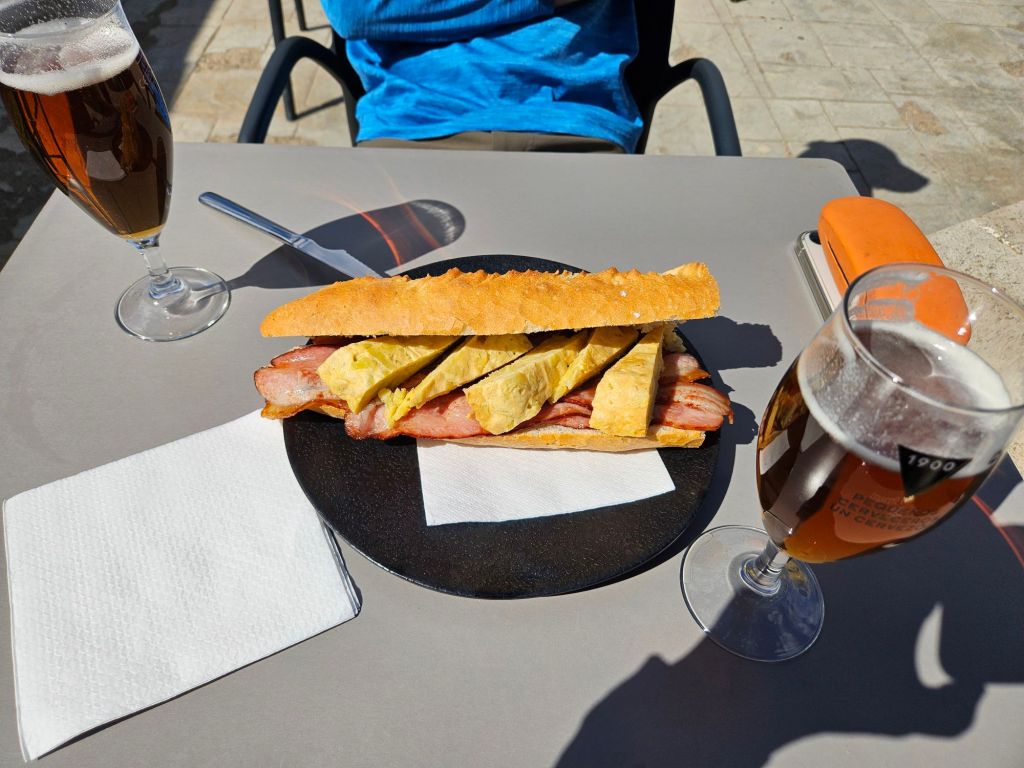
After our trip to see the rock art (and soak in the silence and fresh air) we returned to town for an afternoon of exploration. We refueled first with a shared bocadillo (sandwich) of tortilla and bacon. (Tortilla here is a 1 inch thick “omelet” of potato with just enough egg to hold it together. Carb on carb–R very happy.)

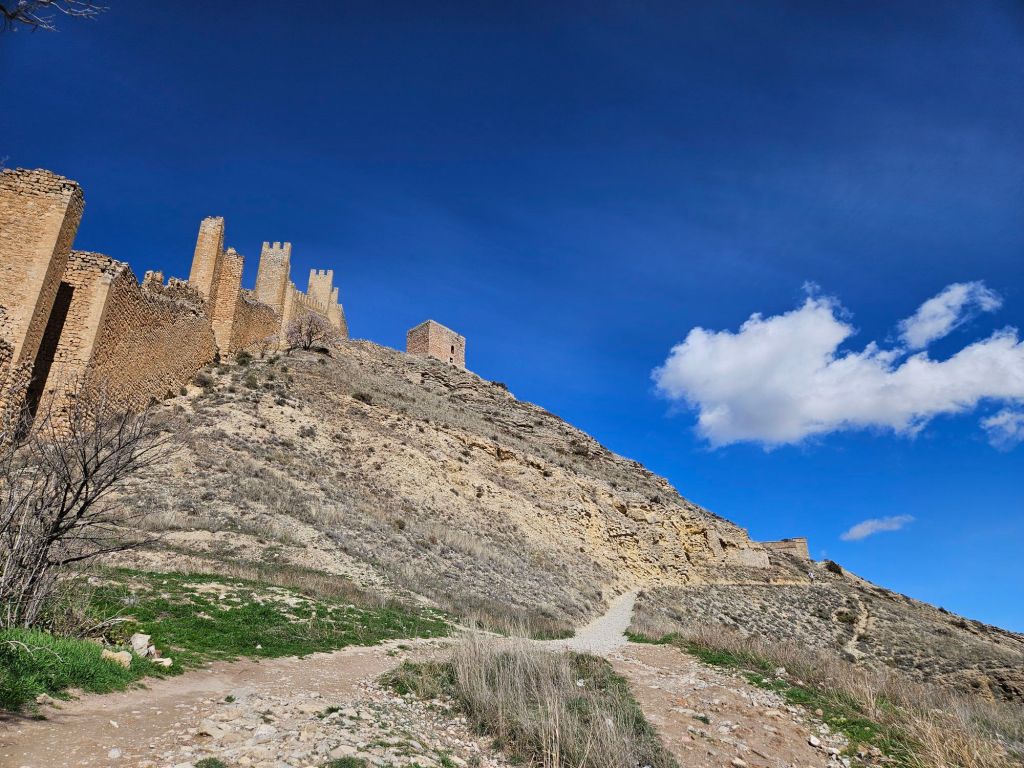
Then, yes, up the stairs to the climb all the way to the top of the walls. Incredible views, impressive construction, and a few sketchy steep paths that had me retracing my steps while R continued exploring.

Down again to the river walk. Beautiful, but yet more sketchy paths. Enjoyed my time on a sunny rock while R continued on, around the base of the town, then up and over from the other side.

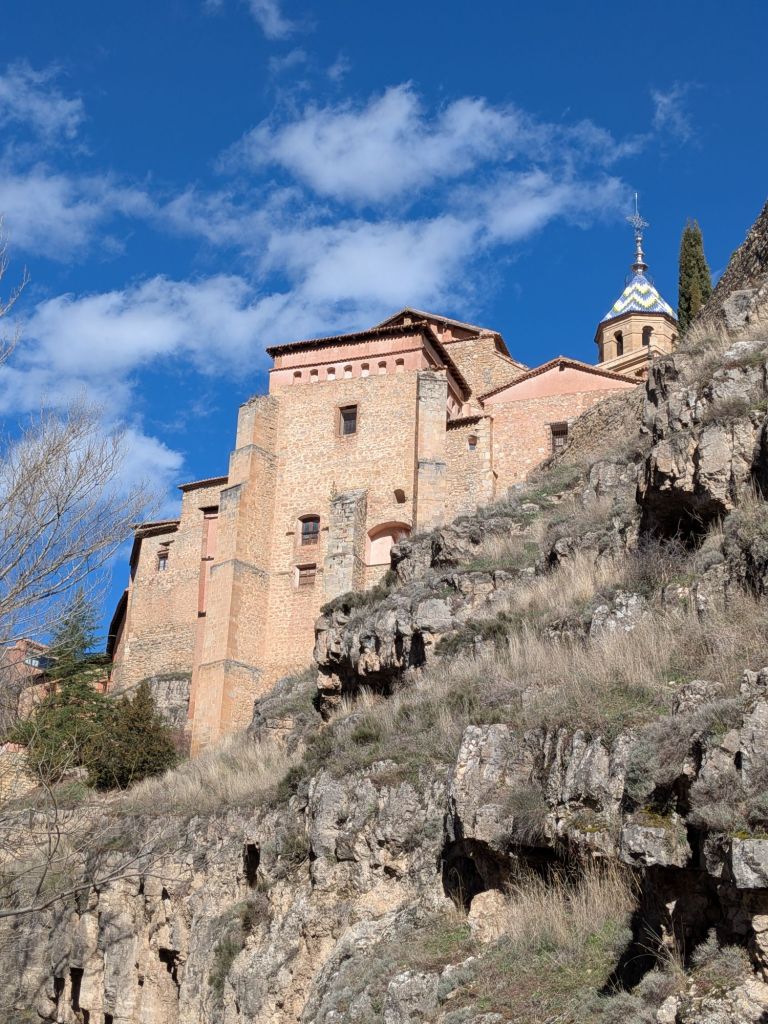
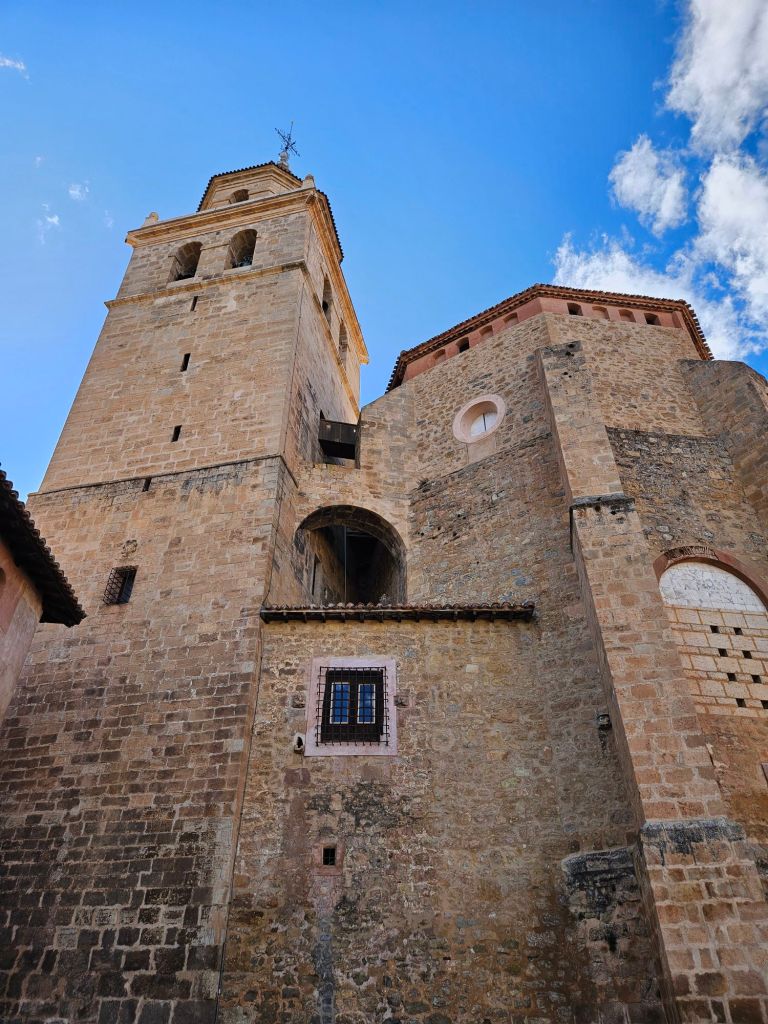
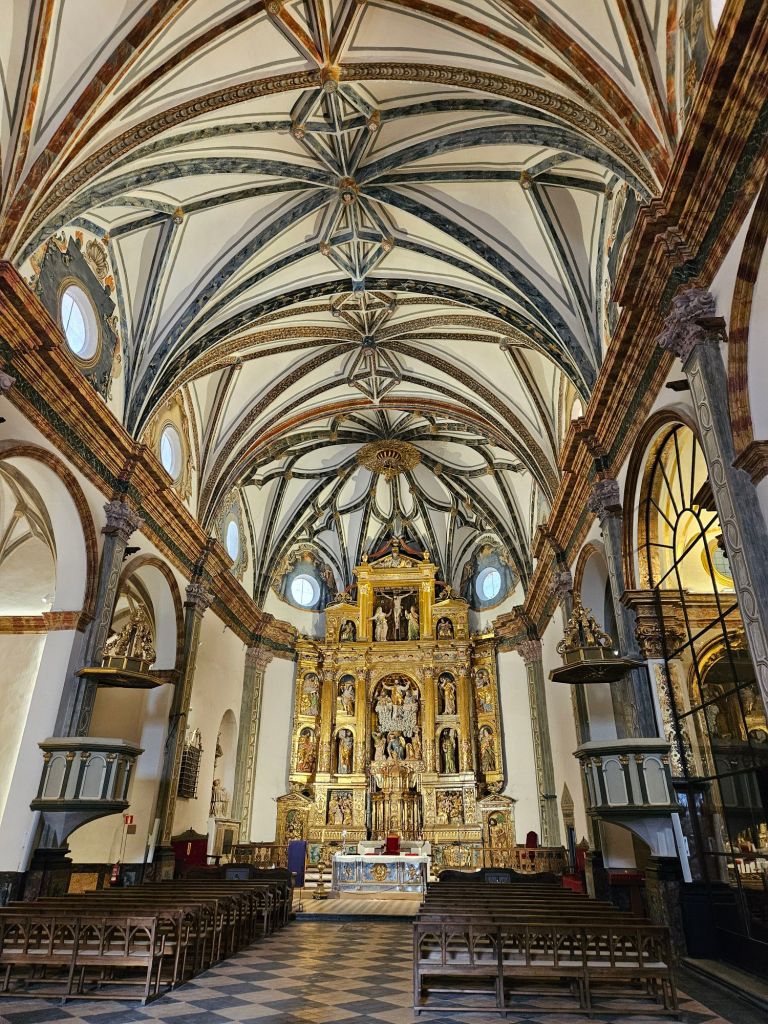
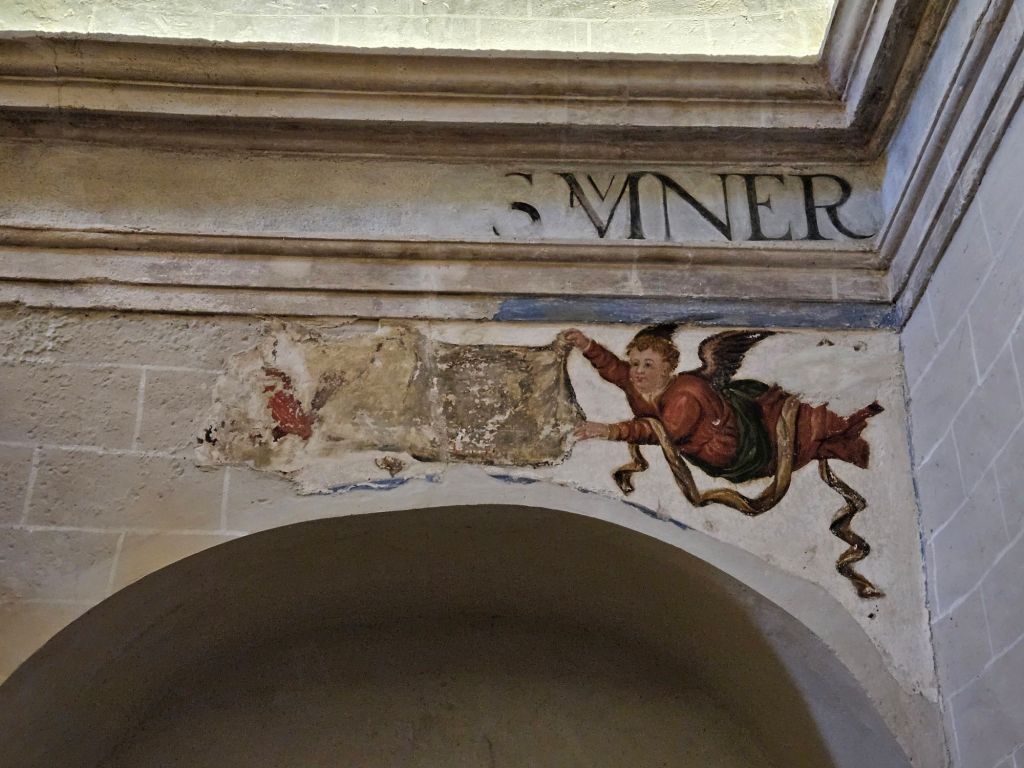
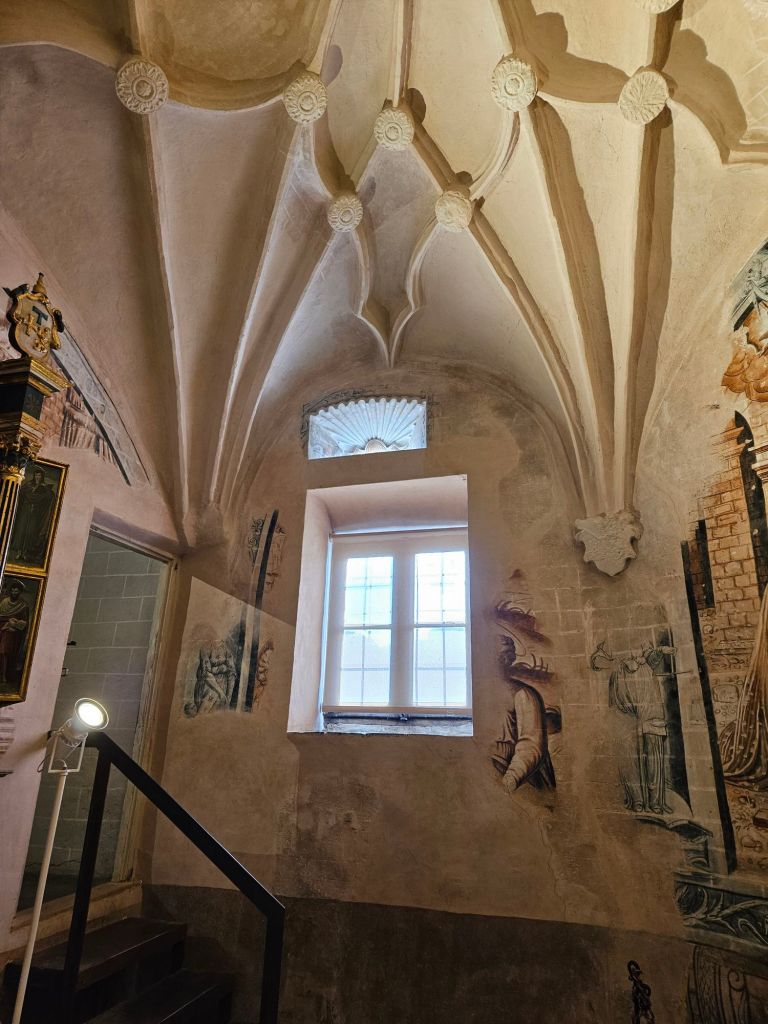
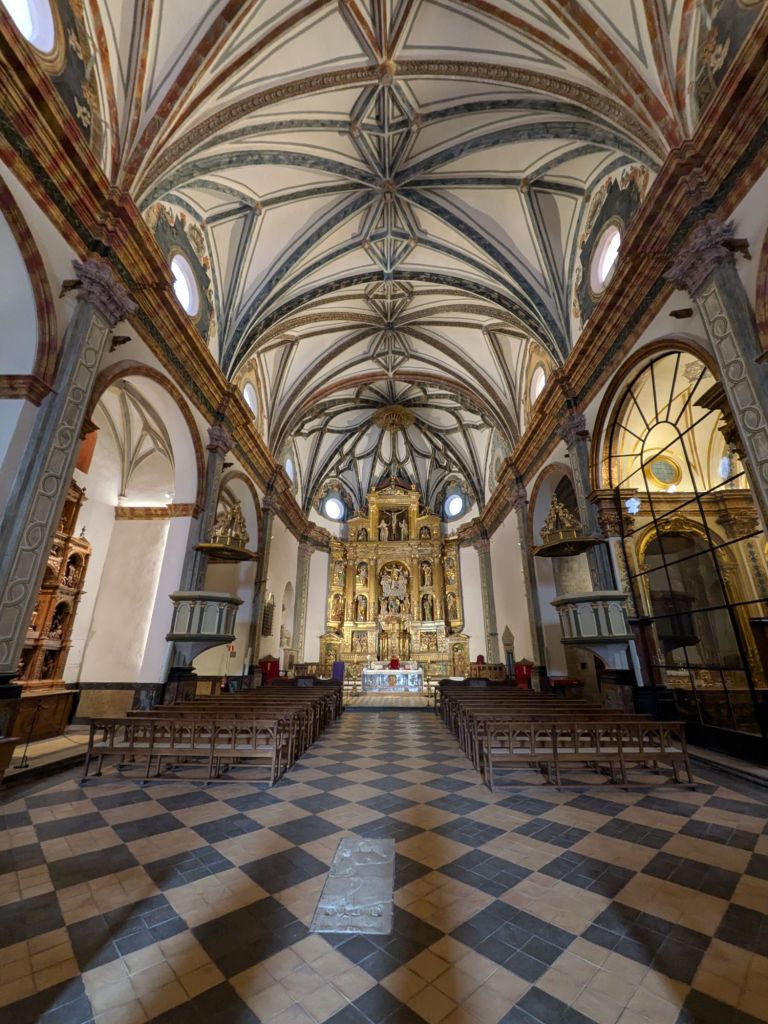
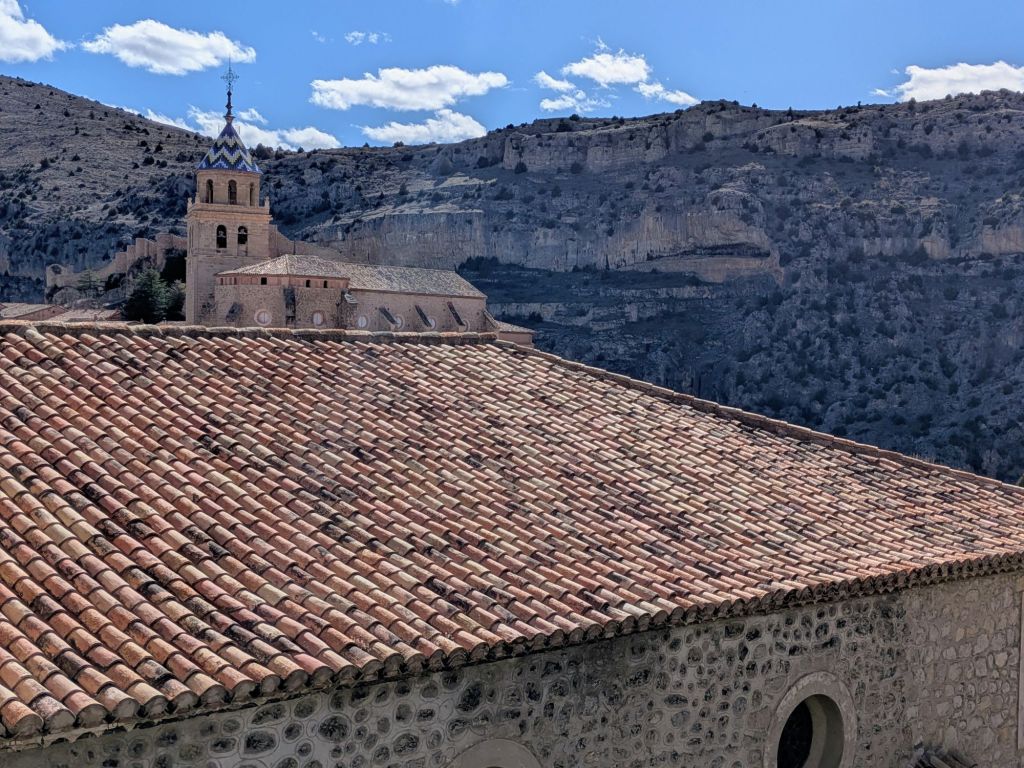
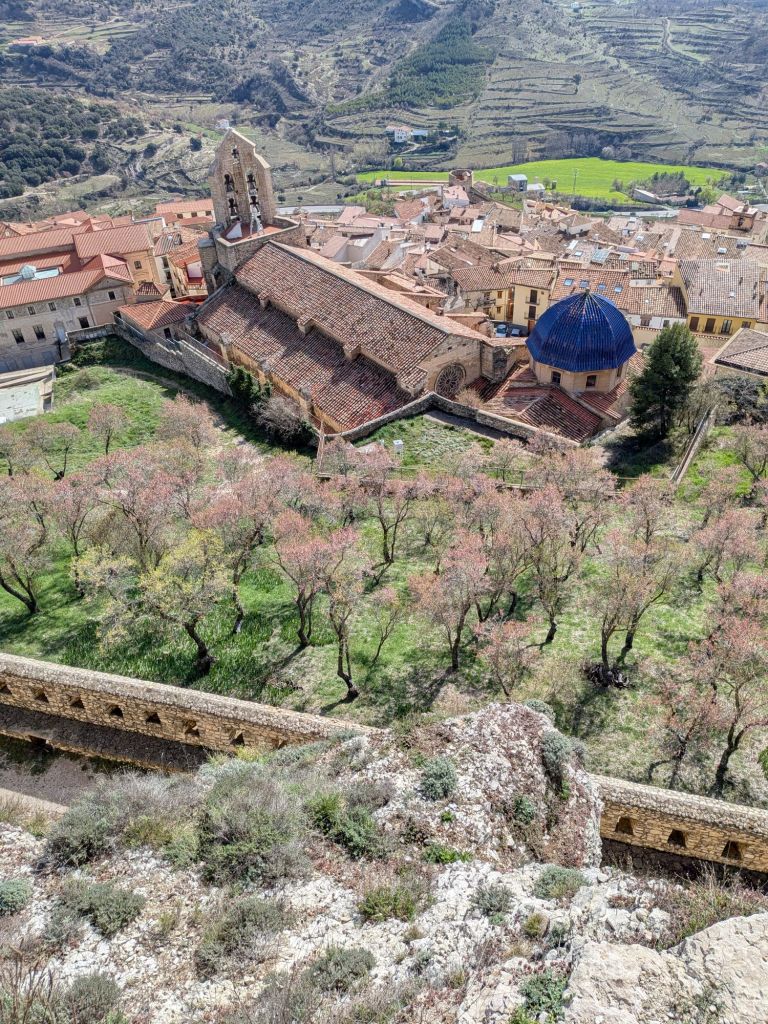
Back up again to a guided tour of the coldest cathedral I’ve ever visited. The guide noted the unusual closed cloister–this was done a few hundred years ago by a bishop who hated having to walk outdoors in the cold on his way to mass. Can’t believe it made that much of a difference given how utterly chilly the cathedral was.

It was only possible to enter the cathedral with a guide. She led the tour in Spanish and we managed to understand a lot of it. That said, we both realized that our brains time out after a few concentrated minutes and we lose the thread.

(R here. After a few minutes I thanked her for being so clear and explained that though it was fast for me I was getting ochenta por ciento – 80%. That was probably optimistic, and 10 minutes later it was varying from 50% to 5%.)

I was most interested in the guide’s description of their renovation work. She said the challenge is in deciding which era to restore to. The cathedral is no doubt built upon the remains of the Grand Mosque – although they haven’t found direct evidence of this, everywhere else in Spain the first thing the returning Christians did was build a cathedral on the site of the main mosque in newly conquered towns. Worth noting here is that this town wasn’t conquered but gifted–we both caught part of a line about a Christian having done a favor for the Arab ruler of the castle, who gave him the castle in thanks.

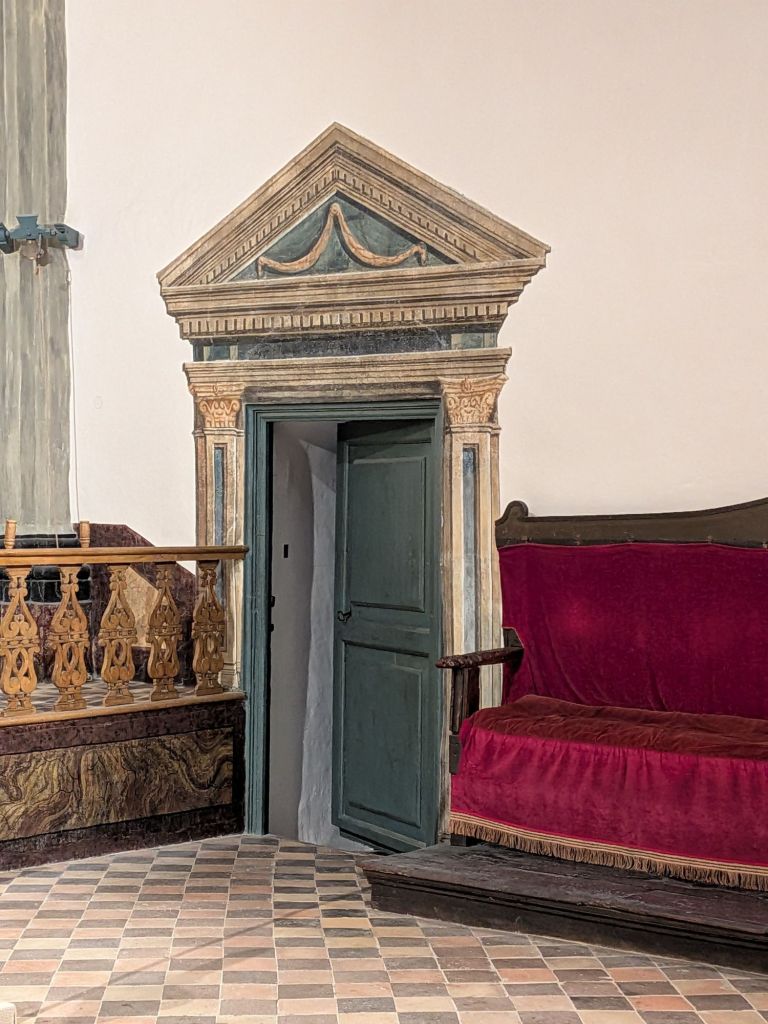
In any event, the cathedral was built over several hundred years, and remodeled and restored a few times.  In the current restoration work, they’re trying to keep evidence of each layer, while restoring to the most salvagable or most coherent layer they can.

Finished the tour, walked shivering into a patch of sunlight, then headed back down the hill. Out the other side of the gorge for a quick late afternoon clamber to get views from the other side. 

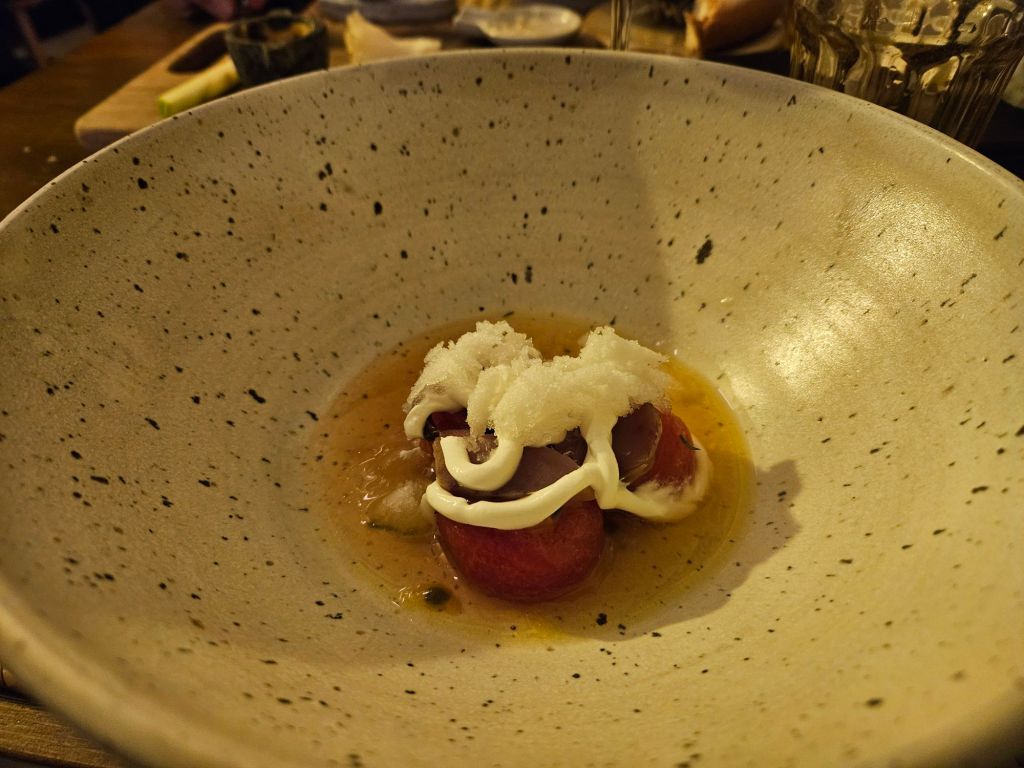
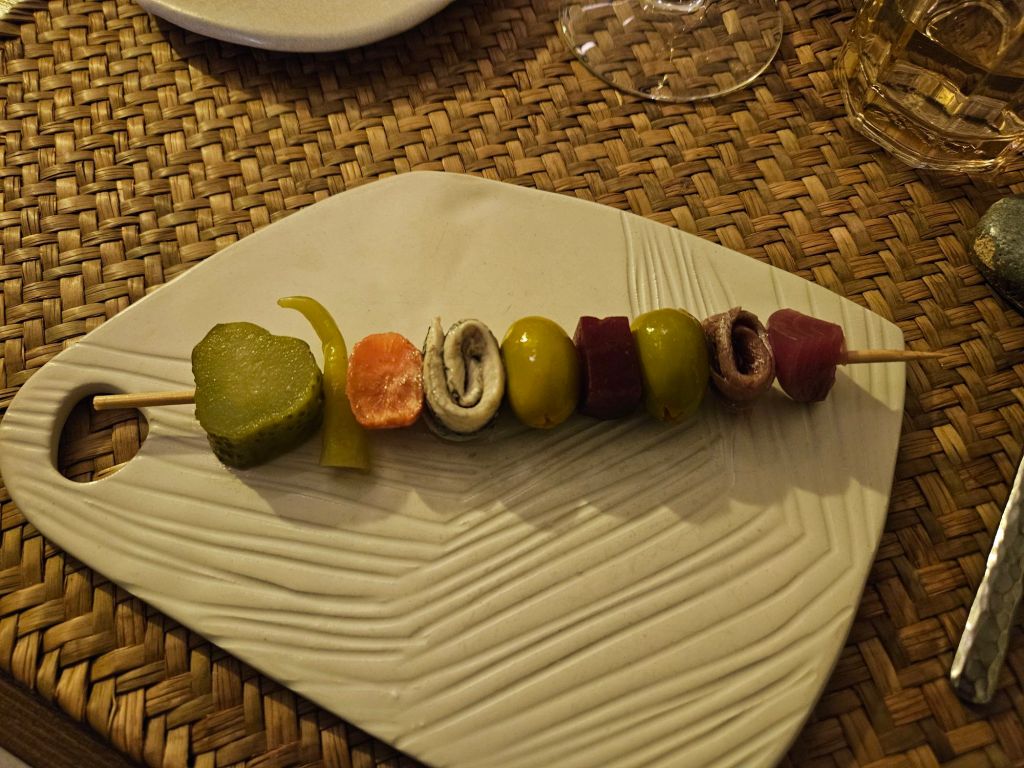
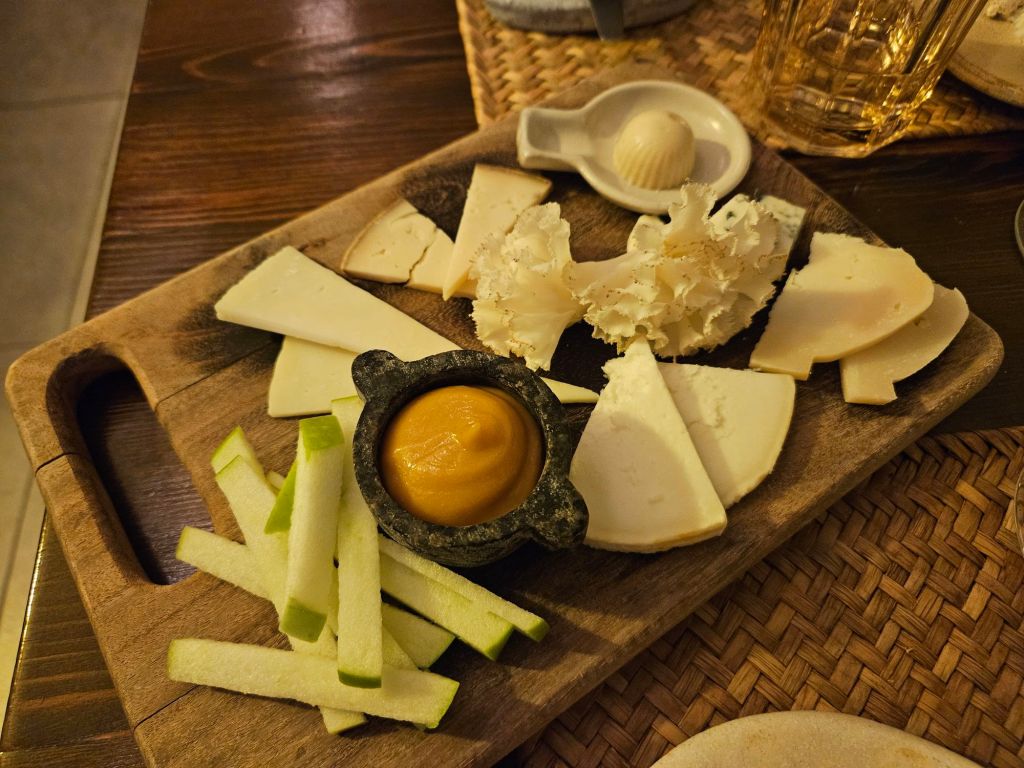
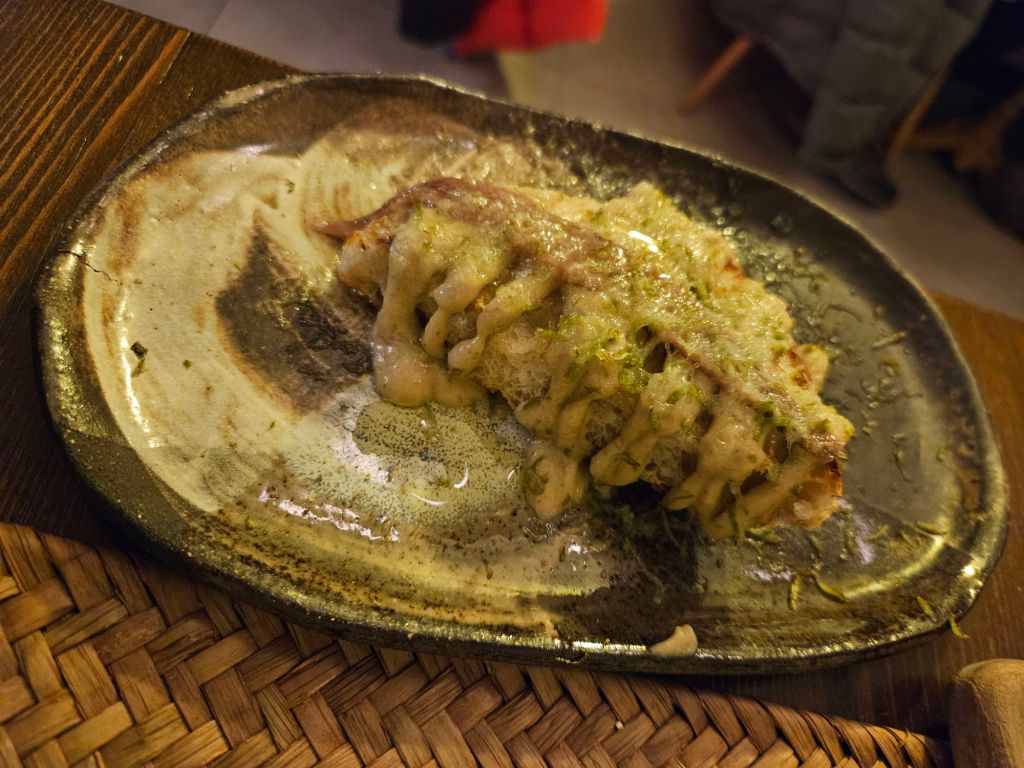
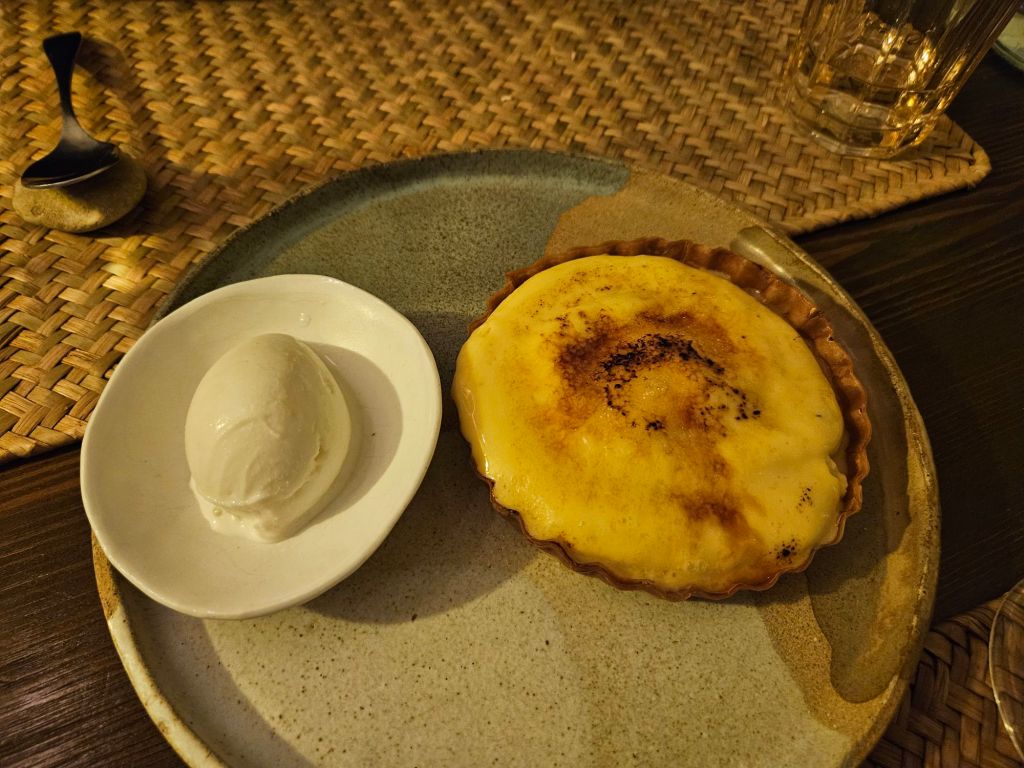
Back to the hotel, then up the hill for an unusual and tasty meal. Sadly, many of the menu offerings included either nuts I shouldn’t eat or meat bits R really wouldn’t like, but what we did eat was full of flavors and combinations that were new to us and unexpectedly delicious.

The pale, innocent-looking thing that looks like a small pat of butter, top right among the cheeses, was actually a sensationally powerful and delicious blue cheese.

Stars out when we left–Orion and Sirius standing guard above the castle. Back down the hill–getting very chilly–to our nice warm room and bed.

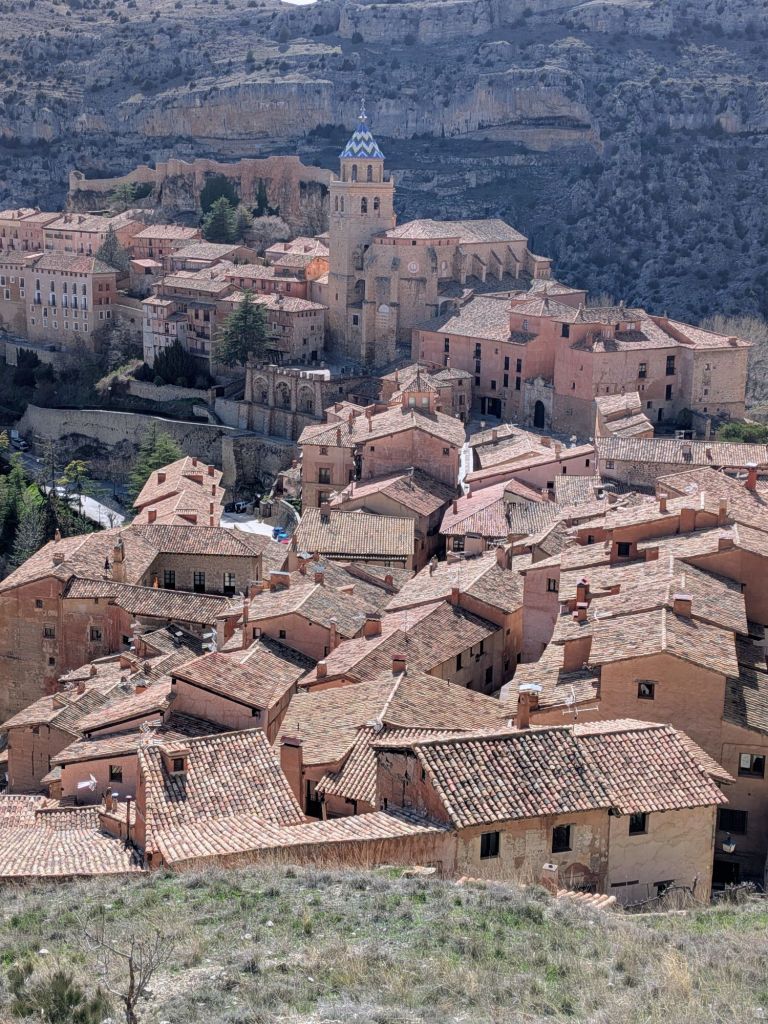
R here again with a few bonus pics:

Albarracín, day 1

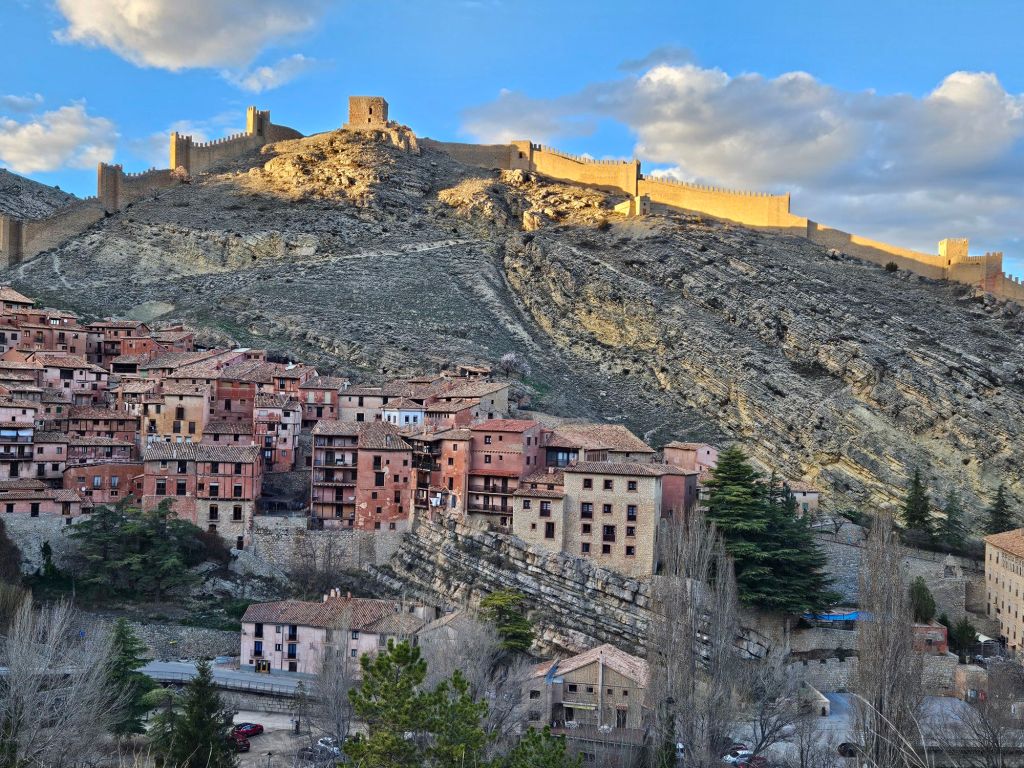
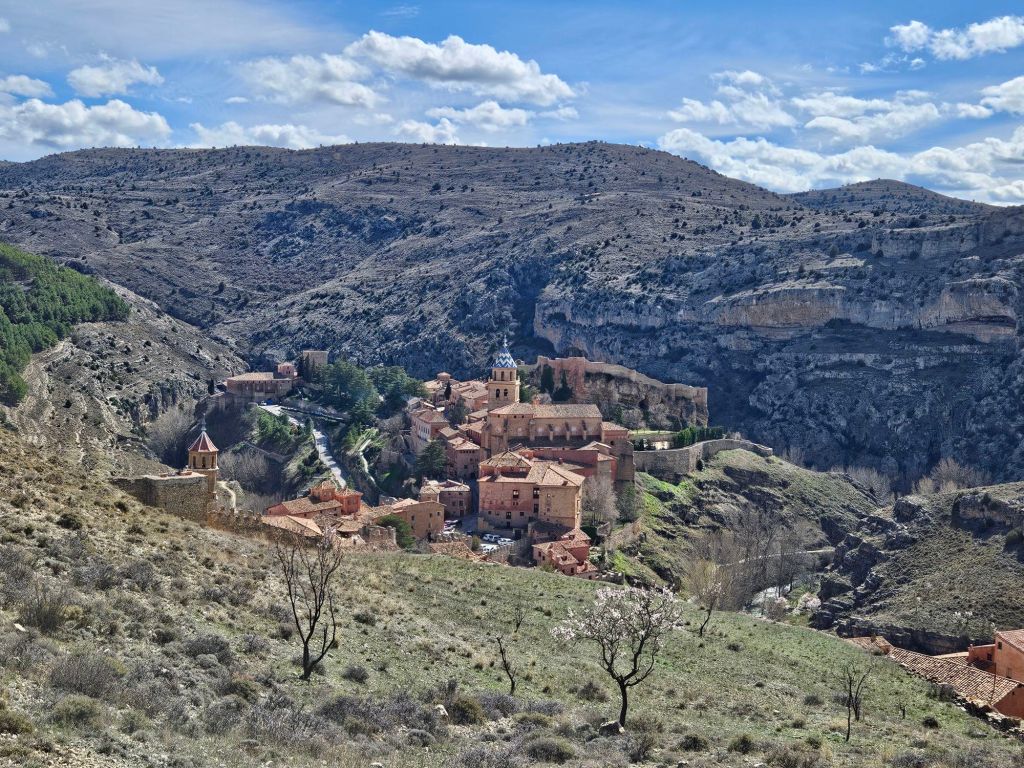
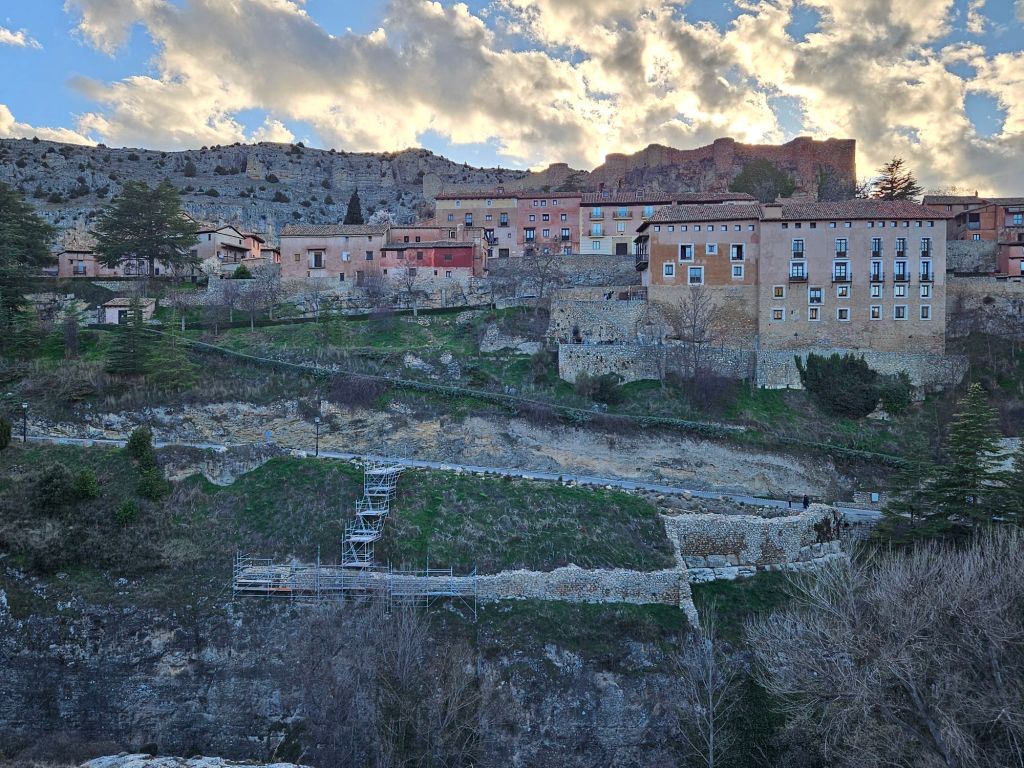
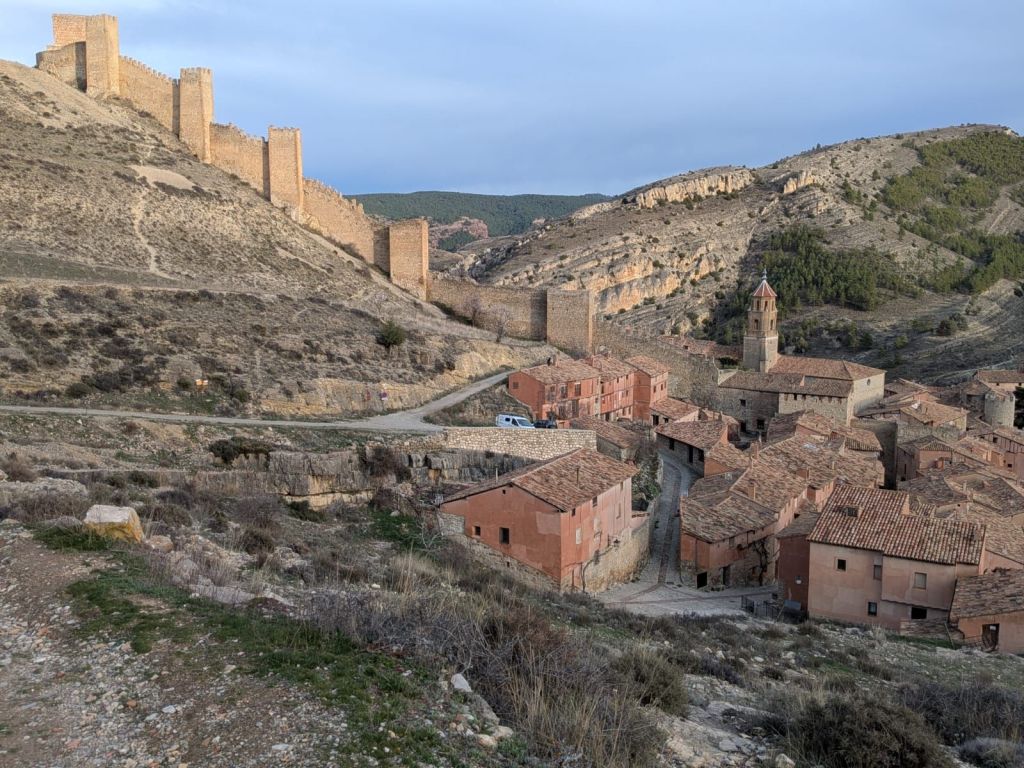
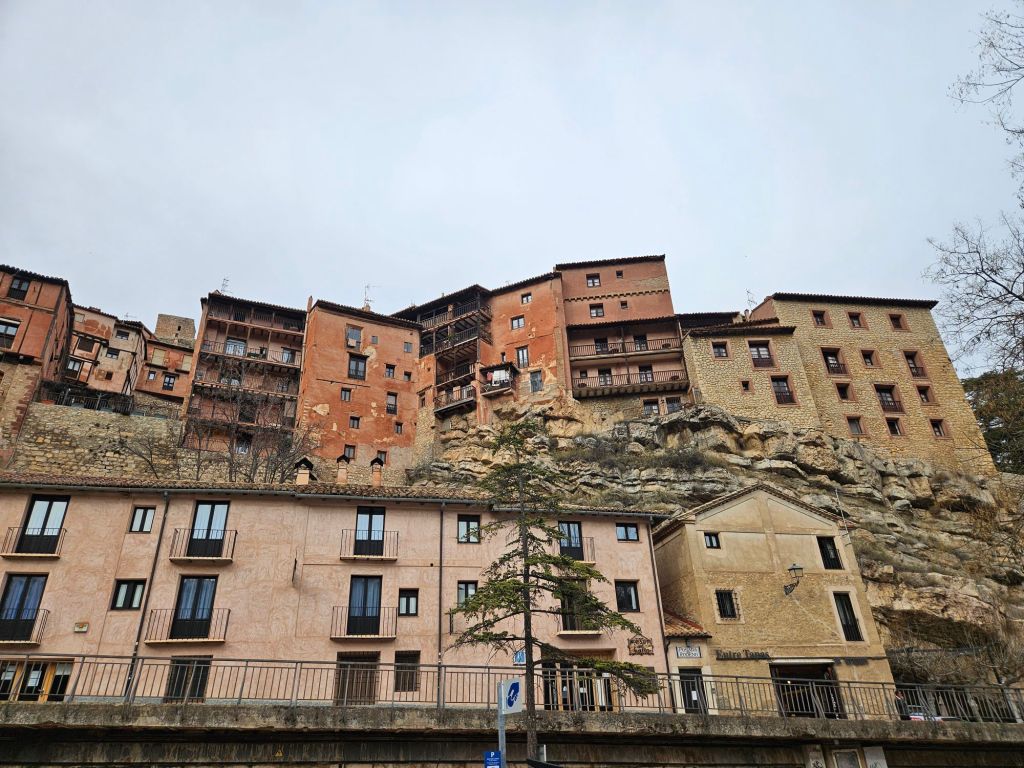
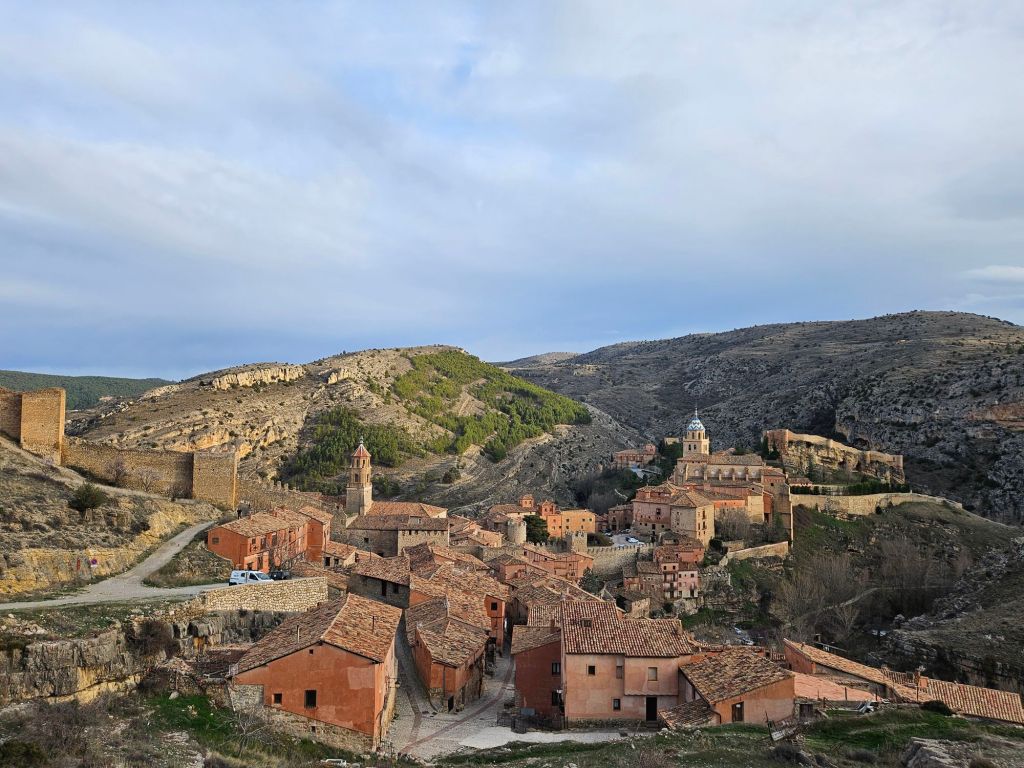
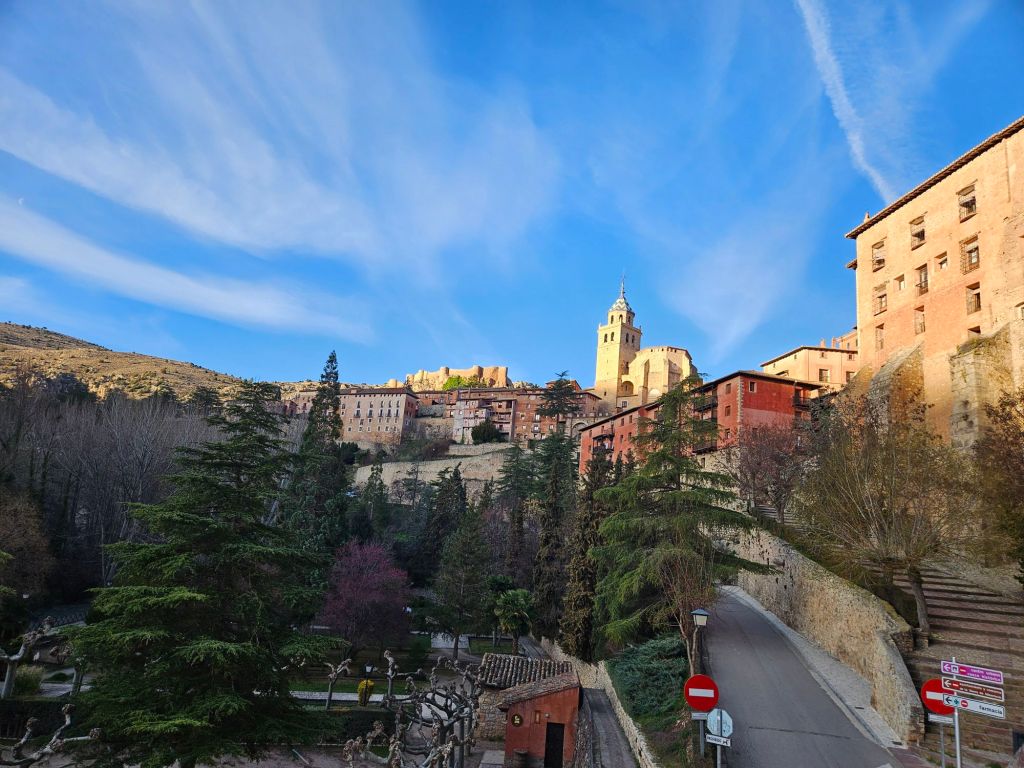
After our wrong way, steep hill, narrowly avoiding death drive into Morella (ok, it wasn’t that bad, just that stressful) I congratulated myself on having insisted on a hotel at the bottom of the hilltop town of Albarracin. That’s our hotel at the bottom of the pic above, with the first layer of the old town visible above. I took the photo from the easy access, large level parking lot just across the street.

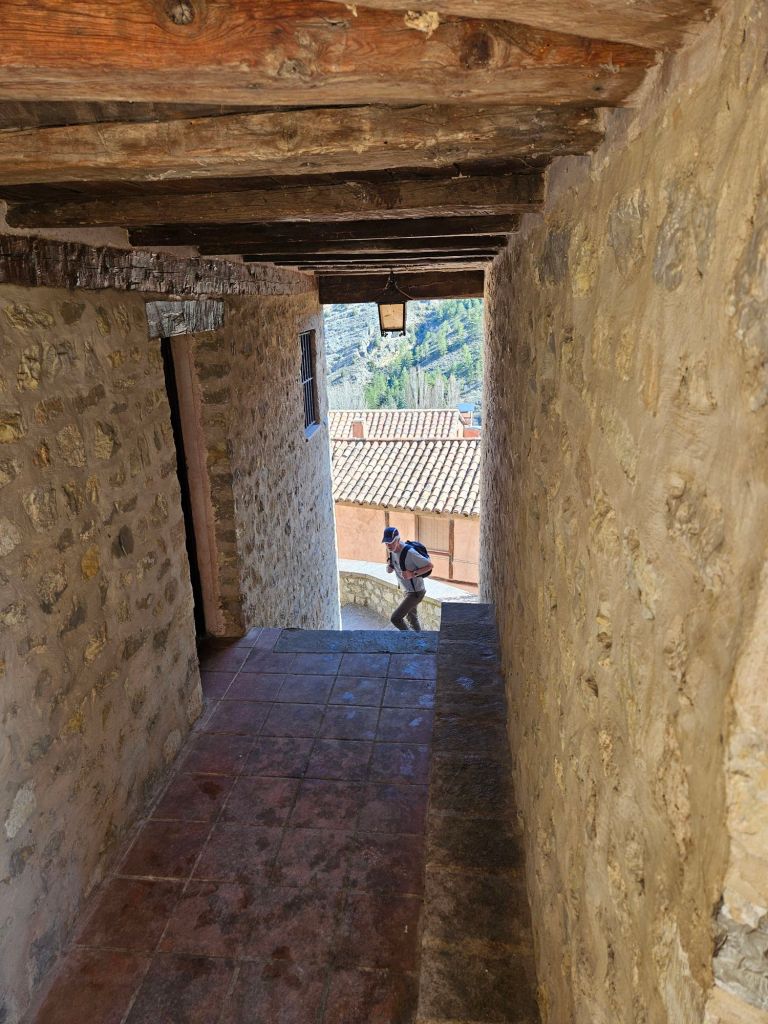
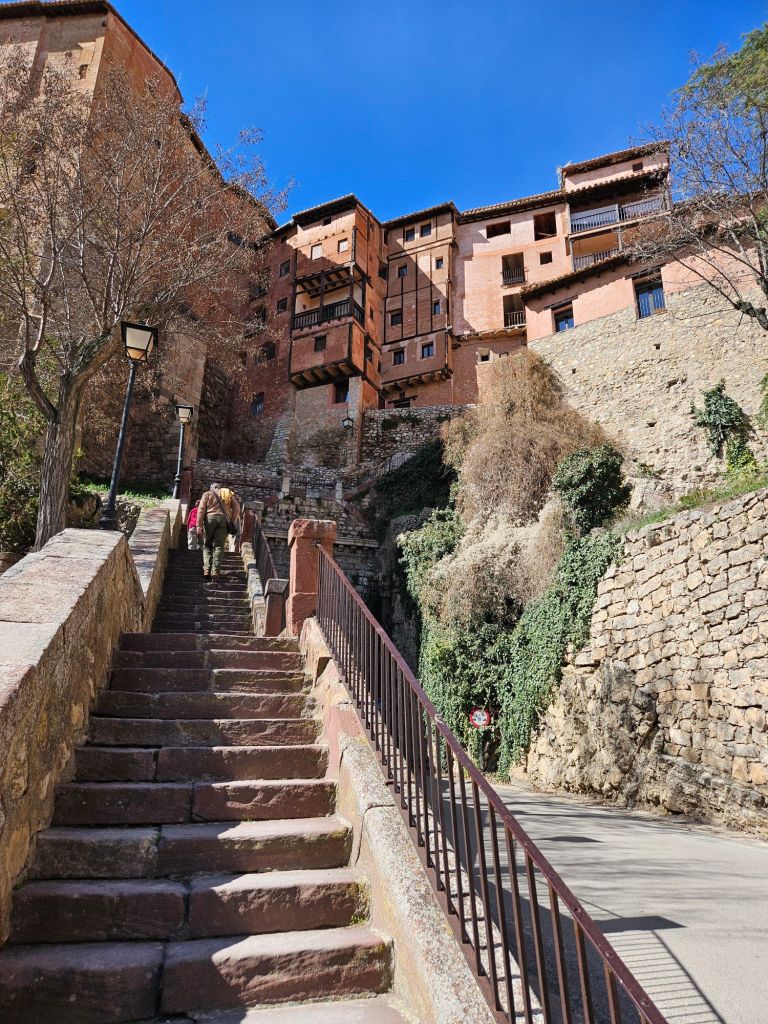
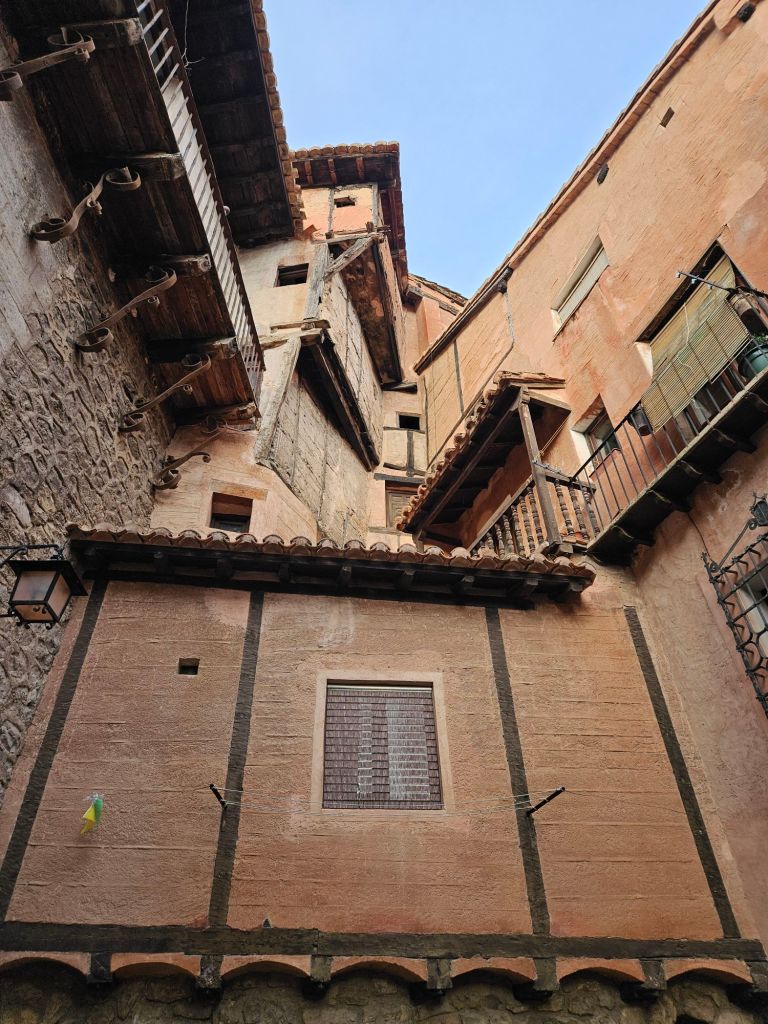
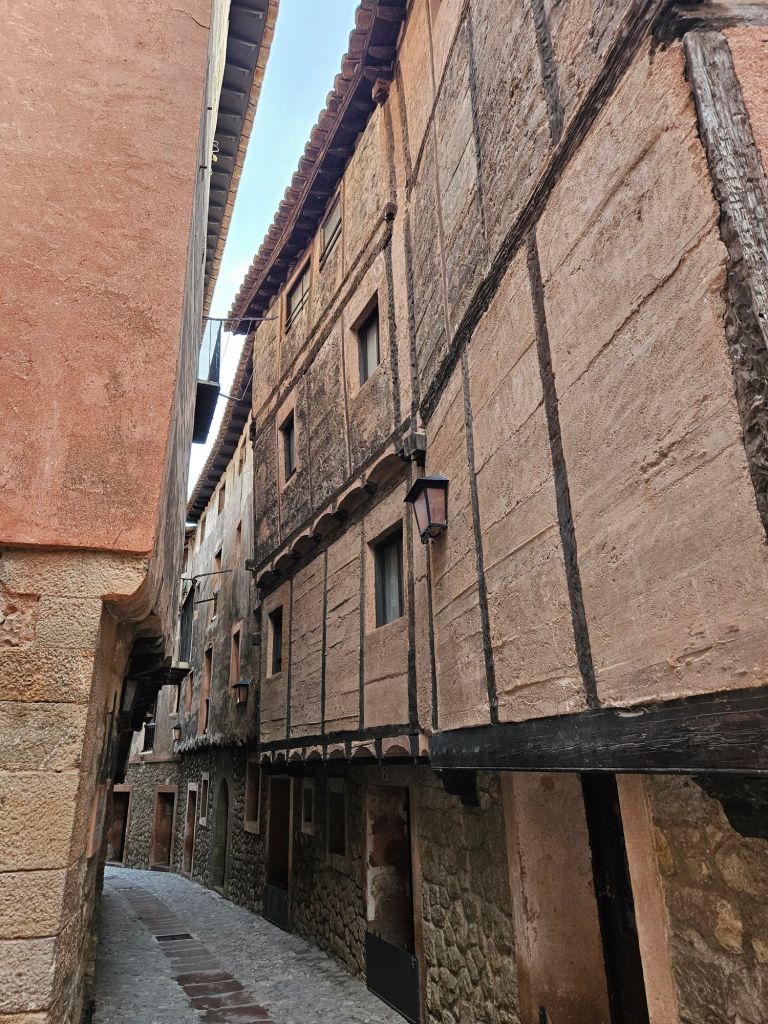
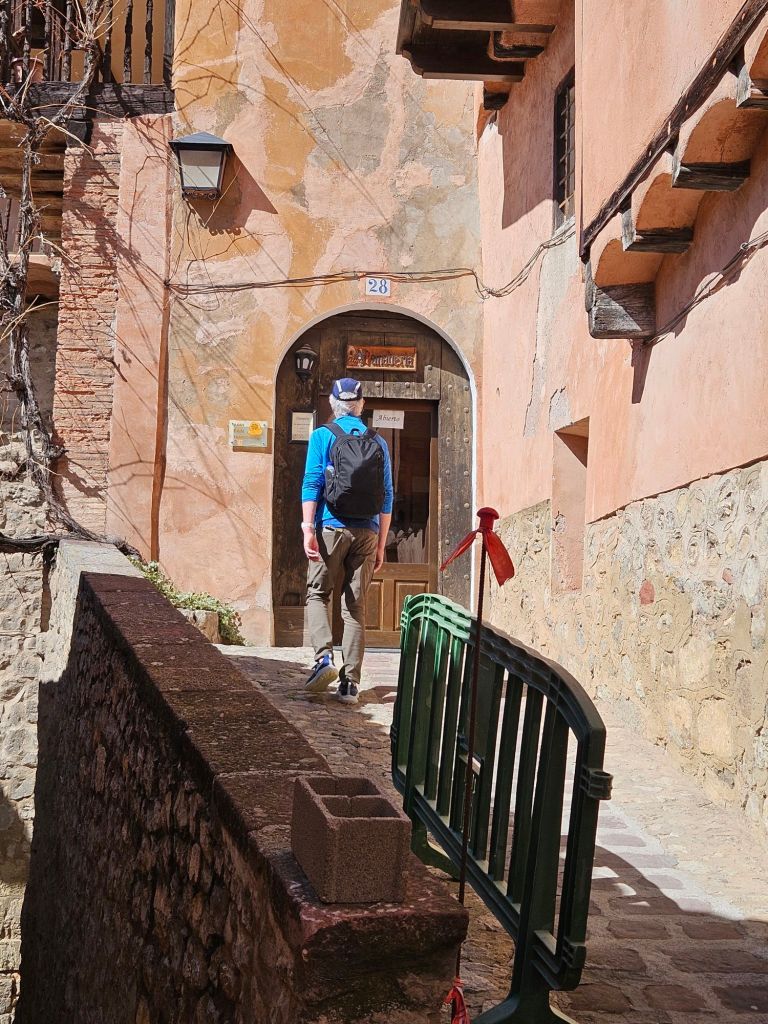
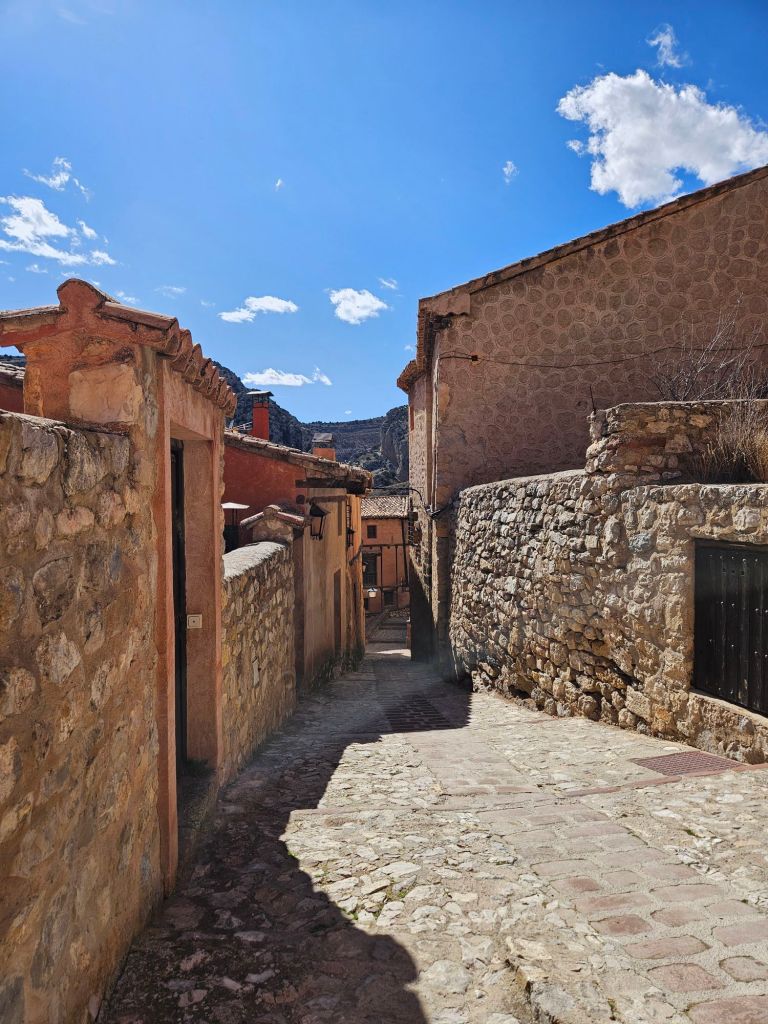
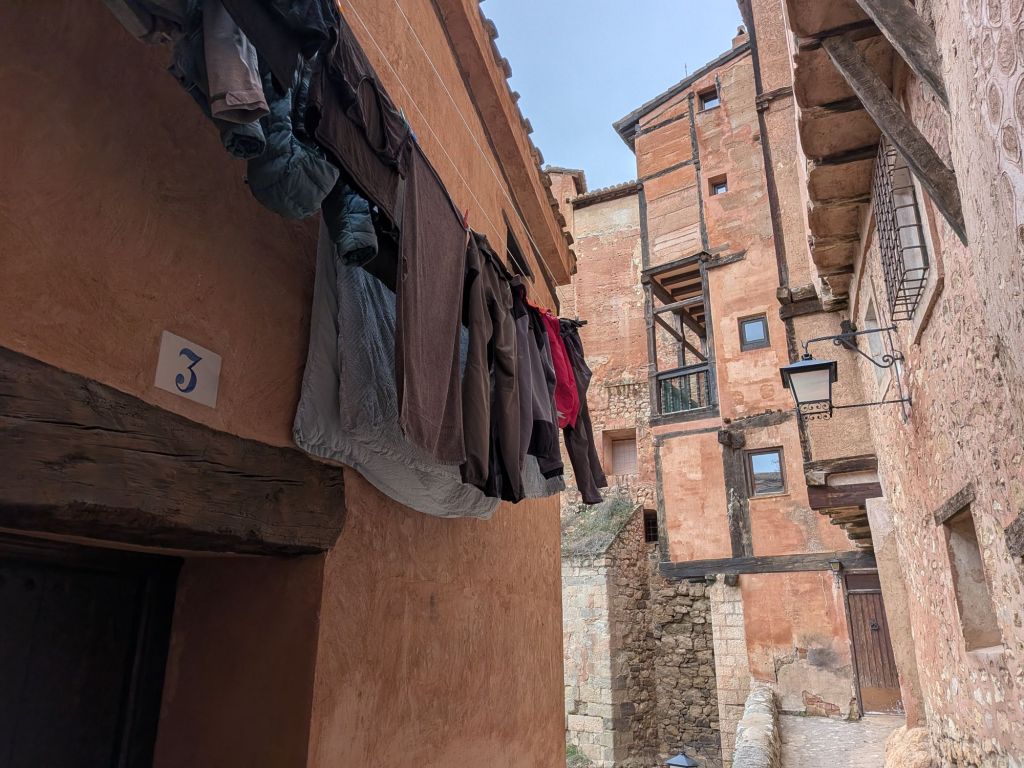
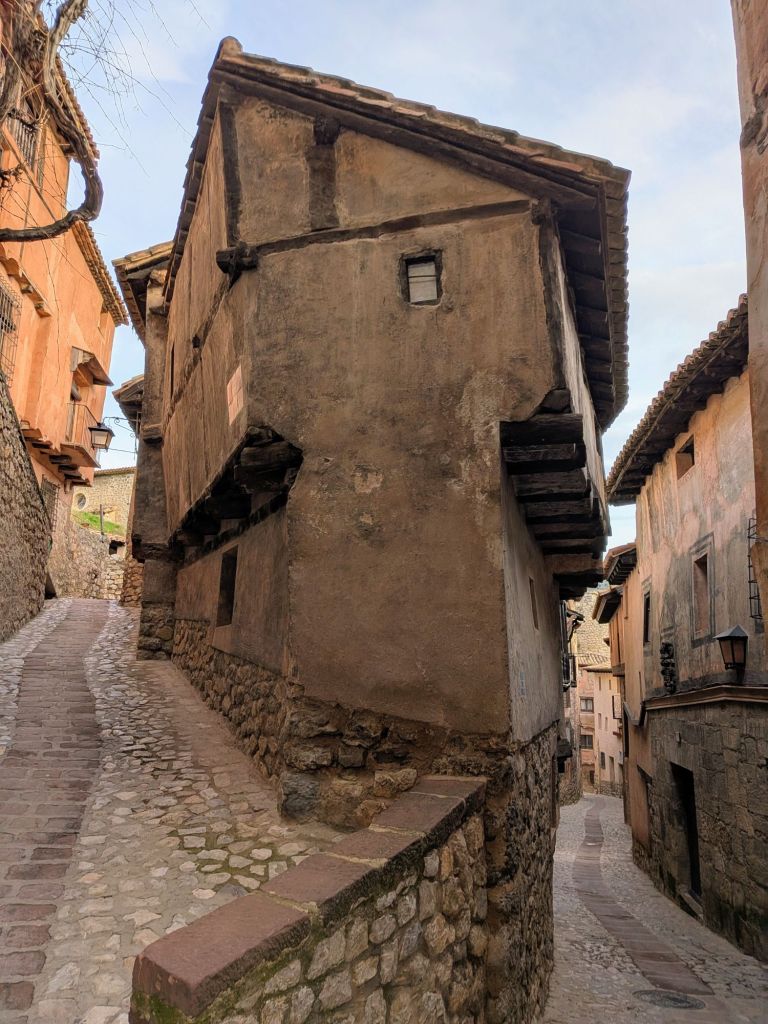
And then we decided to go exploring. Up the stairs. And up, and up, and up, through tiny cobblestone  “roads” and passageways. Over 100 steps just to get to the lower part of the old town. My thighs and lungs were questioning my hotel choice.

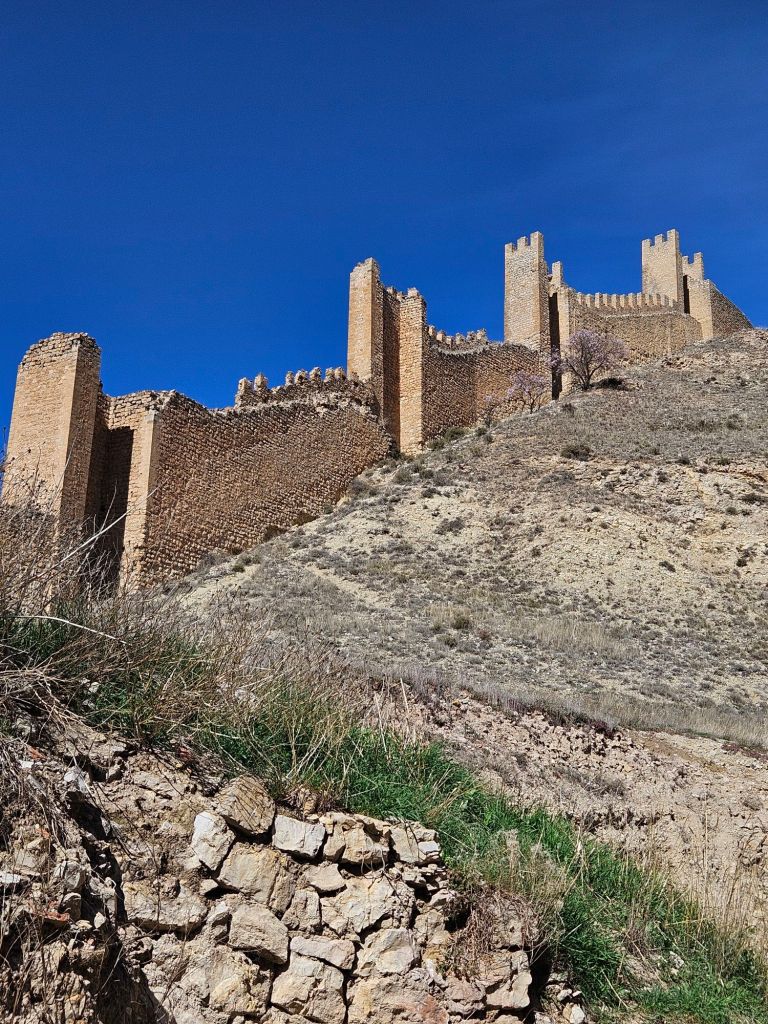
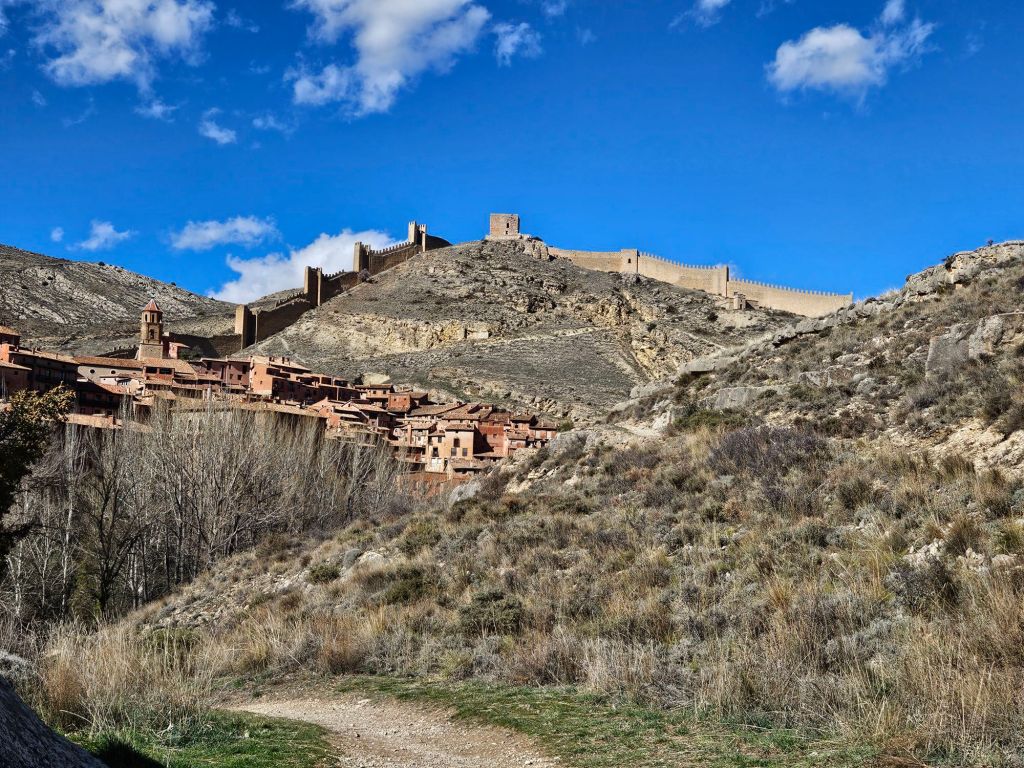
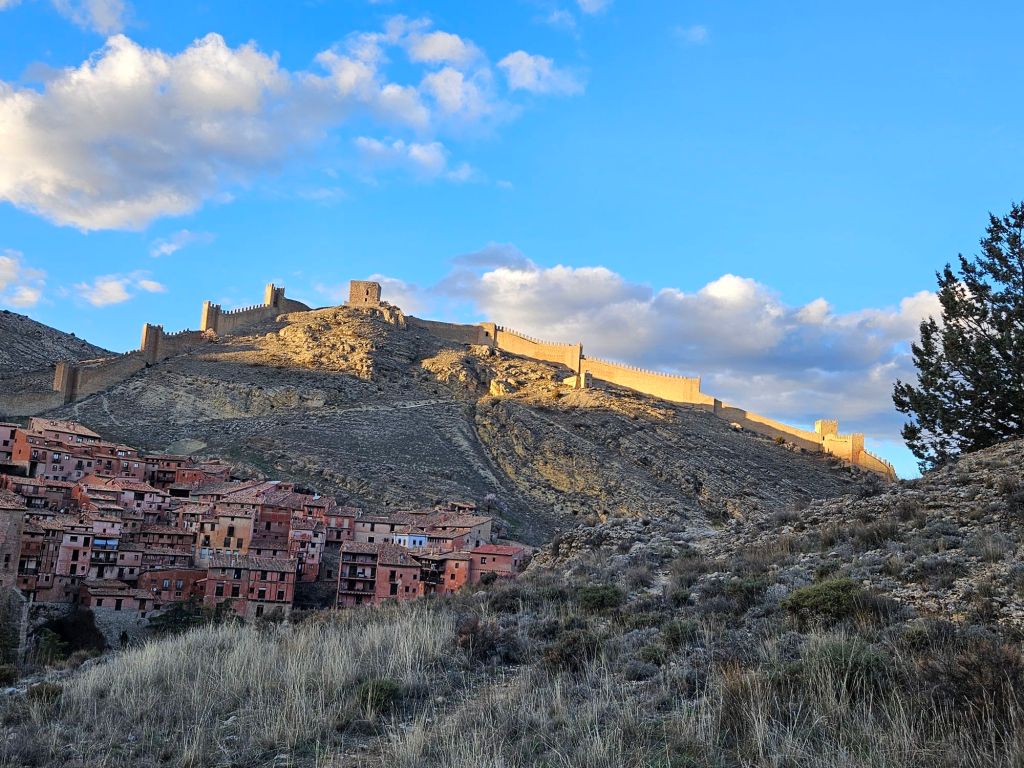
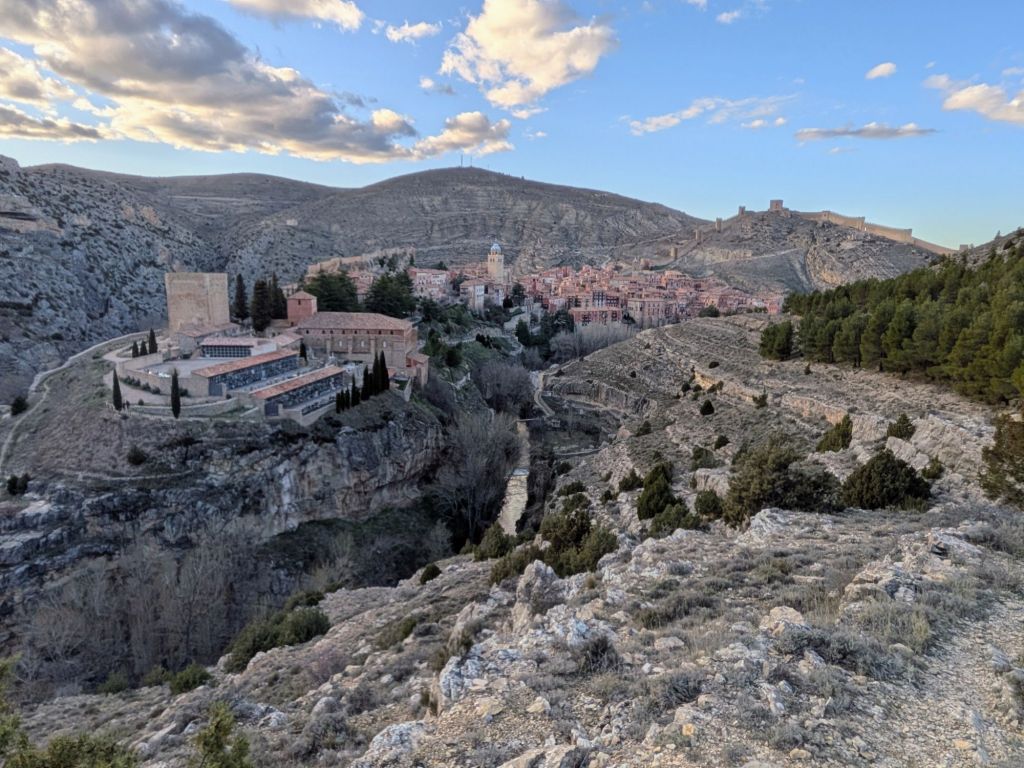
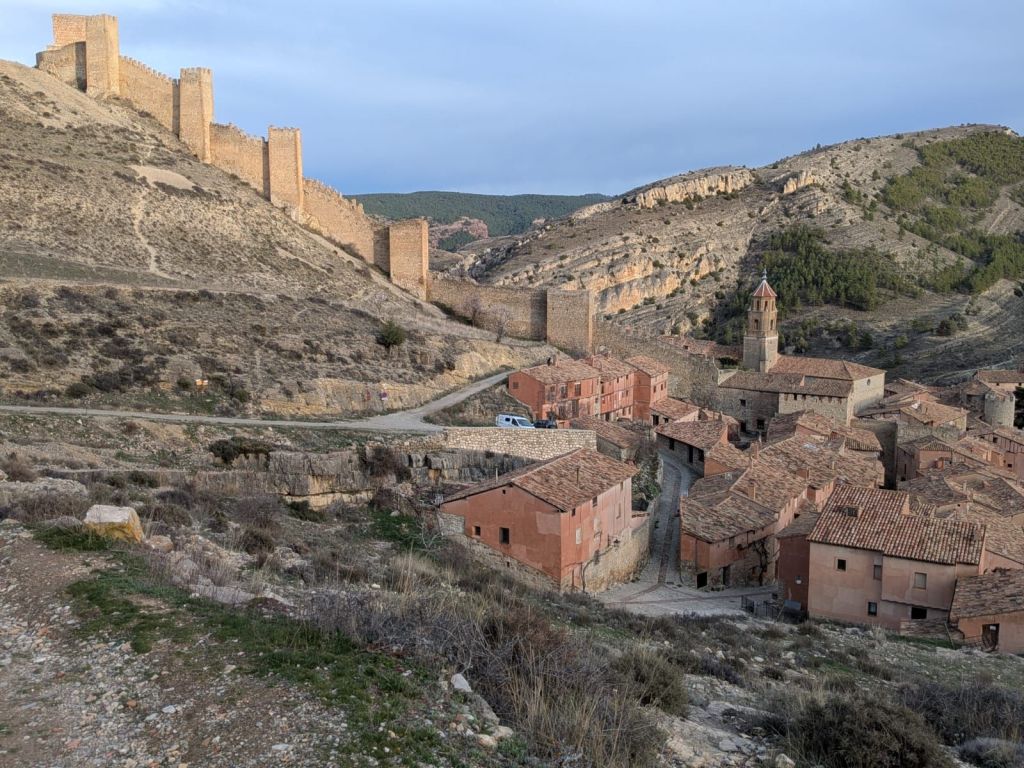
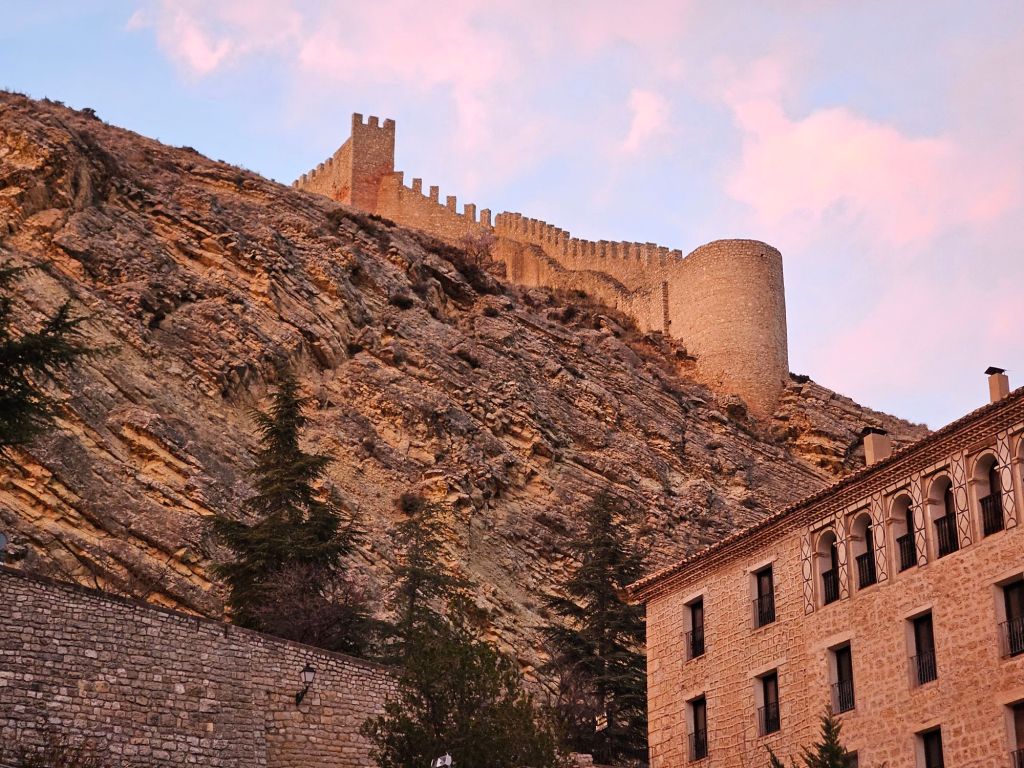
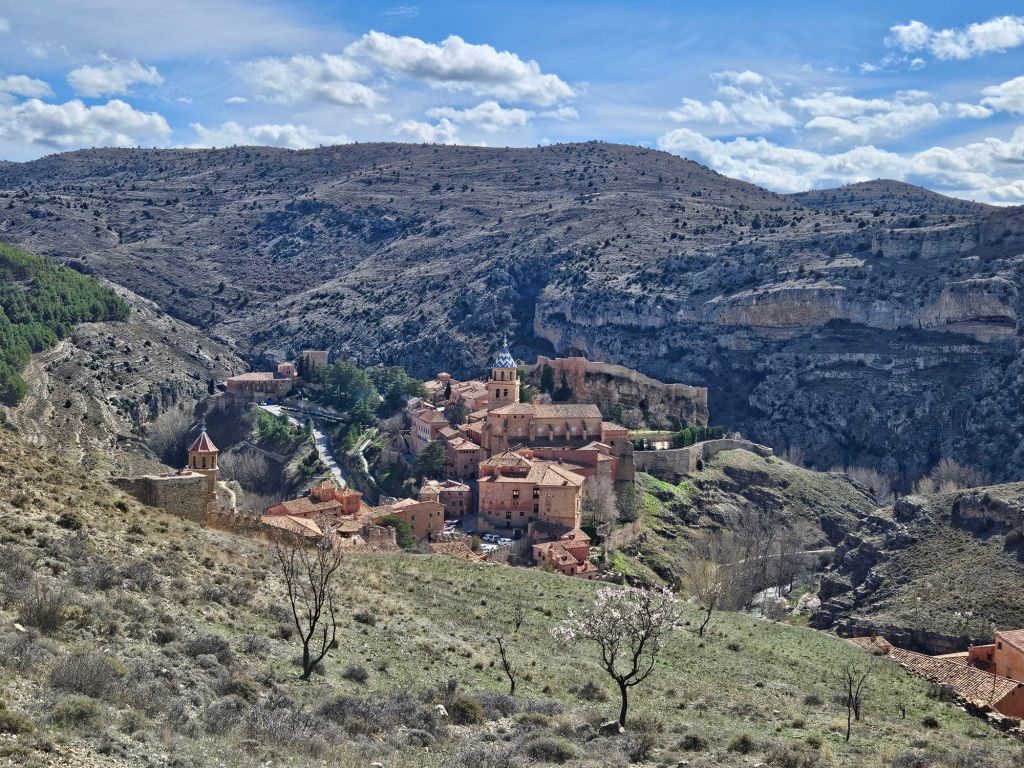
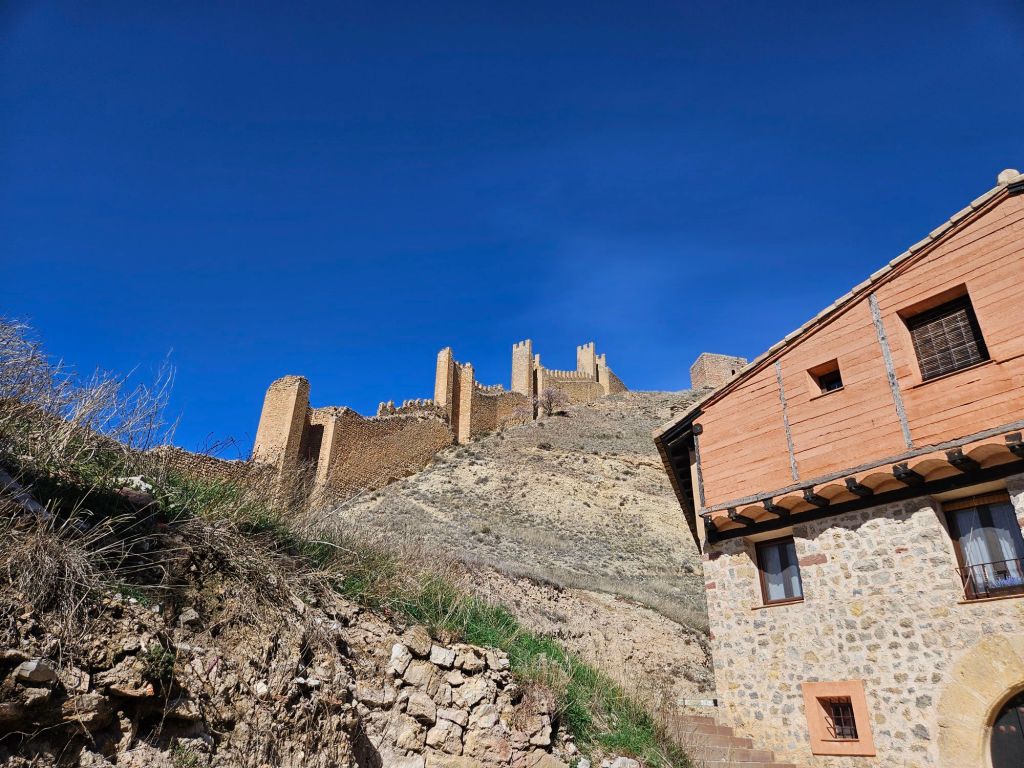
But eventually we got above the town to the walls. From there we could see the oldest castle and wall parts off to right–originally Arabic and built around 900 AD–and to our left the new walls, built around 1600 AD by the Christians. In between, in a vaguely kidney bean shape dictated by the river gorges, the town.

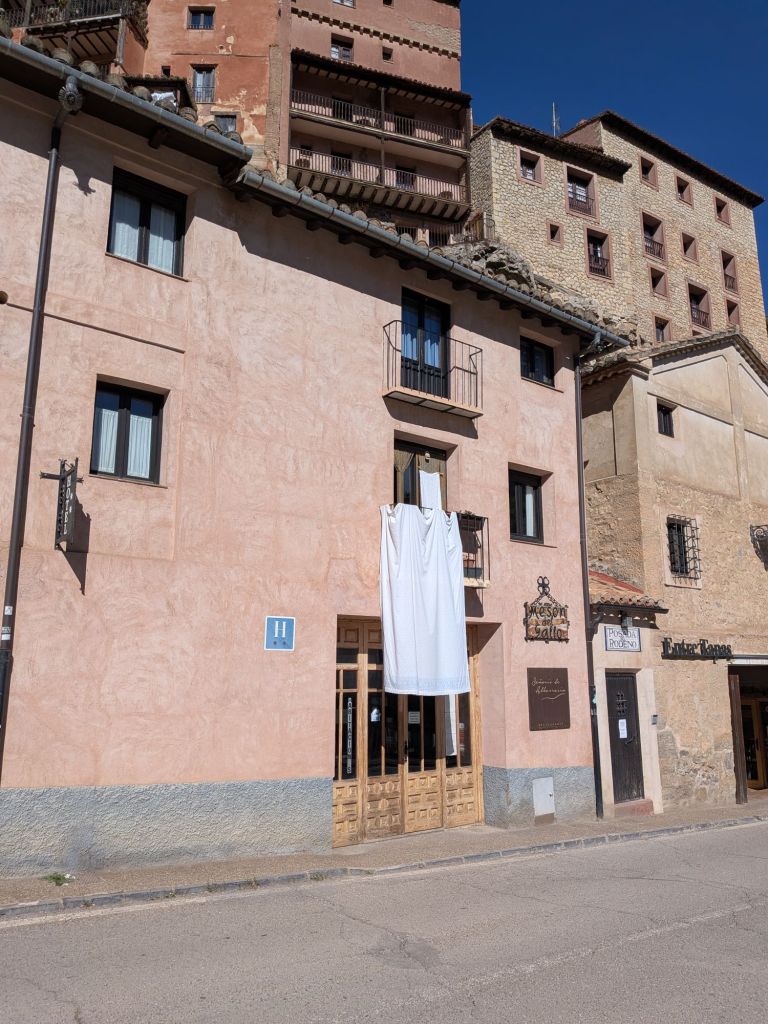
Eventually we made our way down and back to our 2 two star but very comfy hotel El Meson de Gallo. (Very grateful for the enthusiastic radiators. Went down to 32 each night.)

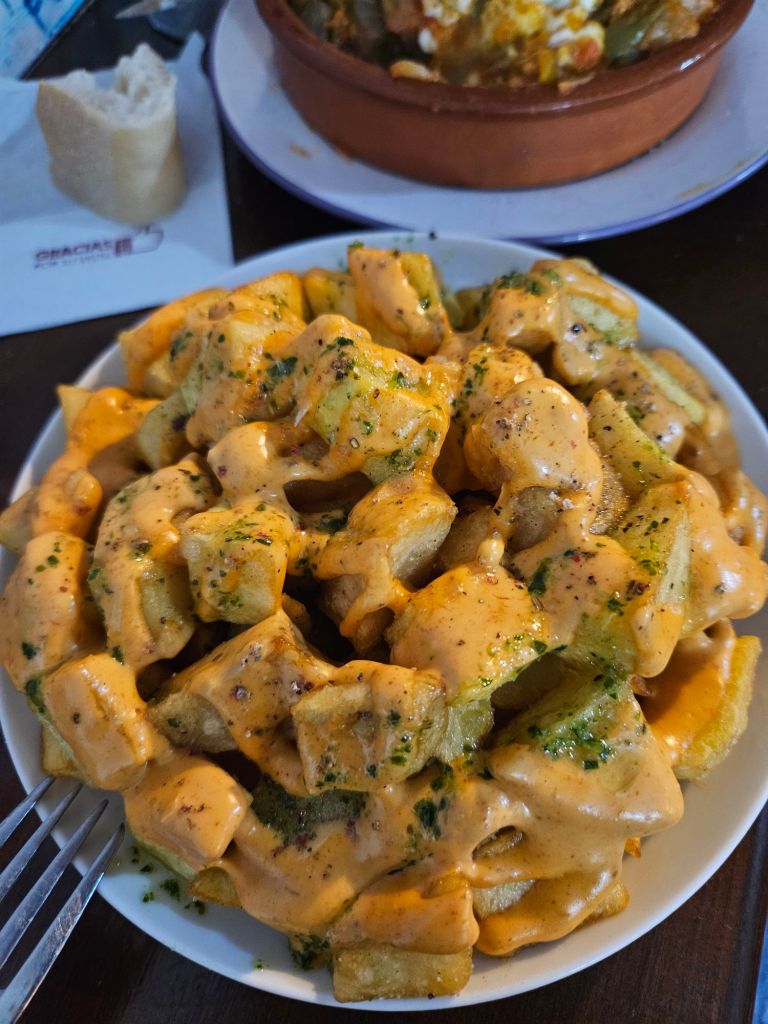
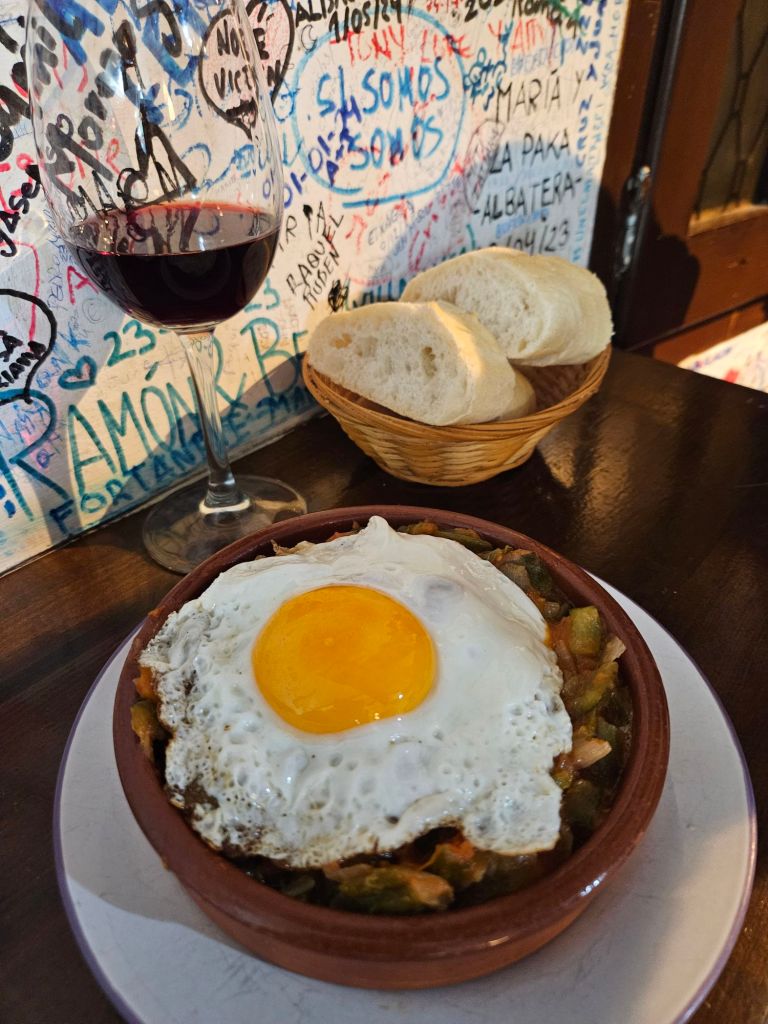
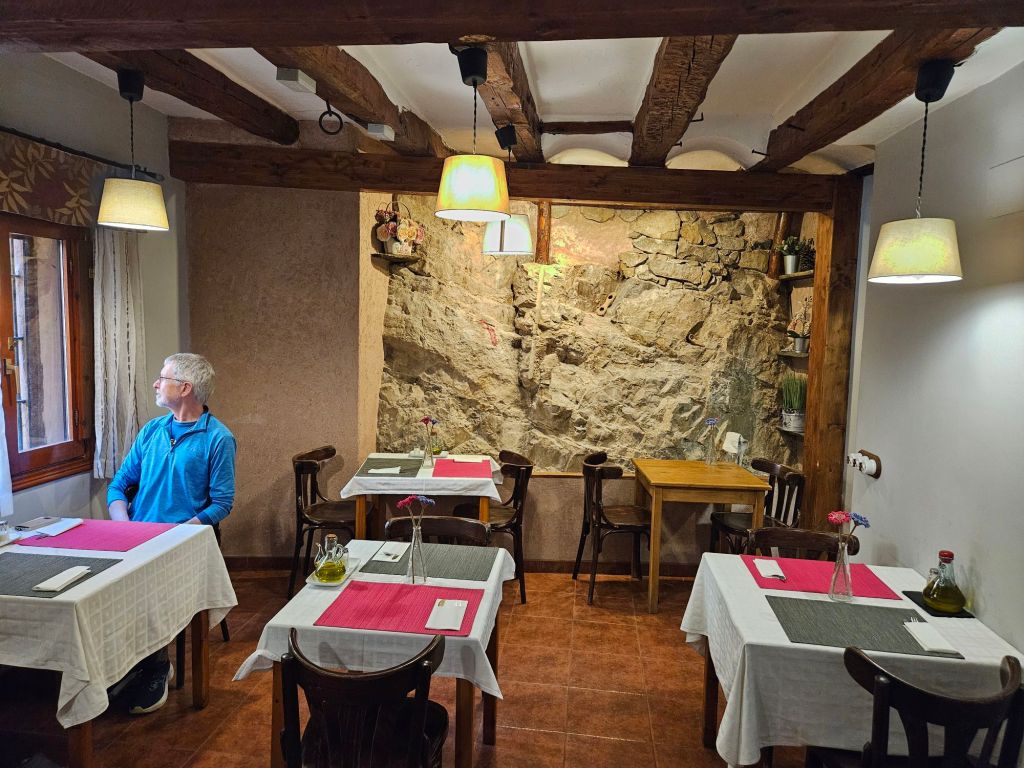
After a brief respite, time for dinner. Back up the stairs again, though this time we found a route with only 54 actual steps and the rest a steep cobblestone road. Not much was open (mid-week during the off season), but we landed in a delightful tiny 4 table bar, where the waitress was kind and the food basic but tasty – an excellent ratatouille with an improbably huge fried egg on top; a big mound of patatas bravas – and the walls and ceiling covered with penned in names of anyone who had ever visited.

Back down the hill and to bed.