Family and theatre

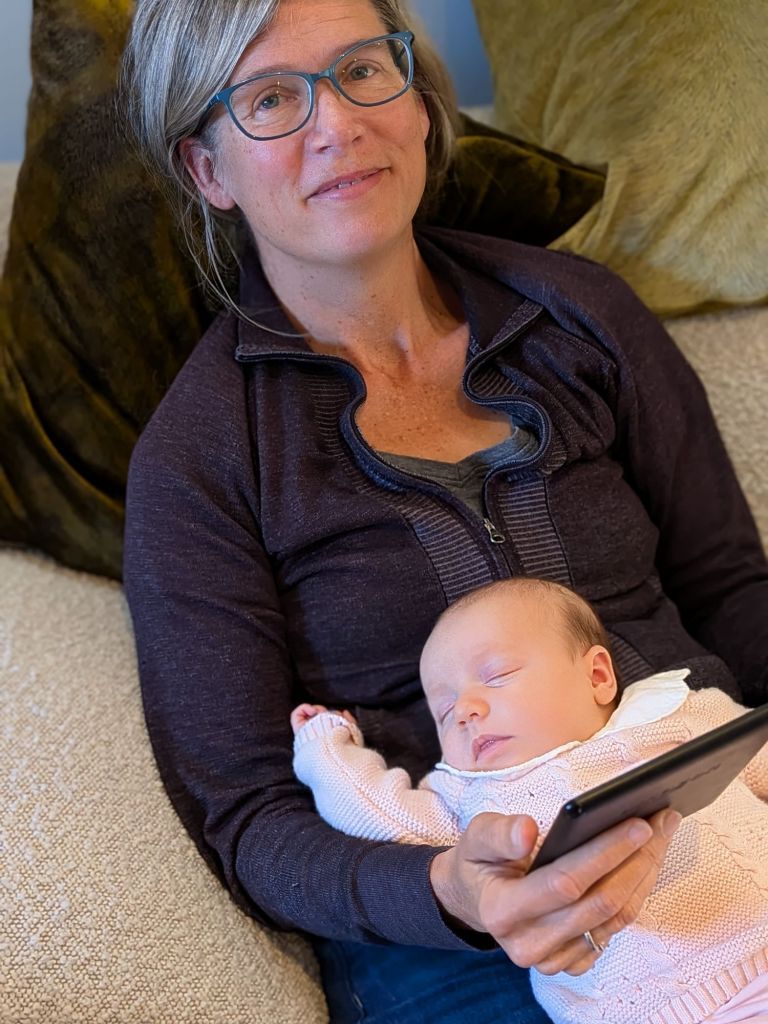
I spent the morning cuddling Isobel’s baby Hero while R gave Isobel a lesson in bread making.

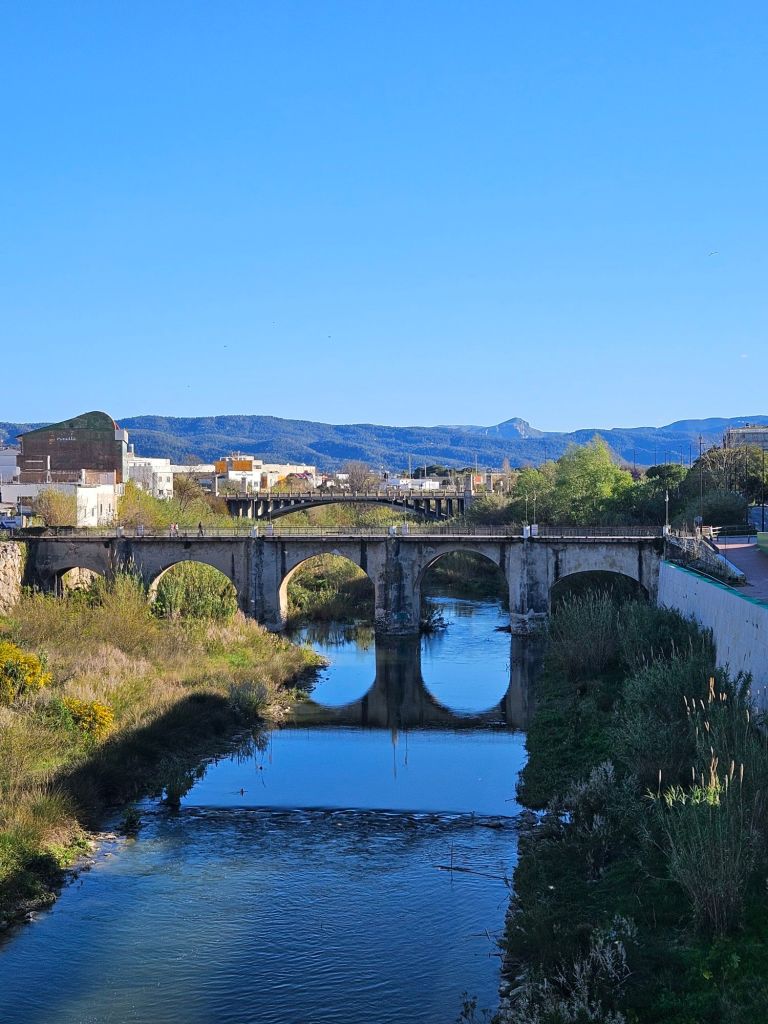
After a peaceful lunch we took a walk along the river (tide was very high and it was spilling over the road in places) then headed out to the theatre.

At Clarissa’s suggestion we went to My Neighbour Totoro. So glad to have seen it. The plot was a bit thin, but the staging, puppetry and effects were magical. Puppets, ranging from tiny soot sprites manipulated in groups to form flying murmurations to a 2-story tall Totoro snoring gently on his back, were worked by visible teams of black clad puppeteers.
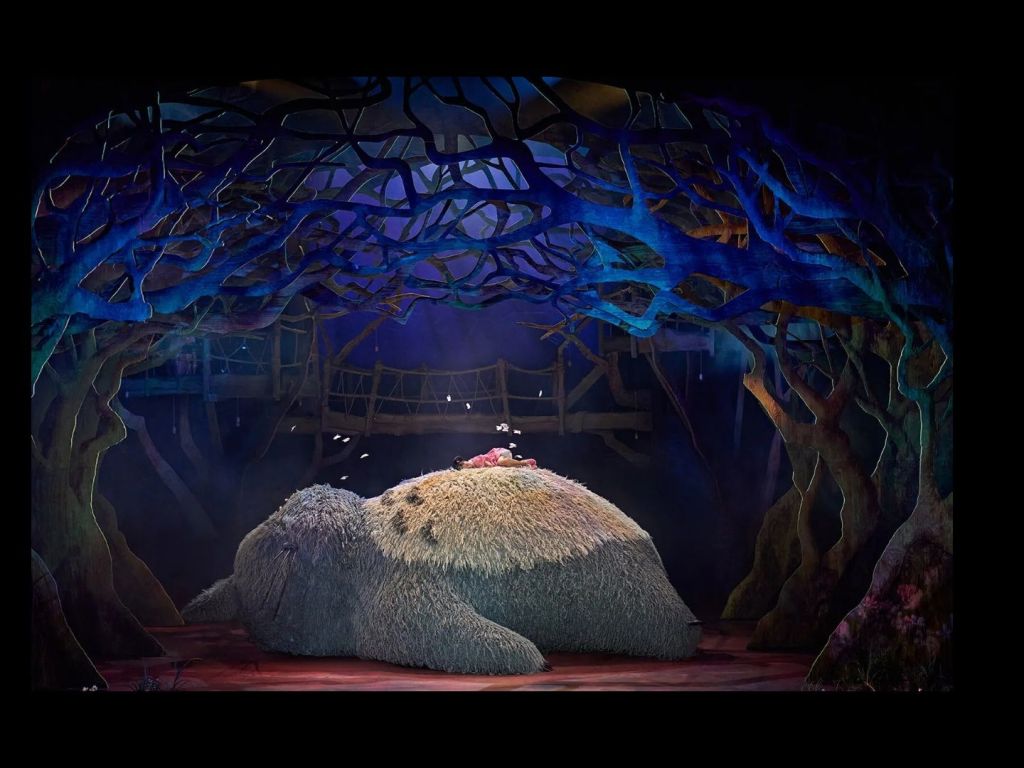
An actor perched atop a puppet. Screenshot from the show’s website.

Even the family’s house was like a puppet, constantly spinning and reforming itself as the play progressed. Musicians were ranged around the set in platforms in the trees, and the trees themselves slid in and out of stage frame depending on how deep the action was in the forest. So very clever and imaginative.

R here:  This is based on the famous Hayao Miyazaki / Studio Ghibli animated film of 1988. Never seen it, now must. I loved Totoro’s “voice,” which used some notes so deep that they were more like a feeling in the chest than a sound but also many high, slightly querulous squeaks – expressive in the manner of whale song. Clarissa has seen an earlier stage version that she said was darker and more complex. The happy-ever-after ending we saw fits with the idea that the vast but benevolent wood spirit Totoro is an embodiment of hope. Not sure how that works if the ending isn’t a happy one.
¡Adiós a España!

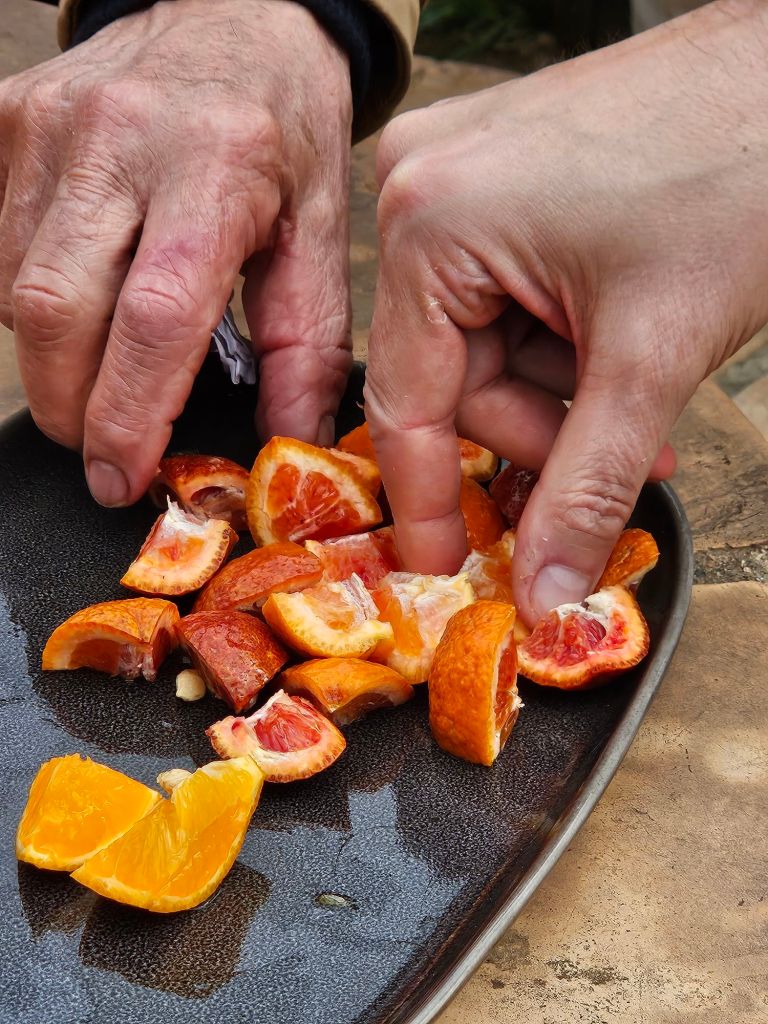
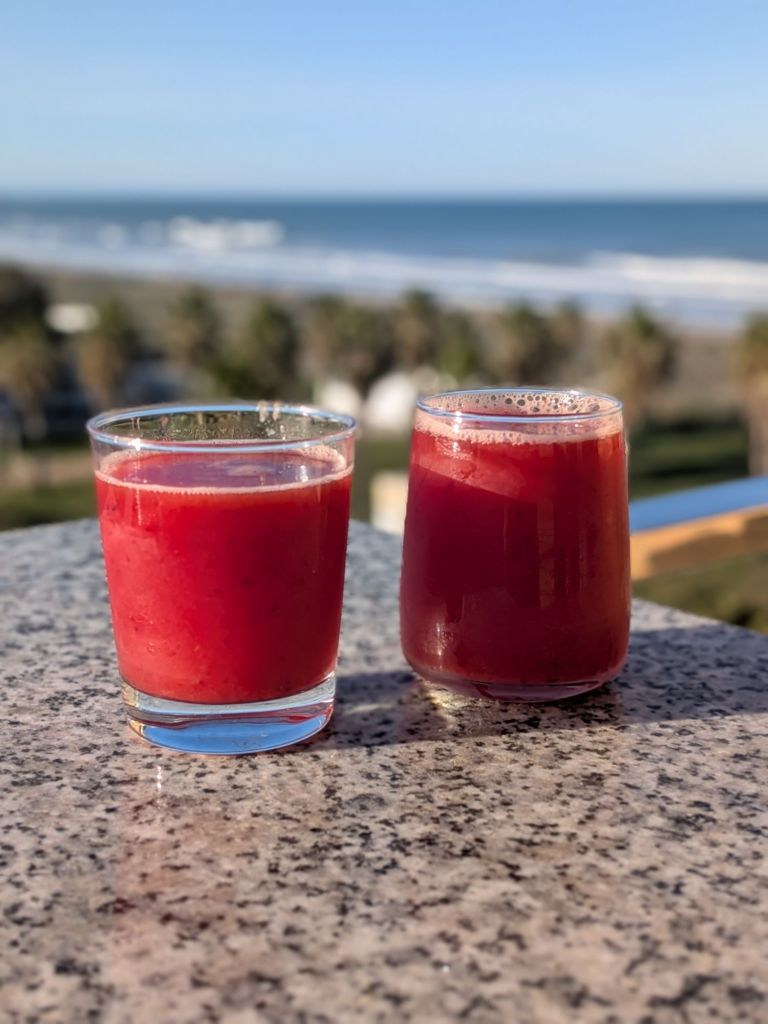
Freshly squeezed blood orange juice
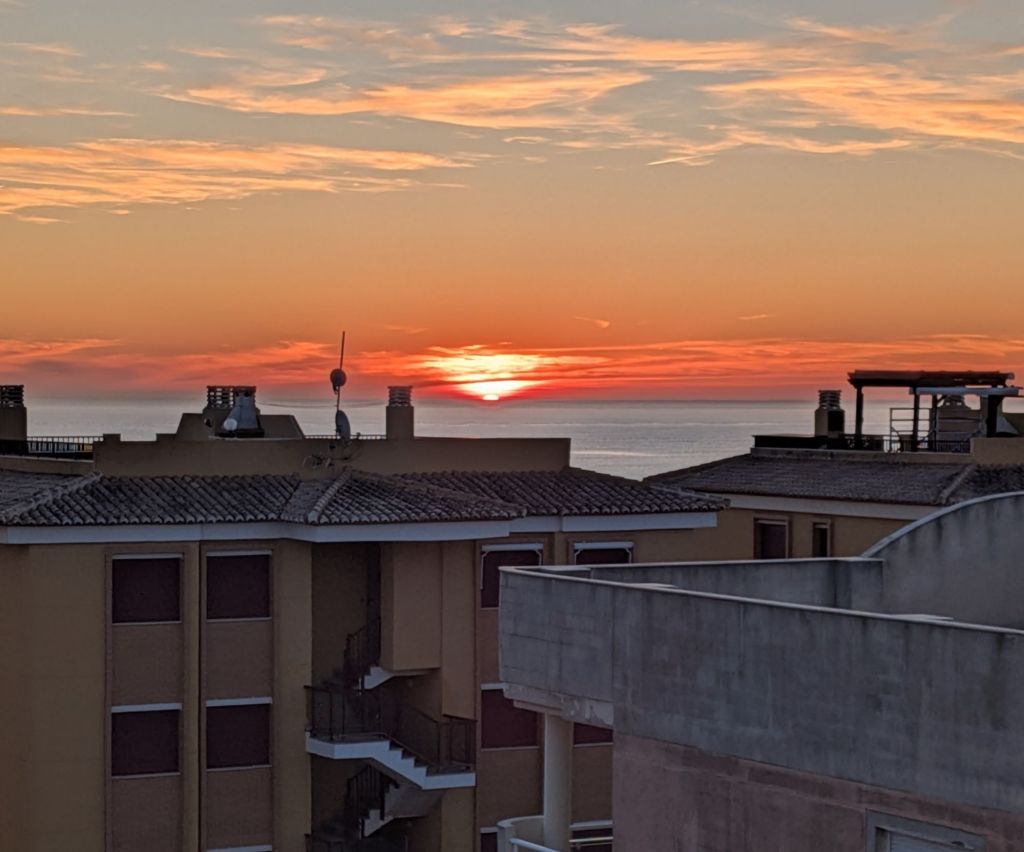
Tuesday 17th, 7.10 am: dawn over the Mediterranean

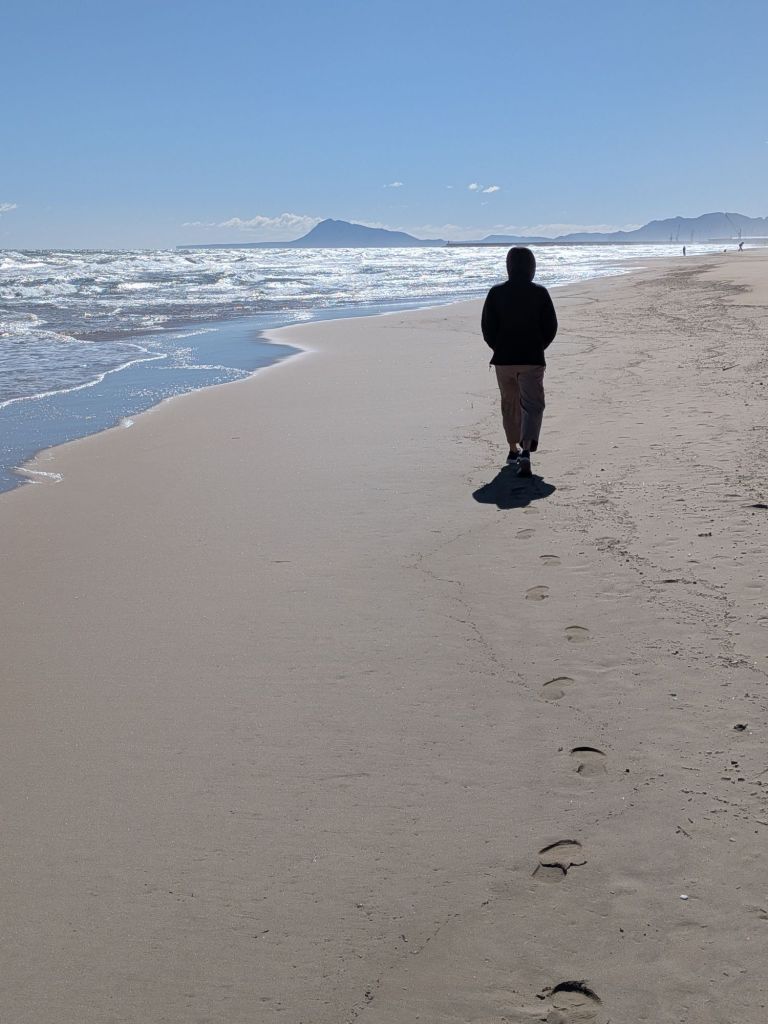
Packing, tidying, and a glorious hour or so walking on the beach at Daimus. Stood in the sea up to my ankles but not much tempted to swim.

More food

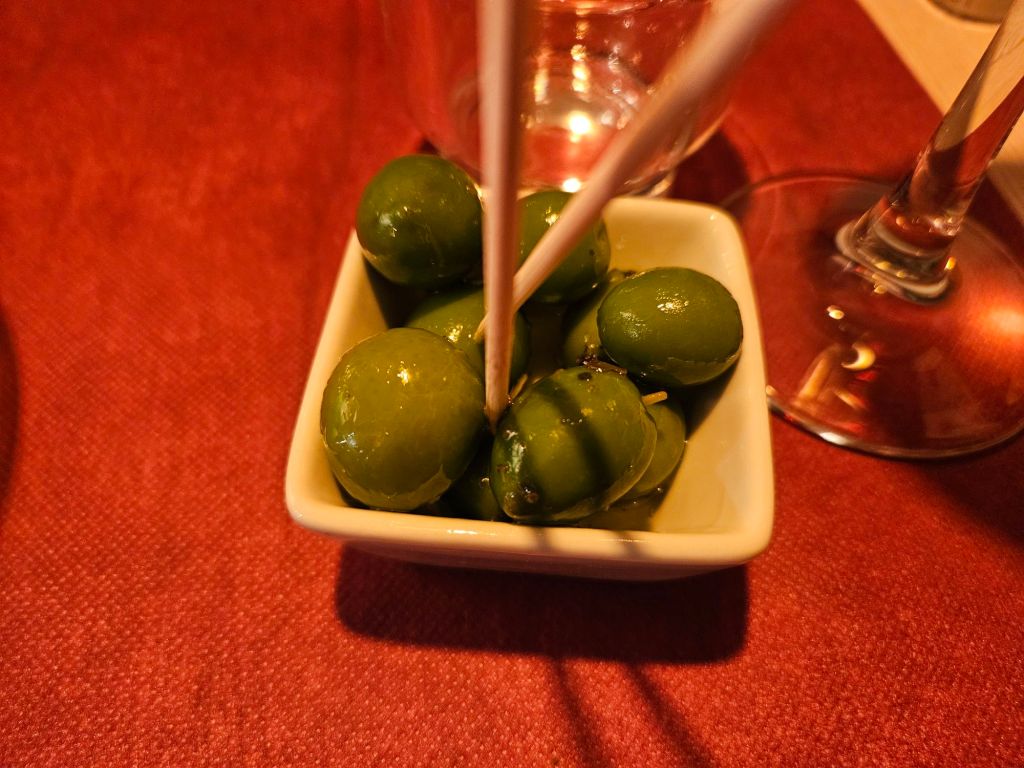
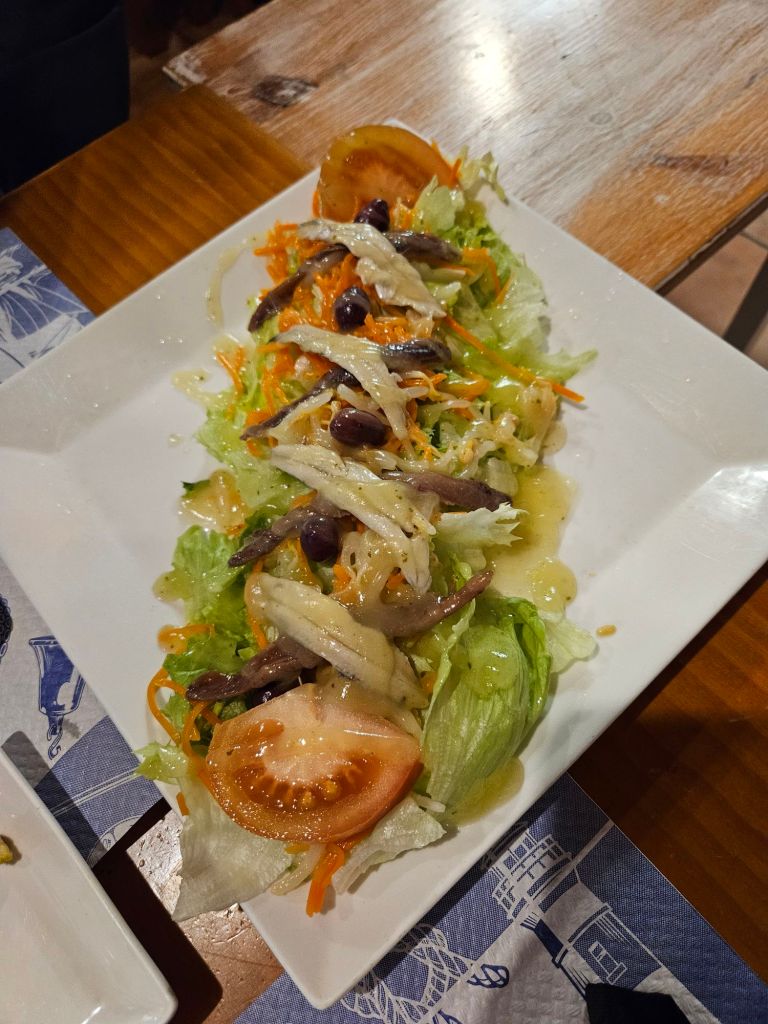
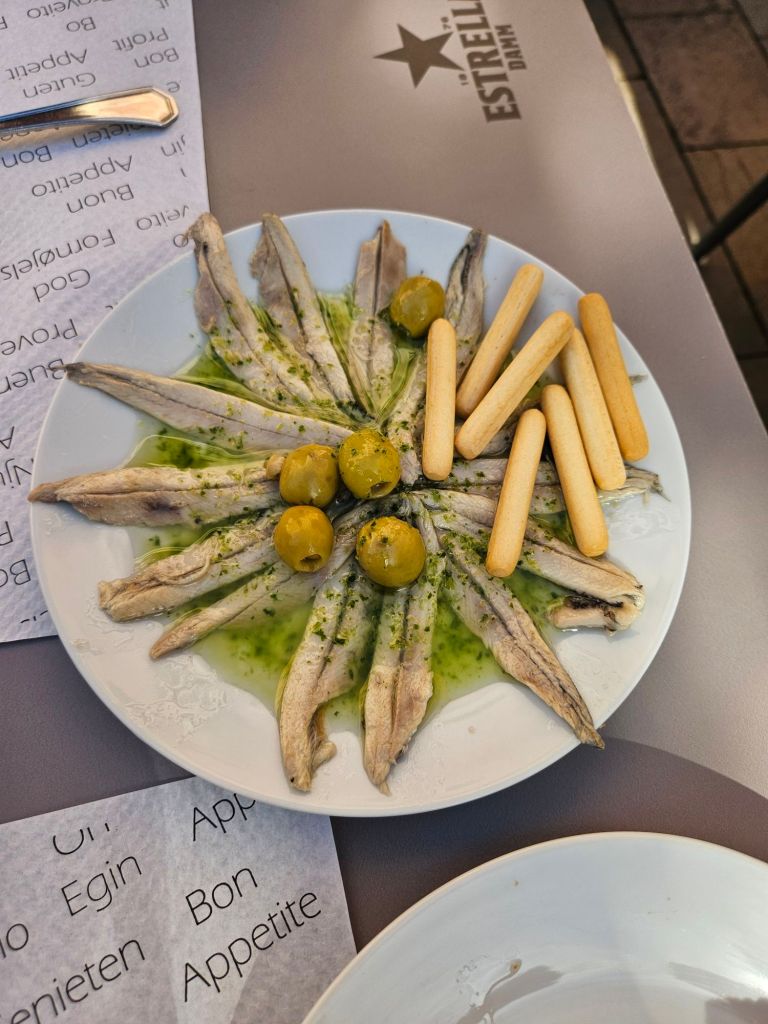
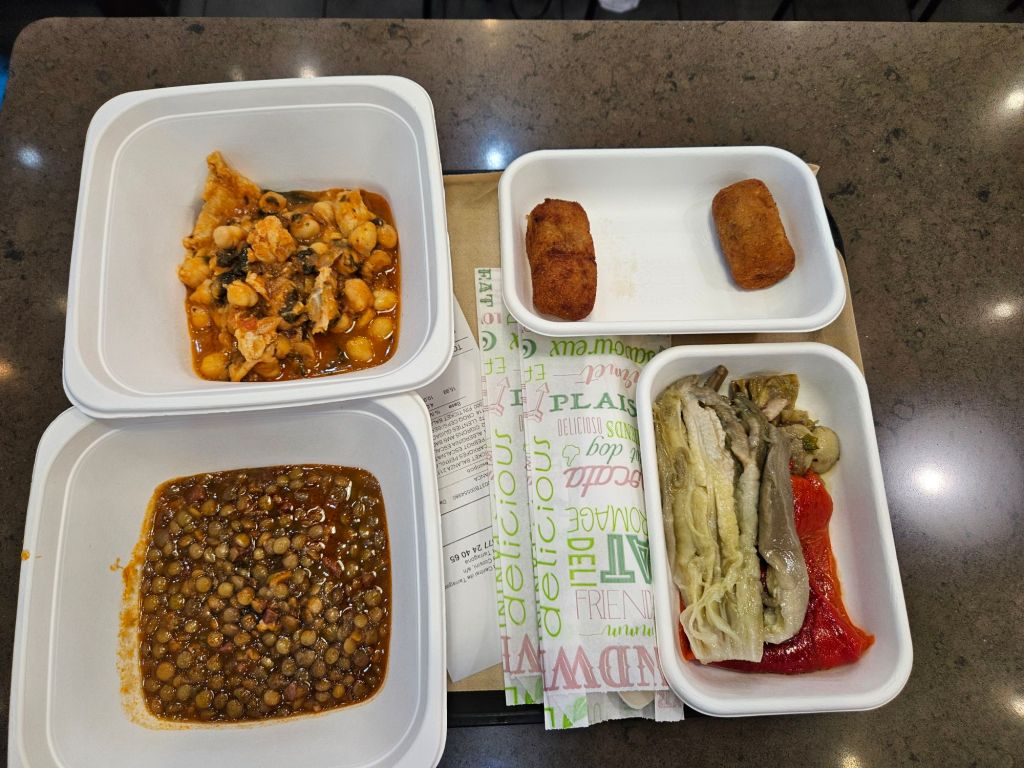
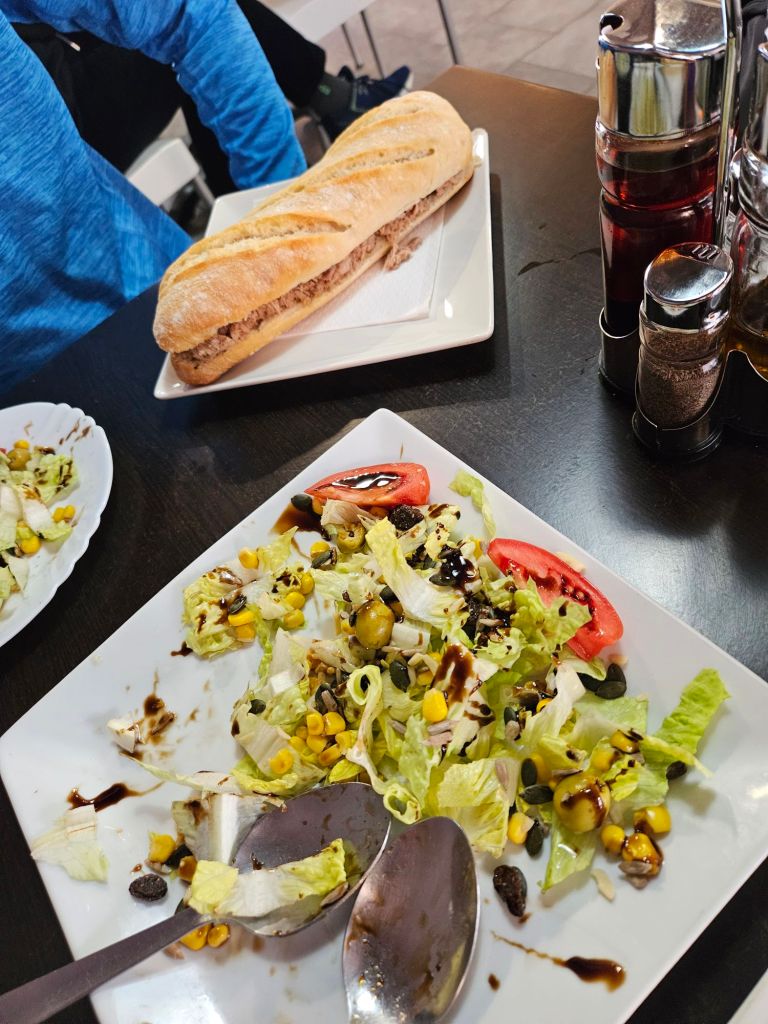
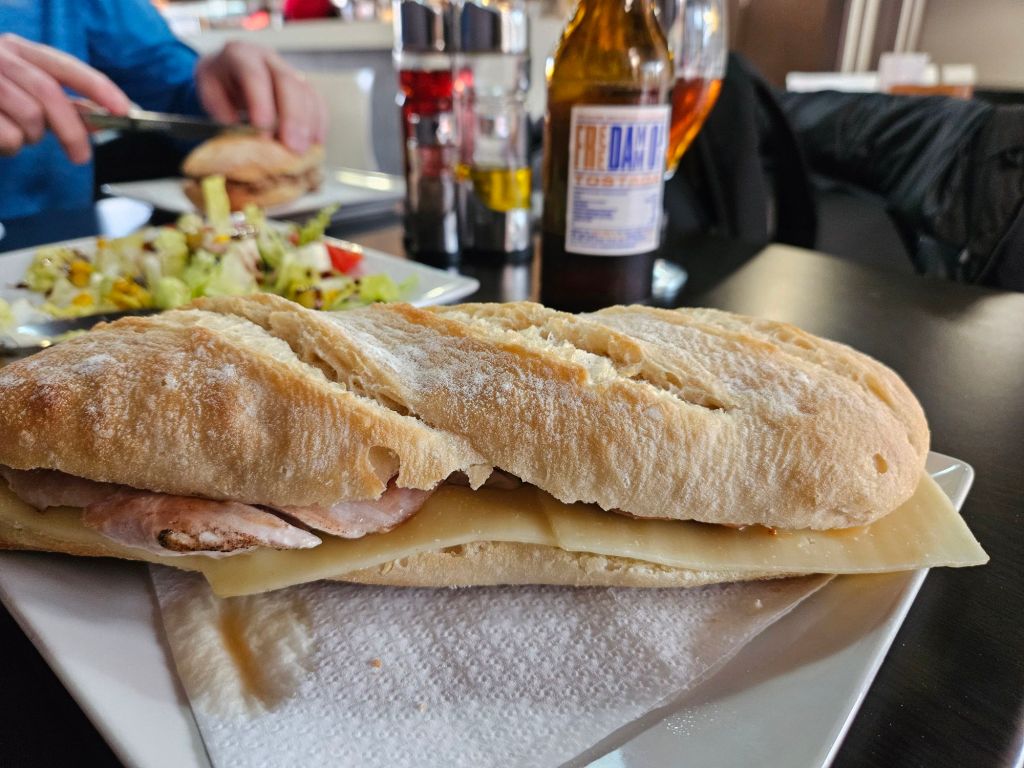
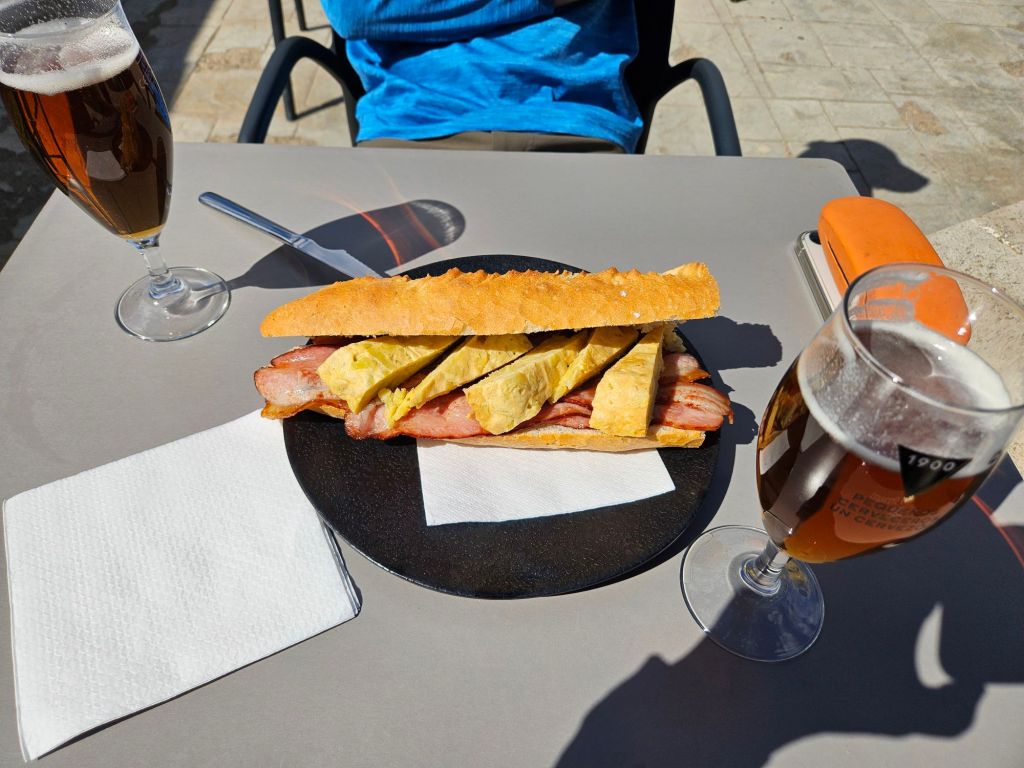
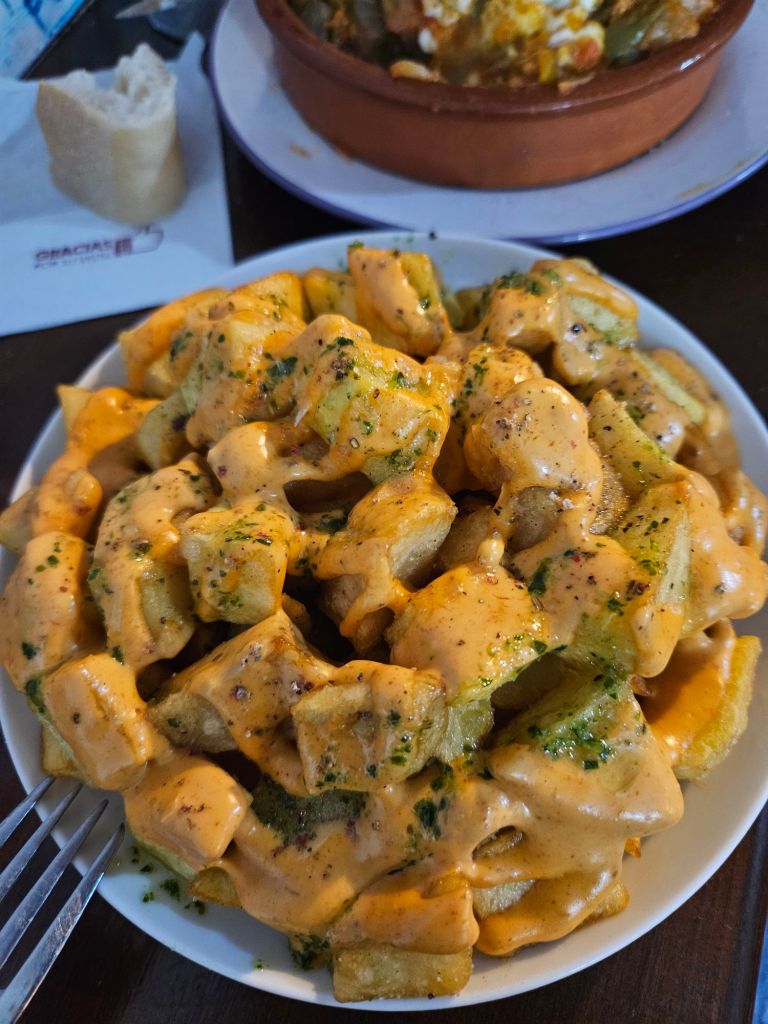
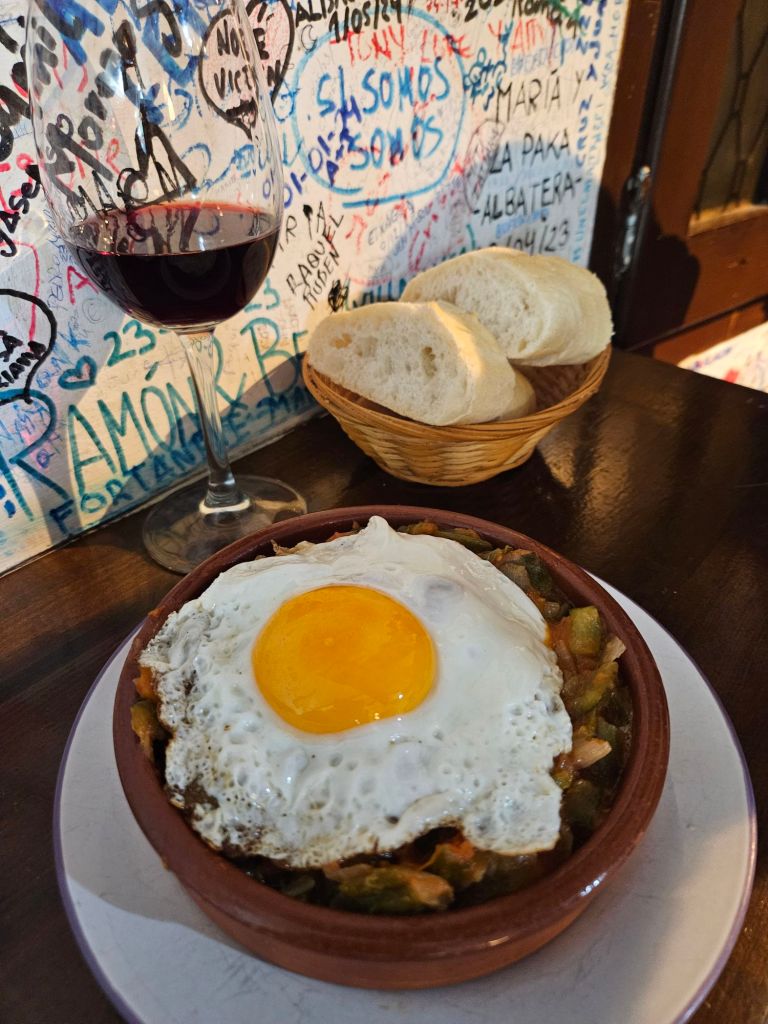
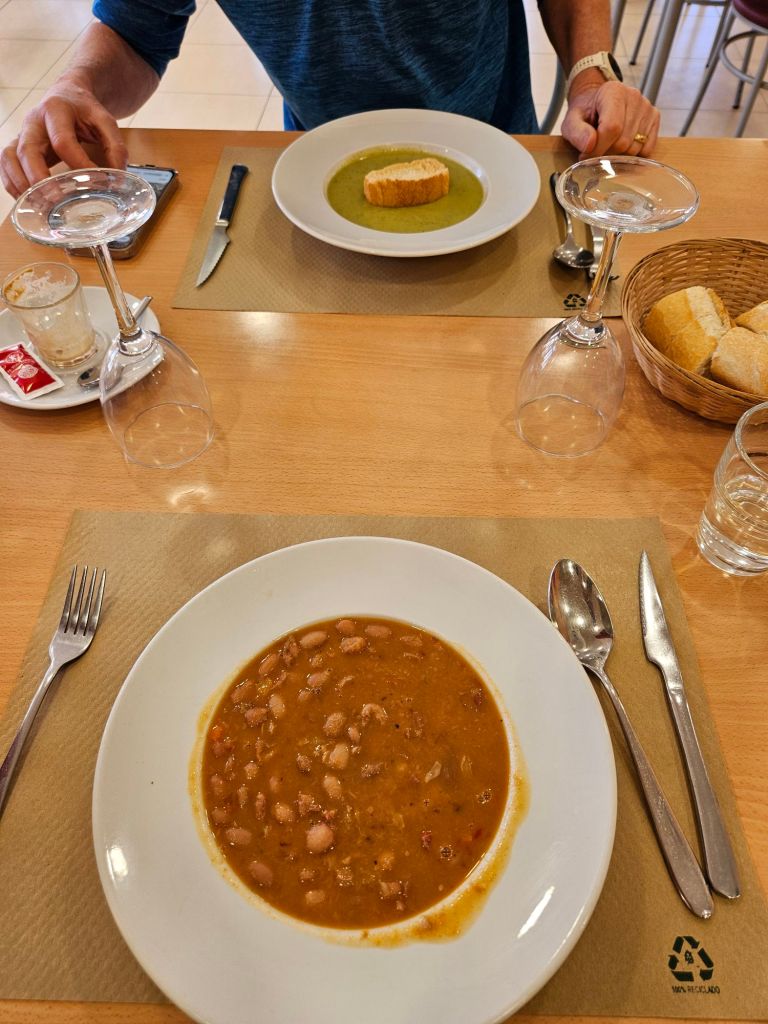
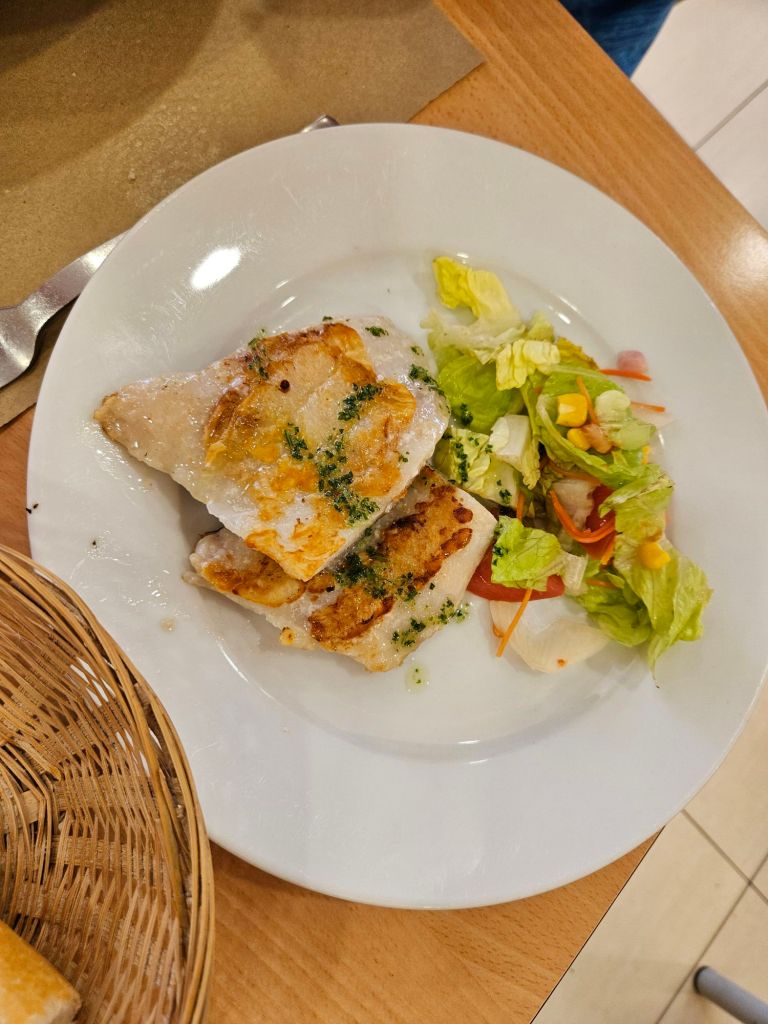
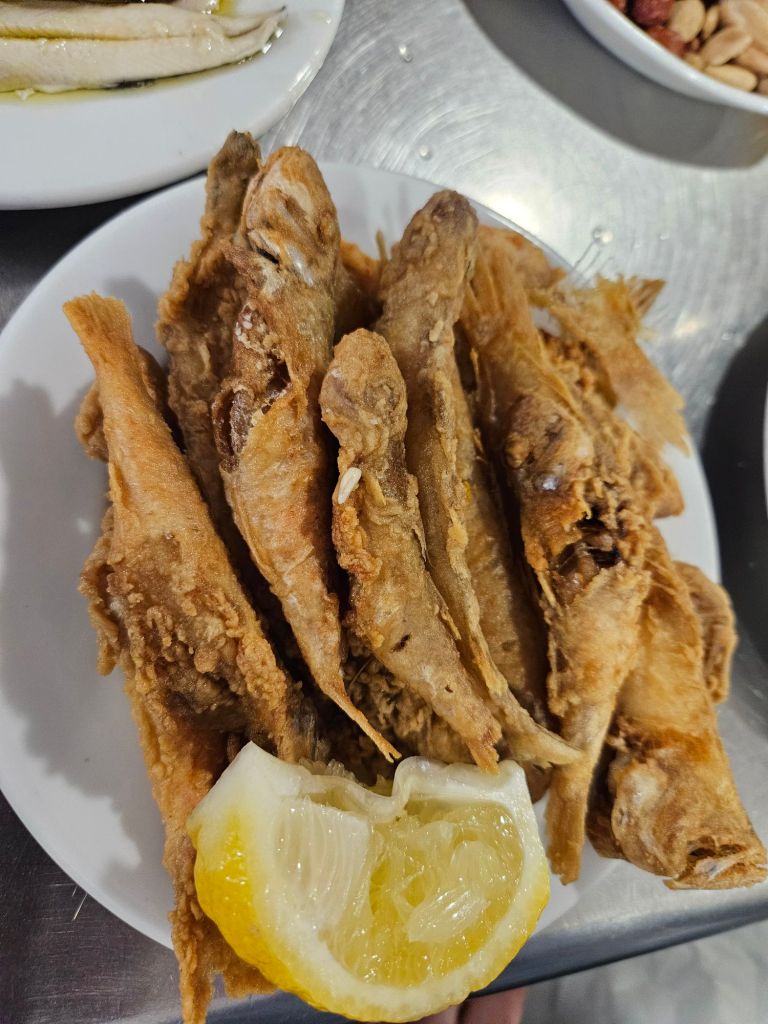
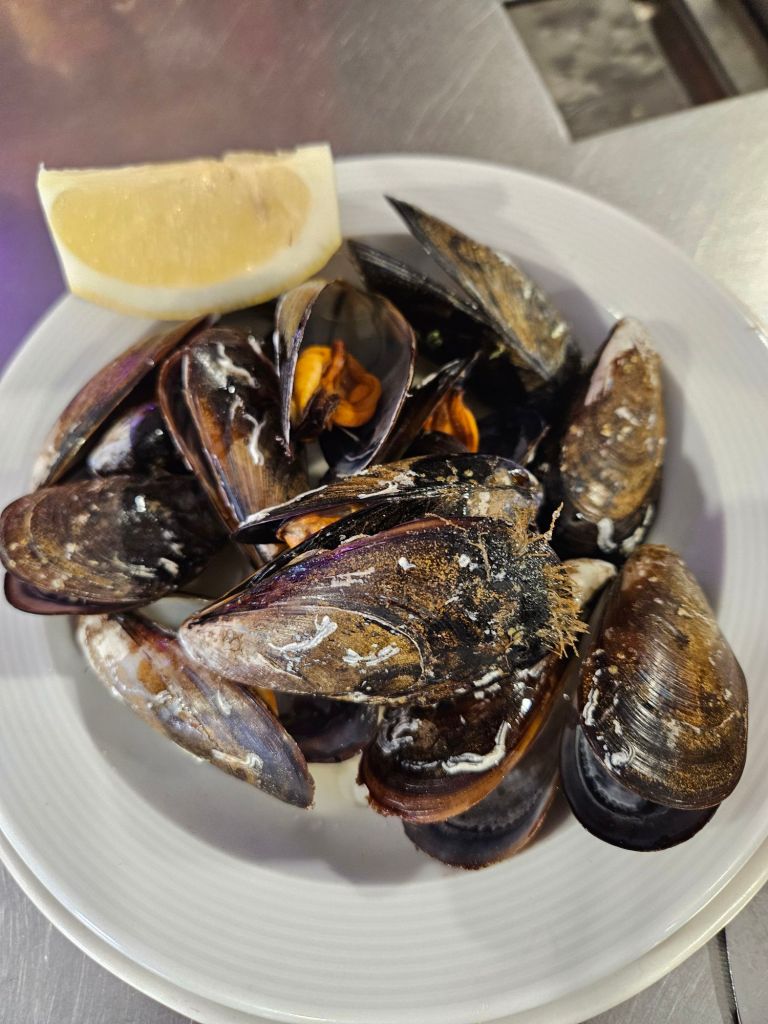
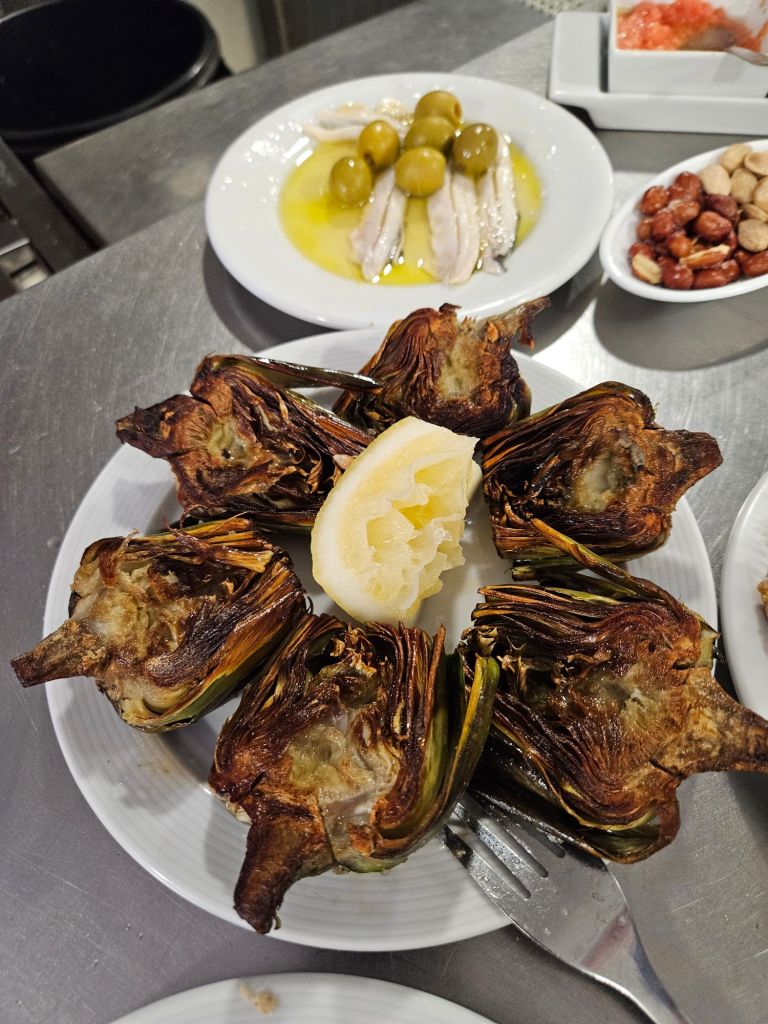
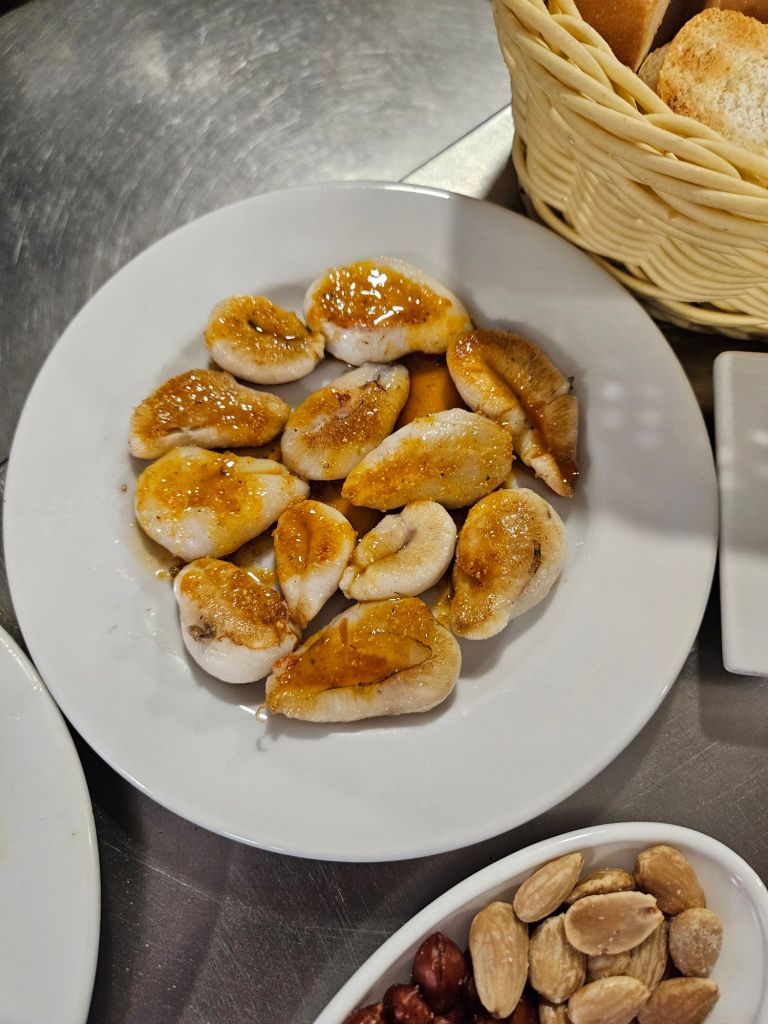
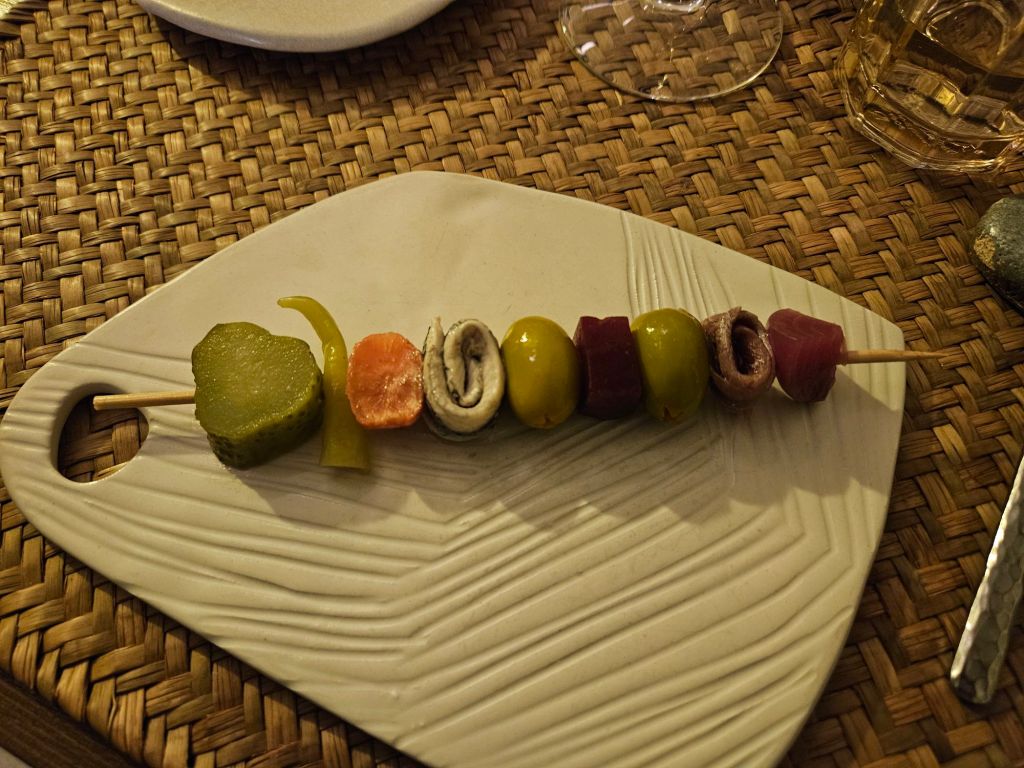
Eating here has been interesting. It’s possible to eat quite well, though not as cheaply as we could two years ago (no doubt a combo of inflation and bigger cities/more touristy areas). But overall we’ve found the food to be oilier, heavier, meatier, and less vegetably than either of us would otherwise choose.

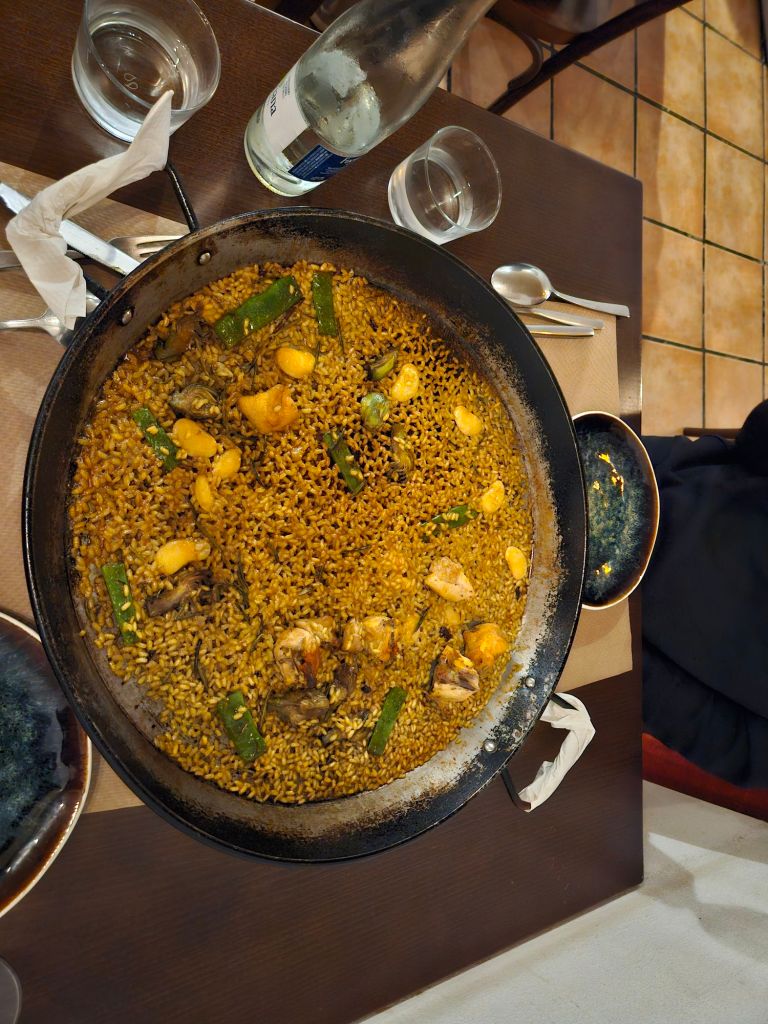
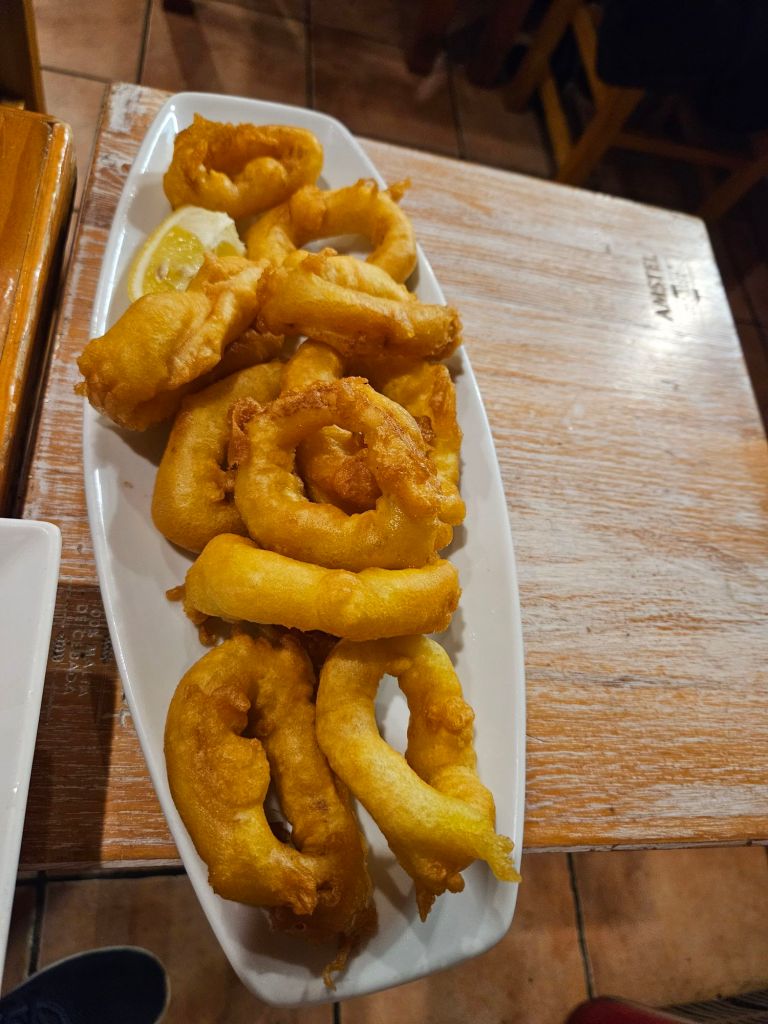
It’s perhaps heresy to admit that Valencian paella is…ok. The olive oil used here is miles better than what we get at home, but I found it hard to enjoy when it thickly coated a thin layer of heavily salted rice dotted with bits of seafood, veg, and meat. When I say dotted, I do mean dotted. A paella for two might include 4 slices of artichoke, 6 fava beans, and 4 strips of roasted red pepper, plus maybe 10 protein tidbits. With a seafood paella you may get 2 shrimp plus assorted fish, calamari or cuttlefish pieces, with a few rabbit, pork or chicken nuggets.

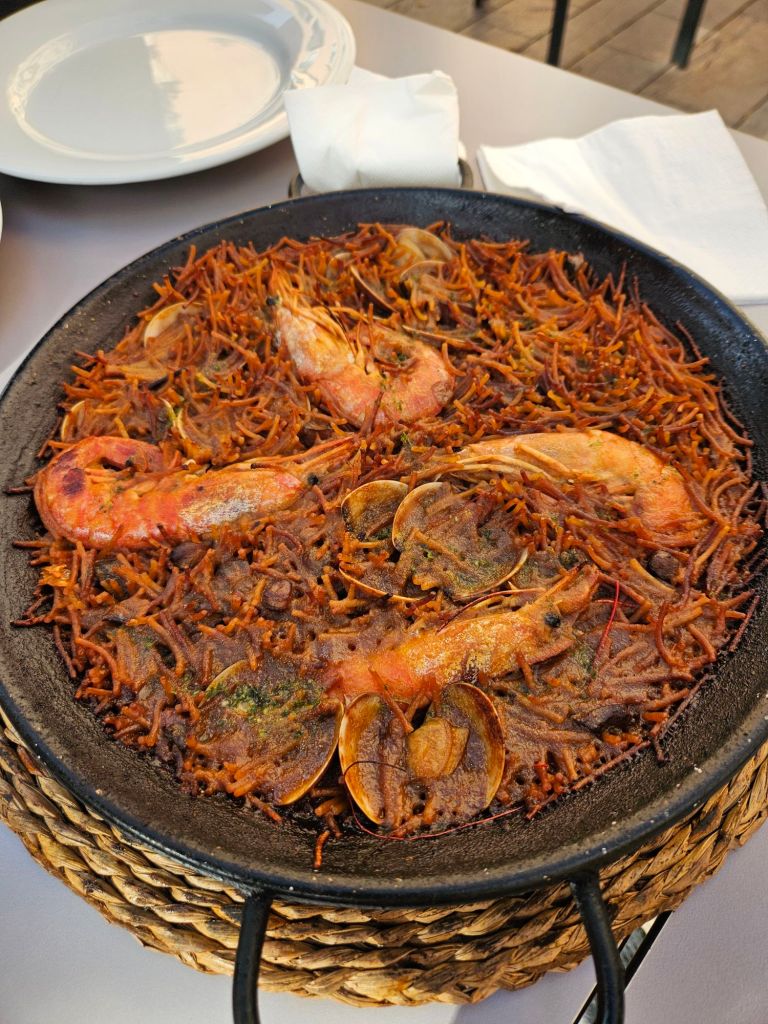
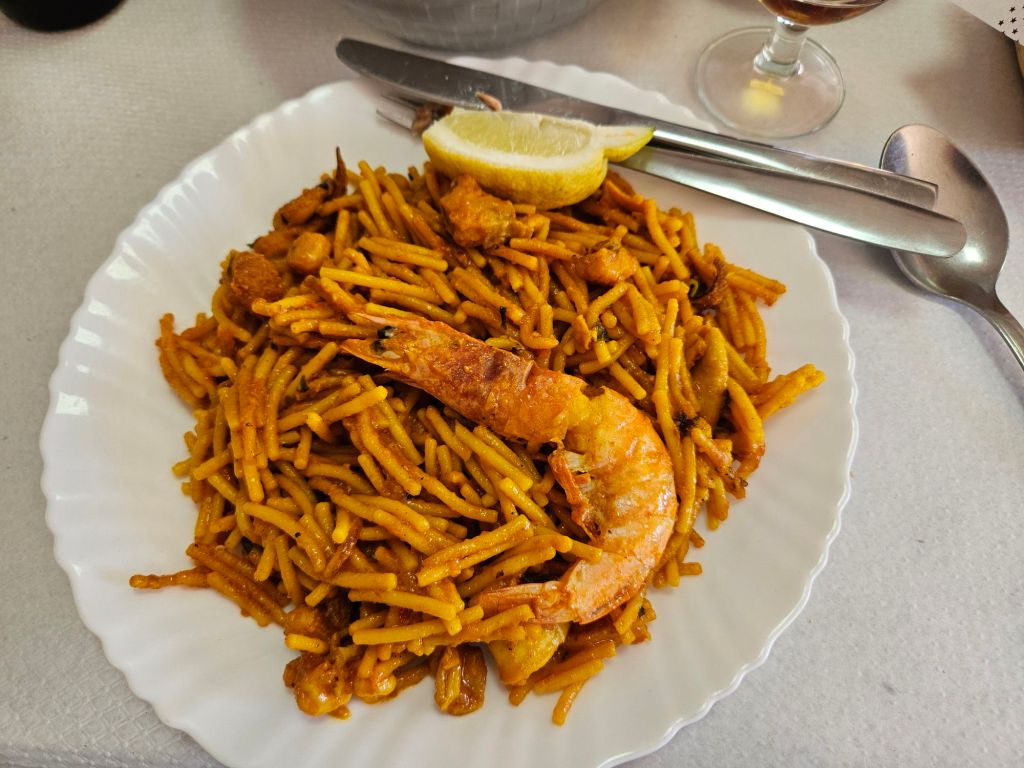
Its not all about paella. There are other arroz dishes (wet or dry styles) and fideo (or fidueo or fideuado) depending on where you eat it. Fidueo, however you spell it, is essentially paella made with short noodle pieces (spaghetti or angel hair). Same issues apply.

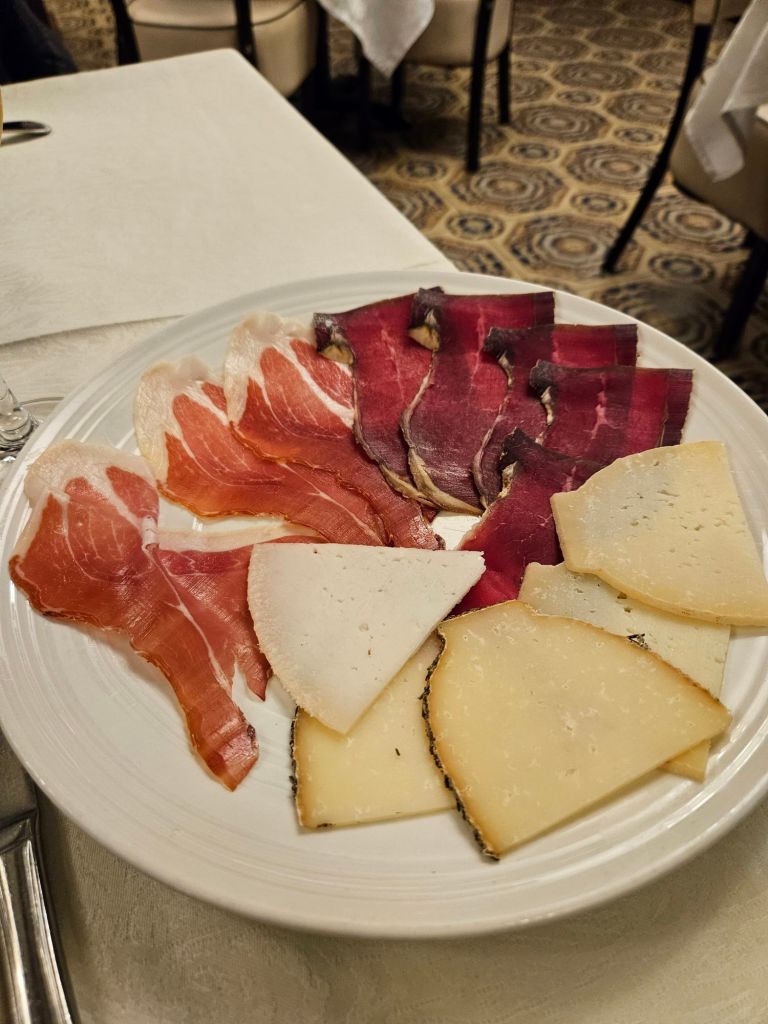
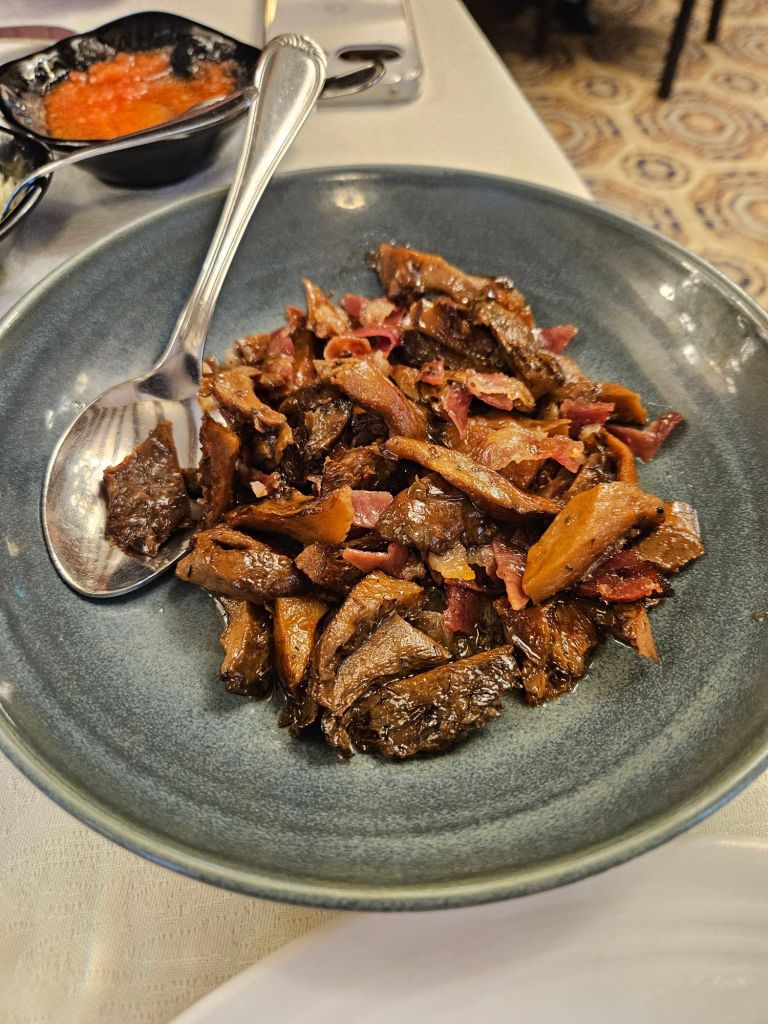
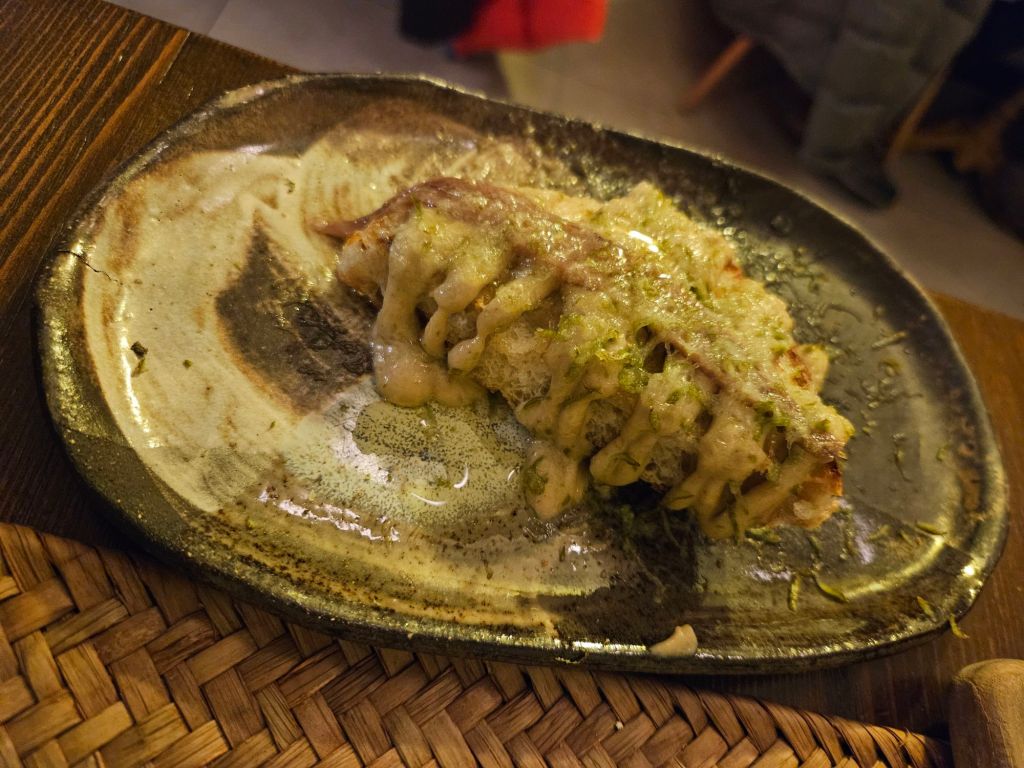
Spain is known for its jamon, and it is pretty magical. Intense, though, and expensive, so you only eat a few slices at a time and its a special treat. In Morella we encountered a plate of mixed elaboraciones: in the mountains, they have access to beef and goat as well as pig, and cure them all beautifully. (Still, though, rich and intense and meaty. I was more ok with them than R.)

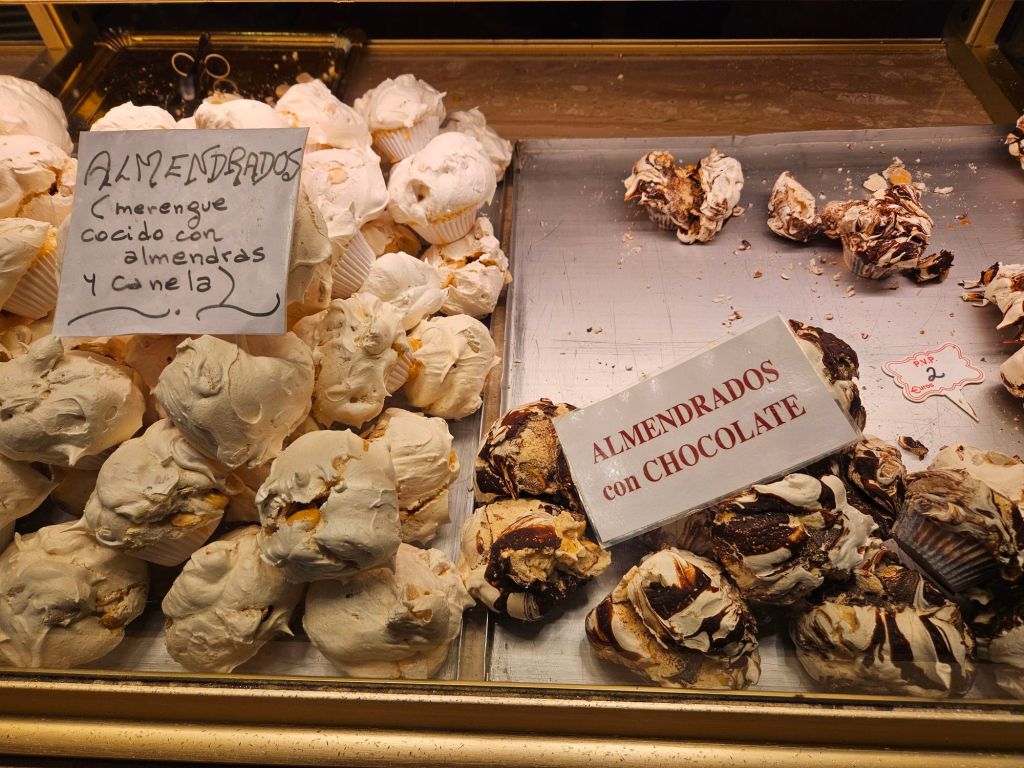
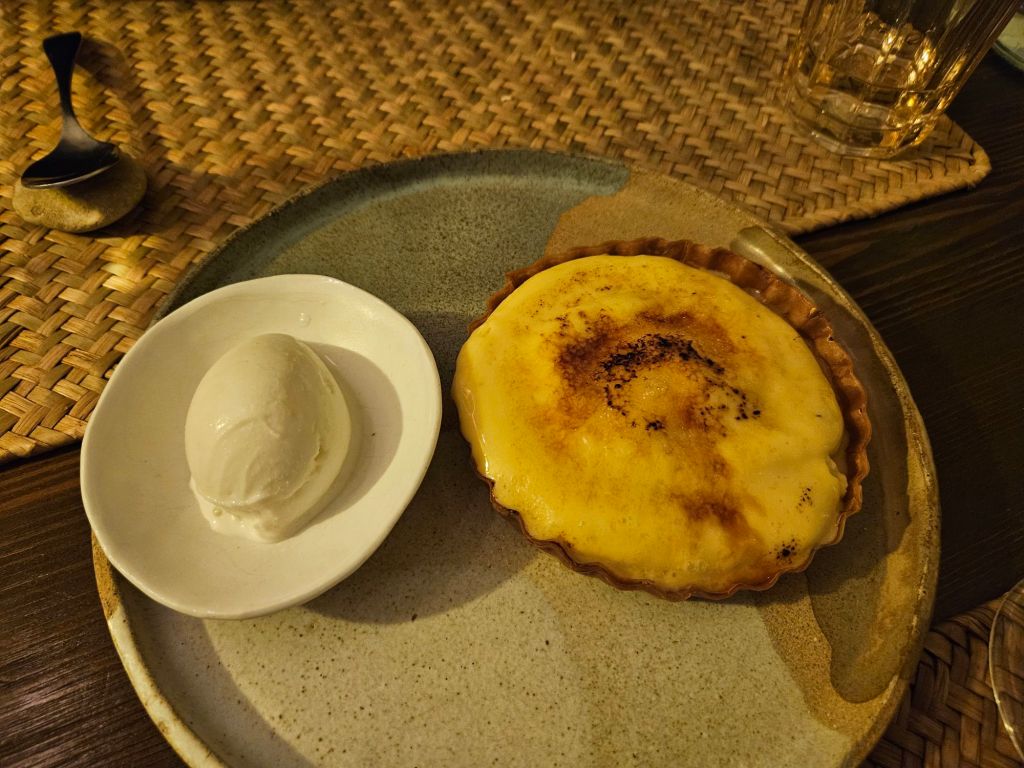
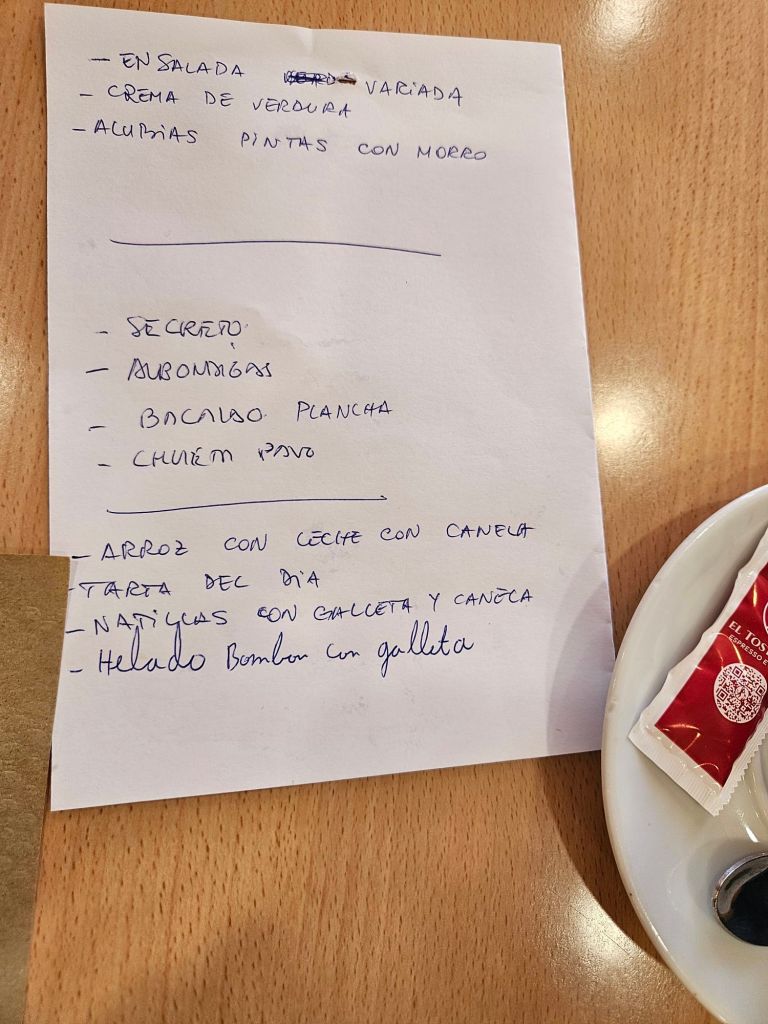
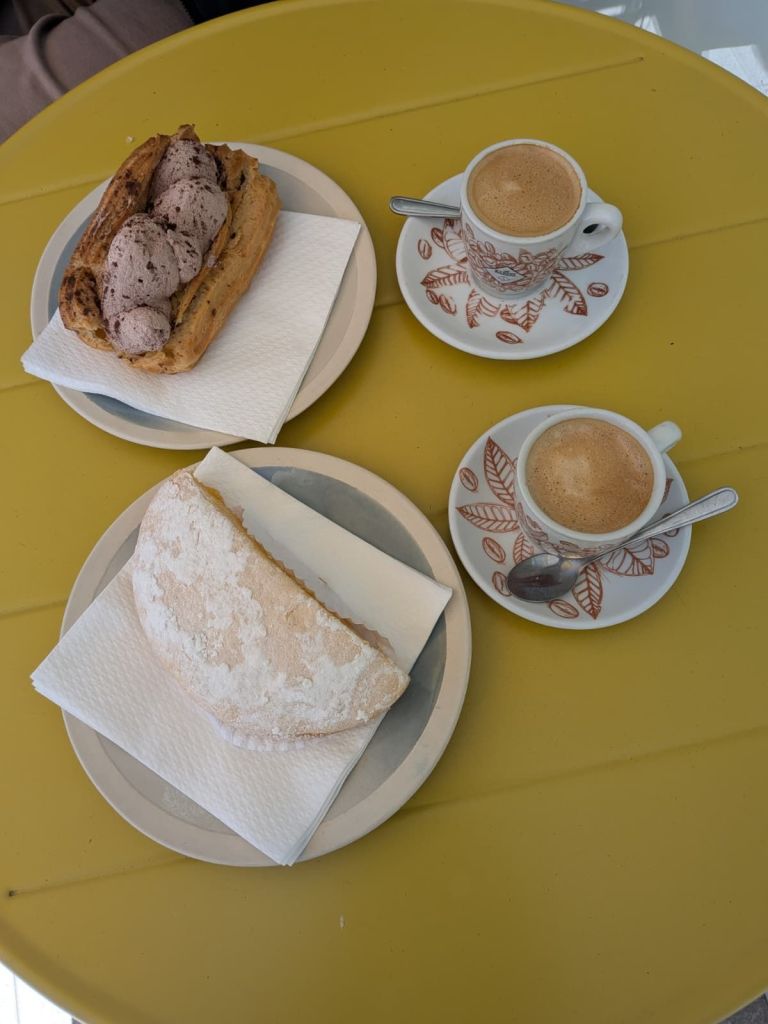
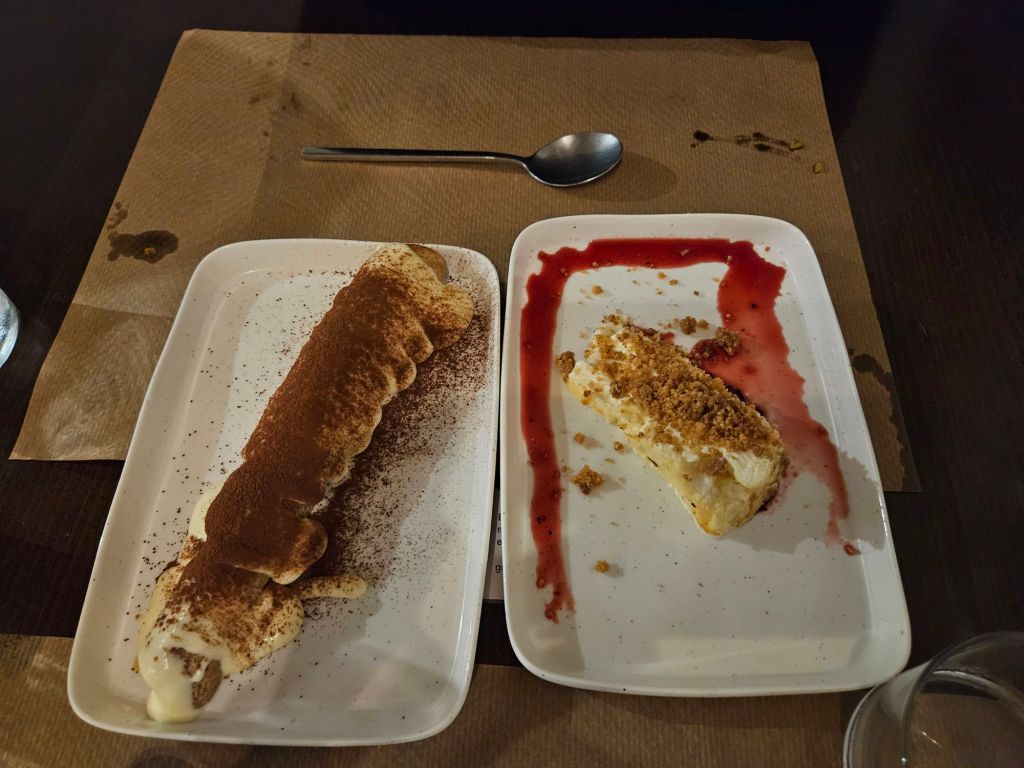
Because we ate a “menu del dia” most lunches, we regularly ate dessert (included in the price). Mostly they were familiar sweets, but cuajada was new to us. It’s essentially a plain milk pudding served chilled. I enjoyed the light sweetness of it; R preferred cheesecake. I also tested a number of tiramisus.

Theology of tarta de queso

I am a passionate devotee in the cult of cheesecake. So are the Spanish. But I’m not yet wholly persuaded by their doctrines and practices. 

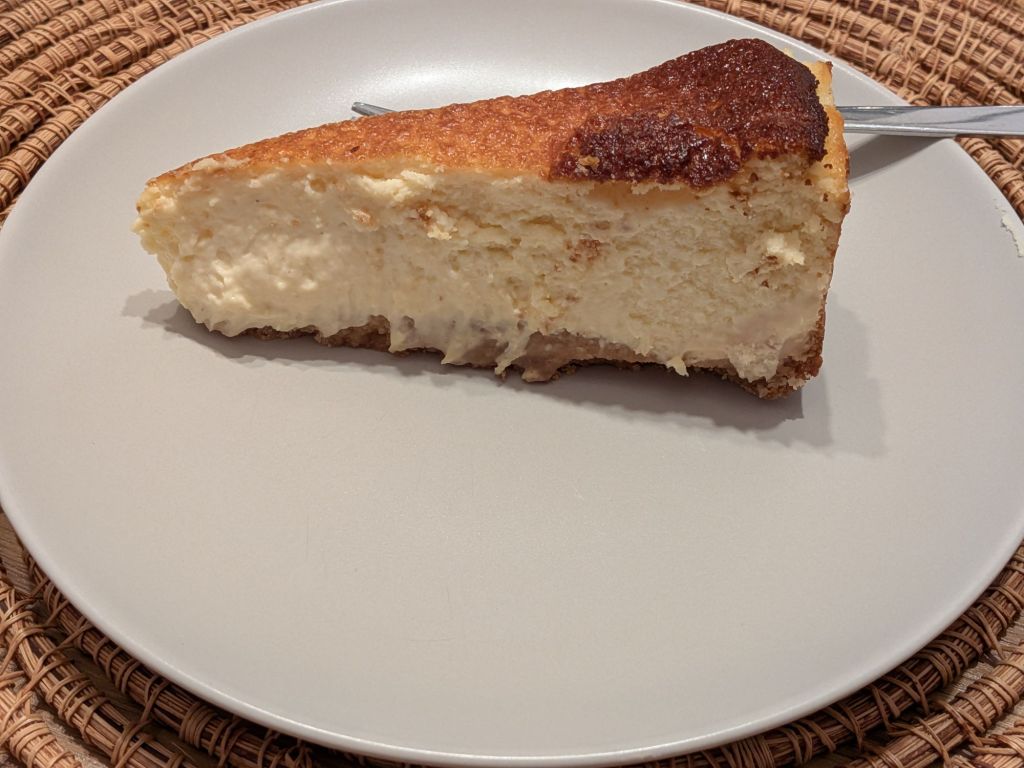
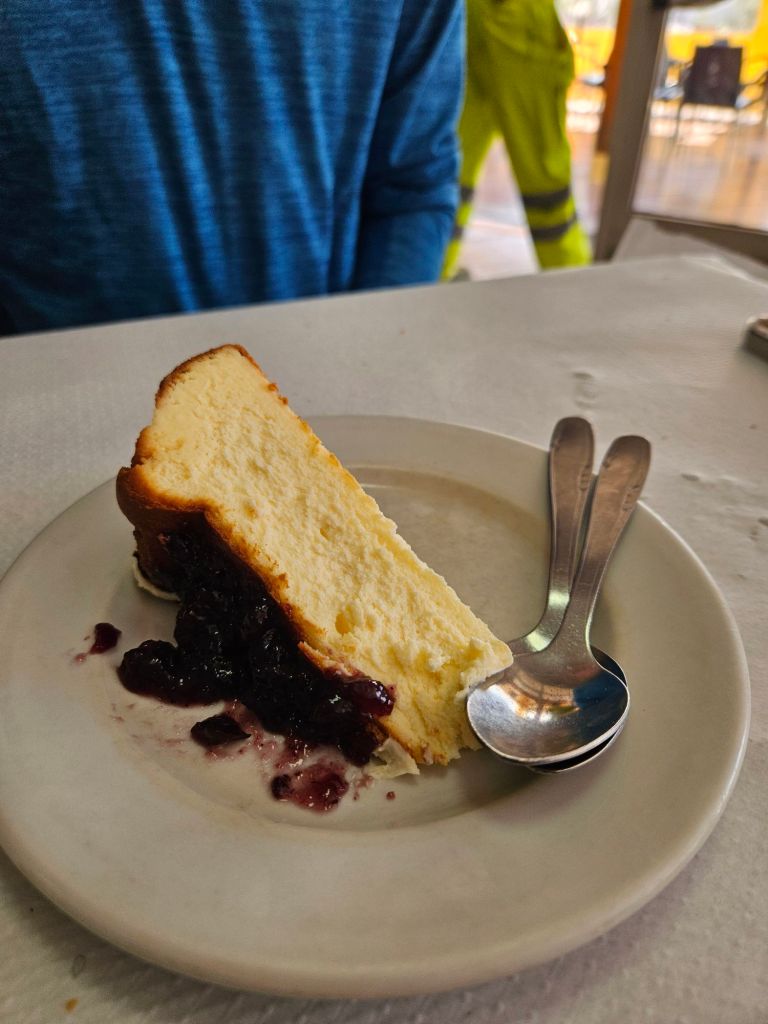
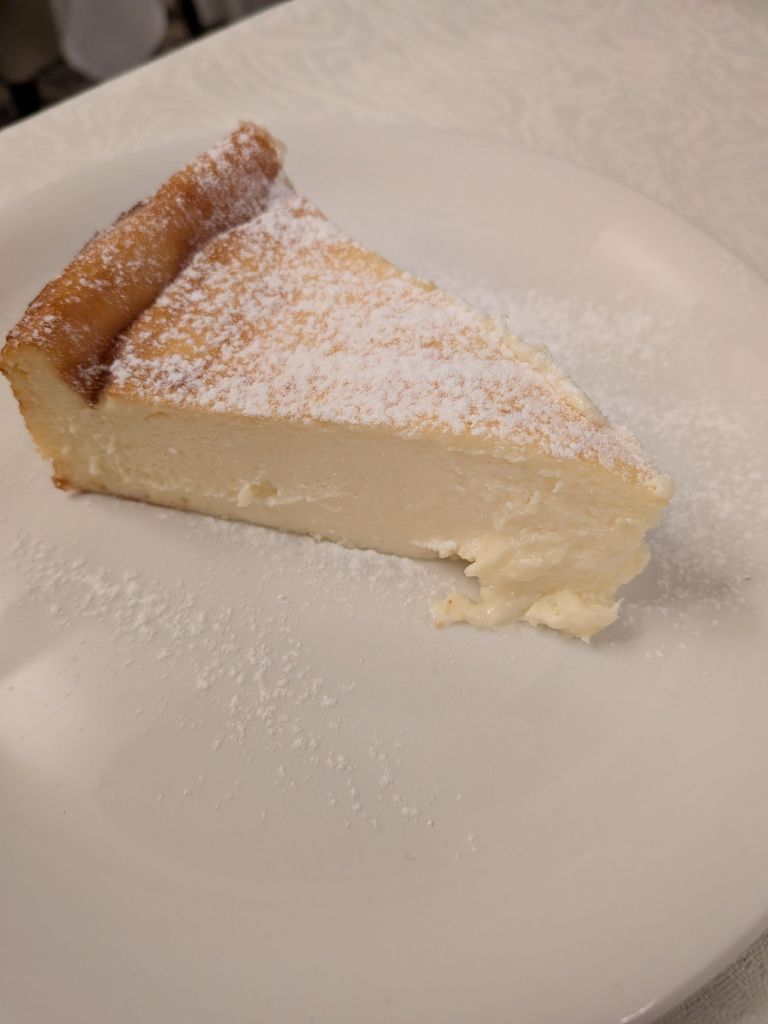
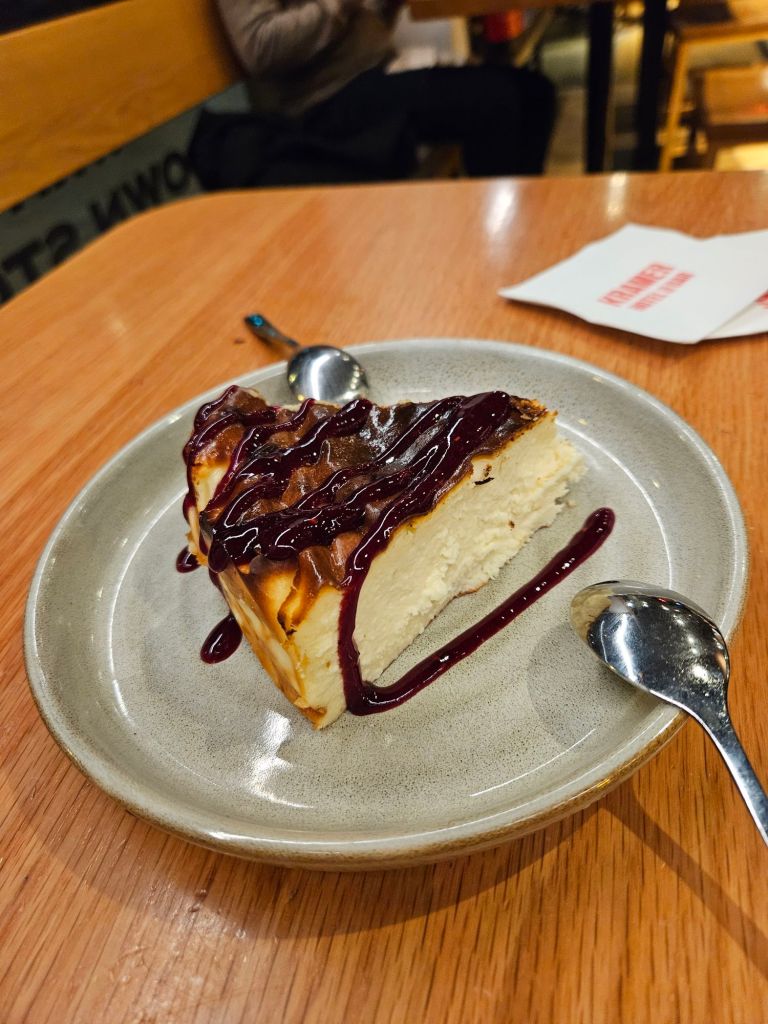
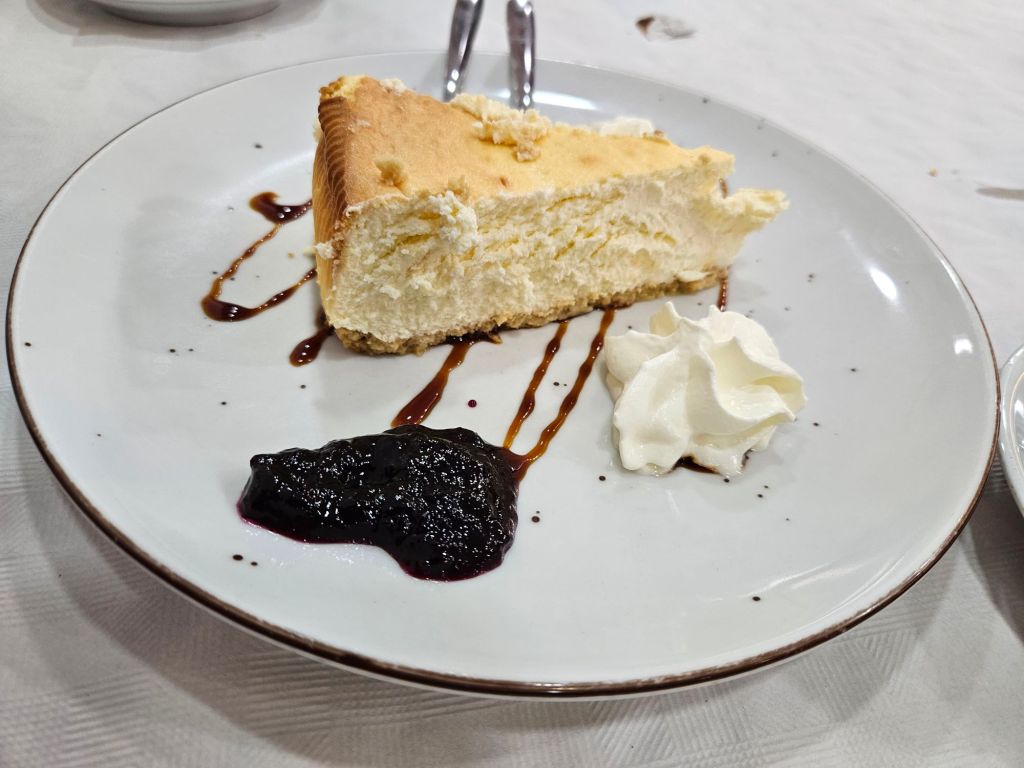
Above is an example where, IMHO, you can tell just by looking that the texture is going to be gummy. I had another – perhaps similar looking to the naive lay brother or sister – that I could tell was going to feel too wet, too light, too like whipped cream.

OTOH, I granted both these some forgiveness for avoiding the two great sins of most cheap restaurant cheesecake (and indeed, much expensive restaurant cheesecake) – being overcooked and rubbery, and/or being too sweet, and/or disguising a deep spiritual emptiness under a lava of sweetened fruit.

Some denominations here anoint the cheesecake with a lurid green sauce made from pistachios. At first I thought this was a bit like pouring tinned cherries on top. (See above; get thee behind me, Satan!) But I concede that the pistachios might be worth considering – unfortunately I have not yet had the chance to try this.

The Spanish seem agnostic on the crust / not crust question. By upbringing and habit I should find this shocking, being a crustafarian through and through. But to my own surprise I feel pretty tolerant and ecumenical about this. No crust is merely unorthodox, whereas a soggy one should be excommunicated.

On the key matter of consistency, I have always been a strict follower of US doctrine, according to which you must cook the cake very slowly in a water bath. (Otherwise the outside overcooks by the time the middle is set.) Heretically, the Catalunyans sometimes cook theirs faster, and until the outside is barely set, so that when you cut a “slice” the inside collapses in a thick pool across the plate. This is not wholly  unpersuasive – I might yet convert – though it doesn’t always work.

What I’ve yet to experience here is the sublime, indefinable, ineffable, transcendentally perfect structure and mouth feel you can expect from the most exalted cheesecake in New York – or my kitchen.

I will continue the search with an open mind, an open heart, and a stomach growling in anticipation as usual.

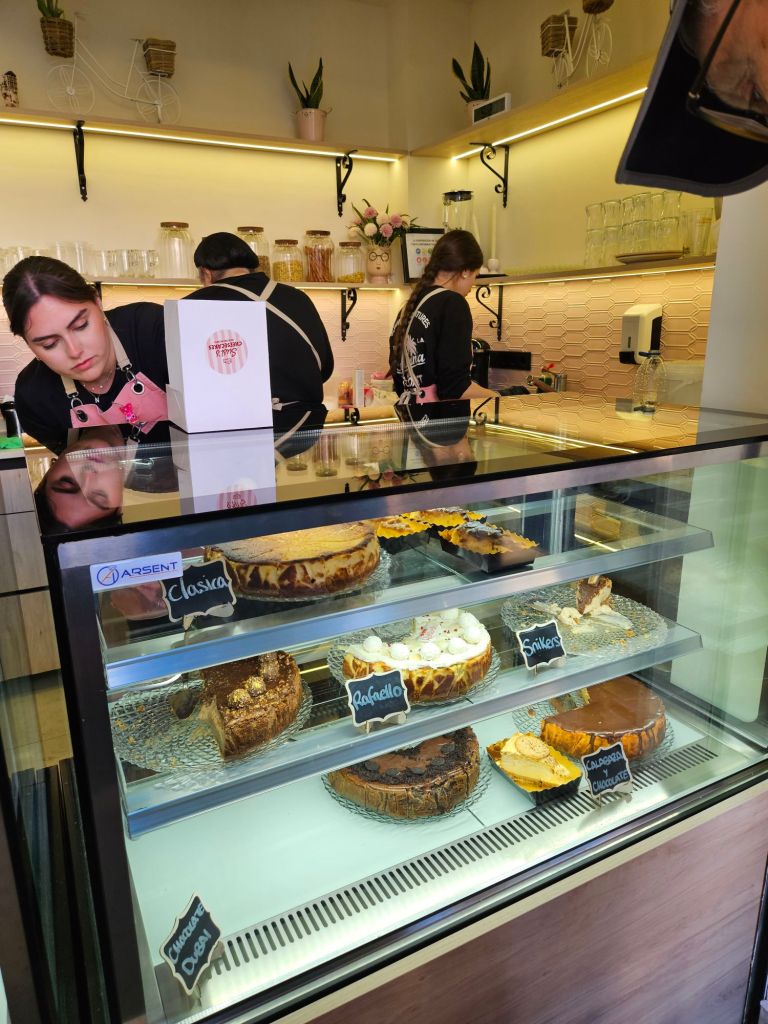
Possibly my best trozo (slice) so far. Or possibly just the one that sat best with my existing prejudices. It came from the shop below, in Gandía, with many other varieties alas untried:
Notice that one flavor is Snikers

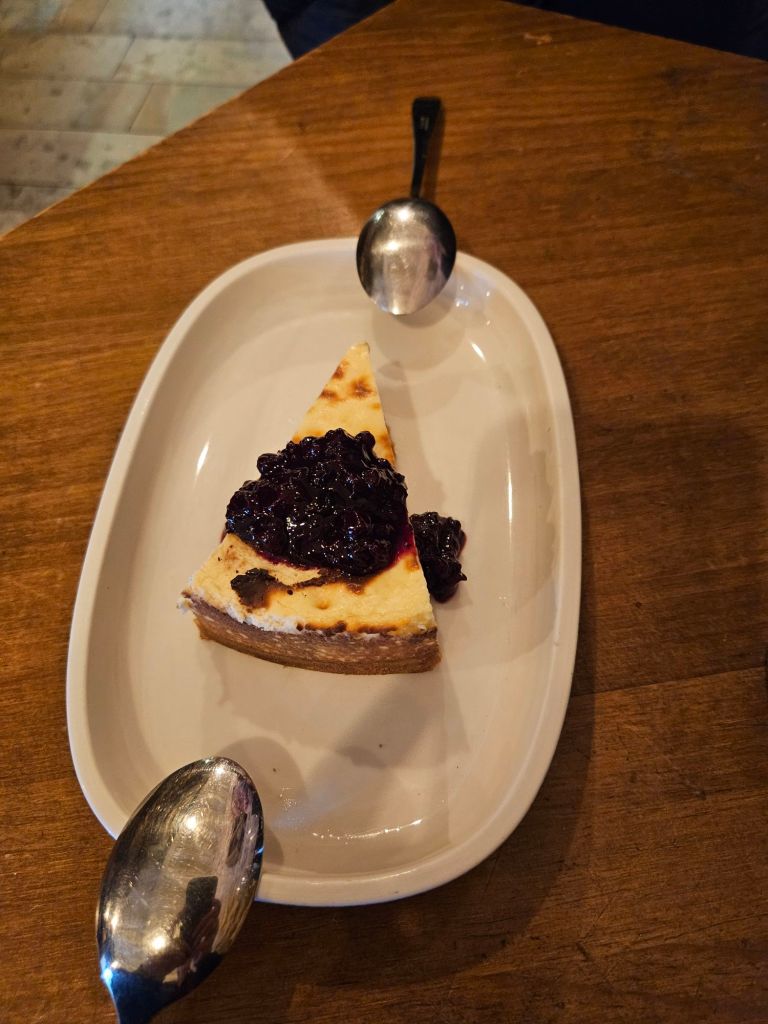
Some others candidates here – ¡Qué aproveche!

K here. Just want to note that in Spain one can a) get a punch card at a cheesecake shop so your 10th slice is free and b) in the markets, many places sell cheesecake not by the slice but by the kilo.

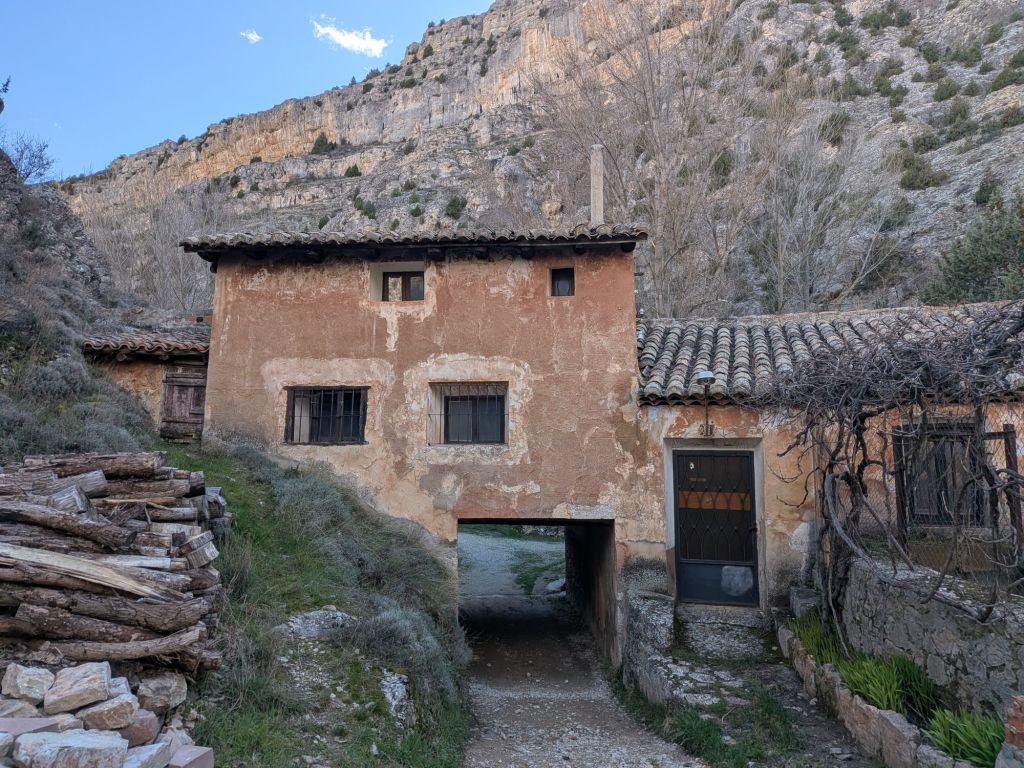
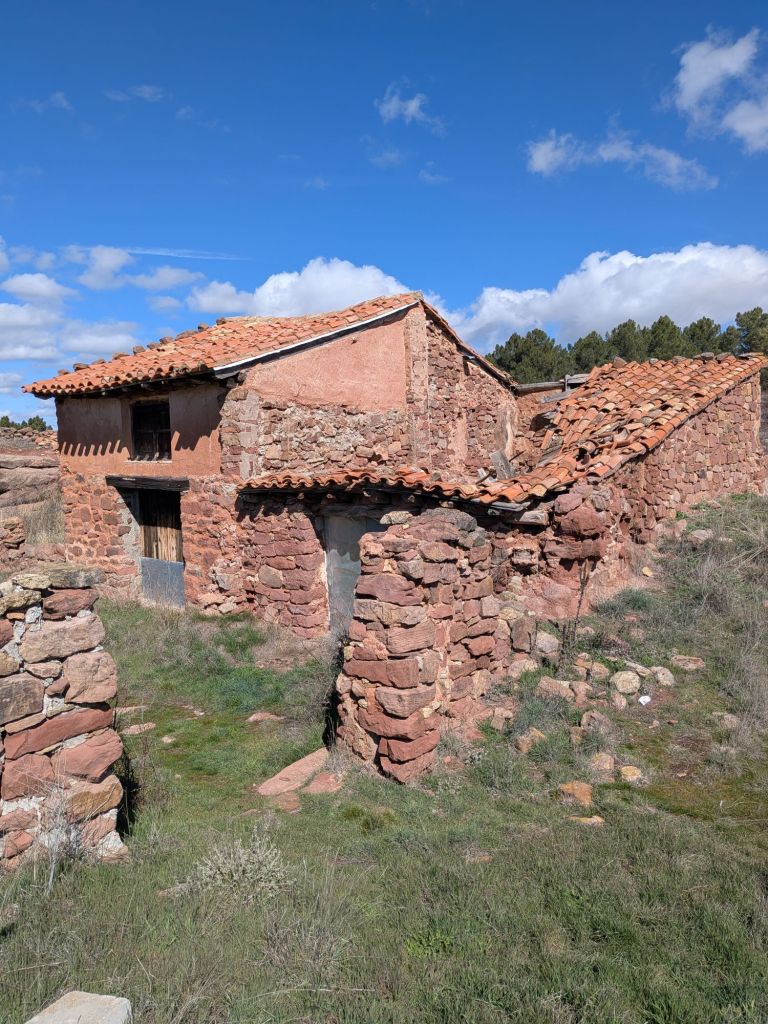
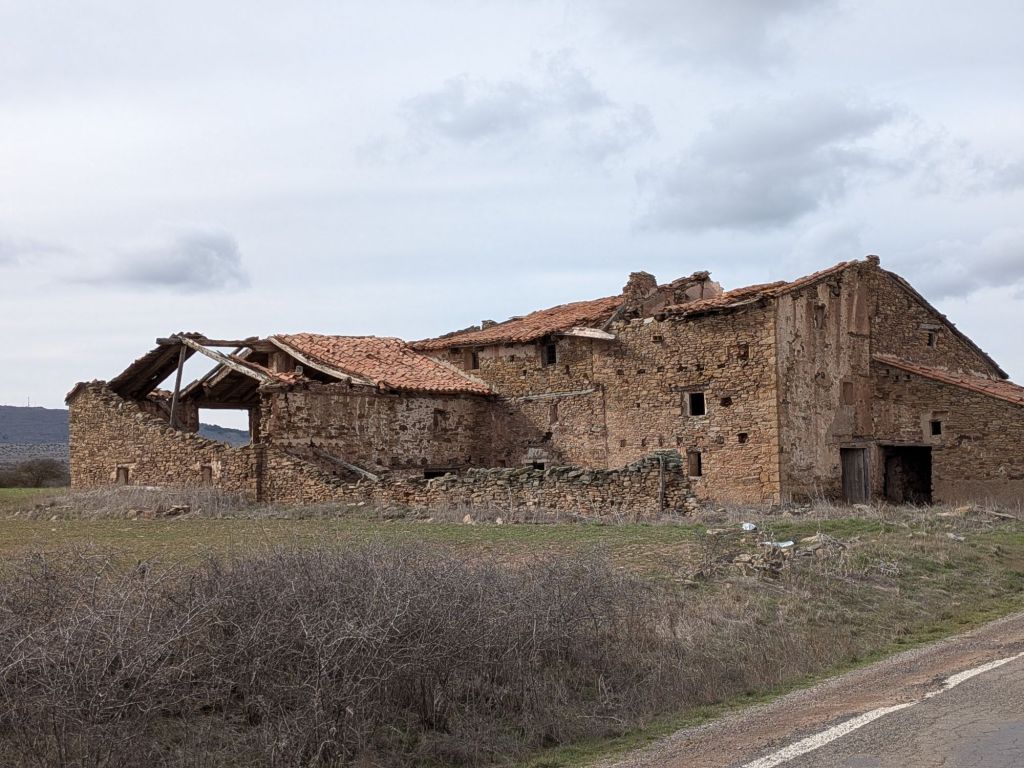
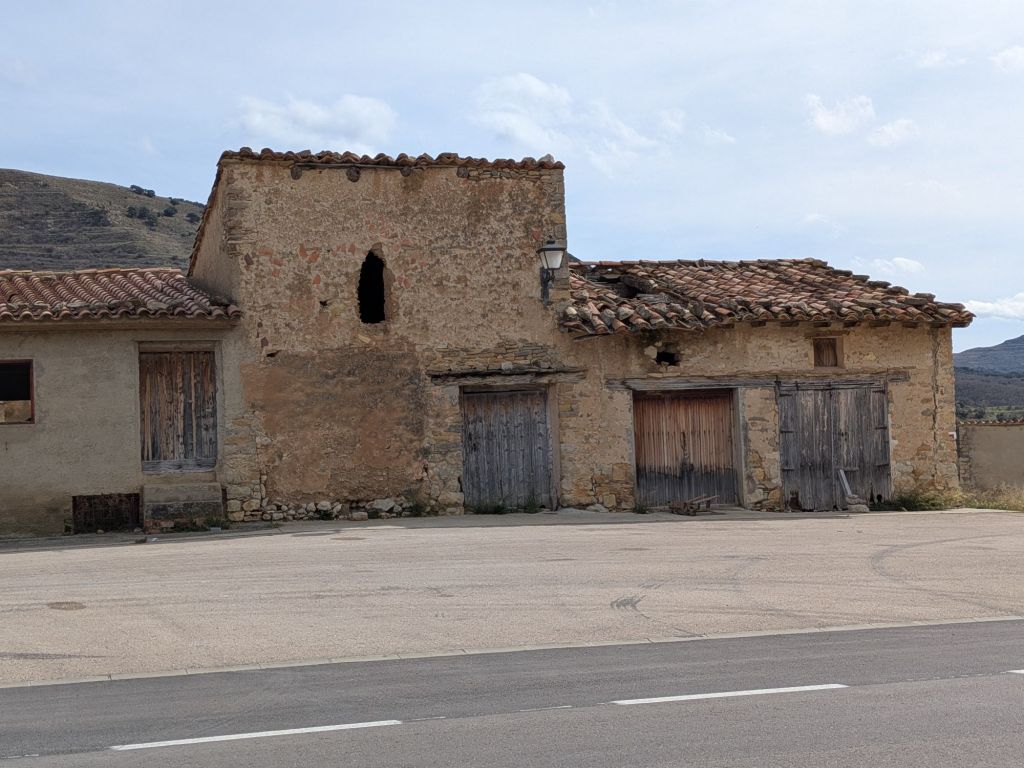
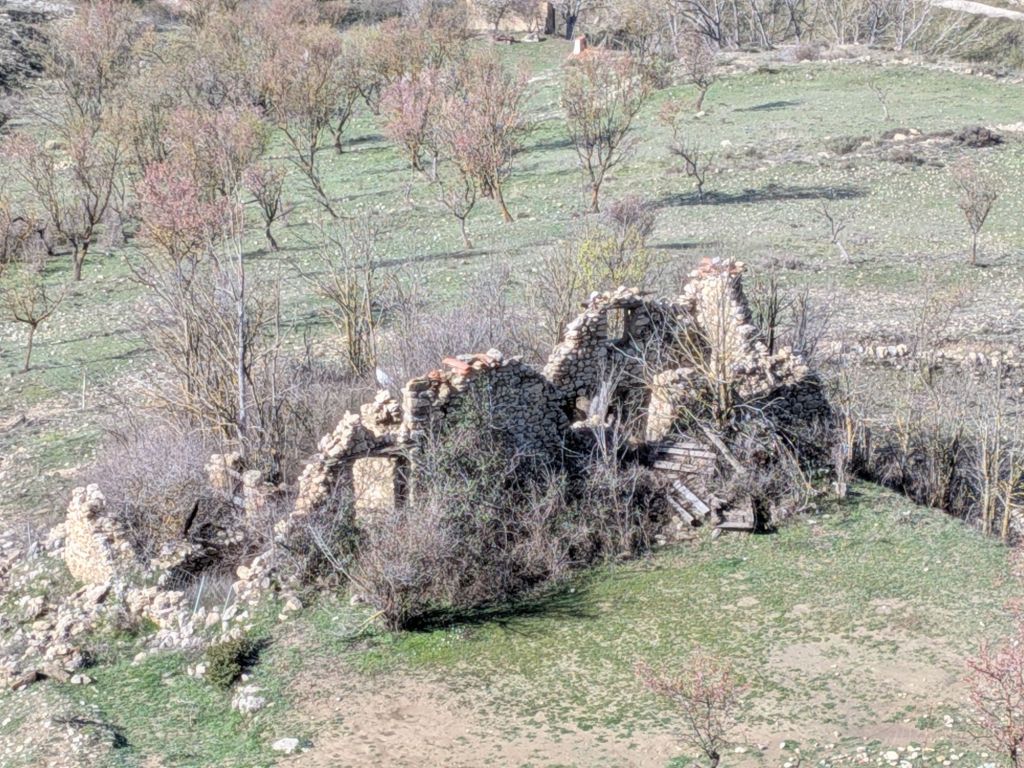
Abandoned buildings

Roman stadia and Muslim walls aside, they cover the landscape here in extraordinary profusion – witness, I assume, to Spain’s continuing rural depopulation:

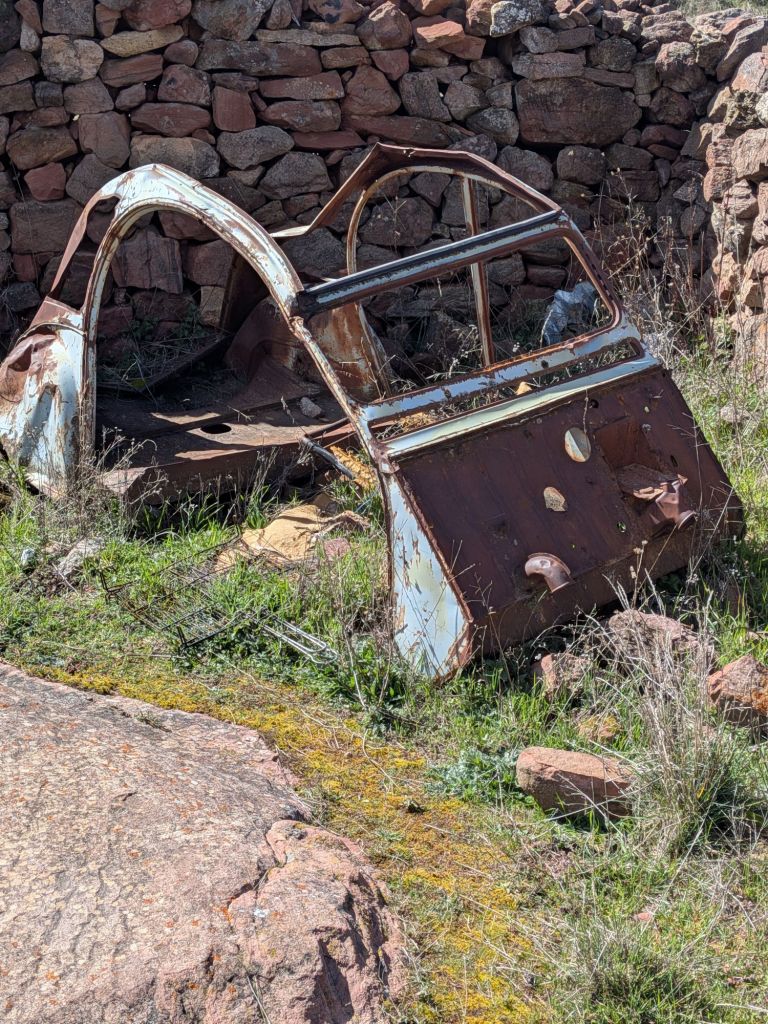
Inside one of them was this skeletal remnant of a Citroen Diane:

We’ve only seen at a distance one entire abandoned village (or so it appeared to be, though there was smoke rising from somewhere). But there are supposedly quite a few in this area. And there’s a very clear economic distinction between some obviously poor, eerily almost-empty communities we passed through and those that, because of architecture or location, have managed to make something of a devil’s bargain with the money of tourists like us.

I wish I had the Spanish to engage people in real conversation about these issues, instead of getting it only roughly right when asking for directions.

Sun, sand, puffy jackets

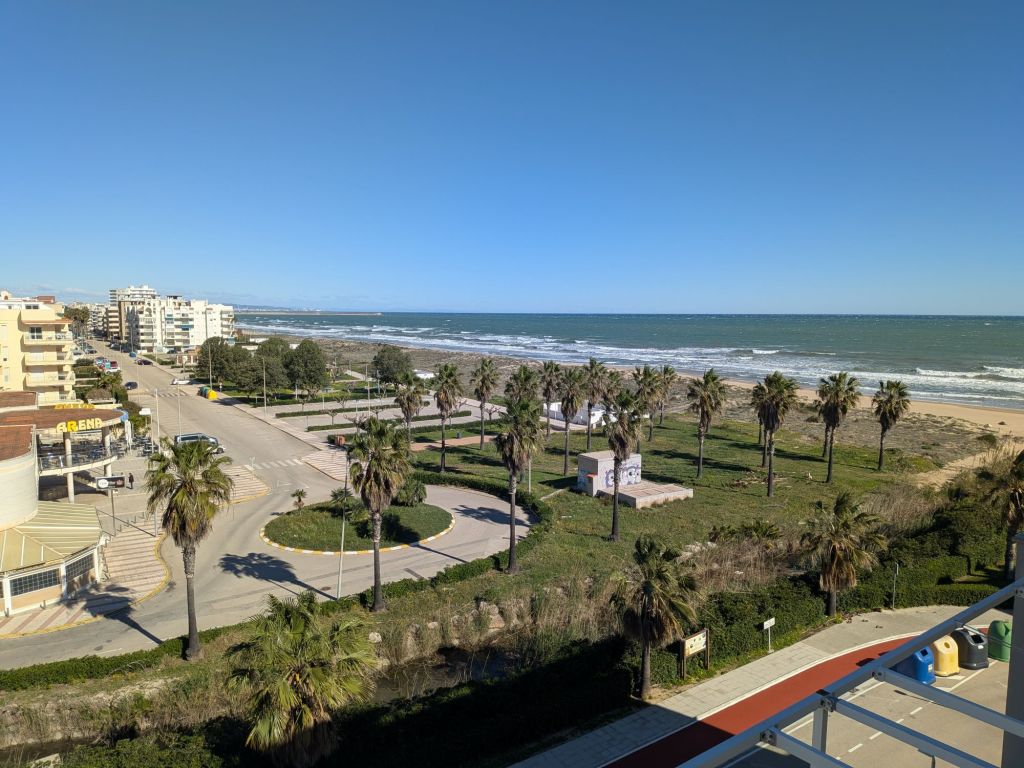
View from our apartment

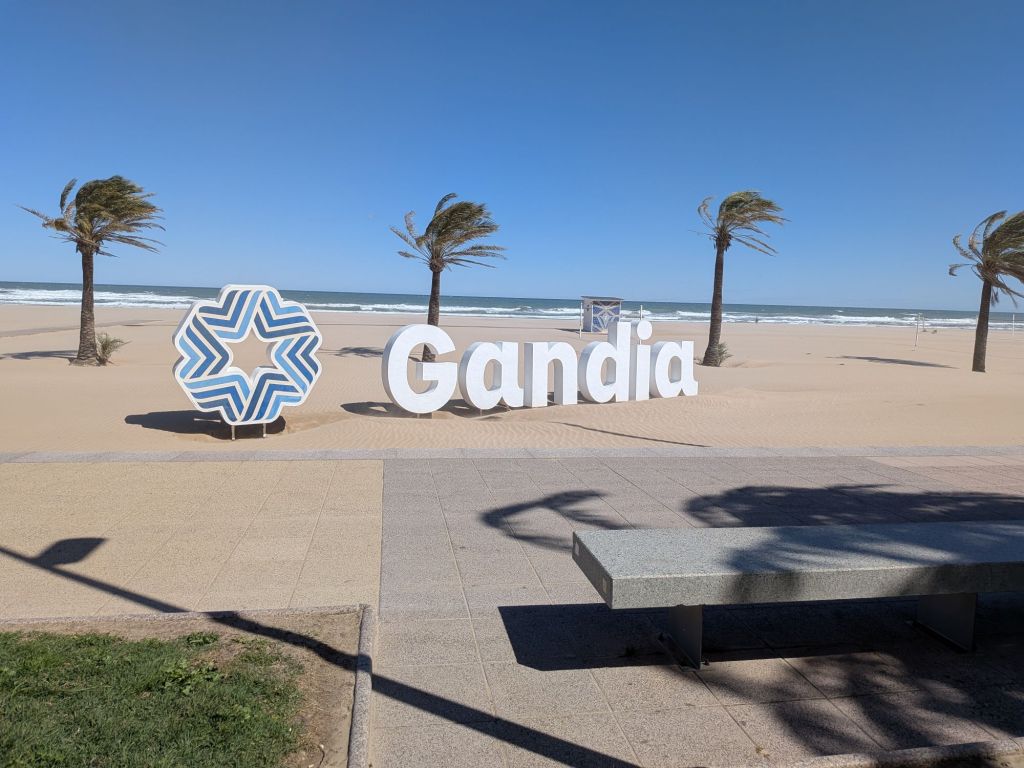
Woke up to sunshine, but the howling wind we’d heard during the night hadn’t moderated. Hence the strange paradox of a walk down a beautiful but all but deserted beach, shoved on from behind and wishing our down layers were a bit thicker.

We found some protection out on the long stone breakwater where the Gandía ferries leave for Ibiza; in the lee of it, we sat on a bench and watched terns diving and dining.

Back north into the wind proved a real challenge and we were glad to retreat into a restaurant for very authentic, er, pizza and beer.

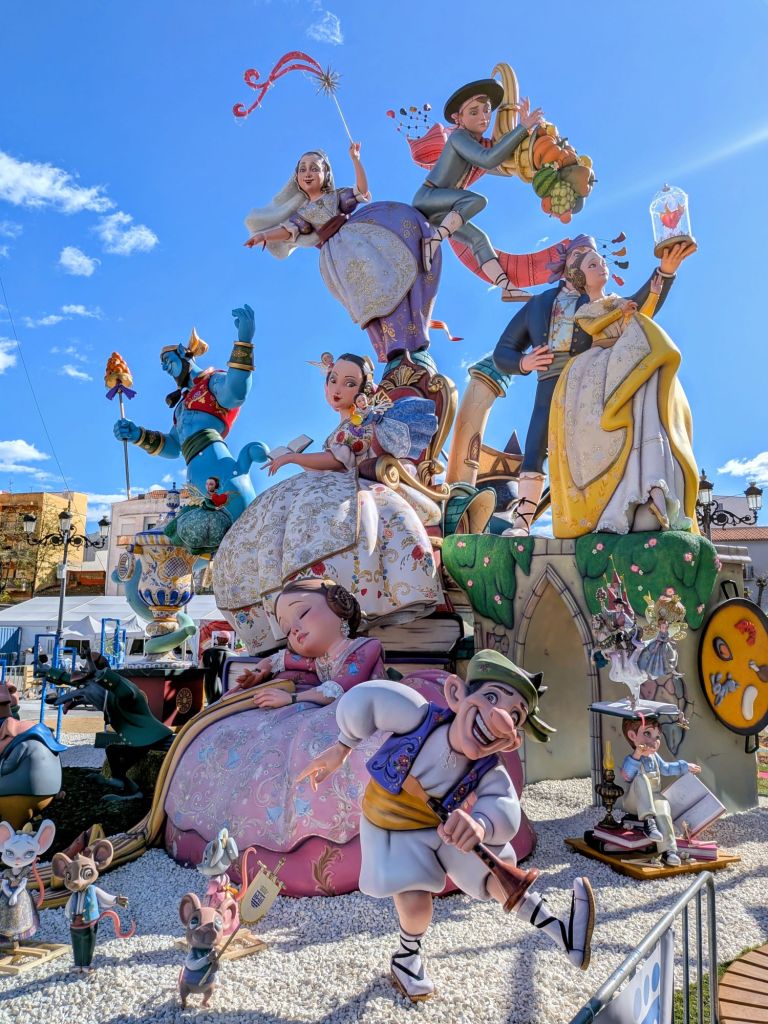
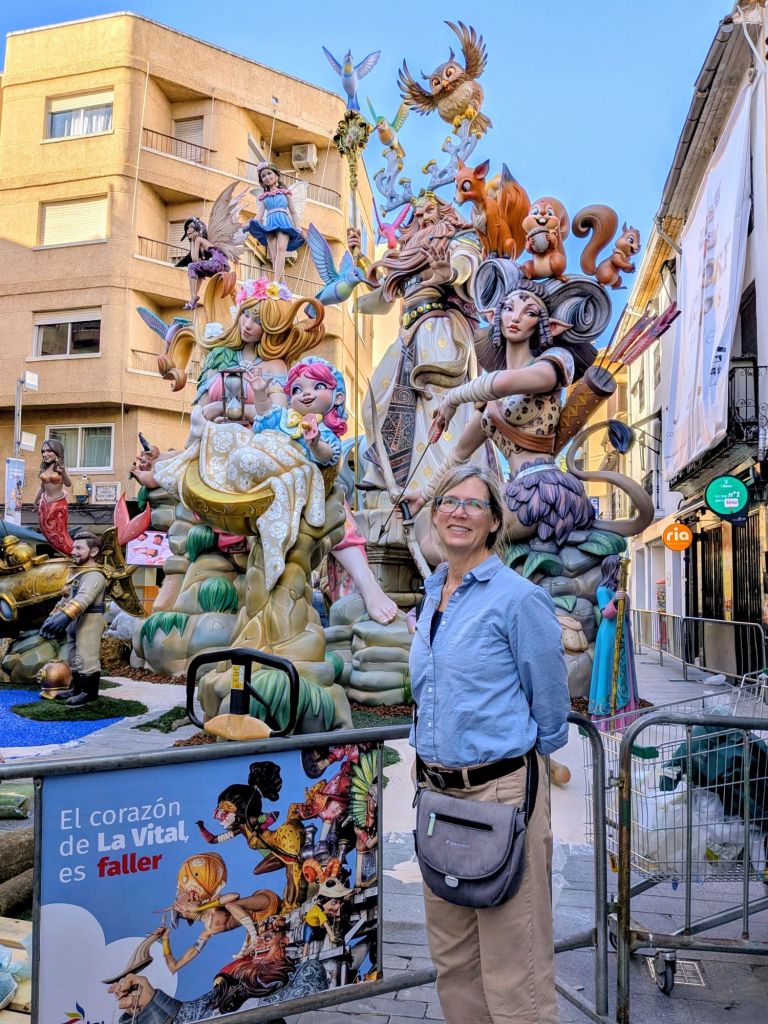
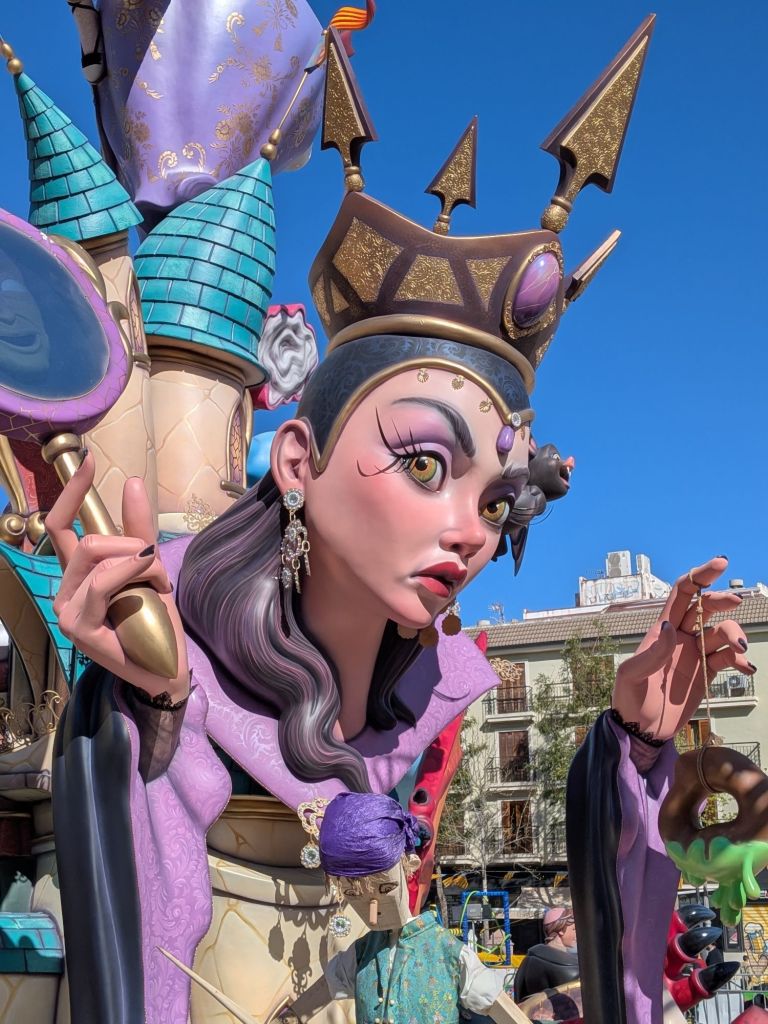
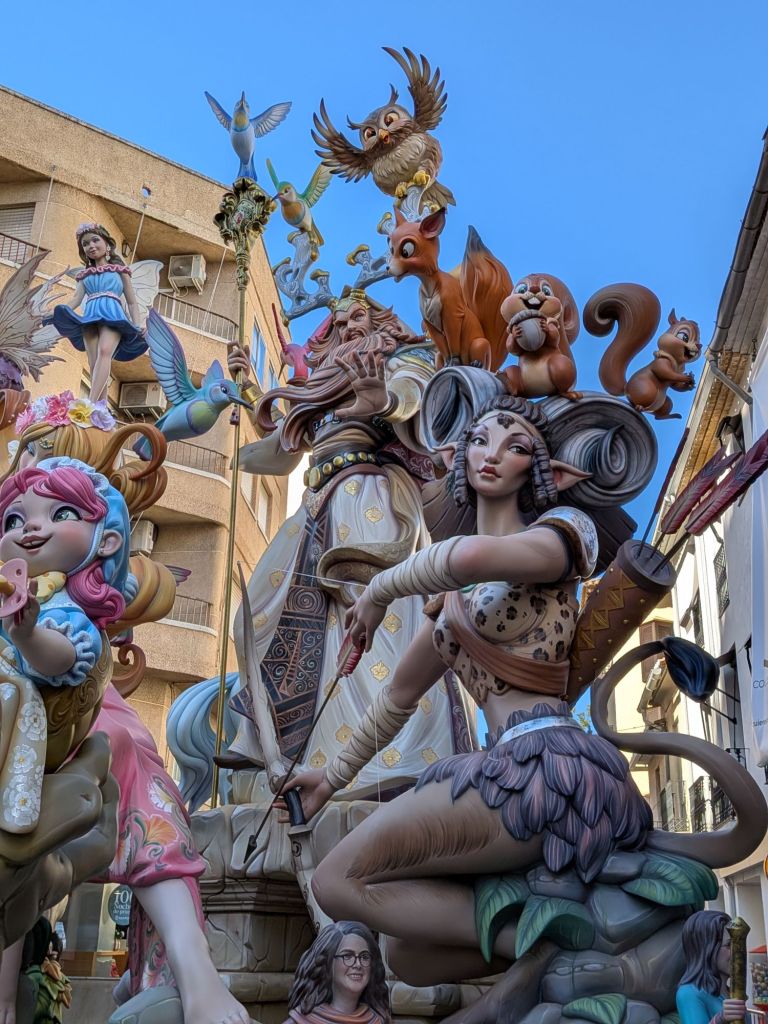
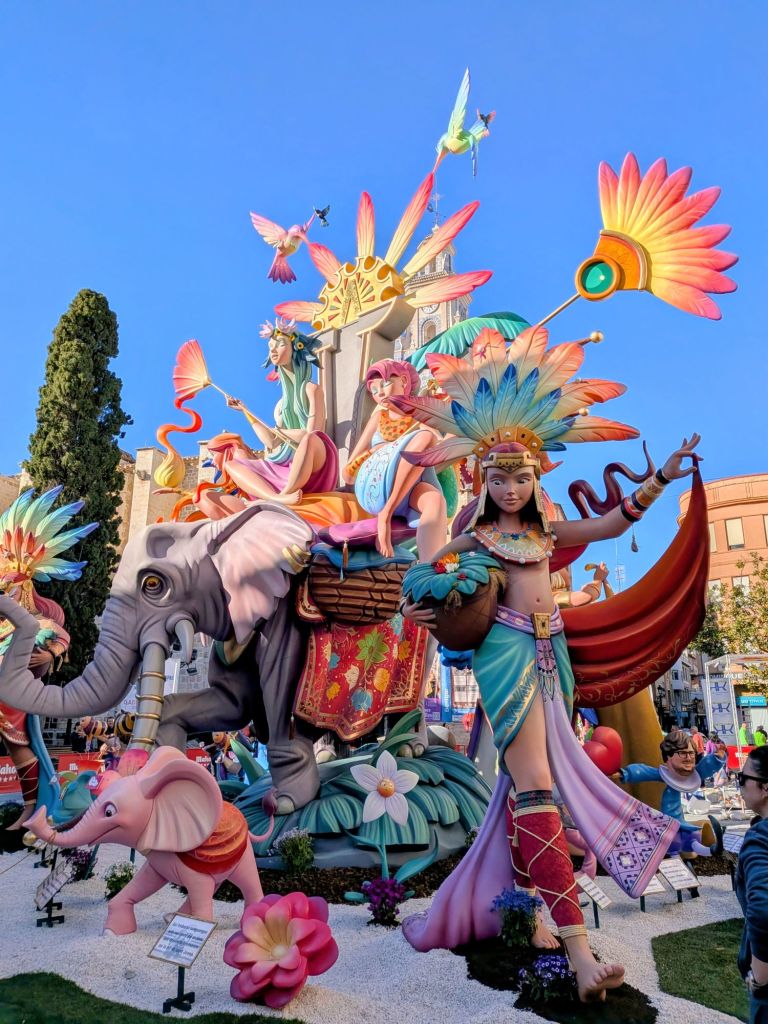
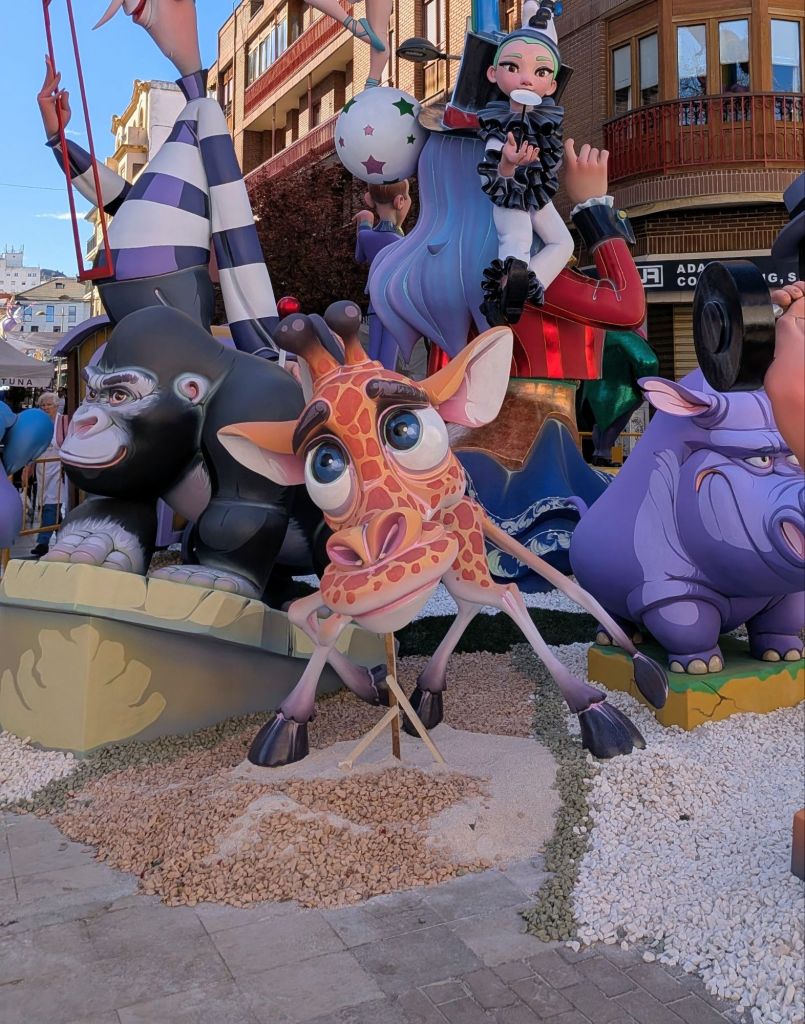
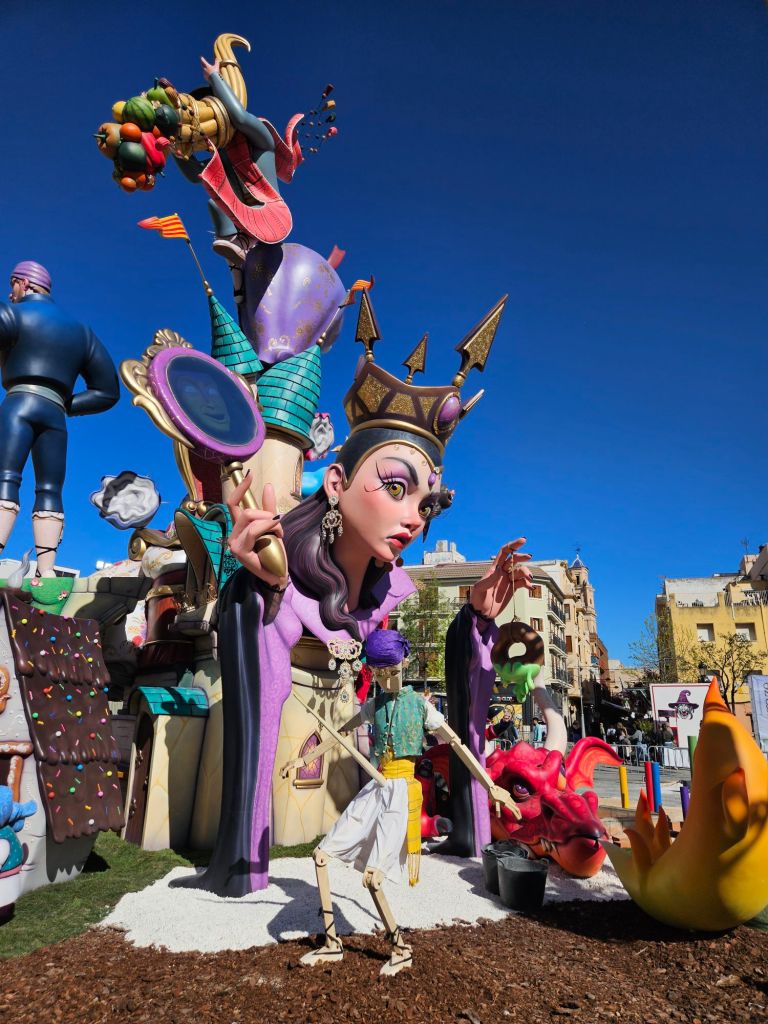
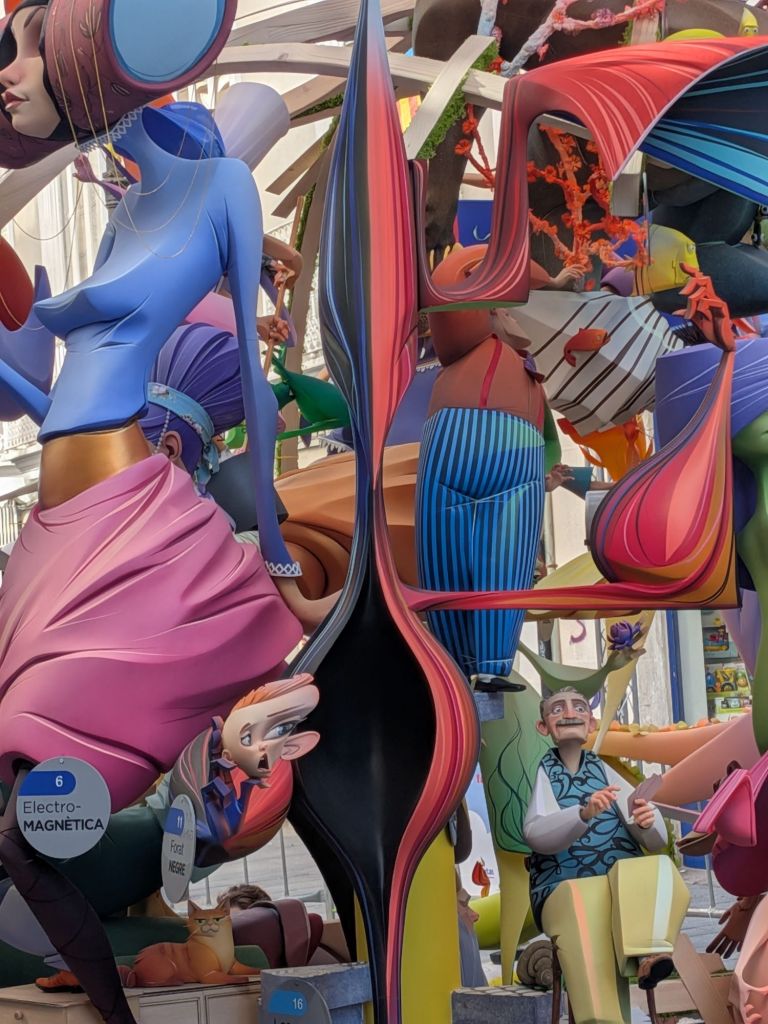
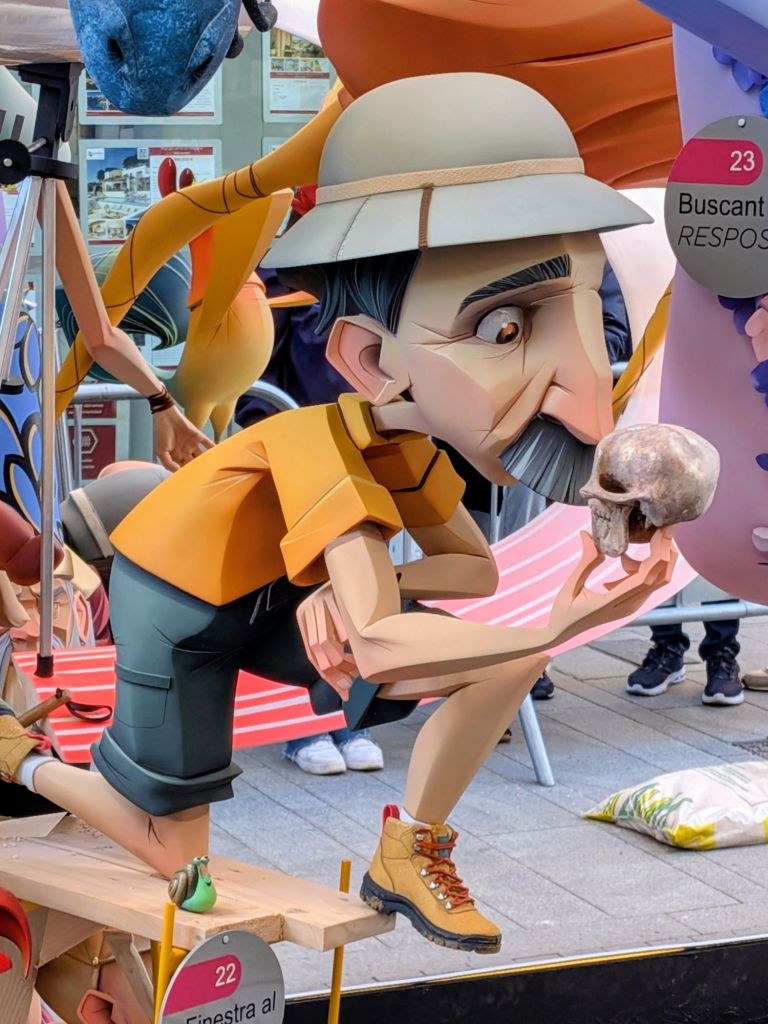
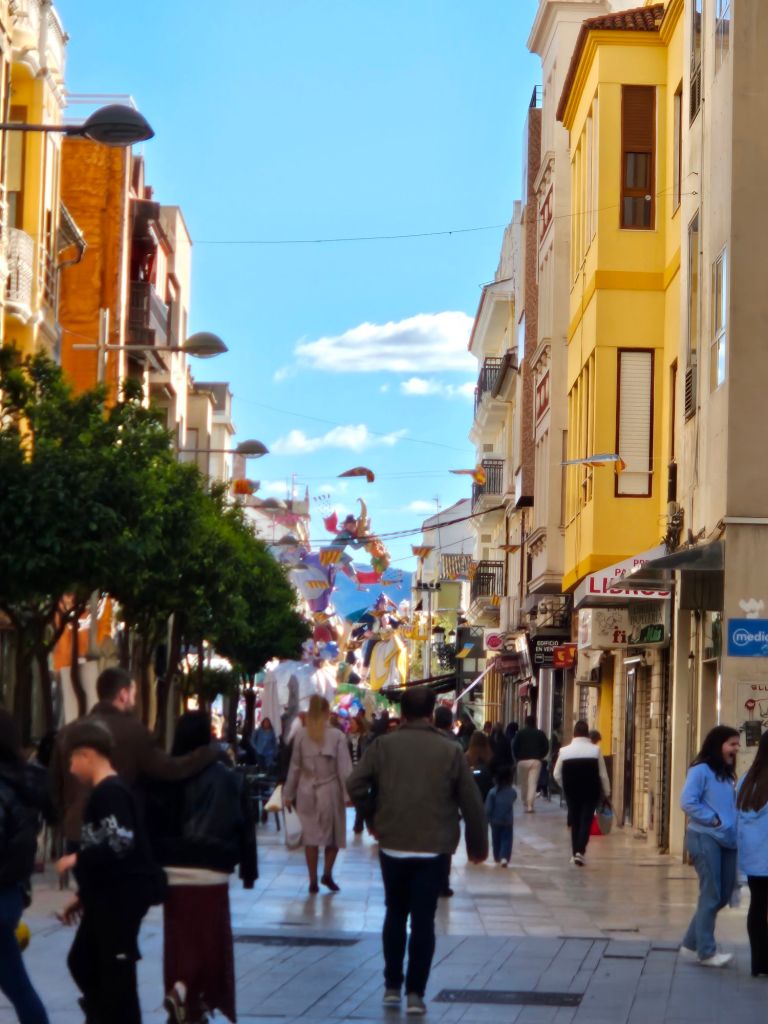
Afterwards into Gandía itself, with no particular goal, but we were delighted to stumble into the middle of “la planta”- installation (planting) of the ninots in preparation for the Crema – the coming finale (which alas we’ll miss) of the whole month-long Falles festival. 

(We’ve been here a month and I’ve only just grasped that crema has nothing to do with cream. It’s cognate with cremate, being Catalan / Valenciano for burning – what happens to most of the ninots at the end.)

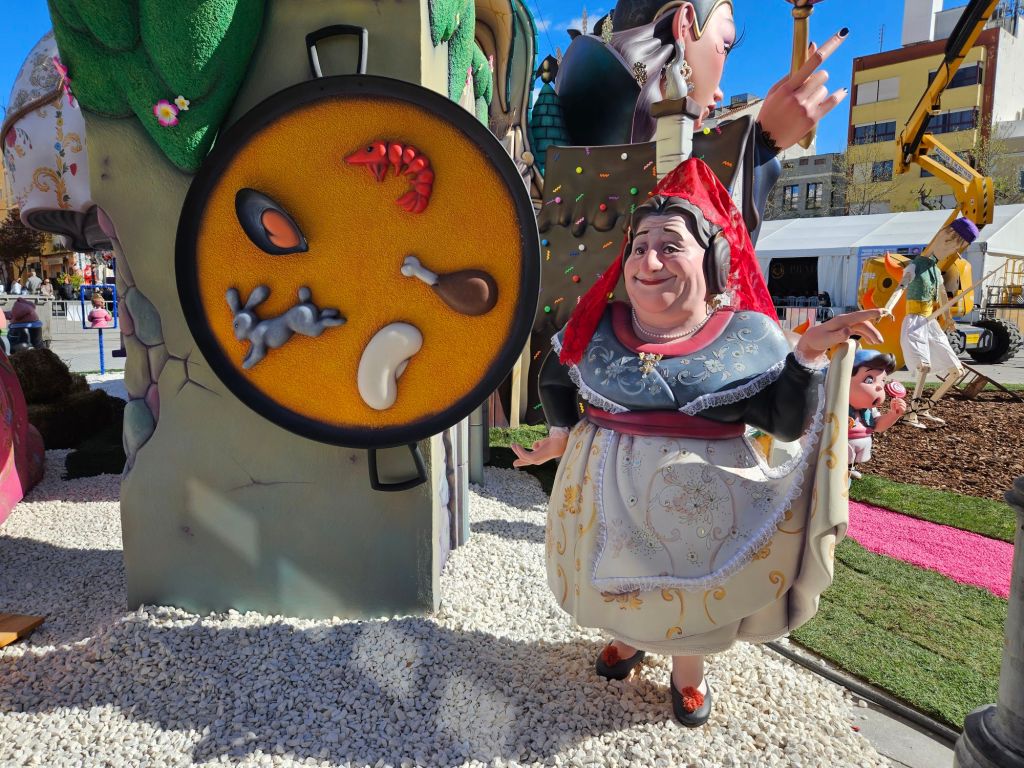
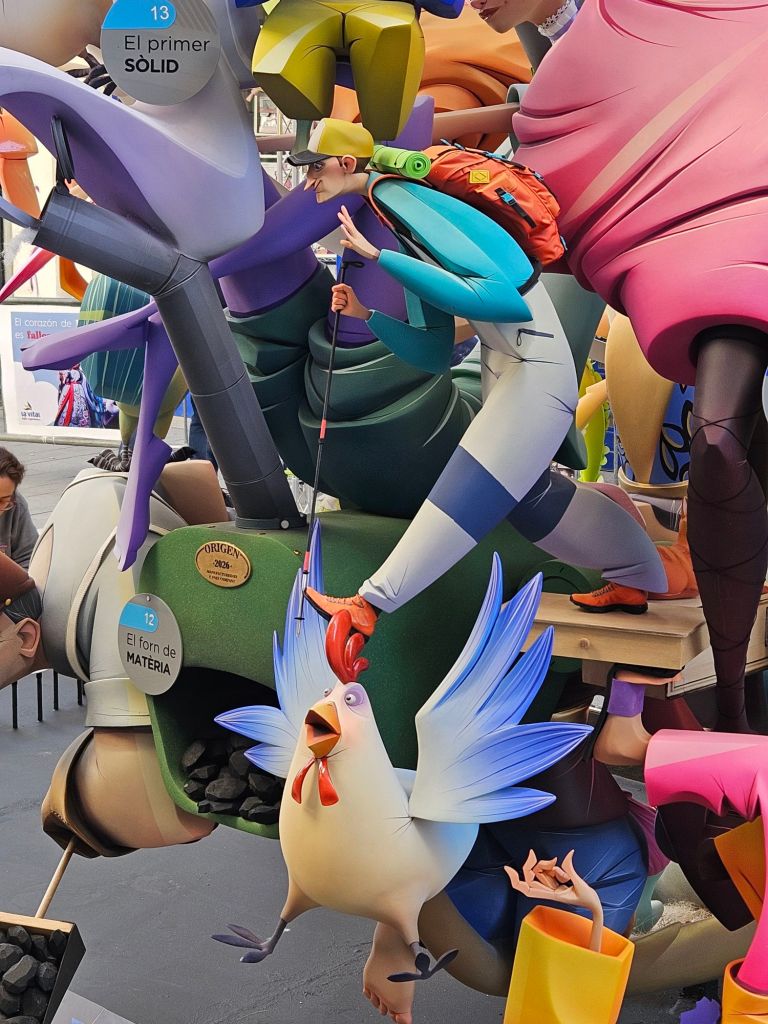
I’m not sold on the dominant Disney cartoon style, but these things are nevertheless hugely impressive. Some of them take up whole intersections:

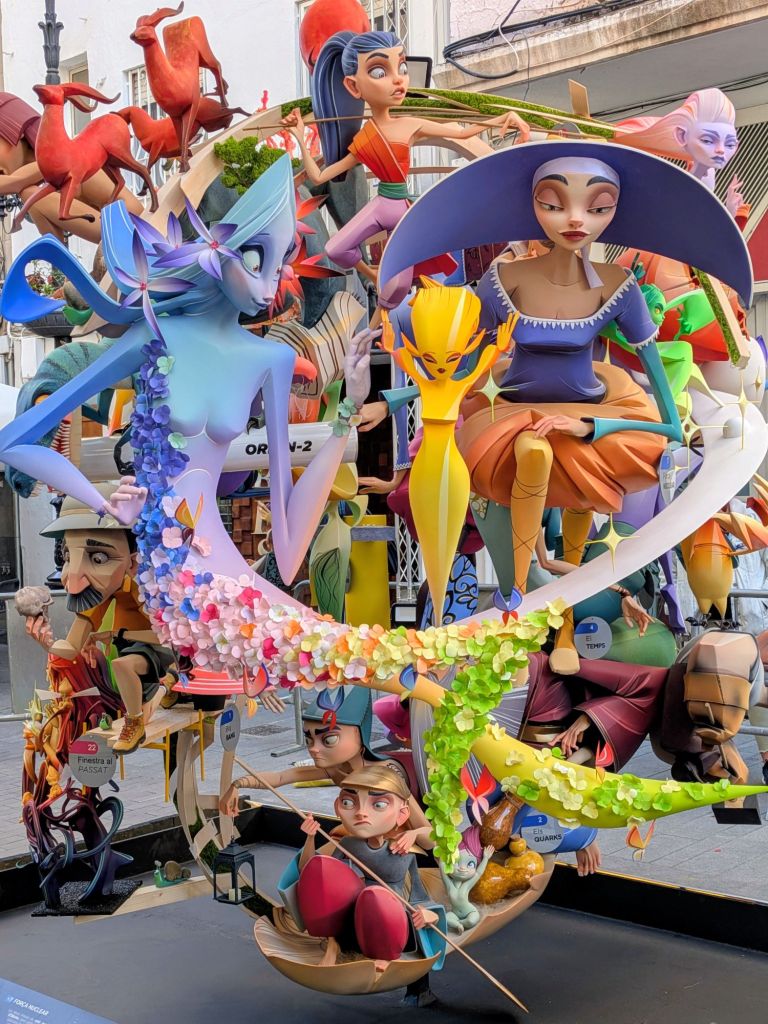
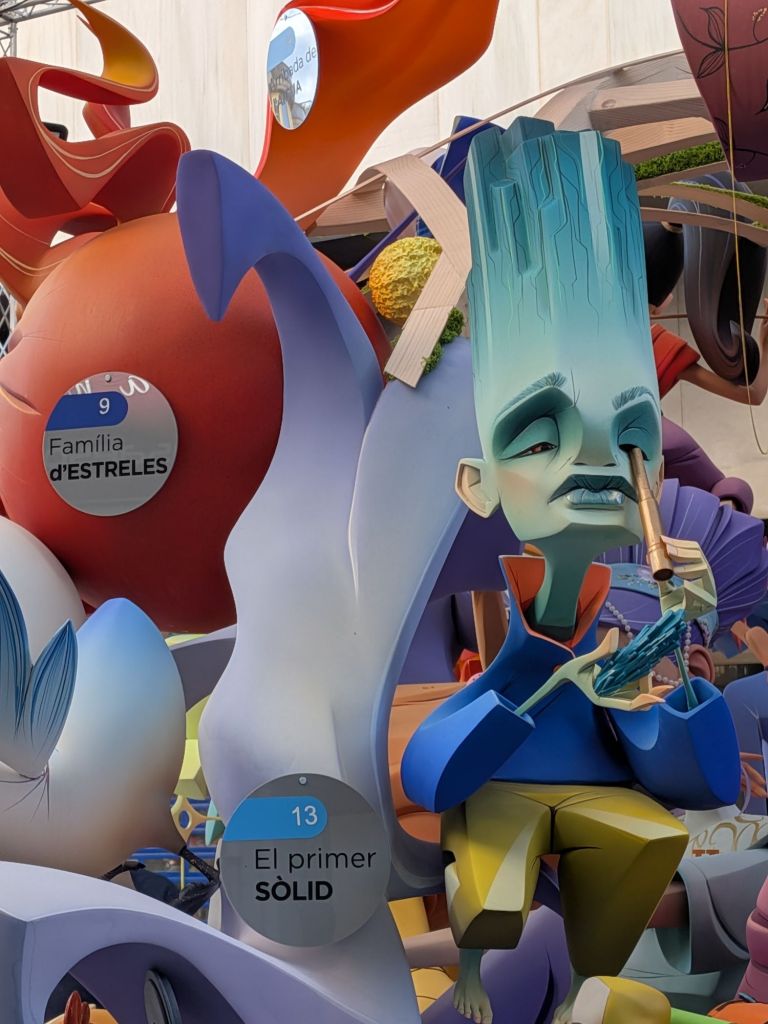
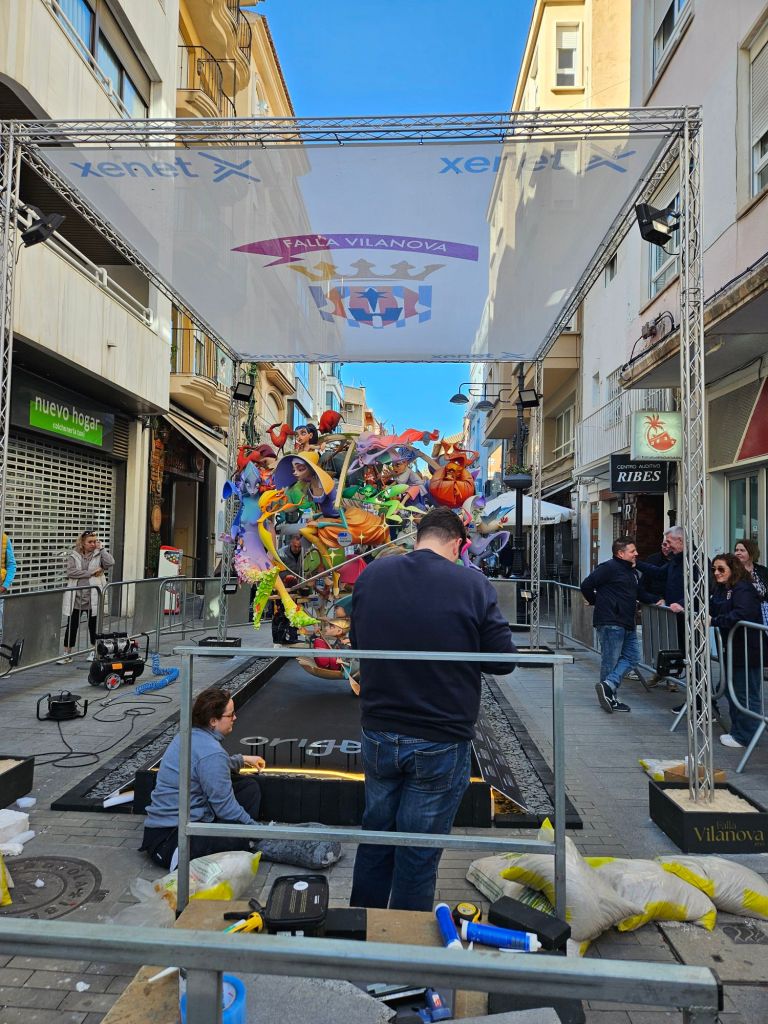
One, a sort of fantasy history of the universe called Origen, was a mere couple of meters high but particularly imaginative and intricate, complete with a personified comet bringing the Earth its water, a figure in the middle stirring the Primordial Soup, a star being born, a black hole tucking someone in, and dozens more. A team of people was still working on it, touching up paint etc. We thought it should definitely win the prize and be saved:

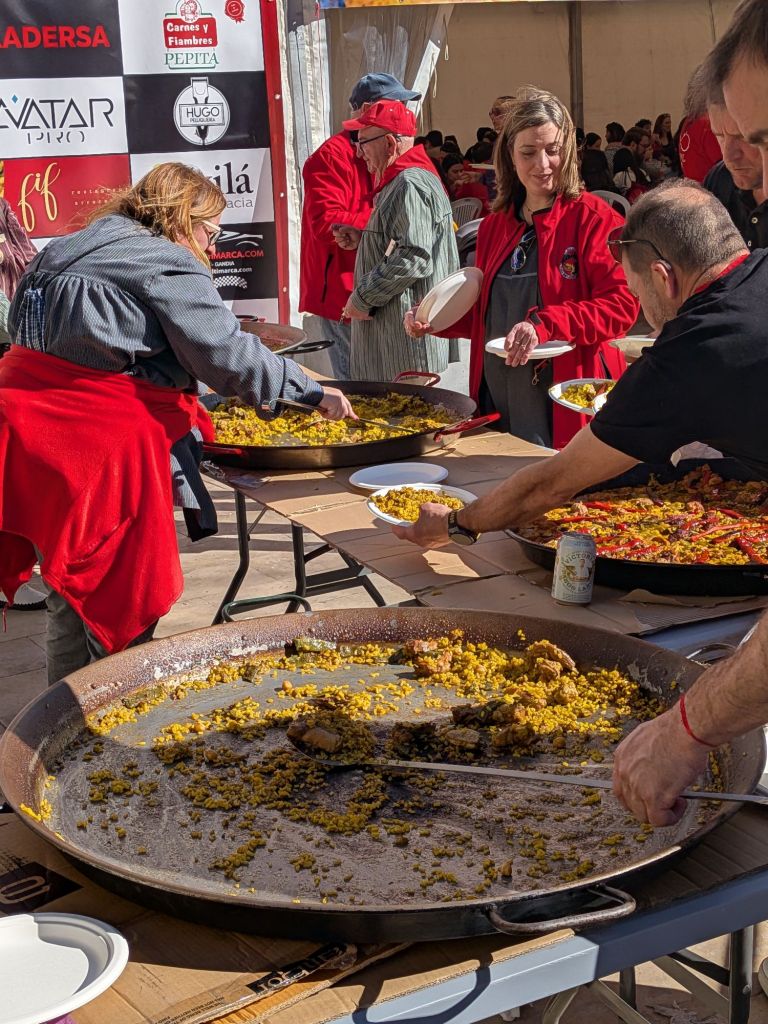
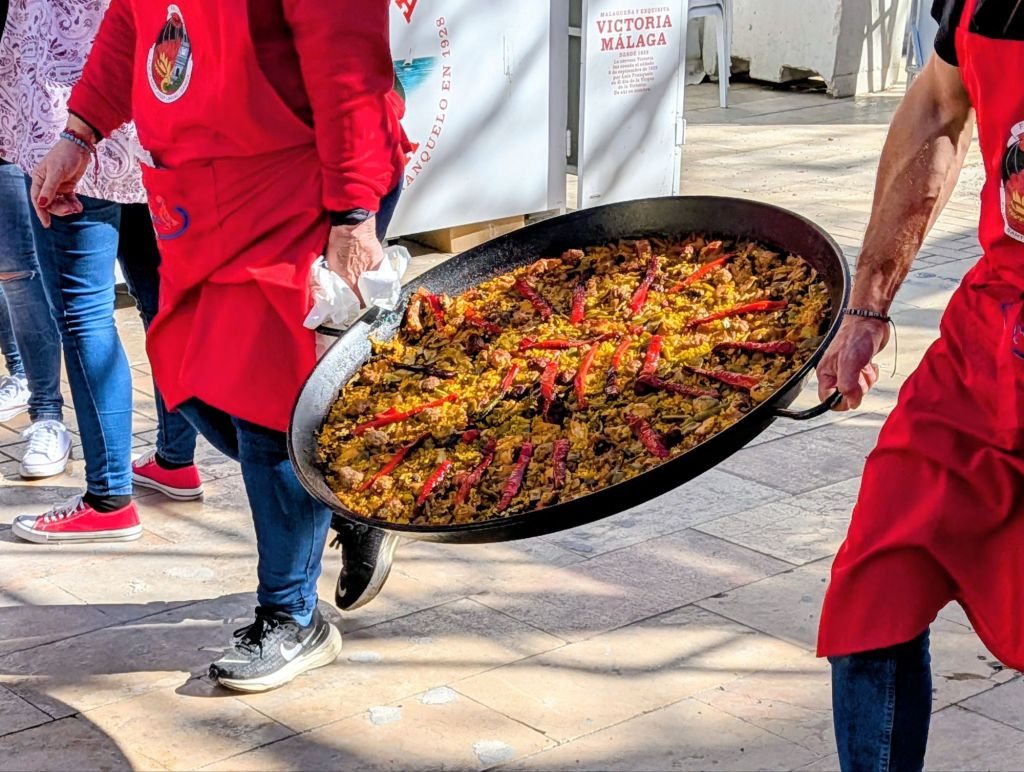
Ok, we were mostly delighted. There’s an infectious social energy and effort that goes into Falles. You can see why people are so dedicated to it, and proud of the sense of cultural identity it embodies – perhaps in part because of the sense that there’s something at once joyfully communal and creative but also joyfully pointless about it. Lots of food involved, including of course paella:

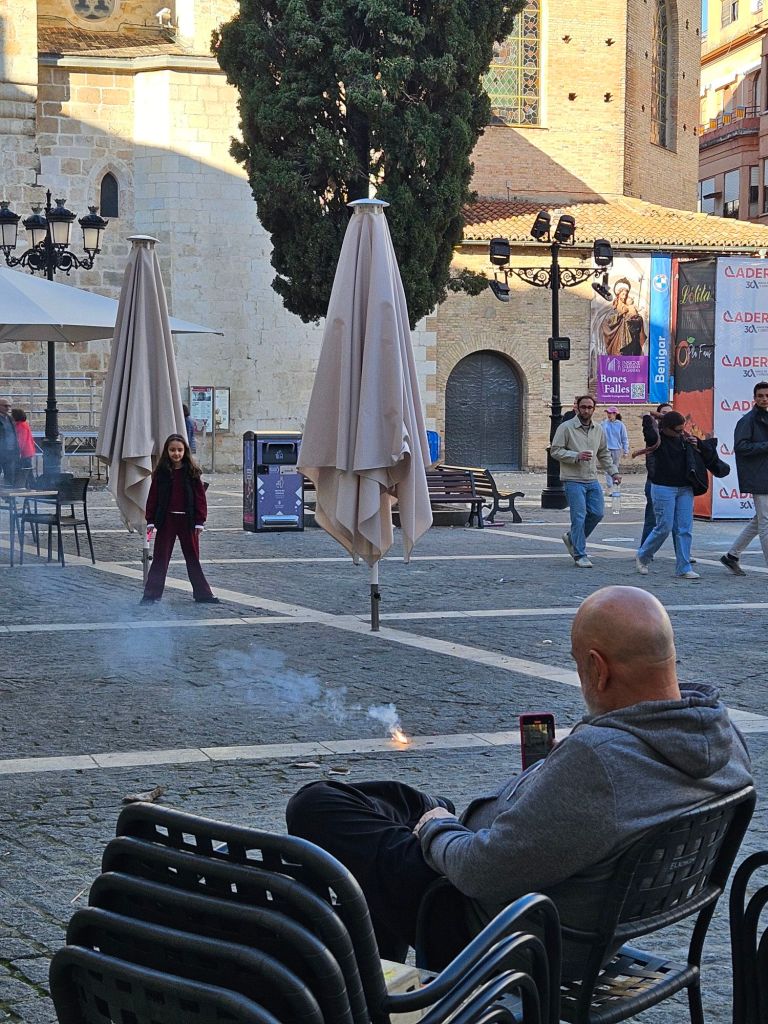
OTOH part of the fireworks theme involves everyone aged 7-17 running around in the streets gleefully throwing firecrackers. By the time we left our ears were ringing.

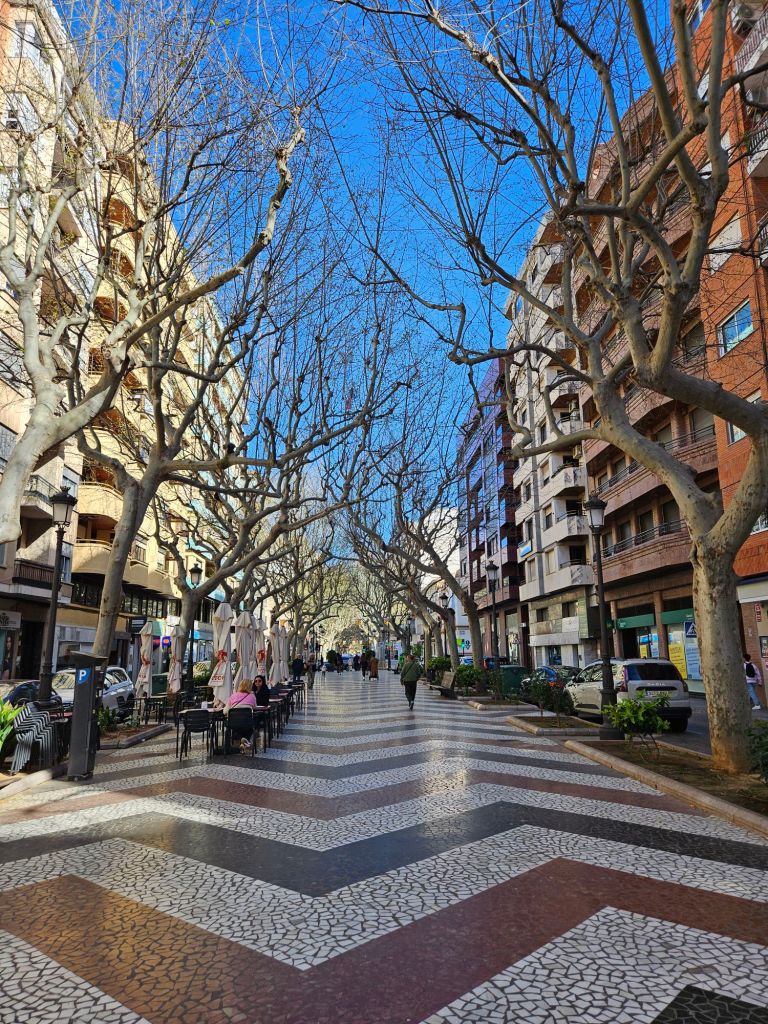
K here. We walked the streets in “downtown” Gandia keeping an eye out for any tourist stops we thought we should come back to see. It is a pretty town, but the beach won out.

Citrus, citrus, citrus!

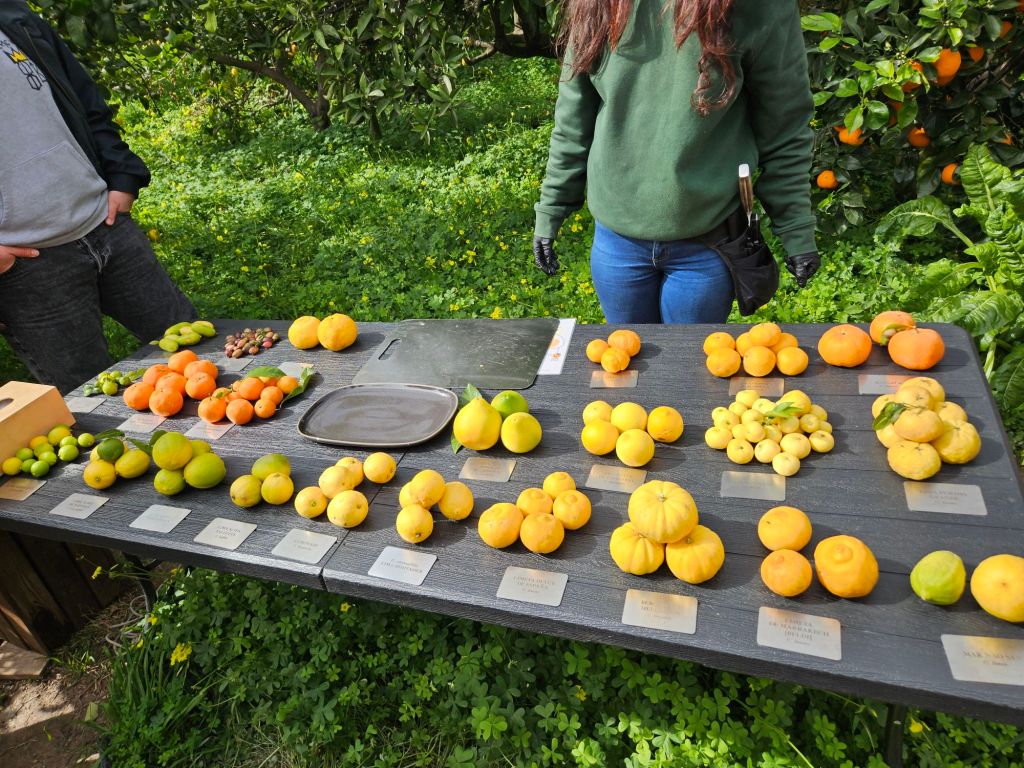
A few months before we left, I read an article about the Todoli Citrus Foundation in Spain and immediately resolved to visit. R had proposed a more northern driving route, but I insisted on a stop in Gandia. So glad I did.

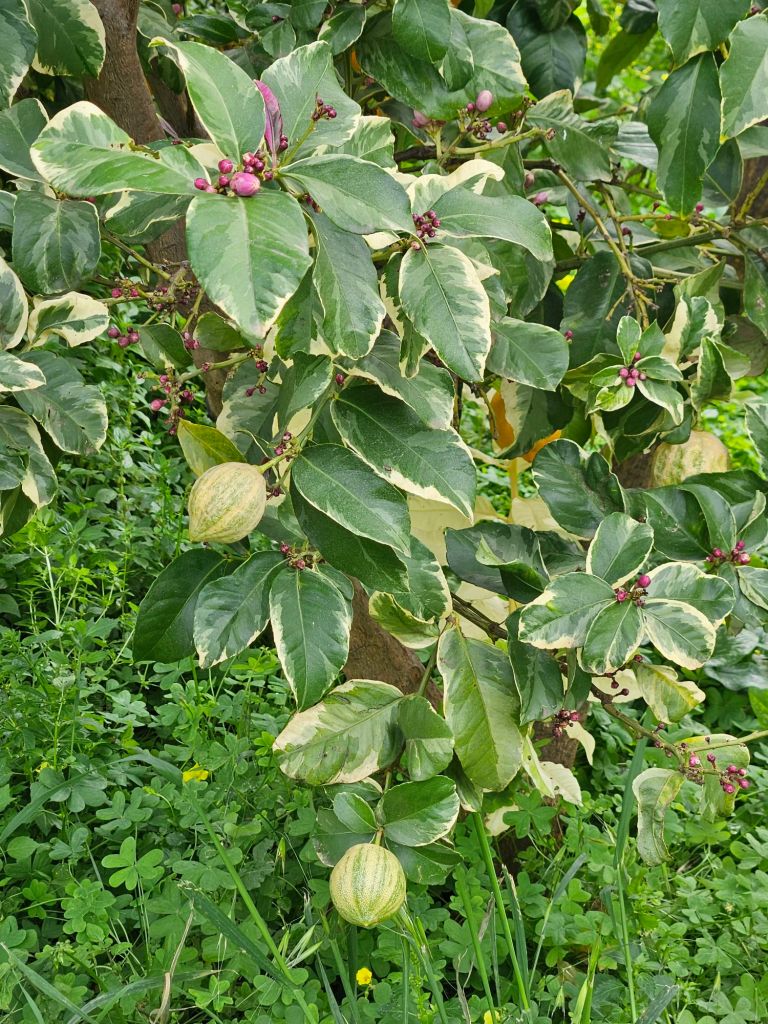
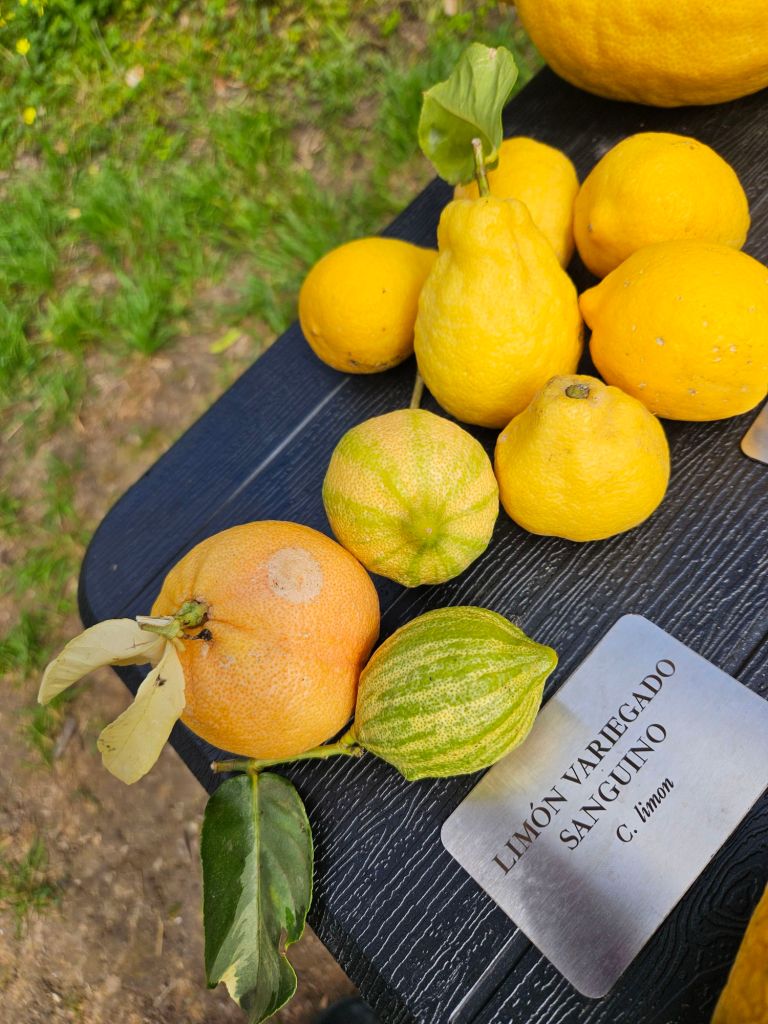
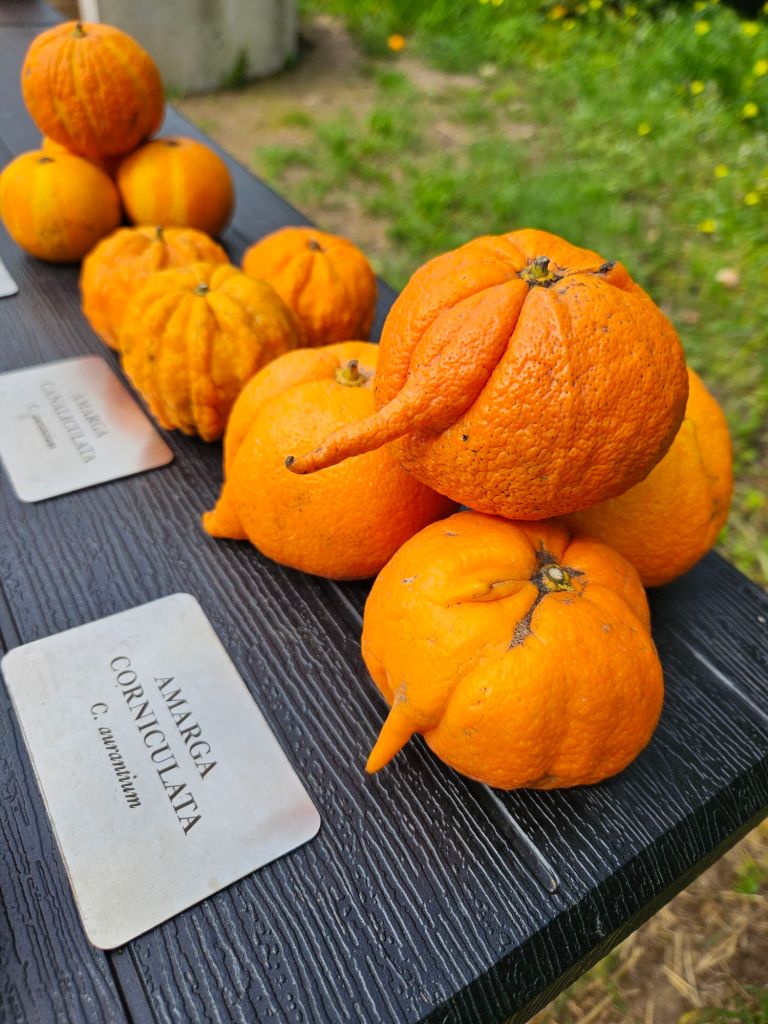
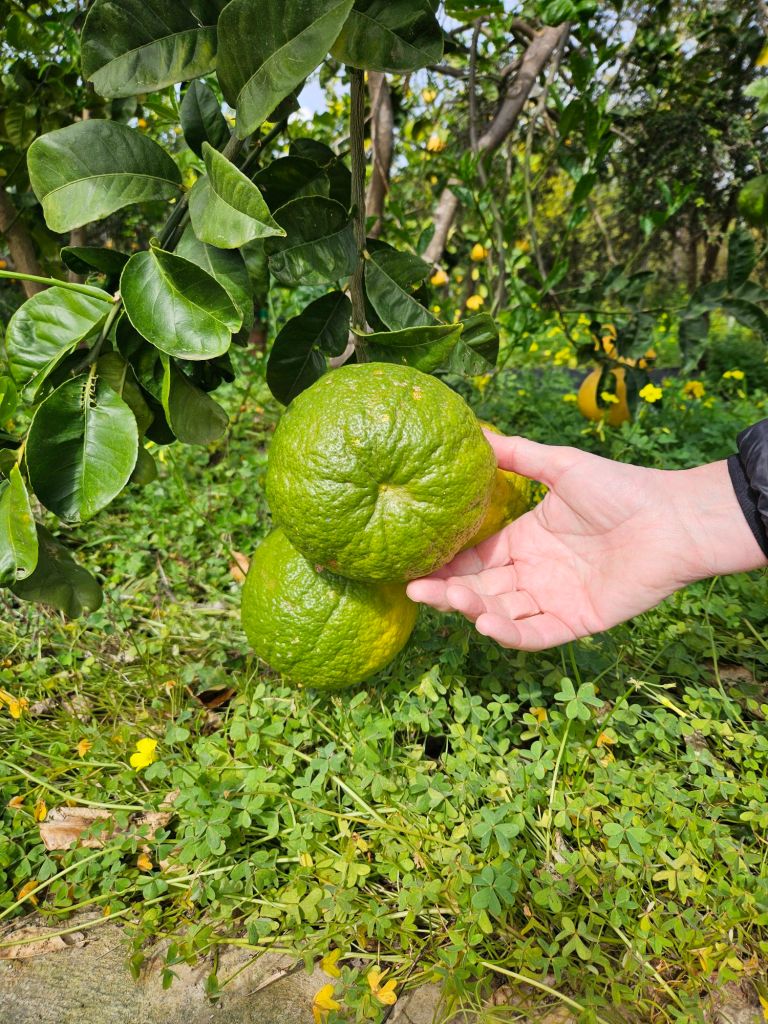
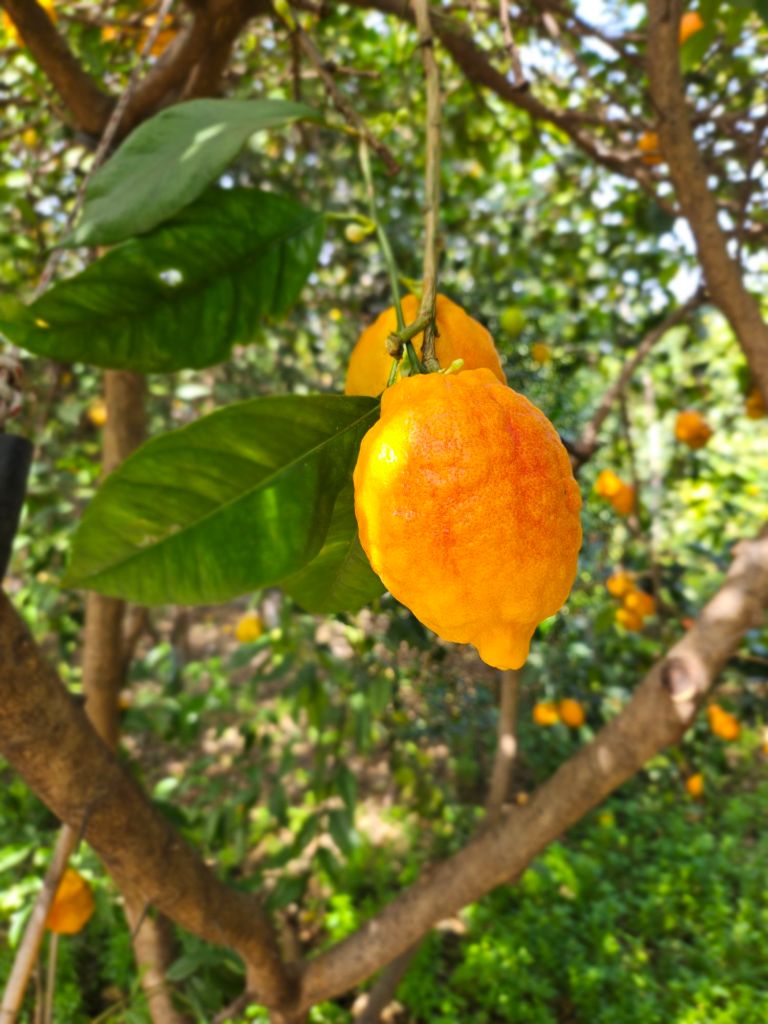
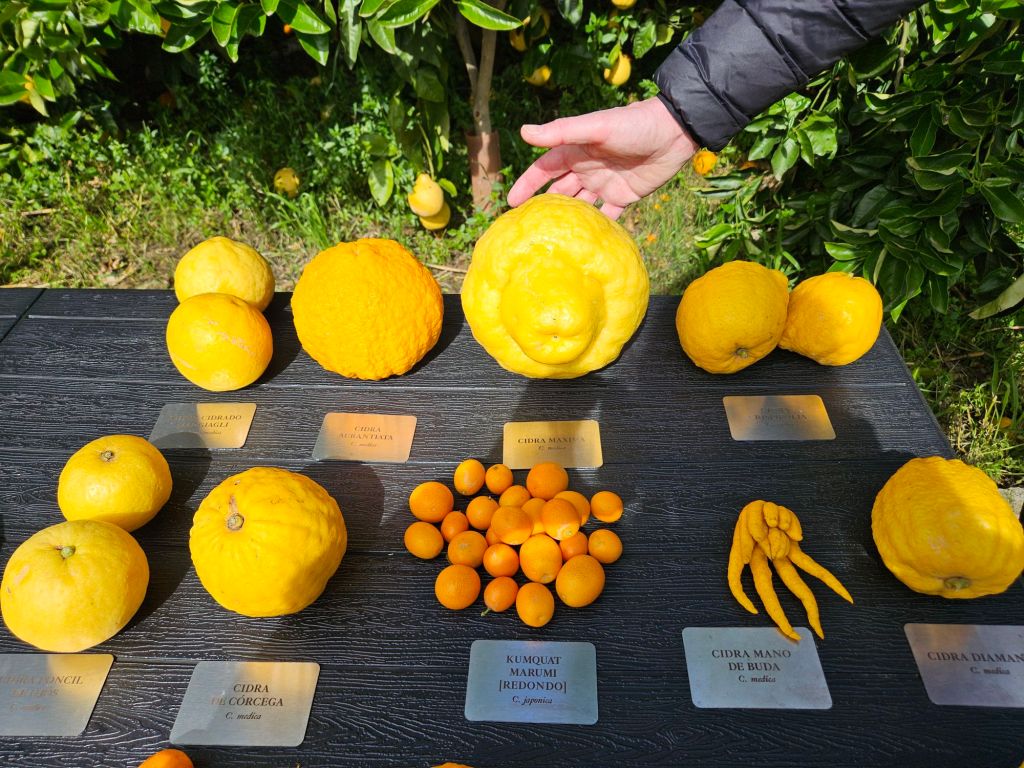
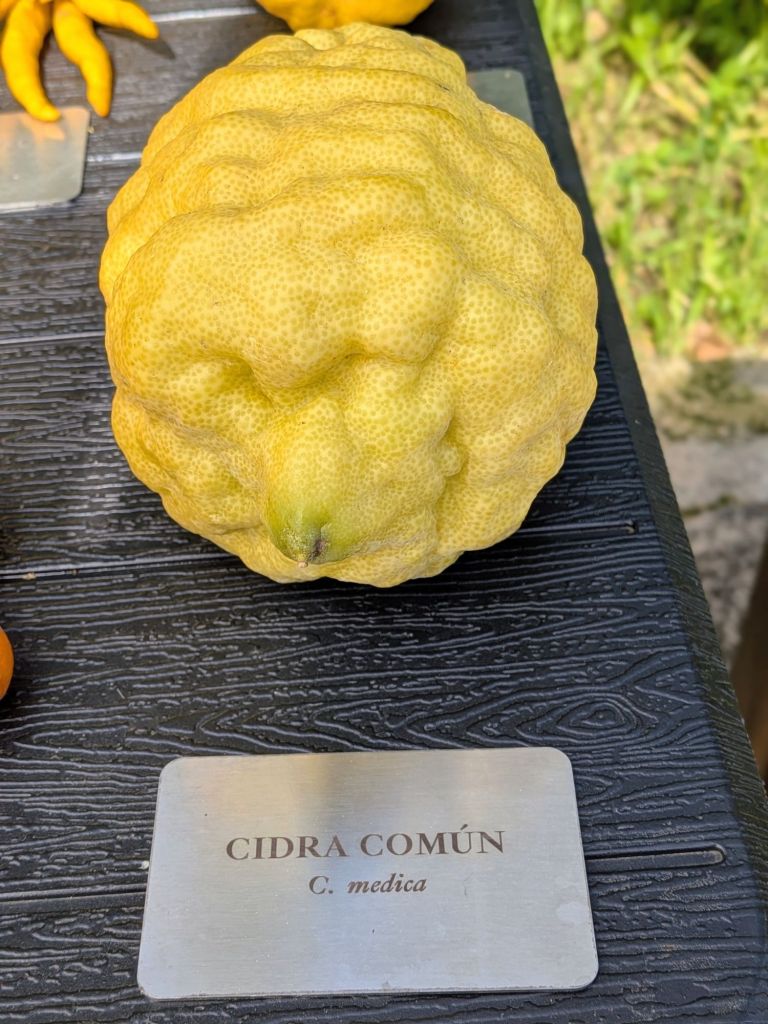
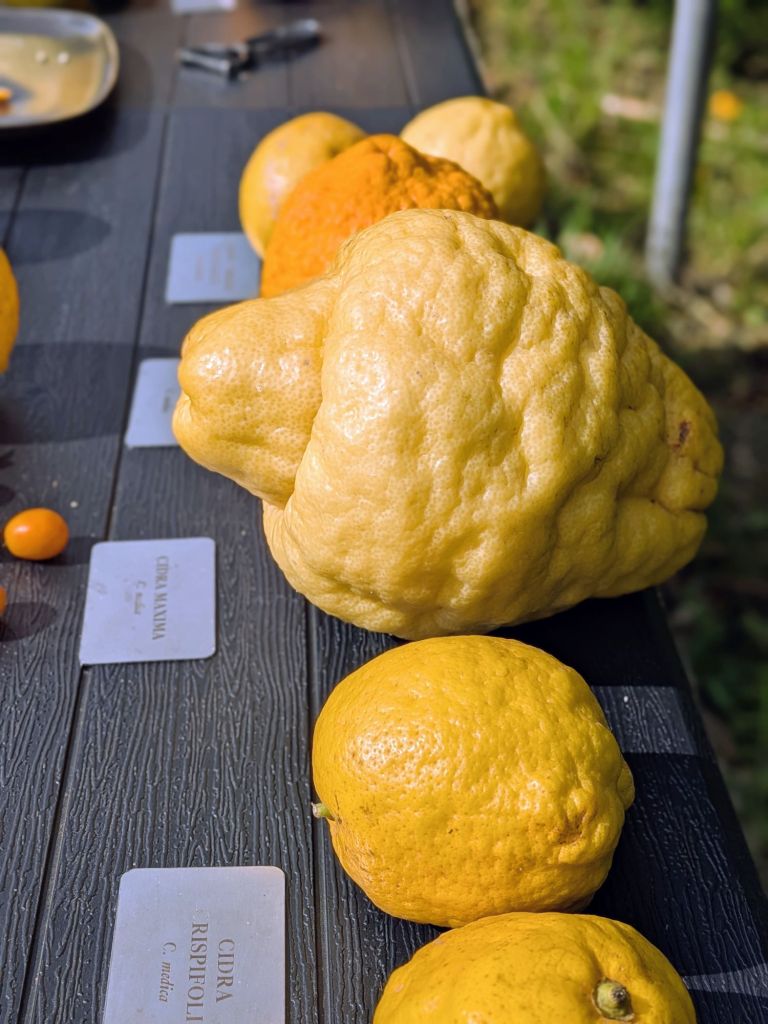
The Foundation grows over 500 varieties of citrus, preserving antique varieties, testing climate resilience, and hybridizing new varieties. On the tour you get some explanation (in Spanish, but we followed mostly) and–the best part–the opportunity to try some 15-20 varieties of citrus.

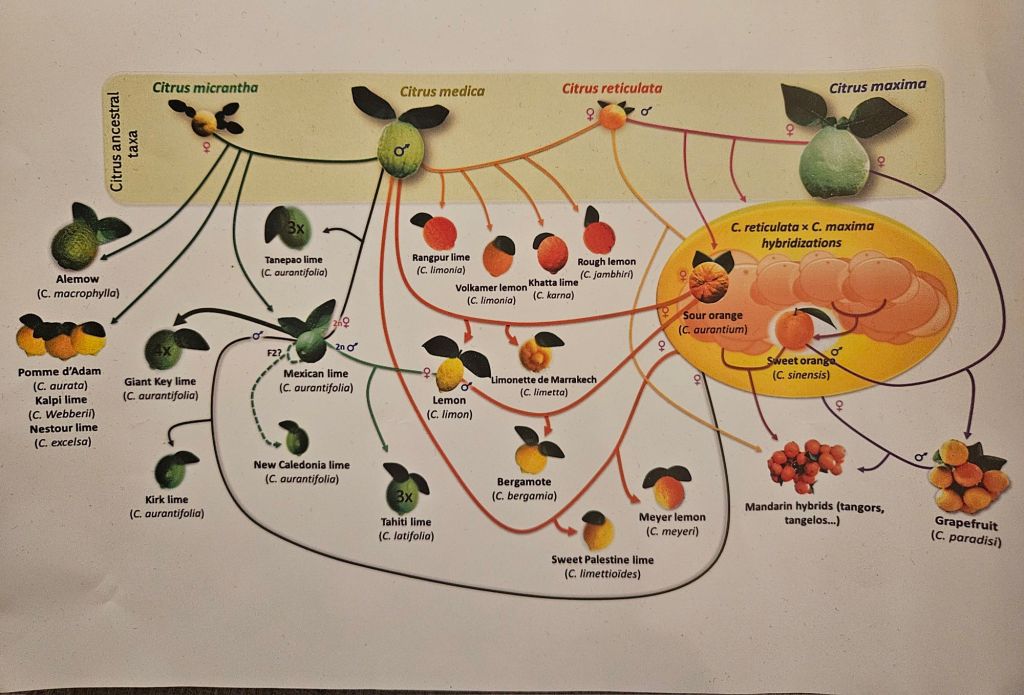
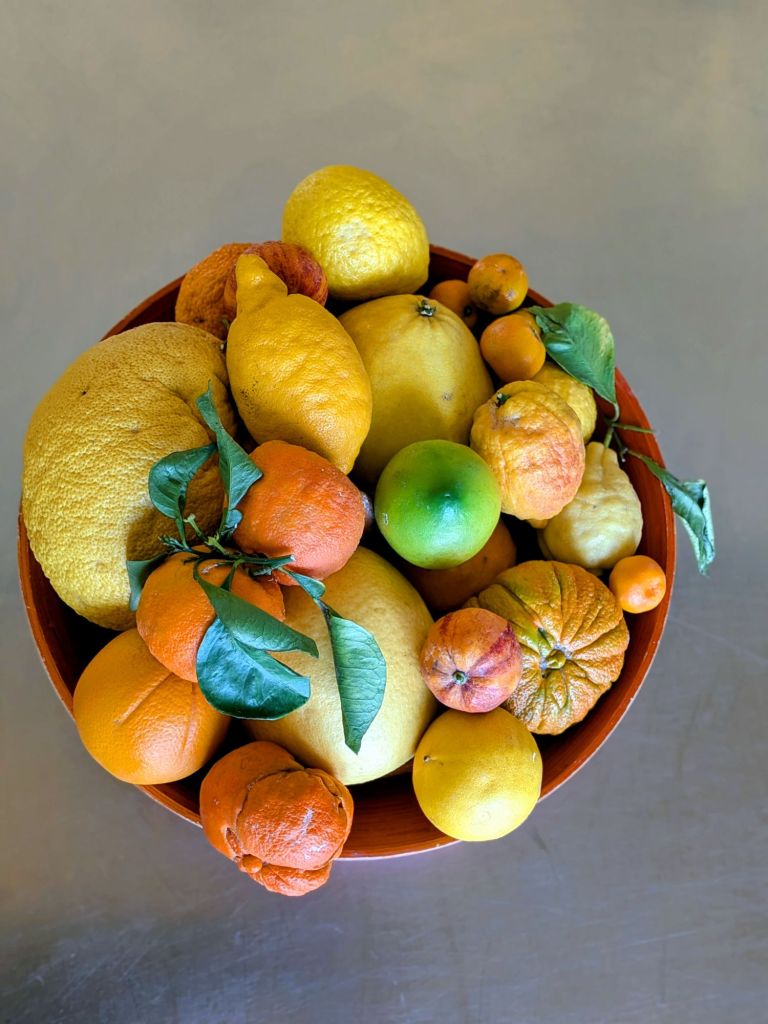
All modern citrus comes from just 4 ancestors, and are divided (roughly) into sweet and acid. Within each of these, sizes, shapes, colors and flavors are amazingly different.

At least some of the trees come from varieties that were, some 1000 years ago, introduced in Spain by the Moors for their ornamental and aromatic purposes. Later, the Borgias were big collectors of beautiful citrus trees. Today, you walk into the garden and experience sensory overload of smells, colors and tastes.

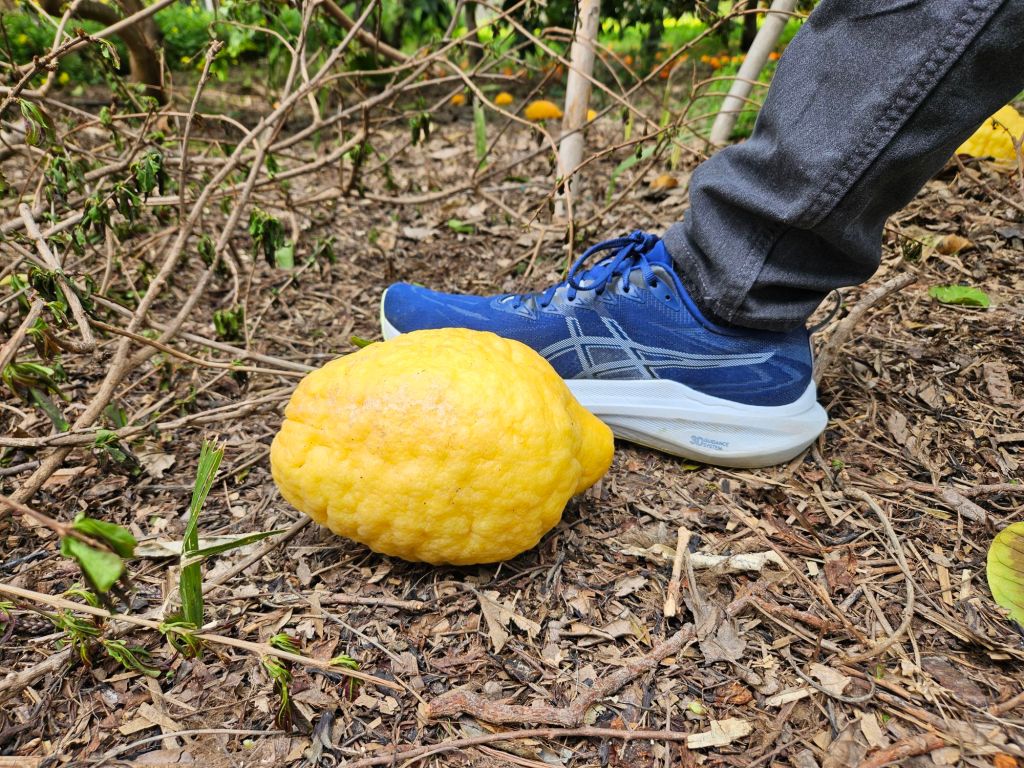
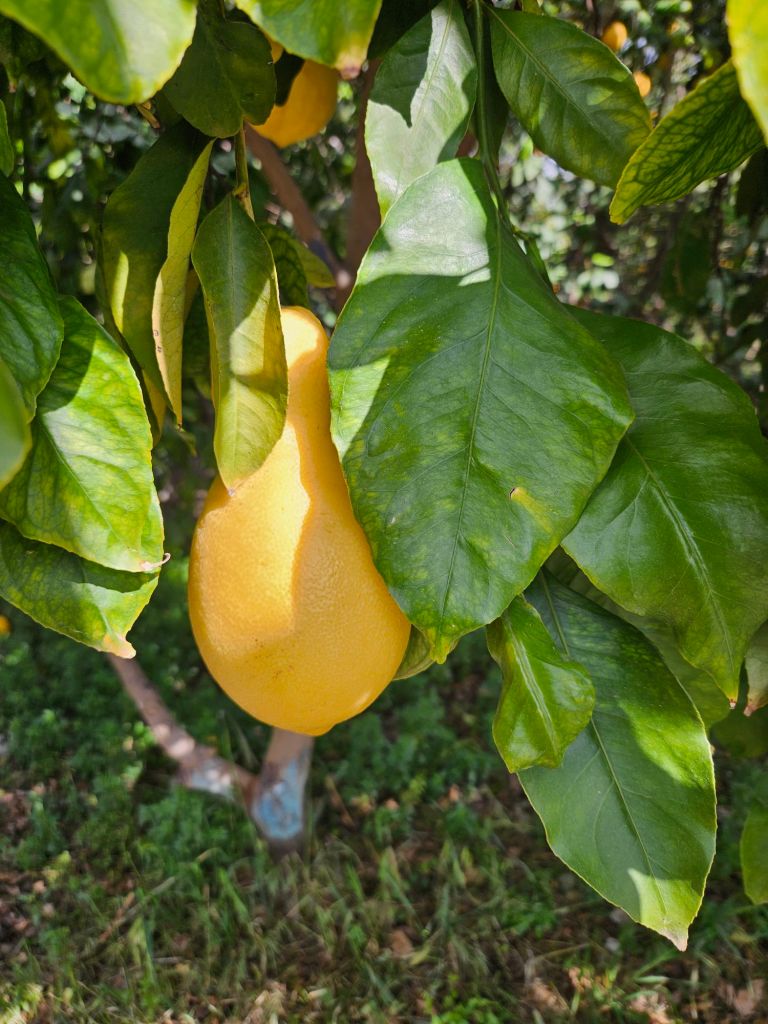
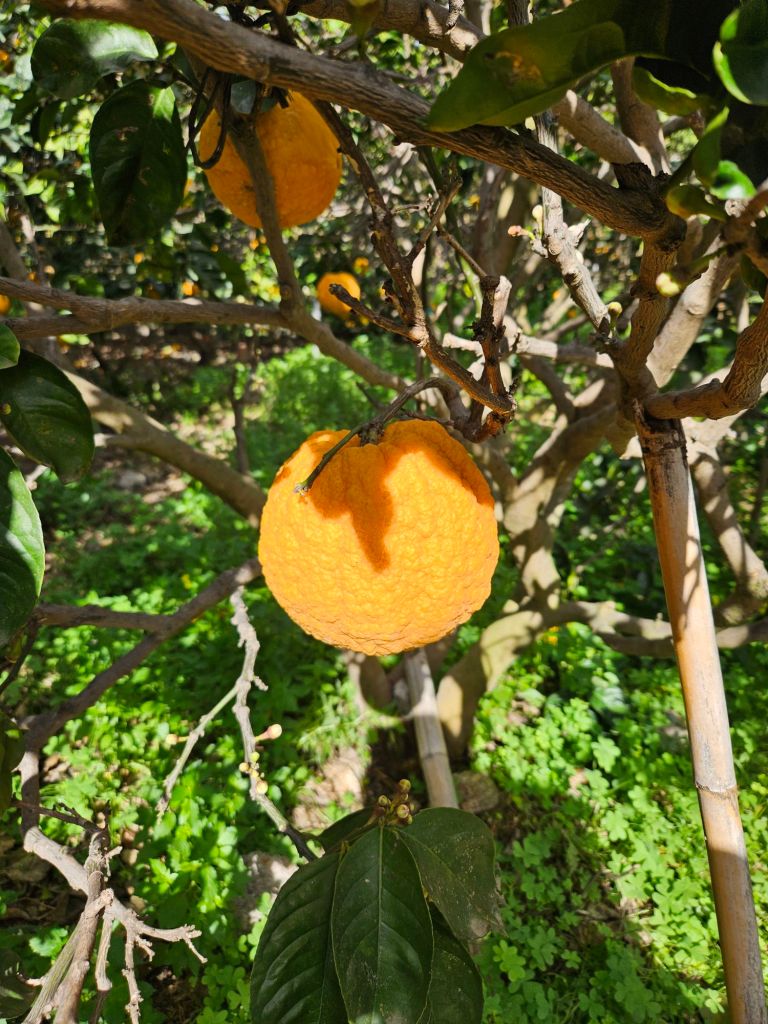
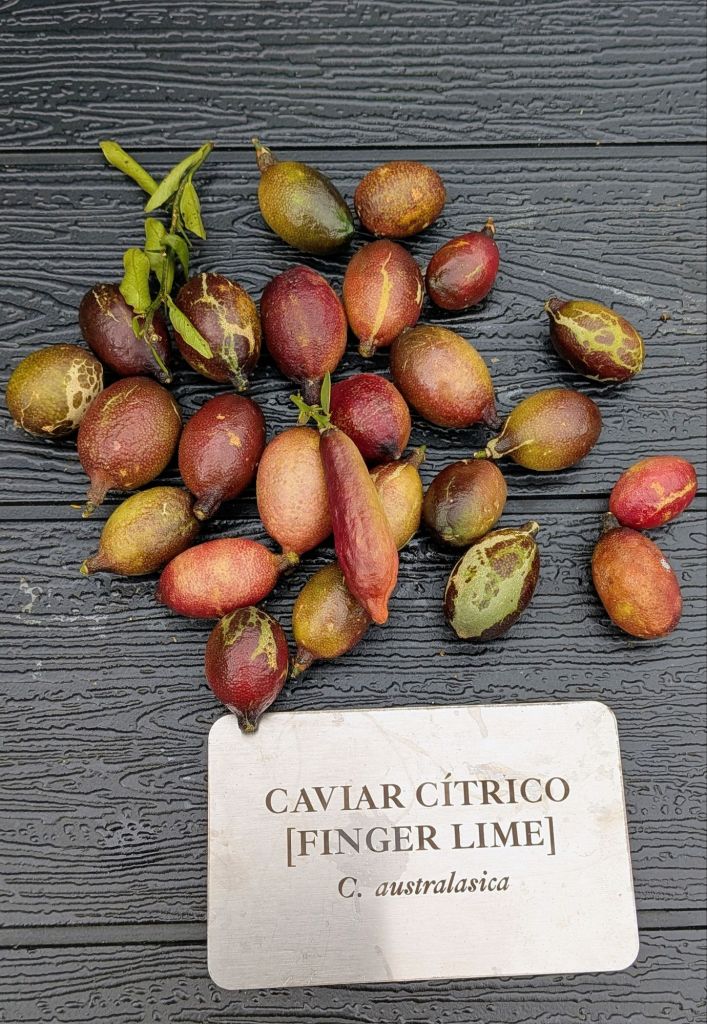
We were both blown away by the “citrus caviar” also known as Australian finger limes–a fruit the size of a walnut containing salty-sour-sweet granules unlike any other citrus we’ve ever tasted. I also, at our guide’s suggestion, dropped a piece of bergamot peel into my purse. Still getting lovely wafts of scent every time I open the bag. We also both regret not remembering the name of the citron that had a very acidic, small central pulp, a bitter orange exterior skin, and a thick phenomenally sweet and flavorful white pith.

R here: I did a deep nerdy dive into citrus genetics afterwards. Complicated. The four main naturally occurring citrus – pumelo, true mandarin, micrantha, and can’t remember the other one – emerged from a common ancestor 12 million years ago in the Himalayas. The seeds of one of these crossed the Wallace Line from SE Asia into Australasia 4 million years ago, so the three wild Australian species are pretty distant, genetically. All our familiar varieties are hybrids.

It takes a village

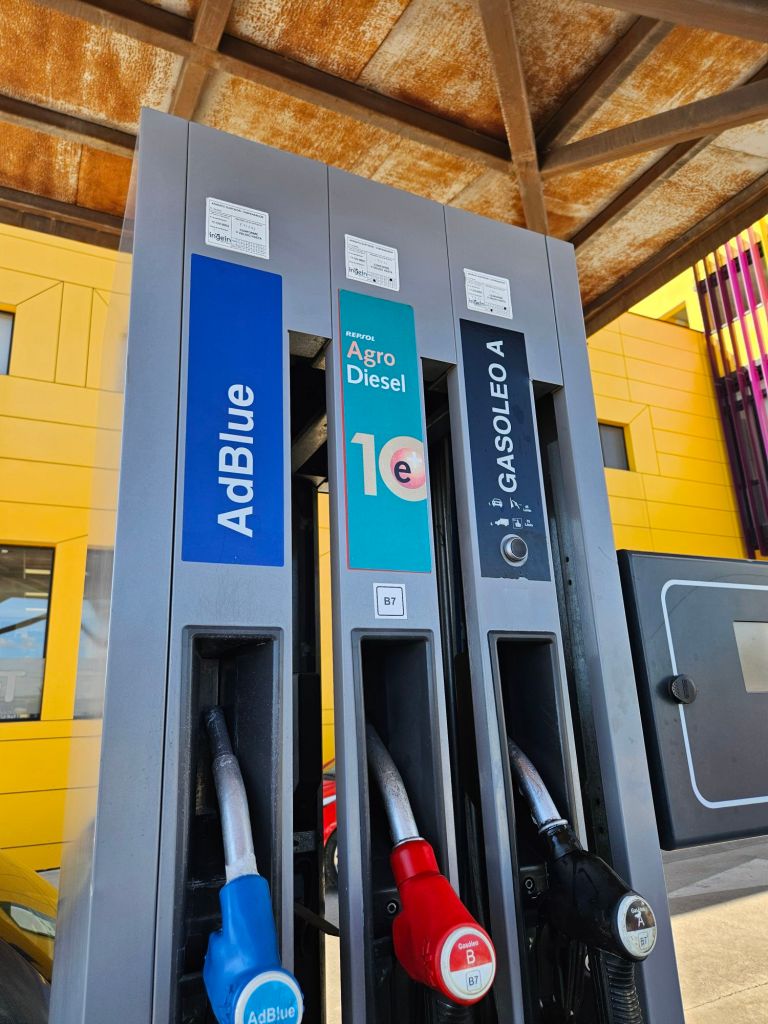
First time needing to fill the rental car. Big truck in the way at the pump, so went to the next one. Could not figure out payment system, but a nice man helped us with the pre-pay. Gracias, gracias…  and thank goodness gasóleo nozzles are the wrong size for gasolina cars. Switched back to first (gasolina) pump. Different nice man helped here, but this pump wouldn’t work even then. Woman from office came out and fixed it.
Now have, surprise, two identical €60 charges on the credit card. As travel screw ups go, pretty minimal.

And so to the coast and Gandia – or actually the satellite community of Daimus, which was probably once a charming fishing village but is now part of the solid cliff of white hotels and apartment buildings that line the Spanish coast from Barcelona to the Portuguese border so that people like me can drink English beer and end up looking like a lobster.

A different kind of Roman aqueduct

“Well that was strange and unintelligible” said R as we returned to the car.

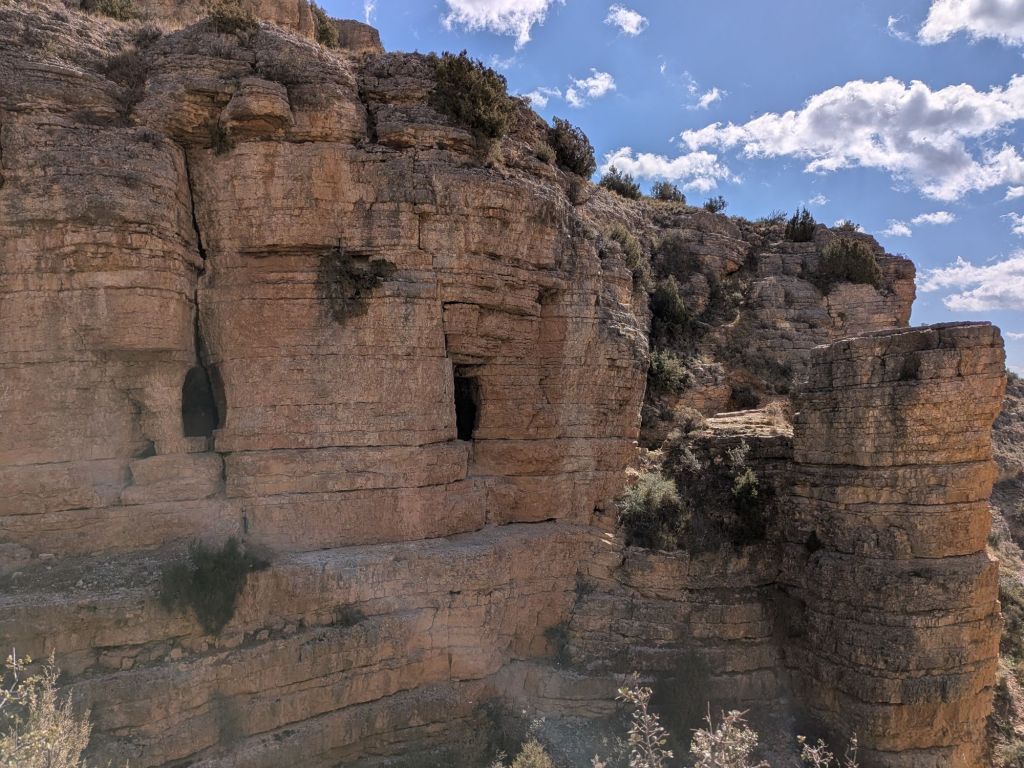
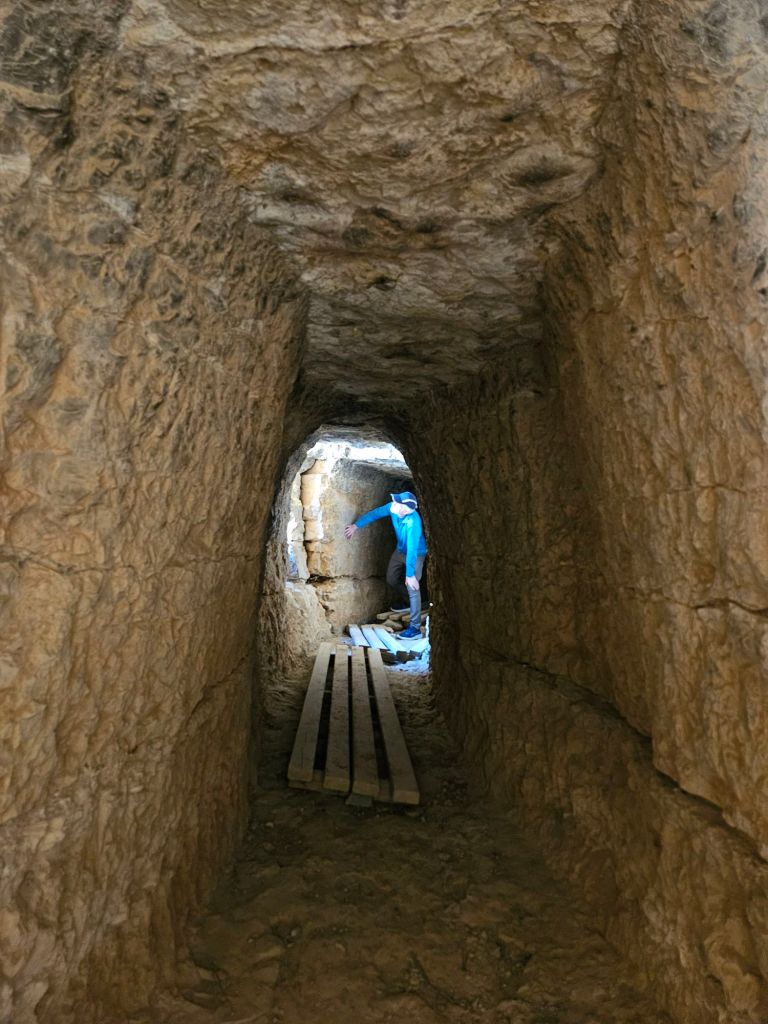
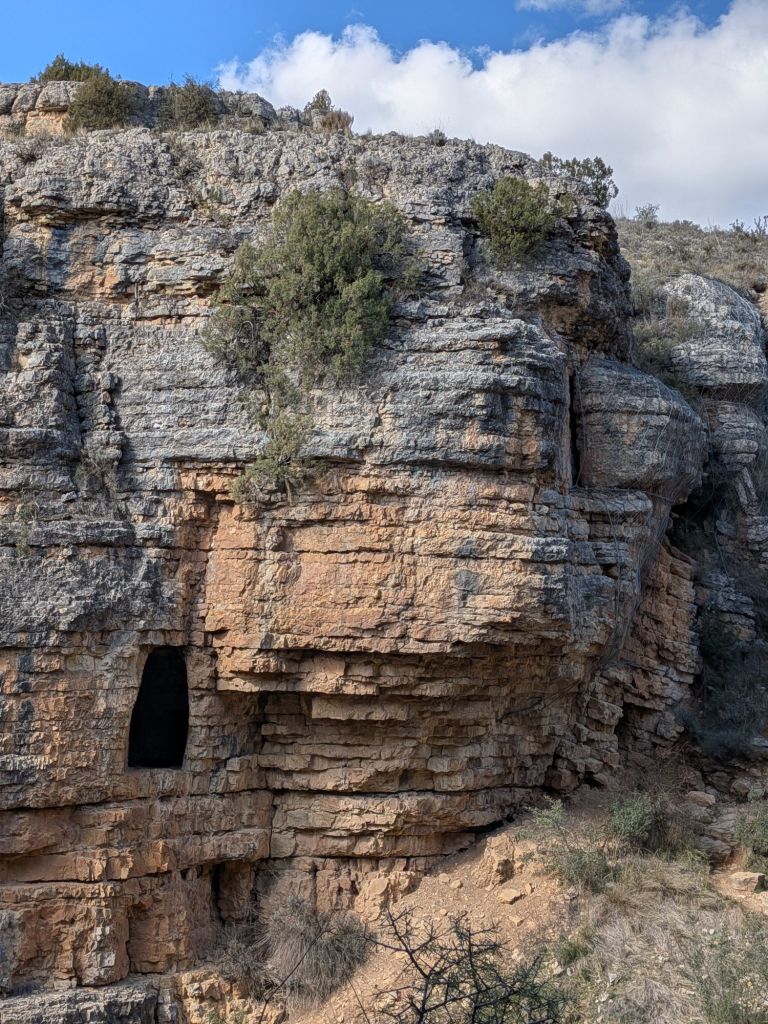
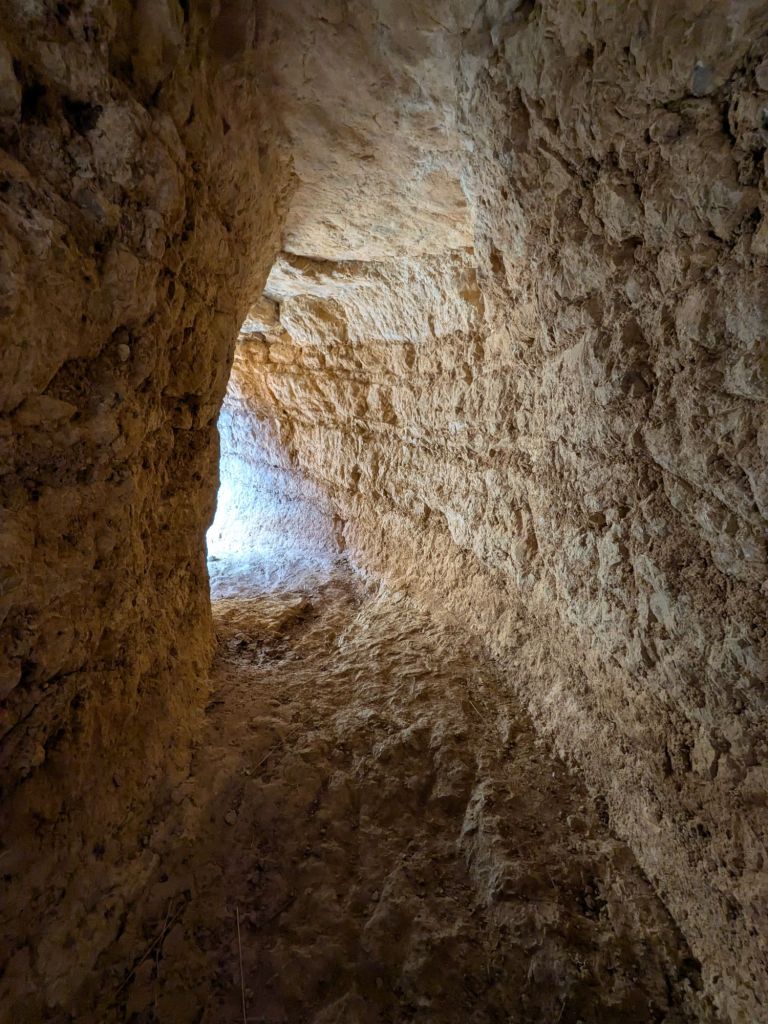
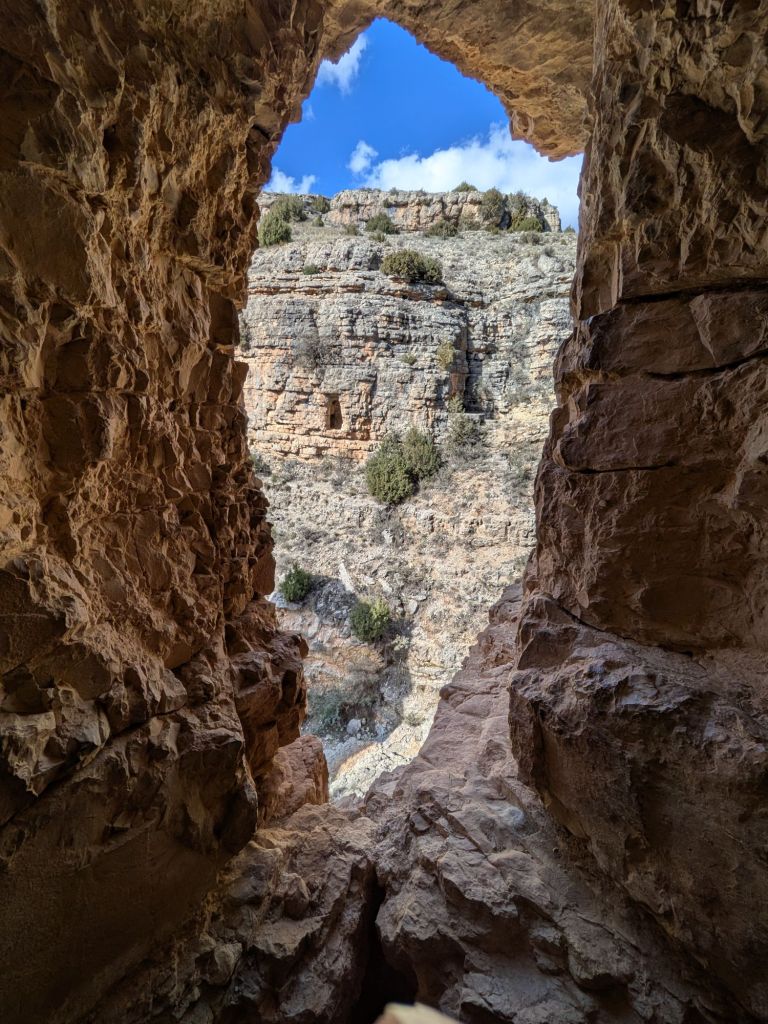
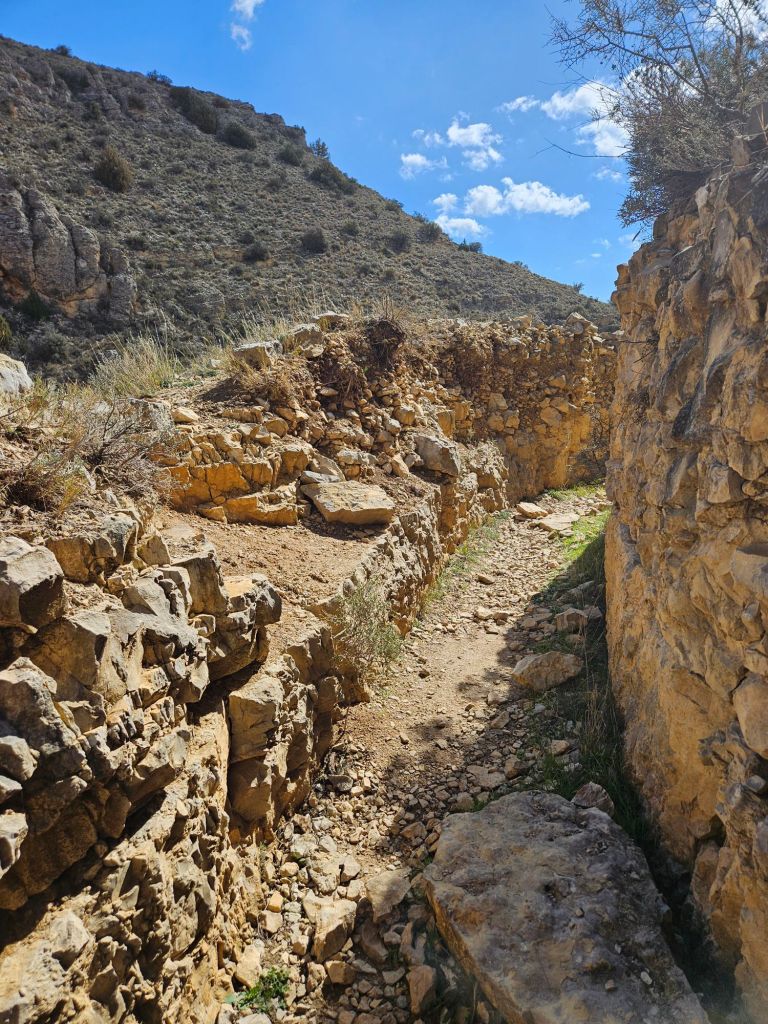
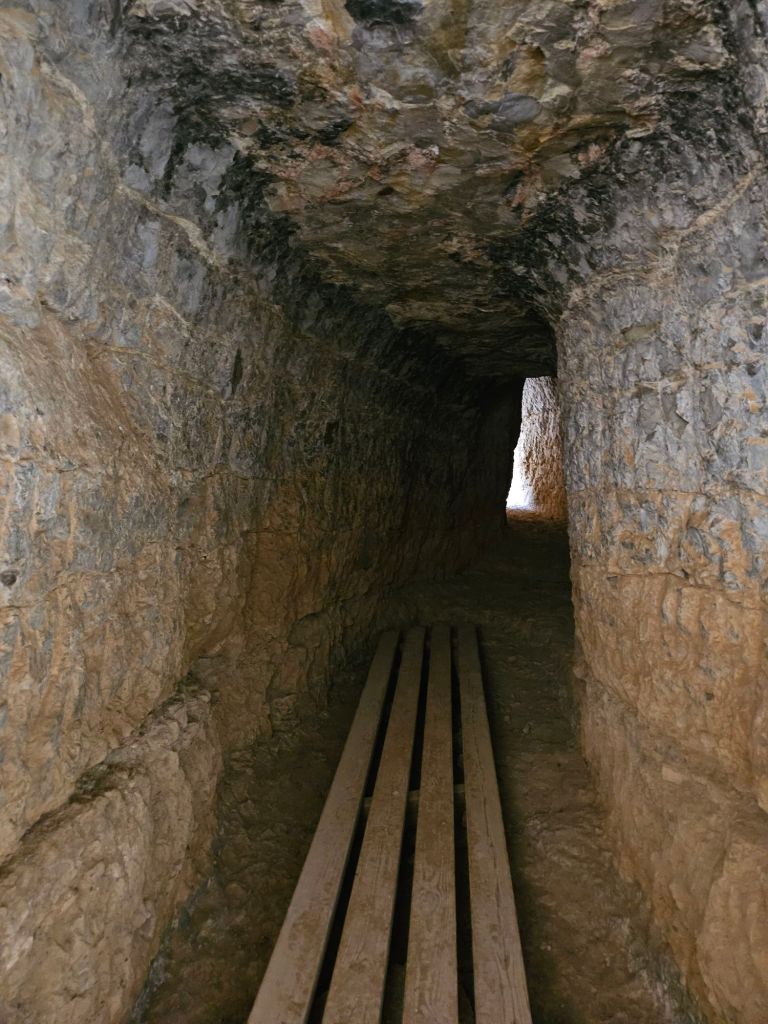
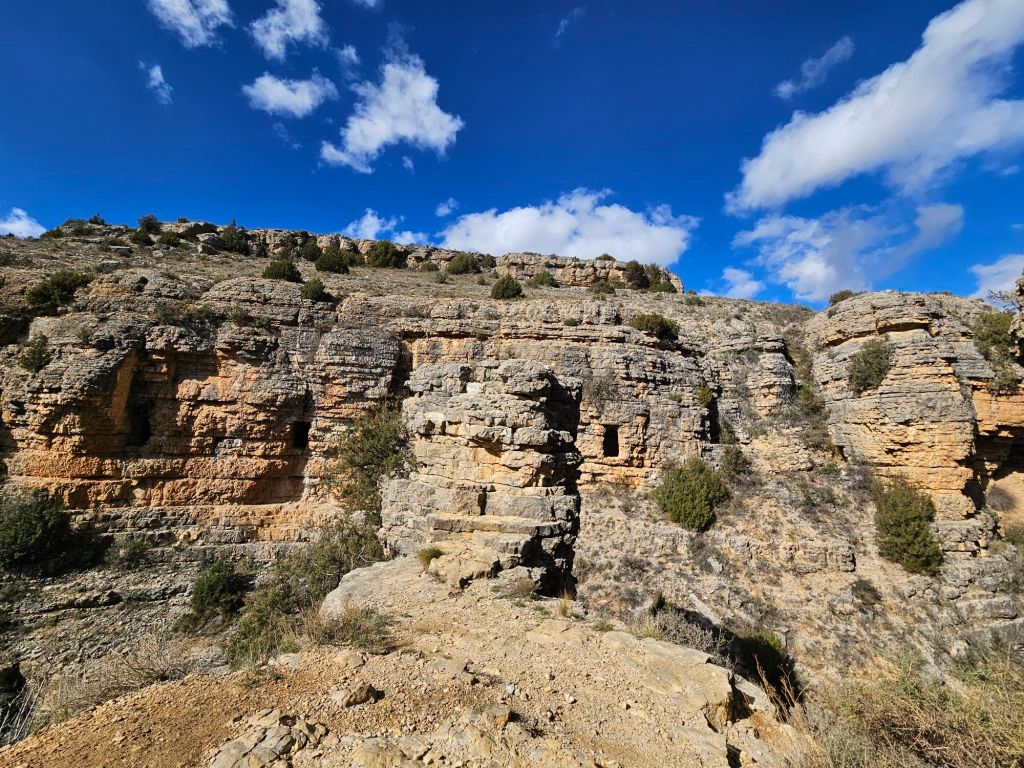
On our way out of Albarracin, we made a quick stop to view a section of the Roman aqueduct that connected the Rio Guadalaviar to the town of Cella, some 25 km away. At this viewpoint, the Barranco de Burros, it consists of a series of rock tunnels lining a canyon, with windows cut for ventilation and maintenance access. One can now hike past the modern retaining wall (protecting from flash floods in the gully) to access the tunnel system. You can walk, not quite upright through them, and marvel at the labor it took to plan and build 25 km of it.

Modern estimates are that this viaduct carried 16 gallons per minute. This massive undertaking was used for centuries. No one knows for sure when it was abandoned, but there is, per the signage, no mention of it in Christian records from the reconquest of Cella (one end of the aqueduct).
Los fusilados

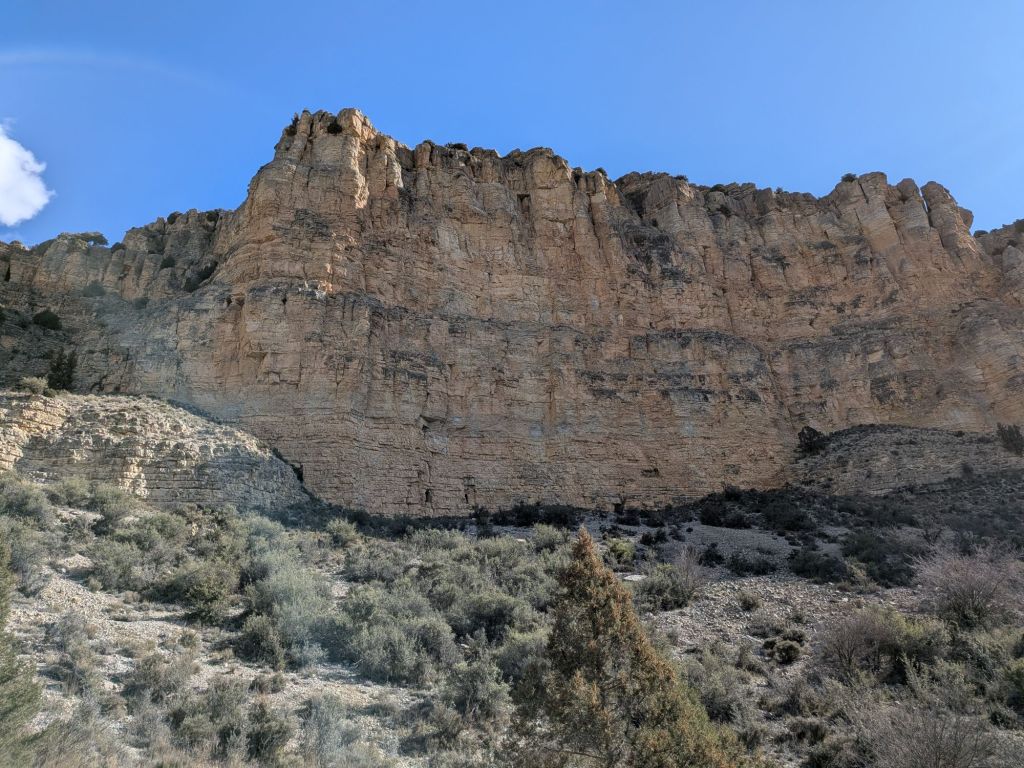
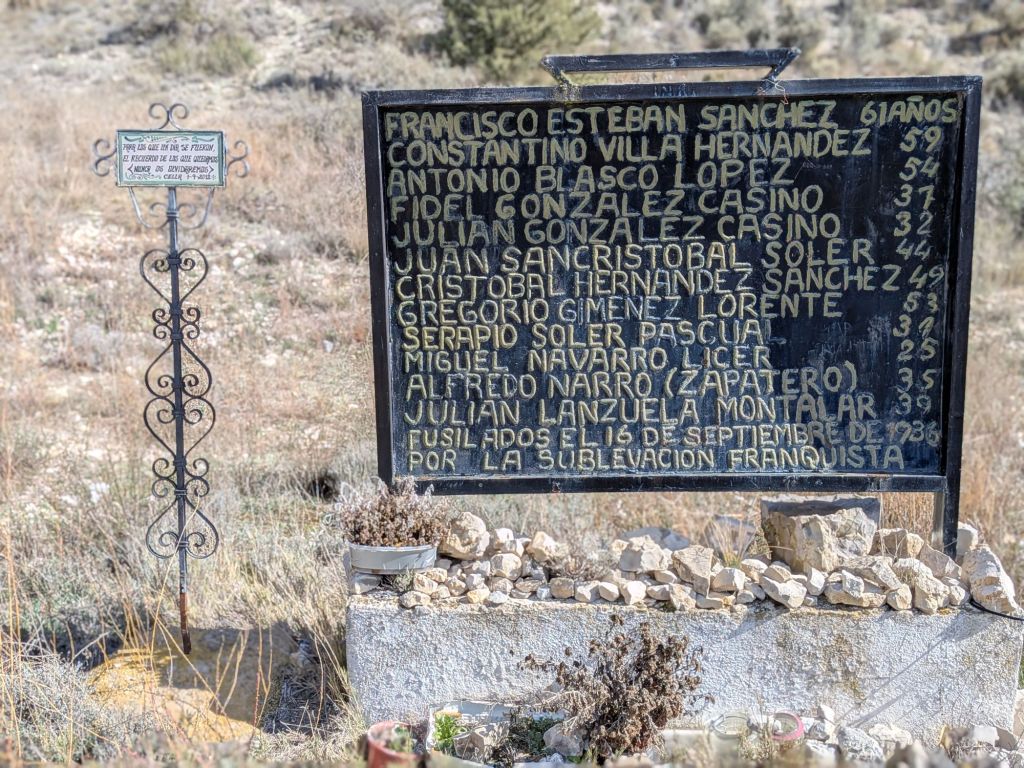
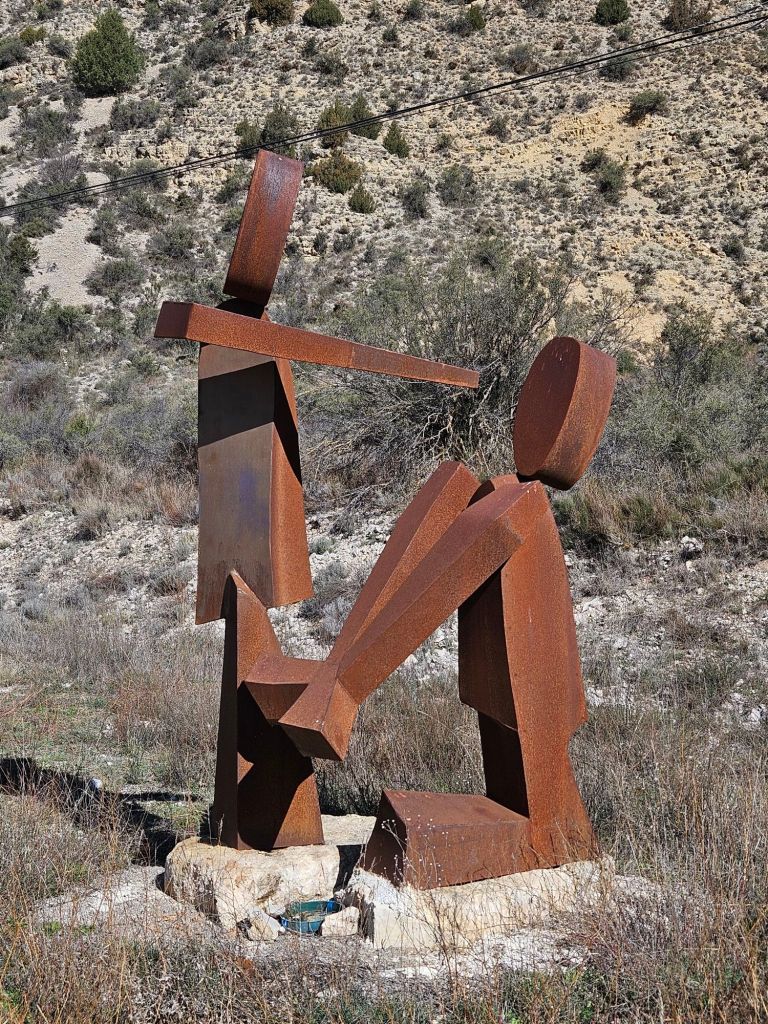
Having grown up with the not unreasonable idea that Orwell’s Homage to Catalonia is one of the key books of the 20th century, I had meant to do my homework on the Spanish Civil War before coming to this area – but I did not. The guide at Albarracín’s cathedral mentioned casually that the war had almost destroyed the town, culturally and economically. This morning, not far out on our drive back to the coast, I noticed a marker that led to a moving and brutally frank iron memorial.

Here under a high cliff on Sept 16 1936, just as the war was beginning, the Francoists executed twelve local men, all from the same small village. All are buried here in a mass grave.
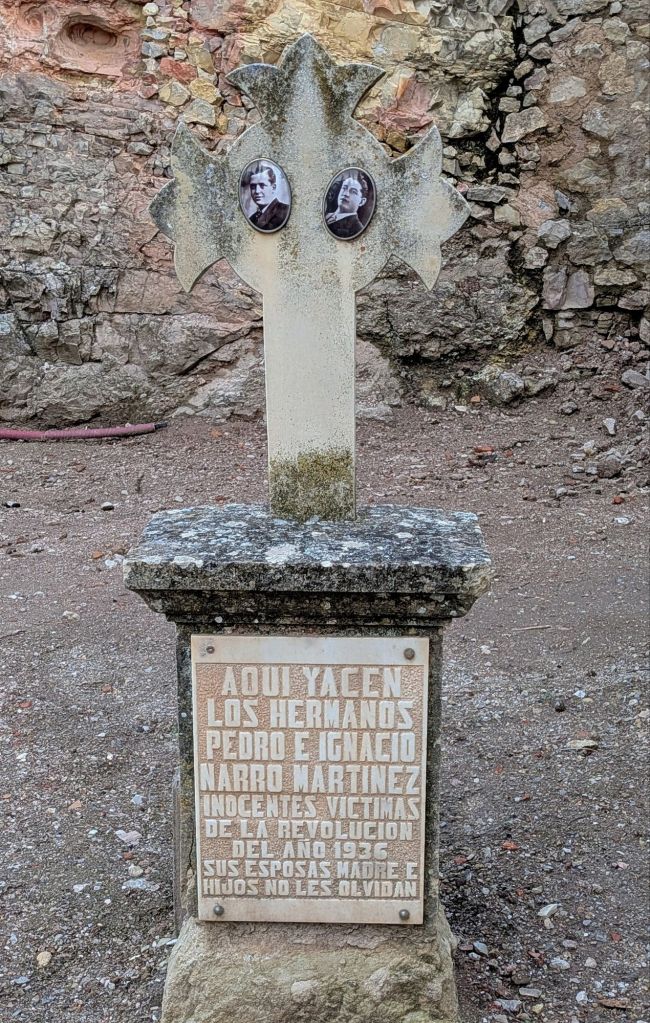
The previous day, in one of Albarracín’s cemeteries, I’d come across this:

It was unclear whether the brothers Pedro and Ignacio Martinez were inocentes victimas of the Francoists or the Republicans. 90 years on, a raw wound still.