Limp

After the Vagina Museum in London, gender equality demanded that in Reykjavik we see the Penis Museum. Sorry, the Icelandic Phallological Museum – we’re all about the science here. Sadly, the museum promises a lot of pleasure but doesn’t stand up. The expensive ticket is a very clever way to seduce money out of gullible tourists like us.

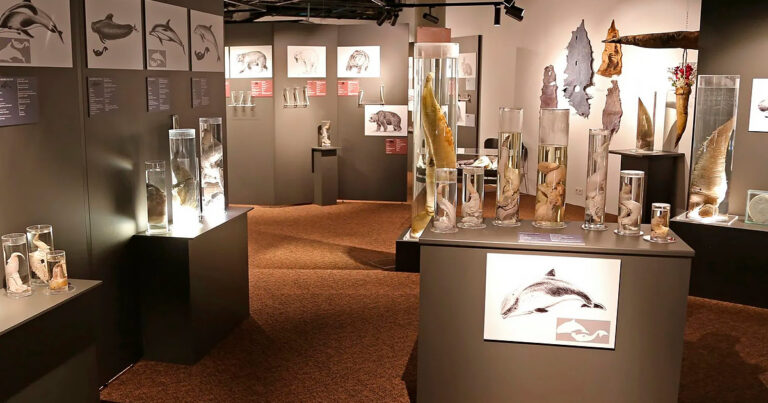
The main jewel(s): around 300 animal appendages in formaldehyde. Whales have a lot to boast about, definitely more than camels, and raccoons more than voles. (Though boasting may be different if you consider size relative to body size, vs absolute size.) Some are straight, some twisty. Some have bones, some don’t. But once you’ve seen three or four you’ve seen them all. Size doesn’t really matter. The museum began with a joke gift of a bull pizzle–used by the museum founder as a pointer in his teaching job–and grew into a collecting interest. Each display card identifies the species and includes a few notes about mating habits, but the museum didn’t measure up to its promise of “enabling individuals to undertake serious study into the field of phallology in an organized scientific fashion.” 10 year old boys and/or Instagram influencers, on the other hand, could probably be convinced they were having an exciting time.

There’s a room devoted to the work of a Californian woman whose artistic mission was to collect plaster casts from famous people, mostly musicians. I think the technical term may be Stiffies. (Jimi Hendrix is here, or anyway the relevant part of him is.)

They also have a plaster cast donated by the man – surprisingly, not called Dick Moby – who supposedly has the most impressive (euphemism alert) “total urethral length” ever recorded in a human. Apparently  he tends to respond to stimulus by fainting. He’s surely not the only one.

That, plus a lot of jokey bad art, a phallic themed cafe, and a gift shop with t-shirts that could be so much better, about sums it up.

This is a museum with a one track mind and not enough lead in its pencil. All in all, a bit of a cock-up. But it was busy and seems to be raising a lot of hard cash.

(Note: we didn’t take any photos in the museum. The one above comes from icelandtravelguide.is)
Iceland living up to its name

We have a little less than 72 hours here. Plan was to get off the plane Sunday night and almost immediately embark upon a northern lights tour. Unfortunately, R had a bad reaction to our bottomless bowls of soup–two huge bowls of shrimp in a “broth” made from bernaise sauce left him decidedly queasy. Heimer, owner and guide from Aurora Experts, very kindly said we could try again either Monday or Tuesday, but did not hold out high hopes with the weather. Today definitely didn’t work. We’ll see what tomorrow (our last day) brings.

It’s not particularly cold here–hovering right around freezing–but the wind is whipping along and there’s bits of snow either falling or being redistributed from roof tops. Thus, with dripping noses, weeping eyes, and hunched shoulders we spent the day battling to stay upright as we walked between museums.

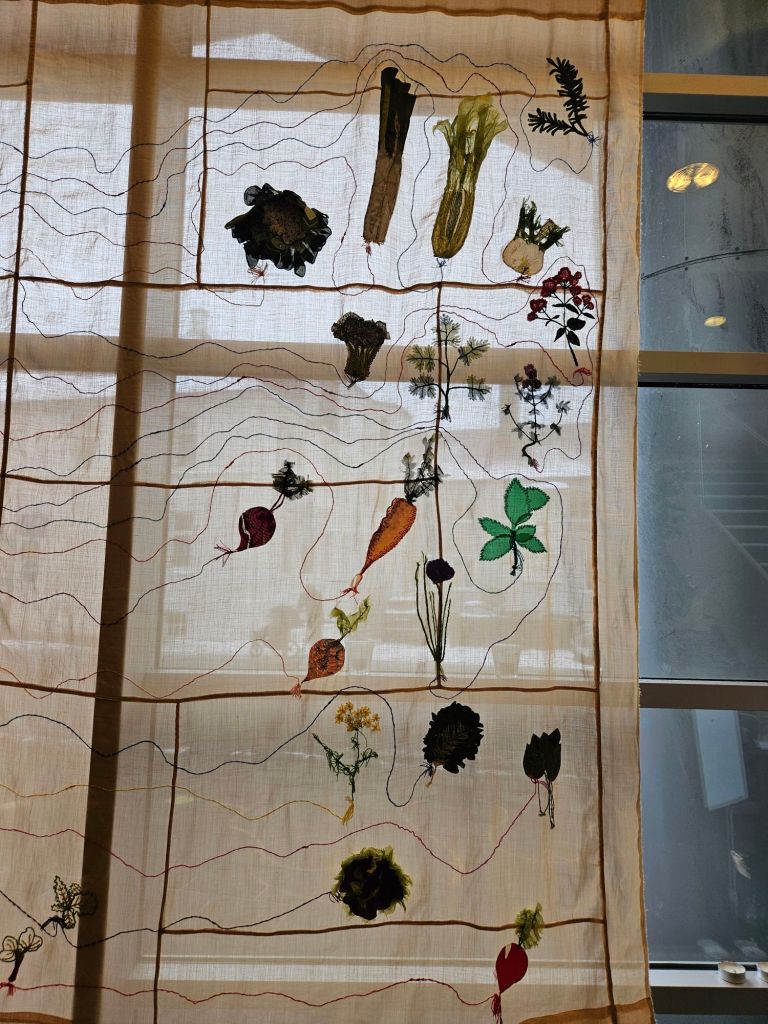
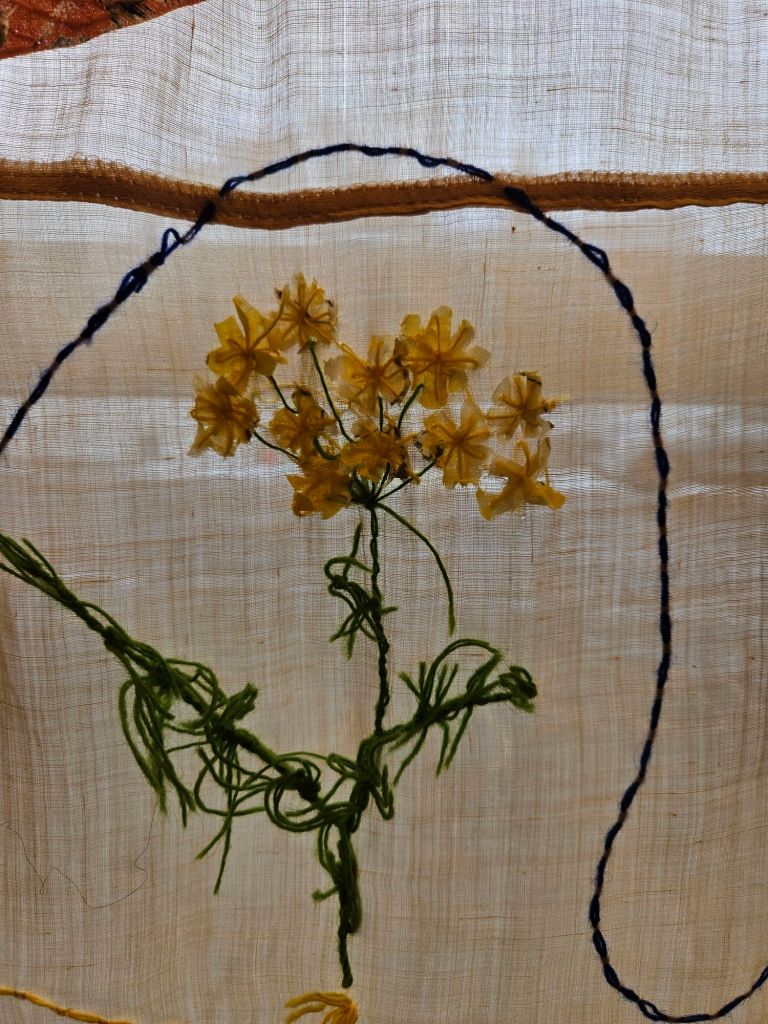
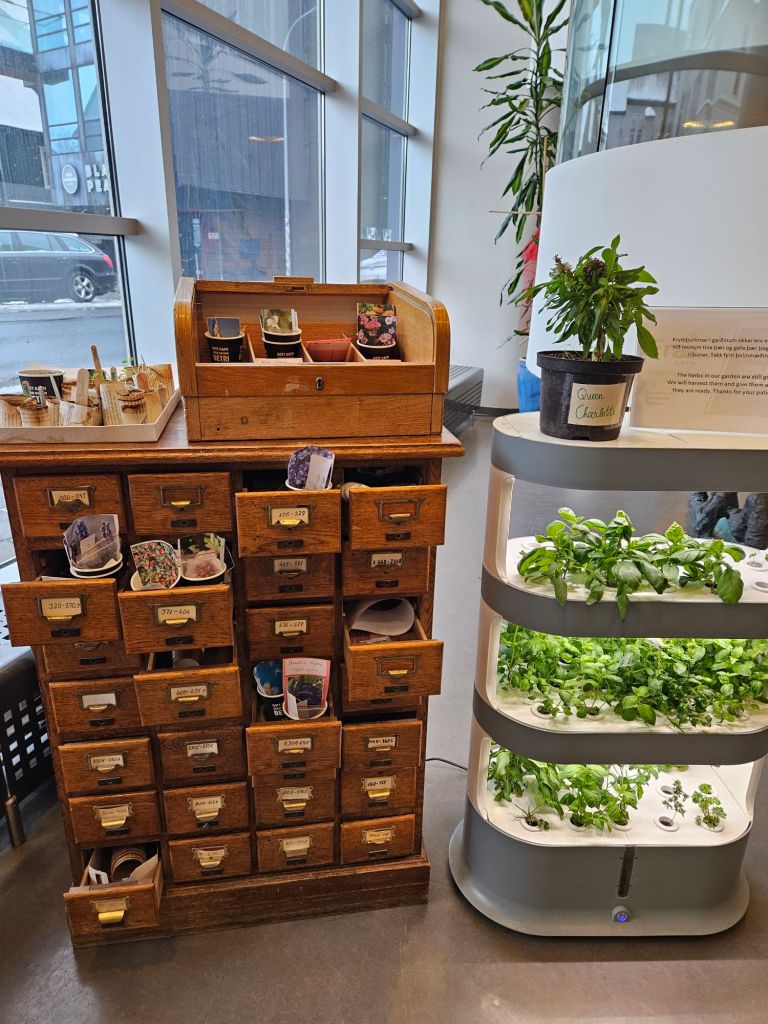
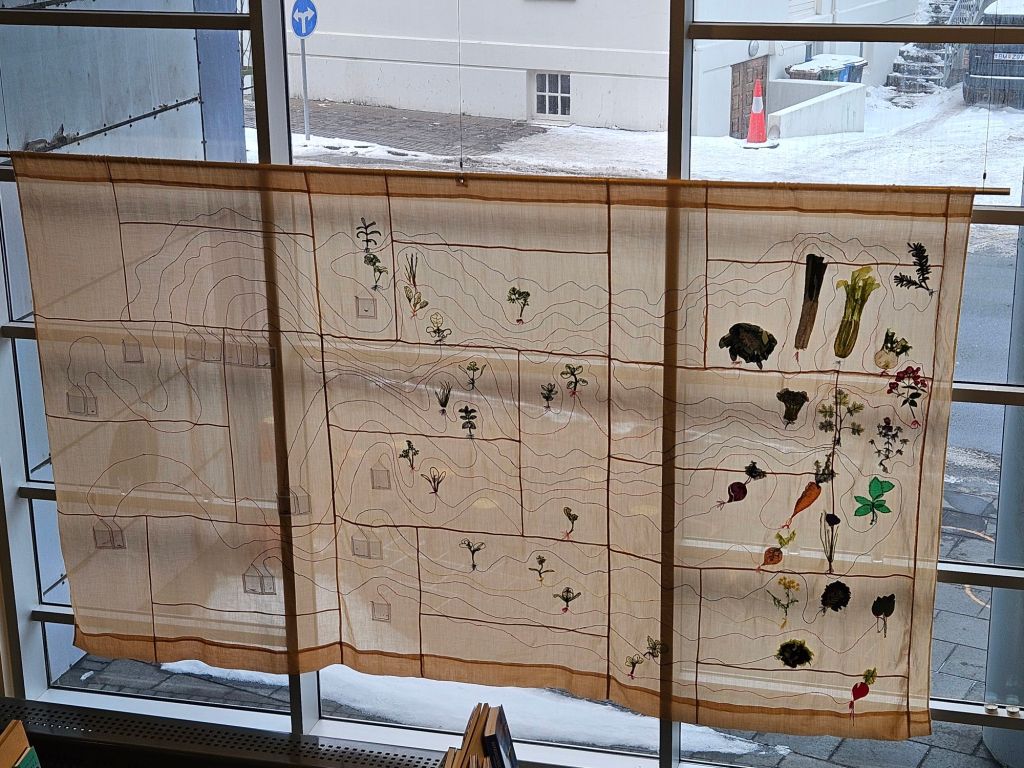
We started with the photography museum, located inside a public library. On our way in and up, we admired the seed library and a hand embroidered muslin curtain.

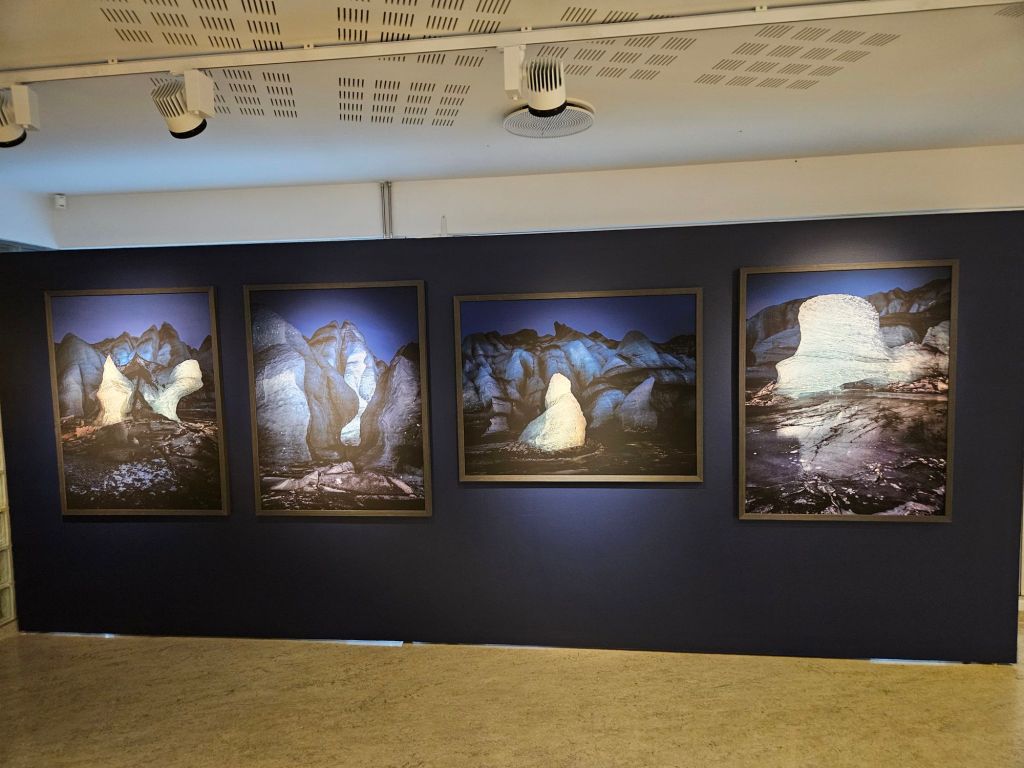
The photography museum featured stunning night time photos of glacier/ice formations. Spent some time wondering if I could magically sneak them into my carryon.

From here we made our way to the Saga Exhibit. Headphones on, we enjoyed the audio tour through the atmospheric life size dioramas of early Icelandic inhabitants.

One interesting factoid: Nearly 70% of the female population of Iceland is of Celtic heritage, while the male population is about 80% Norse. Speculation is that most of the women were originally brought here as slaves or captives.

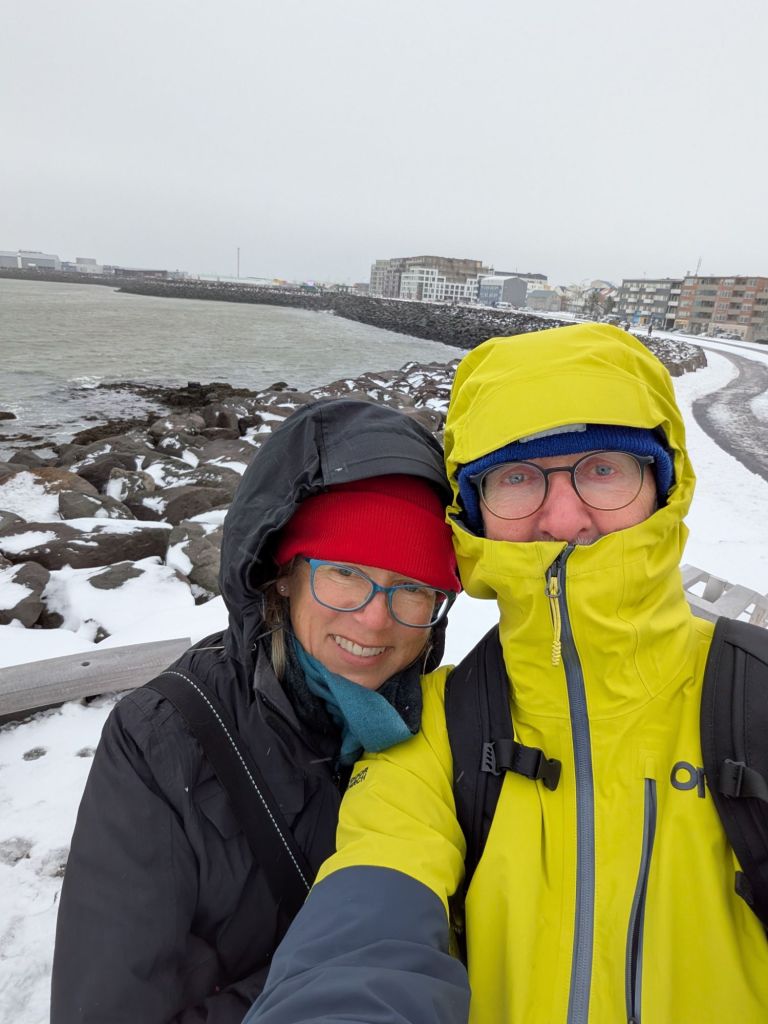
We left the exhibit with the intention of walking out to a lighthouse viewpoint. About 500 meters later we admitted defeat (see photo above, in which you can’t tell it’s gusting to 35 mph) and trudged our way to the Maritime Museum instead.

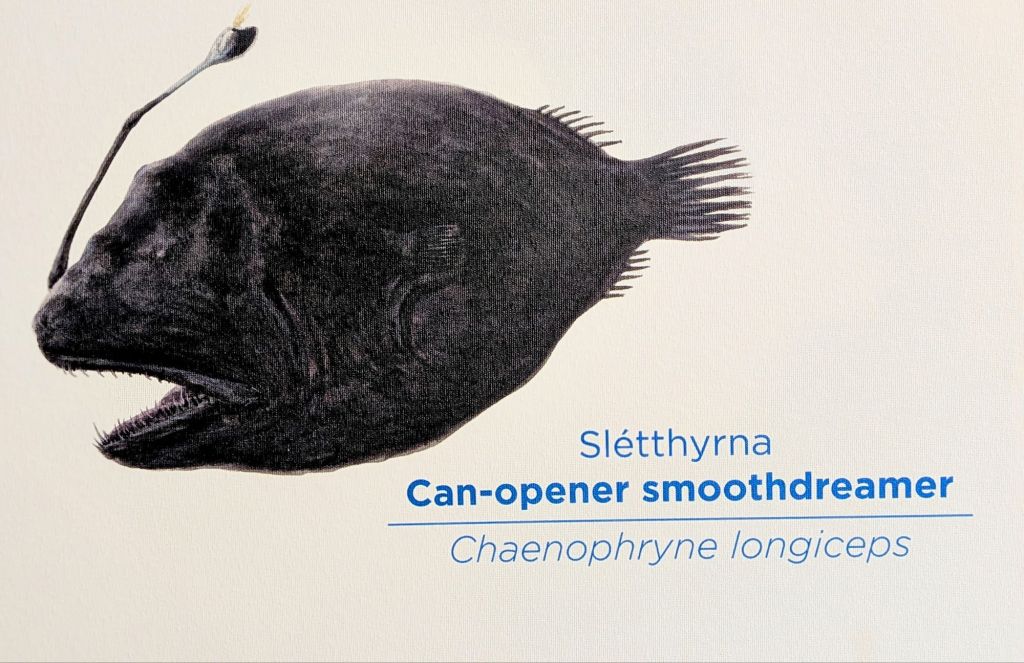
On a wall displaying all the (many many many) species of fish in these water, the prize for best name surely goes to this charmer:

A temporary exhibit traced the interesting history of a French expedition to Iceland in the 1830s. The French seem to have thought the Icelanders were noble, but savage, mainly because they lived in squalid conditions and didn’t wash often enough. At the time, leprosy was almost eradicated in Europe but still endemic here. In the best tradition of C. 19th explorers, the visitors created vast leather bound volumes of notes and scientific drawings – by far the best record of what life was like here 200 years ago.

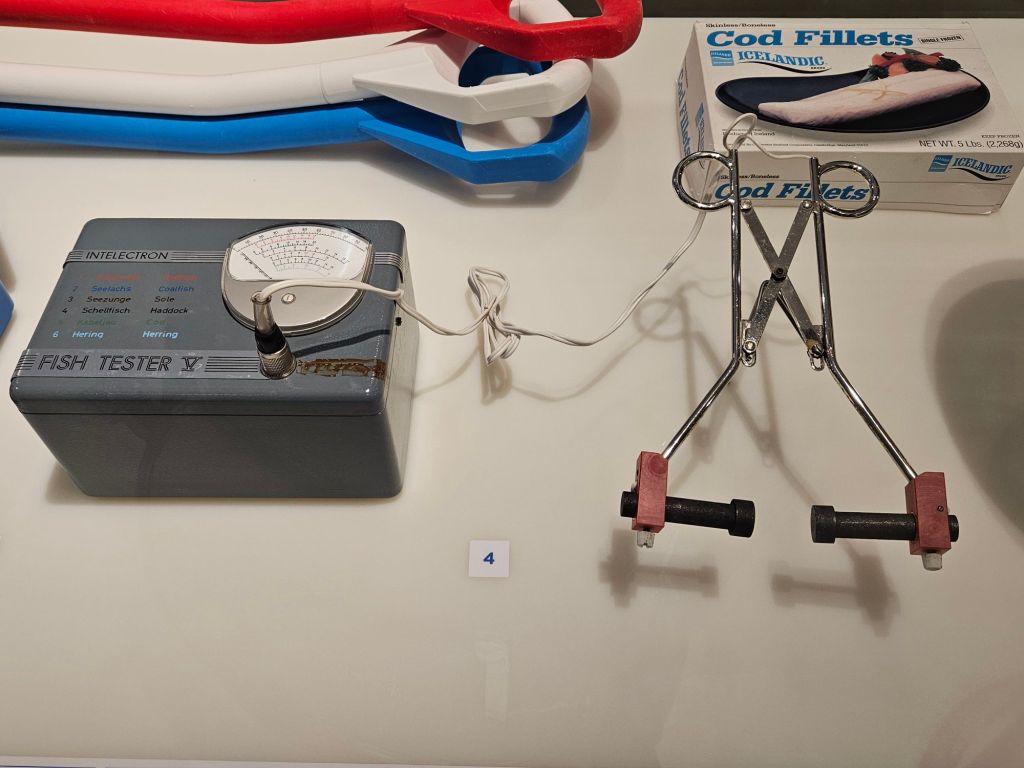
The permanent exhibit showed items related to the fishing industry in Iceland. I appreciated the historical equipment, ranging from very early handcrafted fish hooks to one of the first battery powered fish quality testers pictured below.

From there to a late lunch of very good fish and chips and then to the disappointing Phalological Museum (see the other post).

Since we could not go aurora watching, we headed to a public pool instead. Iceland has a robust swimming pool culture, though I should note that the pools were crowded with tourists (“there’s always a lot of you when the weather’s bad and your tours are canceled” said the surprisingly friendly ticket taker.)

After making our way through the locker rooms (“full shower, no suit on until you’re clean”), we scampered across the cold outdoor pool deck to squeeze into the mid-heat pool. Ahhh. Once sufficiently warmed we made our way further along the deck and up a flight of stairs to the rooftop pool. Hotter, and double ahh. From there a brief dip in the hottest pool, also roof top, but that was much too hot for us. Back downstairs to the “cool” pool and then we took our limp noodle selves home to bed.

No photos as cameras and phones are strictly prohibited.