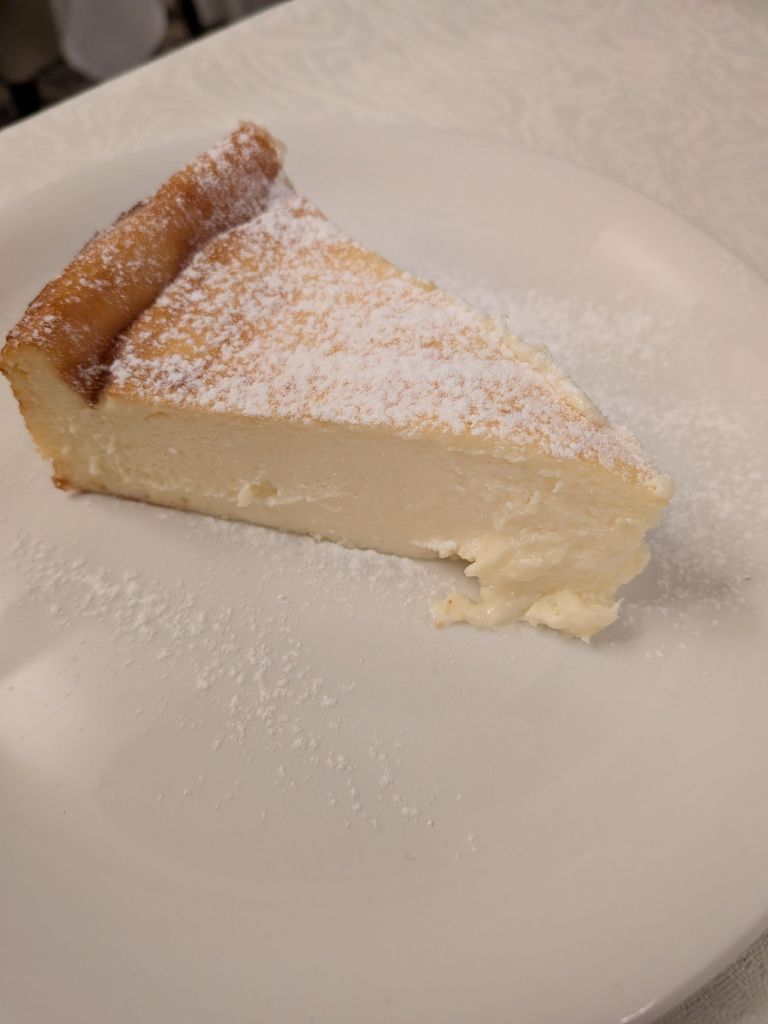
I am a passionate devotee in the cult of cheesecake. So are the Spanish. But I’m not yet wholly persuaded by their doctrines and practices.
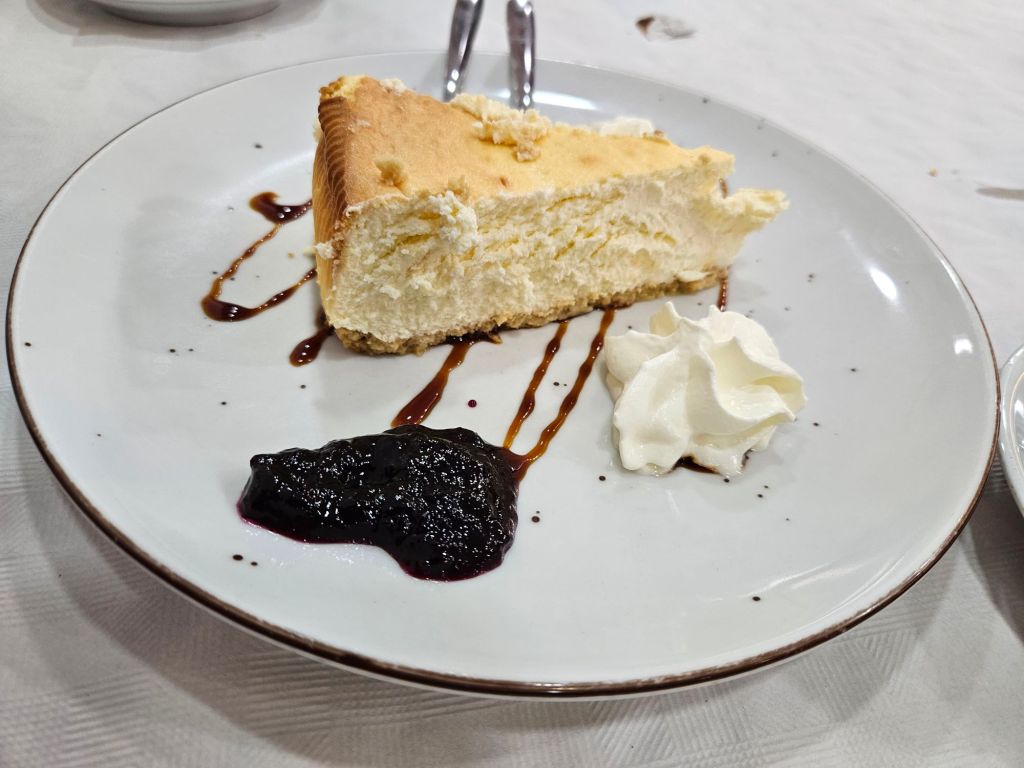
Above is an example where, IMHO, you can tell just by looking that the texture is going to be gummy. I had another – perhaps similar looking to the naive lay brother or sister – that I could tell was going to feel too wet, too light, too like whipped cream.
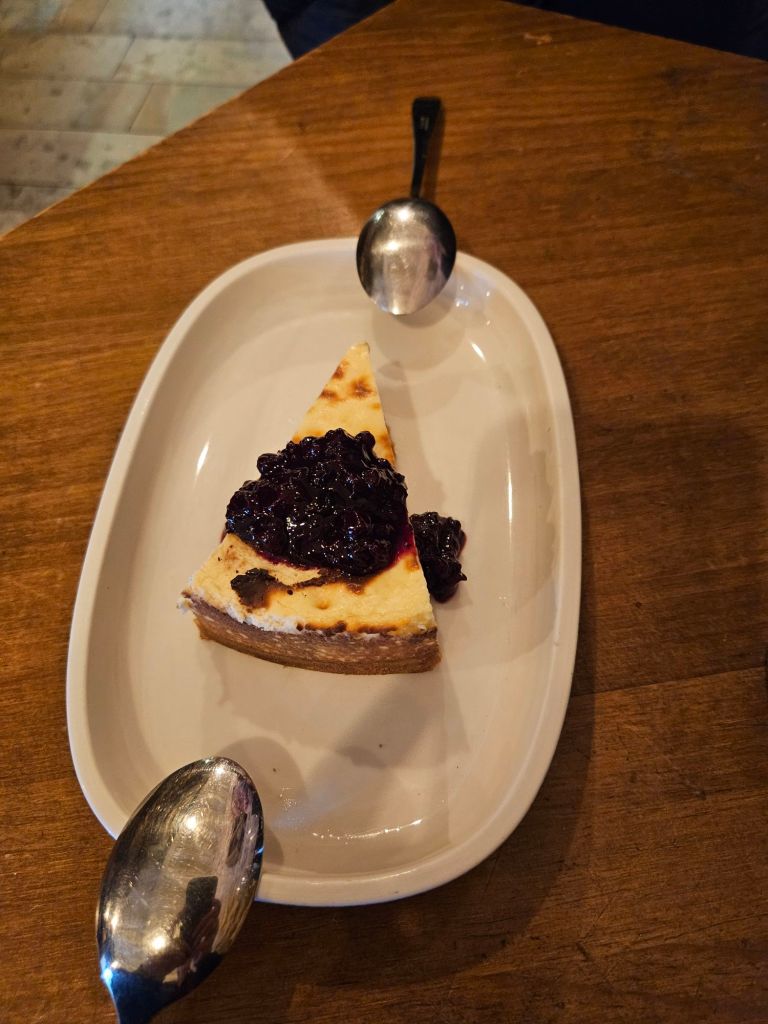
OTOH, I granted both these some forgiveness for avoiding the two great sins of most cheap restaurant cheesecake (and indeed, much expensive restaurant cheesecake) – being overcooked and rubbery, and/or being too sweet, and/or disguising a deep spiritual emptiness under a lava of sweetened fruit.
Some denominations here anoint the cheesecake with a lurid green sauce made from pistachios. At first I thought this was a bit like pouring tinned cherries on top. (See above; get thee behind me, Satan!) But I concede that the pistachios might be worth considering – unfortunately I have not yet had the chance to try this.
The Spanish seem agnostic on the crust / not crust question. By upbringing and habit I should find this shocking, being a crustafarian through and through. But to my own surprise I feel pretty tolerant and ecumenical about this. No crust is merely unorthodox, whereas a soggy one should be excommunicated.
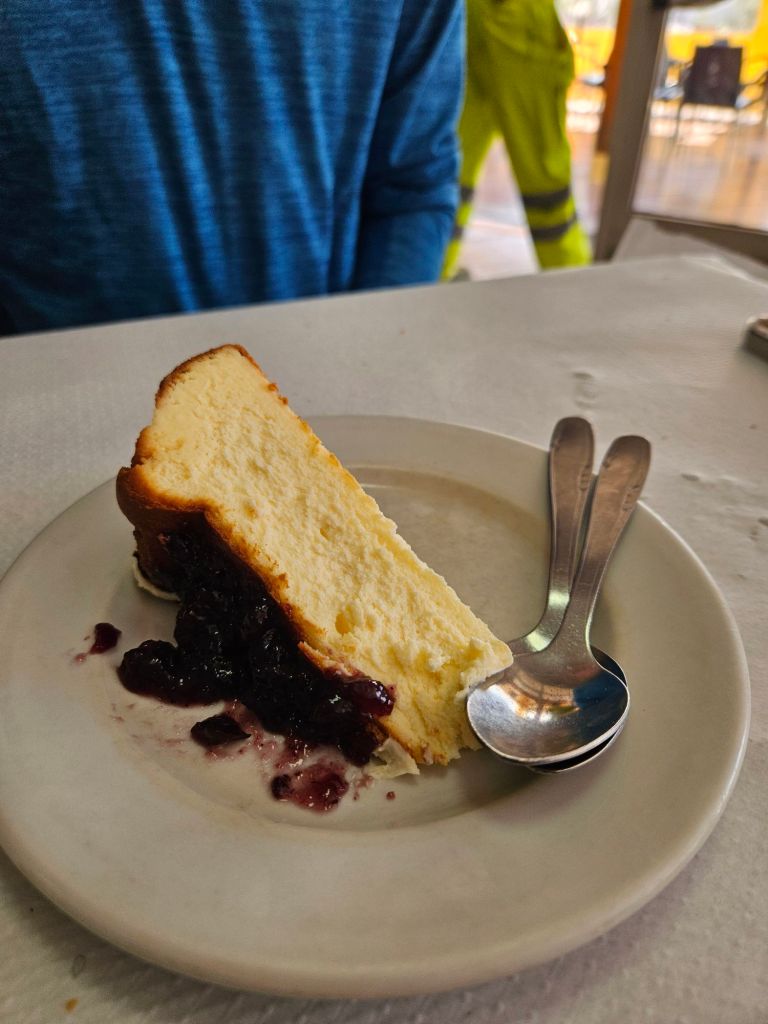
On the key matter of consistency, I have always been a strict follower of US doctrine, according to which you must cook the cake very slowly in a water bath. (Otherwise the outside overcooks by the time the middle is set.) Heretically, the Catalunyans sometimes cook theirs faster, and until the outside is barely set, so that when you cut a “slice” the inside collapses in a thick pool across the plate. This is not wholly unpersuasive – I might yet convert – though it doesn’t always work.
What I’ve yet to experience here is the sublime, indefinable, ineffable, transcendentally perfect structure and mouth feel you can expect from the most exalted cheesecake in New York – or my kitchen.
I will continue the search with an open mind, an open heart, and a stomach growling in anticipation as usual.
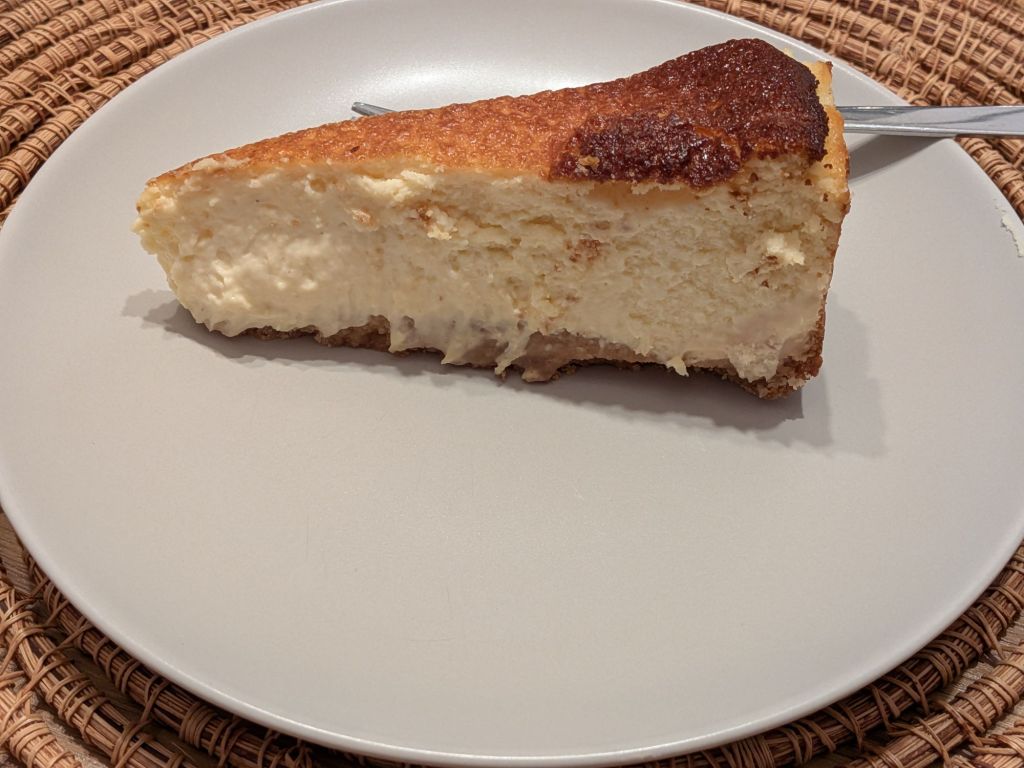
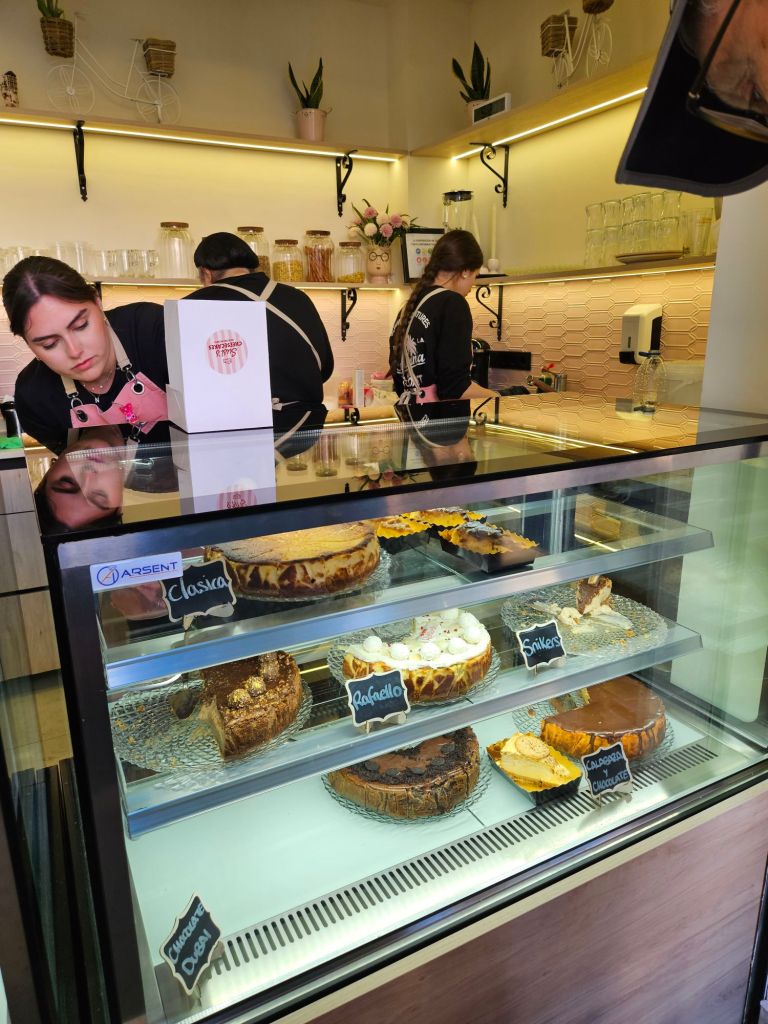
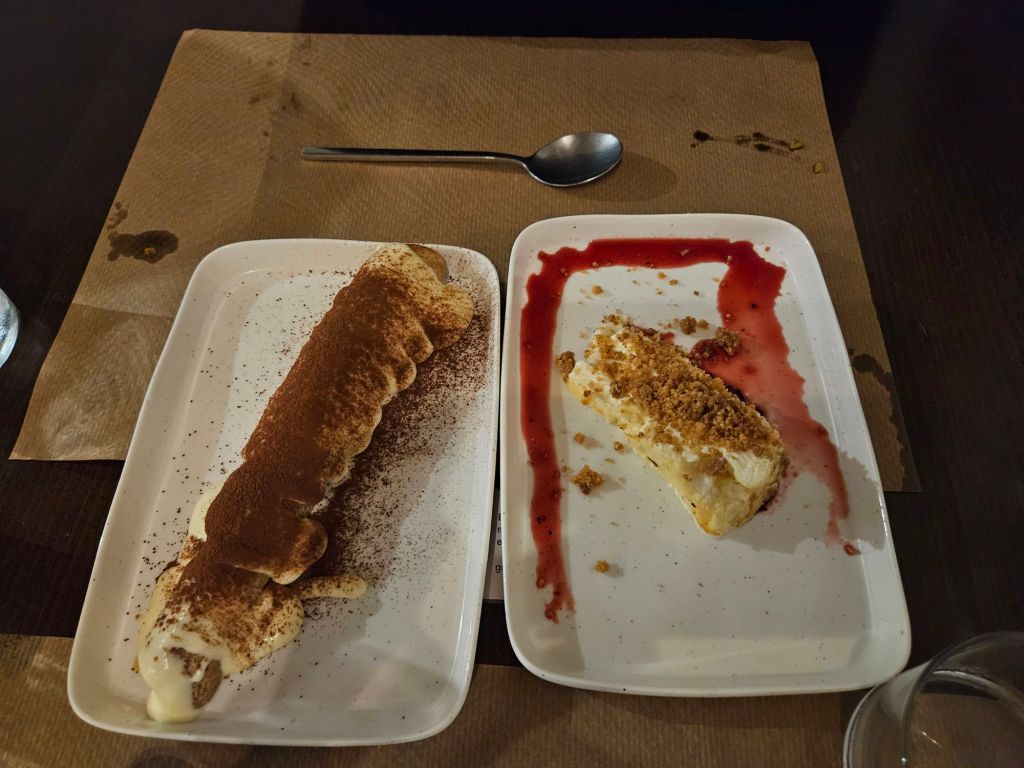
Some others candidates here – ¡Qué aproveche!
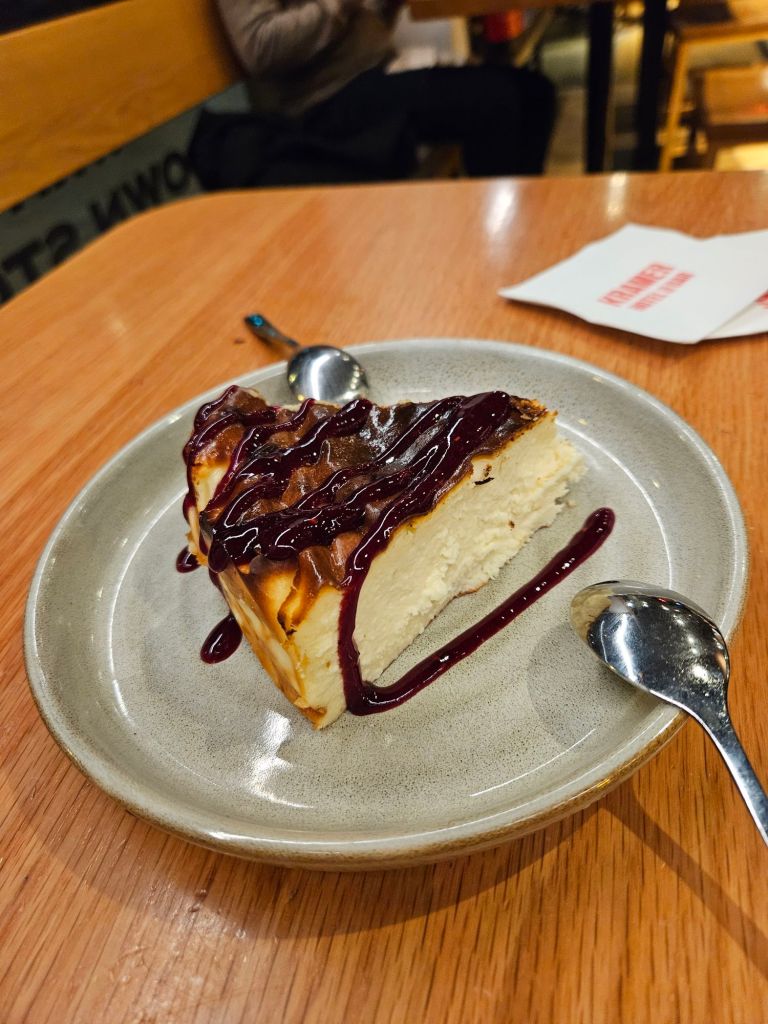
K here. Just want to note that in Spain one can a) get a punch card at a cheesecake shop so your 10th slice is free and b) in the markets, many places sell cheesecake not by the slice but by the kilo.
 Kerry & Richard in Spain (mostly) 2026