It takes a village

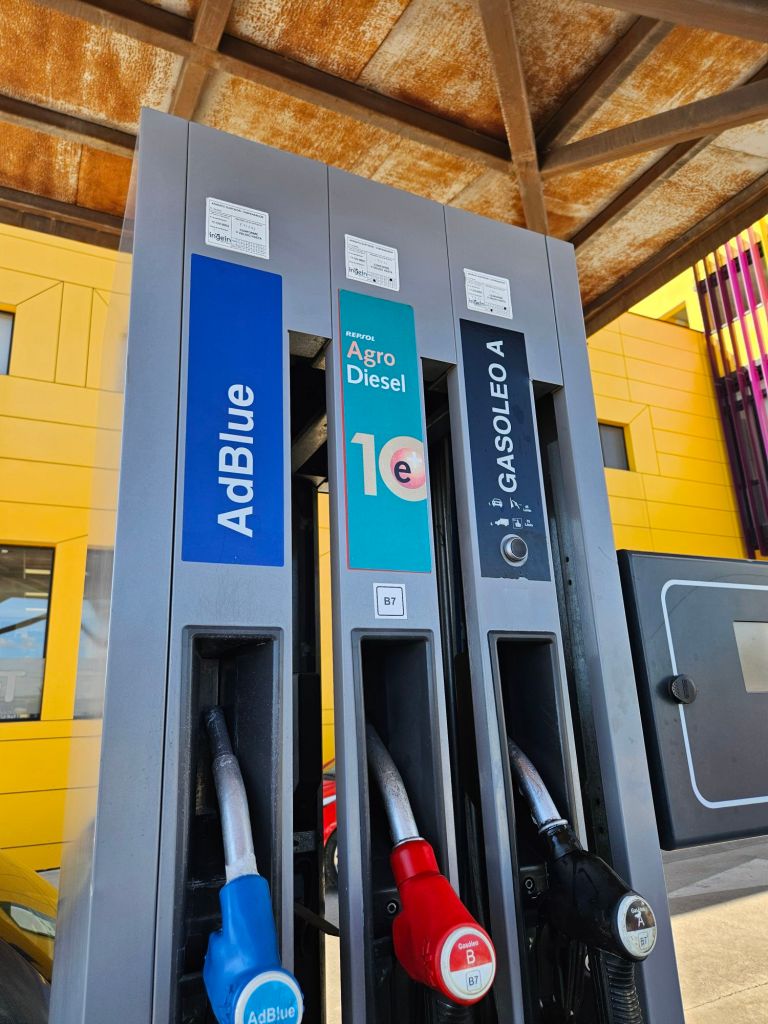
First time needing to fill the rental car. Big truck in the way at the pump, so went to the next one. Could not figure out payment system, but a nice man helped us with the pre-pay. Gracias, gracias…  and thank goodness gasóleo nozzles are the wrong size for gasolina cars. Switched back to first (gasolina) pump. Different nice man helped here, but this pump wouldn’t work even then. Woman from office came out and fixed it.

Now have, surprise, two identical €60 charges on the credit card. As travel screw ups go, pretty minimal.

And so to the coast and Gandia – or actually the satellite community of Daimus, which was probably once a charming fishing village but is now part of the solid cliff of white hotels and apartment buildings that line the Spanish coast from Barcelona to the Portuguese border so that people like me can drink English beer and end up looking like a lobster.
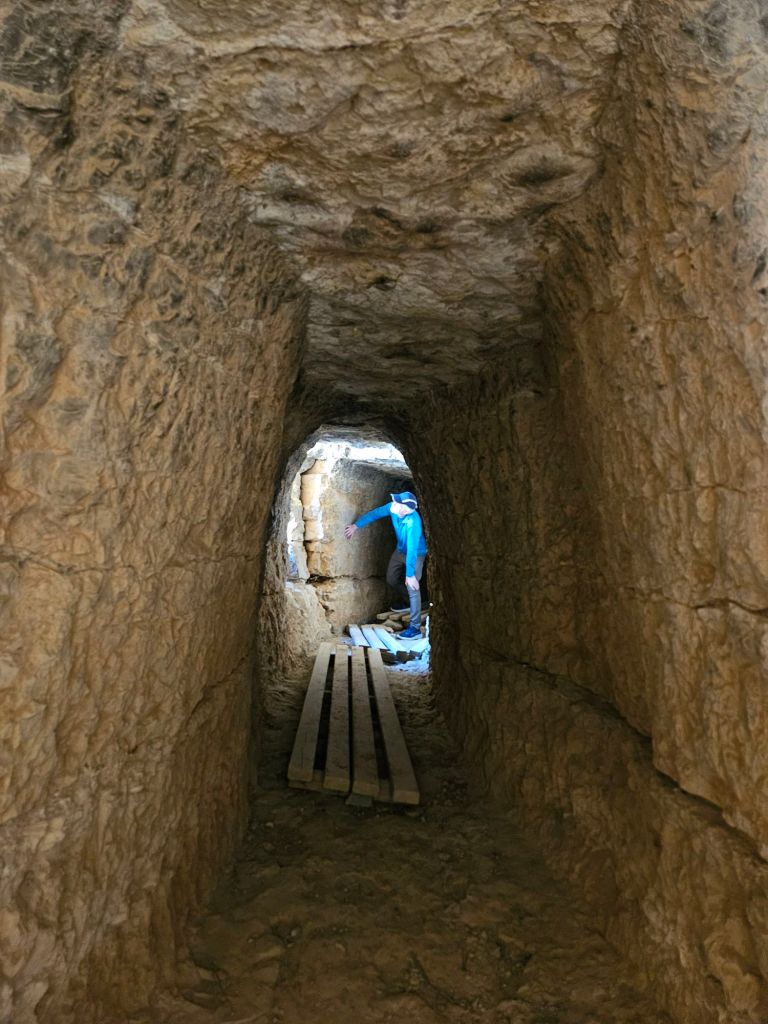
A different kind of Roman aqueduct

“Well that was strange and unintelligible” said R as we returned to the car.

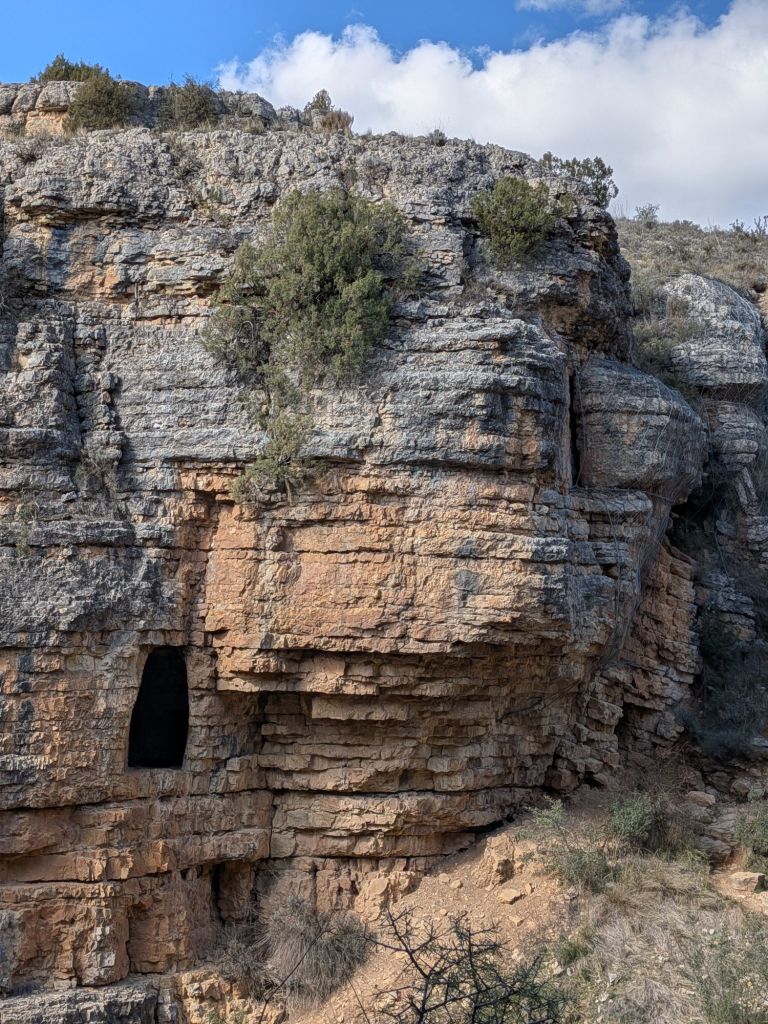
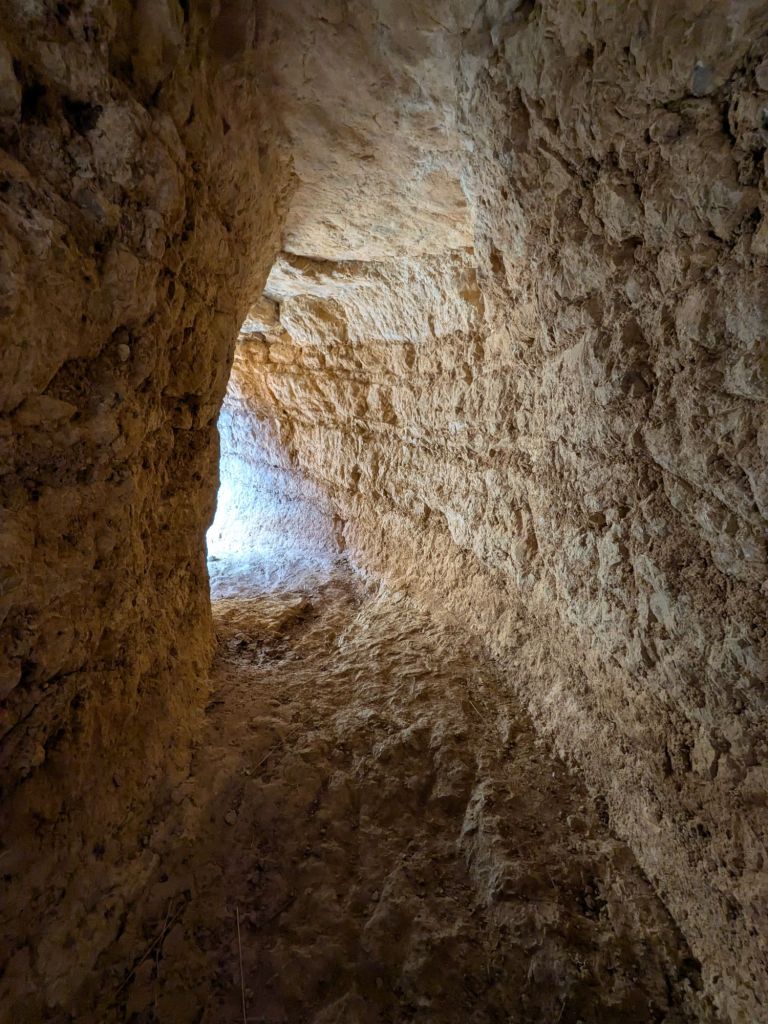
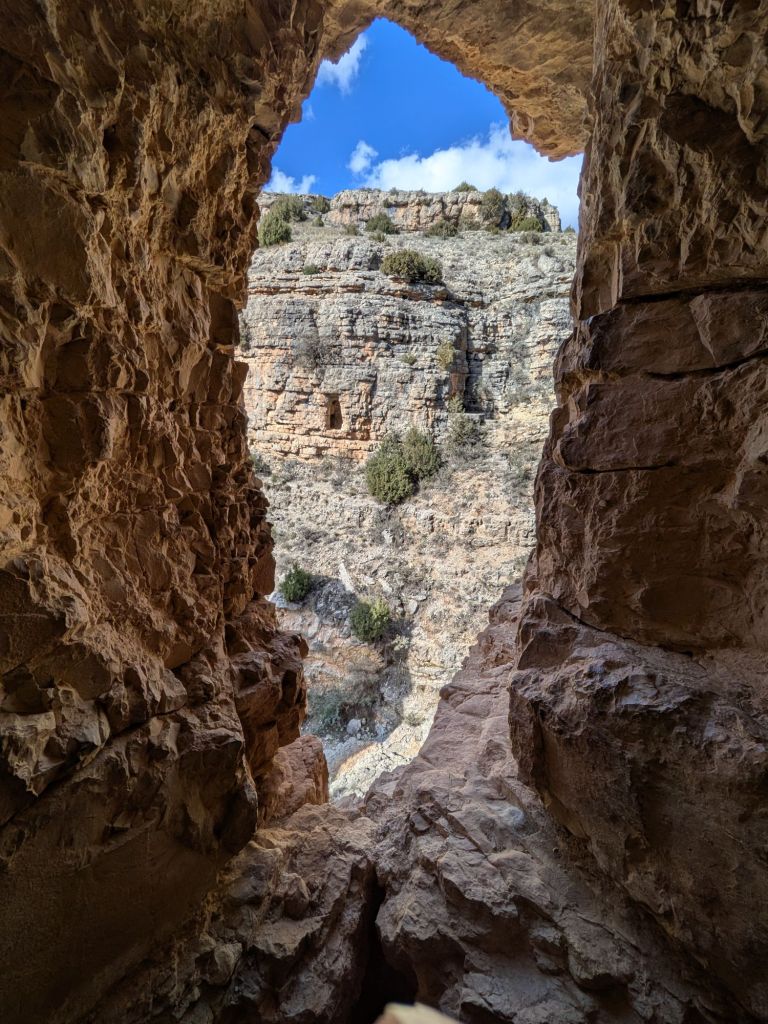
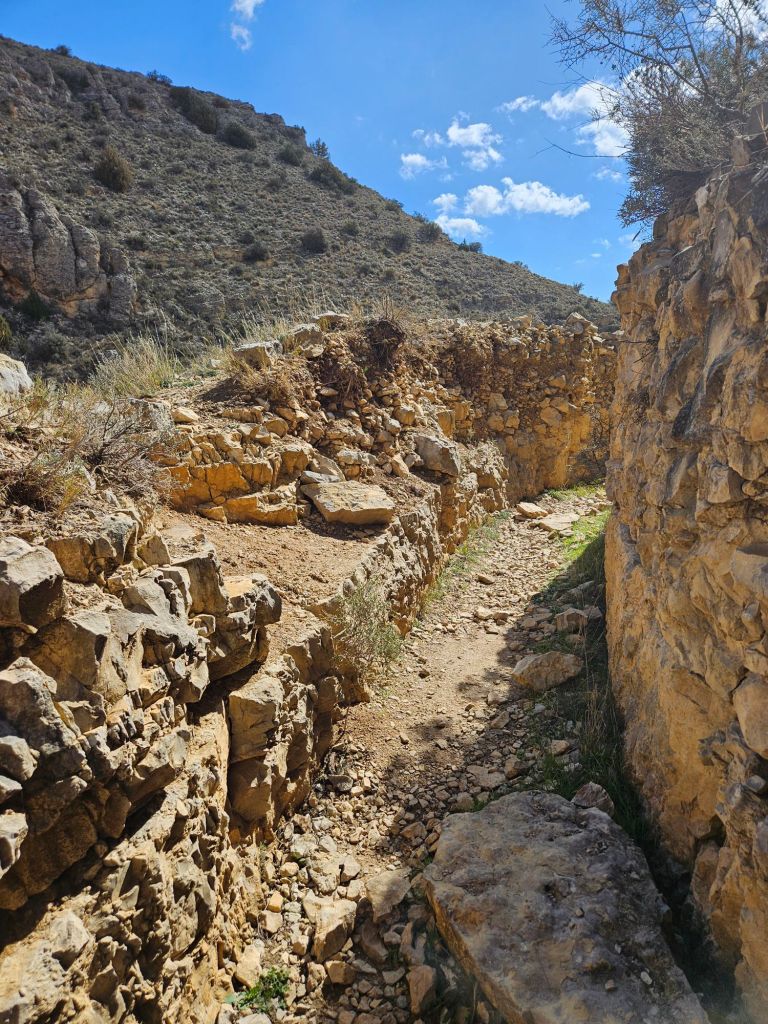
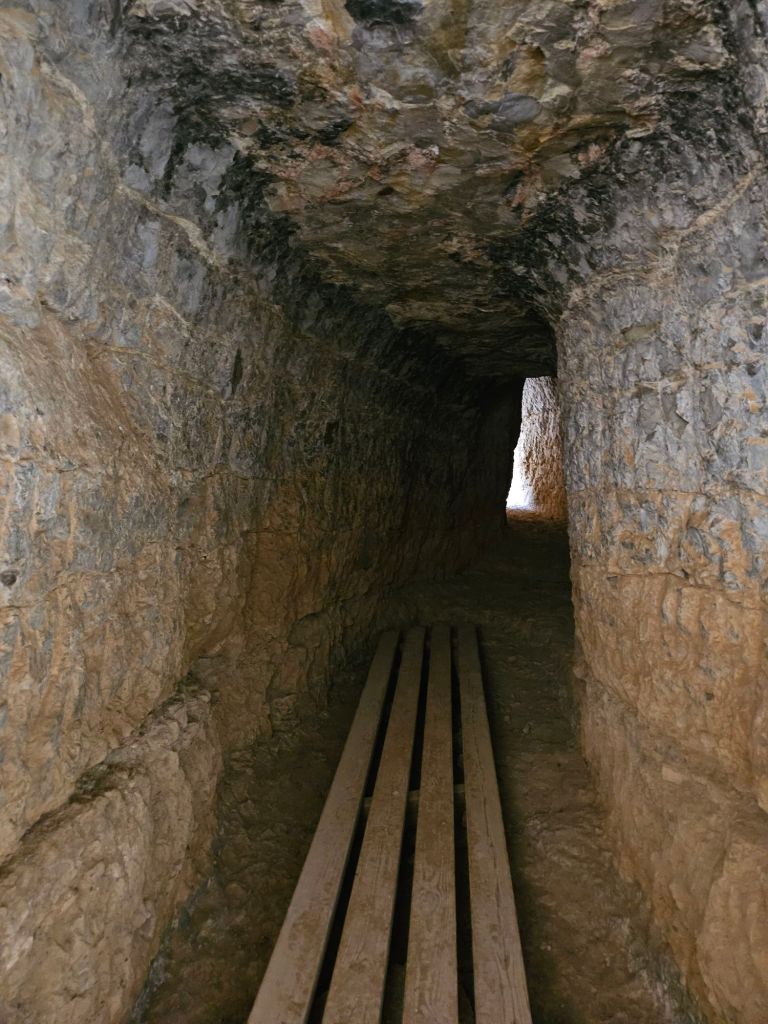
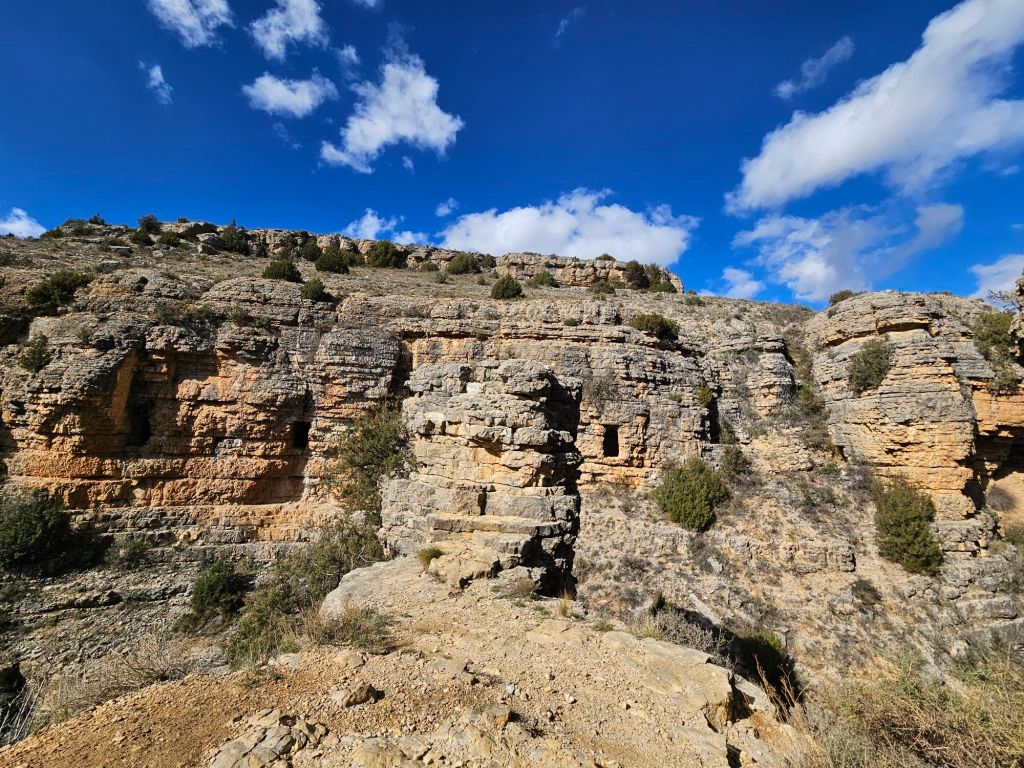
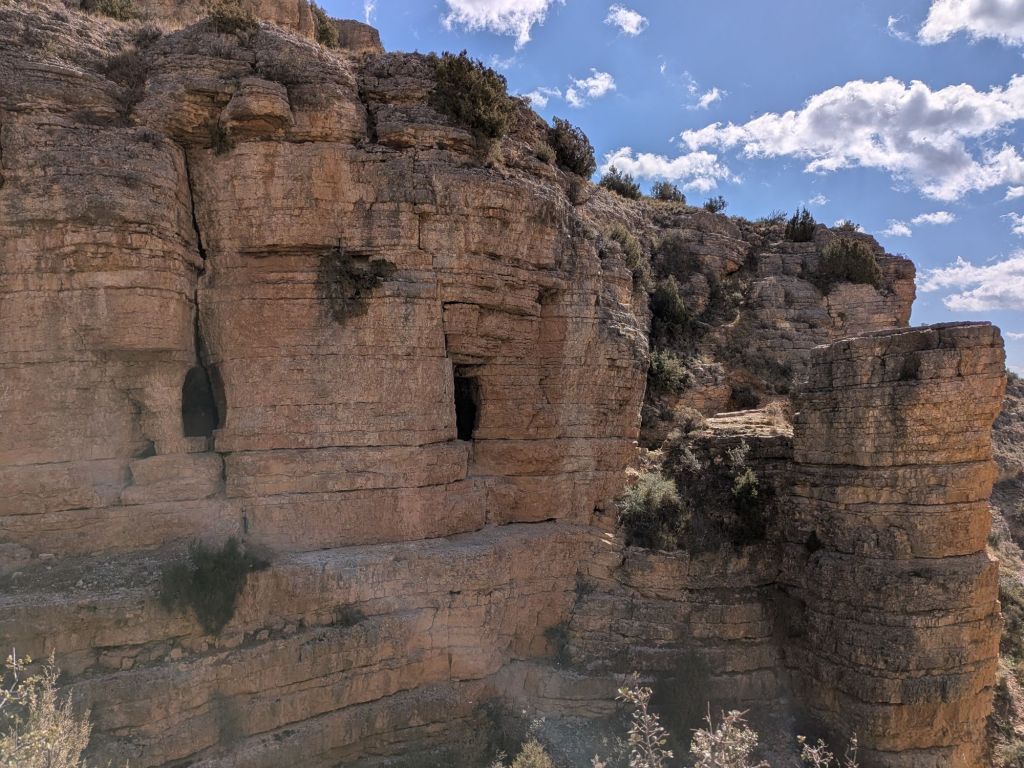
On our way out of Albarracin, we made a quick stop to view a section of the Roman aqueduct that connected the Rio Guadalaviar to the town of Cella, some 25 km away. At this viewpoint, the Barranco de Burros, it consists of a series of rock tunnels lining a canyon, with windows cut for ventilation and maintenance access. One can now hike past the modern retaining wall (protecting from flash floods in the gully) to access the tunnel system. You can walk, not quite upright through them, and marvel at the labor it took to plan and build 25 km of it.

Modern estimates are that this viaduct carried 16 gallons per minute. This massive undertaking was used for centuries. No one knows for sure when it was abandoned, but there is, per the signage, no mention of it in Christian records from the reconquest of Cella (one end of the aqueduct).

Los fusilados

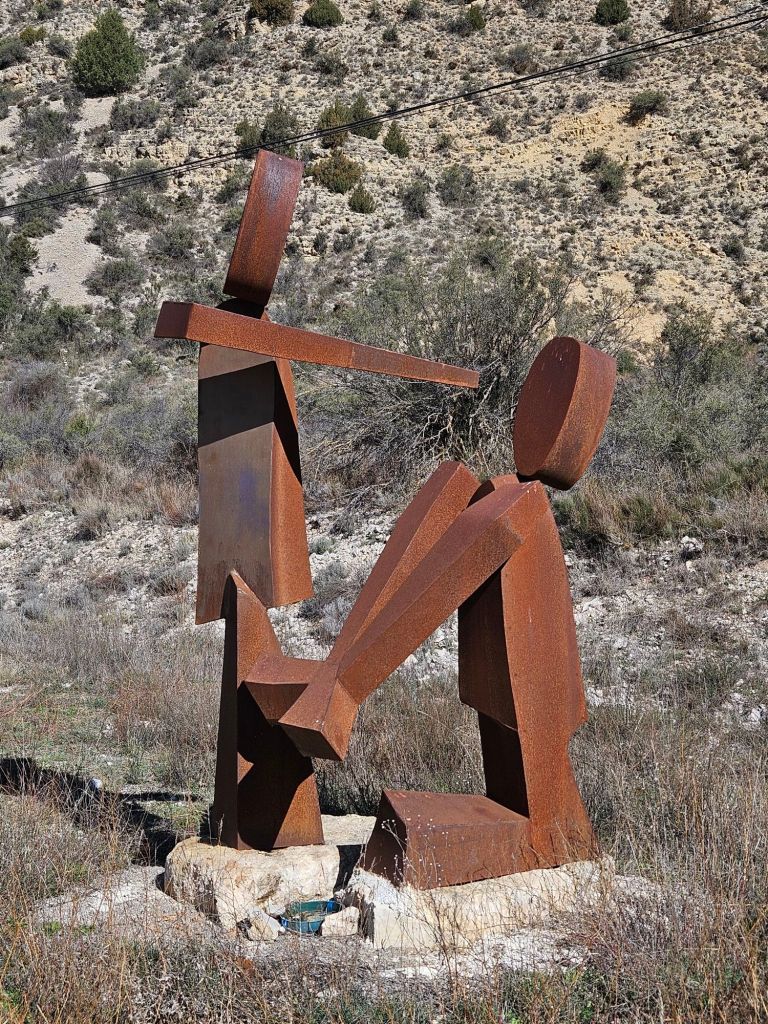
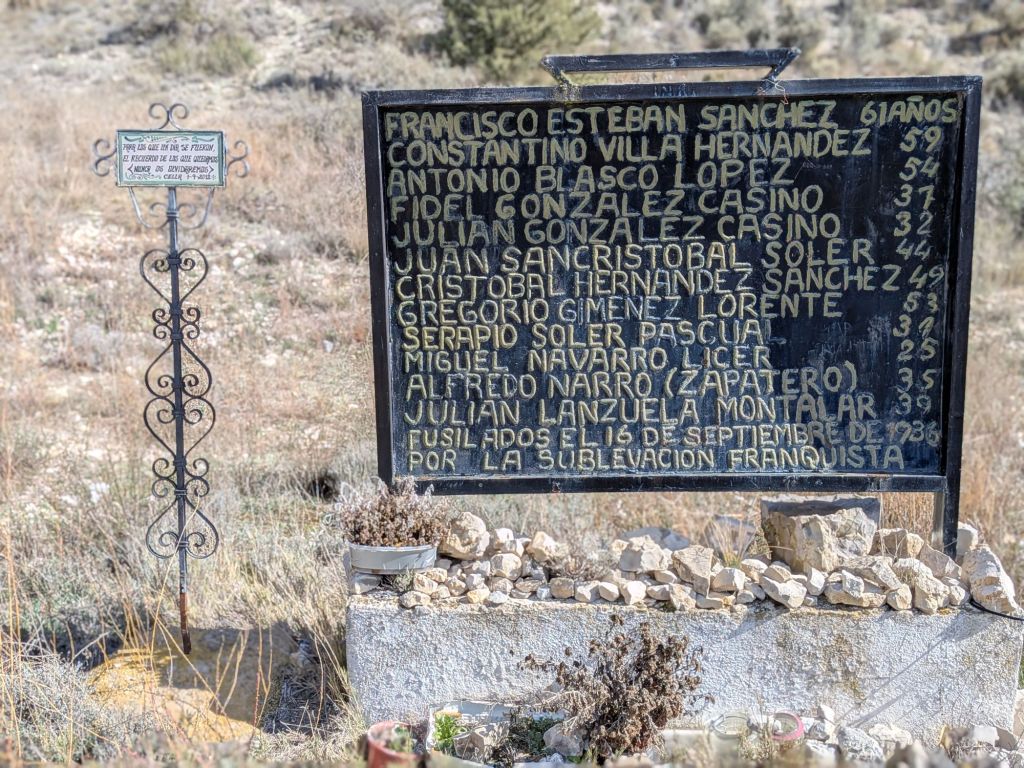
Having grown up with the not unreasonable idea that Orwell’s Homage to Catalonia is one of the key books of the 20th century, I had meant to do my homework on the Spanish Civil War before coming to this area – but I did not. The guide at Albarracín’s cathedral mentioned casually that the war had almost destroyed the town, culturally and economically. This morning, not far out on our drive back to the coast, I noticed a marker that led to a moving and brutally frank iron memorial.

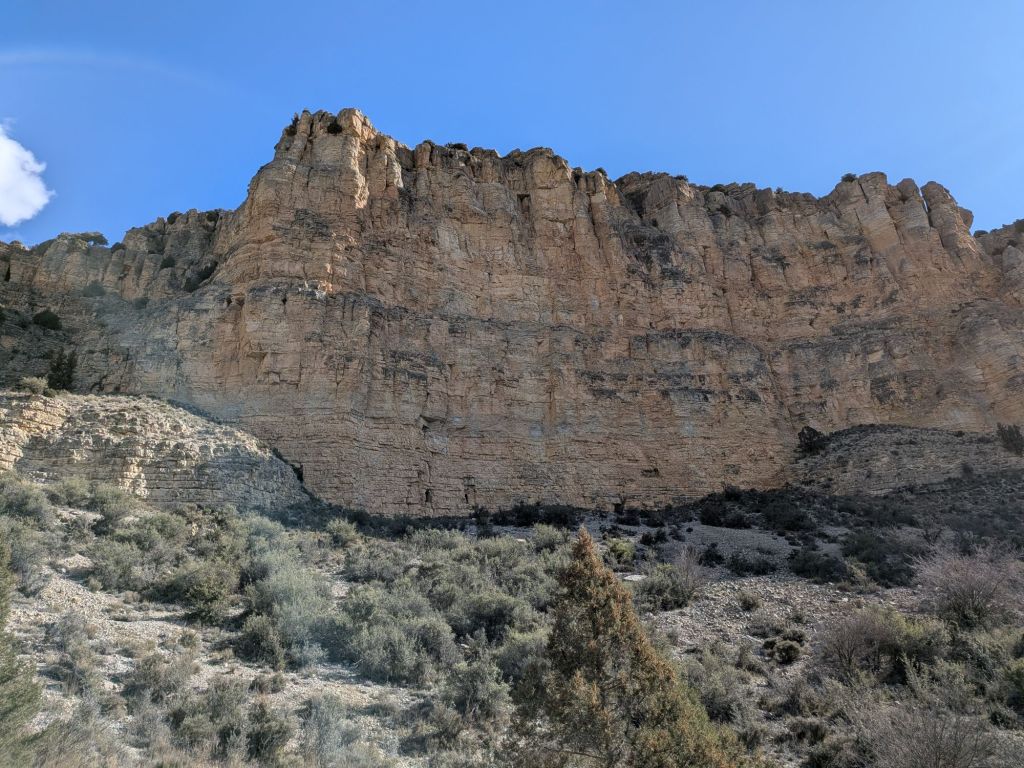
Here under a high cliff on Sept 16 1936, just as the war was beginning, the Francoists executed twelve local men, all from the same small village. All are buried here in a mass grave.

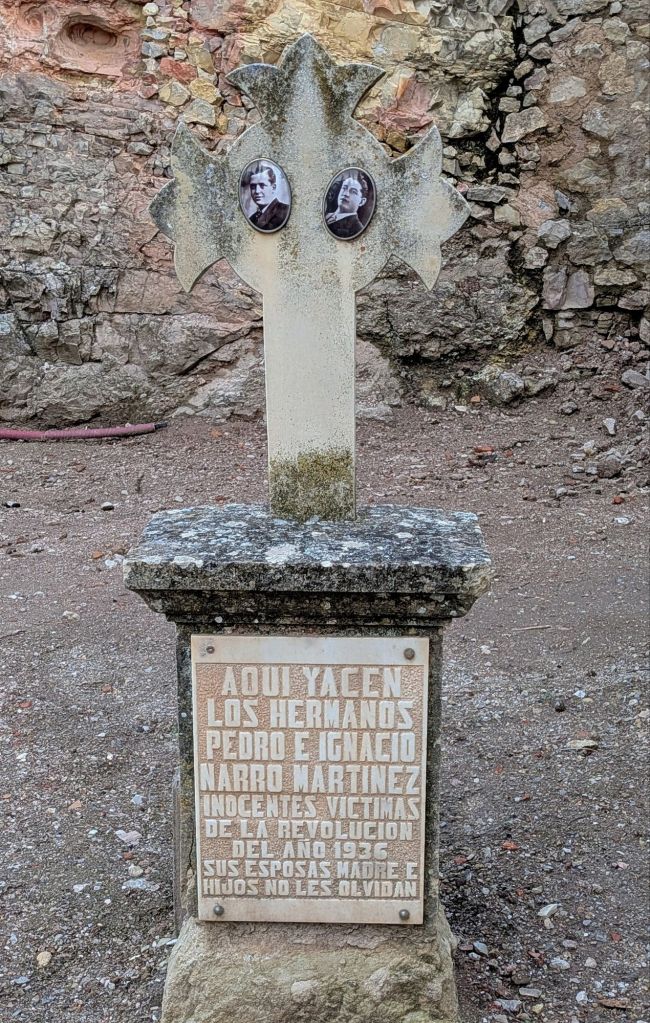
The previous day, in one of Albarracín’s cemeteries, I’d come across this:

It was unclear whether the brothers Pedro and Ignacio Martinez were inocentes victimas of the Francoists or the Republicans. 90 years on, a raw wound still.