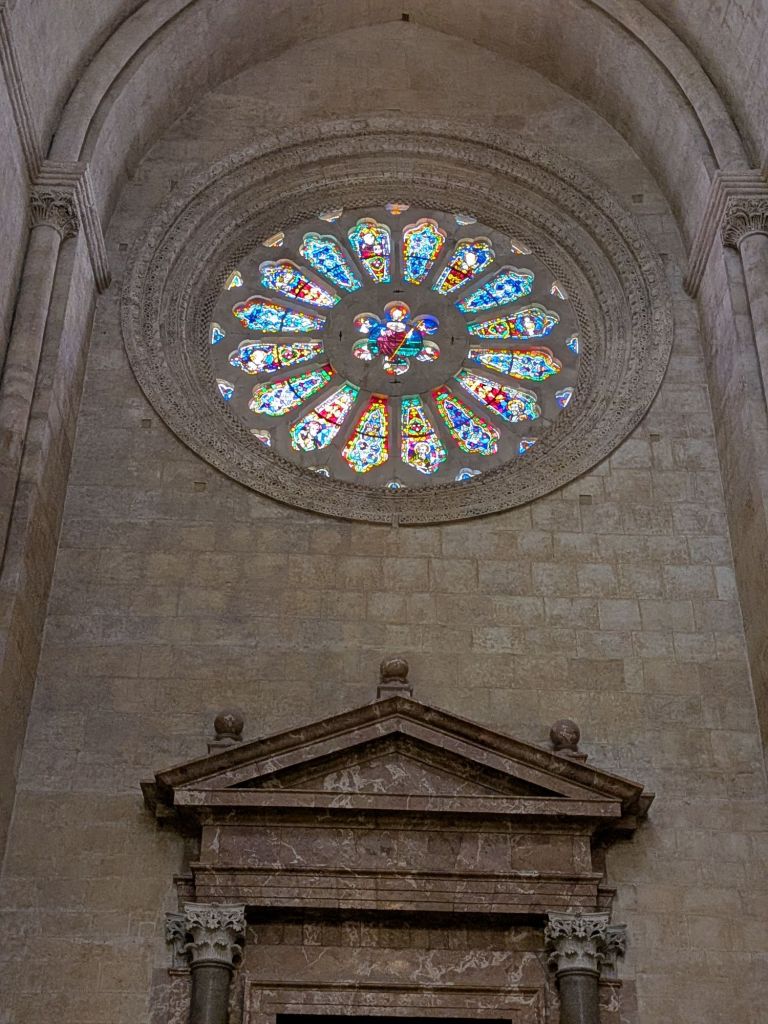
Words fail – and I know K wants to do a long post on this – but here to be getting on with is the largest rose window in Catalunya:
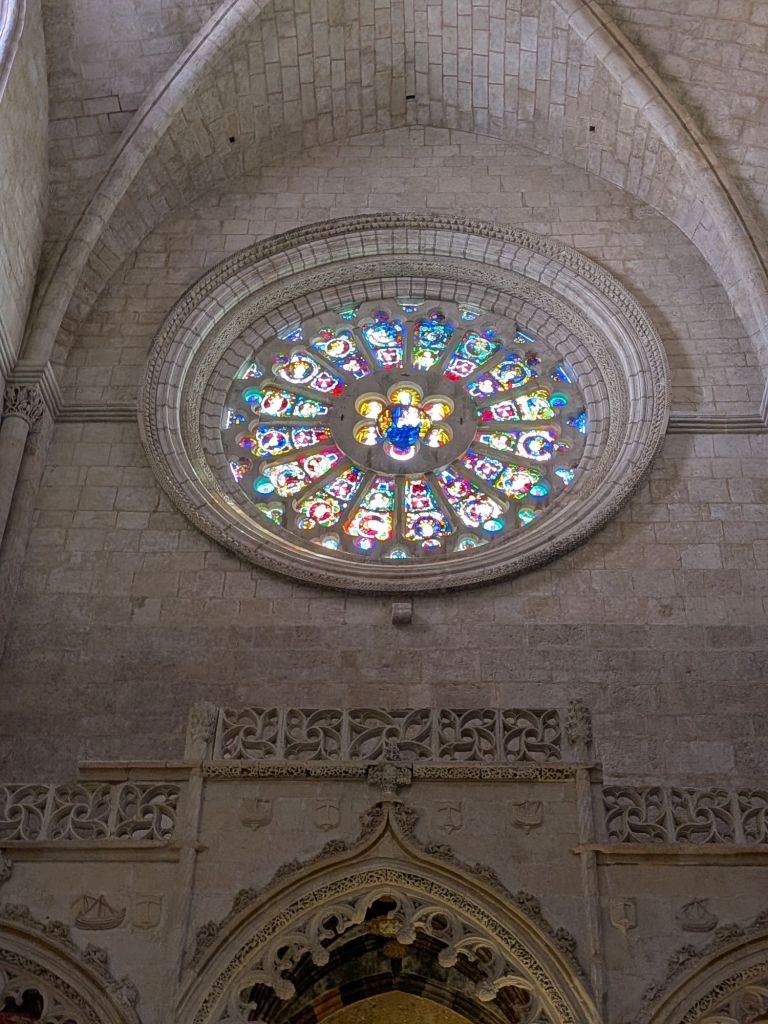
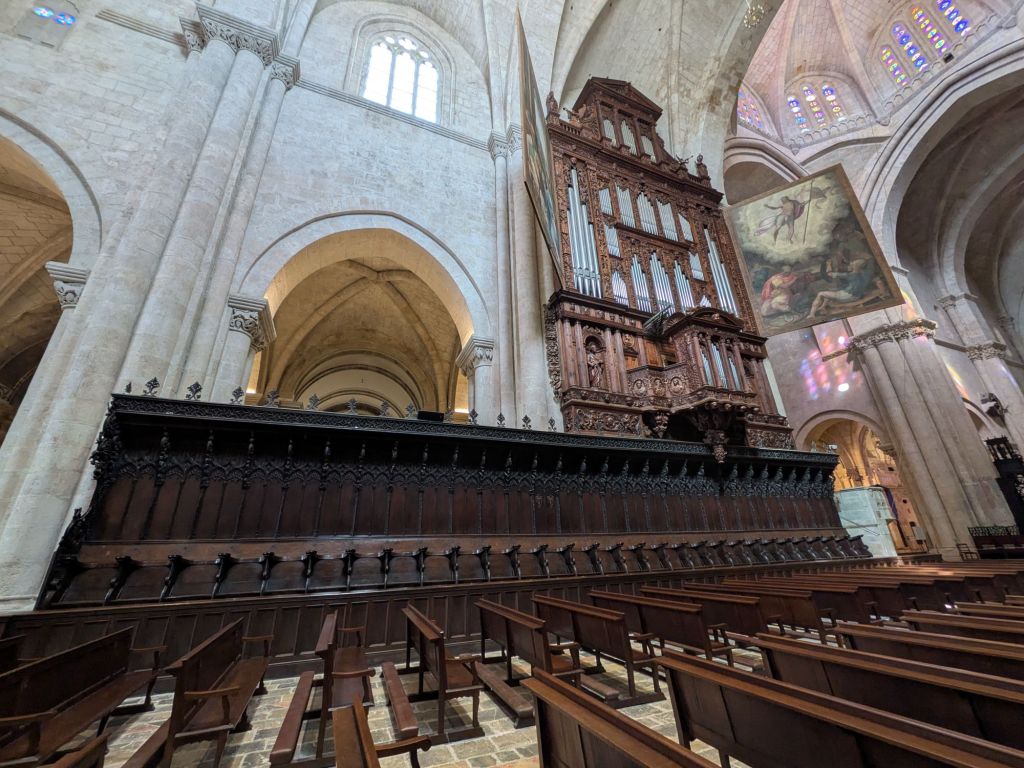
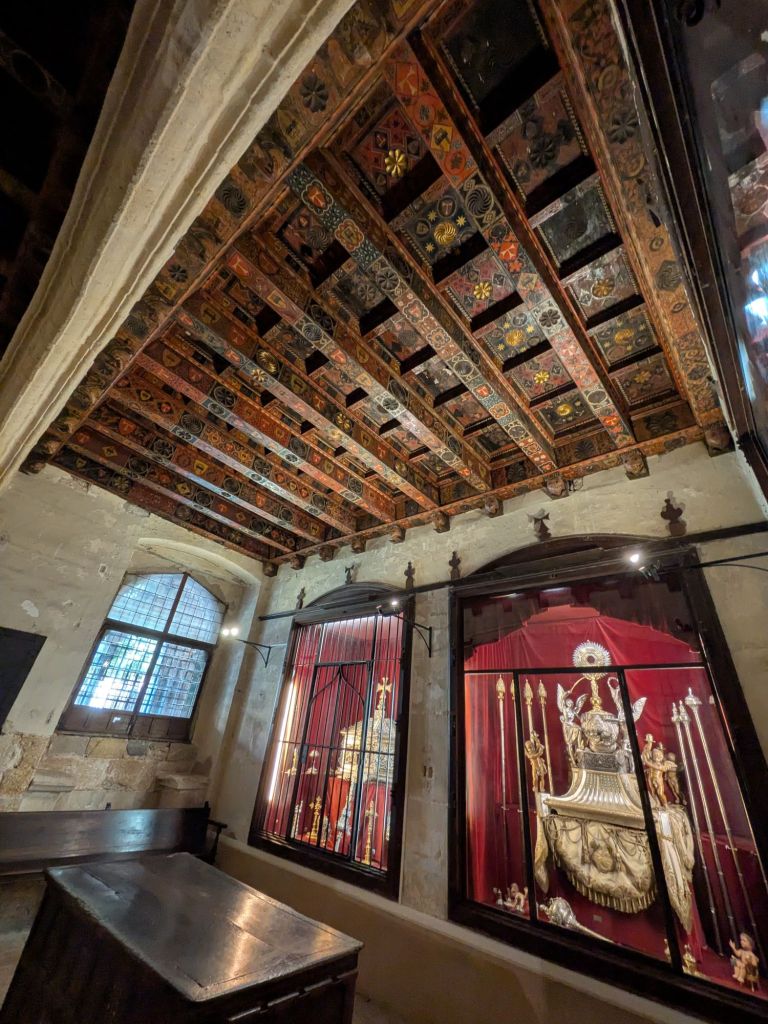
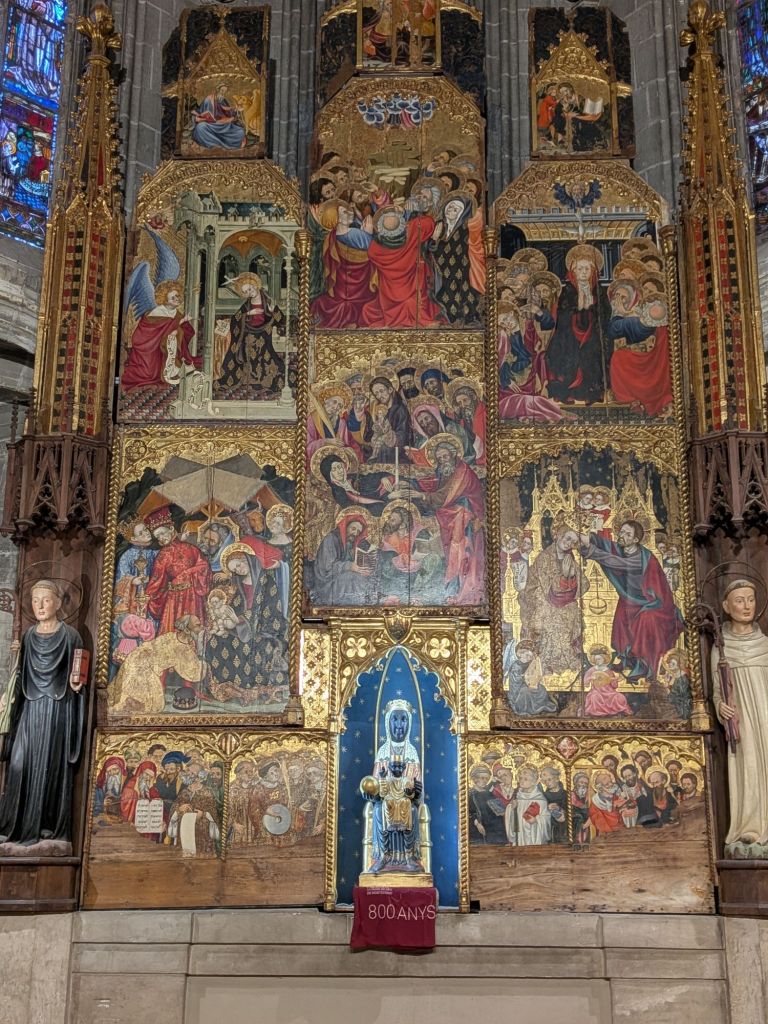
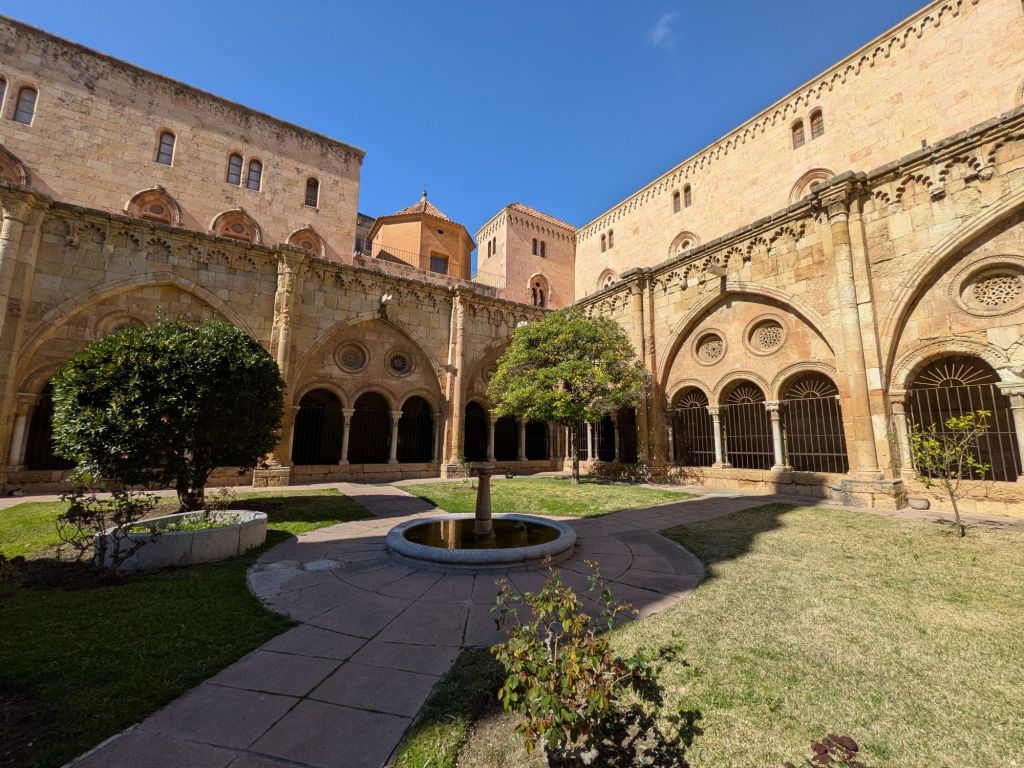
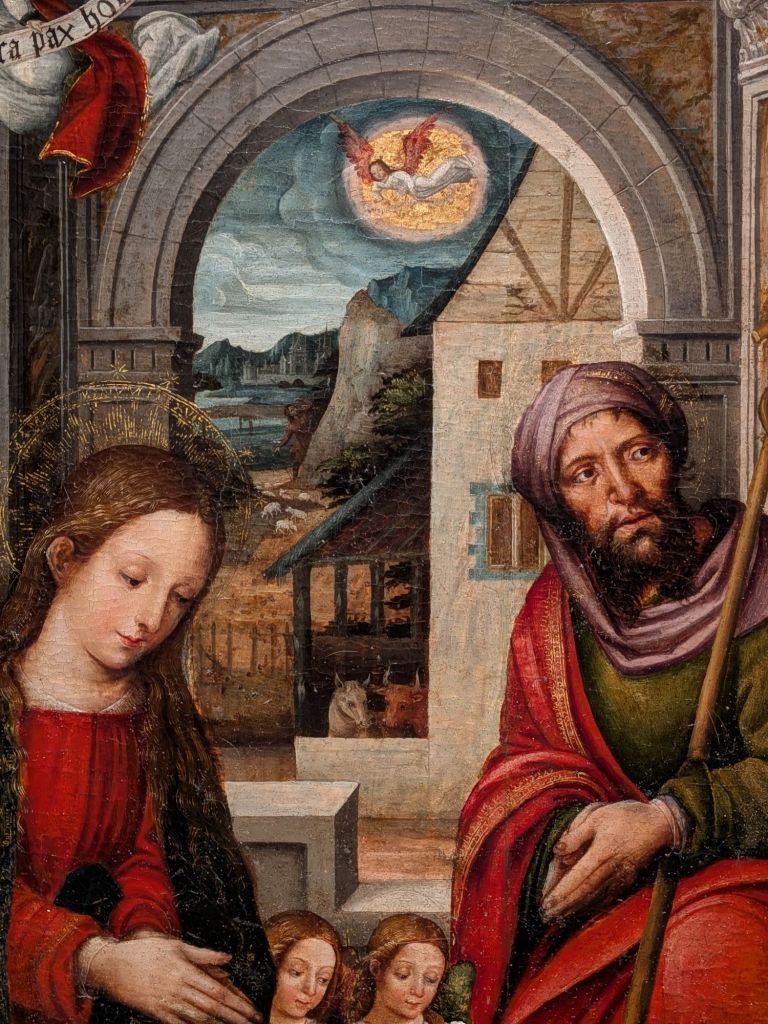
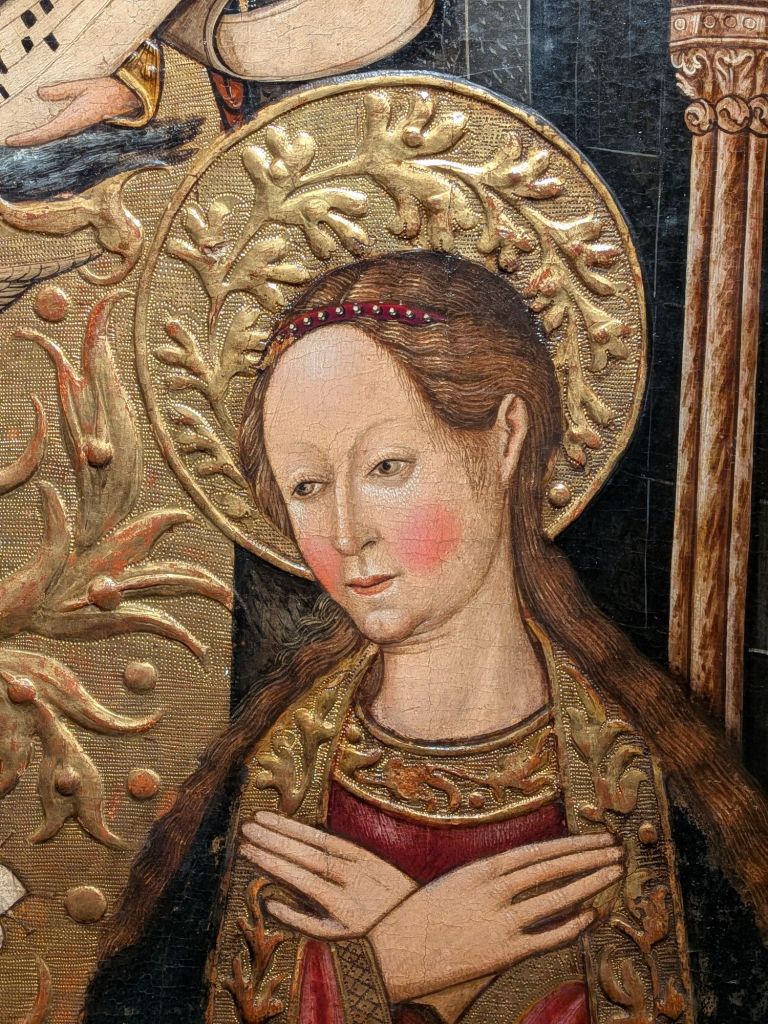
And here’s another one (of about six), plus the vast C15 choir stalls and organ, a C14 coffered ceiling in the treasury, an unbelievably beautiful and well preserved 1510-ish altarpiece in one of more than a dozen side chapels, and the lovely, sun-warmed cloisters:
These pictures only scratch the surface of what isn’t so much a cathedral as a huge, rich, labyrinthine complex – all on the spot where the Roman forum once stood.
After about two hours we were seriously hungry and in need of a break, but then we discovered a whole section we’d missed, and we couldn’t bear to leave.
Then we realized we hadn’t yet seen the museum, and almost didn’t bother, which would have been a serious mistake:
We thought we’d have plenty of time, given that we covered a lot of ground yesterday and that many places are regularly closed on Mondays. Hah.
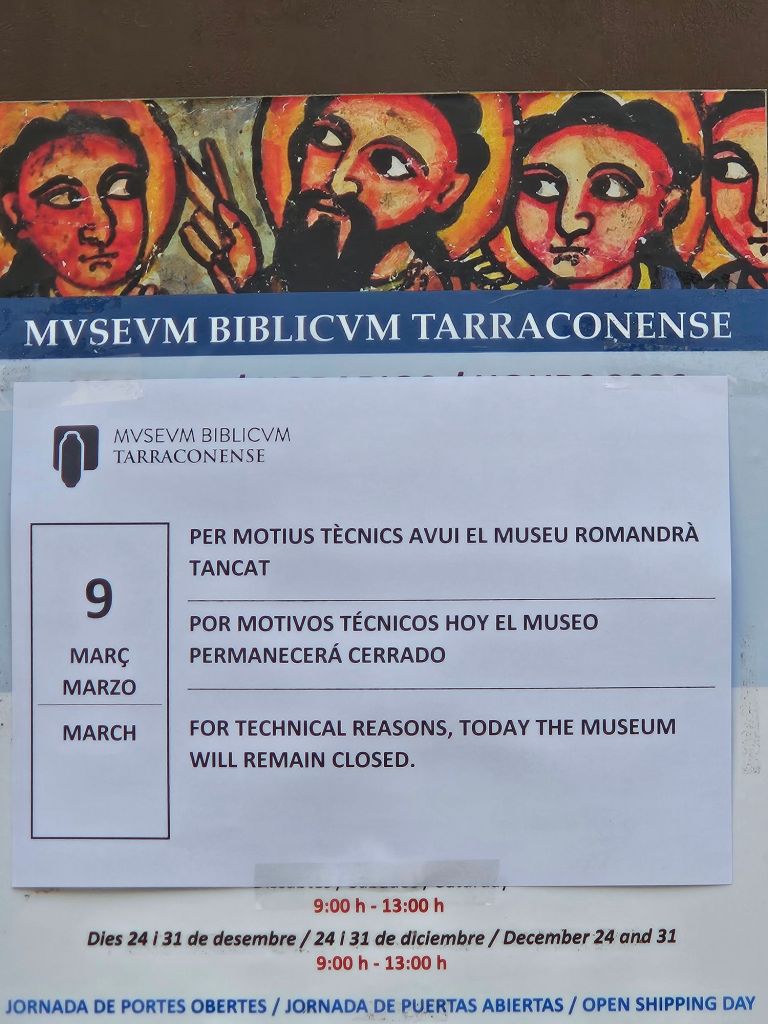
First stop, the Biblical Museum. Sign on the door:
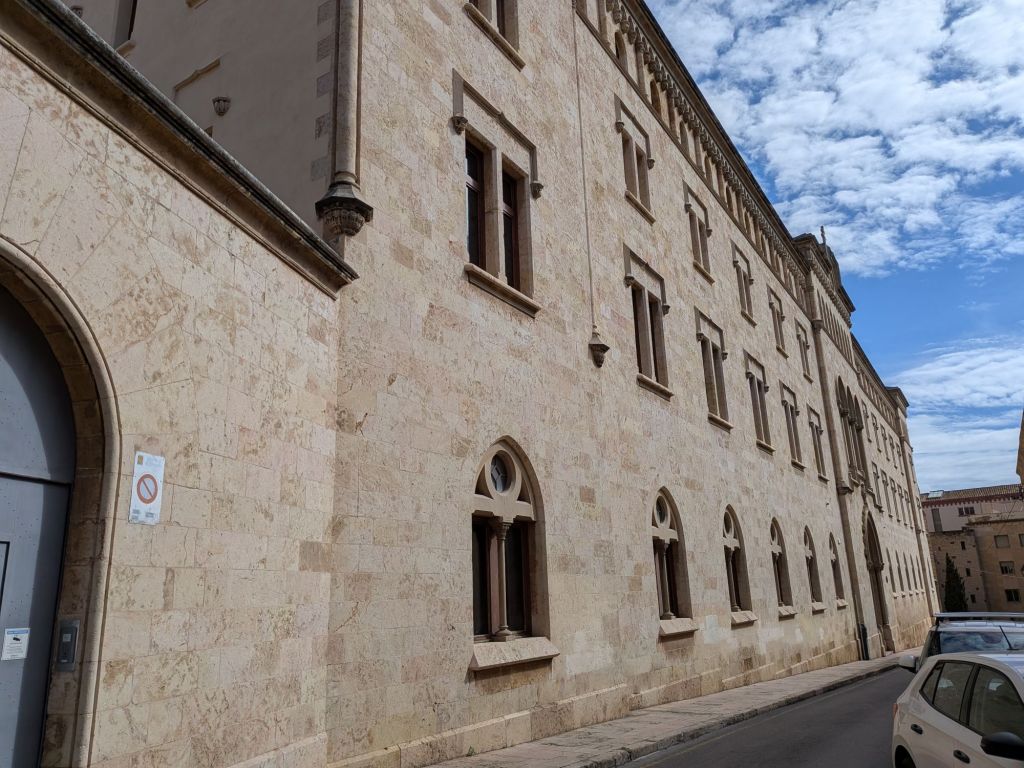
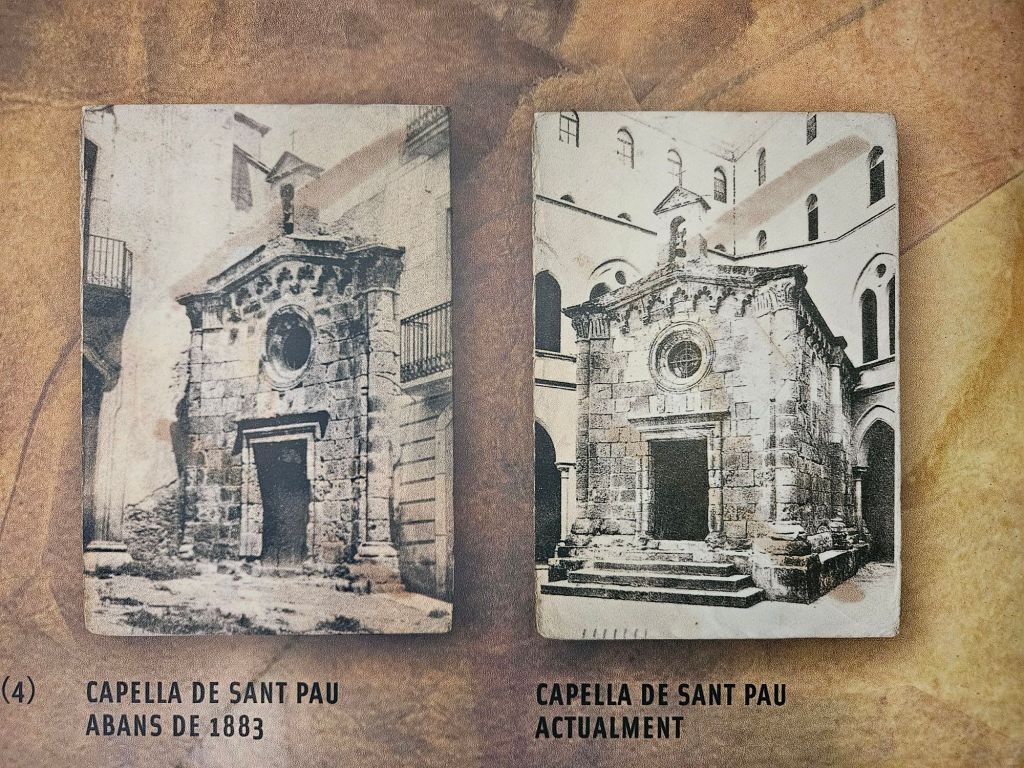
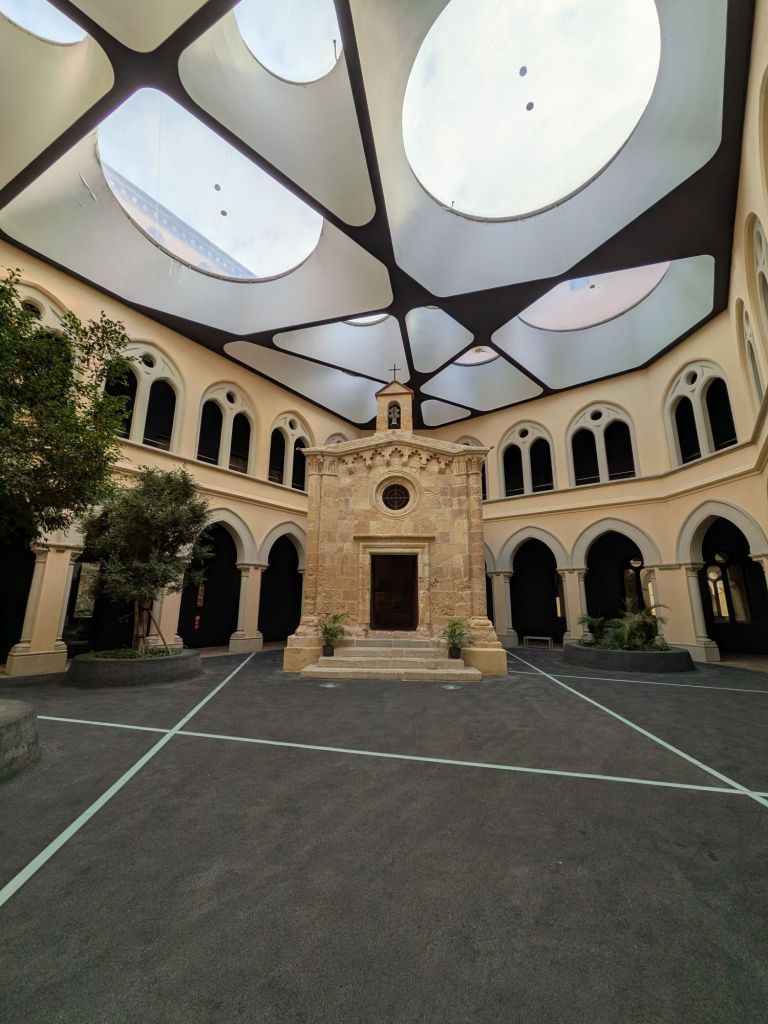
So that stop was fast. Up the street to the Chapel of St. Pau (Paul). We’re expecting a small 13th century chapel, but find a huge imposing building instead. Turns out it is the former seminary, built in the 1880s around the chapel, in a mix of Gothic and Renaissance styles that manage to be imposing and wonderfully elegant. (Hard to capture though because the surrounding streets are so narrow.)
The seminary itself ceased operations in the late 1960s and the building, extensively renovated between 2008 to 2012, now houses the cultural center of the diocese.
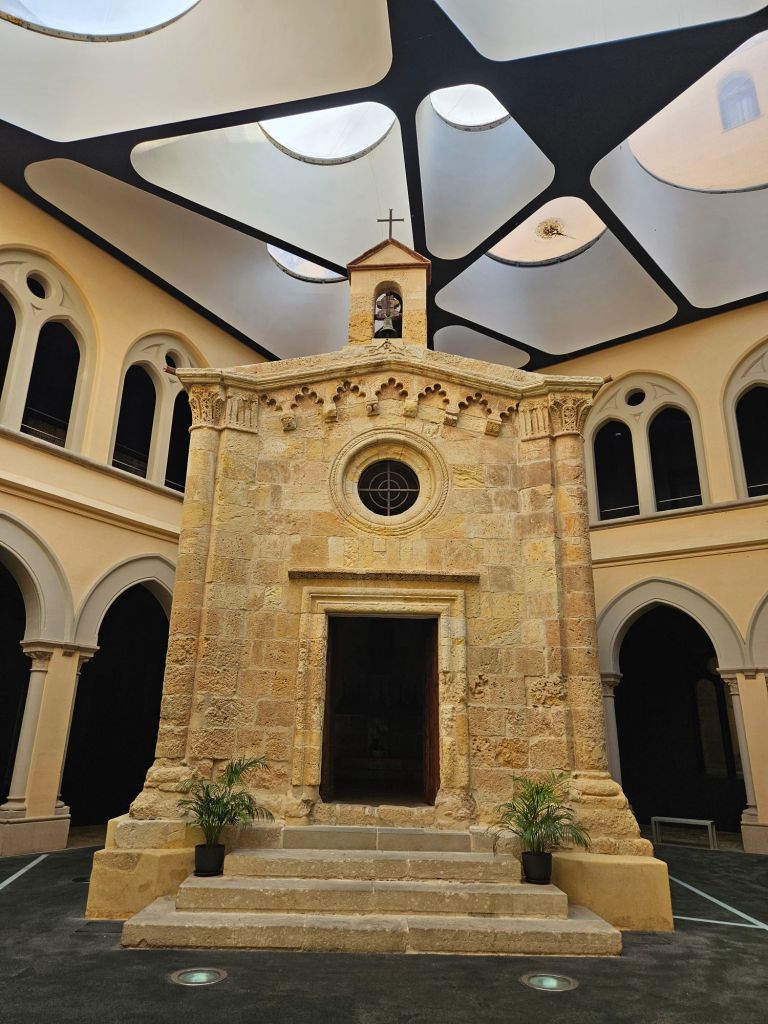
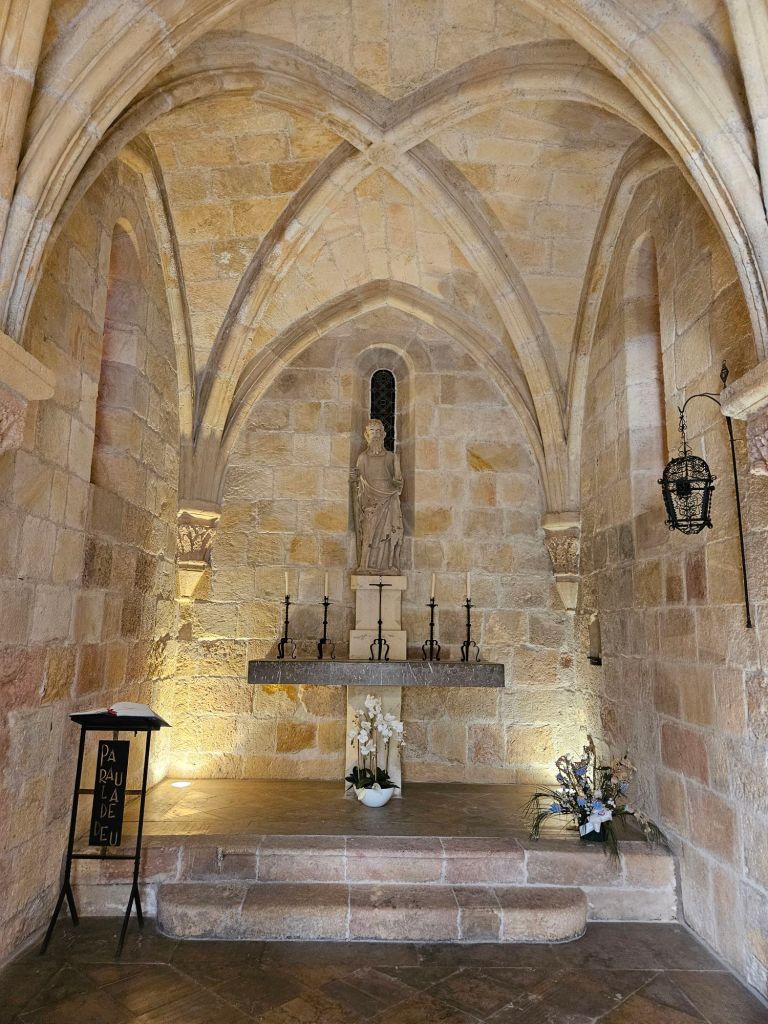
The chapel dates from the 13th century, after the end of the Muslim era, and was built as a satellite to the main cathedral (that’s another post). It adjoined the medieval hospital. Not only were two versions of the C. 18 building built around it, but in 2012 the whole courtyard was enclosed in ultra-modern style. The combination is like nothing we’ve ever seen.
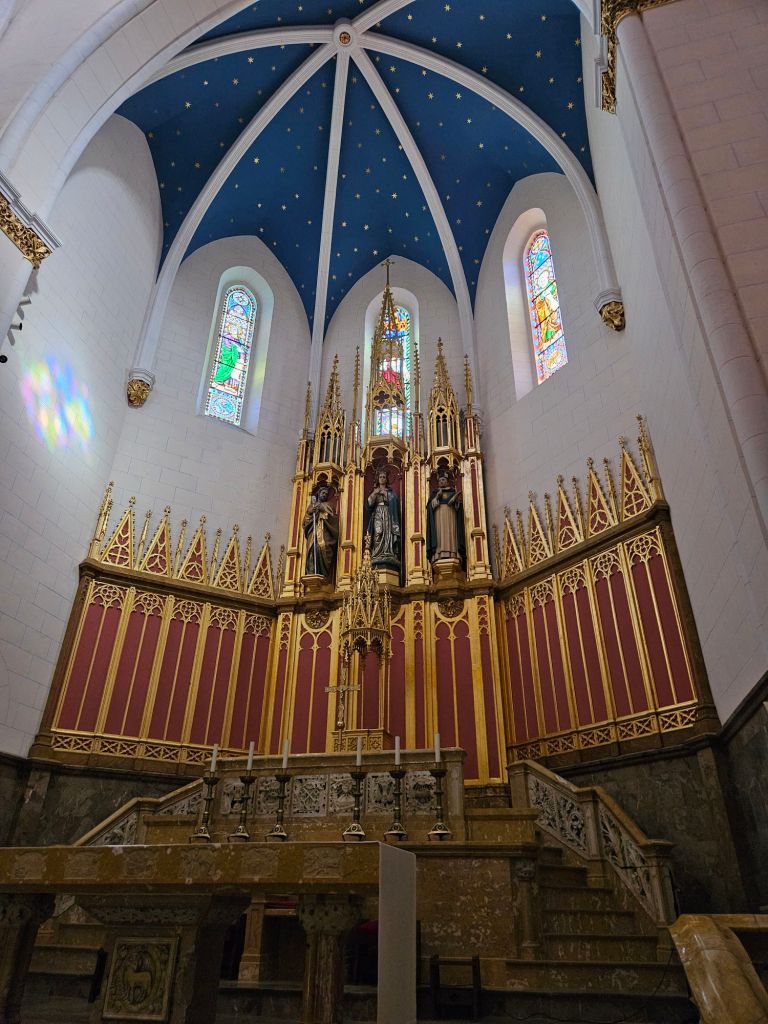
The chapel exteriorThe chapel interiorAn illustration showing how the chapel was integrated into the original seminary walls and uncovered during the most recent renovations.C13, C18, C21
The Seminary itself was a unexpected bonus, even if we were chastised, over a nearly unintelligible PA system, for going up the stairs to see the exhibits on the second floor. (In our defense, the lights were on, there was no signage, and we could see more exhibits on the upper gallery.)
Because the old chapel was not enough, there was also a new chapel in the seminary.
 Kerry & Richard in Spain (mostly) 2026