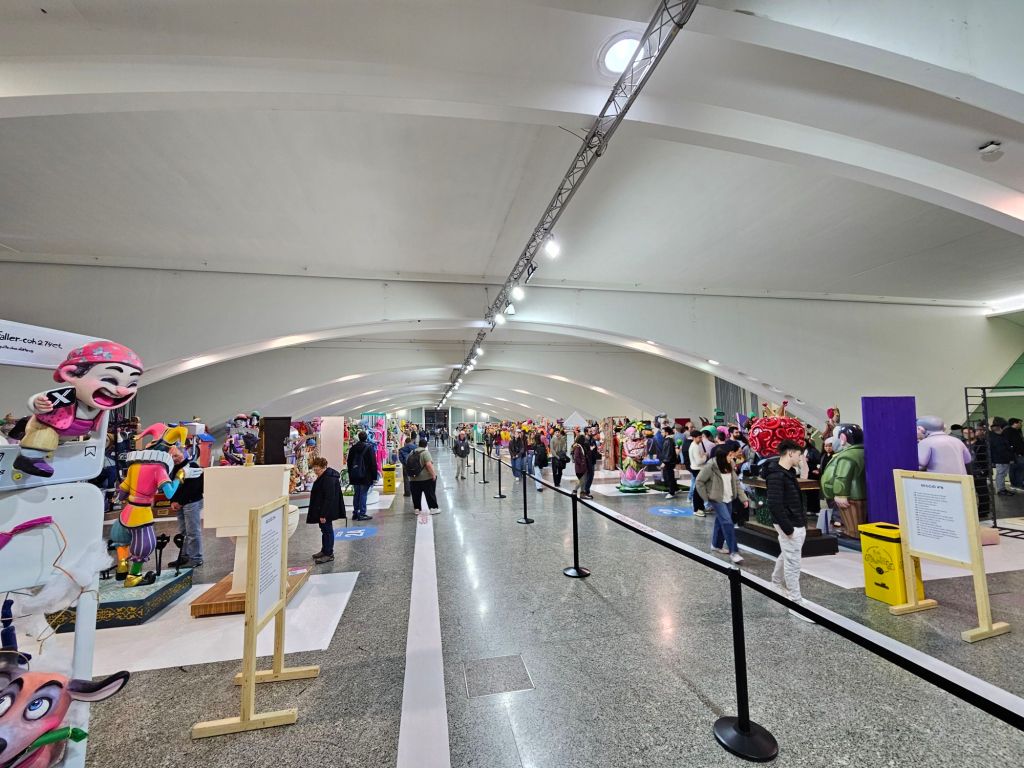
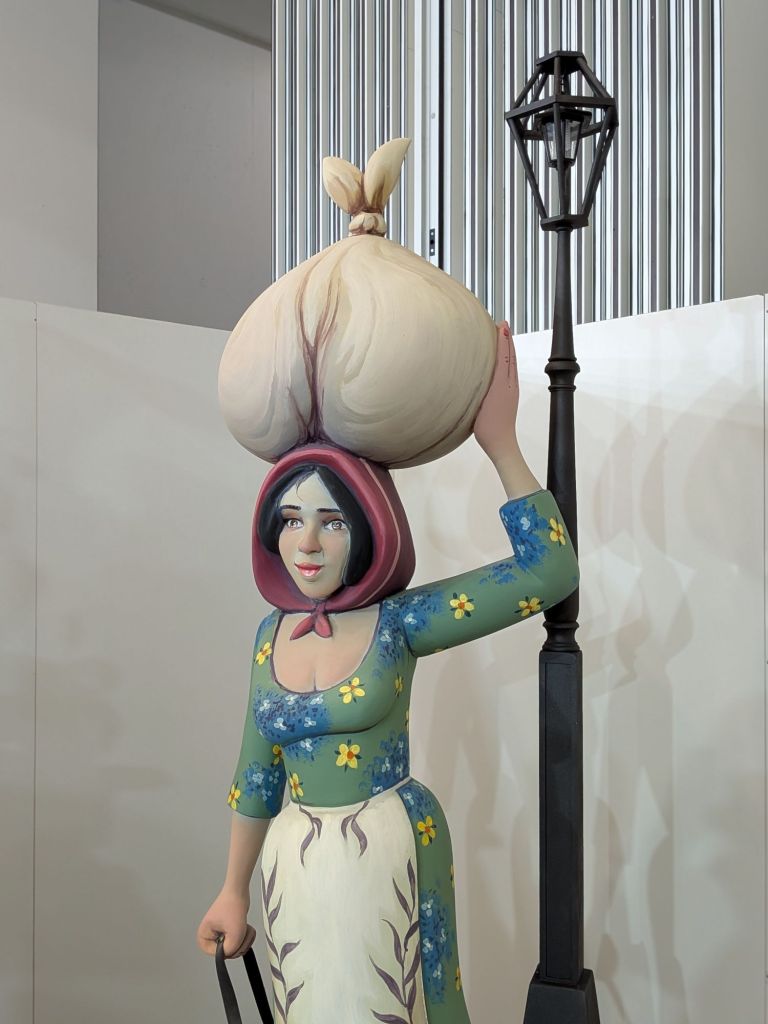
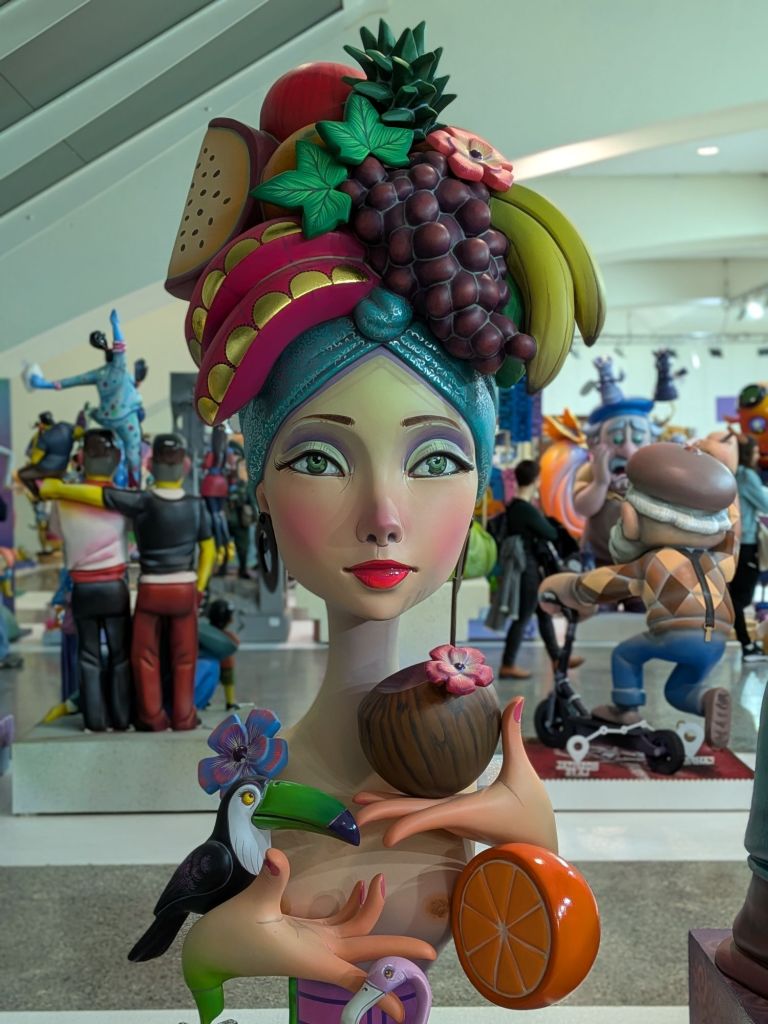
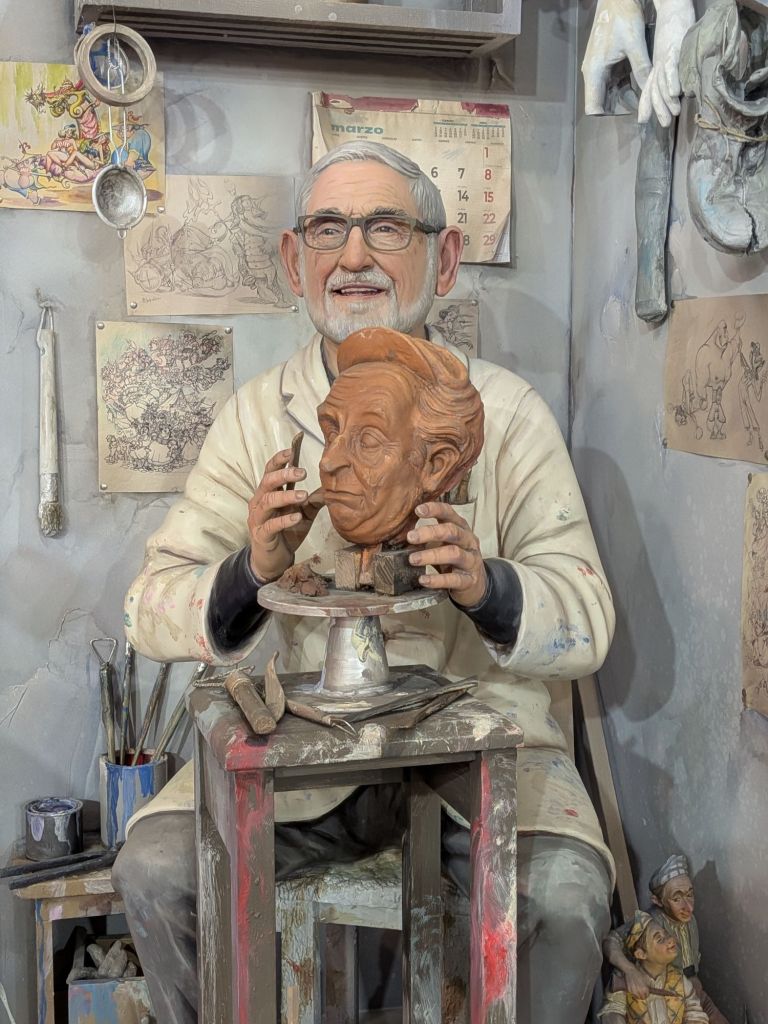
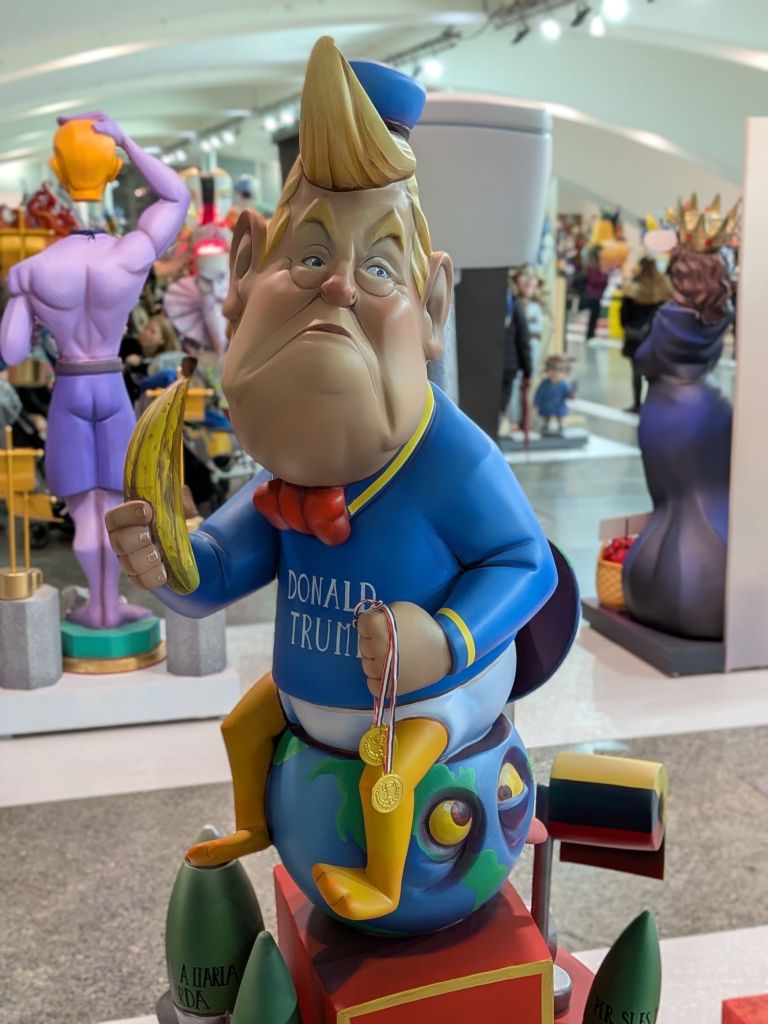
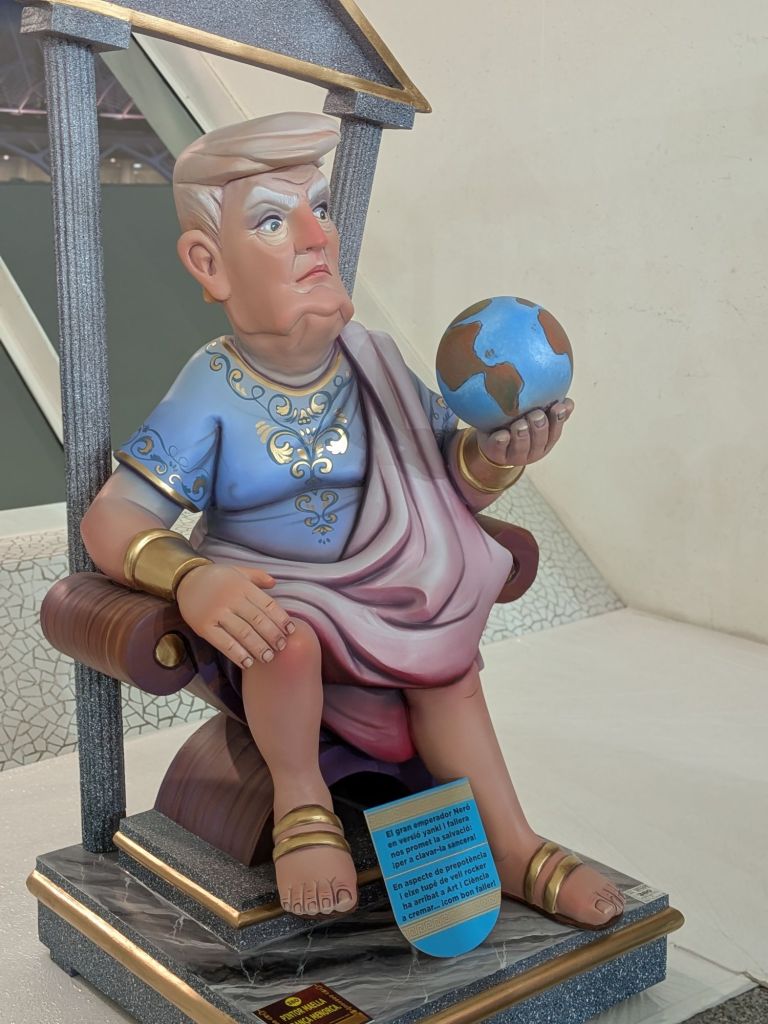
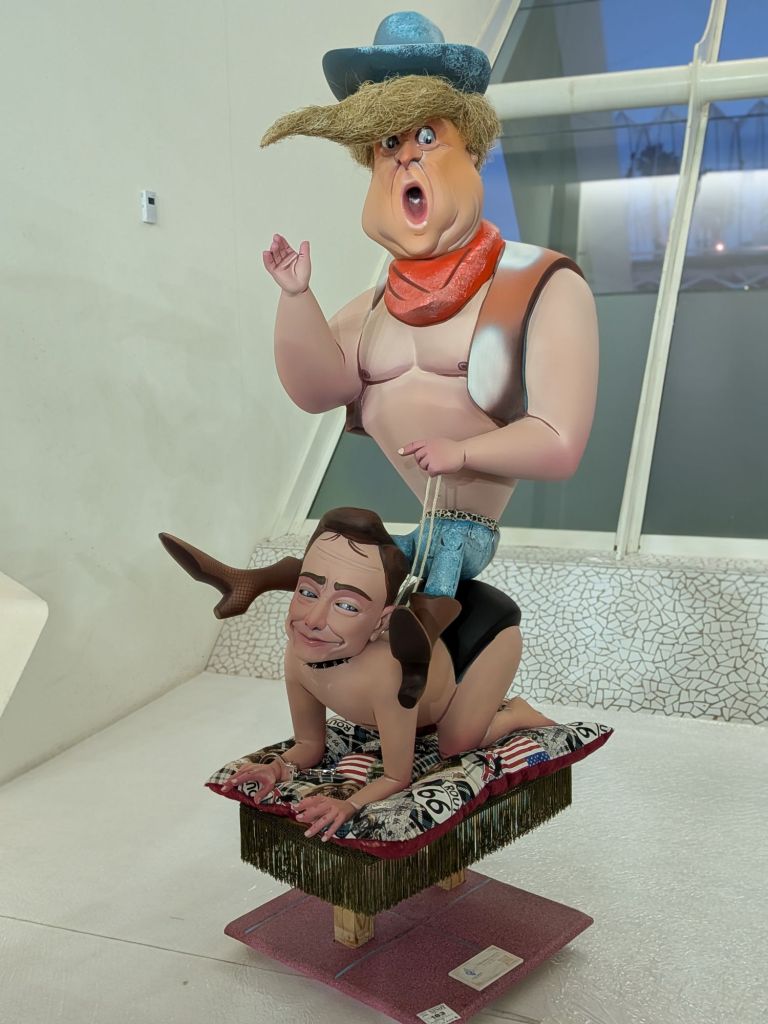
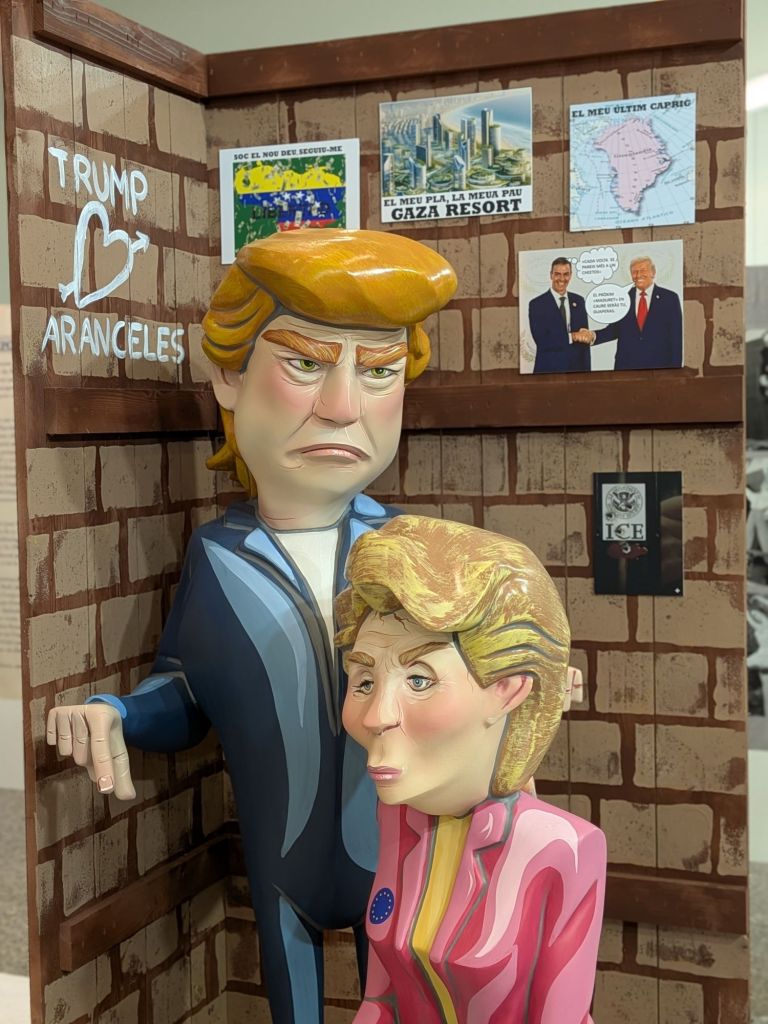
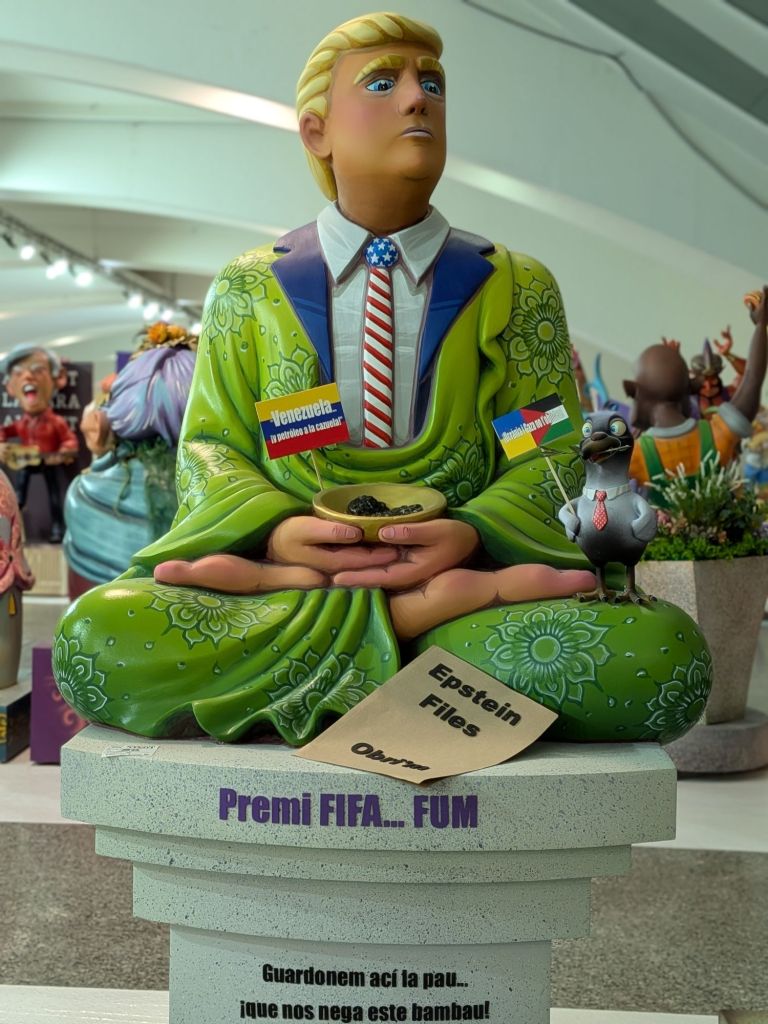
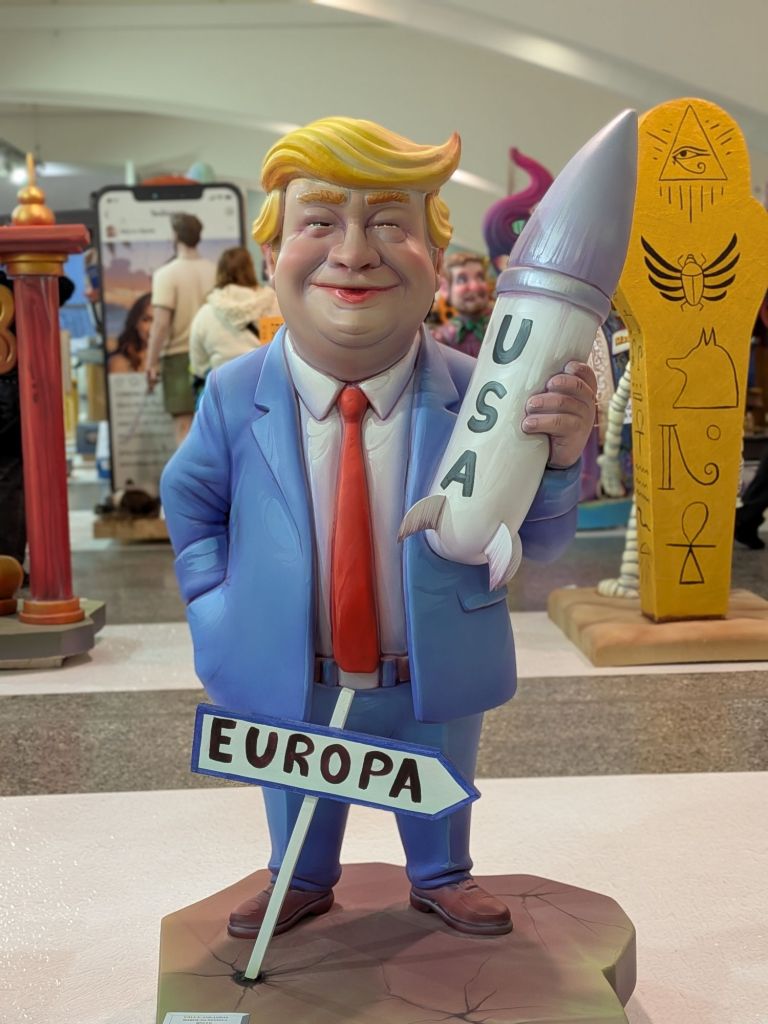
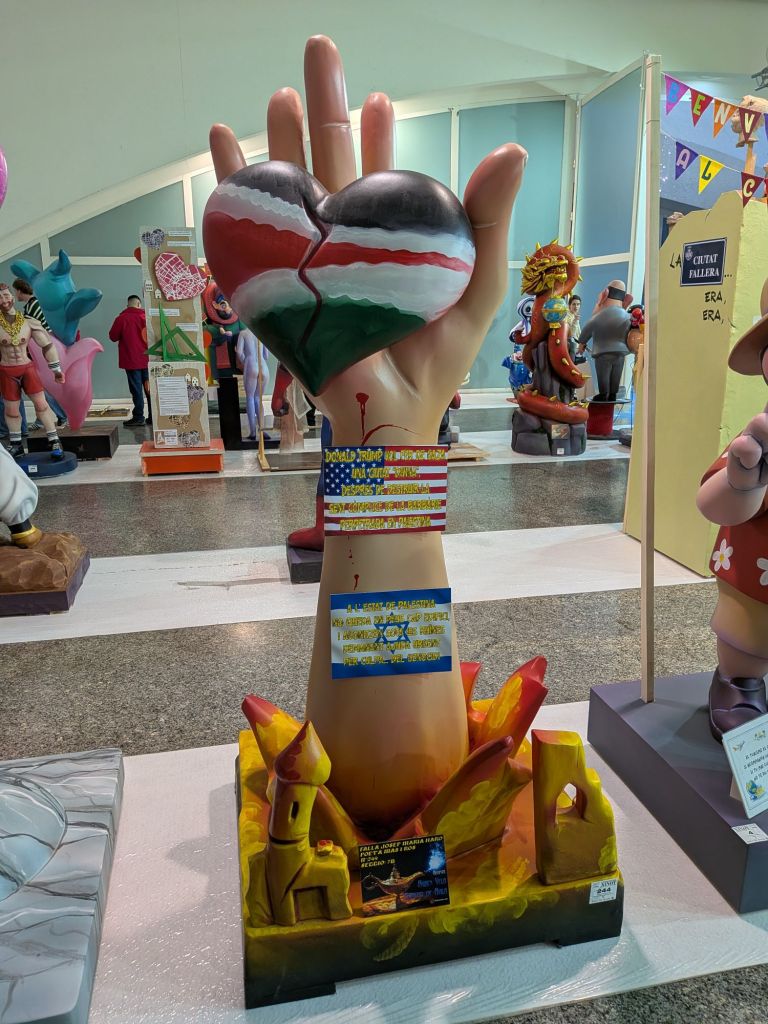
One of the defining features of Las Fallas are the ninots– dolls– constructed by different neighborhoods and groups. They’re currently on display in an exhibition, but they will be installed in the streets soon. Two will be chosen to be saved, and all the rest will be burned (in the streets) at the conclusion of the festival.
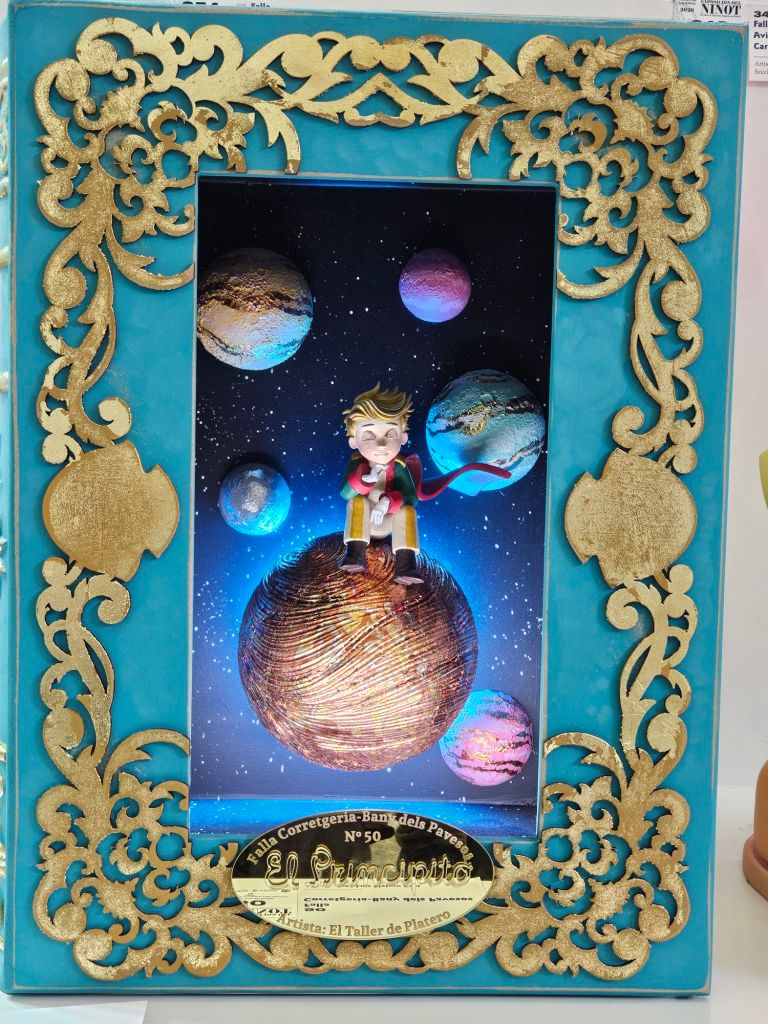
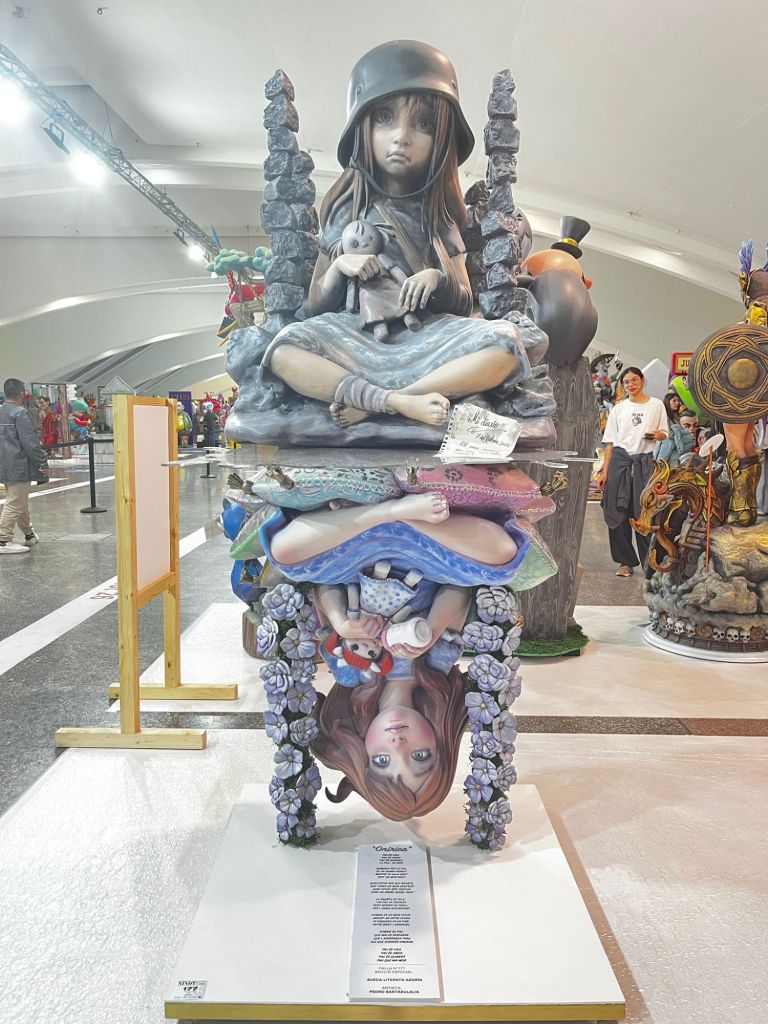
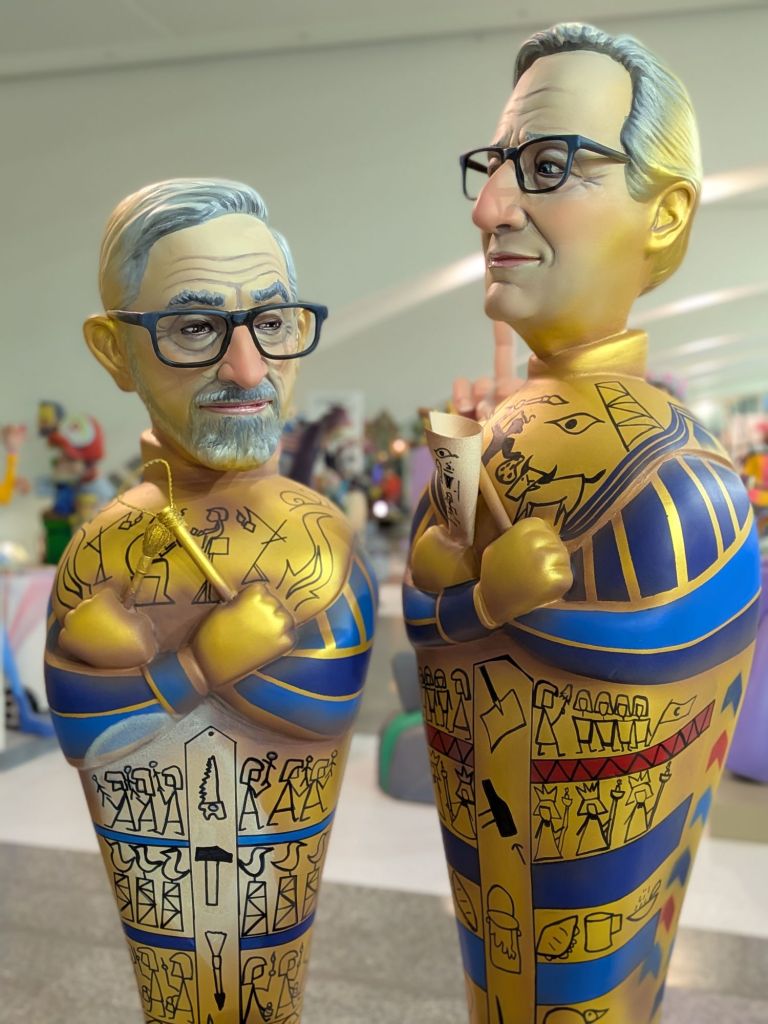
Since we’d been to the museum to see the previously saved ones, we thought we ought to go to the exhibition and see this year’s offerings. Bottom line–I find most of them creepy in a Disney meets horror movie clown kinda way, and I don’t understand most of the messaging. But for the record, a few photos.
One theme is especially popular this year:
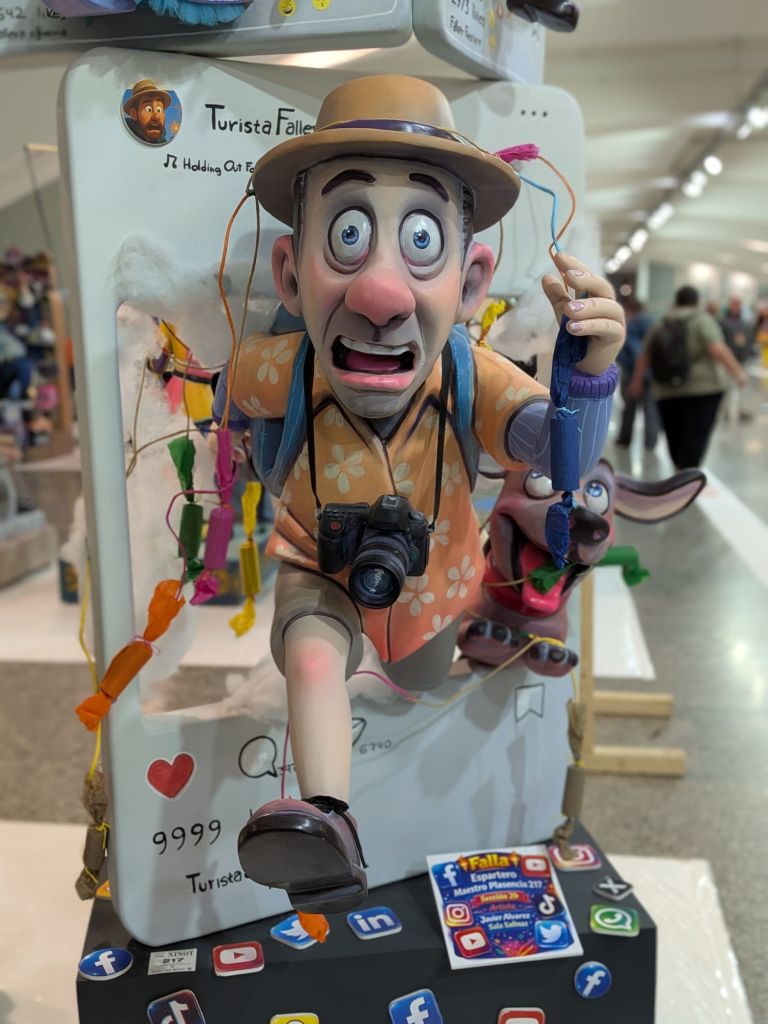
R here. I particularly like this one of a crazed tourist bursting out of a social media post:
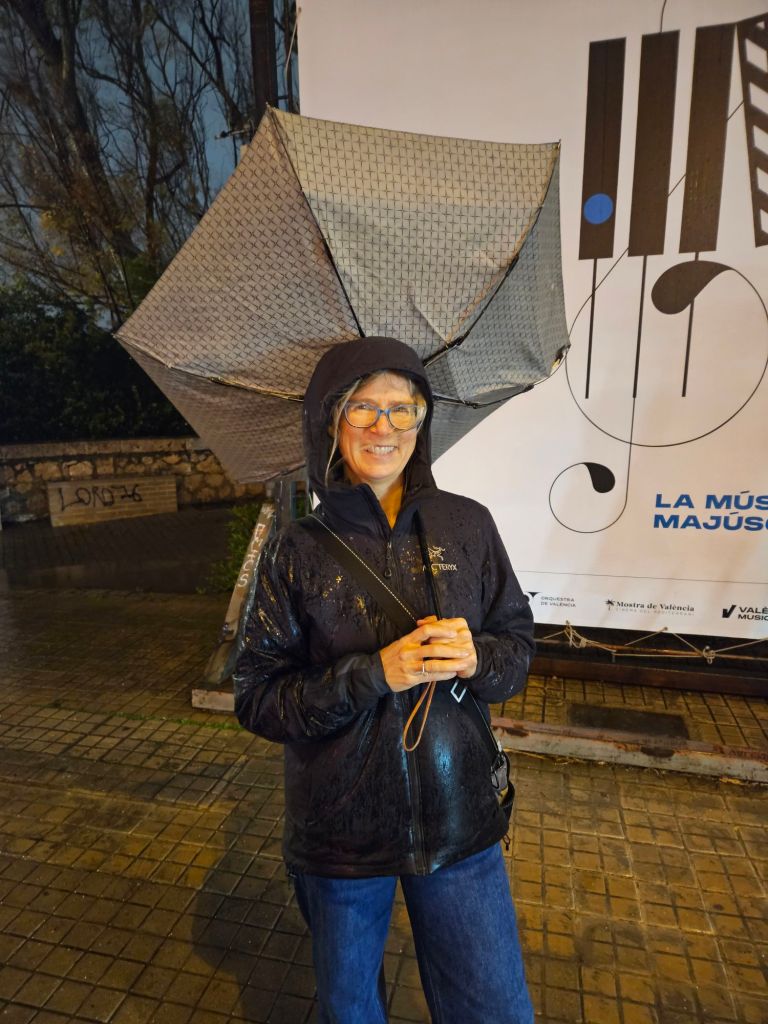
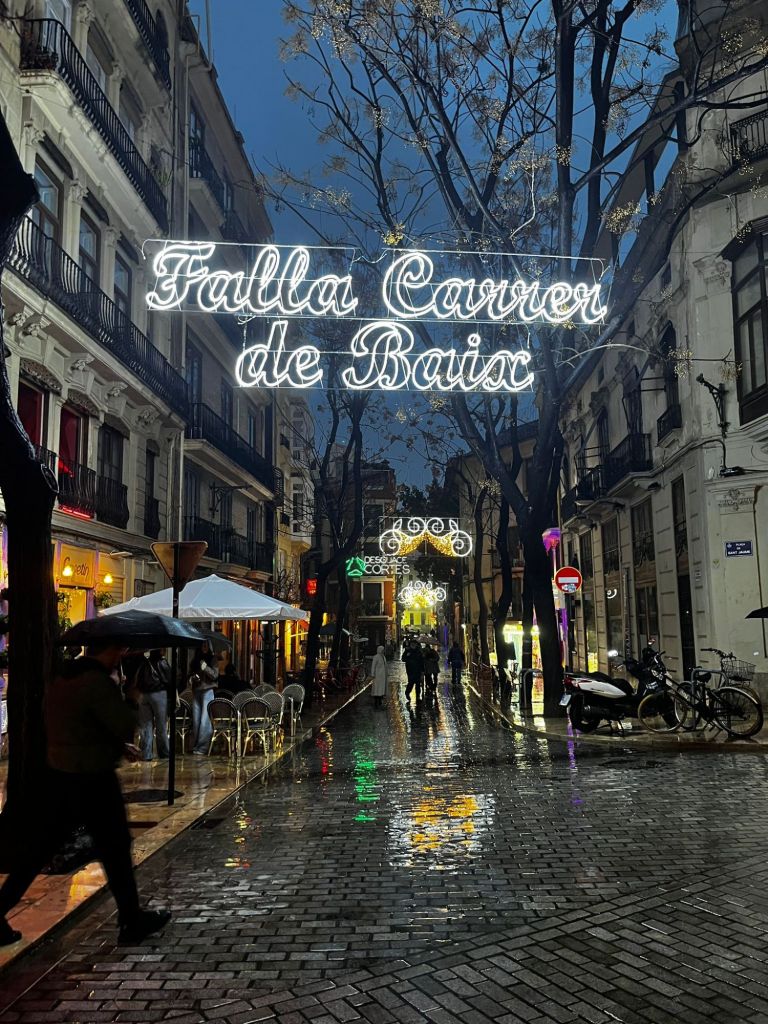
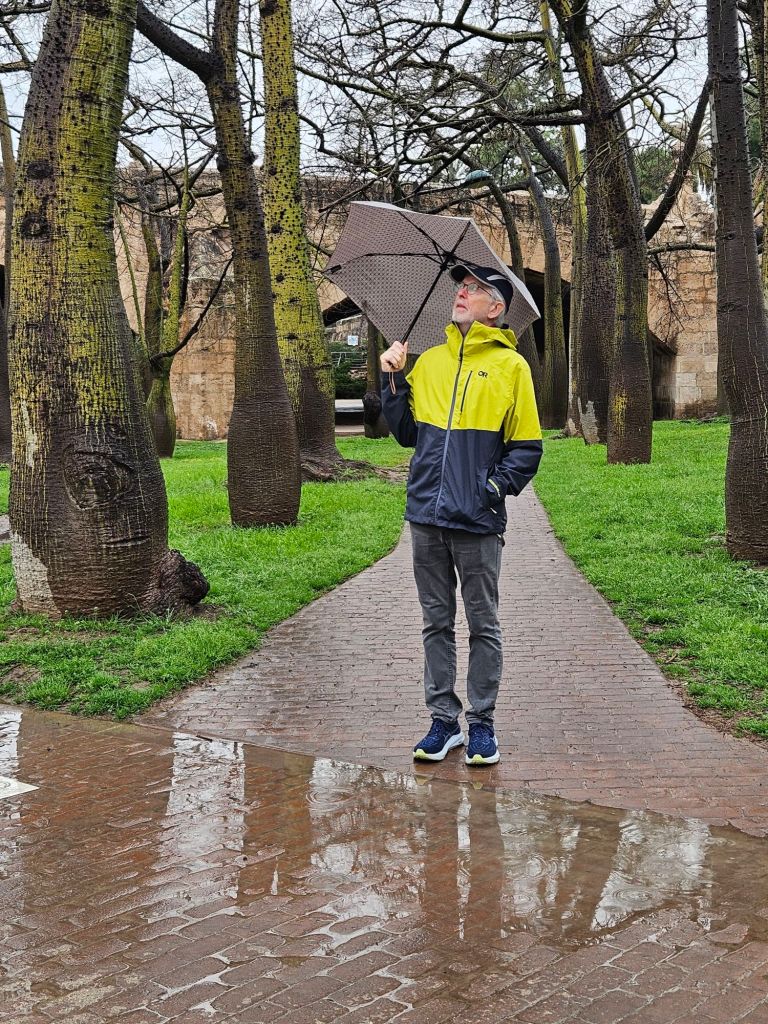
Oh, and we got soaked walking home, but the rain made the streets shine with the Fallas lights.
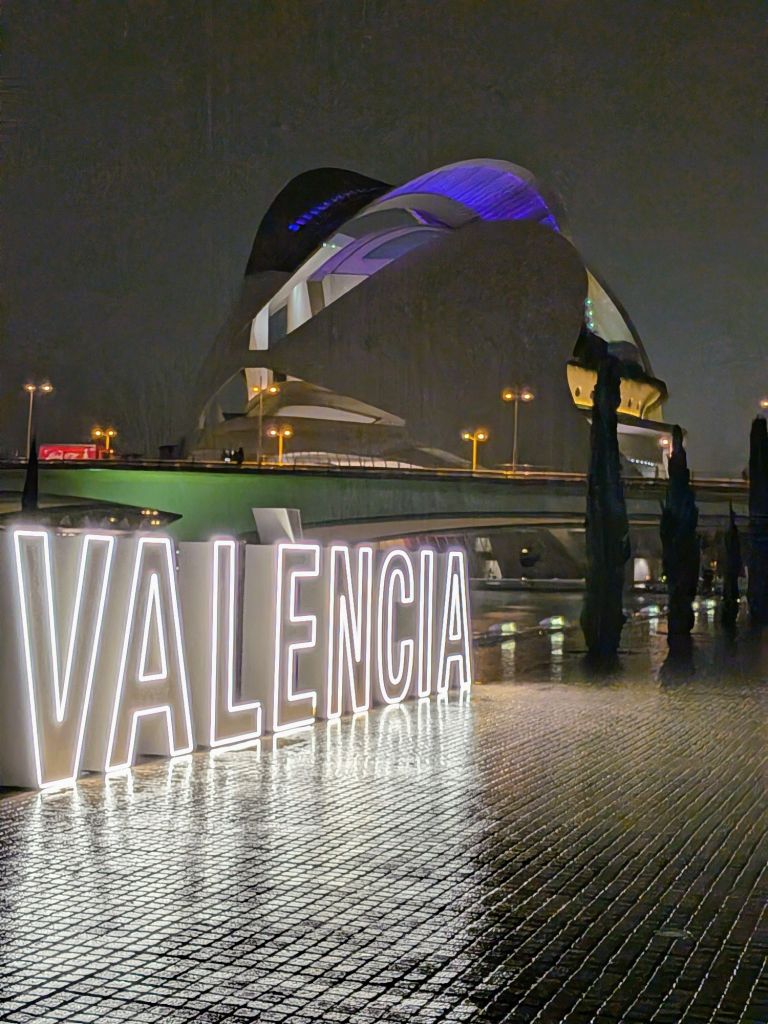
This, btw, is the opera house – in the form of a space aged Conquistador’s hat – that forms the centerpiece of the vast Cuitat des Artes y Ciencias complex, by controversial rock star architect Santiago Calatrava. Looks amazing; 3x over budget; everything leaks.
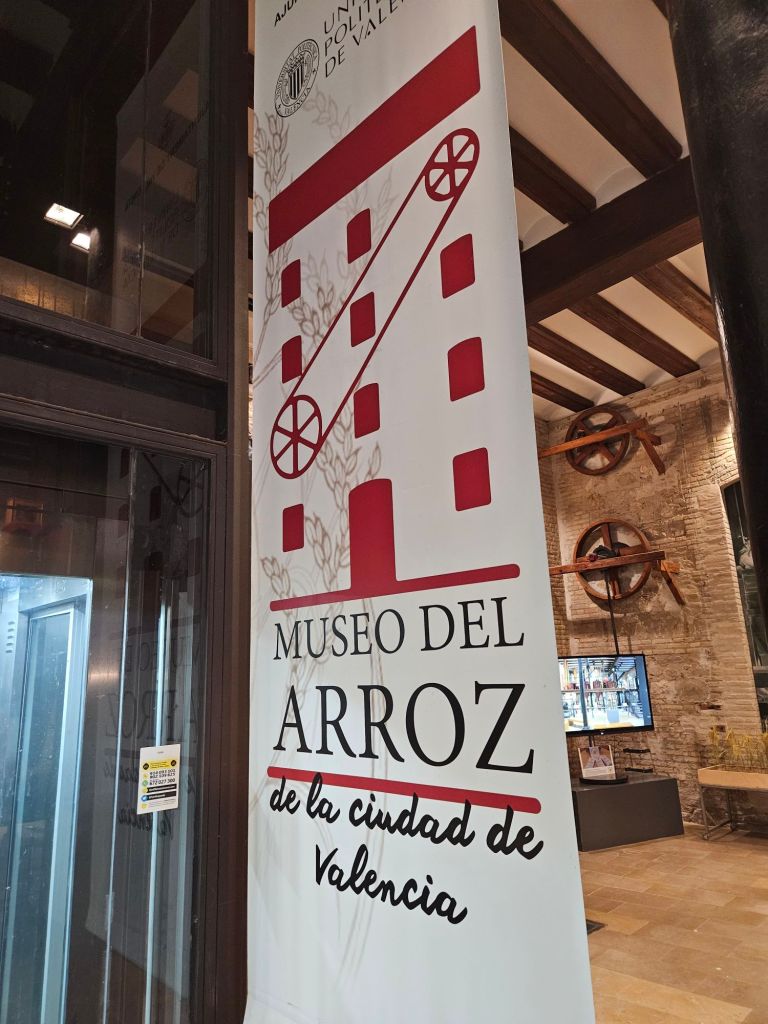
Where do you go when you can’t process any more glorious Renaissance art? The Rice Museum.
Rice, as the exhibits noted, originated in China, but was introduced to Spain by the Moors, who planted it near Valencia in the 8th century. Since then it has become an absolutely integral part of life here, giving rise to the well known Valenciano Paella and many less well known arrozes, both wet and dry.
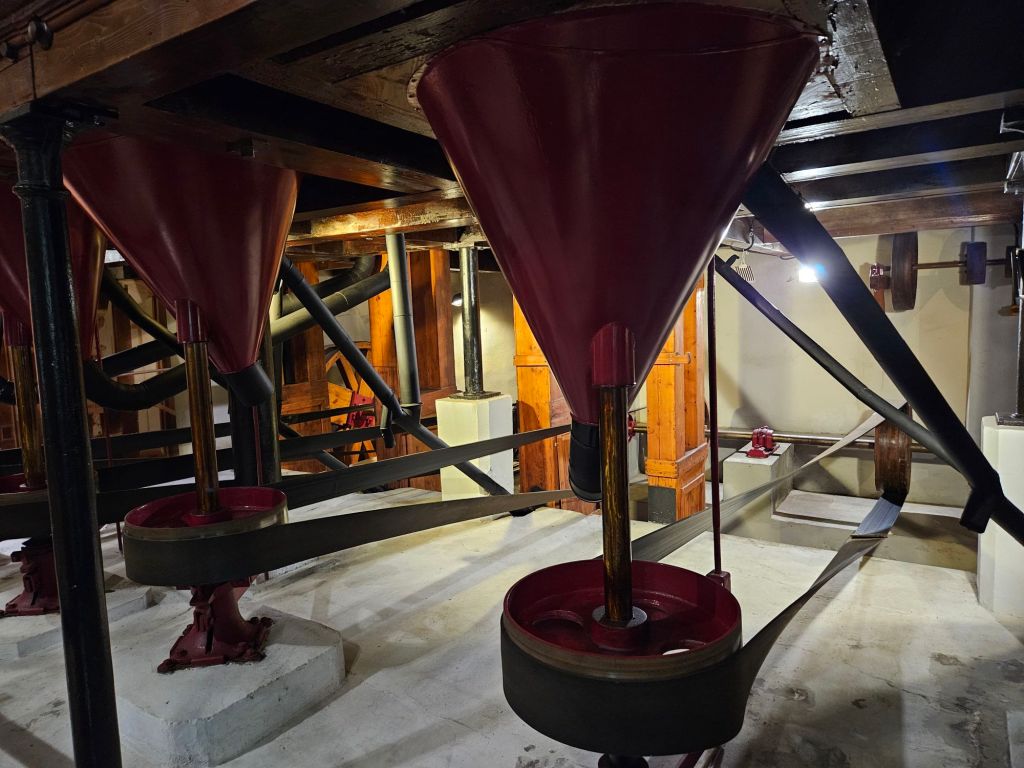
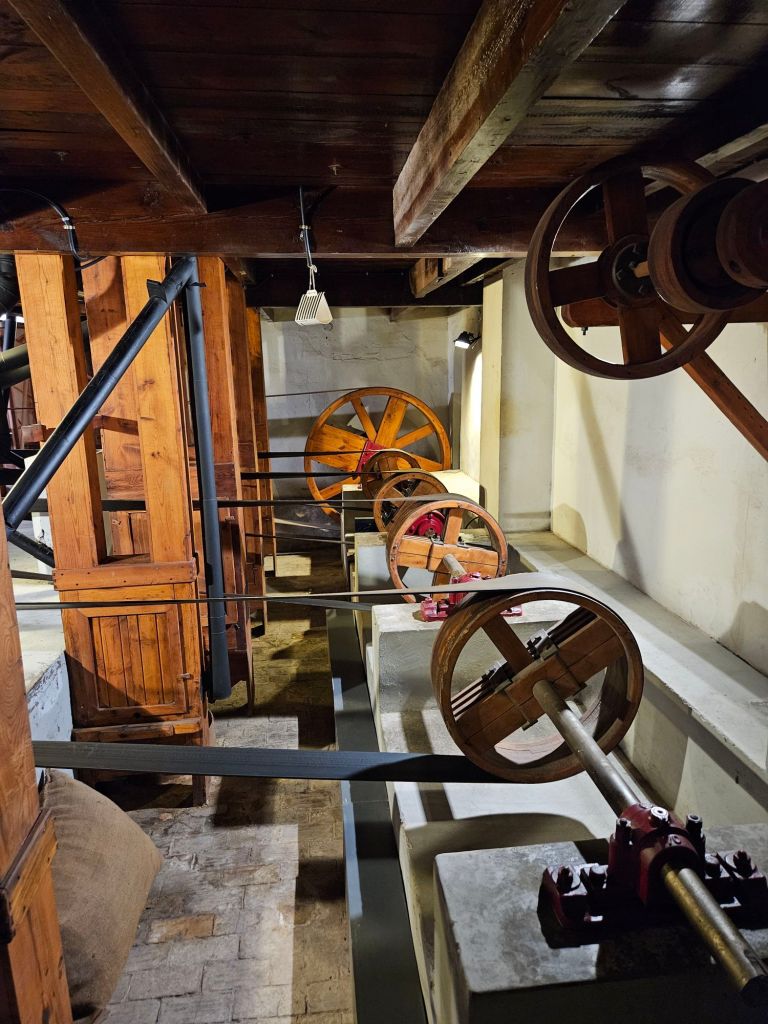
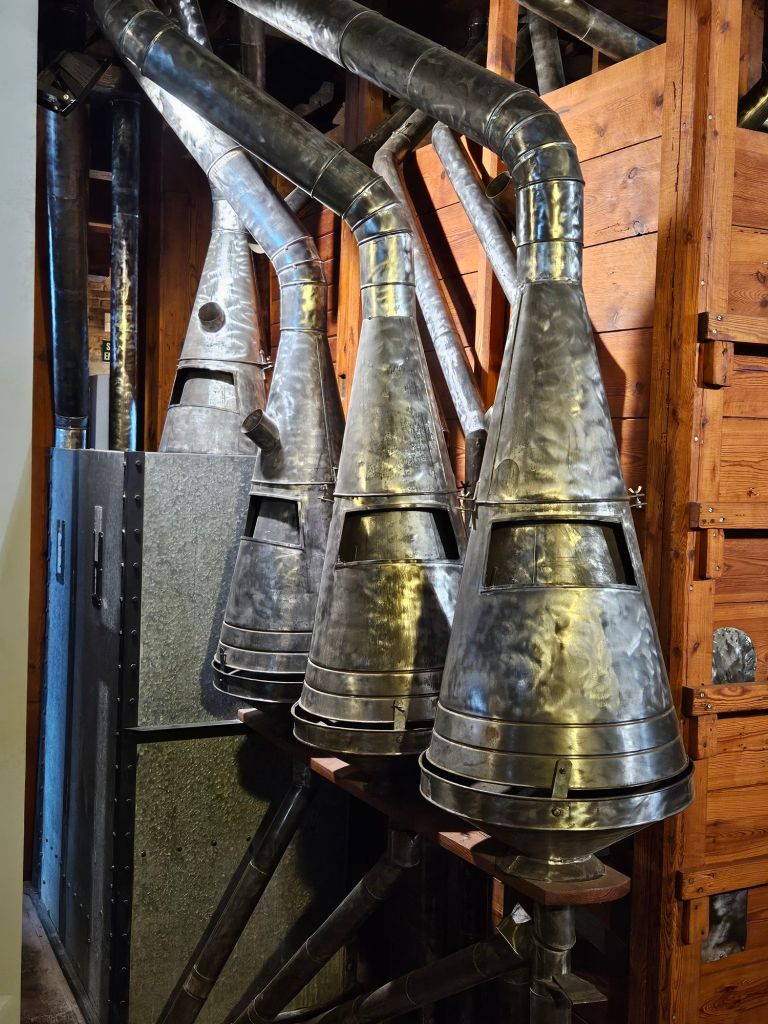
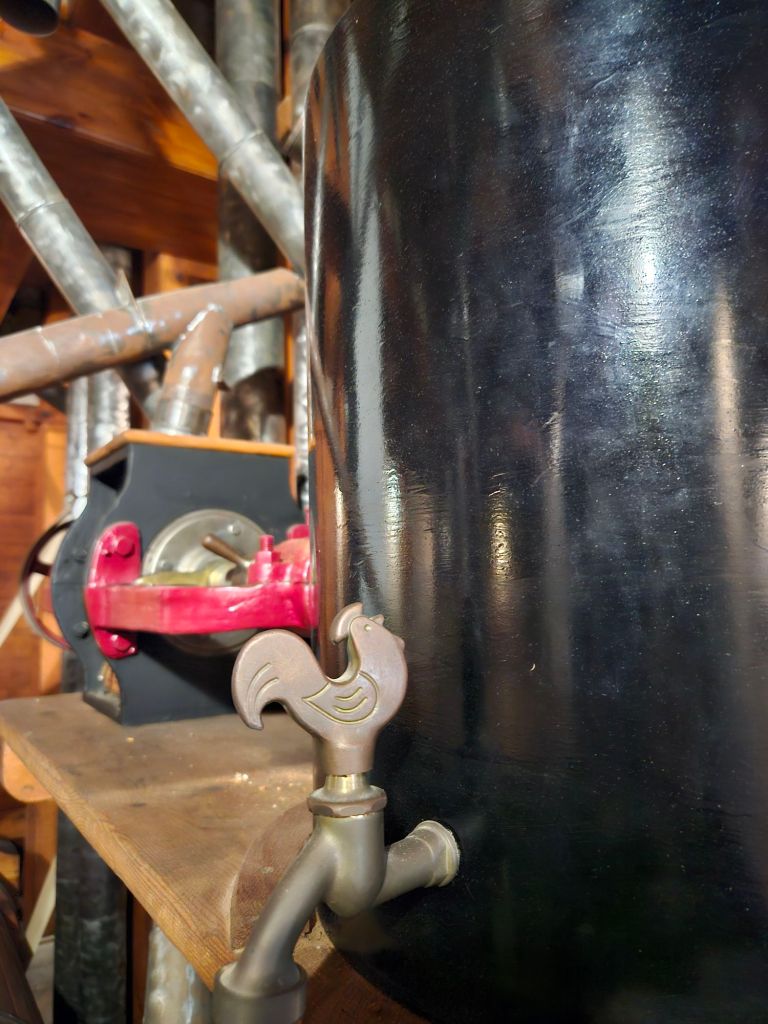
The museum is located in an old rice mill and houses all the original and lovingly restored machinery accompanied explained by audio guide.
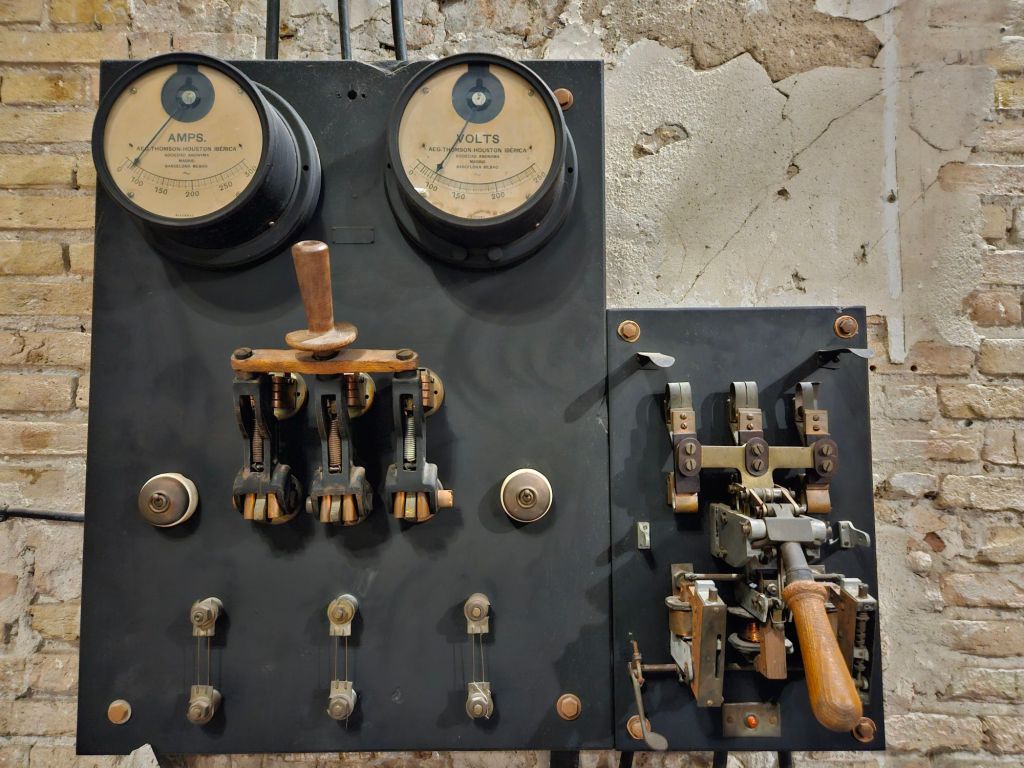
This particular mill was the first electrified mill in the area. As an early adopters of such a new fangled–and expensive–technology, the owners decided to buy only two motors. As a result, the mill is a 3 story marvel of gears, drive shafts, and belts. Rice entered as paddy rice, went through cleaning sieves, hullers, polishers, and baggers, and left as the makings of deliciousness.
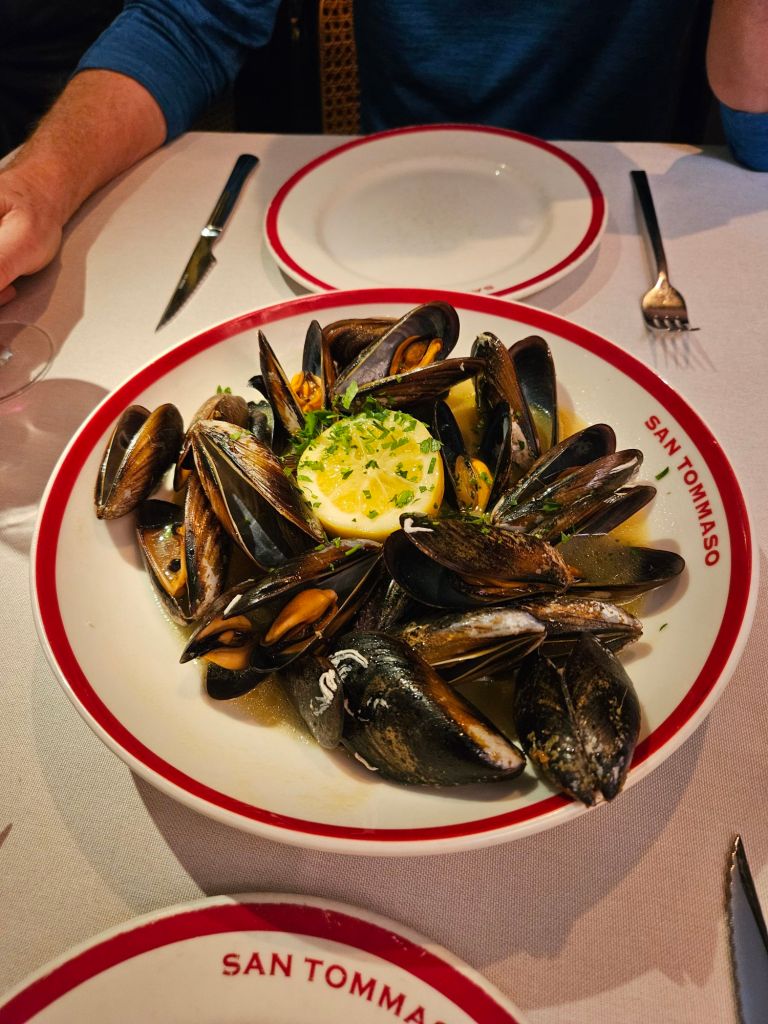
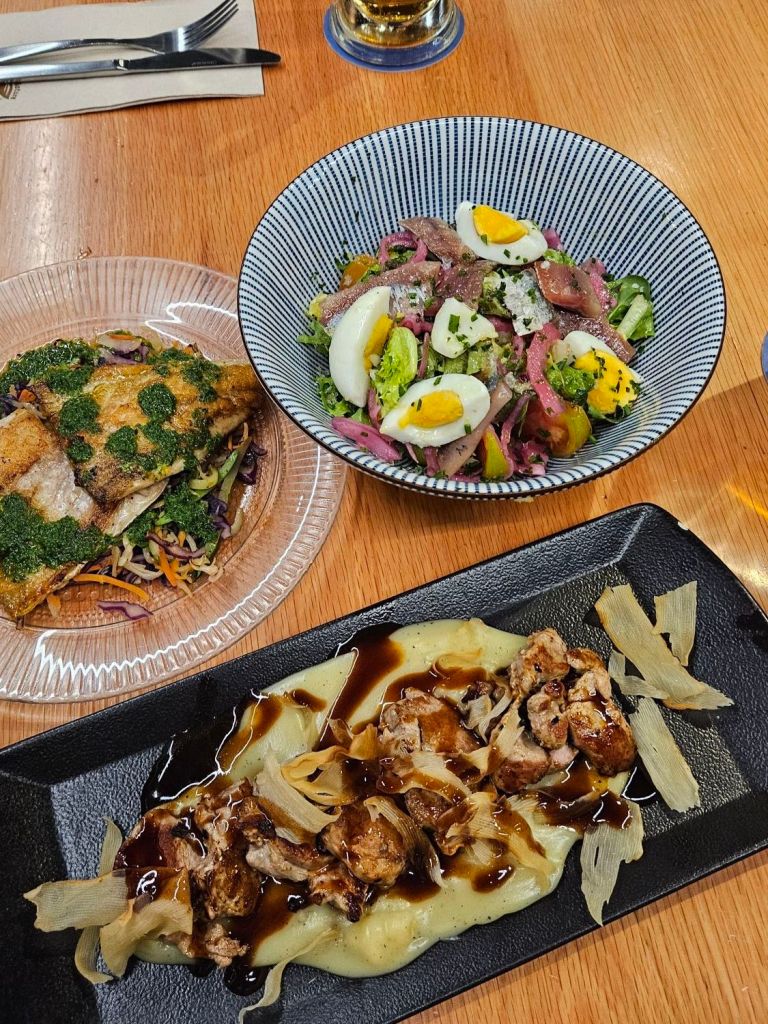
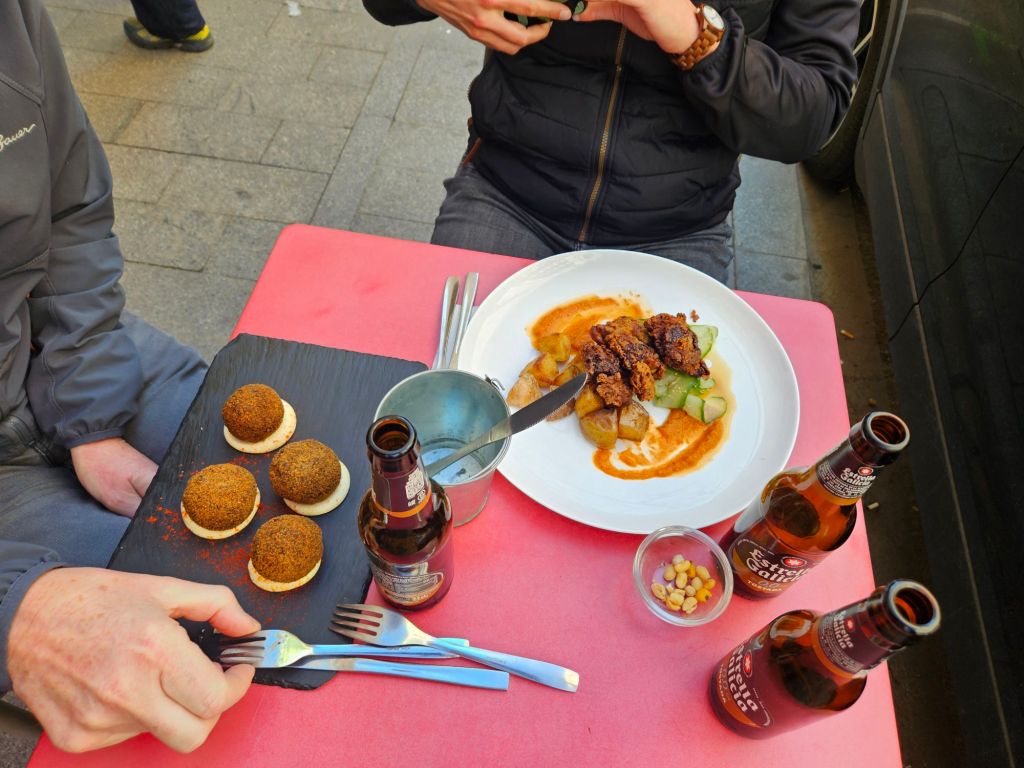
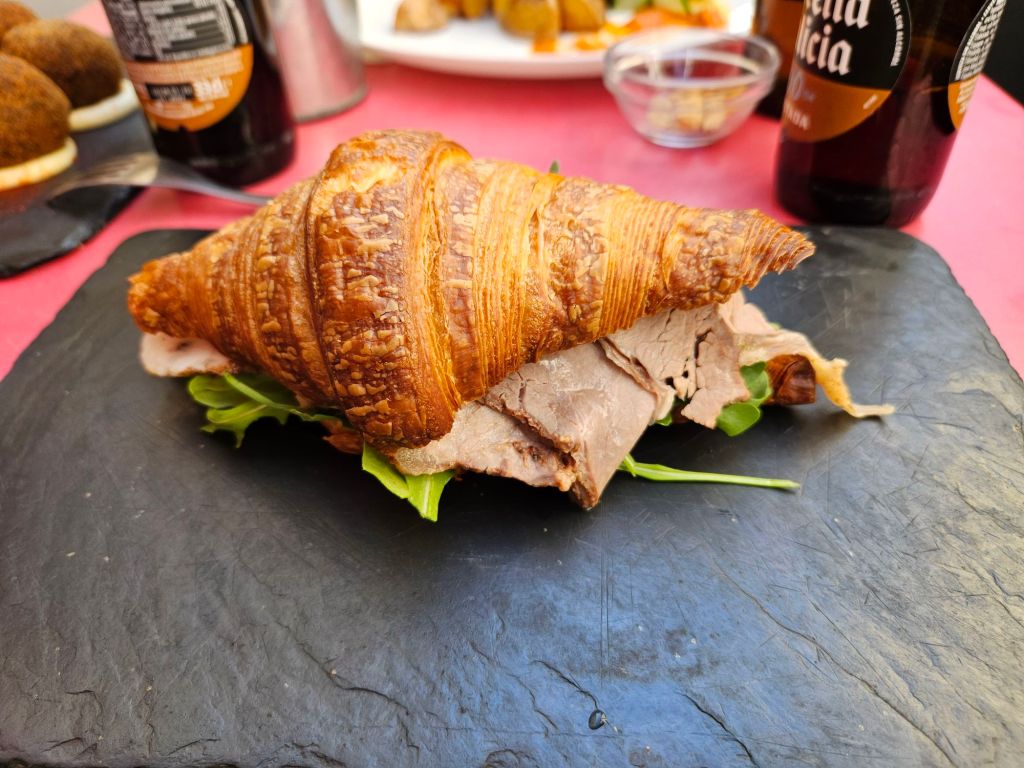
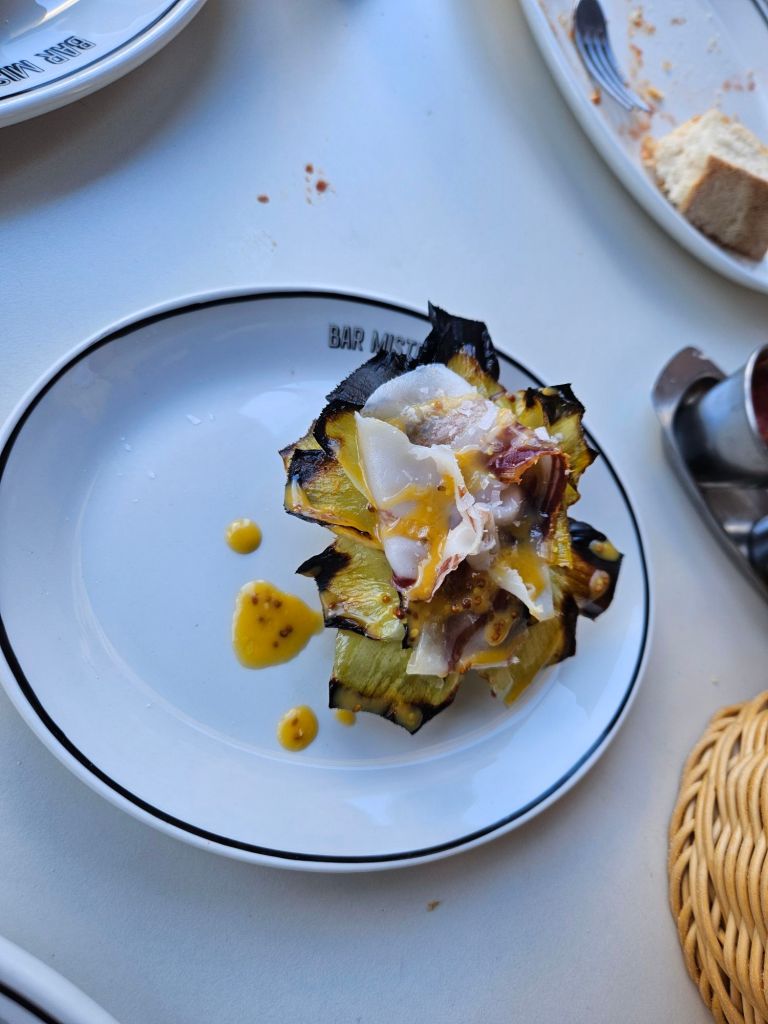
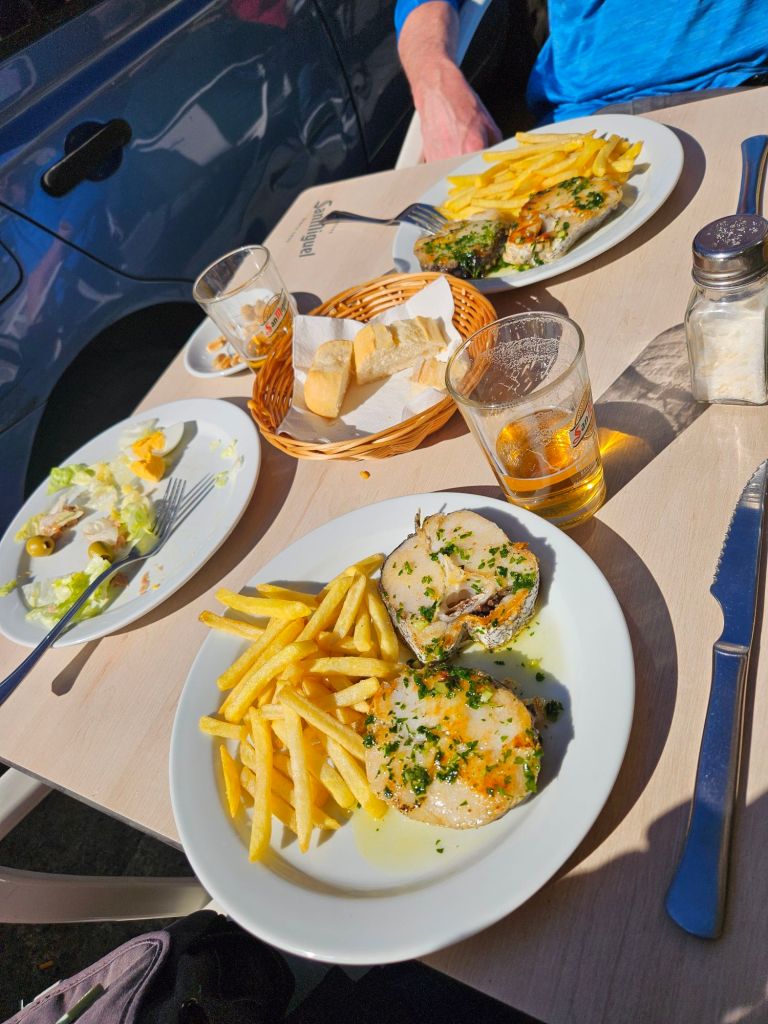
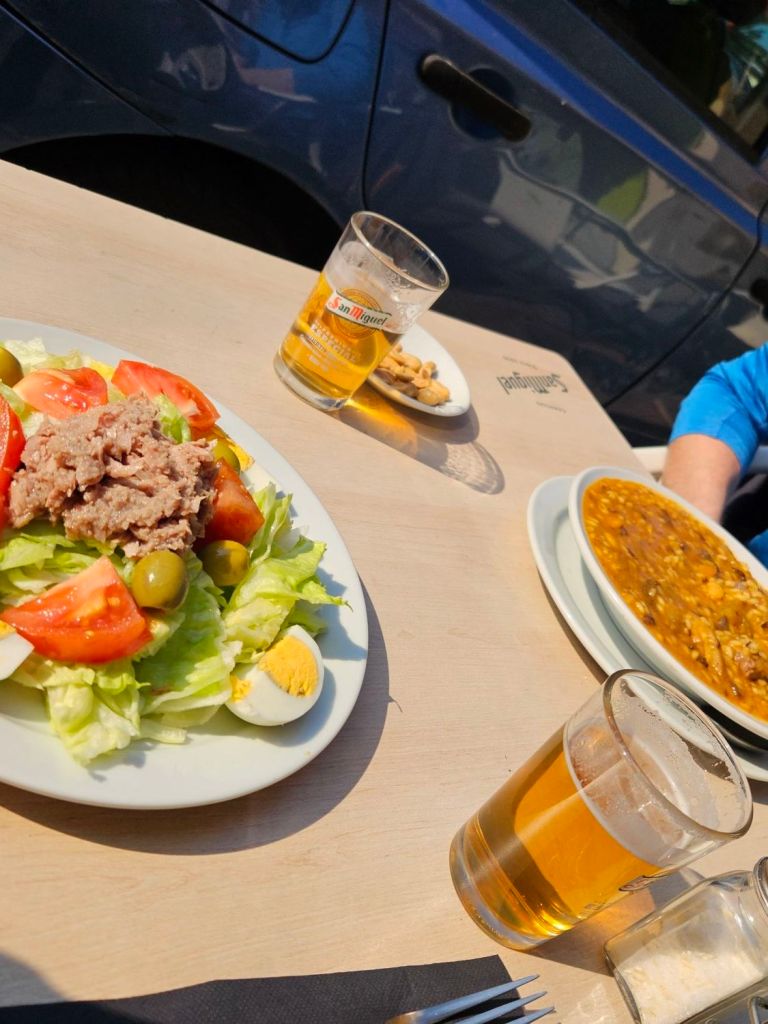
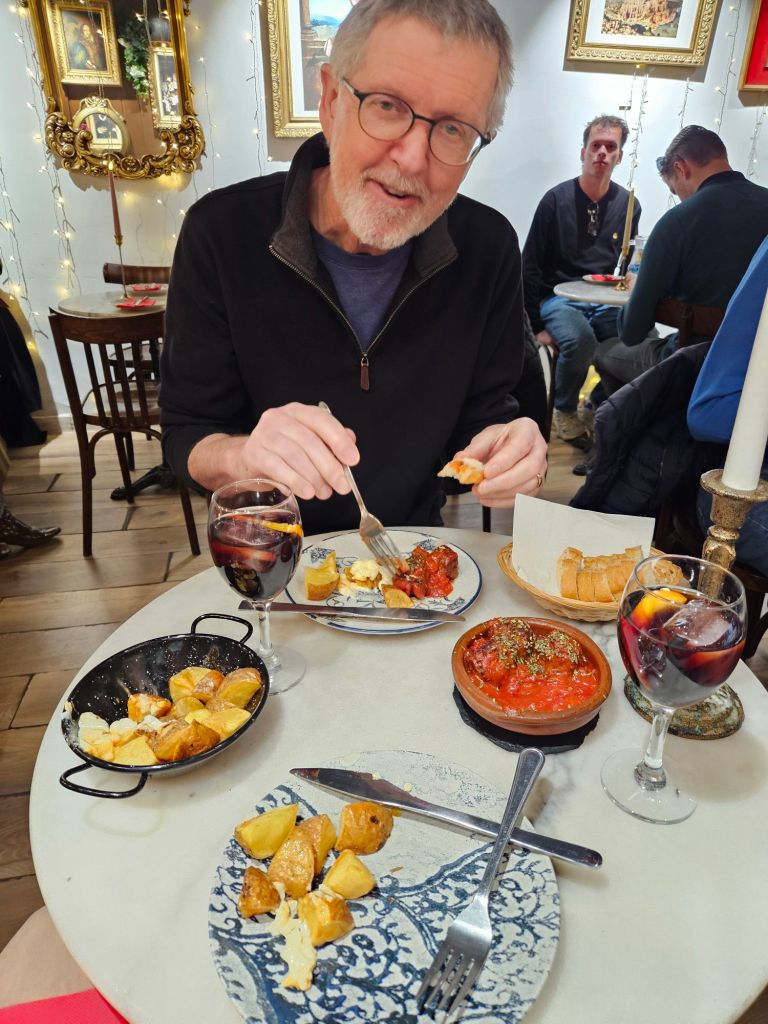
We have been eating (and eating and eating) many yummy things. To recap:
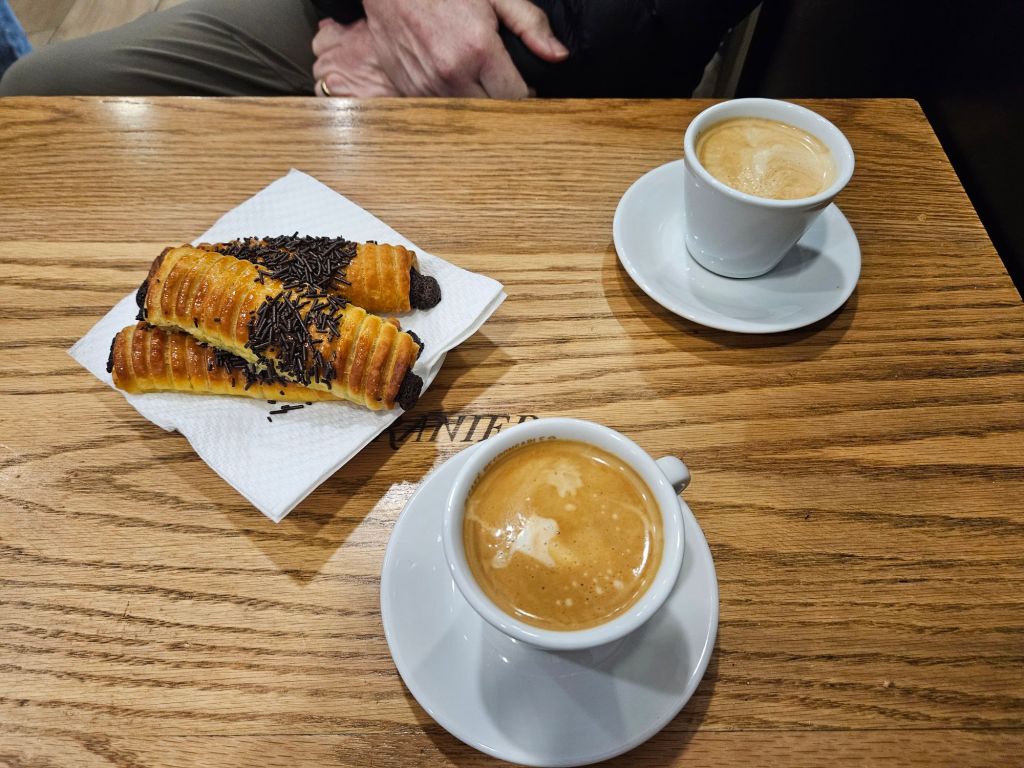
Breakfast pastries
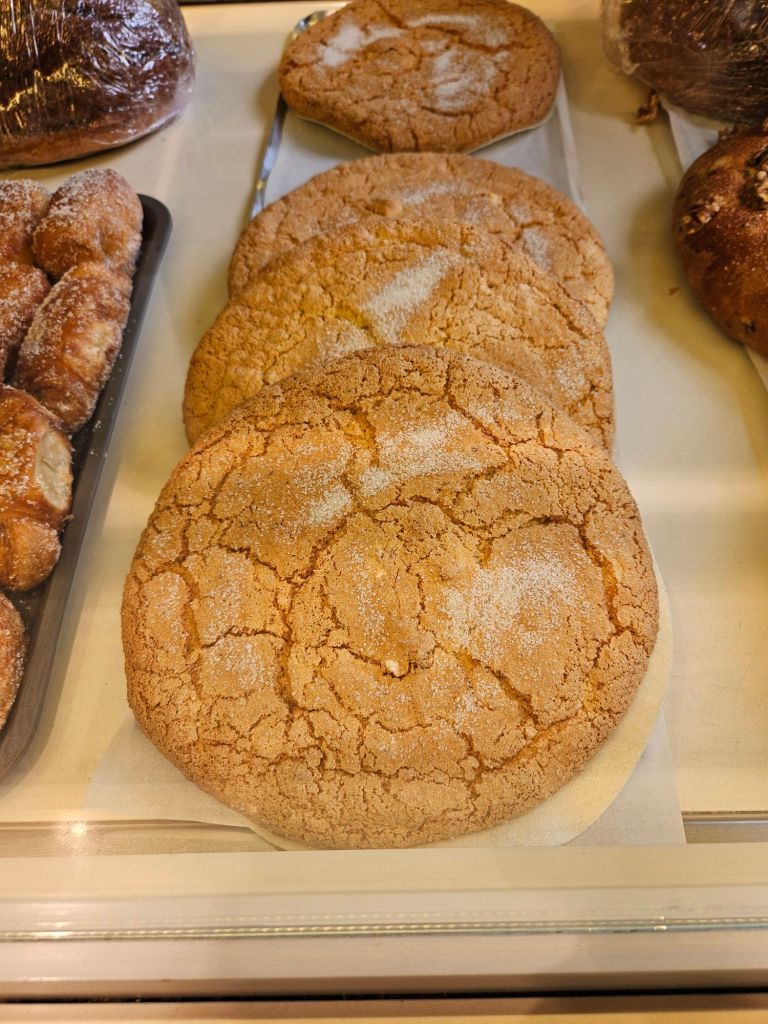
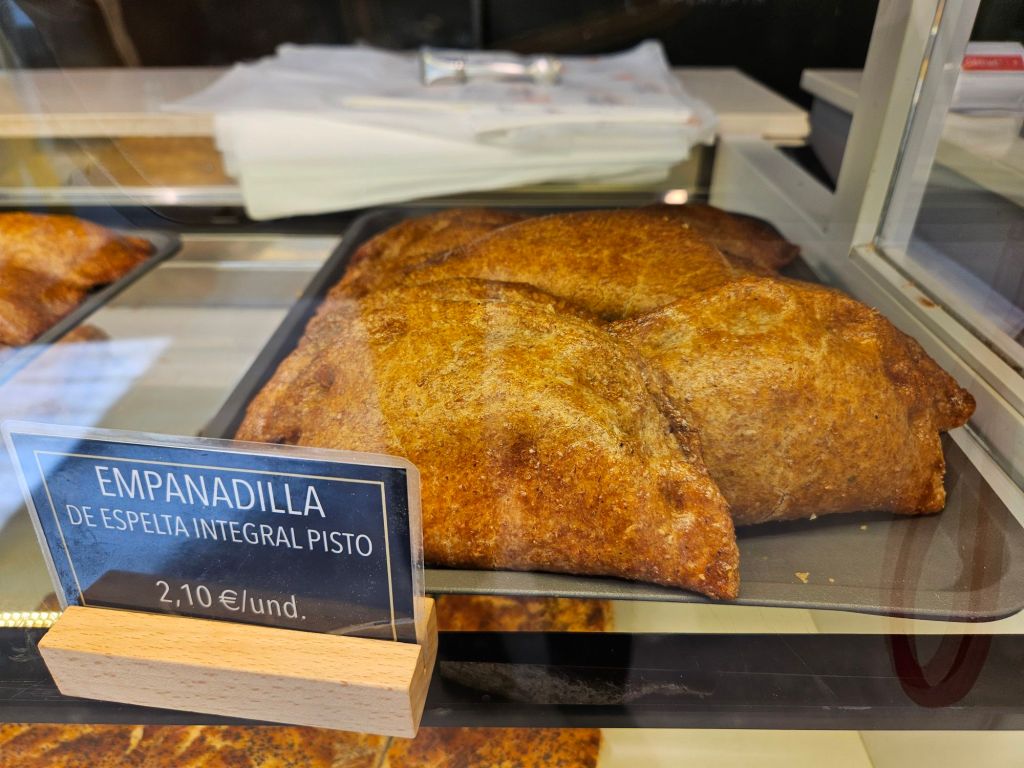
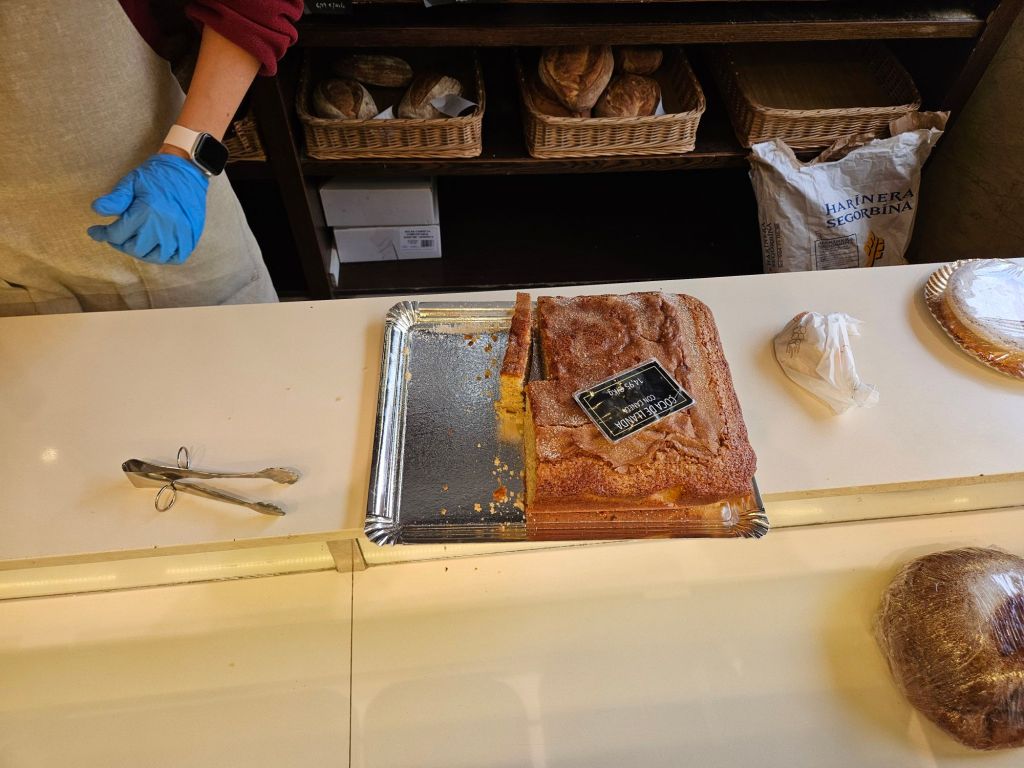
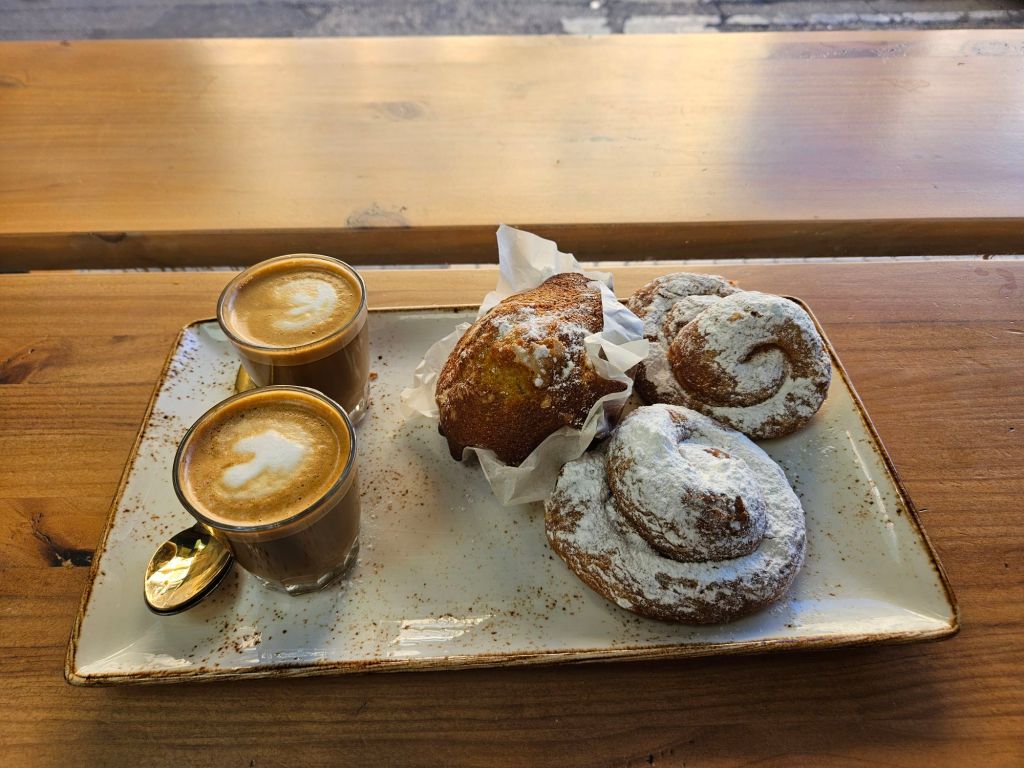
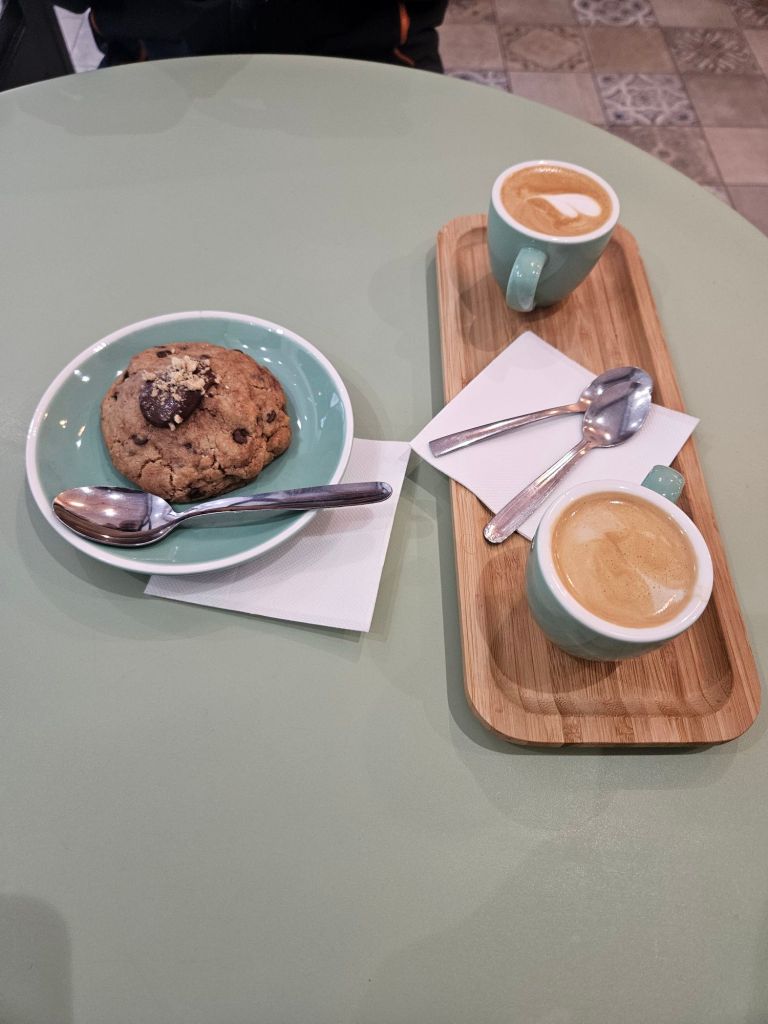
Or second-breakfast pastries, if we have eaten some egg and toast in the apartment before going out. R maintains the croissants and pastries here aren’t as good as those in France, and he may be right, but they’re still mostly pretty tasty. There was a bakery right by the school that made excellent empanadas with a multi-grain crust that managed to be robust without being dry or leathery. They also made delicious tiny croissants and passable chocolate chip cookies. We enjoyed an oversized cookie that I thought would be an almond meringue, but was more like a snickerdoodle with almond flour. Very sticky base. We were trying to peel it off the paper, and leaving quite a bit behind, before I realized the paper was rice paper and edible.
Our (and València’s) favorite coffee is the cortado, espresso with a little steamed milk usually served in a glass.
Fartons and horchata
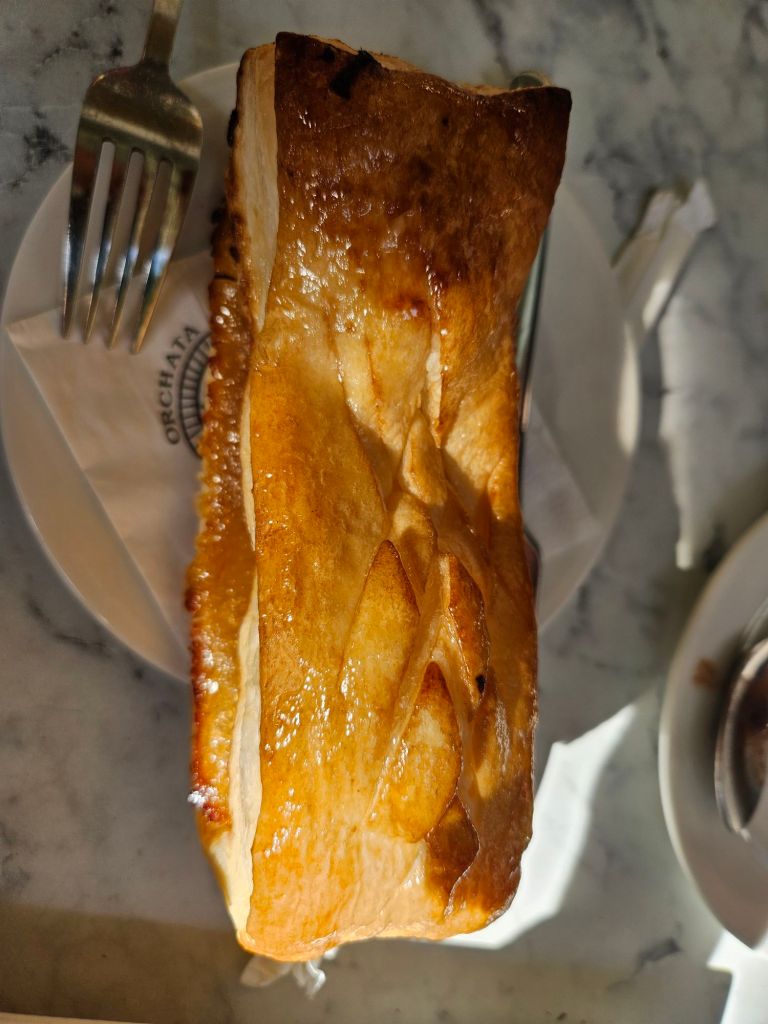
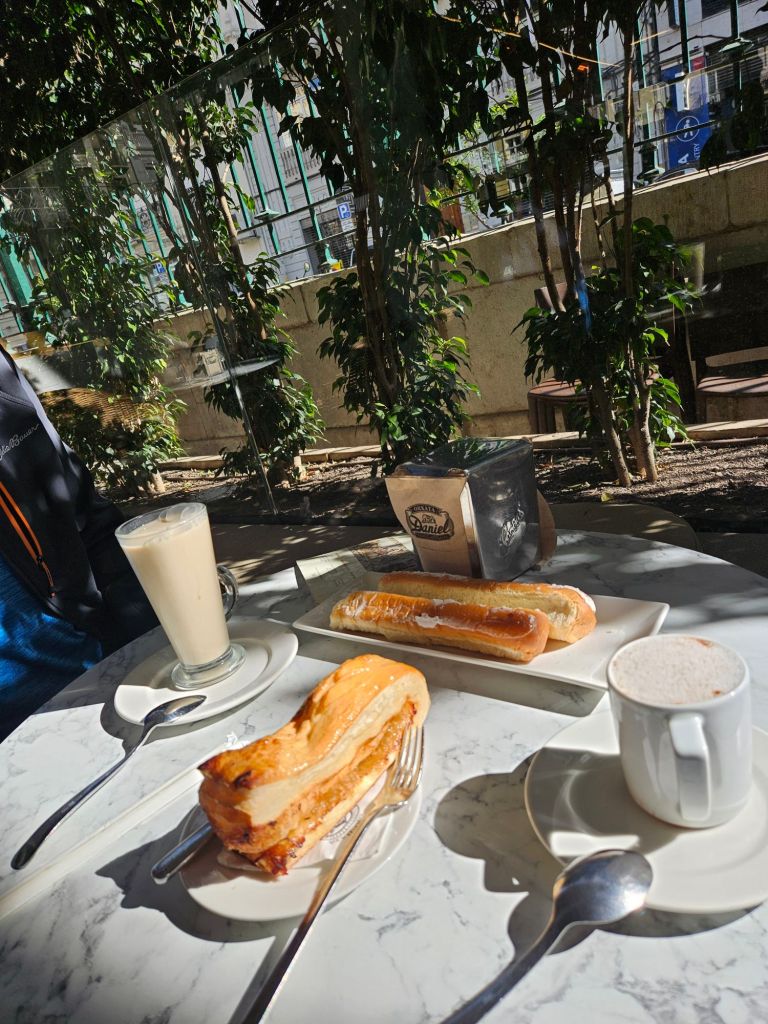
If there is a signature sweet of Valencia it is a farton, usually served with a cup of horchata. Honestly, didn’t really work for us. A farton is a stick shaped pastry that resembles, more than anything else, a very cottony hot dog bun, dusted with powdered sugar. They are meant to be dunked in horchata, which here is a sweetened drink made from ground tiger nuts and cold water (in Mexico, horchata is made from corn). I can see how maybe this would be a nice sweet in very hot weather (its very light in the stomach), but otherwise I feel like there are better options.
The fartons and horchata are in the back and on the left. The foreground is a folded puff pastry and a horchata chocolate combo.
Bocadillos
A signature Spanish snack. Very plain crusty bread (think baguette) made into a sandwich with thin shavings of ham. Maybe a thin slice of cheese. Filling, and the ham is excellent, but overall it’s very dry and hard work. No pic here.
Tapas and “El menu”
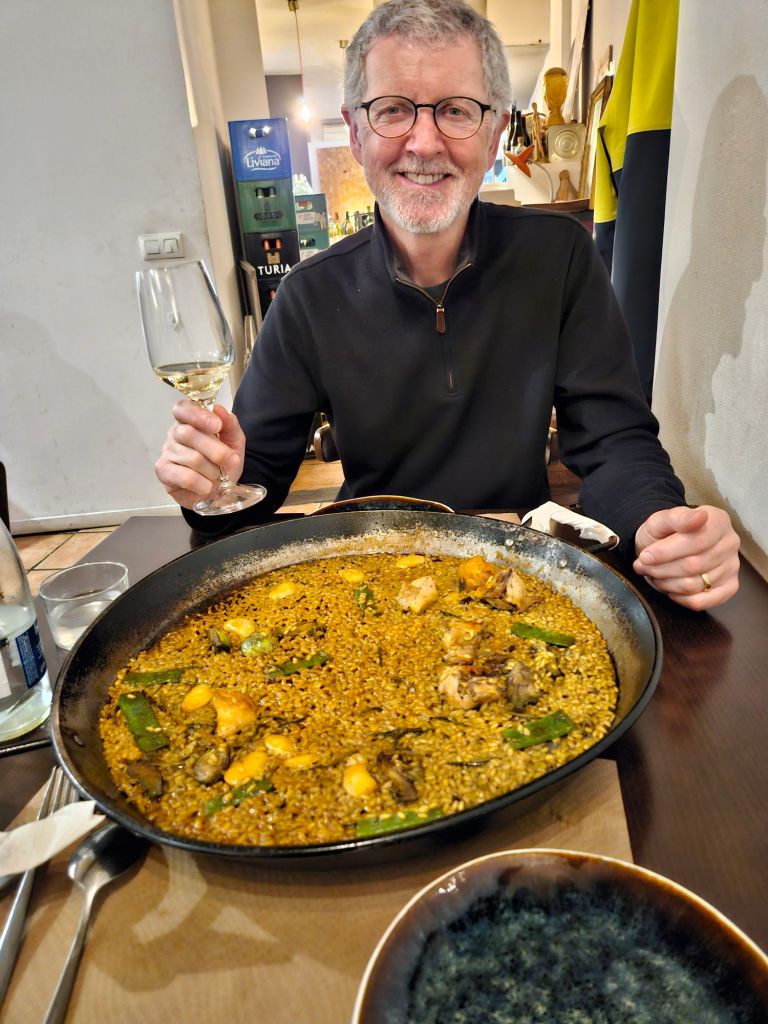
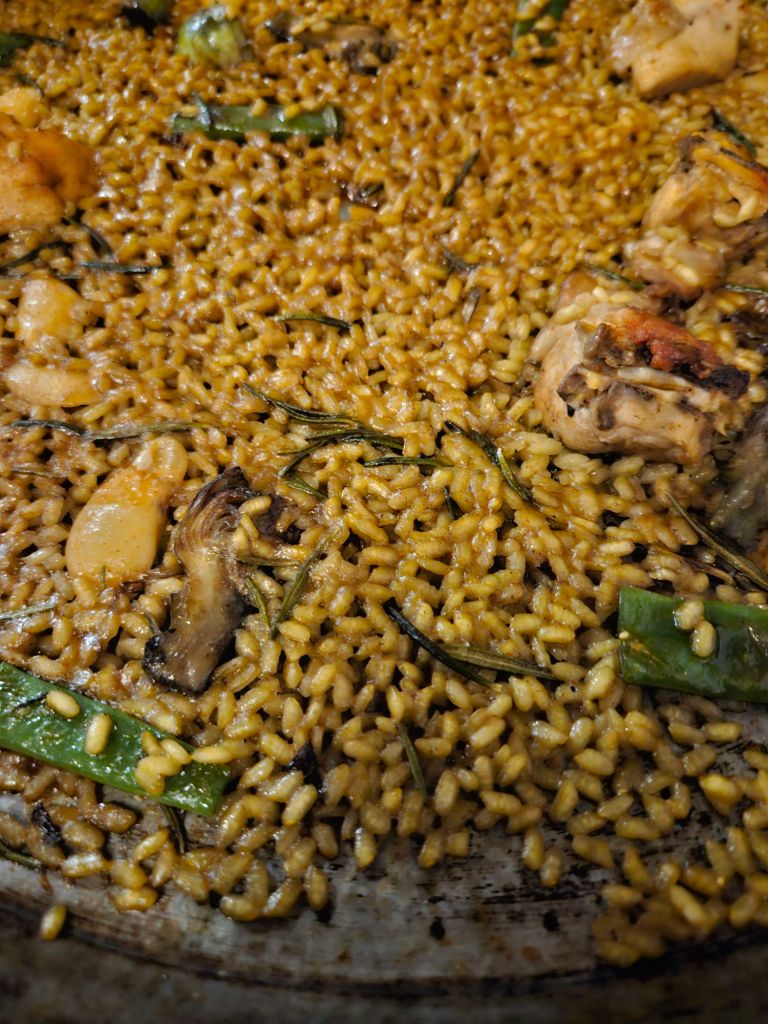
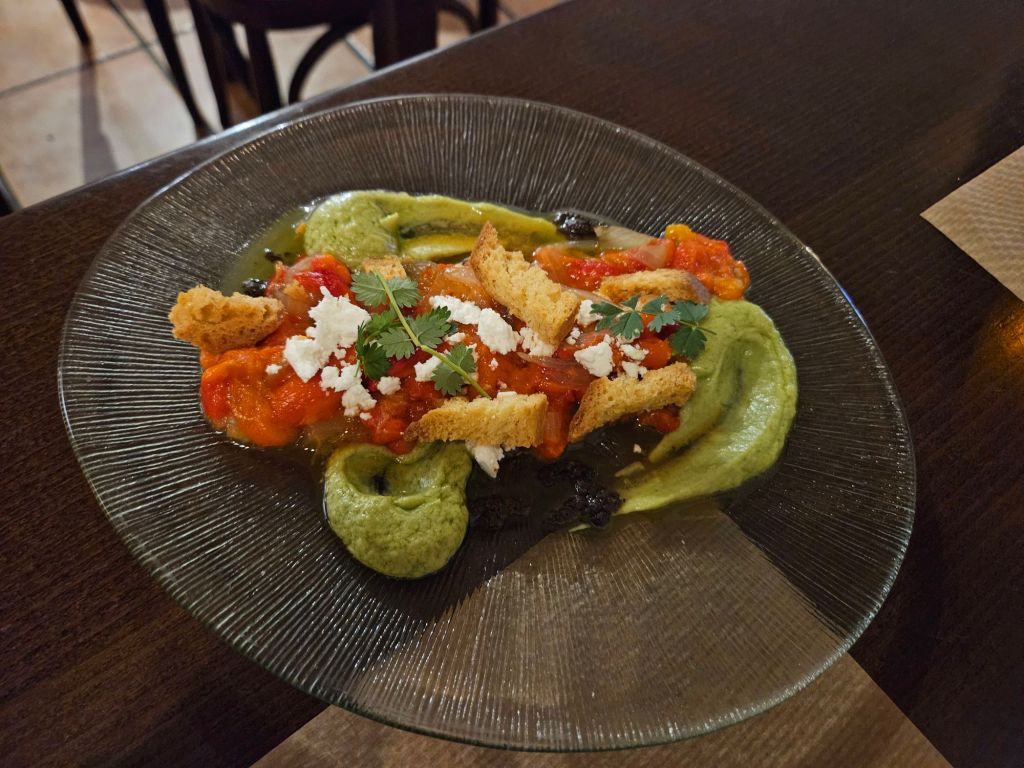
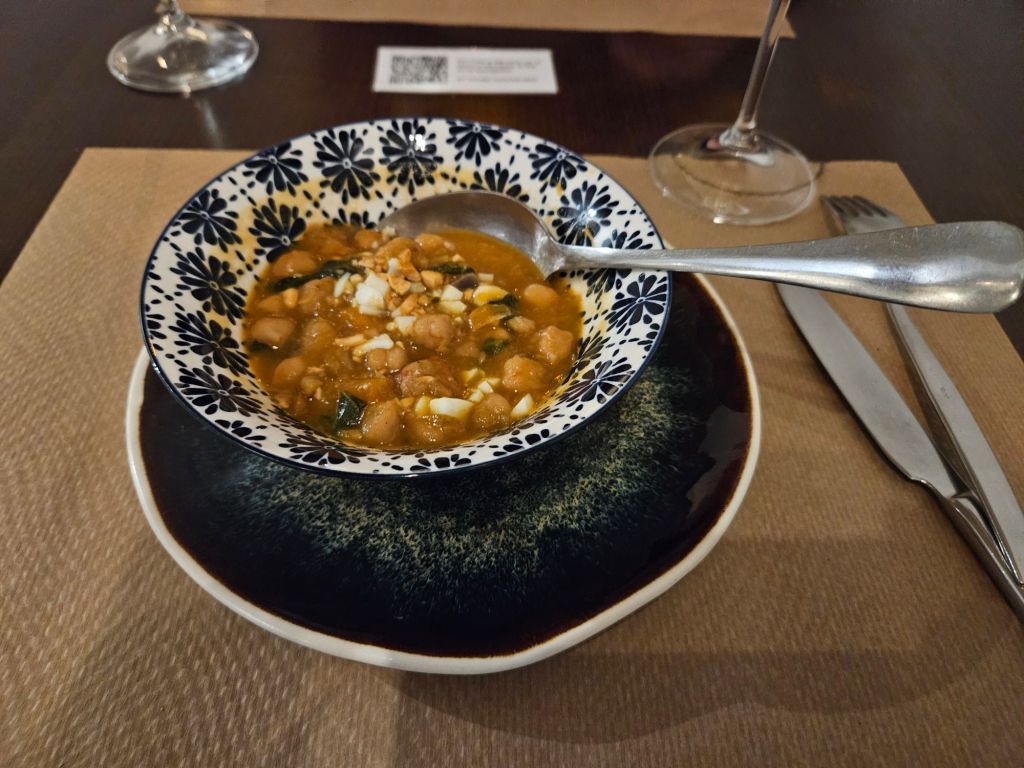
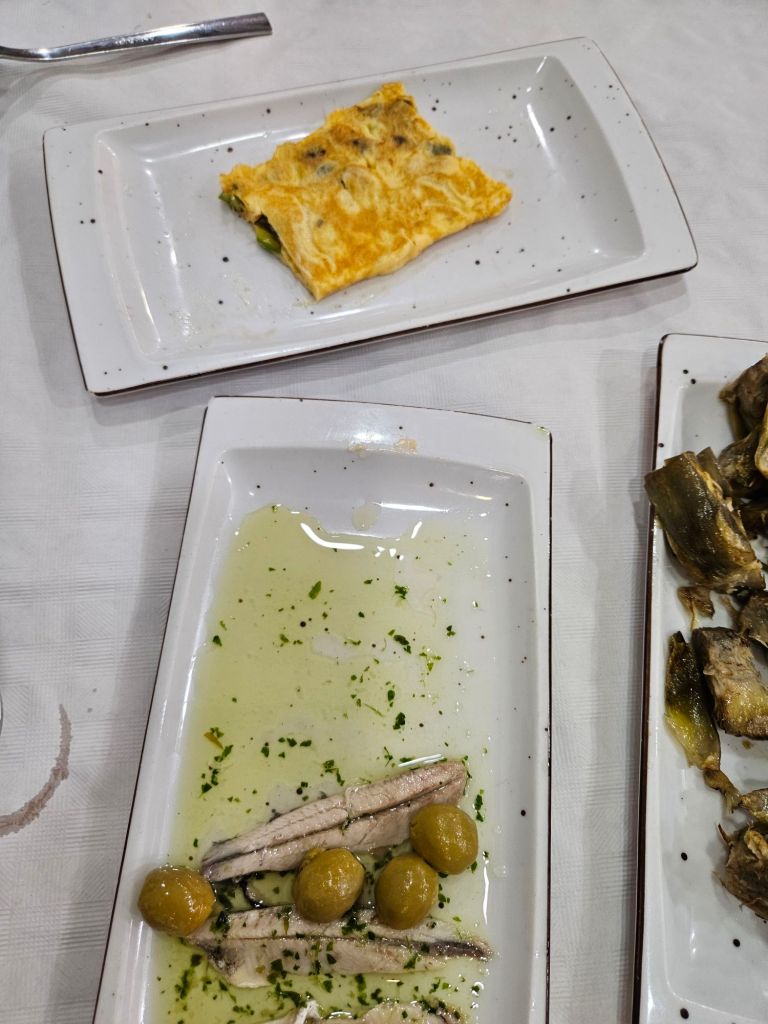
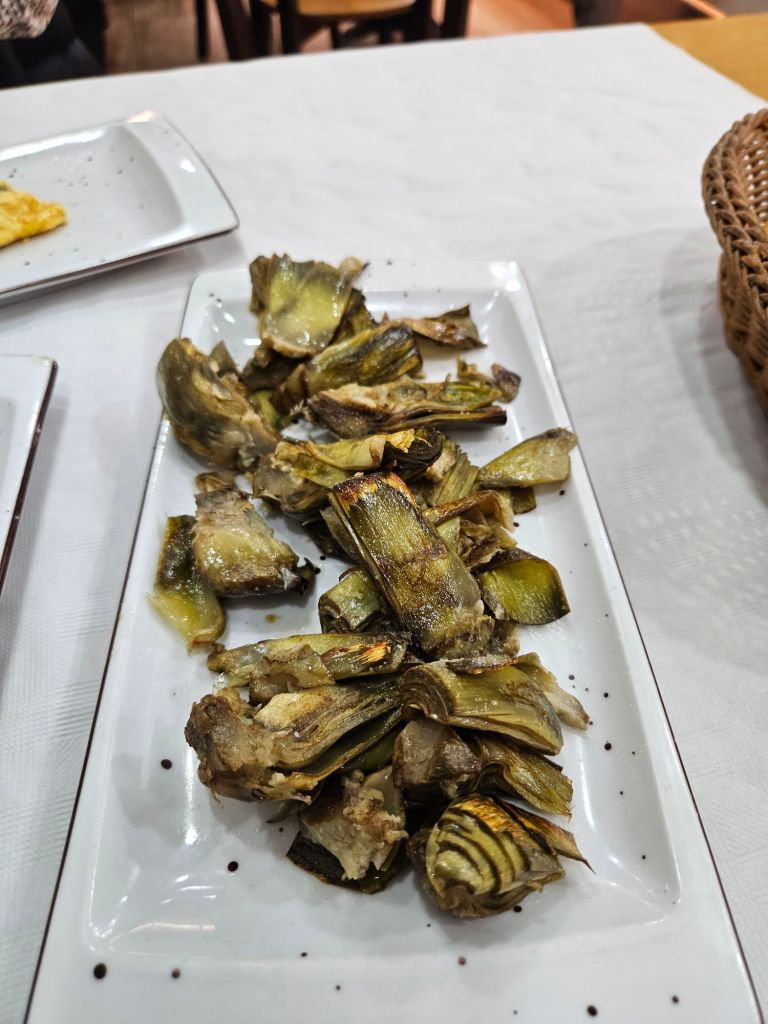
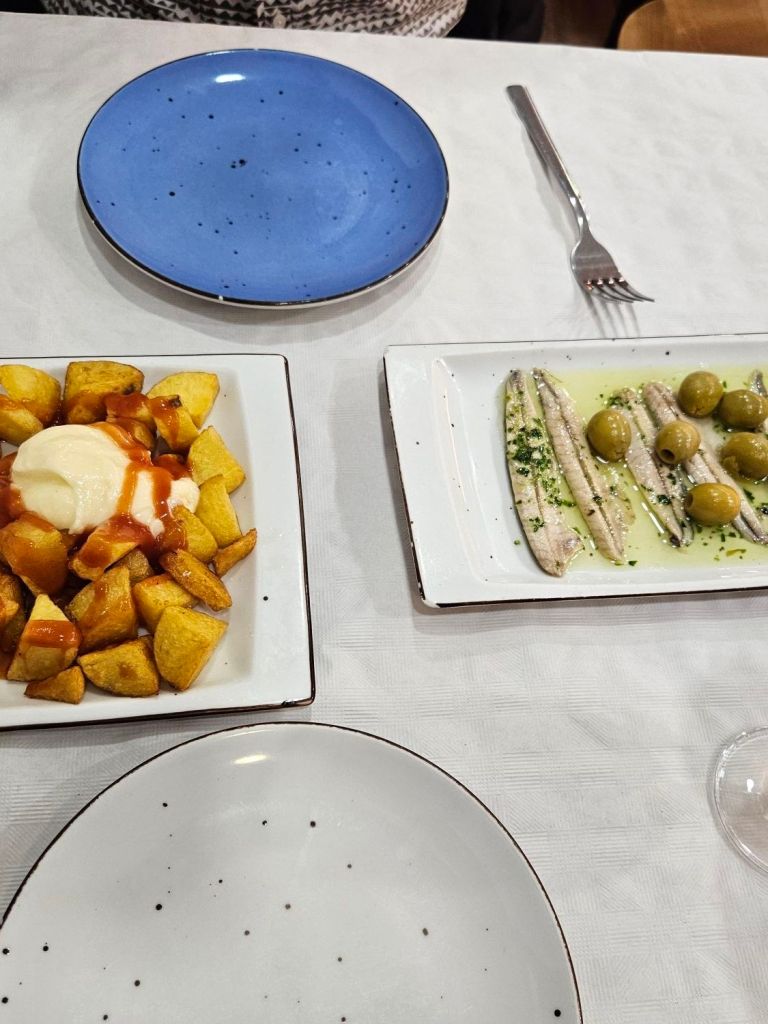
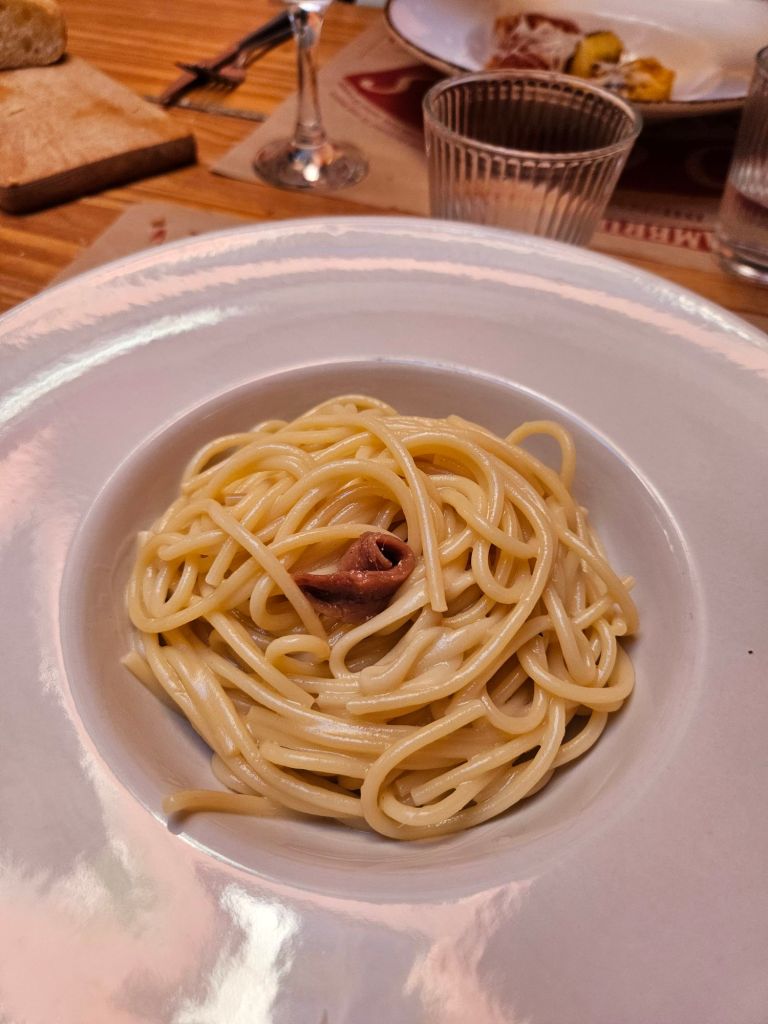
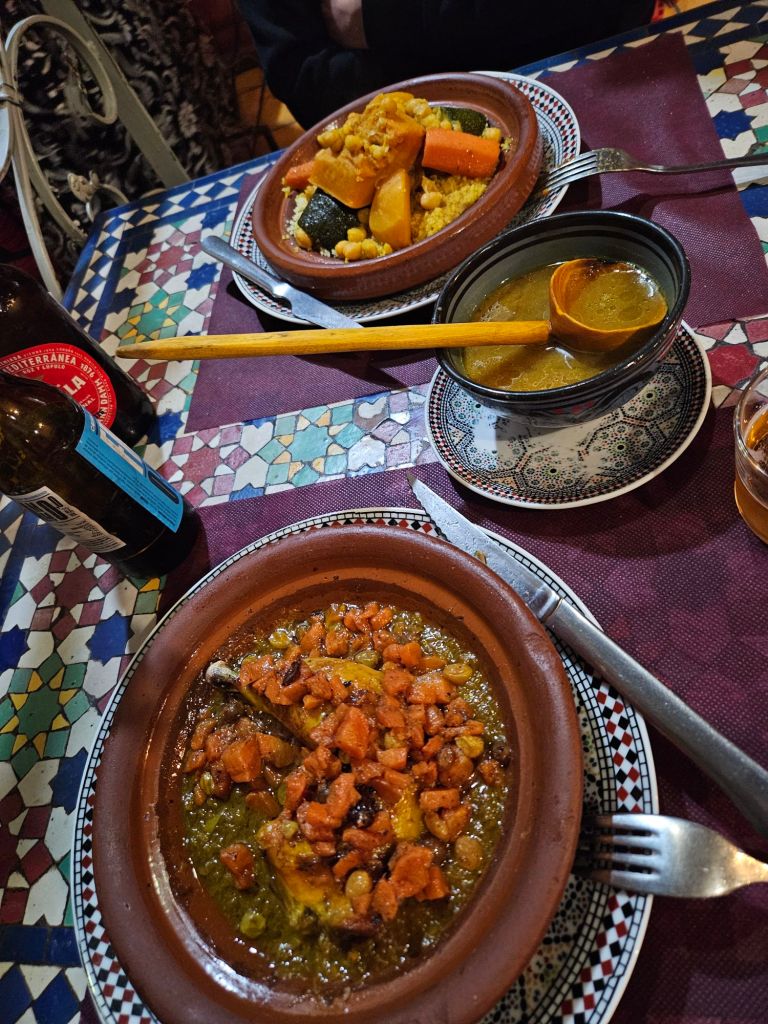
And here’s where things start getting especially yummy. “El menu del dia” is the preset lunch option at restaurants. Usually 2 or 3 courses, with a drink included. A budget friendly way to eat a variety. Artichokes, asparagus, bocarones, patatas bravas (roast potatoes topped with aiolli and spicy red sauce), olives, paella. And in the non-Spanish, but still excellent, category, are pizza Napoli, Moroccan tagine, and pastas.
Cheesecake
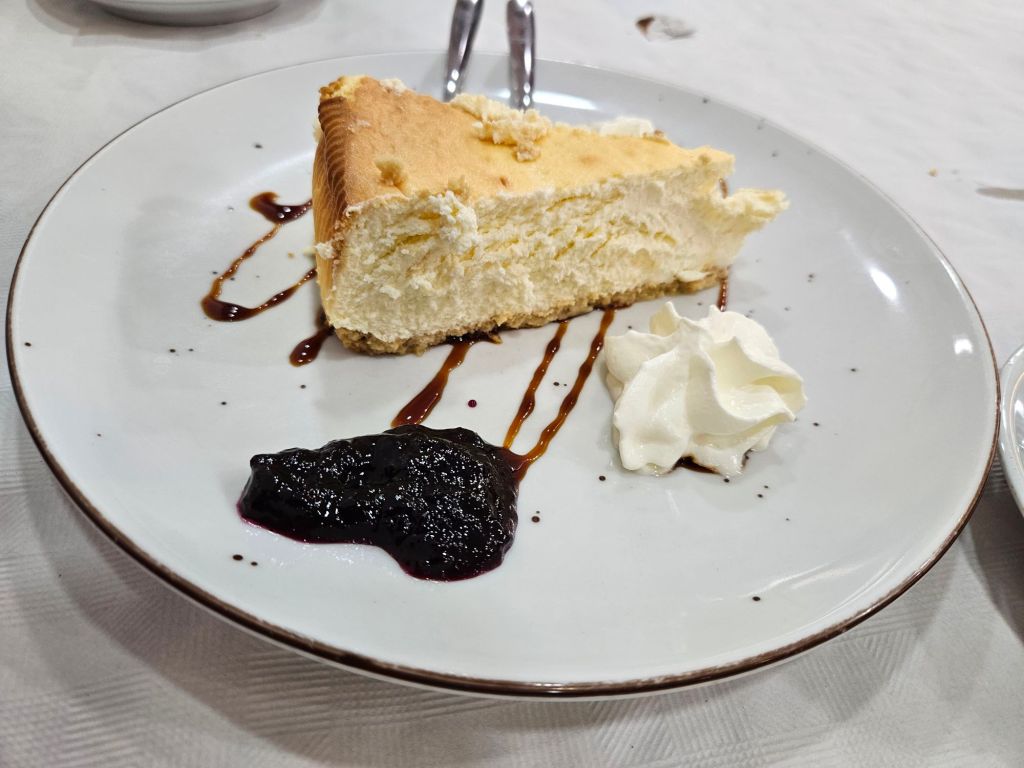
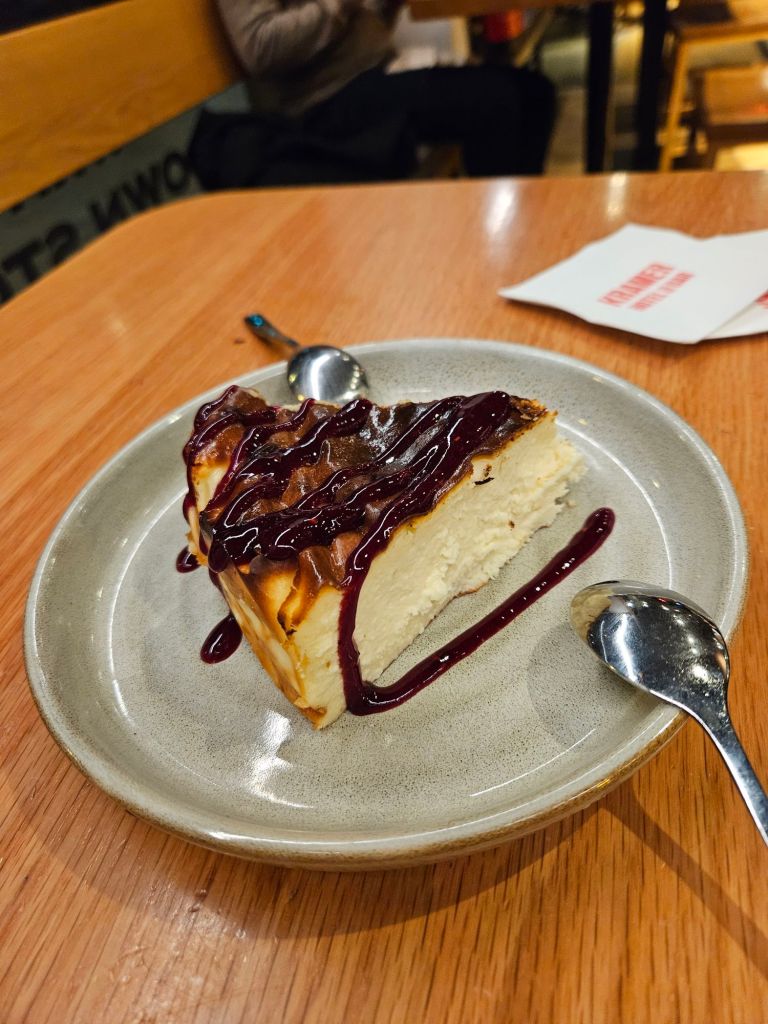
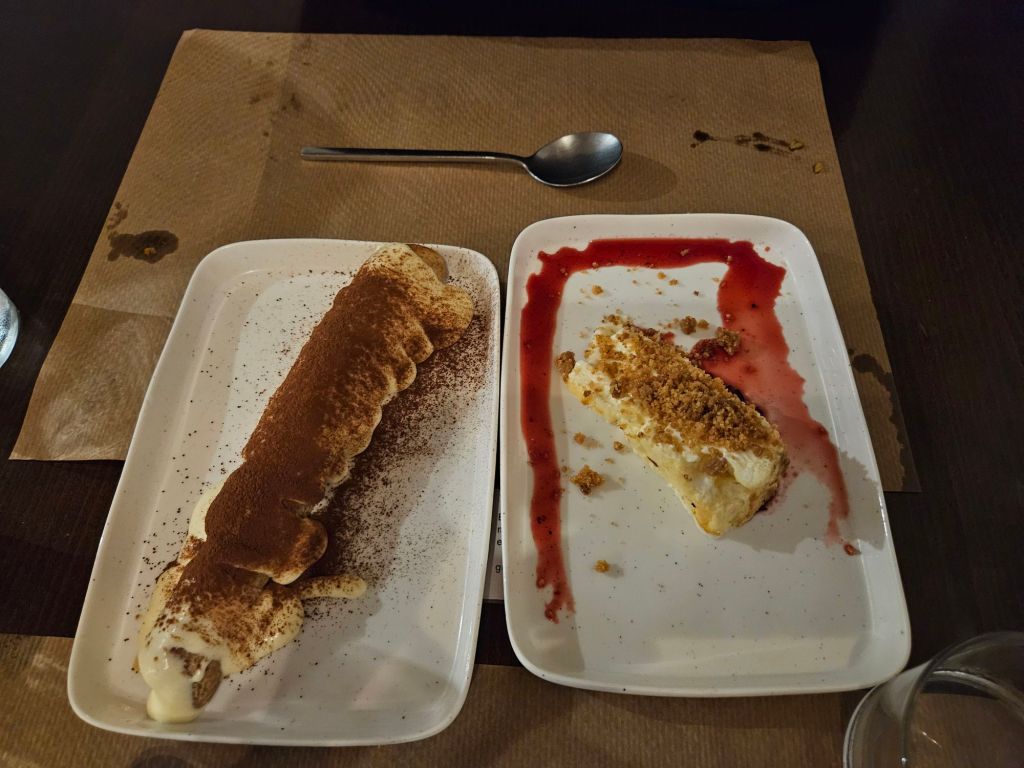
Cheesecake is a big thing here, and one of R’s favorite things. Usually it’s made without a crust. Basque cheesecake is usually cooked until very brown on top, while other styles are judged by how much they ooze across the plate when sliced. R is trying as many as he can squeeze in. Still hasn’t found the perfect one, so experimentation will continue.
On the left, above, is the best use of a farton I’ve tried–fartonmisu, a tiramisu made with a farton. Yum.
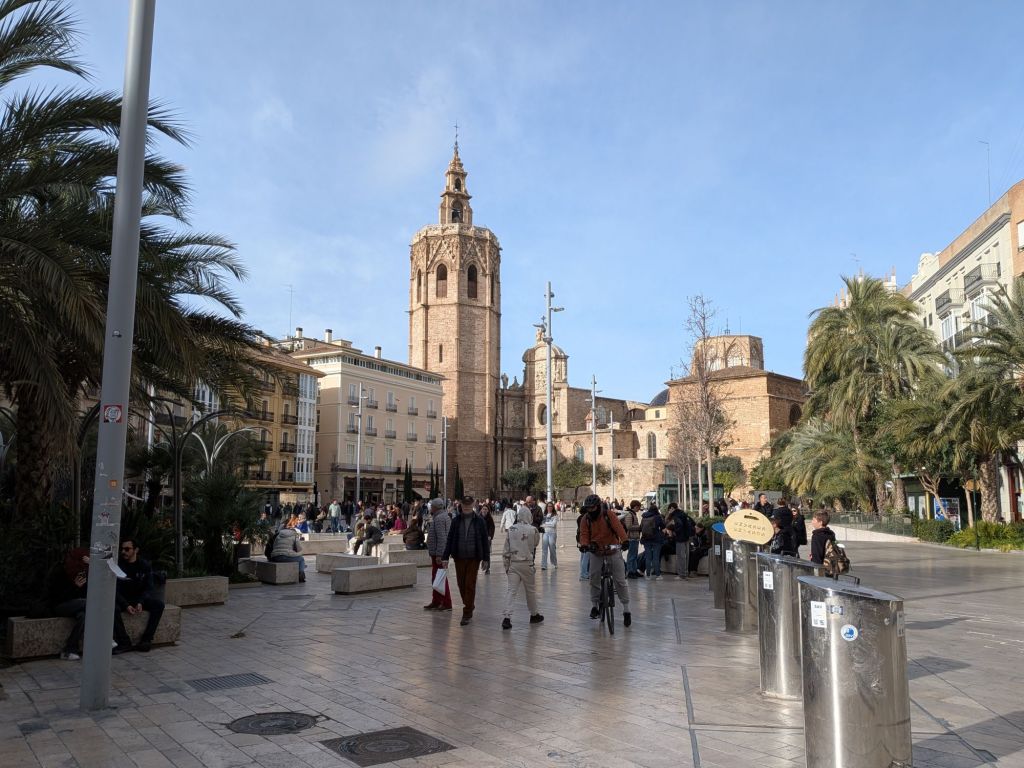
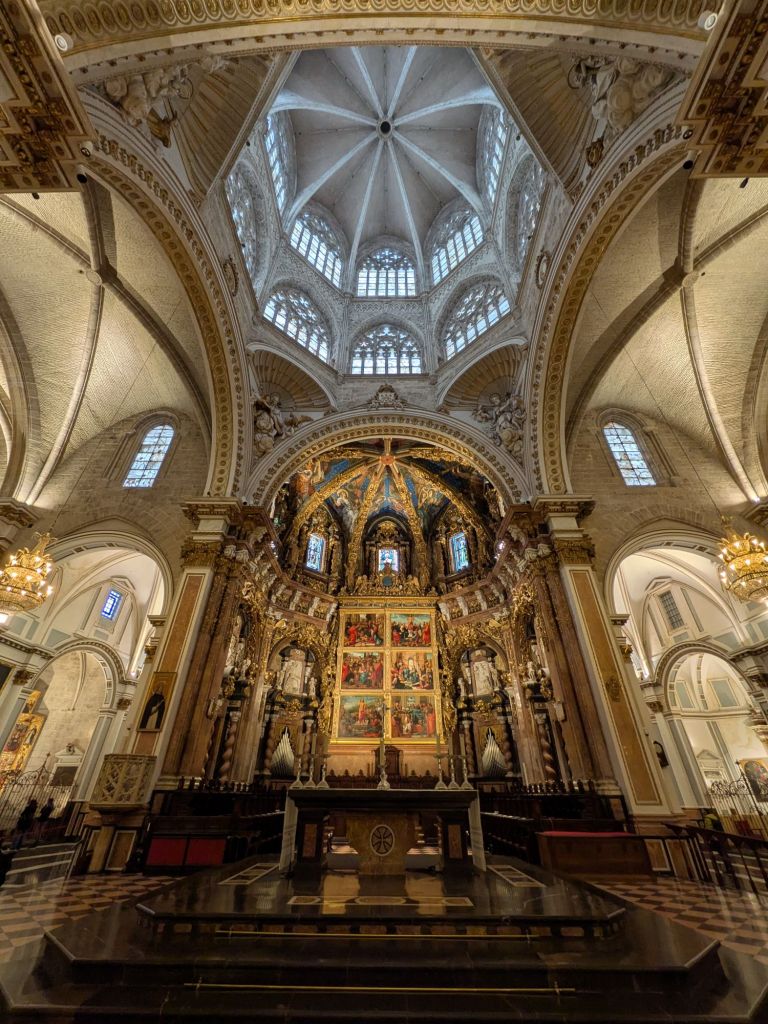
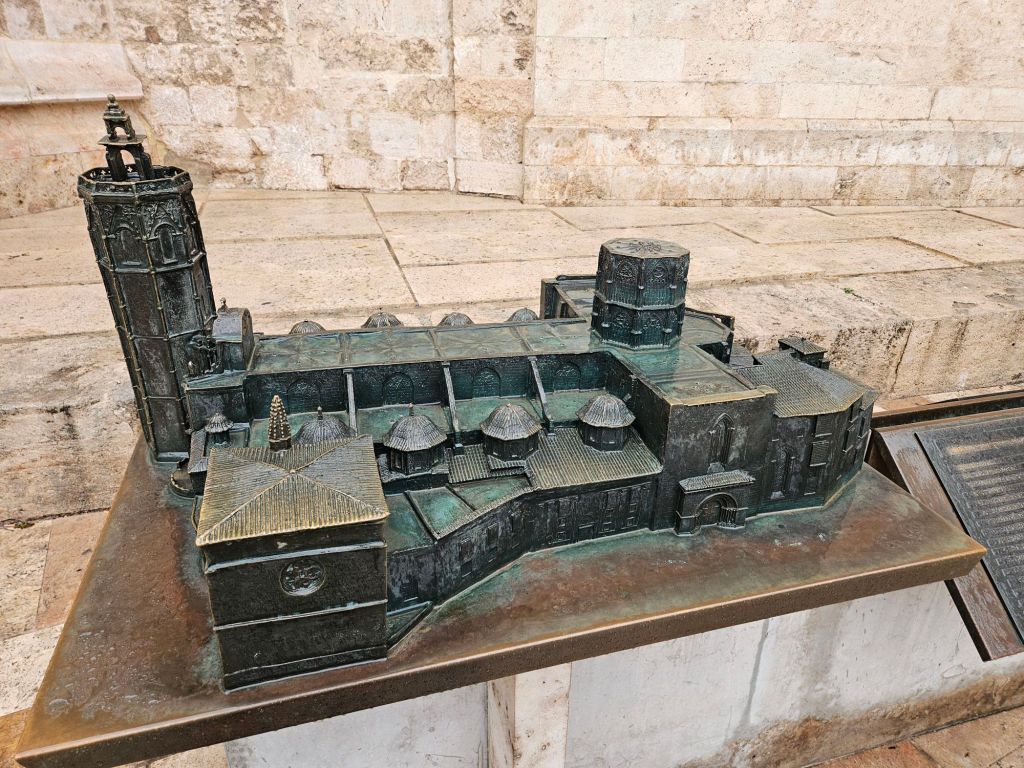
València’s huge Gothic cathedral is really three sites – the cathedral itself, the museum within it, and the bell tower. The latter is supposedly a must-do for healthy thigh-burn and views of the Cuitat Vella; alas the weather, cloudy the past few days, has turned to rain and they’ve closed it.
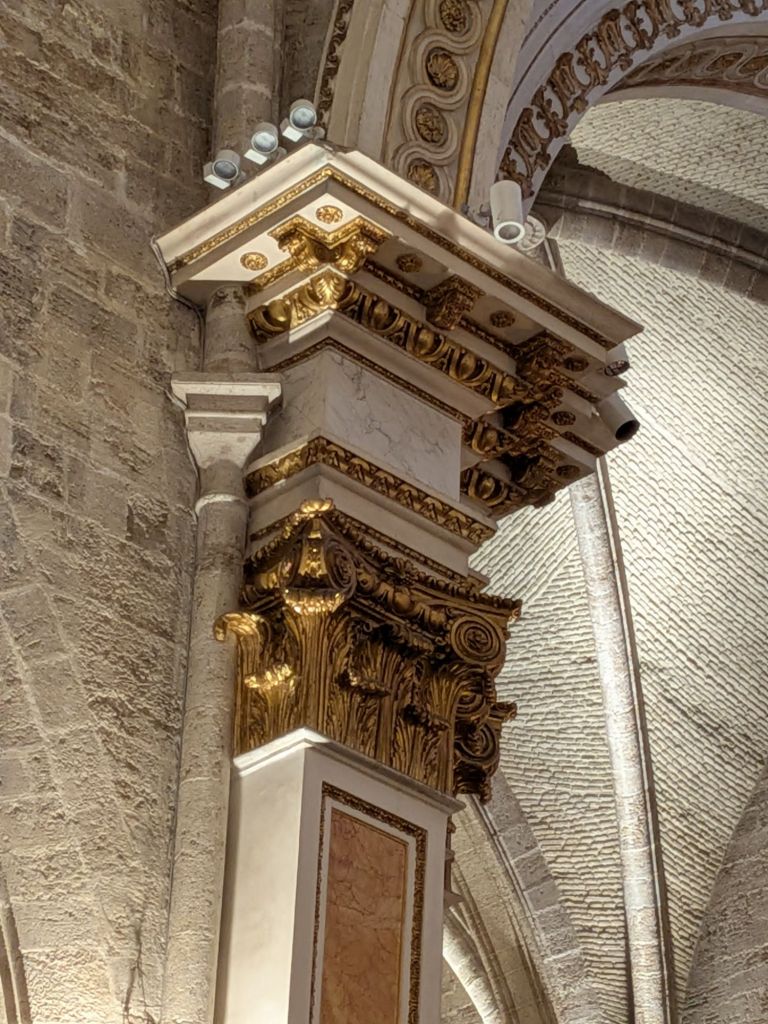
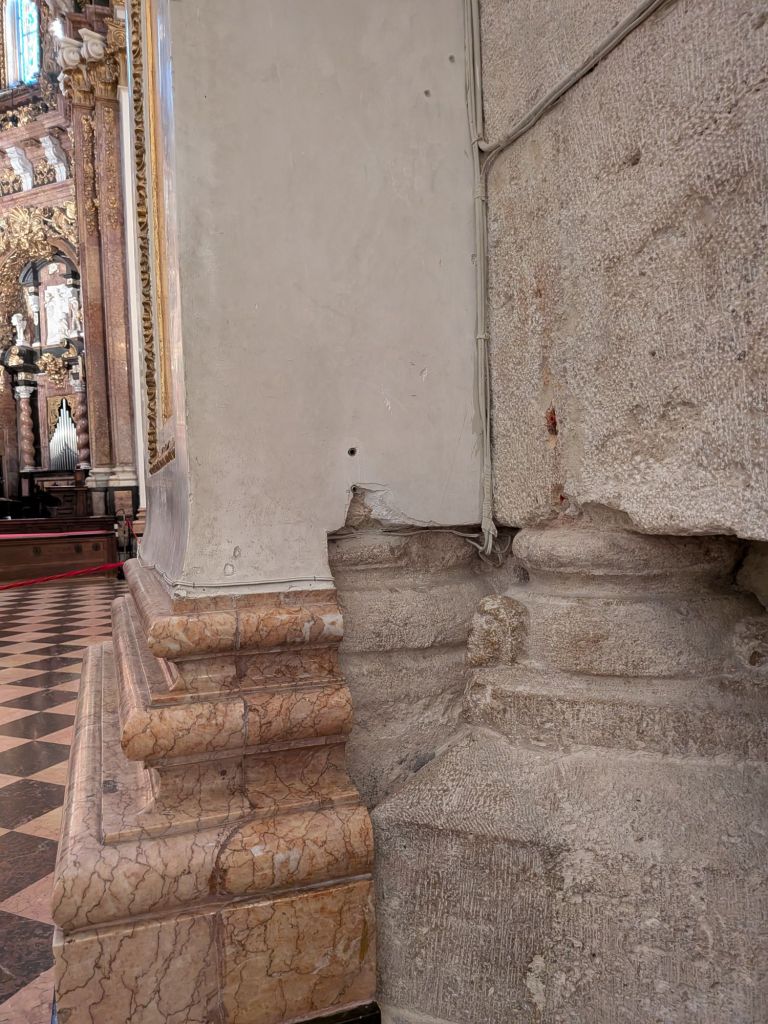
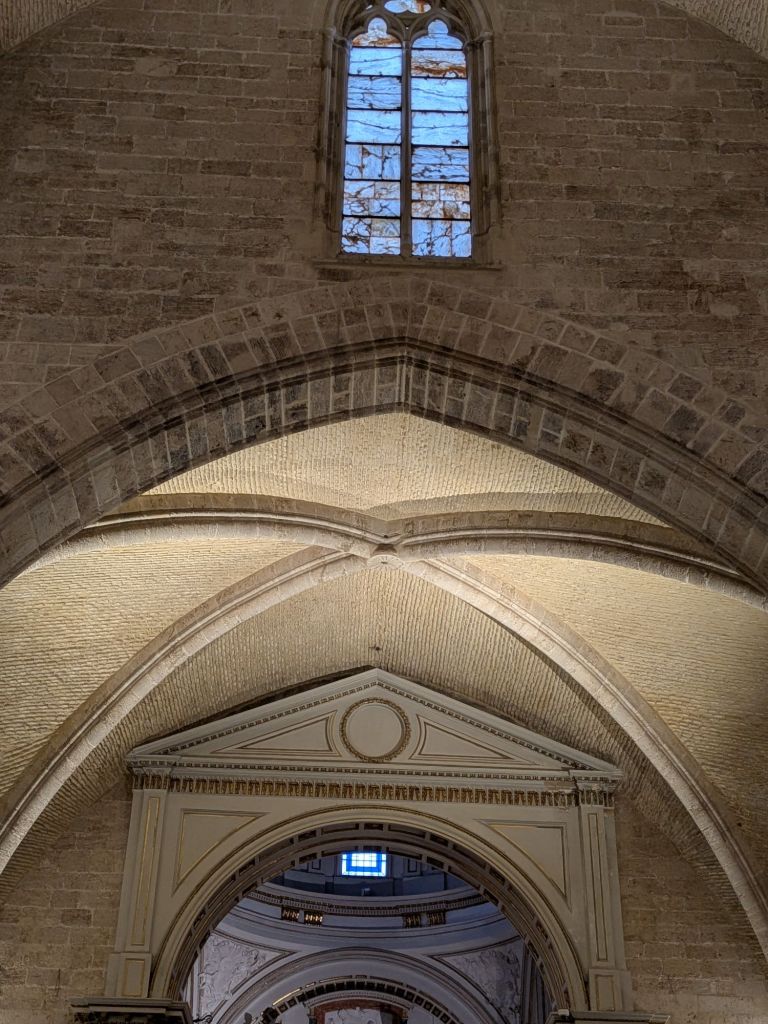
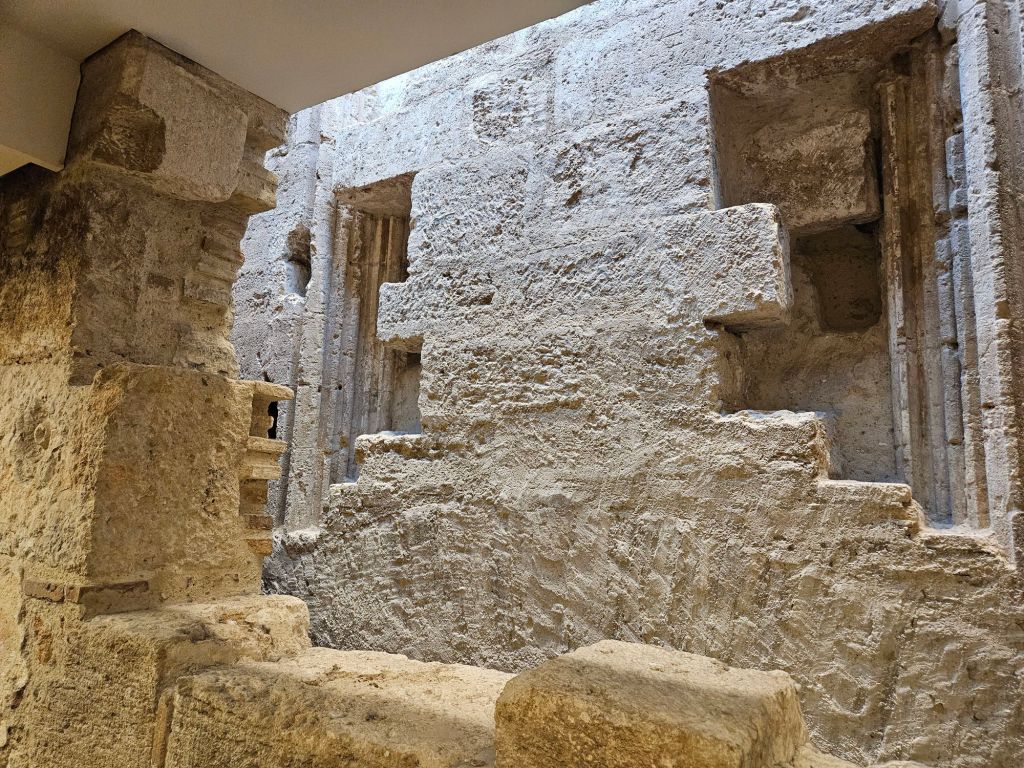
The cathedral itself is (deep breath) an 18th C Neoclassical renovation of a 13-16th C partly Romanesque but mainly Gothic structure built over a 10th C mosque built over a 6th C Visigothic church built over a 1st C Roman temple. (Dates approximate. The smart money says there’s a 50,000 BCE Neanderthal cafe and gift shop further down, still waiting to be discovered.)
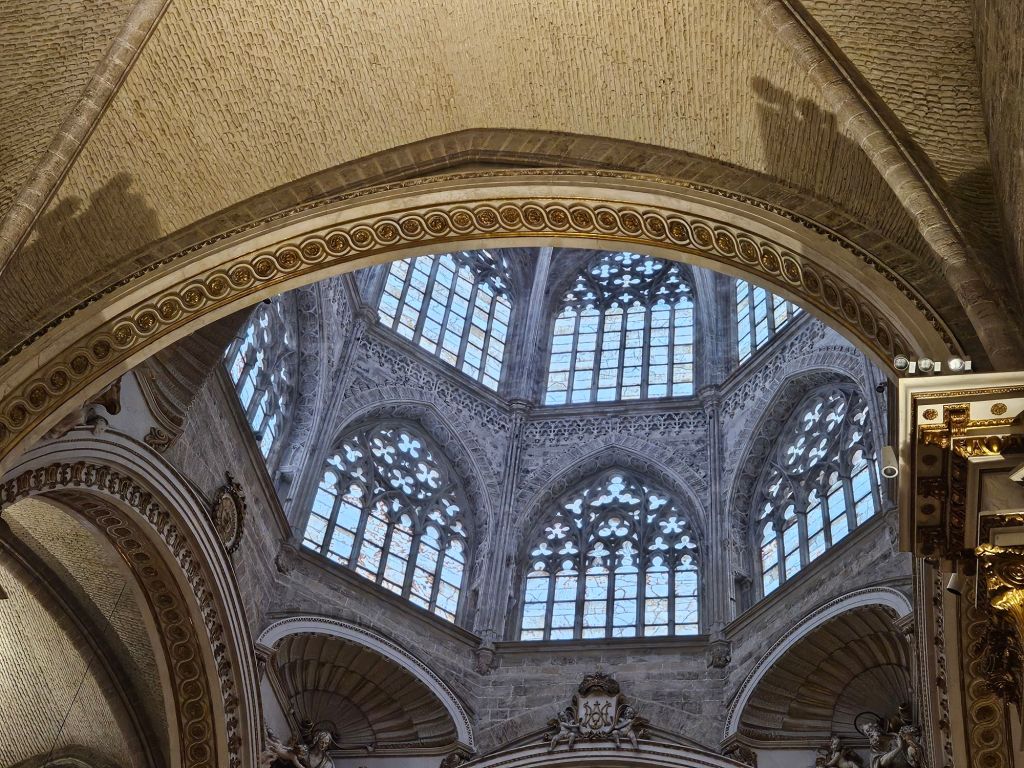
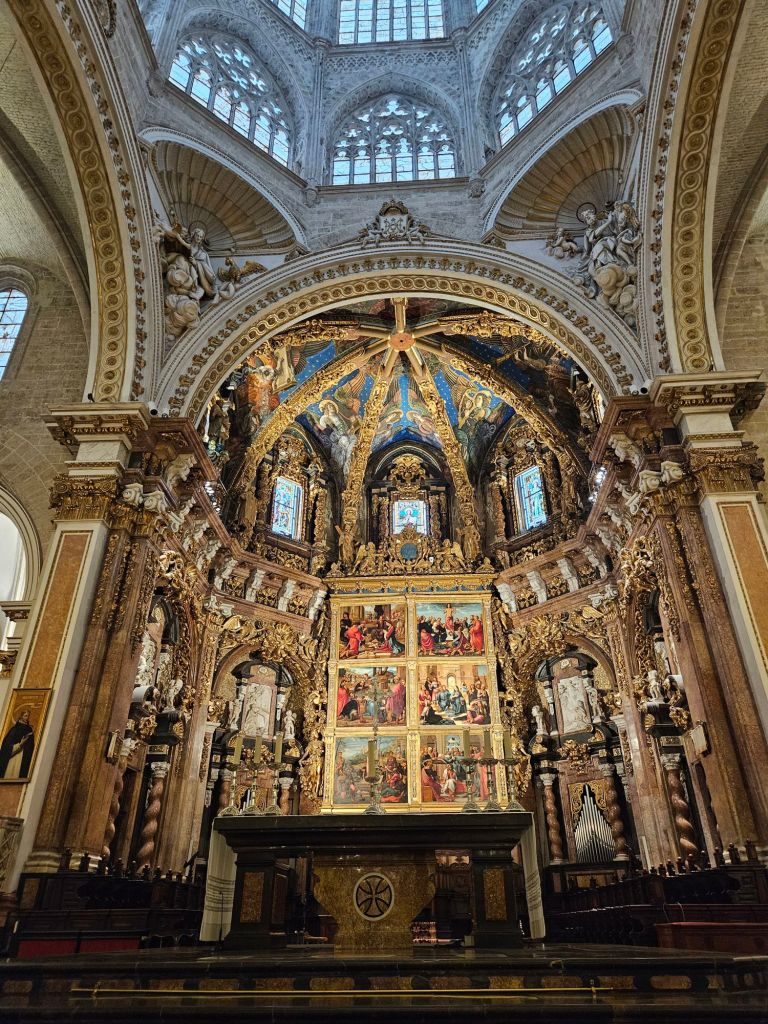
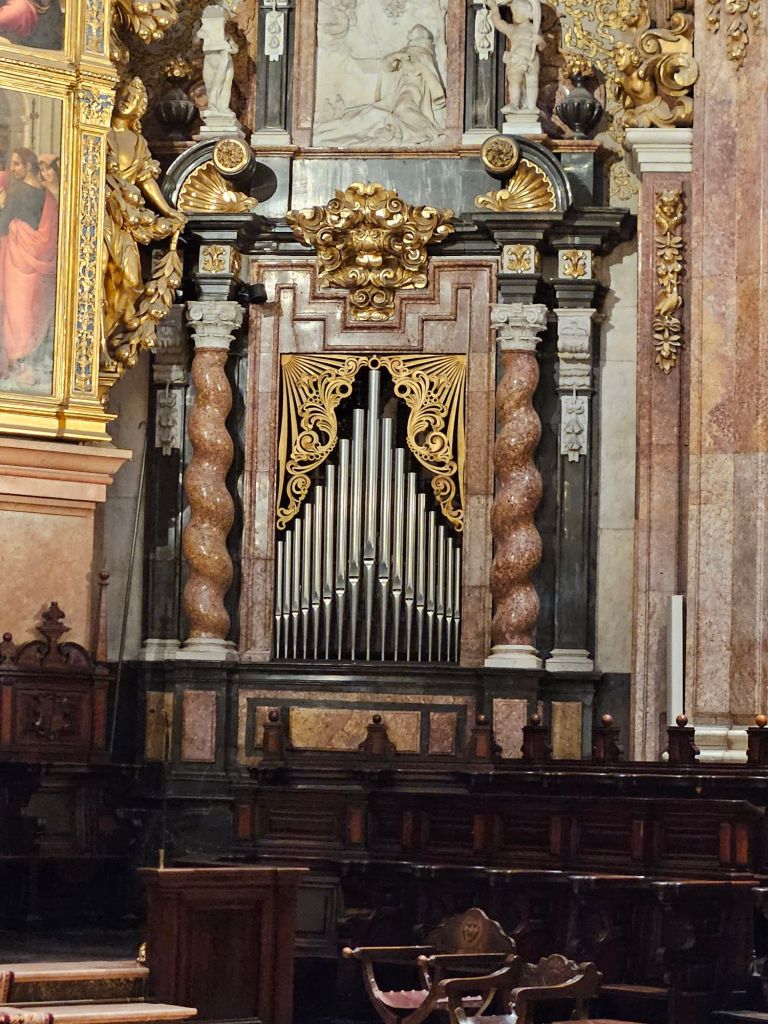
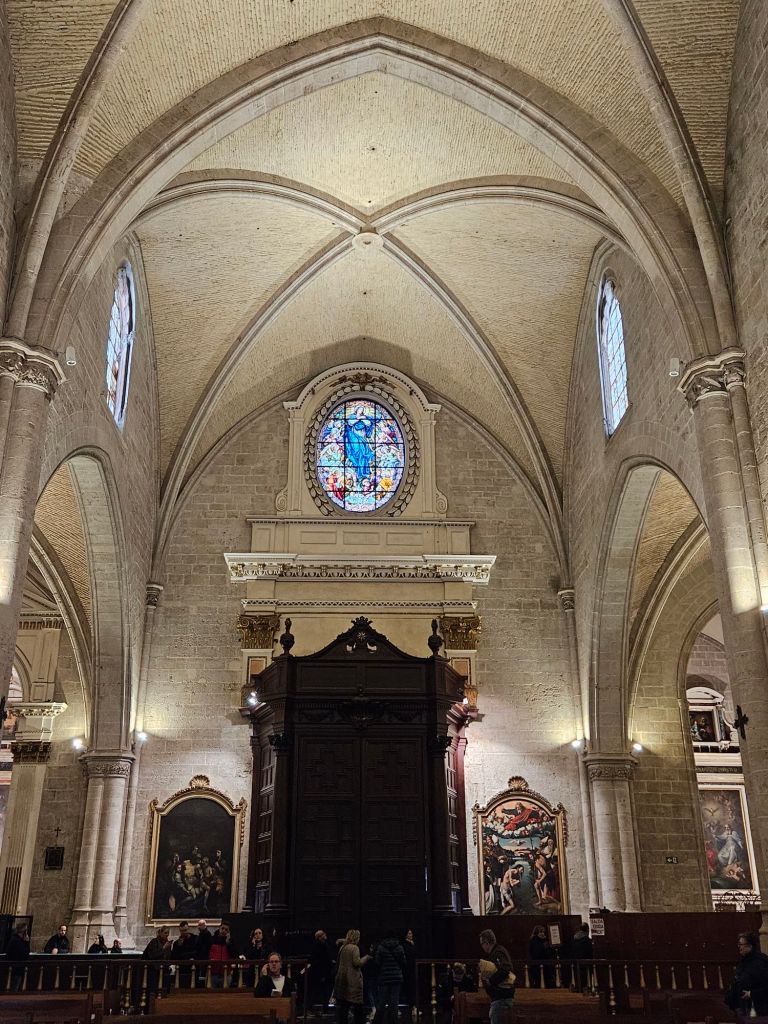
The exterior shows a variety of styles; inside, it’s glorious and feels mostly harmonious even though the C. 18 “improvements” are very obvious:
C18 column super-glued over originalDitto, detailGothic arch; C18 archC18 rounding of pointed Gothic arches; Romanesque octagonal tower.
We often avoid audio guides. On this occasion we got one in English and one in Spanish but rapidly abandoned the Spanish one – too much work given the challenging acoustics and complexity of the information. The density of historical detail here made the English guide well worth it.
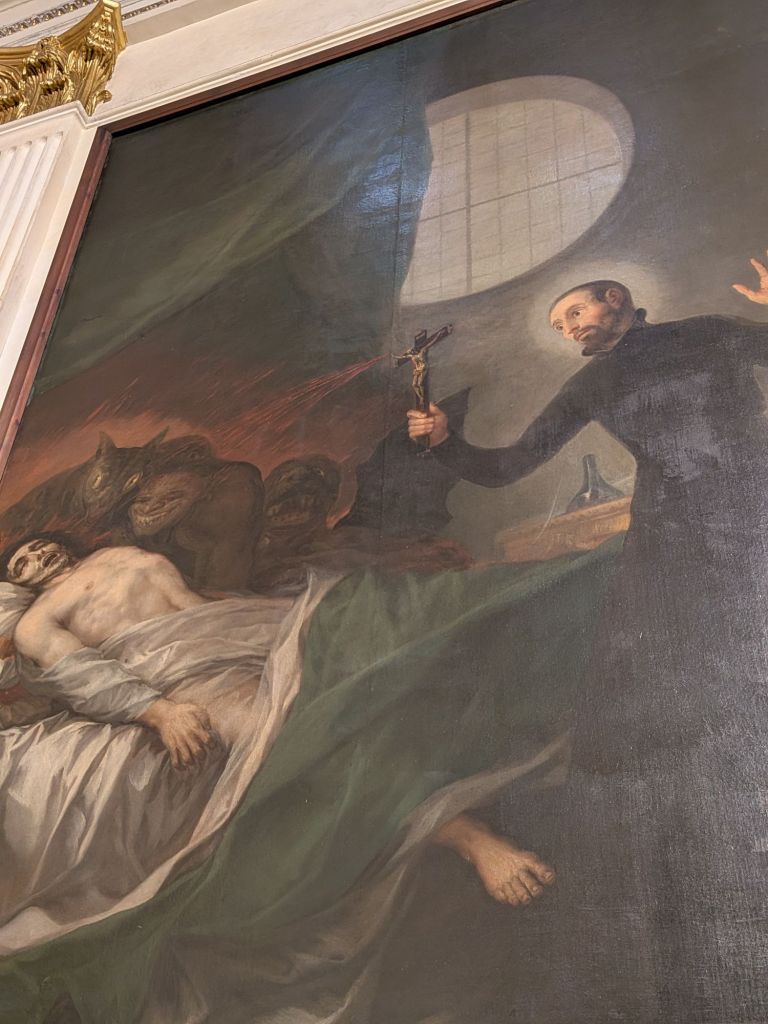
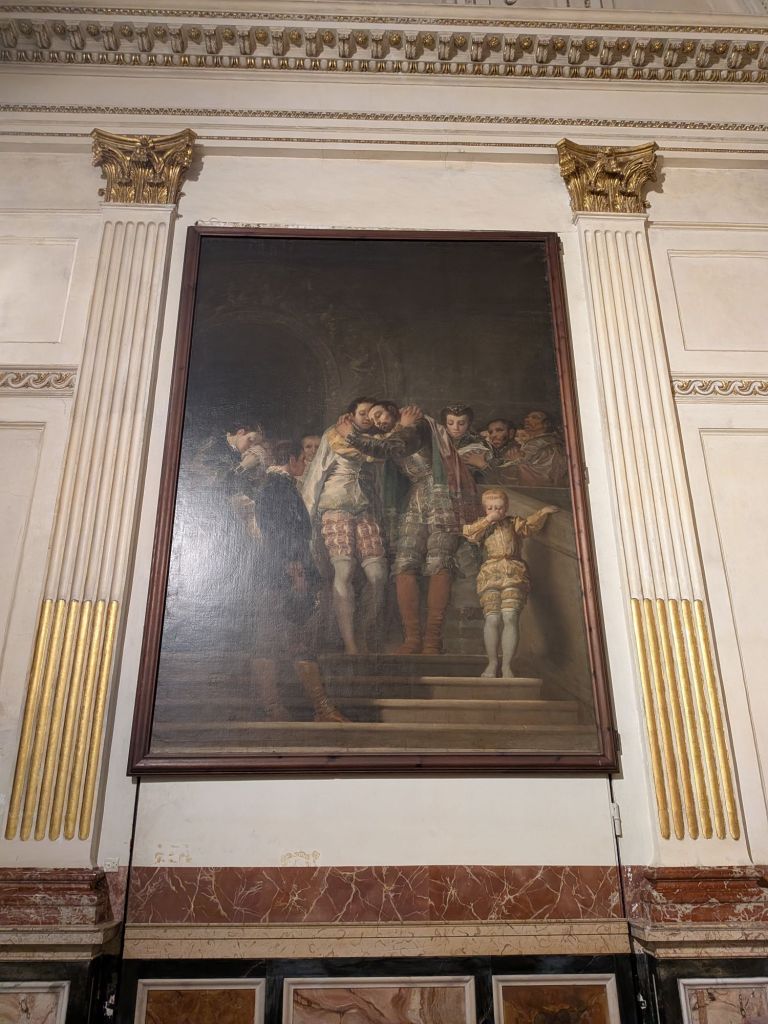
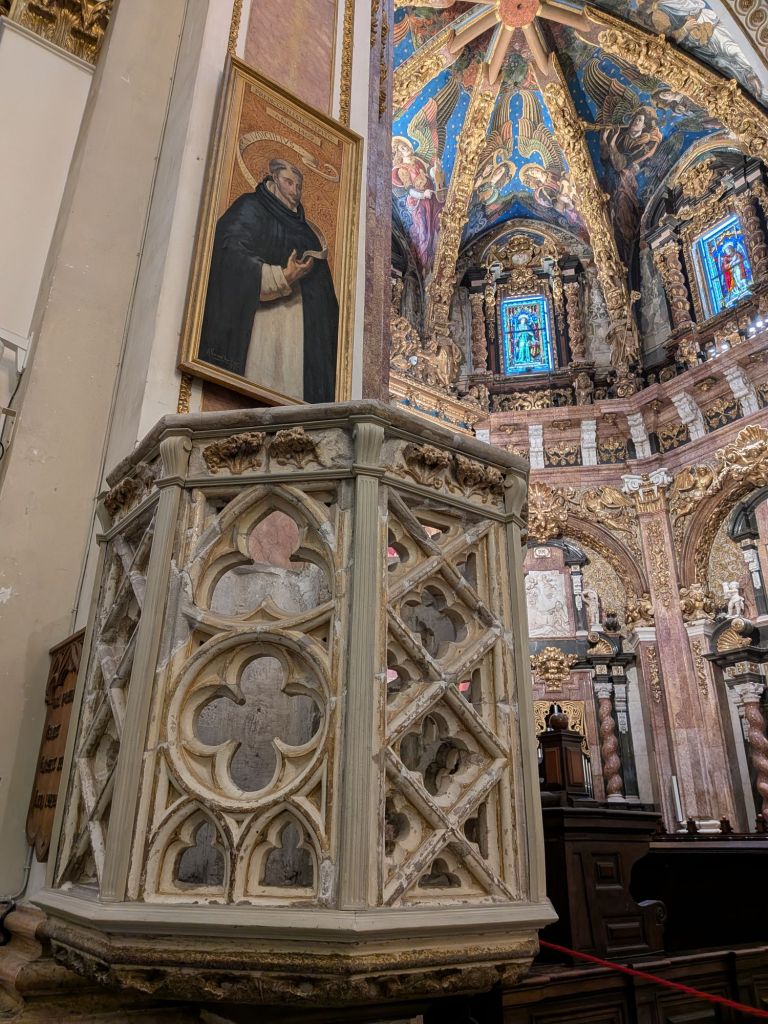
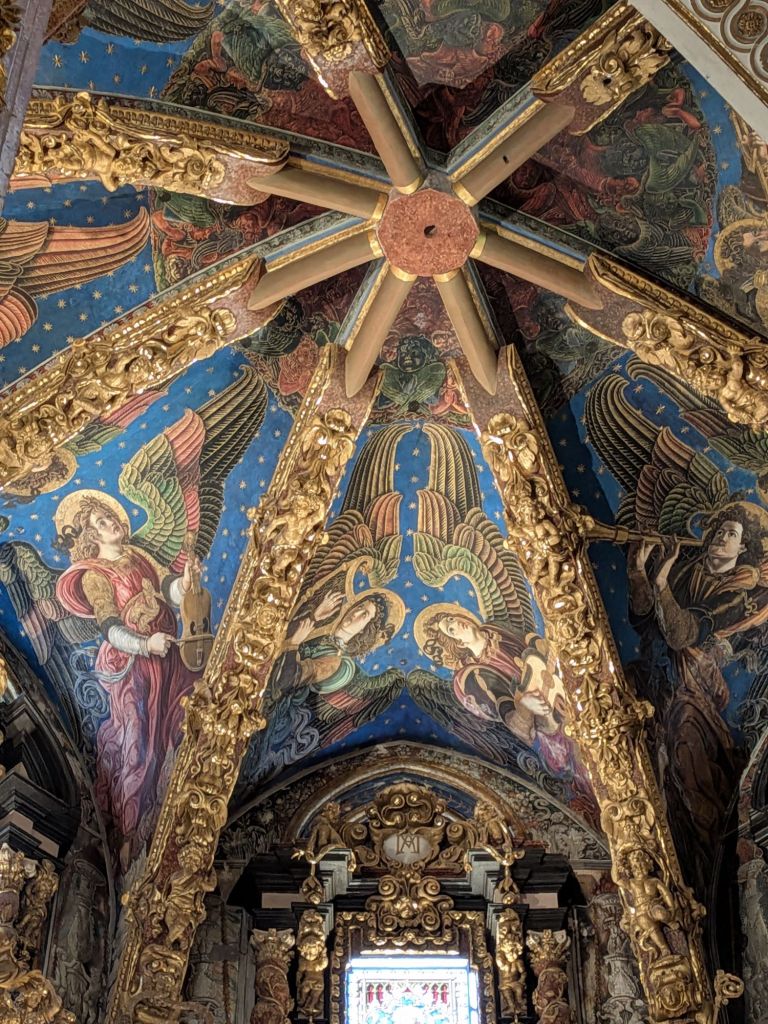
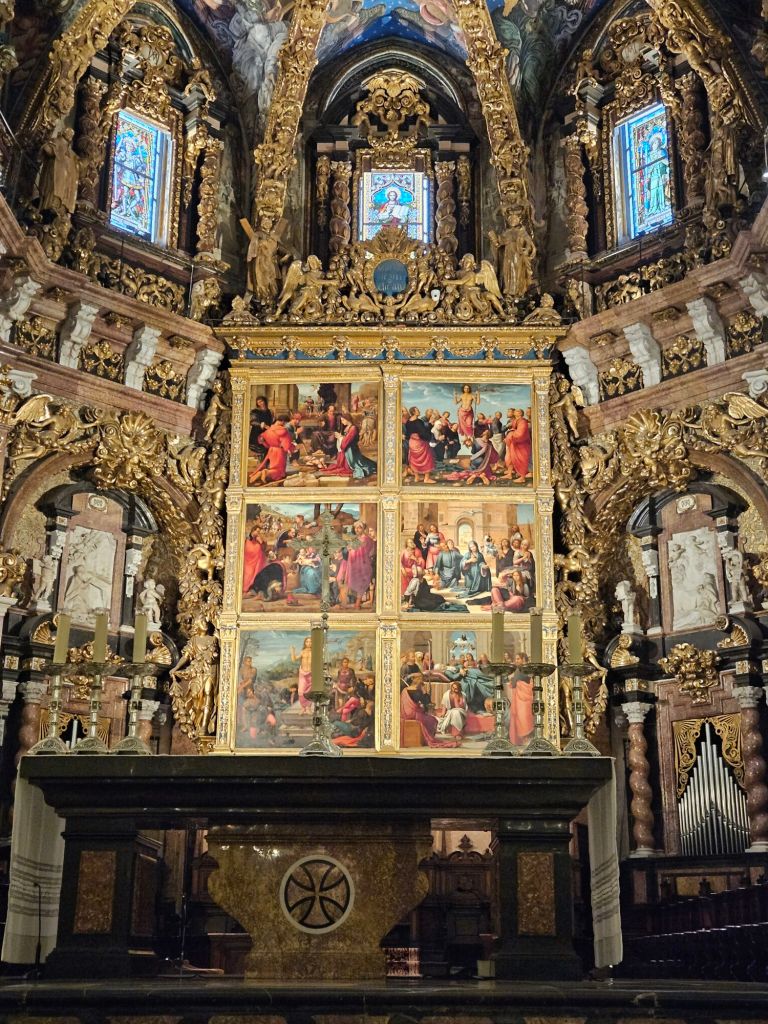
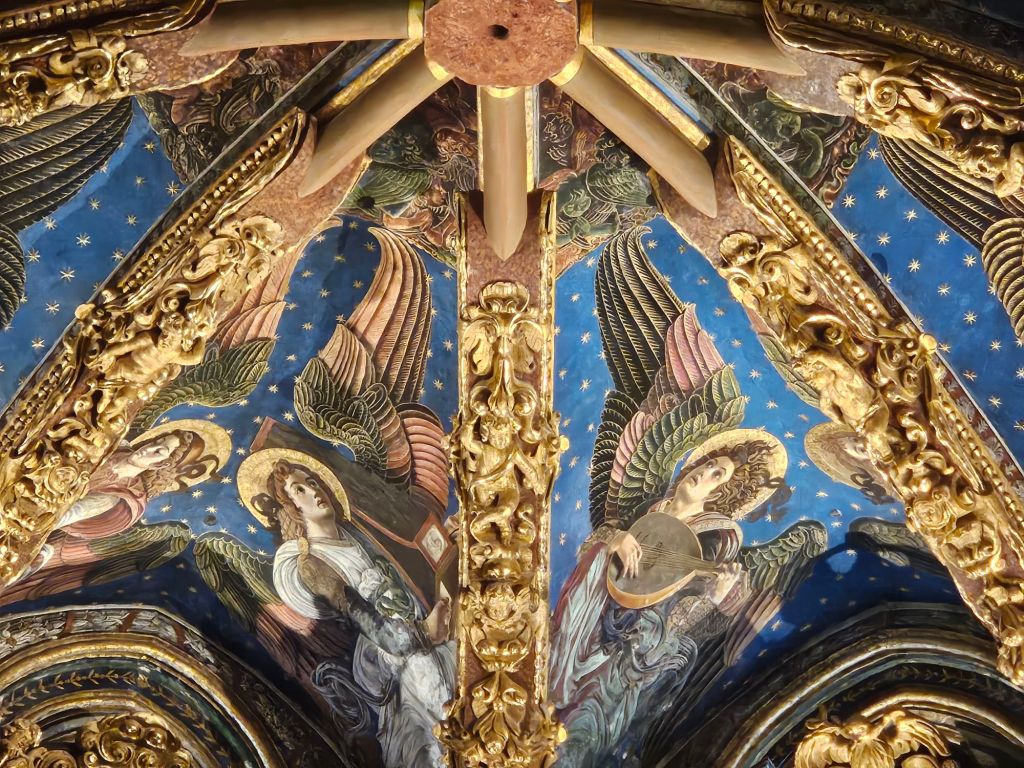
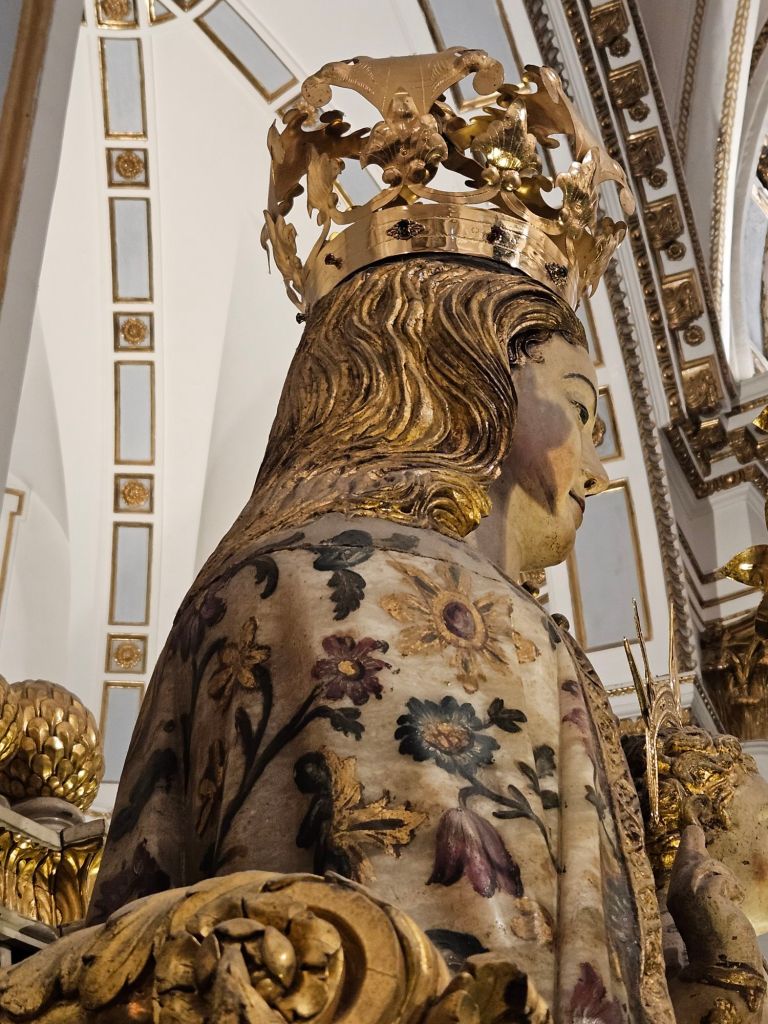
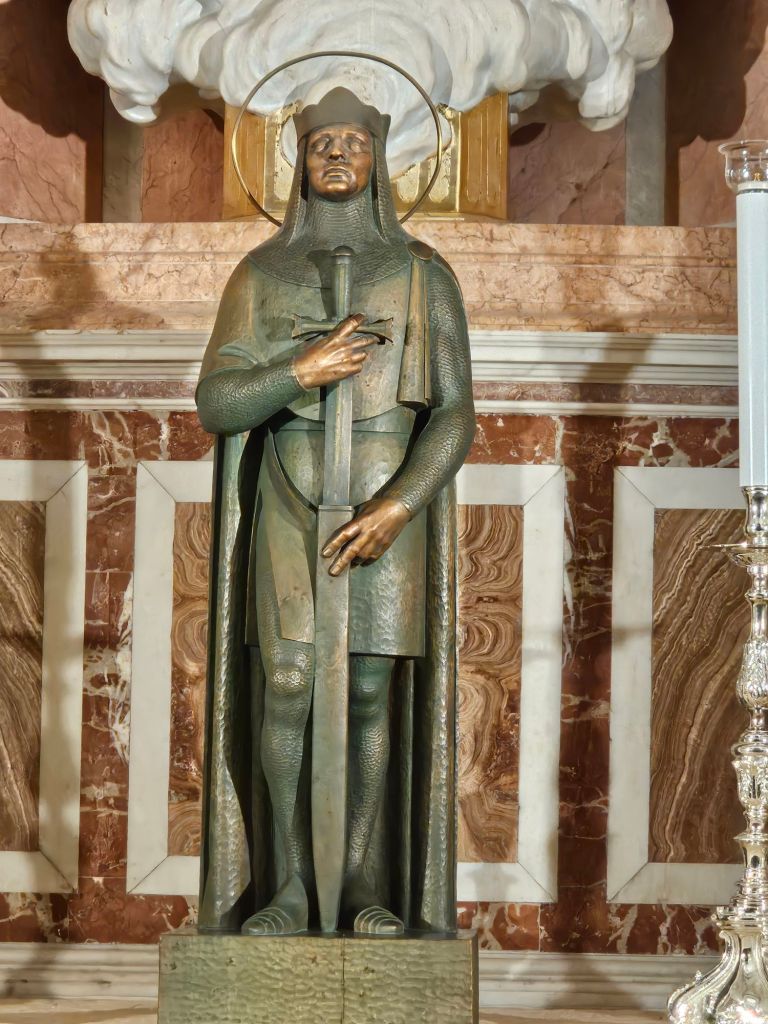
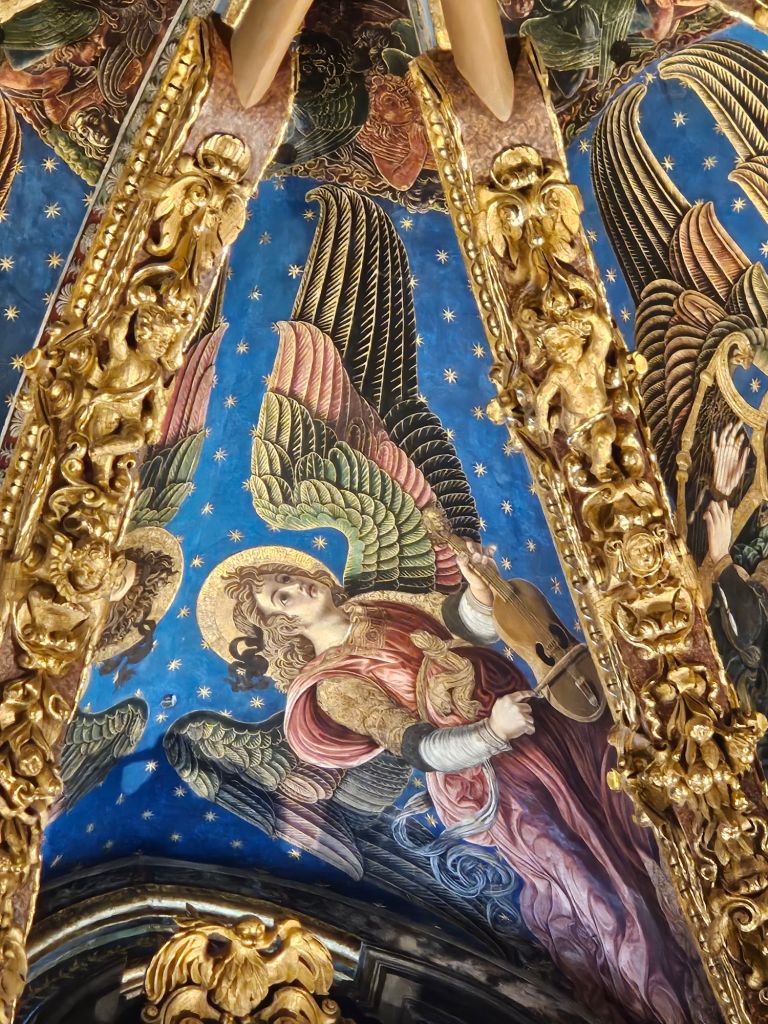
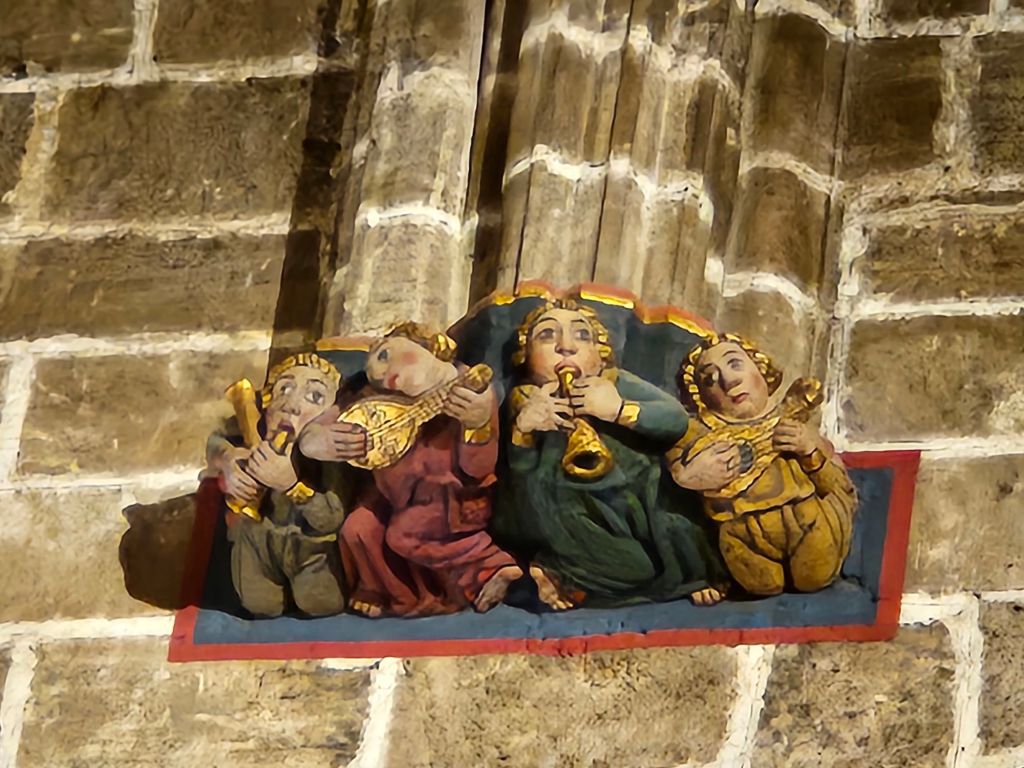
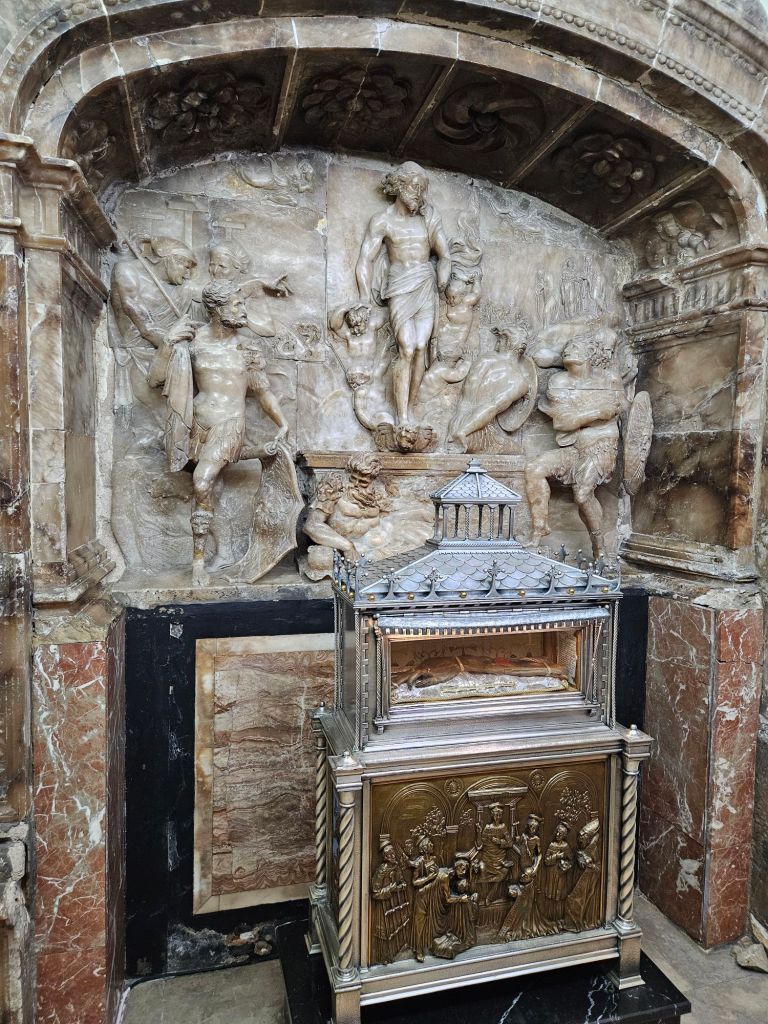
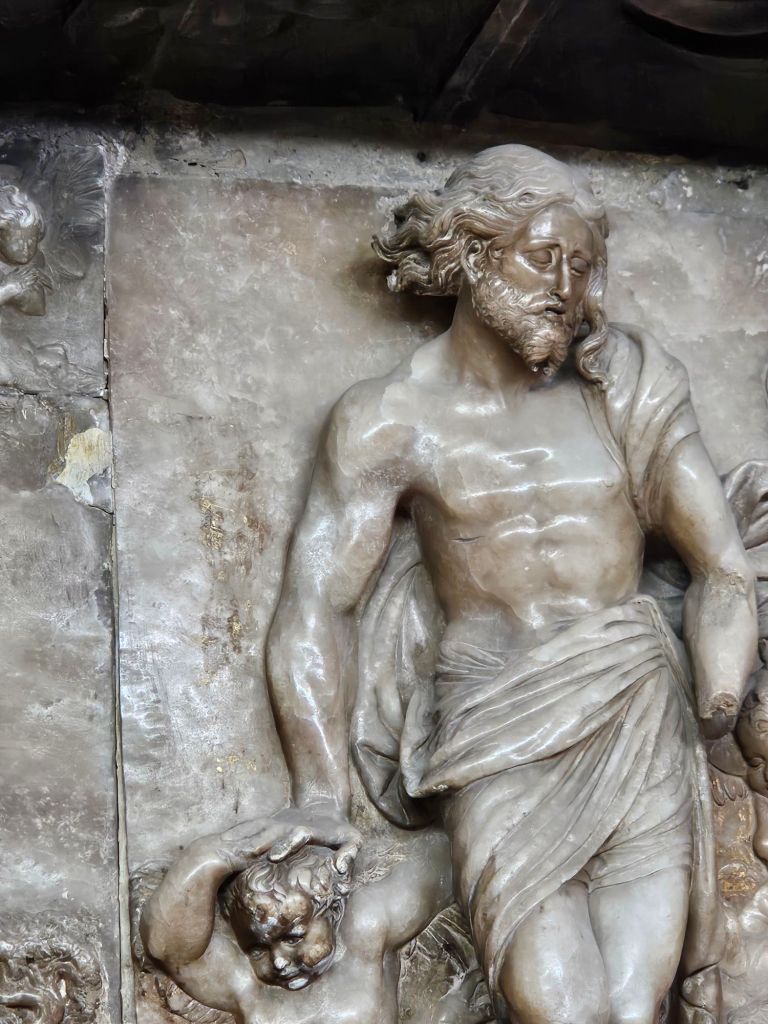
The historical riches are astounding, e.g. a couple of Goyas displayed without fanfare in one of the umpteen ornate side chapels, the elaborate stone pulpit from which St Vincent Ferrer preached in this very spot around 1410, and gorgeous C16 frescoes of musician-angels that were only rediscovered in 2004.
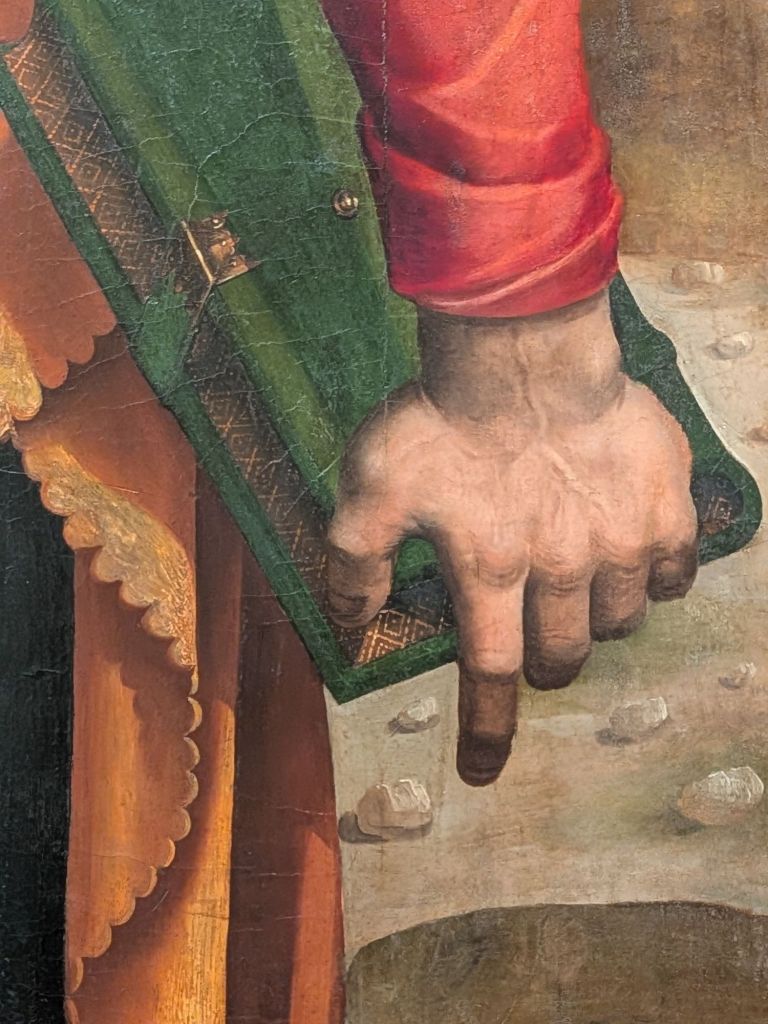
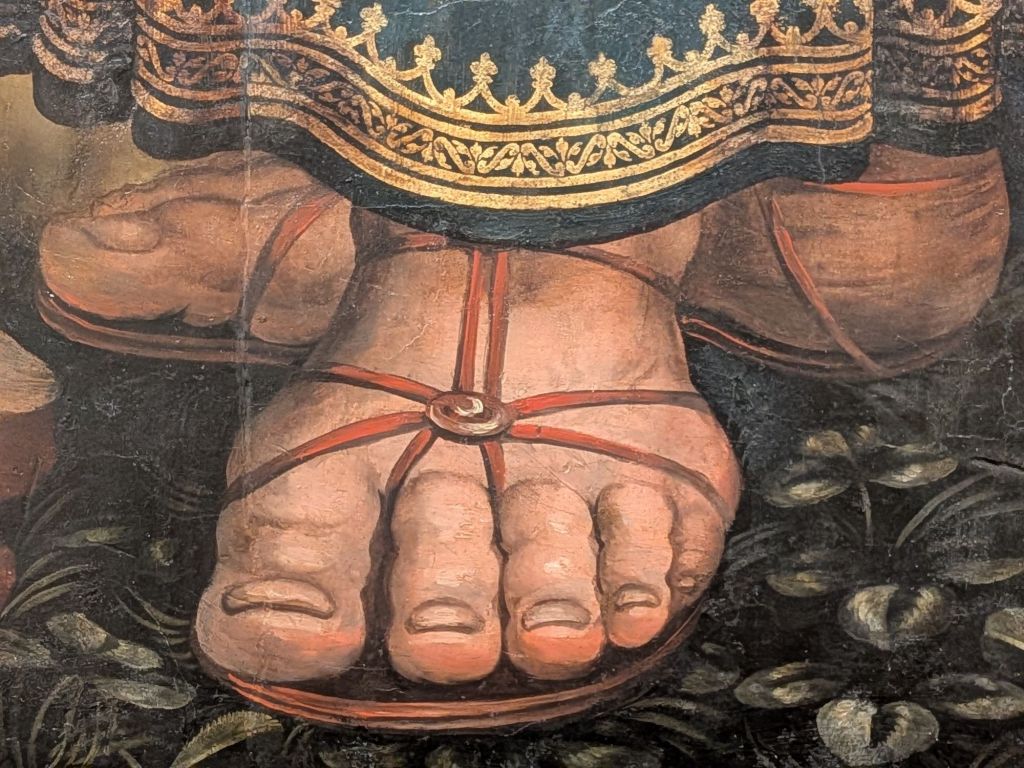
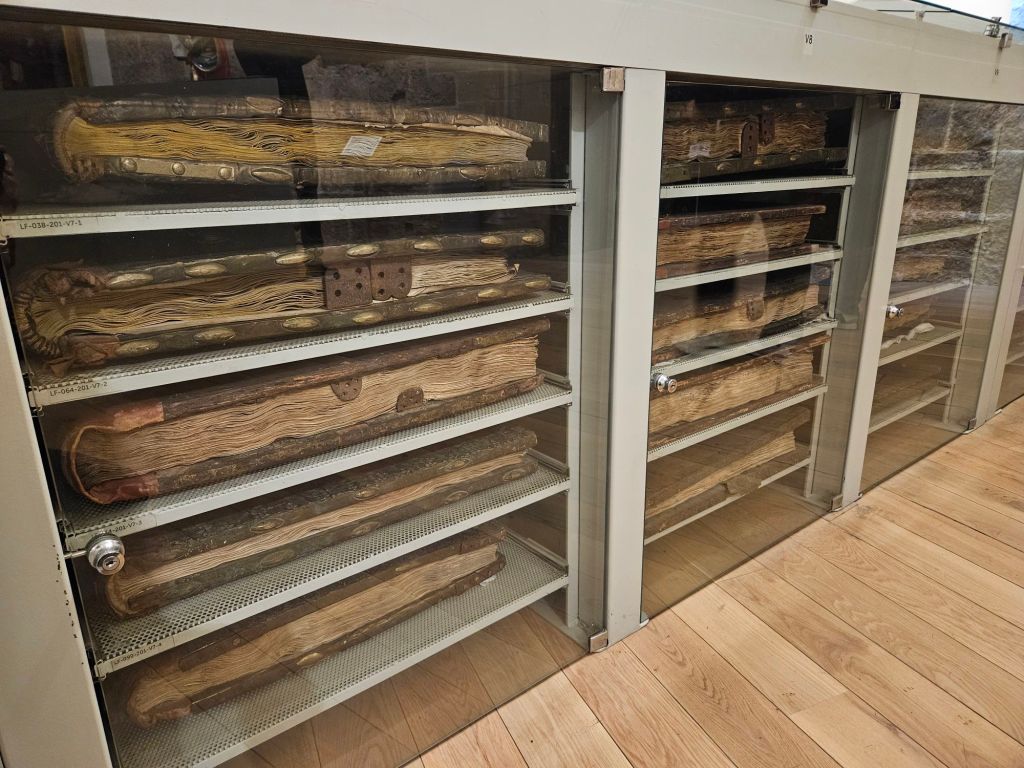
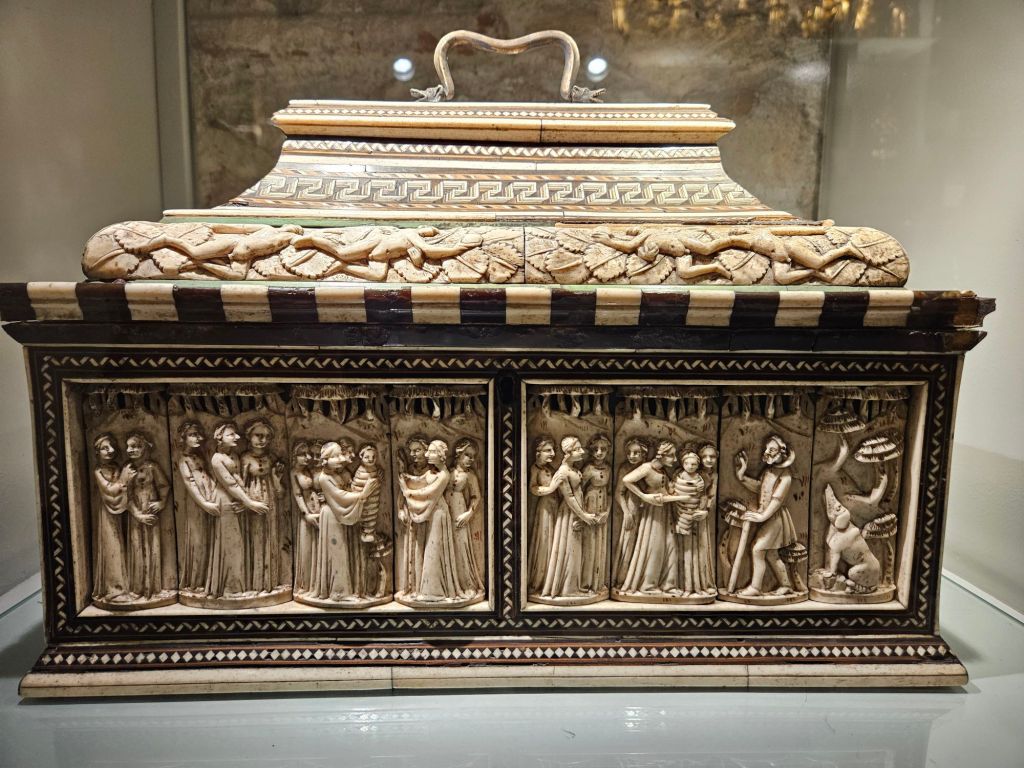
The museum is contained within an outer part of the cathedral. Tremendous riches in painting, sculpture, gold, etc., acquired in large part by gift from kings of Aragon, Castille, etc.
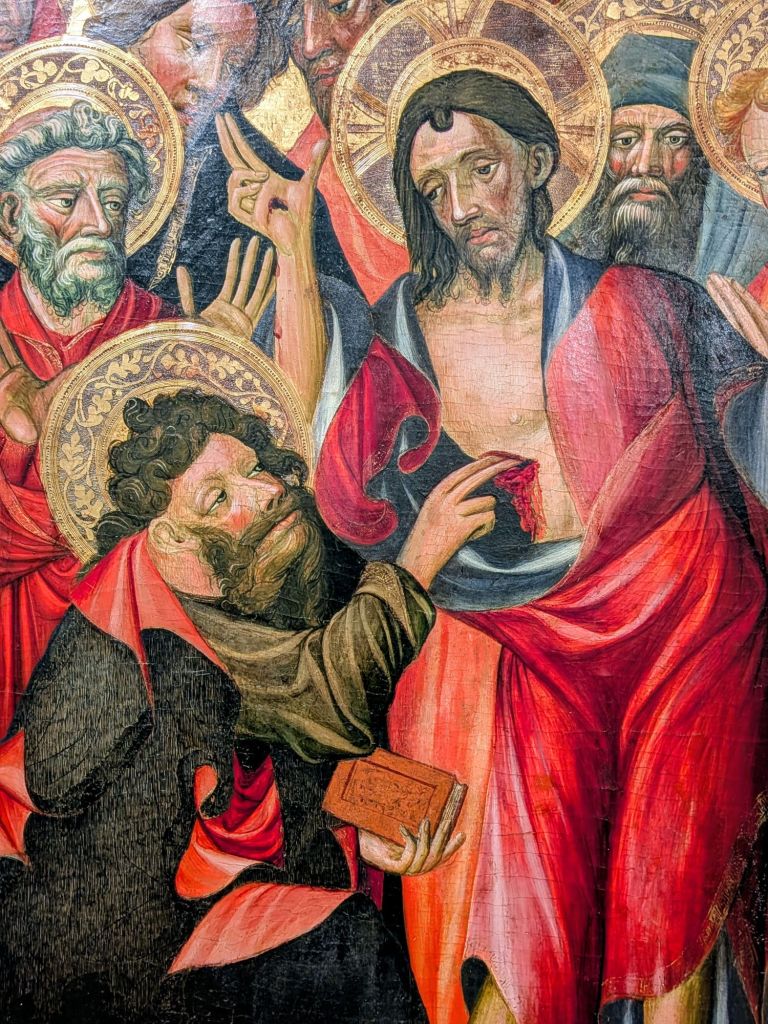
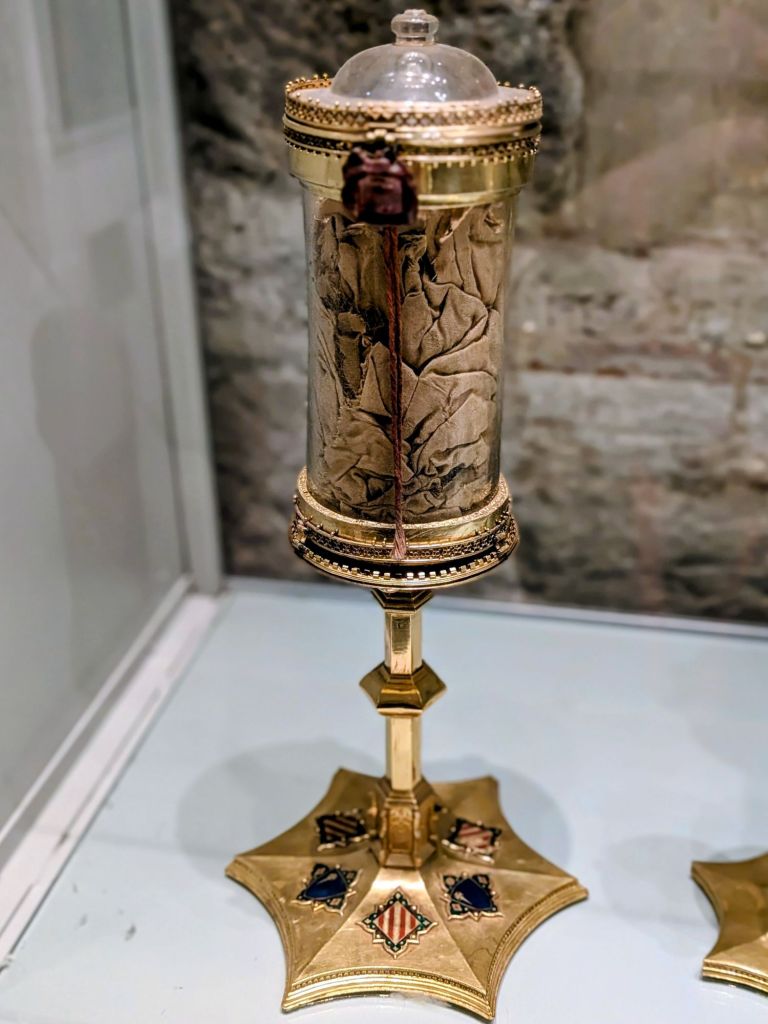
St Paul, detailDittoDoubting Thomas, c. 1400Relic: the shirt of the infant Jesus
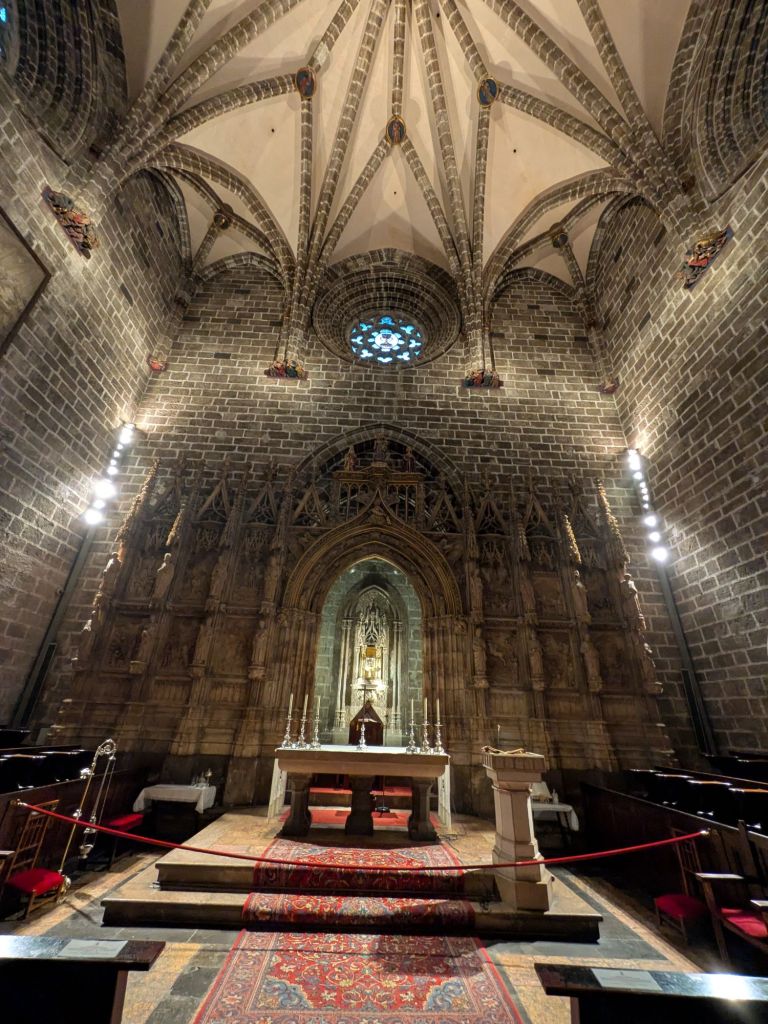
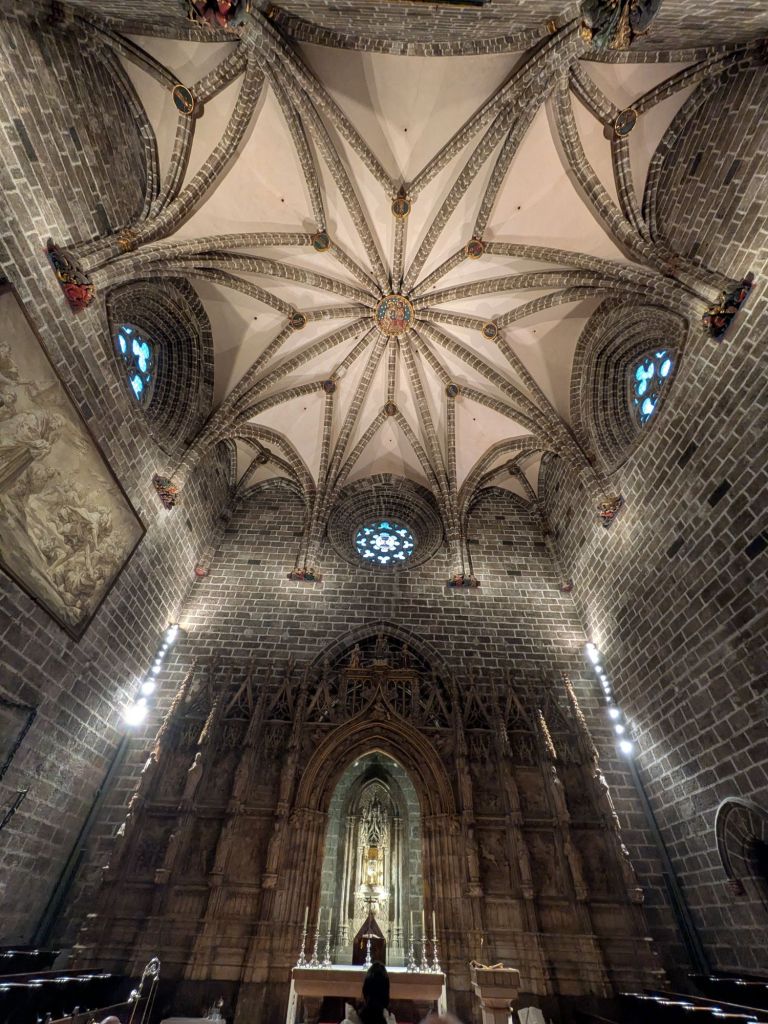
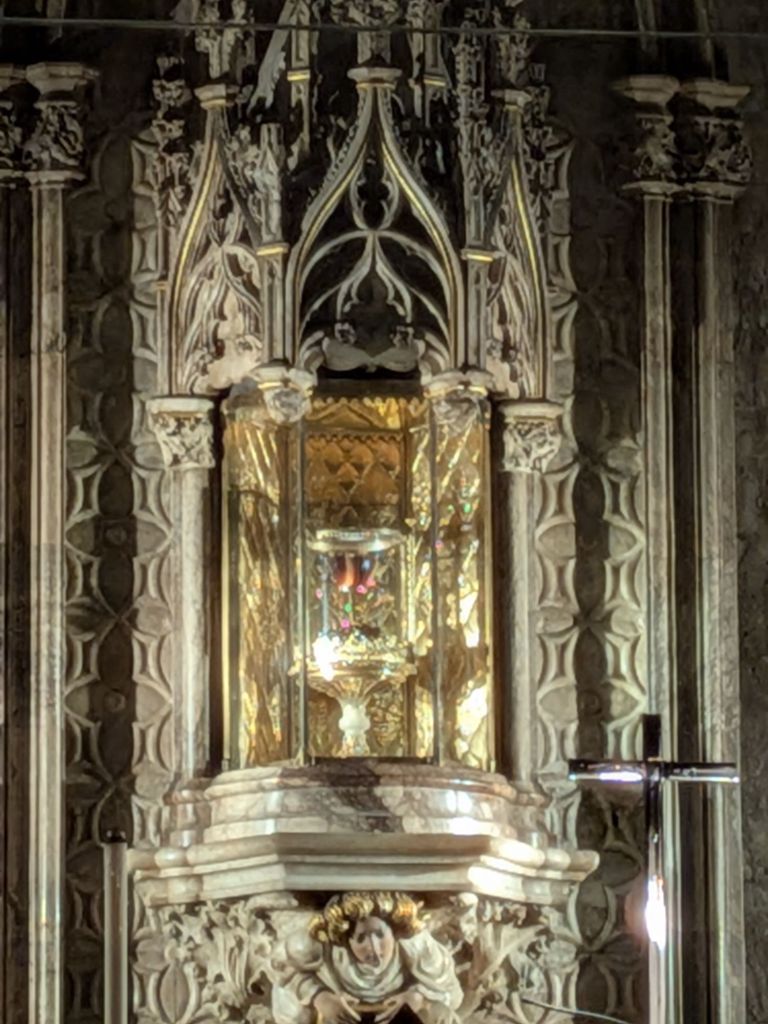
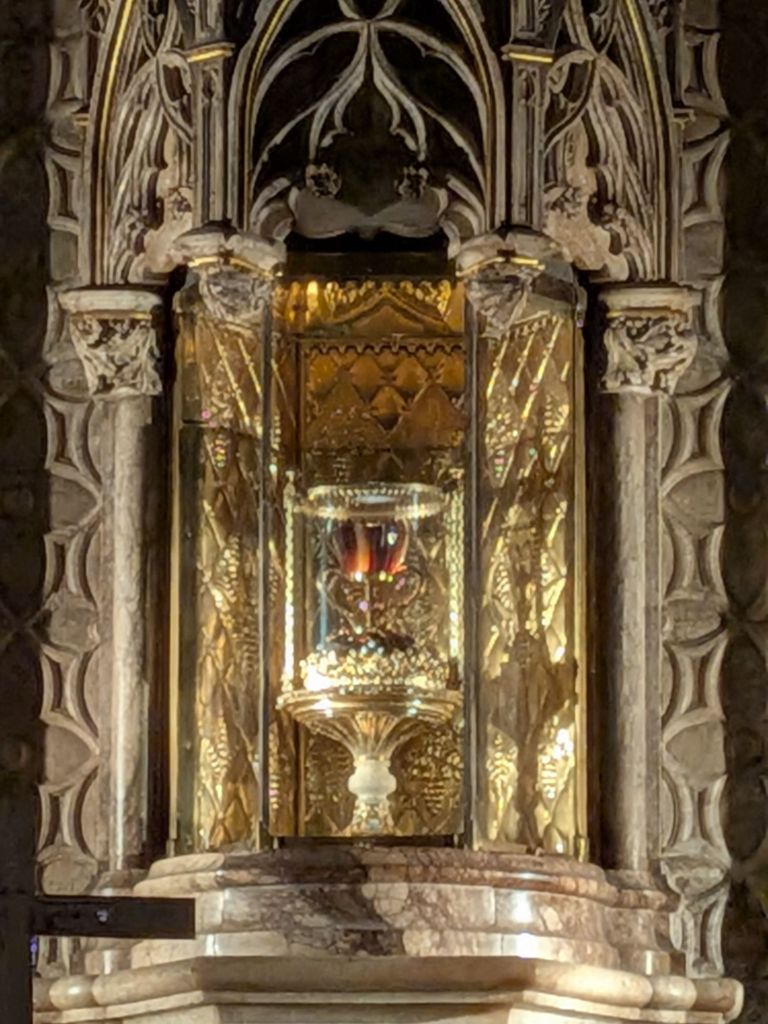
The grand finale, in a magnificent Gothic side chapel that would do as a small cathedral in itself, is (don’t say “supposedly” around here) the Holy Grail – brought from Jerusalem to Rome by St. Paul and thence eventually (insert vague history stretching over several countries and a dozen centuries) to Valencia. The gold is medieval – the Grail is the red cup you can just see in the middle.
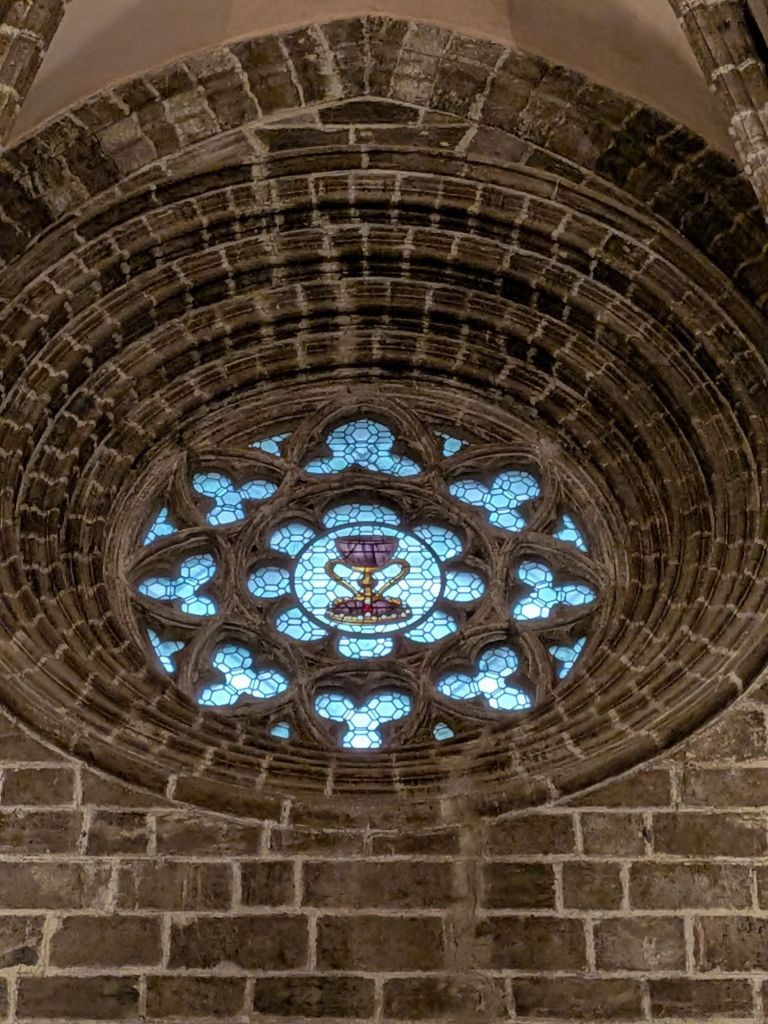
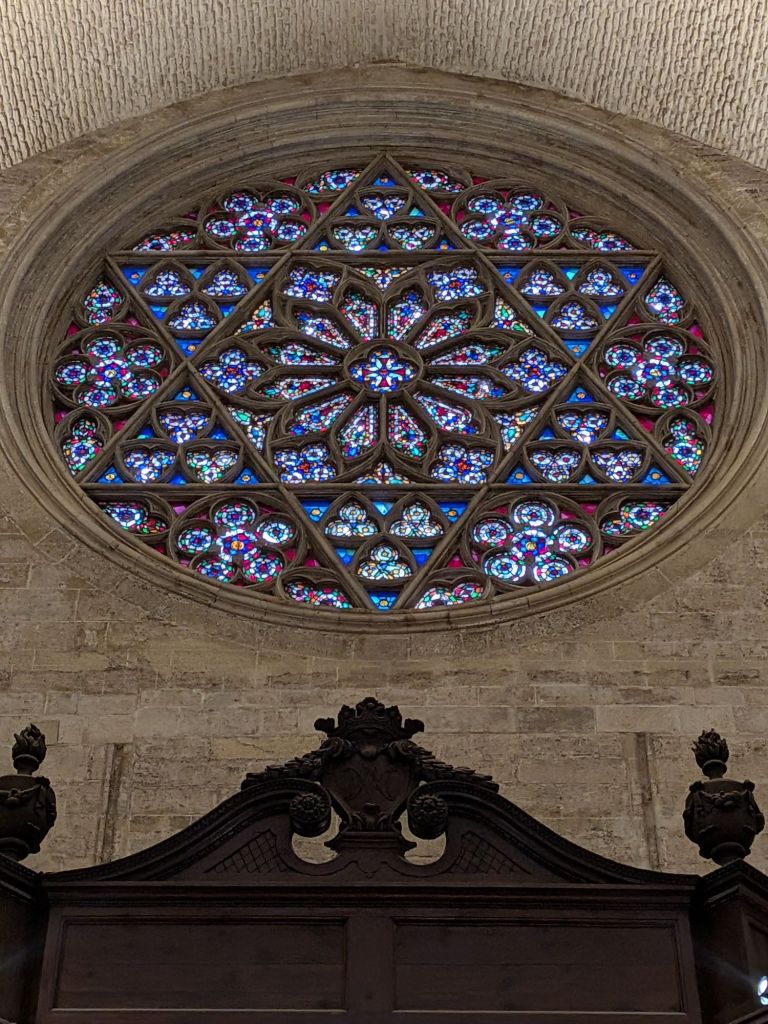
Two rose windows that the audio guide barely bothered to mention:
K here. We spent the better part of 3 hours here, slowly wandering, listening to the guide, marveling at the magnitude of it all. I kept wondering how much more rich and layered it might have been if I knew more Bible stories, more Catholic saints, more art history, more architecture. One could have picked any spot in the cathedral and spent an hour with an expert digging through the details. But then again, even without the extra depth, my brain reached saturation.

 Kerry & Richard in Spain (mostly) 2026