Wednesday: took in a pair of major-minor historic sites not far from Clarissa’s – the carefully preserved and restored houses of legendary Victorian illustrator Linley Sambourne (d. 1910) and the artist and socialite Lord Frederick Leighton (d. 1896).
Sambourne was a wholly self-taught artist who became famous for his satirical work with Punch magazine and illustration of great children’s classics like Alice Through the Looking Glass and The Water Babies, but he never made a lot of money. Living well beyond his means, with his wife he created a wonderfully cluttered aesthetic oasis in a narrow row house, where regular guests included Everret Millais and Oscar Wilde.
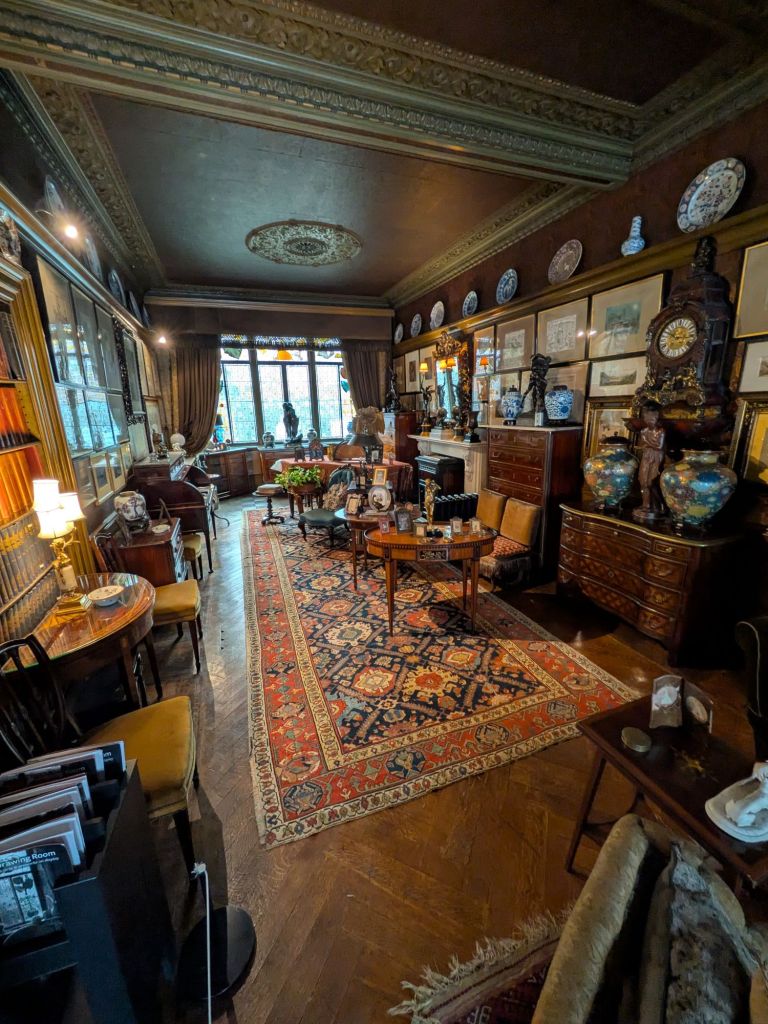
Interesting features included areas where he had bought very expensive wallpaper but only papered the parts of the walls not covered with numerous framed pictures, and tiny armchairs that visitors assume were for children; actually they were for women wearing bustles. Apparently you would sit down directly on the chair, on the bustle, and this would bring you to the same height as the man sitting next to you in an ordinary armchair.
Leighton’s house is only 5 minutes walk away but halfway there we had to collapse into a Persian restaurant and eat a delicious spiced herbed stew and an eggplant and tomato stew over saffron rice.
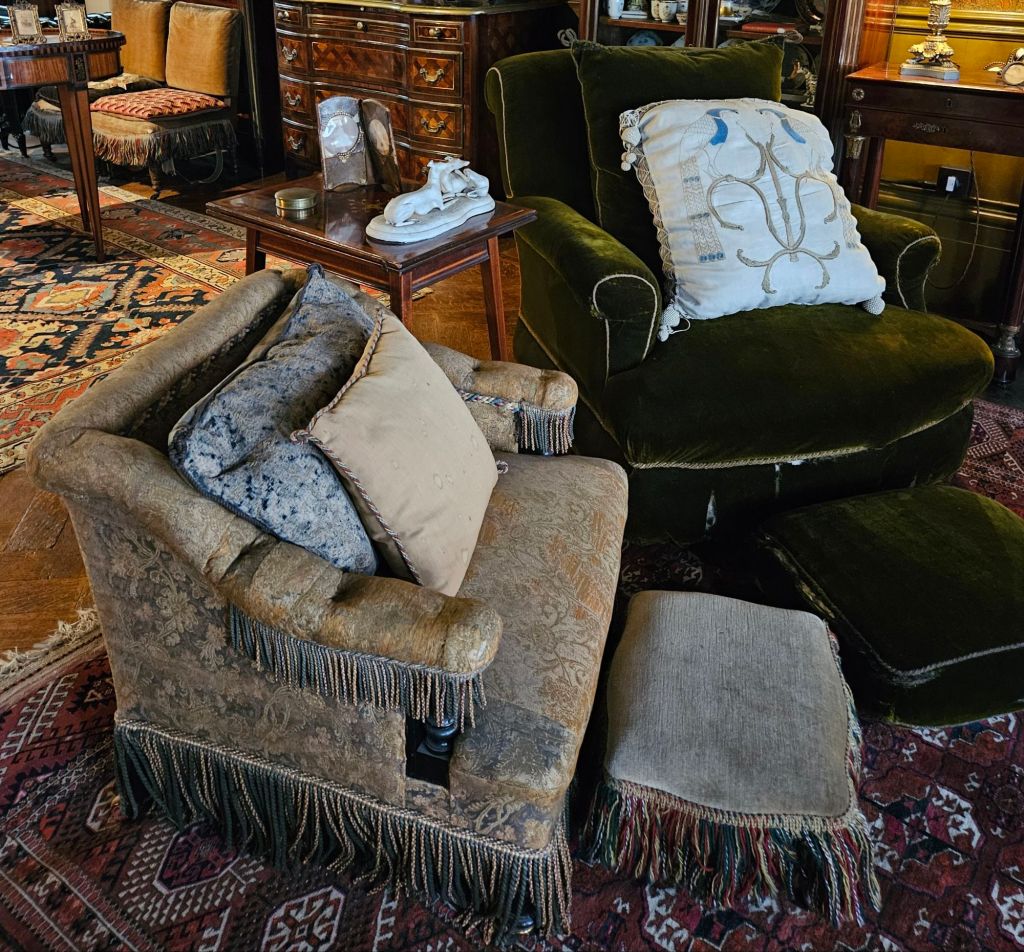
Leighton – the only artist ever to be made a Lord – clearly was never short of money, and his house is something of a small palace. He was obsessed with the Middle Eastern and Arabic culture – he made visits in that part of the world every year for 40 straight years – and aside from a vast clutter of art and objet the most impressive thing is the Arab Room, which is two stories high and exquisitely tiled throughout with quotations from the Quran and a fountain and pool in the middle.
Popular music aficionados might recognize the Arab Room, used apparently in a variety of movies and TV shows, from the video of The Stranglers’ ‘Golden Brown.’
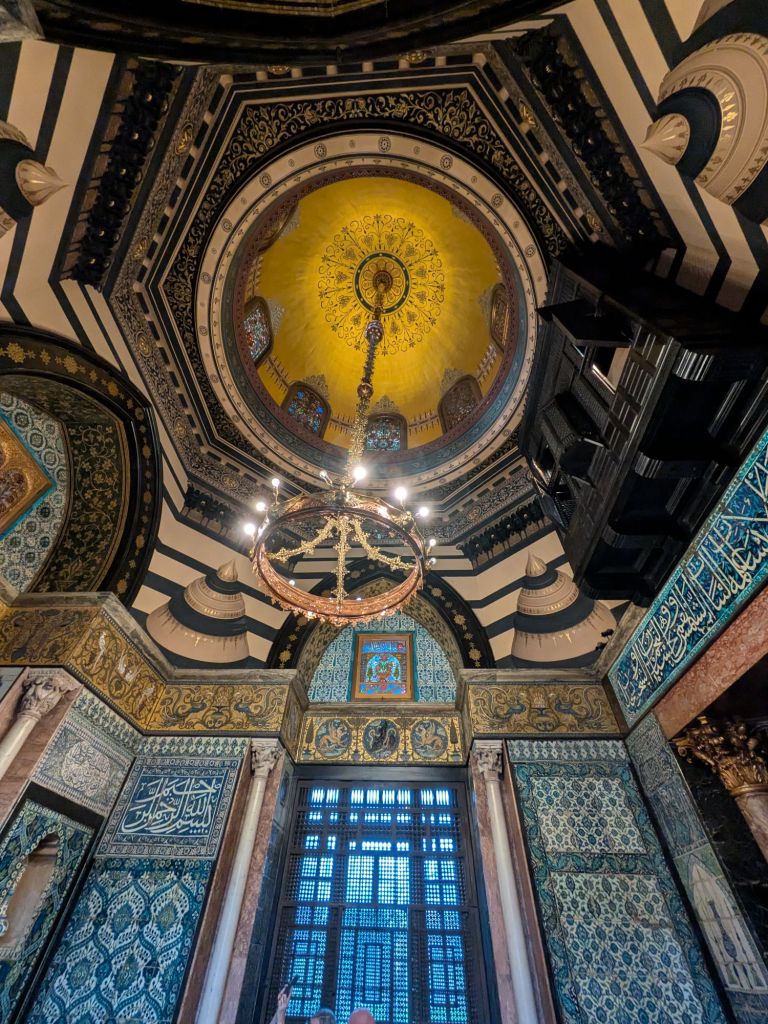
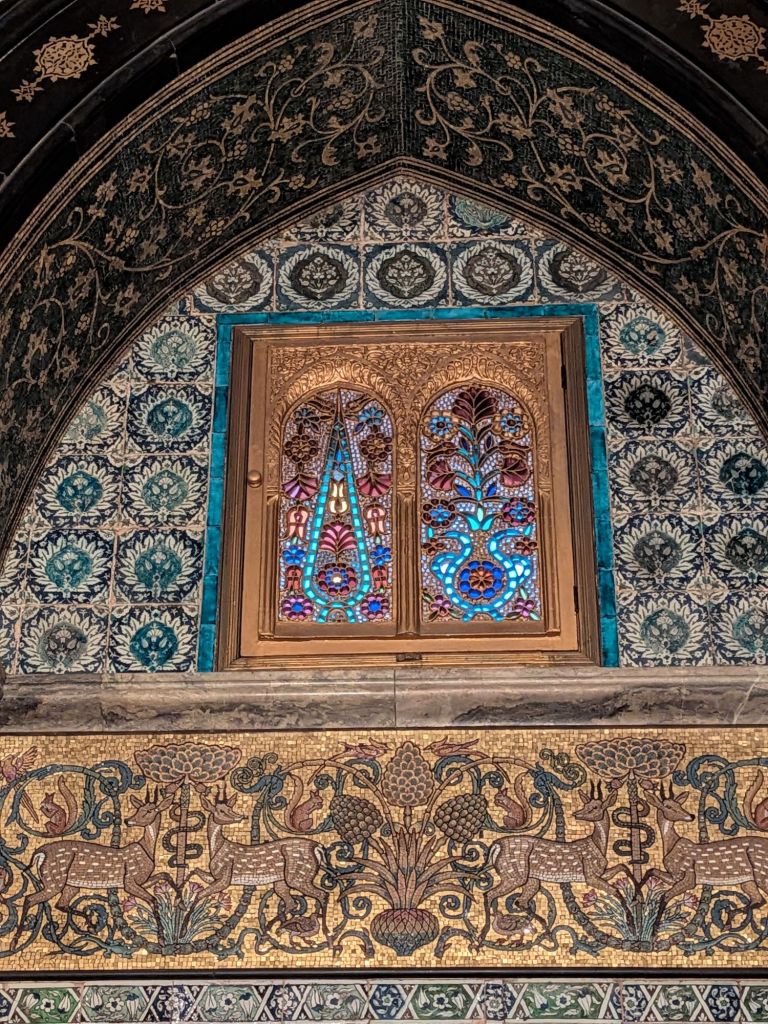
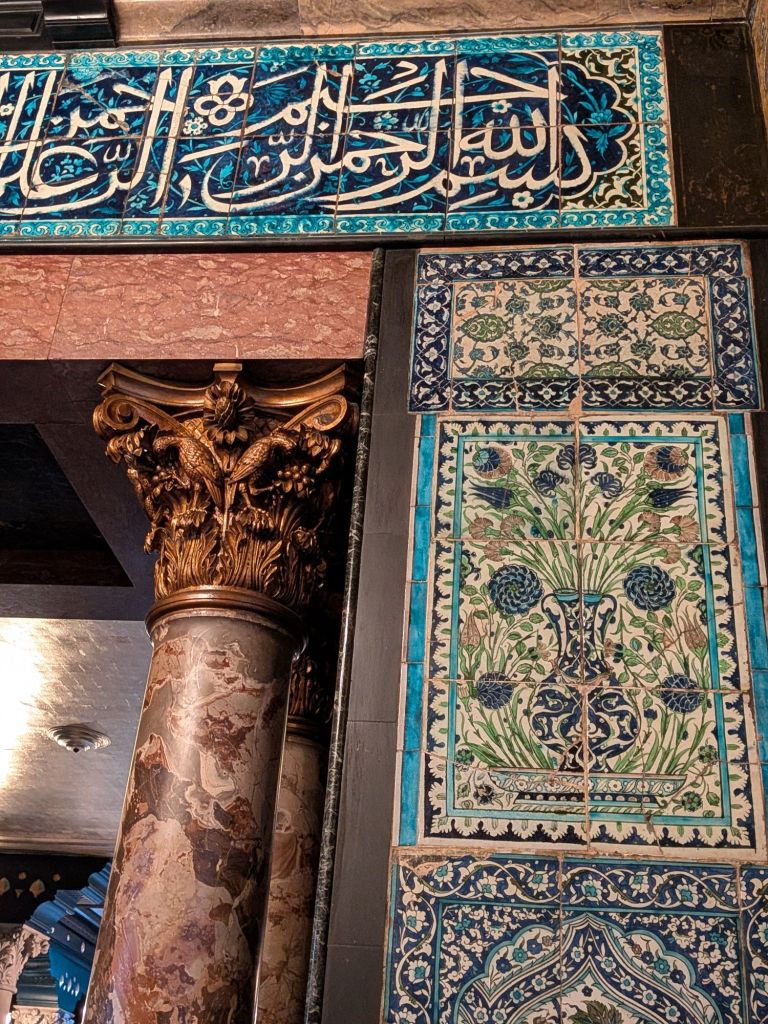
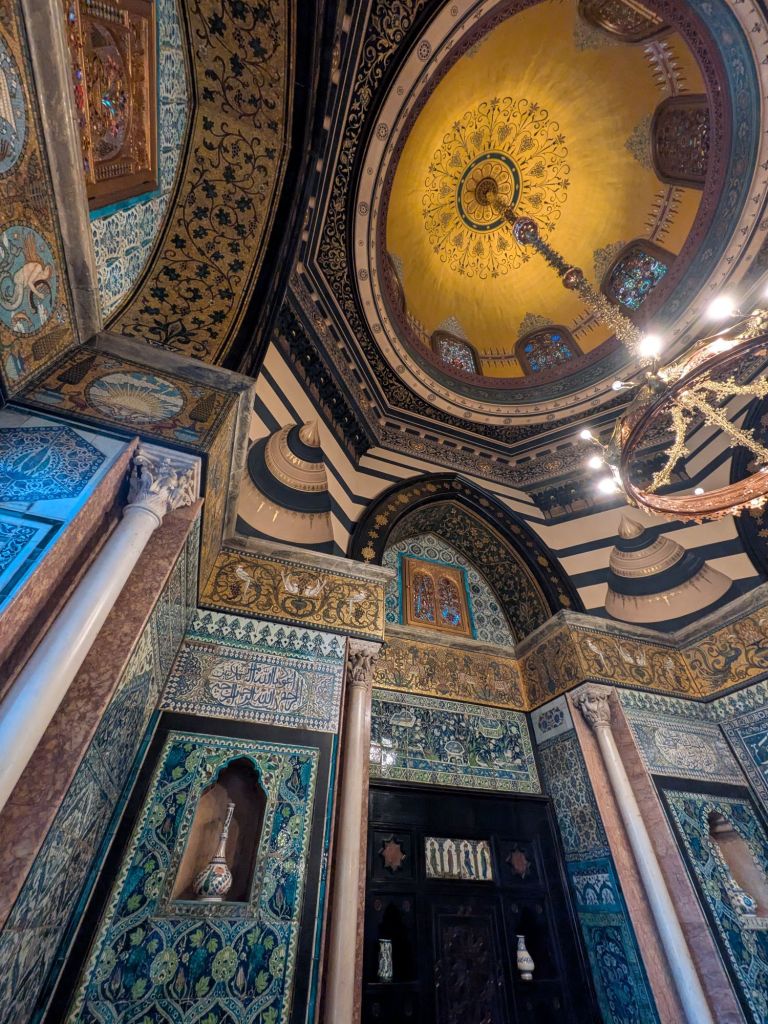
When Leighton died, most of the furnishings in the house were sold by his sisters to raise money to pay his bequests. The home, which couldn’t be sold, was eventually donated to the Council. In recent years, as the house has been being restored and operated as a museum, curators are slowly acquiring objects to restore the home. Where they know of a particular item from letters or other descriptions, but haven’t been able to locate the original or a suitable stand in, they have placed so called ghost objects. A fascinating way to give the impression of how a room looked while maintaining the authenticity of the space.
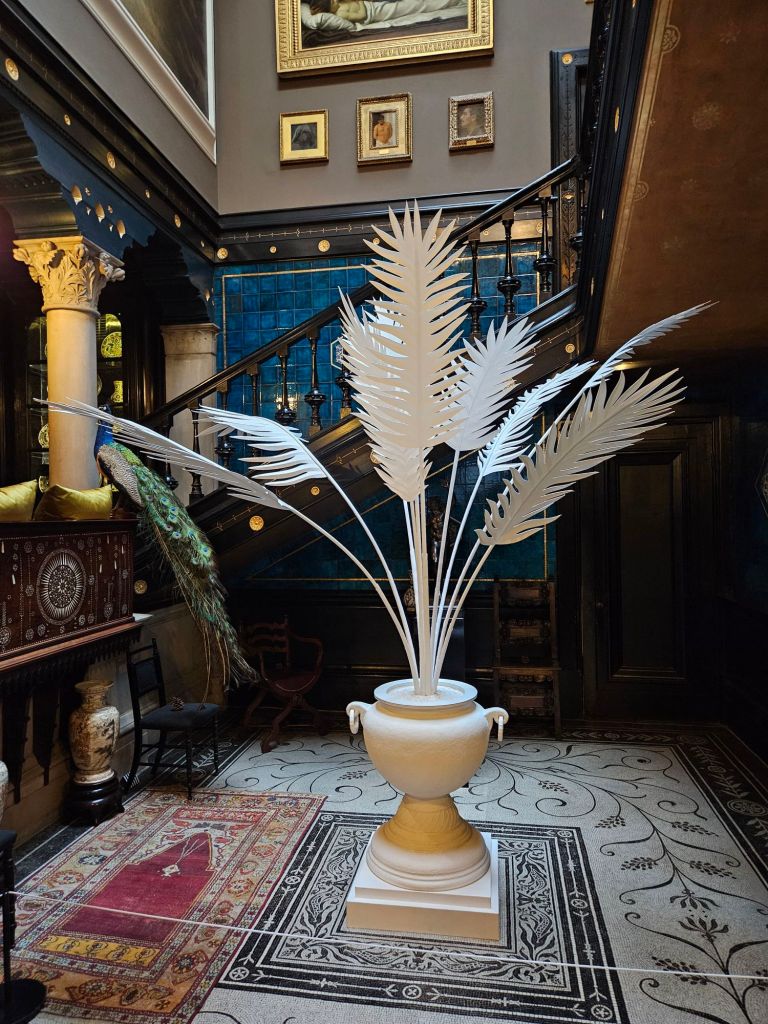
An enthusiastic and knowledgeable docent, who turned out to be a painter himself, showed us around. Because he had something interesting to say about virtually everything, we would have been there longer than our schedule allowed and we had to abandon him and browse through the last half of the house rather more quickly. Back to Clarissa’s briefly…
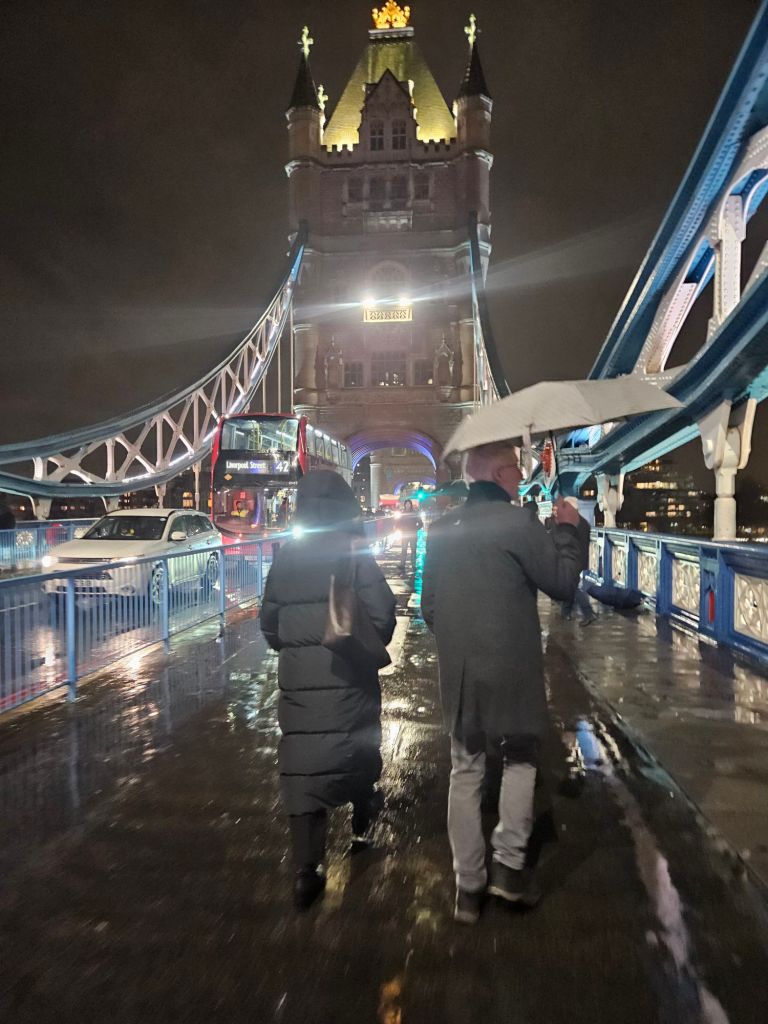
… and then back out across London to Tower Bridge, which we crossed in crowds and rain…
… to the Bridge Theatre, where we saw a hit revival of Steven Sondheim’s Into the Woods, a clever musical mashup of about five different iconic children’s tales including Cinderella, Little Red Riding Hood, Jack and the Bean Stalk, etc.
As Clarissa put it, Sondheim is a bit like “the Benjamin Britten of musicals.” This did not disappoint–excellent book and fabulous cast. Such a treat!
 Kerry & Richard in Spain (mostly) 2026